宝洁公司

Search documents
I'd buy PG on its pullback here, says Jim Cramer
CNBC Television· 2025-12-16 00:34
Hey, I'm Kramer. Welcome to Mad Money. Welcome to Cray America.other my friends. I'm just trying to make you a little money. My job, not just entertain, but to teach you.So call me 1800 743. Tweet me Jim Kramer. If you ask me what tech stock I like right now, right here, I tell you that my favorite tech stock is Proctor and Gamble.A house of innovation spends more than $2 billion a year on research and development to make the best personal products imaginable. From Pampers that can handle a pounding to Tide ...


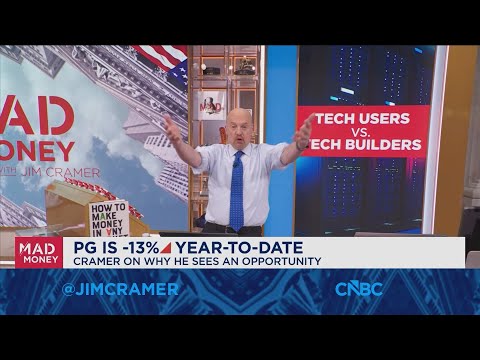
I'd buy PG on its pullback here, says Jim Cramer
Youtube· 2025-12-16 00:34
Hey, I'm Kramer. Welcome to Mad Money. Welcome to Cray America.other my friends. I'm just trying to make you a little money. My job, not just entertain, but to teach you.So call me 1800 743. Tweet me Jim Kramer. If you ask me what tech stock I like right now, right here, I tell you that my favorite tech stock is Proctor and Gamble.A house of innovation spends more than $2 billion a year on research and development to make the best personal products imaginable. From Pampers that can handle a pounding to Tide ...

My favorite tech stocks are B2B users of technology, says Jim Cramer
CNBC Television· 2025-12-16 00:33
If you ask me what tech stock I like right now, right here, I tell you that my favorite tech stock is Proctor and Gamble. A house of innovation spends more than $2 billion a year on research and development to make the best personal products imaginable. From Pampers that can handle a pounding to Tide Evo detergent with six levels of clean to the Gillette Labs heated razor for the best shaving imaginable, this company is loaded with the kind of tech I'm willing to pay for.And get this, it's stocks on sales d ...
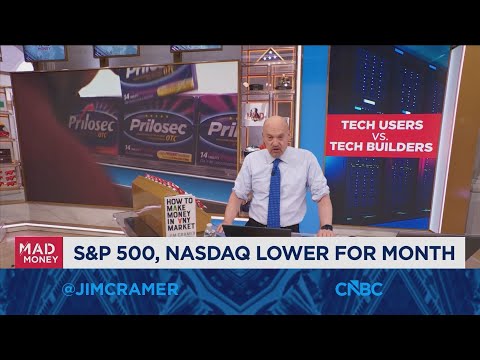
My favorite tech stocks are B2B users of technology, says Jim Cramer
Youtube· 2025-12-16 00:33
Core Viewpoint - Proctor and Gamble is highlighted as a preferred tech stock due to its significant investment in innovation and technology, spending over $2 billion annually on research and development to enhance personal products [1] Group 1: Company Performance - Proctor and Gamble's stock is down more than 13% for the year, and management has indicated that they will miss the upcoming quarter, which is seen as a de-risking opportunity [2] - The company is viewed as a strong user of technology rather than a producer, which is currently favored in the market [3] Group 2: Technological Utilization - Proctor and Gamble is leveraging AI to optimize its supply chain and employing digital twin technology for factory design, resulting in significant cost savings compared to traditional construction methods [4] - The focus is on business-to-business users of technology, suggesting that companies like Proctor and Gamble will benefit from acquiring advanced tech to reduce costs and accelerate product development [5]
How AI stocks could 'fall a lot,' why one analyst thinks Tesla is a Sell
Youtube· 2025-12-15 22:11
Market Overview - The Dow closed down 41 points, while the NASDAQ fell about half a percent, indicating a lack of significant movement in major indices ahead of important economic data releases [1][2] - The S&P 500 equal-weighted index showed positive performance, suggesting a broader market strength despite the tech sector's decline [3] Sector Performance - The healthcare sector was the top performer, followed by utilities, while technology and energy sectors experienced declines [4] - Defensive sectors showed some strength, indicating a cautious market sentiment as investors await key reports [4] Ford's Strategic Shift - Ford announced a pivot towards gas-powered vehicles, including more trucks and hybrids, while canceling the Lightning EV pickup due to high costs [25][28] - The company plans to convert existing EV plants into truck production facilities and develop a new range-extended EV model with a 700-mile range [25][26] - Ford will also focus on battery storage solutions for grid-scale operators, acquiring battery plants previously in a joint venture with SK [25][26] Financial Implications for Ford - Ford is set to report a $19.5 billion charge related to special items, with $8 billion attributed to EV asset write-downs and $6 billion for restructuring [26][31] - The market reacted positively to Ford's announcement, with a 2% increase in stock price, indicating investor approval of the strategic changes [29][31] Tesla's Market Position - Tesla shares closed near record highs following the launch of a new robo-taxi test in Austin, although analysts view this as an incremental step rather than a significant breakthrough [37][43] - Concerns remain regarding Tesla's high valuation, with the stock trading at over 175 times 2027 EPS estimates, suggesting potential overvaluation [39][41] - The company has faced a decline in domestic sales, particularly after the expiration of the federal EV tax credit, which may impact future performance [41][43] Economic Data Insights - Upcoming economic data includes the November jobs report, with expectations of 50,000 new jobs and a 4.5% unemployment rate, which will influence the Fed's monetary policy [45][46] - Retail sales data is also anticipated, with core retail sales expected to show stronger underlying consumer strength despite a slowdown in headline sales [47]



Got $500? Vanguard Consumer Staples ETF Could Be the Smartest Buy Today
The Motley Fool· 2025-12-15 21:59
Group 1: Consumer Behavior and Market Trends - Consumers are increasingly concerned about rising costs but continue to purchase necessities, favoring low-price retailers like Walmart over more upscale options like Target [1] - The current economic environment suggests a conservative investment approach, particularly in essential goods [1] Group 2: Vanguard Consumer Staples ETF Overview - Vanguard Consumer Staples ETF invests in companies within the consumer staples sector, with Walmart as its top holding, followed by Costco, Procter & Gamble, Coca-Cola, and PepsiCo [3] - The ETF tracks the MSCI US Investable Market Consumer Staples 25/50 Index, ensuring diversification by limiting individual stock holdings to a maximum of 25% and no more than 50% from stocks worth 5% of total assets [6] Group 3: Performance and Investment Strategy - Vanguard Consumer Staples ETF has a history of outperforming during challenging market conditions, with a low expense ratio of 0.09%, making it a cost-effective option for investors seeking stability [7] - Investing in consumer staples is attractive due to the essential nature of the products, which consumers continue to buy regardless of economic downturns [9] - The ETF provides a diversified approach to investing in consumer staples, reducing the need for investors to cherry-pick individual stocks [11]
Tesla stock hits an all-time high, why this analyst is 'cautiously optimistic' about markets
Youtube· 2025-12-15 21:19
Market Overview - Major indices are mostly flat, with the Dow down 20 points (0.4%) and the NASDAQ down 0.4%, indicating a lack of significant movement in the market [2][4]. - The S&P 500 is also slightly down, only 7 basis points, but the equal-weighted index shows some resilience against concentration concerns [3]. Sector Performance - The healthcare sector is the top performer, up 1.33% since October 1st, followed by consumer discretionary and utilities, both showing gains of around 1% [5]. - Energy and tech sectors are the only ones in the red, indicating a rotation in sector performance [6]. Technology and AI Focus - The tech-heavy NASDAQ is underperforming as bond yields rise, with notable declines in major tech stocks like Broadcom (down 5%) and Costco (down 3%) [6][9]. - Chris Versace, CIO at Tamatica, expresses cautious optimism about the market, focusing on sectors poised for superior earnings growth, particularly in AI [11][12]. AI Adoption and Market Implications - There is a strong multi-year outlook for AI adoption and usage, with significant implications for digital infrastructure and companies like Nvidia and Arista Networks [15]. - Concerns about companies tapping debt markets to finance AI initiatives echo past experiences from the dot-com bubble, highlighting the need for careful evaluation of AI investments [16][17]. Cryptocurrency Market - Bitcoin has seen a decline of nearly 5% recently, with a year-to-date drop of 9%, attributed to various market pressures including interest rate expectations from the Bank of Japan [32][33]. - In contrast, gold and silver are performing well, with gold nearing a new high at 4,343 and silver up over 115% year-to-date, driven by demand and economic factors [35][36]. Housing Market Insights - Homebuilder confidence remains low, with builder sentiment stuck in the 30s, reflecting ongoing economic uncertainty and high mortgage rates [54][55]. - The latest rate cut from the Fed is seen as beneficial for construction lending, but mortgage rates are expected to remain above 6% for most of 2026 [56][59]. OpenAI and Competitive Landscape - OpenAI has been named Yahoo Finance's Company of the Year, reflecting its significant impact on the tech landscape and partnerships with major firms like Nvidia and Microsoft [80][102]. - The competitive landscape includes challenges from Google’s Gemini, with discussions on whether multiple winners can coexist in the AI space [104].

2025消费行业年度趋势分析报告
Sou Hu Cai Jing· 2025-12-15 17:11
Core Trends in the Consumer Industry - The consumer industry in 2025 is characterized by market polarization, organizational restructuring, multi-point industry explosions, and talent resilience [1] - Understanding these trends is essential for businesses, investors, and professionals to seize opportunities amid uncertainty [1] Market Trends: New Opportunities in Polarization - The consumer market is undergoing significant transformation, with the "middle price range" cooling, rational consumption rising, and the silver economy booming [3] - High-income consumers are pursuing quality upgrades, while low- to middle-income consumers focus on cost-effectiveness, leading to a notable "polarization" in consumption [4] - The core driver of consumption upgrade is "value recognition," with high-income consumers willing to pay a premium for innovative, socially responsible, and health-oriented products [4] - The tea beverage industry exemplifies this trend, with low-cost brands like Mixue Ice Cream seeing over 40% profit growth, while mid-range and high-end brands face declining profits [5] Rational Consumption Rise - The brand premium is diminishing, with consumers now prioritizing quality and effectiveness over brand recognition [6] - Consumers are increasingly pragmatic, utilizing both online and offline channels for price comparison and product selection [6] - The rise of "ingredient-focused" consumers and the popularity of private label products reflect this shift, with significant growth in ingredient searches on platforms like Tmall [7] Silver Economy: A New Growth Frontier - The silver economy is transitioning from a niche market to a trillion-dollar sector, driven by an aging population and stable income for retirees [8] - By 2035, the number of individuals aged 60 and above in China is expected to reach 480 million, providing a solid foundation for this market [9] - Various sectors, including finance, entertainment, and consumer goods, are witnessing significant growth, with health products and senior-friendly smart devices gaining traction [9] Organizational Trends: Streamlining and Empowerment - Consumer companies are undergoing profound changes in organizational structure, focusing on efficiency and agility [11] - Many companies are engaging in "slimming down" initiatives, shedding non-core operations to concentrate resources on key business areas [12] - Strategic roles are evolving from advisory to operational, requiring personnel to be deeply involved in business execution [14] Industry Trends: Diverse Growth Across Segments - The beauty and personal care sector is shifting from online dominance to a blend of online and offline experiences, emphasizing the importance of physical retail [20] - The food and beverage industry is experiencing steady growth, with a focus on health and quality, as well as a shift towards high-quality price competition [22] - The health supplement market is booming, with a projected market size of 355.4 billion yuan in 2024, driven by diverse consumer demands and innovative product forms [24] - The pet industry is expanding, with a focus on emotional spending and professional services, reflecting a shift towards health and companionship [26] - Outdoor sports are experiencing explosive growth, driven by increased health awareness and diverse leisure activities [28] - The tourism sector is evolving towards quality and experiential offerings, with new business models reshaping the industry landscape [32] Talent Market: Opportunities Amidst Challenges - The talent market is characterized by intensified competition and a focus on immediate capabilities, with companies prioritizing recent industry experience [38] - The demand for social e-commerce talent is surging, driven by the transformation of traditional fast-moving consumer goods (FMCG) channels [39] - Building career resilience is essential for professionals to navigate the evolving job landscape and seize emerging opportunities [41]

Looking for a Consumer Staples ETF? Here's How XLP and RSPS Compare on Cost, Risk, and Earnings
The Motley Fool· 2025-12-14 23:23
Core Insights - The article compares two consumer staples ETFs, the State Street Consumer Staples Select Sector SPDR ETF (XLP) and the Invesco S&P 500 Equal Weight Consumer Staples ETF (RSPS), highlighting their distinct approaches to sector exposure and investment strategies [1][2]. Expense Ratios and Portfolio Structure - XLP has a significantly lower expense ratio of 0.08% compared to RSPS's 0.40%, making it more cost-effective for investors [3][10]. - XLP manages $15.5 billion in assets under management (AUM), while RSPS has $236.2 million, indicating XLP's larger scale and potential liquidity advantages [3][11]. - XLP's portfolio is market-cap-weighted, leading to heavy exposure to large companies like Walmart and Procter & Gamble, with its top three holdings comprising nearly 30% of the fund [5][7]. - RSPS employs an equal-weighting strategy, providing more balanced exposure across its 37 holdings, with top positions representing less than 4% of assets each [6][7]. Performance and Risk Comparison - Over the past year, RSPS has returned -5.05%, while XLP has returned -3.19%, indicating better performance for XLP in this timeframe [3]. - The maximum drawdown over five years for RSPS is -18.61%, compared to -16.32% for XLP, suggesting that XLP has been slightly less volatile [4]. - The growth of $1,000 invested over five years would yield $992 for RSPS and $1,180 for XLP, further illustrating XLP's superior performance [4]. Investment Implications - XLP's concentrated approach can lead to higher returns when top holdings perform well, but it also poses risks if those stocks underperform [8][9]. - RSPS's diversified strategy may protect against volatility but could dilute the potential gains from high-performing stocks [9]. - Investors should consider the trade-offs between cost, performance, and risk when choosing between these two ETFs [10].

The Smartest ETF to Buy With $500 Today Is the Vanguard Value ETF (VTV) -- No Matter Where the Market Goes Next
The Motley Fool· 2025-12-14 15:30
Core Insights - The Vanguard Value ETF (VTV) is highlighted as a balanced investment option that combines growth potential with dividend income, making it suitable for long-term investors concerned about market corrections or economic downturns [1][9] ETF Overview - The Vanguard Value ETF tracks the CRSP U.S. Large Cap Value Index, focusing on large-cap value stocks determined by various financial metrics such as price-to-book ratios and price-to-earnings ratios [4] - The ETF has a low expense ratio of 0.04%, meaning an investor pays only $4 annually for every $10,000 invested [6] Performance Metrics - Recent performance data shows the Vanguard Value ETF's five-year average annual return at 12.40%, while the ten-year and fifteen-year averages are 11.55% and 11.77%, respectively [6] - In comparison, the Vanguard S&P 500 ETF has higher returns, with a five-year average of 14.91%, but includes a significant concentration in its top holdings [6] Top Holdings - The top ten holdings of the Vanguard Value ETF include JPMorgan Chase (3.60%), Berkshire Hathaway (3.22%), and ExxonMobil (2.12%), collectively accounting for about 20% of the ETF's total value, indicating a less concentrated portfolio compared to the S&P 500 [8] Dividend Yield - The Vanguard Value ETF offers a dividend yield of 2.1%, which is significantly higher than the S&P 500's yield of 1.1%, making it an attractive option for income-seeking investors [9]