
实丰文化

Search documents
文娱用品板块1月15日跌1.04%,三柏硕领跌,主力资金净流出2.08亿元



Zheng Xing Xing Ye Ri Bao· 2026-01-15 08:59
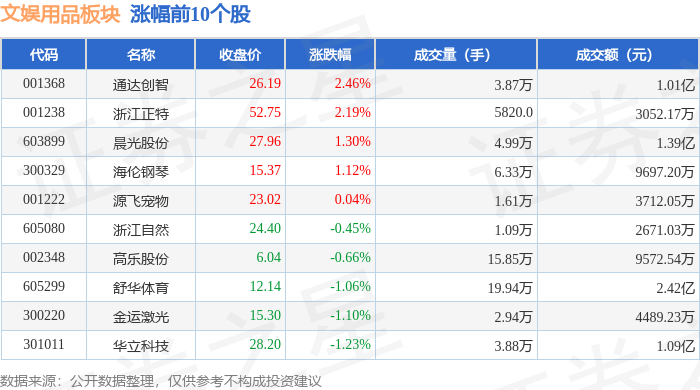
Market Overview - The entertainment products sector experienced a decline of 1.04% on January 15, with Sanbaisuo leading the drop [1] - The Shanghai Composite Index closed at 4112.6, down 0.33%, while the Shenzhen Component Index closed at 14306.73, up 0.41% [1] Stock Performance - Notable gainers in the entertainment products sector included: - Tongda Chuangzhi (001368) with a closing price of 26.19, up 2.46% [1] - Zhejiang Zhengte (001238) at 52.75, up 2.19% [1] - Chenguang Co. (6688809) at 27.96, up 1.30% [1] - Significant decliners included: - Sanbaisuo (001300) at 17.00, down 4.97% [2] - Chuangyuan Co. (300703) at 26.98, down 4.66% [2] - Qunxing Toys (002575) at 6.41, down 3.75% [2] Capital Flow - The entertainment products sector saw a net outflow of 208 million yuan from institutional investors, while retail investors had a net inflow of 161 million yuan [2] - The sector's capital flow details indicate: - Yingpais (002899) had a net inflow of 19.16 million yuan from institutional investors [3] - Shuhua Sports (605299) saw a net inflow of 18.11 million yuan from institutional investors [3] - Morning Light Co. (603899) had a net inflow of 5.89 million yuan from institutional investors [3]

“死了么”App估值上亿,照见“孤独经济”万亿新蓝海
Sou Hu Cai Jing· 2026-01-14 14:50
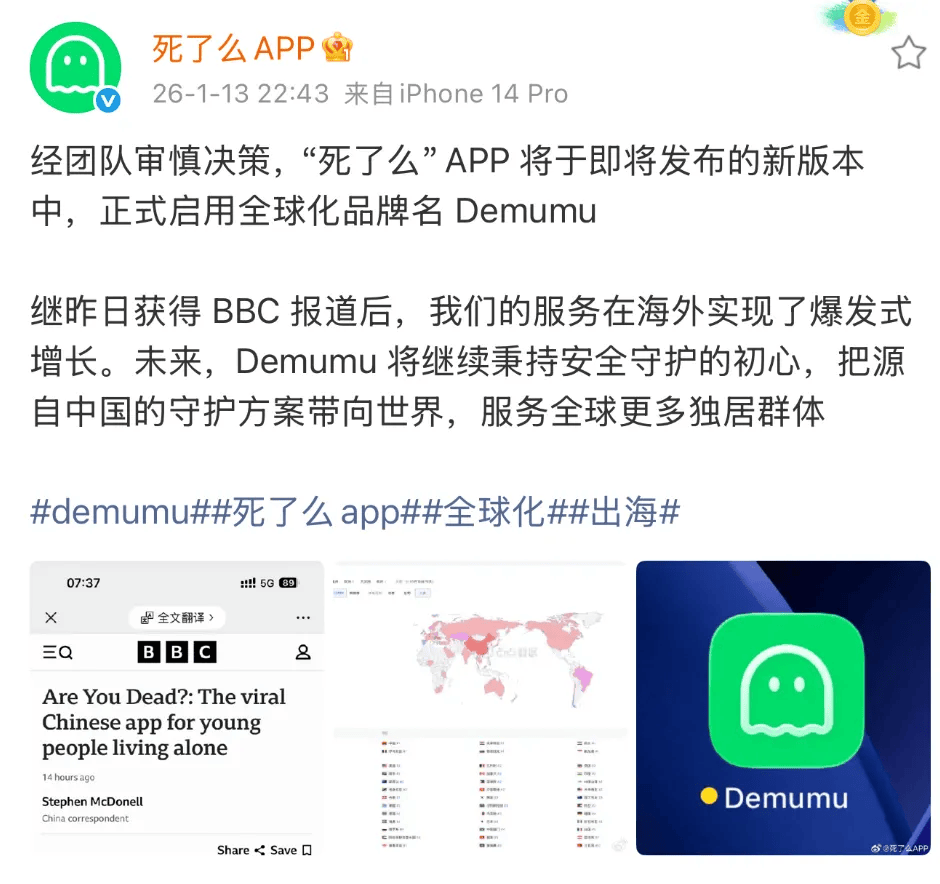
Group 1: App and Company Overview - The "Are You Dead?" app has gained significant popularity, with a rapid increase in downloads by 100 times since its launch, which had an initial investment of just over 1,000 yuan and was developed in less than a month [1] - The app's daily new user count has surged by 500-800 times compared to its initial phase, leading to a company valuation increase to approximately 100 million yuan from 10 million yuan within two days [1] - The app's founder plans to sell 10% of the company's equity for a financing amount in the tens of millions, despite the name "Are You Dead?" being criticized for its negative connotation, prompting a rebranding to "Demumu" for the upcoming version [1] Group 2: Societal Trends and Market Potential - The emergence of the "Are You Dead?" app reflects a growing trend in the "loneliness economy," which is a response to the increasing number of individuals living alone, particularly among urban youth [2][3] - By 2030, it is projected that the number of people living alone in China could reach 150-200 million, with the solo living rate exceeding 30%, driven by factors such as urban migration and changing marriage views [3] - The "loneliness economy" is expected to grow rapidly, with a focus on products that provide emotional value and cater to the needs of individuals living alone, indicating a significant market opportunity [3][5] Group 3: Emotional and Material Needs - The loneliness economy encompasses both emotional and material needs, with young individuals seeking emotional release and social interaction while feeling fatigued by interpersonal relationships [5][7] - The market for companionship services is expanding, with offerings ranging from online companionship to in-person activities, reflecting a growing demand for emotional fulfillment [7] - The rise of AI products and pets as alternatives for companionship is notable, with AI companionship market revenues projected to soar from $30 million to between $70 billion and $150 billion by 2030 [12][16] Group 4: Industry Developments and Consumer Behavior - Major companies are entering the AI companionship and pet markets, with significant investments and product launches aimed at meeting the emotional needs of consumers [15][16] - The pet industry is also experiencing rapid growth, with a projected market size of 312.6 billion yuan by 2025, driven by younger generations who view pets as family members [16][19] - The food and beverage industry is adapting to the needs of solo diners, with businesses like Haidilao innovating their offerings to cater to individual consumption patterns [20][22]
AI玩具赛道能否跑出下一个LABUBU?
Zheng Quan Ri Bao· 2026-01-13 16:49
Core Insights - The AI toy market is experiencing unprecedented growth, with sales in the first half of 2025 increasing by 600% quarter-on-quarter and over 200% year-on-year, driven by consumer demand and significant investment activity [1][2] - The industry is characterized by a diverse range of players, including tech startups, traditional toy manufacturers, and internet giants, all vying for a share of the AI toy market [2][4] - The pursuit of "realistic emotional interaction" has become a consensus among AI toy manufacturers, with competition shifting towards enhancing user experience [4][7] Market Dynamics - As of June 2025, there are 1,766 active companies in the AI toy sector, indicating a robust entry of various enterprises into this market [2] - The average return rate for AI toys is reported to be between 30% and 40%, significantly higher than the 15% for traditional toys, highlighting challenges in consumer acceptance [7] - AI toys generally have a higher profit margin compared to traditional toys, with prices ranging from 200 to 700 yuan, and some products priced significantly higher due to advanced features [5][6] Technological Integration - Companies are integrating advanced AI technologies into toys, enabling features such as memory retention and interactive dialogue, which enhance the emotional connection with users [2][3] - The development of multi-modal large models is a focus for traditional hardware companies, aiming to create more engaging AI toy experiences [3][4] - The industry is leveraging China's robust manufacturing capabilities, with domestic chips expected to account for 82% of AI toy components by 2025, providing a cost advantage [6] Commercial Strategies - AI toys are adopting a business model that combines one-time hardware sales with ongoing software subscription fees, extending product lifecycles [6] - Companies are exploring B2B solutions, offering comprehensive AI toy packages to small and medium enterprises, thereby creating additional revenue streams [6] - The industry is encouraged to maintain originality and avoid imitation, as suggested by industry leaders, to foster innovation and long-term growth [7] Regulatory Environment - The Ministry of Industry and Information Technology is working on revising national standards for toy safety, particularly concerning privacy and data security for AI toys that interact frequently with children [8] - The government aims to guide toy companies in applying AI technology to create new consumer demands, indicating a supportive regulatory framework for the industry [8]
文娱用品板块1月13日跌1.09%,明月镜片领跌,主力资金净流出2.07亿元
Zheng Xing Xing Ye Ri Bao· 2026-01-13 09:00
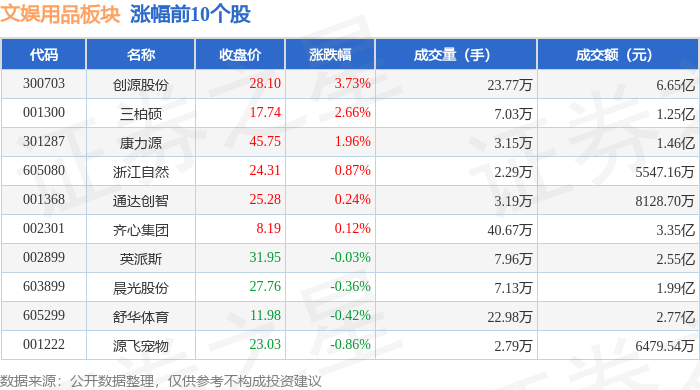
Market Overview - The entertainment products sector experienced a decline of 1.09% on January 13, with Mingyue Lens leading the drop [1] - The Shanghai Composite Index closed at 4138.76, down 0.64%, while the Shenzhen Component Index closed at 14169.4, down 1.37% [1] Stock Performance - Notable gainers in the entertainment products sector included: - Chuangyuan Co., with a closing price of 28.10, up 3.73% and a trading volume of 237,700 shares, totaling 665 million yuan [1] - Sanbai Shuo, closing at 17.74, up 2.66% with a trading volume of 70,300 shares, totaling 12.5 million yuan [1] - Kangliyuan, closing at 45.75, up 1.96% with a trading volume of 31,500 shares, totaling 146 million yuan [1] - Conversely, Mingyue Lens saw a significant decline, closing at 43.32, down 3.99% with a trading volume of 56,000 shares, totaling 246 million yuan [2] Capital Flow - The entertainment products sector saw a net outflow of 207 million yuan from institutional investors, while retail investors contributed a net inflow of 275 million yuan [2] - The capital flow for specific stocks indicated: - Chuangyuan Co. had a net inflow of 32.65 million yuan from institutional investors, while retail investors had a net outflow of 25.11 million yuan [3] - Mingyue Lens experienced a net outflow of 7.54 million yuan from retail investors [3] - Sanbai Shuo had a net inflow of 11.81 million yuan from institutional investors, with a net outflow of 1.08 million yuan from retail investors [3]
实丰文化发展股份有限公司 关于公司及下属公司为另一下属公司提供担保进展的公告
Zhong Guo Zheng Quan Bao - Zhong Zheng Wang· 2026-01-12 22:53
Group 1 - The company plans to apply for a credit financing limit of up to 1.2 billion yuan for itself and its subsidiaries to meet business development and operational funding needs in 2025 [2] - A subsidiary, Guangdong Shifeng Intelligent Technology Co., Ltd., has signed a working capital loan agreement with Huaxia Bank for a loan amount of 17 million yuan, which falls within the approved financing limit [3] - The company and its subsidiaries will provide mutual guarantees for credit financing, with a total guarantee amount not exceeding 1.2 billion yuan, including 500 million yuan for companies with a debt-to-asset ratio exceeding 70% and 700 million yuan for those with a ratio not exceeding 70% [4] Group 2 - The guaranteed party, Guangdong Shifeng Intelligent Technology Co., Ltd., was established on February 25, 2022, and is a wholly-owned subsidiary of the company [5] - The company has authorized its chairman to handle specific procedures and sign relevant contracts within the approved financing limit without the need for additional board or shareholder meetings [3][4] - The total actual guarantee amount, including this guarantee, is 247.548 million yuan, accounting for 34.40% of the company's most recent audited total assets, with no overdue guarantees or litigation-related guarantees [12]

实丰文化发展股份有限公司关于公司及下属公司为另一下属公司提供担保进展的公告
Shang Hai Zheng Quan Bao· 2026-01-12 18:09
Group 1 - The company plans to apply for a credit financing limit of up to 1.2 billion yuan for itself and its subsidiaries to meet business development and operational funding needs in 2025 [2][4] - A subsidiary, Guangdong Shifeng Intelligent Technology Co., Ltd., has signed a working capital loan agreement with Huaxia Bank for a loan amount of 17 million yuan, which falls within the approved financing limit [3][8] - The company and its subsidiary will provide mutual guarantees for financing applications, with a total guarantee amount not exceeding 1.2 billion yuan, including specific limits based on the subsidiaries' asset-liability ratios [4][12] Group 2 - The guaranteed party, Guangdong Shifeng Intelligent Technology Co., Ltd., was established on February 25, 2022, and is a wholly-owned subsidiary of the company [5][6] - The company has authorized its chairman to handle specific procedures and sign relevant contracts within the approved financing limits without needing to convene additional board or shareholder meetings [3][4] - As of the announcement date, the total actual guarantee amount, including this guarantee, is 247.548 million yuan, accounting for 34.40% of the company's most recent audited total assets [12]
实丰文化(002862) - 关于公司及下属公司为另一下属公司提供担保进展的公告
2026-01-12 10:45
关于公司及下属公司为另一下属公司提供担保进展的 公告 本公司及董事会全体成员保证信息披露的内容真实、准确、完整,没有虚 假记载、误导性陈述或重大遗漏。 一、授信融资及担保情况概述 (一)授信融资情况概述 实丰文化发展股份有限公司(以下简称"公司"、"实丰文化"或"上市 公司")于 2025 年 4 月 14 日召开的第四届董事会第十次会议和第四届监事会 第十次会议、2025 年 5 月 6 日召开的 2024 年年度股东大会,审议通过了《关于 2025 年度为公司及下属公司申请授信融资提供担保额度预计的议案》(下属公 司含下属全资、控股、参股子公司,包括现有的、新设立的和通过收购等方式 取得股权的公司,下同),为满足公司和下属公司业务发展和日常经营的资金 需求,2025 年公司及下属公司拟向相关金融机构(包括银行及非银行类金融机 构等)申请不超过 12 亿元(含本数)的授信融资额度,授信方式为信用、抵押 或担保(包括公司及下属公司因业务需要由第三方担保机构提供担保的,公司 及下属公司需要向该第三方担保机构提供的反担保),业务种类范围包括但不 限于贷款、汇票承兑、汇票贴现、开立信用证、信用证项下进口押汇等,具体 ...
AI玩具引爆CES,京东、字节、华为等巨头加码下能否跑出AI版泡泡玛特?
Xin Lang Cai Jing· 2026-01-12 07:08
Core Insights - The article discusses the emergence of AI toys, particularly highlighting the AI pet robot "mirumi" from Yukai Engineering, which gained significant attention at CES 2026, indicating a shift in the toy industry towards emotional interaction rather than static display [1][3] - Major tech companies like JD.com, ByteDance, and Huawei are recognizing the potential of the AI toy market and are actively investing in this sector [4][6] Industry Trends - The AI toy market is projected to grow at a compound annual growth rate (CAGR) of approximately 14%-16% over the next decade, potentially exceeding $60 billion by 2034 [7] - In China, the AI toy market is expected to surpass 10 billion yuan by 2030, with an annual growth rate exceeding 70% [7] - Traditional toy sales are experiencing a decline, with a reported 0.6% drop in sales in 2024, prompting a shift towards smarter, AI-integrated products [8] Company Developments - JD.com hosted an AI toy conference in July 2025, attracting over 600 manufacturers, and has seen significant sales of AI toys, with products like Fuzozo selling out quickly [4][6] - ByteDance launched its AI companion toy "Xianyan Bag" in 2024, which utilizes advanced AI technologies for interaction, and has seen substantial sales growth in its AIoT products [6] - Huawei's collaboration with Luobo Smart resulted in the launch of the AI emotional companion product "Smart Hanhai," which also sold out rapidly upon release [6] Market Dynamics - The demand for traditional toys is expected to weaken over time, pushing the industry towards increased intelligence and AI integration, which could enhance both volume and pricing [8] - AI toys are gaining traction due to their capabilities in interaction, companionship, and education, appealing to a broader age demographic [8][9] - The market penetration of AI toys is anticipated to increase as the target audience expands from children and teenagers to all age groups [9]



陪伴机器人,正在改写9亿人的孤独经济
Sou Hu Cai Jing· 2026-01-11 16:16
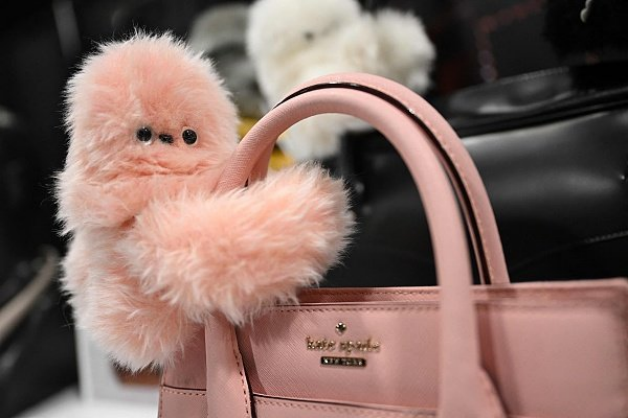
Core Insights - The rise of companion robots is driven by the dual forces of emotional consumption and AI technology, transitioning from toys to essential life companions [1][3] - The demand for companionship is fueled by a significant loneliness economy, with 900 million people in need of emotional support [4][6] Group 1: Market Dynamics - The online market for AI toys in China is projected to surge by 394.9% by 2025, with emotional companionship products growing from 7.0% to 15.7% market share [4] - The global AI companionship market is expected to grow from $30 million to between $70 billion and $150 billion by 2030, with the domestic market reaching approximately $3.86 billion by 2030 [8] - The demand for companionship robots is particularly strong among young adults aged 18-35, with over 120 million living alone in China [6] Group 2: Technological Advancements - New-generation companion robots have evolved from passive responders to active empathizers, utilizing advanced AI technologies to understand user emotions and context [9][11] - Multi-modal sensors enable these robots to perceive voice, visual, tactile, and environmental cues, enhancing user interaction [11] - The integration of large models and low-cost API calls facilitates the widespread adoption of companion robots [9] Group 3: Competitive Landscape - The market is characterized by three main player categories: traditional toy manufacturers, tech startups, and cross-industry players [14] - Traditional toy companies leverage established IPs and supply chains to transition into the AI space, while tech startups focus on high-end, differentiated products [16][18] - Cross-industry players innovate by extending scenarios, such as Sony's Aibo and Panasonic's interactive robots, to create new market opportunities [20][22] Group 4: Product Evolution - Companion robots are segmented into three price tiers: entry-level (100-500 RMB), mid-range (500-3000 RMB), and high-end (over 3000 RMB), catering to diverse user needs [23][25][27] - Entry-level products focus on basic interactions, while mid-range products emphasize emotional recognition and advanced features [24][25] - High-end products offer multi-modal interactions and medical-grade companionship, primarily targeting affluent families and healthcare institutions [27] Group 5: Future Trends - The market for companion robots is expected to transition from concept-driven to demand-driven growth, with four key trends emerging: emotional computing precision, deeper IP integration, diversified scenario expansion, and service-oriented monetization models [28][29][31] - Emotional computing will enhance robots' ability to respond to user emotions accurately, while IP collaborations will deepen user engagement [29] - The expansion into adult emotional therapy, elderly care, and educational settings will broaden the market scope [31] Group 6: Opportunities and Challenges - Despite the promising market outlook, challenges such as technology integration and safety risks remain prevalent [32][33] - The industry faces potential issues with data privacy, especially concerning sensitive user information, necessitating careful market education and product adaptation [33] - The competitive landscape is intensifying, with a risk of commoditization in the entry-level segment, highlighting the need for differentiation [35]

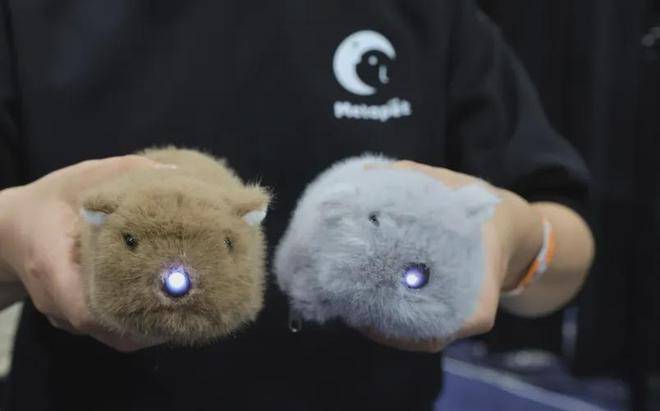
【明日主题前瞻】AI玩具从细分赛道跃升为主流消费新宠,未来市场规模或达千亿量级
Xin Lang Cai Jing· 2026-01-11 12:03
Group 1: AI Toys Market - The AI toy market is projected to exceed 100 billion yuan in 2023 and is expected to reach a scale of over 1 trillion yuan by 2030, with a compound annual growth rate (CAGR) exceeding 50% [2] - AI toys integrate artificial intelligence technologies such as dialogue models and emotional computing, evolving from simple interactions to deep companionship and emotional connections [2] - Companies like Tom Cat and Shifeng Culture are launching innovative AI toys that cater to various user demographics, including children, the elderly, and young adults [2] Group 2: Nuclear Fusion Research - Global nuclear fusion research has entered an engineering phase, indicating significant advancements in fusion energy technology [3] - The upcoming 2026 Nuclear Fusion Energy Technology and Industry Conference aims to promote collaboration and innovation within the nuclear fusion industry [3] - Companies involved in the nuclear fusion sector, such as Lianchuang Optoelectronics and Guokai Electronics, are focusing on key components and technologies necessary for fusion devices, which are expected to generate substantial orders [4][5] Group 3: AI in Healthcare - OpenAI has launched ChatGPT Health, targeting the rapidly growing AI healthcare market, which is projected to reach approximately 505.59 billion USD by 2033, with a CAGR of 38.8% [6] - Companies like Meinian Health and Weining Health are actively developing AI technologies for early disease screening and healthcare solutions, leveraging partnerships with tech giants [7] Group 4: Aerospace Industry in Guangzhou - Guangzhou aims to establish itself as a global hub for advanced manufacturing and commercial aerospace by 2035, focusing on satellite internet and reusable rocket technology [8] - Companies like Feiwo Technology are engaging in 3D printing for commercial aerospace engines, while investment firms are creating complete investment ecosystems in the aerospace sector [8] Group 5: Gaming Industry Trends - The gaming industry is experiencing a surge in new game launches and updates, which are expected to drive revenue growth [9] - AI is being integrated into gaming, enhancing production efficiency and creating new opportunities for innovation [9] Group 6: AI Programming - AI programming is becoming a core application of AI, with major tech companies increasingly relying on AI to generate new code [11] - Companies like Fabben Information and Keda Guokuan are developing AI tools to assist in programming, improving efficiency and code quality [12]