
库卡

Search documents
广东推进院校、企业深度协同 产教评融通照亮就业之路
Ren Min Ri Bao· 2025-09-28 00:04
Core Insights - The Guangdong Province is implementing a comprehensive skill ecosystem to enhance employment opportunities for graduates, focusing on aligning education with industry needs [1][5] - The introduction of "micro-specialty" courses aims to improve the match between traditional education and market demands, allowing for greater flexibility in career paths [2] - Initiatives like "order classes" and practical training programs are designed to ensure that students acquire relevant skills that directly correspond to job requirements [3][5] - Competitions are being leveraged to enhance practical skills and connect students with industry standards, promoting long-term career development [4] Group 1: Skill Ecosystem Development - The Guangdong Provincial Human Resources and Social Security Department has launched a plan to create a skill ecosystem that integrates industry, education, and evaluation, providing comprehensive services for job seekers [1][5] - The initiative includes collaboration between educational institutions and enterprises to facilitate better employment outcomes for youth [1] Group 2: Curriculum and Training Innovations - The "micro-specialty" curriculum reform is being implemented to strengthen the connection between education and industry needs, with an increase of 1-2 new specialties introduced annually [2] - Training programs such as "order classes" allow students to gain hands-on experience in real-world settings, enhancing their employability [3] Group 3: Competitions and Skill Development - Competitions are being promoted to improve practical skills and align them with job market requirements, helping students transition into the workforce more effectively [4] - The government supports vocational skill competitions, integrating industry standards into competition criteria to facilitate career advancement [4]
产教评融通照亮就业之路(高校毕业生就业服务在行动)
Ren Min Ri Bao· 2025-09-27 21:54
Core Insights - The Guangdong province is enhancing vocational education and training to better align with industry needs, focusing on skill development for graduates and improving employment opportunities [1][5]. Group 1: Educational Initiatives - The introduction of "micro-specialty" courses aims to improve the match between traditional programs and market demands, with an annual increase of 1-2 new specialties in various industries [2]. - The "order class" training model encourages companies to offer positions for student apprenticeships, facilitating direct access to quality job opportunities for graduates [3]. Group 2: Skills Development and Competitions - Competitions are being leveraged to enhance practical skills, with participants gaining new competencies applicable to future job roles, such as programming for lighting design [4]. - The Guangdong government supports vocational skill competitions, integrating industry standards into competition criteria to facilitate career advancement [4]. Group 3: Policy and Collaboration - The "Skills Illuminate the Future" initiative aims to provide subsidized vocational training for over 1.5 million individuals by 2027, with a focus on increasing the number of skill certification holders [5]. - Collaboration among enterprises, educational institutions, and government is emphasized to create a comprehensive training model that connects job demand, skill training, evaluation, and employment services [5].
AI机器人应用场景迈向1-100 厂商人士透露“今年销售增速预计超50%” |直击2025工博会
Xin Lang Cai Jing· 2025-09-27 15:05
Core Insights - The 25th China International Industry Fair (CIIF) took place from September 23 to 27, showcasing advancements in robotics and artificial intelligence, emphasizing the theme "Embodied Intelligence, Leading the Future" [4][7] Industry Overview - The robotics exhibition has become the largest and most influential international event in the robotics sector, serving as a barometer for the development of China's robotics industry [4] - The exhibition featured over 350 robotics companies, with a display area exceeding 56,000 square meters, highlighting both domestic and international brands [15] Technological Advancements - The event showcased robots with higher intelligence, flexibility, and deeper human-machine collaboration, indicating a trend towards more advanced applications in various sectors [7][9] - Companies are increasingly integrating AI with robotics to enhance capabilities across multiple fields, including industrial manufacturing, agriculture, healthcare, and emergency services [9][24] Market Dynamics - Many robotics manufacturers reported significant growth in orders and sales compared to the previous year, with expectations that industrial robotics will be the largest growth area in the next two years [7][25] - A notable increase in demand was observed, with some companies anticipating sales growth rates exceeding 50% [24][27] Company Highlights - KUKA showcased various automation solutions across multiple industries, including aerospace and automotive, emphasizing high-end intelligent manufacturing technologies [19] - Gree Electric presented complex parts automation solutions, demonstrating capabilities in multi-functional processing and cost reduction [19] - New Times exhibited collaborative robots that significantly reduce programming time and enhance production efficiency [22] - ABB highlighted innovations in dynamic path tracking and collaborative robotics, showcasing applications in critical sectors like automotive and electronics [23] Future Outlook - The robotics industry is expected to continue evolving, with a focus on developing autonomous multifunctional robots that can create sustained value [24][28] - Industry experts noted the need for improved performance and usability in certain applications, indicating areas for future development [27][28]


机器人AI视觉重构产业制造逻辑 中国凭什么能够领跑全球?
机器人大讲堂· 2025-09-27 04:15
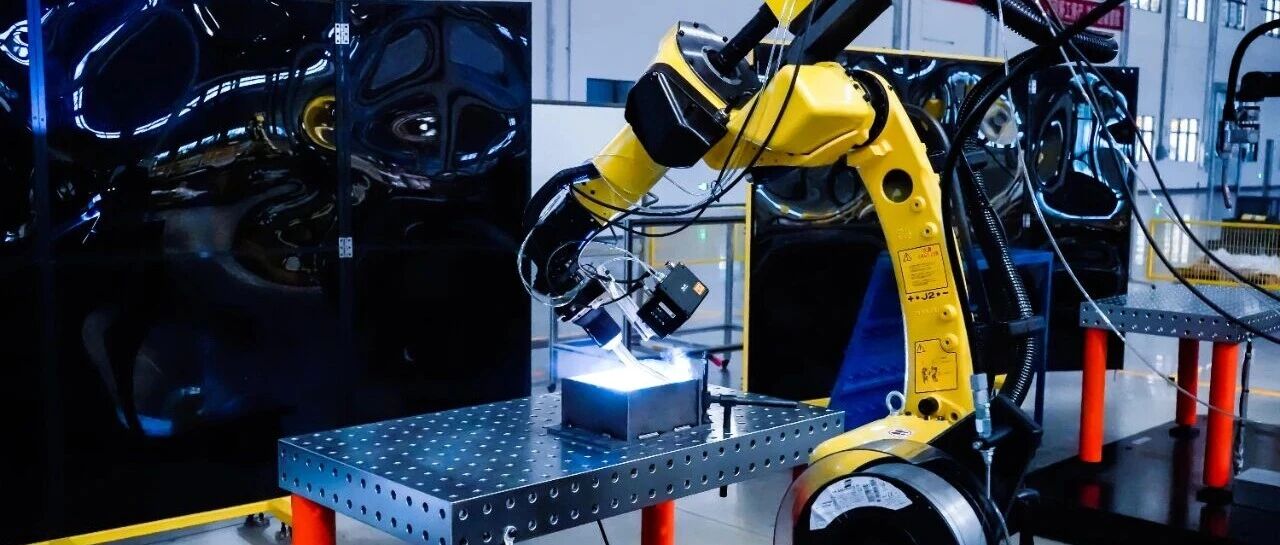
Core Insights - The article emphasizes the growing importance of AI vision technology in the industrial robotics sector, driven by the demand for high precision and efficiency in manufacturing processes [1][2][7]. Market Overview - The global machine vision market is projected to reach 95.754 billion yuan by 2025, with China's market expected to reach 29.042 billion yuan. By 2032, the global market is forecasted to grow to 164.07 billion yuan, reflecting a compound annual growth rate (CAGR) of 8.0% from 2025 to 2032 [1]. Precision in Manufacturing - AI vision technology is crucial for achieving micron-level precision in industries such as automotive manufacturing, where the detection of defects has shifted from millimeter to micron levels. For instance, a welding deviation of just 0.01 millimeters can lead to significant safety hazards in battery production [2][4]. Efficiency in Logistics - The logistics and warehousing sector is rapidly transitioning to "unmanned and clustered" operations, with AI vision technology enhancing sorting efficiency. AI-powered sorting robots can process over 3,000 items per hour with an error rate below 0.05%, compared to human workers who sort about 2,000 items daily with a 1.5% error rate [6][7]. Competitive Landscape - China is emerging as a leader in the global AI vision industry, with its machine vision system market expected to reach 73.164 billion yuan (approximately 10.2 billion USD) by 2025, accounting for over 24% of the global market share [7][15]. Technological Advancements - Traditional machine vision systems face limitations due to insufficient algorithm precision and hardware response delays. Recent advancements in AI algorithms and hardware integration are overcoming these challenges, enabling real-time detection and decision-making capabilities [8][10]. Full-Process Empowerment - AI vision technology is evolving from mere defect detection to full-process empowerment in manufacturing. This transformation enhances efficiency and product quality by integrating perception, decision-making, and execution capabilities [13][14]. Policy and Ecosystem Support - The rapid development of China's AI vision industry is supported by government policies and a robust industrial ecosystem. Initiatives like the "14th Five-Year Plan for Intelligent Manufacturing" aim to digitize and network a significant portion of the manufacturing sector by 2025 [15][16][18]. Future Trends - The future of AI vision technology in robotics is expected to focus on multi-modal data integration, enhanced edge intelligence, and collaborative ecosystems that facilitate interoperability among different manufacturers' systems [19].


“AI+制造”浪潮已来 工博会展现新型工业化新图景
Shang Hai Zheng Quan Bao· 2025-09-26 18:27
Core Insights - The 25th China International Industry Fair (CIIF) showcases the convergence of advanced equipment and intelligent technology, emphasizing a new industrialization vision centered on high-end, intelligent, and green manufacturing [1][2][4] - The event highlights breakthroughs in cutting-edge fields such as superconductivity, controlled nuclear fusion, atomic-level manufacturing, brain-computer interfaces, and quantum technology, presenting a comprehensive view of future industrial development [1] Group 1: Robotics and Automation - The robotics exhibition features China's "Four Little Dragons" and international giants, with JAKA Robotics launching the JAKA EVO industrial embodiment intelligent platform, addressing multiple industry pain points [2] - ABB introduced the new IRB6750S robot, capable of handling a maximum payload of 350kg with a path accuracy of 0.9mm and a repeat positioning accuracy of 0.06mm, while reducing energy consumption by 20% [4] Group 2: Industrial AI Applications - Siemens unveiled a new generation of electric vehicle smart assembly equipment in collaboration with Zhongke Motong, marking the first pilot application of Siemens' Industrial Copilot in China, which reduces program development time and on-site debugging cycles by 30% [5] - A report released by Siemens and Zhiding Think Tank indicates that only a few enterprises are leading in the application of industrial AI due to high costs, lack of skilled professionals, and insufficient technology maturity [5]
AI与机器人盘前速递丨Meta推出AI视频生成平台Vibes;工博会机器人展馆500+品牌共赴科技盛宴!
Mei Ri Jing Ji Xin Wen· 2025-09-26 03:34
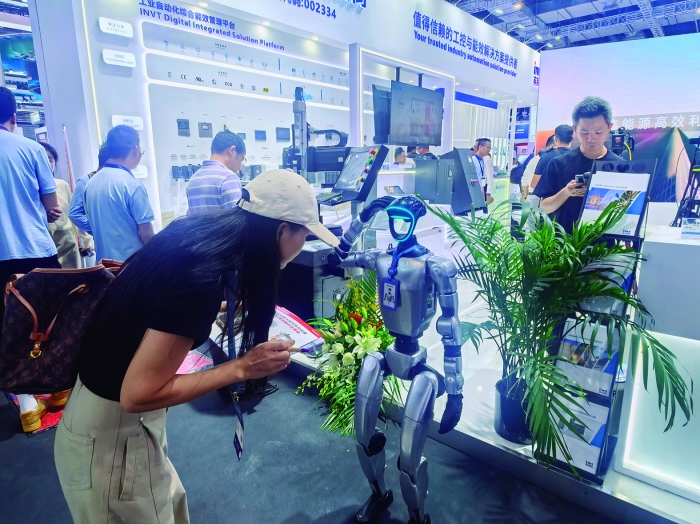
Market Overview - AI concept stocks have resumed their upward trend, with the server concept index leading the market. The Huaxia Sci-Tech AI ETF (589010) rose by 1.59%, showing strong performance throughout the day [1] - The total trading volume reached 771,000 hands, with a net inflow of funds amounting to 27.63 million yuan, marking a historical high in scale at 327 million yuan [1] - The Robot ETF (562500) saw a daily increase of 0.36%, with significant inflows of 555 million yuan, surpassing similar funds and achieving a new historical high in scale at 21.89 billion yuan [1] Key Developments - Meta has integrated the AI video creation platform Vibes into its Meta AI application, allowing users to create, discover, and share short video content [2] - The 25th China International Industrial Expo is currently ongoing, showcasing over 500 international brands in the robotics sector, including ABB and Fanuc, alongside domestic leaders like Siasun and KUKA [2] - IDC forecasts that global AI IT investment will reach $315.9 billion in 2024, with a compound annual growth rate (CAGR) of 31.9% expected to grow to $1.2619 trillion by 2029 [2] Industry Insights - The humanoid robot industry is entering a phase of diverse development, with a clear trend towards industrial applications. Commercialization of humanoid robots is anticipated, prompting attention to domestic component manufacturers [3] - The Robot ETF (562500) is noted as the only fund exceeding 20 billion yuan in scale, providing comprehensive coverage of the Chinese robotics industry [4] - The Huaxia Sci-Tech AI ETF (589010) is positioned to capture significant moments in the AI industry, with a focus on small and mid-cap stocks [4]
直击工博会|国产机器人追求更灵活,海外厂商猛打“本土牌”
Di Yi Cai Jing· 2025-09-25 06:54
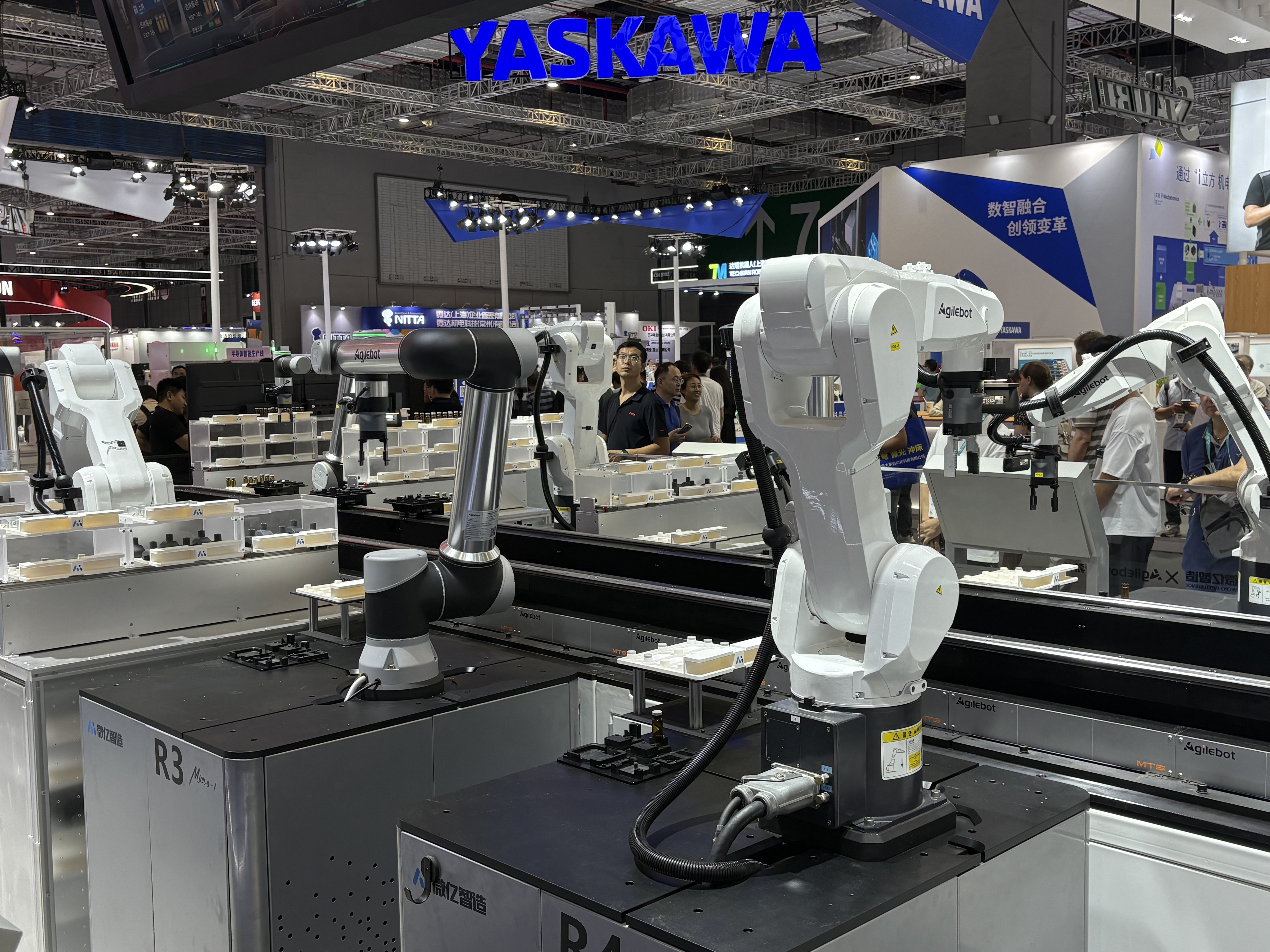
Core Insights - The article discusses the advancements in flexible production lines by Chinese robotics companies and the localization efforts of overseas firms in the automation industry [1][7]. Group 1: Automation Trends - Chinese robotics companies are focusing on flexible production lines, moving away from traditional fixed automation systems that limit production adaptability [5]. - The introduction of intelligent flexible production lines, such as the one showcased by 微亿智造, features robots performing different tasks simultaneously, enhancing operational efficiency [1][5]. - The shift towards software and algorithm improvements is emphasized as a key area for enhancing the value of automation, rather than solely focusing on hardware upgrades [5][6]. Group 2: Competitive Landscape - 微亿智造 is positioned among established industrial robot giants like ABB and KUKA, leveraging its agility and lack of historical burdens to innovate rapidly [6]. - Bosch Rexroth introduced the ctrl X XC20 servo drive system, highlighting its fully localized production process, which aims to meet market demands with cost-effective adjustments [7][11]. - The competitive landscape is characterized by a focus on comprehensive solutions that enhance overall equipment efficiency (OEE) and reduce total cost of ownership (TCO) [11]. Group 3: Emerging Technologies - The article highlights the debut of the third-generation humanoid robot GR-3C, showcasing advancements in design and functionality, including a lightweight yet durable structure [12][15]. - The FOCUS system by Fourier aims to reduce operational costs for users by enabling centralized control of multiple robots, allowing for flexible scaling based on production needs [15].
高端化、智能化、绿色化!工博会为世界提供工业转型升级的中国方案|聚焦2025工博会
Hua Xia Shi Bao· 2025-09-24 10:18
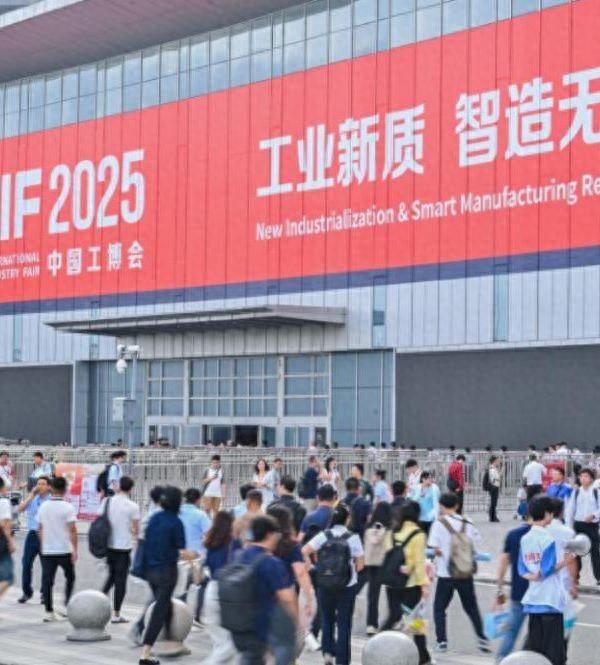
Core Insights - The 25th China International Industry Fair (CIIF) is themed "Industrial New Quality, Intelligent Manufacturing Without Boundaries," focusing on high-end, intelligent, and green industrial development [1][3] - The fair has set a historical record with an exhibition area of 300,000 square meters, showcasing thousands of new products and technologies across the entire industrial chain [1][3] - The event aims to create an open and collaborative smart industrial ecosystem, allowing global companies to share technological achievements and explore development paths [1][3] Exhibition Highlights - The fair features three major special exhibitions: the National New Industrialization Exhibition, the Intelligent Elderly Care Robot Exhibition, and the Future Industrial Innovation Exhibition, each highlighting different aspects of China's industrial high-quality development [3][4][8] - The National Exhibition showcases significant achievements in new industrialization, including the C919 large passenger aircraft and the domestically produced cruise ship "Aida·Magic City," emphasizing China's manufacturing strength [4][6] - The Intelligent Elderly Care Robot Exhibition presents 31 new products aimed at addressing the challenges of an aging population, integrating smart technology with elderly care needs [8][9] Technological Innovations - The Future Industrial Innovation Exhibition displays groundbreaking applications in six key areas: future manufacturing, future space, future information, future energy, future health, and future materials, including a coherent light quantum computer [8][10] - The event highlights advancements in robotics, with companies like ABB and Schneider Electric showcasing new technologies that enhance the autonomy and efficiency of industrial robots [10][12] - The introduction of a green low-carbon exhibition aligns with global sustainability goals, providing a platform for sharing green technologies and low-carbon experiences among industrial enterprises [9][10] Global Participation - The CIIF has become a significant platform for international cooperation, attracting exhibitors from countries like Saudi Arabia, Poland, Turkey, and Germany, showcasing their latest innovations in renewable energy and smart manufacturing [12][13] - The fair has established itself as a leading global industrial exhibition, reflecting China's growing influence and attractiveness in the global industrial landscape [9][12]
库卡2025工博会发布五大智能体 推动制造业全链路数据贯通
Zheng Quan Shi Bao Wang· 2025-09-23 07:41
Core Insights - KUKA, a leading company in industrial automation and robotics under Midea Group, launched five strategic intelligent products at the 25th China International Industry Fair, marking a new phase in intelligent manufacturing with an "ecological collaboration" approach [1][3] Group 1: Product Launches - The five intelligent products include KUKA AI Vision, iiQWorks, KUKA CONNECT IOT, KUKA AI Assistant, and KUKA AMR Fleet, which together create a comprehensive intelligent ecosystem from perception to execution [1][3] - KUKA AI Vision integrates hardware and software, supporting 2D/3D visual recognition and capable of high-precision tasks in various scenarios, already implemented in Midea's Jingzhou washing machine factory [1][2] - iiQWorks provides a full-process visualization support for robot programming, significantly reducing production line preparation time and total cost of ownership (TCO) [2] - KUKA CONNECT IOT connects over 6,000 robots for real-time monitoring and predictive maintenance, with 117 KUKA robots already integrated in the Jingzhou factory [2] - The KUKA AMR Fleet features an intelligent navigation system that enhances delivery efficiency by 30% and has achieved fully automated logistics in the Jingzhou factory [2] Group 2: Ecosystem and Collaboration - The five intelligent products function as a collaborative "digital team," with each product specializing in different aspects: AI Vision for vision, iiQWorks for programming, CONNECT for management, KUKA AI Assistant for training, and AMR Fleet for logistics [3] - This ecosystem facilitates seamless data flow across design, production, operation, and logistics, promoting a transition from localized optimization to a system-level leap in manufacturing [3]

调研速递|美的集团接受投资者网上提问 2025上半年营收2523亿元等要点披露
Xin Lang Zheng Quan· 2025-09-19 11:55
Core Viewpoint - Midea Group is actively engaging in various strategic initiatives to enhance shareholder value, expand its robotics capabilities, and strengthen its presence in international markets, particularly in the Americas. Shareholder Value and Dividends - Since its overall listing in 2013, Midea Group has distributed over 134 billion yuan in cash dividends and implemented share buybacks exceeding 33 billion yuan, ensuring a stable dividend policy for shareholders [2]. Robotics Development - Midea Group has established a humanoid robot innovation center within its Central Research Institute, focusing on core component and complete machine development. The company aims to integrate robotics into home appliances and industrial scenarios, with plans to launch humanoid robots in commercial settings in the second half of this year [3]. International Market Performance - Midea Group is prioritizing its overseas OBM strategy, targeting over 45% of its smart home business revenue from international markets by mid-2025. In the Americas, sales of air conditioning, refrigeration, and washing products have seen double-digit growth, with leading positions in South America and North America [4]. KUKA Robotics Profitability - Following the acquisition of KUKA in 2017, Midea has localized its operations to develop cost-effective products for the Chinese market, addressing key component challenges in heavy-duty industrial robots and making progress in vertical integration [5]. Energy Business Progress - Midea Energy has introduced a "storage + heat pump + AI" strategy at the 2025 International Solar Photovoltaic and Smart Energy Exhibition, launching next-generation energy solutions that cover the entire energy industry chain while leveraging Midea's unique advantages [6]. Sales and Profit Performance - In the first half of 2025, Midea Group reported total revenue of 252.3 billion yuan, a year-on-year increase of 15.7%, and a net profit attributable to shareholders of 26 billion yuan, reflecting a 25% growth [7]. Raw Material Price Management - Midea operates in over 200 countries and regions, with 22 R&D centers and 41 major manufacturing bases globally. The company plans to expand its overseas manufacturing footprint and will address raw material price fluctuations through product structure upgrades and supply chain optimization [8]. Brand Acquisition Strategy - Midea Medical, a brand under the group, is focusing on clinical technology and operational construction, while Kelu Electronics is advancing its energy strategy through a "storage + heat pump + AI" approach, promoting synergy among its brands [9].