Burberry

Search documents
深度 | Burberry摆摊卖围巾,为什么是个好主意?
Sou Hu Cai Jing· 2025-12-06 11:40
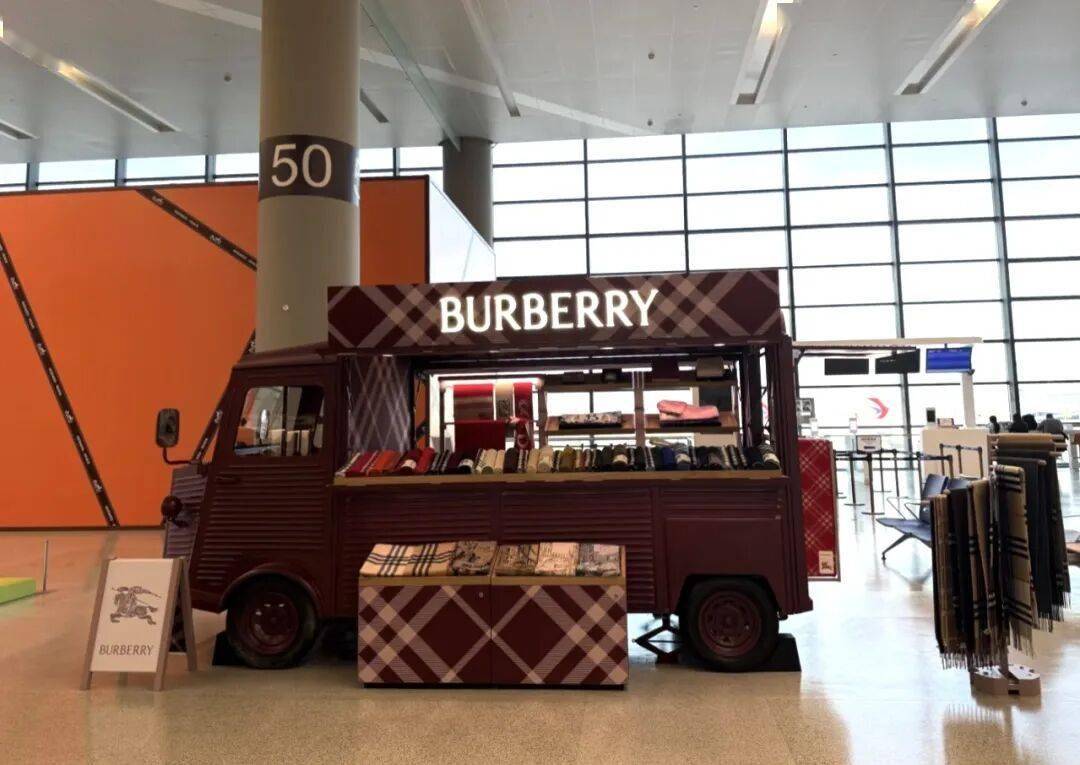
Core Insights - The luxury goods market in China is underestimating the importance of retail innovation, as exemplified by Burberry's recent initiatives at Shanghai Hongqiao Airport [2][3] - Burberry is implementing a new strategy called Burberry Forward, focusing on re-establishing its brand identity around timeless British luxury, particularly through its outerwear and scarf lines [3][7] - The brand's recent performance shows signs of recovery, particularly in the Chinese market, with a notable increase in Gen Z customers [14] Group 1: Retail Innovation - Burberry has introduced a temporary "scarf cart" at Shanghai Hongqiao Airport, a unique retail format aimed at capturing the attention of high foot traffic [2][3] - The airport is becoming a new retail battleground for luxury brands, with an expected global air passenger volume of 5.2 billion by 2025, making it essential for brands to increase touchpoints in these high-frequency destinations [2] - The scarf cart serves as a mobile brand entry point, allowing Burberry to engage consumers in a high-flow environment, enhancing the shopping experience [7][8] Group 2: Brand Strategy - Under the leadership of new CEO Joshua Schulman, Burberry is shifting its focus back to its core British identity, moving away from the previous aggressive high-end positioning that alienated its core consumer base [5][10] - The Burberry Forward strategy includes expanding product lines beyond trench coats to encompass a broader range of outerwear, while also refreshing scarf designs [7][10] - The brand is actively enhancing its retail visual merchandising, with a focus on seasonal displays and dedicated scarf areas in stores [7][12] Group 3: Market Performance - Burberry's revenue fell by 5% to £1.032 billion in the last six months, but there was a 2% growth in the second quarter, indicating a potential turnaround [12][13] - The Chinese market showed a 3% growth in the second quarter, with a significant increase in Gen Z customers by 18%, attributed to effective social media engagement [14] - Despite mixed opinions from analysts regarding Burberry's recovery path, the stock price has risen by 23% this year, reflecting some investor confidence [14][15]

Shuffle Board: Vitale Leaves Versace, Nike’s Third Shake-Up
Yahoo Finance· 2025-12-05 20:30
Group 1: Nike's Leadership Restructuring - Nike has restructured its senior leadership team as part of its "Win Now" strategy to enhance execution and reduce management layers [2][3] - Venkatesh Alagirisamy has been promoted to COO, overseeing supply chain, operations, manufacturing, sustainability, and technology, with the CTO role being removed from the CEO's reporting line [3] - The restructuring includes the exit of two EVPs, Craig Williams and Muge Dogan, with the CCO role being eliminated entirely [3][4] - Nike's four regional heads will now report directly to CEO Elliott Hill, and sales will report to CFO Matt Friend, aiming for tighter integration of operations and technology [4] Group 2: Burberry's Executive Appointments - Burberry has appointed Matteo Calonaci as chief operating and supply chain officer and Johnattan Leon as chief customer officer [5][6] - Calonaci will oversee supply chain, planning, strategy, transformation, and data analytics, succeeding Klaus Bierbrauer [6] - Leon will lead customer engagement, service, and retail excellence teams, transitioning from his role as senior vice president of commercial [7][8] Group 3: Versace's Creative Director Change - Following the Prada Group's acquisition of Versace, Dario Vitale, the creative director, is stepping down after eight months in the role [9] - Until a new creative director is appointed, the design team will report directly to Versace CEO Emmanuel Gintzburger [9]
Burberry Names New Supply Chain, Customer Management Executives
Yahoo Finance· 2025-12-05 10:56
Group 1 - Burberry is enhancing its management team with two internal appointments: Matteo Calonaci as chief operating and supply chain officer, and Johnattan Leon as chief customer officer [1][2] - Calonaci will oversee supply chain, planning, strategy, transformation, and data analytics, succeeding Klaus Bierbrauer [2] - Leon will lead customer engagement, service, and retail excellence teams, while managing digital, outlet, and commercial operations [3] Group 2 - Burberry's like-for-like retail sales grew by 2 percent in the second fiscal quarter, surpassing analysts' expectations of flat performance [4] - In the first half, like-for-like retail sales were flat at £854 million, a significant improvement from a 20 percent decline in the same period last year [5] - The chief financial officer indicated that the third quarter has started well, with trends aligning with the second quarter, and anticipates further growth in the second half [5]
英镑GBPUSD风暴来袭:PMI暴崩、企业停招裁员加速,英国央行面临政策极限
Xin Lang Cai Jing· 2025-12-04 23:37
Group 1 - UK businesses expect a slight increase in price expectations, with an average anticipated rise of 3.7% over the next year, up by 0.1% from the previous month [1] - Employment outlook has weakened, with a decrease of 0.1% to -0.2% over the last three months, indicating plans for a modest reduction in workforce [1] - Consumer price inflation expectations remain stable at 3.4%, while actual inflation has decreased to 3.6%, suggesting a potential peak in inflation and supporting the case for a future rate cut from the current 4% [1] Group 2 - The UK energy regulator Ofgem has approved a £28 billion investment plan over five years, which will increase annual energy bills for consumers by an average of £108 [3] - This investment is aimed at ensuring the security and reliability of the future energy system, despite previous government commitments to lower energy prices [3][4] - Major energy infrastructure companies have welcomed the decision, recognizing the need for significant investment to double electricity transport capacity [4] Group 3 - Concerns over tax adjustments in the upcoming budget have led to a historic sell-off in UK stock funds, with net outflows reaching £3 billion in November, marking the longest streak of outflows on record [5] - The total net outflow over the past six months has reached £10.4 billion, reflecting investor anxiety regarding potential cuts to investment tax incentives [5] - Following the announcement of the budget, which included some tax increases but not as severe as feared, there was a notable reversal in fund flows, indicating a recovery in investor sentiment [5] Group 4 - The UK construction sector has experienced its fastest contraction since May 2020, with the PMI dropping from 44.1 to 39.4, indicating a prolonged downturn [6] - All major sectors within construction, including civil engineering, residential, and commercial building, have shown significant declines, with residential activity hitting its lowest level since May 2020 [6][7] - The decline in construction activity is attributed to weak client confidence and a lack of new project starts, exacerbated by uncertainty surrounding the budget announcement [6][7] Group 5 - The overall PMI for services, manufacturing, and construction in November was 50.1, down from 51.4 in October, indicating a weakening economic momentum in the UK [8] - The construction industry's employment index has fallen to its lowest level since August 2020, with companies citing high wage costs and reduced workloads as contributing factors [7][8]

UK's FTSE 100 edges higher as investors assess corporate updates; Burberry rises
Reuters· 2025-12-04 11:43
Group 1 - The UK's FTSE 100 index experienced a slight increase on Thursday, indicating a cautious investor sentiment amid mixed corporate updates and economic data suggesting potential weakness [1] - Burberry's stock price rose following an upgrade in price target by HSBC, highlighting positive sentiment towards the luxury goods sector [1]

Global luxury apparel market to rebound slowly after 2024 setback – analysis
Yahoo Finance· 2025-12-03 12:23
Core Insights - The global luxury apparel market is projected to recover gradually after a 2.4% contraction in 2024, with growth returning in 2025 primarily driven by price increases rather than higher sales volumes [1][2] - The market is expected to grow at a compound annual growth rate (CAGR) of 2.8% from 2024 to 2029, outperforming the broader apparel market starting in 2028 as the financial conditions of aspirational shoppers improve [3] Market Segmentation - Clothing is anticipated to be the strongest category through 2029, with a CAGR of 3.1%, driven by ultra-wealthy consumers' willingness to spend on trend-led pieces; womenswear is expected to outperform menswear [4] - Accessories, particularly luxury handbags, are projected to achieve a CAGR of 2.9%, while footwear is expected to be the weakest area with a modest CAGR of 1.0% due to strong demand for trainers from premium and mass-market brands [4] Regional Analysis - The Asia-Pacific region is expected to be the growth engine, with the highest regional CAGR of 4.0% between 2024 and 2029, supported by the recovery in China and growth in emerging Asian markets [5] - Europe and the Americas are forecasted to experience softer growth rates of 1.8% and 1.5% CAGR respectively, hindered by sluggish economies and the lingering effects of US tariffs [5] - The Middle East and Africa are projected to increase their share of the global market, with Saudi Arabia and the UAE benefiting from tourism and strong domestic spending [5] Competitive Landscape - Luxury brands retained their market power in 2024, with Louis Vuitton maintaining its position as the largest apparel brand, increasing its market share to 9.8% [6] - Hermès was a standout performer, expanding its market share by 0.7 percentage points to 6.0%, while Chanel also gained share through strategic price increases [6] - Conversely, brands like Gucci and Burberry lost market share due to unclear positioning and weaker product offerings [6] Recovery Drivers - The recovery outlook is supported by structural factors, including the continued demand from ultra-wealthy customers, which stabilizes top-tier luxury houses [7] - Improvements in macroeconomic conditions and rising consumer confidence are expected to gradually bring back aspirational shoppers, particularly from the middle and upper-middle segments [7]
周专题:Burberry披露FY2026H1半年报,业务复苏进程中
GOLDEN SUN SECURITIES· 2025-11-30 11:22
Investment Rating - The report maintains a "Buy" rating for several companies in the textile and apparel industry, including Shenzhou International, Anta Sports, Li Ning, and Bosideng [4][11][20][34]. Core Insights - Burberry's FY2026H1 revenue decreased by 5% year-on-year to £1.032 billion, with retail and wholesale revenues declining by 3% and 12% respectively. However, gross margin improved by 4.5 percentage points to 67.9%, and adjusted operating profit was £19 million, a significant recovery from a loss of £41 million in FY2025H1 [1][15]. - The overall same-store sales for Burberry remained flat, with a slight decline in Q1 followed by growth in Q2, indicating a recovery trend in various regions [2][18]. - The report highlights the improving fundamentals of downstream brand Nike, which is expected to positively impact upstream manufacturing companies and recommends stocks like Shenzhou International and Tabo [3][19]. Summary by Sections Burberry's Performance - Burberry's FY2026H1 revenue fell by 5% to £1.032 billion, with retail down 3% and wholesale down 12%. Gross margin rose to 67.9%, and operating profit improved to £19 million from a loss of £41 million [1][15]. - Same-store sales were flat, with a 1% decline in Q1 and a 2% increase in Q2, showing regional recovery [2][18]. Recommendations for Key Stocks - The report recommends Shenzhou International (2025 PE of 15x), Tabo (FY2026 PE of 15x), and Huayi Group (2025 PE of 22x) due to expected improvements in the industry [3][19]. - For the sportswear sector, Anta Sports and Li Ning are highlighted as strong performers, both with a 2025 PE of 17x, while Xtep International is noted for its growth potential with a 2025 PE of 11x [20][22]. Market Trends - The textile and apparel sector outperformed the market, with the textile manufacturing sector up 2.61% and brand apparel up 3.12% [24]. - The report indicates a positive outlook for the winter season, particularly for down jacket leader Bosideng, which has a FY2026 PE of 14x [8][20]. Recent Company Reports - Bosideng reported a 1.4% increase in revenue and a 5.3% increase in net profit for FY2026H1, with a focus on product innovation and channel optimization [29][31]. - Chow Tai Fook's FY2026H1 revenue decreased by 1.1%, but operating profit increased by 0.7%, indicating a steady recovery [32][34].
业绩回正的Burberry,不再押注年轻人
36氪· 2025-11-30 02:08
Core Insights - Burberry has shown signs of recovery in its financial performance, with a reported revenue of £1.032 billion for the first half of the 2026 fiscal year, despite a slight year-on-year decline. Adjusted operating profit reached £19 million, a significant improvement from a loss of £41 million in the same period last year [6][8] - The brand's performance in the Greater China region has improved, with comparable store sales increasing by 3%, ending a year-long decline. The CEO noted a 129% increase in natural reach and a 10% growth in repeat customers in China [7][8] - Burberry's strategic shift under new CEO Joshua Schulman focuses on returning to its classic British style and core products, particularly trench coats and scarves, moving away from a previous high-end positioning that emphasized expensive leather goods [9][11] Financial Performance - Burberry's revenue for the 2025 fiscal year fell by 17% to £2.46 billion, with adjusted operating profit plummeting by 94% to £26 million. The brand faced significant challenges, including being removed from the FTSE 100 index after 15 years [8][9] - The brand's inventory issues have been highlighted, with a 9% decrease in total inventory for the 2025 fiscal year, despite ongoing reliance on discount channels to clear excess stock [18][22] Strategic Changes - The "Burberry Forward" strategy aims to refocus the brand on its heritage and core products, with a notable shift in pricing strategy for leather goods, including a 22% price reduction on the Knight handbag [9][11] - Burberry is also restructuring its internal operations, including a significant workforce reduction and simplification of its management structure, with regional presidents reporting directly to the CEO [13][15] Market Positioning - The brand is moving away from targeting only trend-driven consumers and is instead focusing on regaining high-net-worth individuals and middle-class consumers who appreciate classic products [27][30] - Burberry's recent marketing efforts have included a cautious approach to selecting brand ambassadors, aiming to attract a more diverse customer base while still appealing to younger generations [30][32] Inventory Management - Burberry's approach to outlet stores has shifted from closure to optimization, recognizing the importance of these channels in the current economic climate. The brand reported a 1%-5% increase in sales from outlet channels, contrasting with a 12% decline in full-price store sales [17][24] - The brand's strategy includes tightening inventory management and reducing discounting practices, with a focus on maintaining brand integrity while addressing consumer demand for value [18][25]

Global trading disrupted by CME outage, Apple set to become world smartphone leader for 2025
Yahoo Finance· 2025-11-28 14:39
Hello and welcome to Morning Brief Market Sunrise. I'm Ramsan Karamali live from Yahoo Finance Studios in London. It's Friday, 28th November.Coming up on the show, an outage at the CME disrupts trading across the globe. Online sales are on the rise during this critical holiday season and Apple looks set to become the world's top phone maker. So grab your coffee and let's own the morning.The first thing you need to know is that an outage at the Chicago Merkantile Exchange has disrupted trading across the glo ...

Global trading disrupted by CME outage, Apple set to become world smartphone leader for 2025
Youtube· 2025-11-28 14:39
Market Disruptions - An outage at the Chicago Mercantile Exchange (CME) has disrupted global trading, affecting futures and options across various markets including bonds, equities, and commodities for several hours [2] Labor Market Insights - Goldman Sachs analysis indicates a further weakening of the labor market, coinciding with President Trump's call for reverse migration following a violent incident involving National Guard members [3][4] Holiday Shopping Trends - Online sales in the US during the Thanksgiving holiday are projected to increase by 6% year-over-year, reaching $8.6 billion, as reported by Salesforce [5] - Black Friday is expected to generate $78 billion in global online sales, with $18 billion coming from the US alone, marking it as the biggest day for online shopping [6] Technology and Consumer Behavior - The integration of AI in shopping is changing consumer behavior, allowing for more personalized gift suggestions, although tariffs and supply pressures are pushing prices higher on electronics and gaming consoles [10][14] - Apple is projected to surpass Samsung as the world's top phone maker, with an expected shipment of 243 million iPhones in 2025, giving it a market share of 19.4% compared to Samsung's 18.7% [14][15] Competitive Landscape - Apple's success is attributed to the launch of the iPhone 17 series, particularly in the Chinese market, while Samsung faces challenges from Chinese competitors in the low to mid-tier smartphone market [16] - Despite Apple's higher share prices, Samsung's stock performance has outpaced Apple's by nearly nine times in 2025 [18] Stock Market Insights - The discussion around value stocks highlights the importance of identifying stocks with low prices relative to earnings, assets, or cash flow, while being cautious of potential value traps [21][22] - Companies like Pfizer and Ford are examined for their stock performance and dividend yields, with concerns about their long-term growth prospects [28][30] AI and Debt Concerns - OpenAI's data center partners have accumulated around $100 billion in debt, surpassing the combined debt of major corporations like Volkswagen and AT&T, raising questions about the sustainability of this financial model [49][50] - HSBC warns that OpenAI's annual costs could reach hundreds of billions, while its projected revenue for the year is only around $20 billion, highlighting a significant financial gap [52] Market Predictions - Analysts predict a favorable environment for equities in 2026, with expectations of Fed interest rate cuts and a focus on growth over inflation [61]