SHEIN

Search documents
创十年新低!亚马逊卖家注册量暴跌44%
Shen Zhen Shang Bao· 2026-01-21 04:10
Core Insights - Amazon's new seller registrations are projected to drop significantly in 2025, reaching 165,000, a 44% decrease year-over-year, marking the lowest level since 2015 [1] - Chinese sellers continue to dominate new registrations, accounting for 59.9% of the total, although this represents a decline from 62.3% in 2024 [1] - The market share of emerging e-commerce platforms is increasing, with Temu capturing 24% of global cross-border e-commerce sales in 2025, equaling Amazon's share [1][2] Group 1: Seller Registration Trends - The number of new sellers on Amazon is expected to fall to 165,000 in 2025, a 44% decline from the previous year [1] - Chinese sellers represent the largest share of new registrations at 59.9%, but this is a decrease from 62.3% in 2024, marking the first decline in four years [1] - The proportion of new registrations from U.S. sellers has dropped to 16.3%, down from 26.8% in 2024, indicating a continuing downward trend [1] Group 2: Market Dynamics - Over 60% of the top 10,000 sellers on Amazon were registered before 2019, highlighting the growing gap between established sellers and newcomers [1] - Temu's rapid growth is notable, as it reached a 24% market share in just three years, up from 1% at its launch in 2022 [2] - The top ten e-commerce apps collectively cover over 2 billion monthly active users, with Amazon leading at 651.7 million, followed by Shopee and Temu [2] Group 3: Seller Strategies and Challenges - Rising tariff costs and increased compliance requirements are discouraging new sellers from joining Amazon, while established sellers are reducing their investments on the platform [2] - Some sellers are diversifying their operations by exploring platforms like Temu and TikTok Shop, and are also establishing manufacturing bases in countries like Vietnam and Mexico to localize supply chains [2] - Sellers in Shenzhen are shifting focus from scale expansion to quality improvement, emphasizing the need for supply chain integration and multi-platform operations to survive industry changes [3]

鸣鸣很忙今起招股 | 1月21日早报
Sou Hu Cai Jing· 2026-01-21 02:06
Star Brands - Ma Liu Ji plans to expand its stores to 400-500 locations, currently operating over 240 stores with retail business accounting for 40% of its operations [2] - Hao Huan Luo opened its first overseas store in Kuala Lumpur, Malaysia, featuring over 50 SKUs with prices comparable to domestic offerings [3] - New Oriental Education appointed Chen Xingjia as a senior advisor with an annual salary of 1.5 million RMB, while committing to donate at least 1 million RMB annually to a charity fund [4] - Yuexiu Wind Industry launched its first store under the "Guangzhou Milk Company" brand, focusing on fresh milk from local farms [5] - Hormel Foods appointed Domenic Borrelli as the new executive vice president of retail business, effective February 23, 2026 [5] Consumer Platforms - A survey revealed that 87% of Amazon sellers plan to use AliExpress as a second growth curve for brand expansion [6] - IPC reported that Temu's international market share is expected to rise to 24% by 2025, up from 1% in 2022, matching Amazon's share [6] - eBay will adjust fees for enterprise sellers starting February 12, 2026, to support seller growth [7] - TikTok Shop's cross-border e-commerce in Southeast Asia is projected to double its GMV by 2025 [8] - Cainiao launched customized logistics services for non-e-commerce projects, marking a significant expansion in its service offerings [9] - Xiaohongshu introduced a new community guideline aimed at promoting positive interactions and preventing misinformation [10] - Douyin released a white paper on live streaming governance, highlighting improvements in compliance and safety measures [11] - SHEIN initiated a "zero-based" skills training program for unemployed graduates and workers in collaboration with local labor unions [12] Investment and Financial Reports - Junlebao Dairy submitted its listing application to the Hong Kong Stock Exchange, with CICC and Morgan Stanley as joint sponsors [14] - Mingming Henbang commenced its global offering, aiming to list on the Hong Kong Stock Exchange on January 28, with cornerstone investors including Tencent and Temasek [15] - Shuijingfang expects a revenue of 3.038 billion RMB for 2025, a decrease of 42% year-on-year, attributed to industry adjustments and high inventory levels [16]



2026,拿捏“品牌出海营销”的三大趋势
3 6 Ke· 2026-01-20 09:57
Core Insights - The trend of Chinese brands going global is accelerating, with the top 100 overseas brands generating a total revenue of 11 trillion yuan, accounting for 24.08% of total revenue [1] - The marketing landscape for these brands is undergoing significant changes due to rising emotional demands, shifts in media communication, tariff-induced market risks, and intensified competition in overseas markets [1] - Brands are increasingly focusing on local resonance and deeper connections with consumers, moving from a sales-driven approach to more complex and nuanced marketing strategies [4][5] Group 1: Emotional Marketing and Local Resonance - The concept of "emotion" is becoming a key focus for brands in 2025, with significant revenue growth reported by brands like Labubu and Shanghai Kale's Pokémon card series [2] - Brands are recognizing the importance of local resonance to meet complex consumer demands, leading to a shift towards a healthier marketing ecosystem that emphasizes long-term strategic partnerships [5][6] Group 2: Partner Marketing and Collaboration - Brands are actively restructuring their partner matrices, with an average of three to four different types of partners, focusing on integrated multi-channel alliance strategies [7] - The loyalty and rewards platforms are among the most popular types of partners, indicating a trend towards enhancing customer lifetime value [7] Group 3: Impact of Tariffs and Market Adjustments - Tariff wars have forced companies to adjust their overseas market strategies, with a notable decline in exports to the U.S. and a shift towards emerging markets in the Middle East, Japan, South Korea, and Latin America [9] - Brands are required to implement deep localization strategies to effectively collaborate and find new opportunities in non-typical markets [10] Group 4: AI Integration in Marketing - 2025 marks a significant year for the integration of AI in brand marketing, with AI enhancing content production efficiency by five times and improving conversion rates by 30% [25] - Brands are increasingly utilizing AI tools for project management, personalized recommendations, and overcoming technical barriers in data tracking and analysis [28][31] Group 5: Content Creation and Influencer Marketing - The quality of content and creative expression is becoming paramount, with 59% of brands planning to allocate a significant portion of their partner marketing budget to content creators [15][18] - Influencer marketing is recognized as a key driver in video content production, allowing brands to adapt quickly to marketing trends without extensive internal resource investment [20] Group 6: Long-term Value and Customer Engagement - Brands are shifting their focus from short-term sales to high-value customer engagement, emphasizing the importance of understanding and optimizing marketing effectiveness [33]

资本“运动特质”的数字跃迁——从“惊险跳跃”到“光速闭环”
Jing Ji Guan Cha Bao· 2026-01-19 02:25
Core Insights - The article discusses the transformation of capital movement in the digital age, emphasizing the shift from traditional methods to a near real-time, globally interconnected "light-speed closed loop" due to advancements in technologies like blockchain, AI, and IoT [1][3]. Theoretical Foundation - Marx's analysis of capital movement includes three forms: monetary capital circulation (G-W...P...W'-G'), production capital circulation (P...W'-G'-W...P), and commodity capital circulation (W'-G'-W...P...W'). The efficiency of capital movement is determined by turnover time, with shorter times leading to higher annual surplus value rates [2]. - The successful reproduction of social total capital relies on maintaining proportional relationships between the two main classes of production, as any imbalance can lead to economic crises [2]. Micro Circulation Acceleration - Digital technology has significantly compressed capital turnover time and optimized social production ratios, leading to a "digital leap" in capital movement [3]. - **Production Cycle (G-W...P)**: Companies like SHEIN utilize data analytics and AI to minimize inventory, achieving a turnover time of just 7 days compared to the traditional 180 days in the apparel industry, thus reducing capital occupancy in production [5]. - **Circulation Cycle (W'-G')**: Blockchain technology has streamlined cross-border payments, reducing transaction times from 7-10 days to under 4 hours, with a 40% reduction in fees, enhancing the speed of capital transformation [6]. - **Reproduction Cycle (G'-G)**: The C2M model allows for real-time feedback from consumer data, enabling rapid product iteration and efficient capital cycles, creating a self-optimizing "light-speed closed loop" [7]. Macro Circulation Structural Imbalance - The micro-efficiency revolution does not guarantee macro-level stability and may exacerbate structural contradictions [8]. - **Virtual Economy Expansion**: The global financial derivatives market has reached 8.2 times the size of the real economy, driven by AI quantitative trading, which can lead to systemic risks during market volatility [9]. - **Ecological Costs of Capital Movement**: Bitcoin mining consumes more electricity annually than Sweden, highlighting the environmental impact of high-energy capital movement models [10]. - **Global Value Chain Fragmentation**: Geopolitical factors hinder the optimal allocation of resources, as seen in the U.S. policies that force companies to relocate manufacturing, disrupting global supply chains [12]. China's Coordinated Practice - China’s governance practices aim to balance the efficiency and risks associated with accelerated capital movement [13]. - **Technological Empowerment**: Initiatives like the "East Data West Computing" project optimize resource allocation and reduce costs, enhancing macro movement efficiency [13]. - **Regulatory Frameworks**: The introduction of mechanisms like the "regulatory sandbox" aims to prevent disorderly capital expansion and ensure that financial technology serves the real economy [13]. - **Process Reengineering**: The "digital port" system has significantly reduced customs clearance times and created profit-sharing mechanisms for stakeholders, promoting equitable benefits from capital movement [13].
字节码动技术赋能短视频与直播运营,助力企业实现全球化出海
Sou Hu Cai Jing· 2026-01-18 15:00
Core Insights - The article discusses the explosive growth of Chinese companies' overseas expansion driven by digitalization, emphasizing the importance of short video and live streaming as essential marketing tools in cross-border e-commerce [1] Group 1: Short Video Operations - Short video platforms like TikTok and Kwai are becoming new global traffic entry points, with TikTok expected to surpass 2.5 billion monthly active users by 2025, fundamentally changing traditional e-commerce logic [1] - Key strategies for overseas expansion include localized content production tailored to market preferences, data-driven A/B testing to optimize video elements, and multi-account matrix operations for effective brand presence [2][3] Group 2: Live Streaming Matrix - Live streaming e-commerce shows varied development across global markets, with Southeast Asia achieving conversion rates of 8-12%, significantly higher than traditional e-commerce [2] - Effective live streaming strategies involve time zone coverage for continuous broadcasting, technology-driven experience upgrades, and a tiered influencer distribution system to maximize engagement and sales [3] Group 3: Full-Chain Supply Chain - A robust supply chain is crucial for supporting the traffic generated by short videos and live streaming, including intelligent product selection systems, optimized cross-border logistics, and compliance risk management [4] - Companies are leveraging data analytics to adjust product strategies based on trending topics and improving logistics efficiency through advanced warehousing solutions [4] Group 4: Technology Integration - The application of bytecode technology enhances content generation automation, significantly increasing production efficiency and reducing costs for cross-border e-commerce businesses [5] - Real-time user profiling and cross-platform data integration are essential for creating a seamless flow from traffic to conversion and fulfillment [6] Group 5: Challenges and Responses - Successful case studies indicate that a "trinity" model combining short video content, live streaming conversion, and rapid supply chain response can reduce customer acquisition costs by 40% and increase repurchase rates by 25% [7] - Companies face challenges such as cultural gaps, data compliance risks, and supply chain flexibility, necessitating localized teams, edge computing for data processing, and dynamic supplier scoring systems [8]

用一年时间,回答“不确定性”
Sou Hu Cai Jing· 2026-01-17 00:52
Core Insights - The central theme for 2025 in foreign trade is "change," driven by fluctuating tariffs and the need for adaptability in cross-border e-commerce [1] - The trade landscape is shifting towards diversification, with emerging markets like Europe, Latin America, and the Middle East becoming key growth drivers [5][7] Group 1: Tariff Impact and Trade Dynamics - The U.S. imposed a series of tariffs on Chinese goods, with rates reaching as high as 145%, significantly impacting trade volumes [5] - Despite a decline in exports to the U.S. by 18.9% in the first 11 months of 2025, China's overall exports grew by 5.4%, indicating a strategic shift towards cross-border e-commerce [7][8] - The cancellation of the "de minimis" policy in the U.S. led to a redirection of low-value packages to Europe, highlighting a significant change in trade routes [8] Group 2: Market Shifts and Growth Opportunities - China’s exports to the EU increased by over 14% in the first nine months of 2025, surpassing the previous year's total, as businesses sought stable markets [11] - Latin America emerged as a significant market for Chinese sellers, with a 6.9% increase in exports, reflecting a growing interest in this region [12] - The overall e-commerce market in Latin America is projected to reach approximately $191.25 billion in 2025, growing at 12.2% [12] Group 3: E-commerce Platform Strategies - Major platforms like Temu, TikTok Shop, and AliExpress are expanding their market presence and enhancing local operations to adapt to changing consumer needs [16][19] - Temu is focusing on local supply and fulfillment strategies, while TikTok Shop is rapidly expanding into new markets, including Europe and Latin America [17][19] - Amazon continues to dominate but faces increasing competition from Chinese platforms, which are leveraging lower costs and localized strategies [27][28] Group 4: Seller Dynamics and Market Competition - The competitive landscape is shifting towards a K-shaped differentiation among sellers, where those with brand awareness and operational capabilities thrive, while others struggle [36][39] - Rising costs in logistics, advertising, and compliance are pressuring sellers to adapt their strategies, with many low-cost, high-volume sellers facing challenges [37][39] - AI is becoming a critical capability for sellers, enhancing efficiency and competitiveness in the cross-border e-commerce space [42][46] Group 5: Future Outlook and Trends - The global e-commerce environment is expected to remain competitive, with a focus on local supply chains, compliance, and customer experience [25][35] - AI integration is crucial for platforms and sellers, with significant improvements in operational efficiency and customer engagement [42][49] - The evolution of cross-border e-commerce is marked by a transition from price competition to a focus on brand strength and operational excellence [35][41]
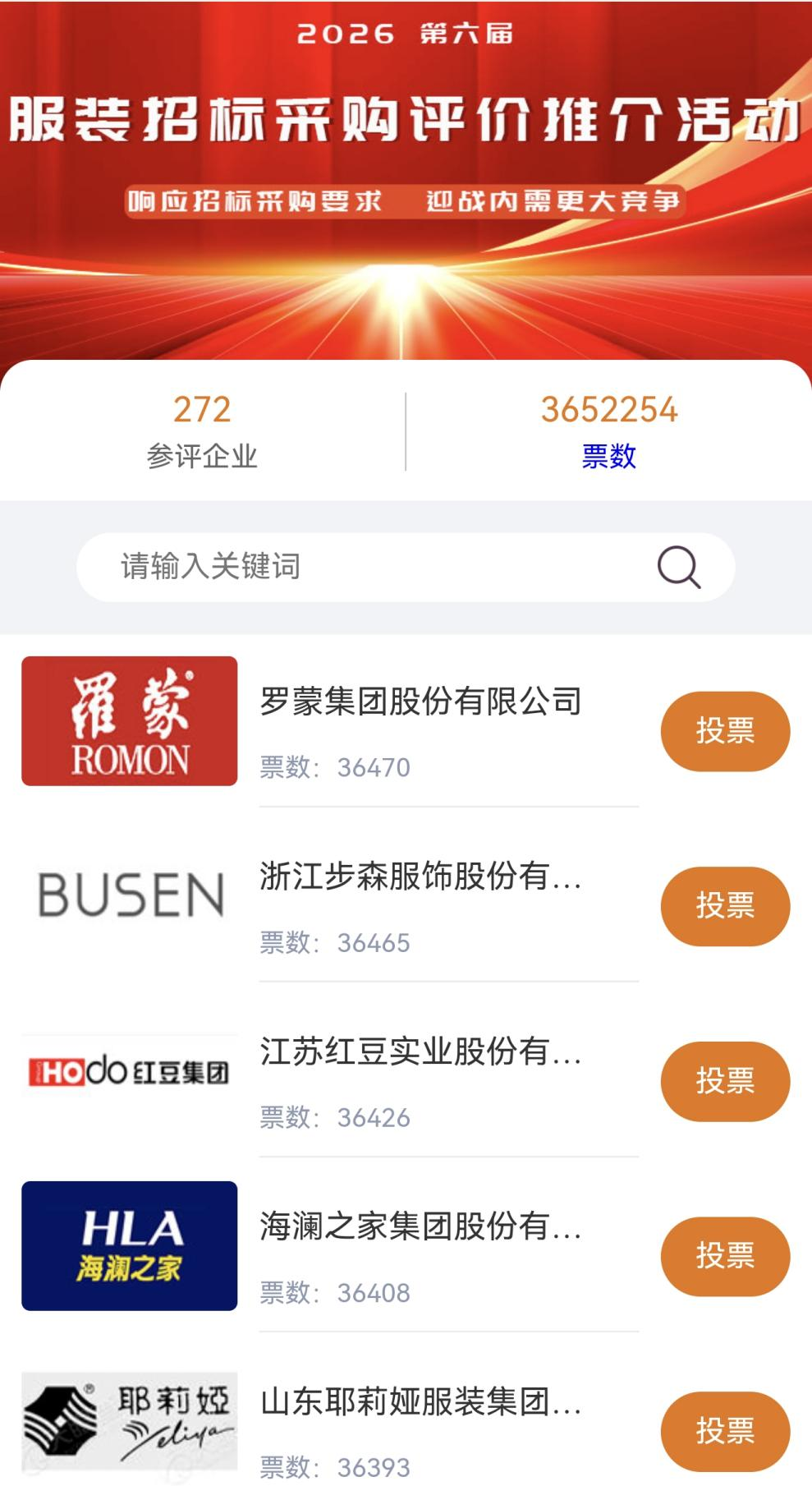
2026(第6届)服装招标采购评价推介活动第二期情况通报
Sou Hu Wang· 2026-01-16 10:28
Industry Overview - The current competition in the Chinese apparel brand market is characterized by a "multi-layered, fast iteration" complex landscape, with traditional boundaries being continuously broken [1] - The competition landscape is diversified, consisting of several core camps: international fast fashion giants (e.g., Uniqlo, ZARA), domestic casual brands (e.g., HLA, Peacebird), sports functional brands (e.g., Anta, Li Ning), high-end design and luxury brands, and numerous online-native brands (e.g., SHEIN, Bosie) [1] - The focus of competition has shifted from channel scale to a deep contest of "brand value + flexible supply chain + digital retail," emphasizing brand culture narrative, consumer emotional connection, data-driven supply chain speed, and conversion efficiency in omnichannel marketing [1] - The industry faces "pressure from both ends," with the high-end market pursuing spiritual value and the mass market focusing on extreme cost performance, while new opportunities are emerging in sustainable fashion, technological materials, and gender-neutral dressing [1] Company Highlights - **Romon Group Co., Ltd.**: Founded in 1984, it is a leading enterprise in the Chinese apparel industry, known for men's suits and has diversified into leisurewear and women's clothing, while also engaging in real estate and international trade [6] - **Jiangsu Busen Garments Co., Ltd.**: A well-known company in the men's clothing sector, focusing on high-quality business attire and maintaining a strong market presence through continuous channel optimization and product innovation [7] - **Jiangsu Hongdou Industrial Co., Ltd.**: Established in 1995, it emphasizes innovation and digital transformation, with a strong brand culture and a commitment to high-quality products across various clothing lines [8] - **HLA Group Co., Ltd.**: A leading fashion enterprise in the A-share market, known for its unique "platform + brand" business model and strong supply chain management, aiming for digital transformation and brand upgrades [9] - **Shandong Yeliya Garment Group Co., Ltd.**: Specializes in professional and high-end custom clothing, known for its complete industry chain and high-quality service in various sectors [10] - **Shandong Ru Yi Technology Group**: A globally recognized innovative textile enterprise with a focus on high-end, technological, and brand-oriented strategies, boasting a complete textile and apparel industry chain [11] - **Jihua 3502 Garment Co., Ltd.**: A leading company in the production of professional uniforms and military supplies, known for its high-quality standards and significant role in national defense [12] - **Beijing Dahuatian Tan Garment Co., Ltd.**: Focuses on industry uniforms and high-end custom clothing, maintaining a strong reputation for quality and service [13] - **EVE Group Co., Ltd.**: A prominent fashion brand group that emphasizes high-end men's clothing and innovative marketing strategies, integrating traditional craftsmanship with modern fashion [14] - **Fuzhou Chunhui Garment Co., Ltd.**: A modern apparel enterprise specializing in knitwear and casual clothing, known for its efficient supply chain and quality control processes [15]


广东制造爆款频出,董明珠们点赞“广货行天下”
Sou Hu Cai Jing· 2026-01-15 04:43
Core Viewpoint - The article emphasizes the importance of quality in both consumer and corporate life, highlighting the robust quality awareness ingrained in Guangdong's manufacturing culture [1]. Industry Overview - Guangdong produces one out of every three smartphones sold globally, with the Greater Bay Area's smart home appliance industry accounting for approximately 30% of the global market [2]. - By November 2025, Guangdong's home appliance exports are expected to represent nearly half of the national total [2]. Historical Context - The "Four Great Kings" of Guangdong, which include traditional products like "Pearl River Water, Guangdong Grain, Lingnan Clothing, and Cantonese Home Appliances," have evolved significantly since the 1980s [3]. Current Industry Developments - "Pearl River Water" now symbolizes Guangdong's extensive trade logistics, with cross-border e-commerce import and export volume increasing 66 times over nine years, holding over one-third of the national market share [4]. - The food industry in Guangdong aims to exceed 1.5 trillion yuan in output value by 2027, with Cantonese mooncakes accounting for 75% of national production and 90% of exports [4]. - Guangdong's clothing and home appliance sectors are innovating in smart wearables and smart home technologies, with 40% of global smartphones and 70% of consumer drones labeled as "Made in Guangdong" [5]. Ecosystem and Supply Chain - Guangdong's manufacturing ecosystem is characterized by deep collaboration and a complete industrial chain, enabling rapid product development and delivery [8]. - In the textile and apparel sector, a micro-ecosystem in Guangzhou allows for clothing production from design to delivery in as little as one day [8]. - The consumer electronics sector benefits from a "one-hour industrial circle" around Dongguan, facilitating efficient assembly of over 95% of smartphone components [8]. Innovation and Technology - The article discusses a transformation in Guangdong's manufacturing driven by AI and user experience, with companies like Gree and Skyworth leading the charge in smart technology integration [12][13]. - The shift in mindset from "what I can produce" to "how I can serve your needs" is highlighted as a key factor in enhancing product offerings [13]. Market Expansion Initiatives - The "Guangdong Goods Going Global" initiative aims to enhance market access for over 6,000 enterprises across various sectors, supported by major e-commerce platforms [15]. - The initiative employs a model of "government support, platform assistance, and enterprise participation," promoting products through cultural integration [15]. Future Outlook - Experts suggest that Guangdong's manufacturing must enhance its brand image and focus on high-value products to compete globally [20][22]. - The importance of leveraging traditional Lingnan culture for creative inspiration in product development is emphasized, alongside the need for technological innovation [22].

展示广东制造实力 传递品牌价值
Nan Fang Du Shi Bao· 2026-01-14 23:14
Core Viewpoint - Guangdong's manufacturing industry is evolving, with a strong emphasis on quality and innovation, positioning itself as a global leader in various sectors, including smart home appliances, food production, and beauty products [12][16][20]. Industry Overview - Guangdong accounts for approximately 30% of the global smart home appliance market, with significant contributions from companies like Gree and Skyworth [12][20]. - The province's cross-border e-commerce has expanded 66 times over the past nine years, holding over one-third of the national market share [13]. - By 2027, Guangdong aims for its food industry output to exceed 1.5 trillion yuan, with mooncake production leading the nation [14]. Ecosystem and Collaboration - Guangdong's manufacturing ecosystem includes 31 major manufacturing categories, with 15 being the largest in the country, fostering a collaborative environment that enhances efficiency and innovation [15][16]. - The textile and apparel sector has developed micro-ecosystems that allow for rapid production cycles, exemplified by a one-day turnaround from design to delivery [15]. - In consumer electronics, the "one-hour industrial circle" around Dongguan enables quick assembly of mobile phone components, supporting brands like Huawei and OPPO [15]. Technological Innovation - The integration of AI into manufacturing processes is transforming user experiences, with companies focusing on personalized solutions rather than just standardized products [17][19]. - Gree's smart factories and Skyworth's AI-driven product recommendations illustrate the shift towards technology that enhances daily life [18]. Global Expansion Initiatives - The "Guangdong Goods Going Global" initiative aims to strengthen market presence and brand recognition, particularly for small and medium enterprises [20][21]. - Experts suggest that enhancing brand image and leveraging high-tech innovations are crucial for Guangdong's global competitiveness [21]. Future Outlook - Guangdong's manufacturers are encouraged to harness traditional cultural elements alongside technological advancements to create unique products that resonate globally [21]. - The combination of a robust industrial ecosystem, innovative technologies, and rich cultural heritage positions Guangdong to redefine its global market presence [21].




跨境电商2025:用一年时间,回答“不确定性”
3 6 Ke· 2026-01-14 09:55
Core Insights - The main theme for foreign trade in 2025 is "change," driven by fluctuating tariffs and the need for adaptability in the face of evolving market dynamics [1] - The cross-border e-commerce sector is experiencing a significant transformation, with a shift towards emerging markets and a focus on AI technology, brand building, and localized operations as core competitive strategies [1] Group 1: Tariff Impact and Trade Dynamics - The U.S. imposed a 10% tariff on Chinese goods on February 1, 2025, which escalated to a peak of 145% due to retaliatory measures, significantly affecting trade [2] - By May 11, 2025, the U.S. reduced tariffs on 91% of goods, acknowledging that previous increases exceeded rational limits, yet the overall tariff on Chinese goods remained at 37.3% [2][4] - China's exports to the U.S. fell by 18.9% year-on-year in the first 11 months of 2025, while overall exports grew by 5.4%, indicating a strategic shift towards cross-border e-commerce and emerging markets [4][5] Group 2: Market Shifts and Emerging Opportunities - The cancellation of the "de minimis" policy in the U.S. led to a redirection of low-value packages to Europe, where demand is rising due to strong consumer spending and stable policies [5][7] - China's exports to the EU increased by over 14% year-on-year by September 2025, surpassing the total for the previous year, highlighting Europe's growing importance as a key market [7] - Latin America has become a significant target for Chinese sellers, with exports to the region growing by approximately 6.9% in the first eight months of 2025 [9] Group 3: E-commerce Platform Strategies - Major platforms like Temu, TikTok Shop, and AliExpress are rapidly expanding their market presence and enhancing localization efforts to adapt to changing consumer needs [13][14] - Temu is focusing on local supply and fulfillment strategies, while TikTok Shop is expanding into new markets, including Mexico and Japan, to validate its content-driven e-commerce model [14][20] - AliExpress is implementing "overseas hosting" services to streamline local operations and enhance market penetration across various regions [16] Group 4: Competitive Landscape and AI Integration - The global e-commerce landscape is becoming increasingly competitive, with platforms needing to focus on local supply chains, compliance, and customer experience to maintain an edge [24][29] - AI is becoming a critical capability for e-commerce platforms, enhancing recommendation systems, fulfillment efficiency, and customer service, with 77% of e-commerce professionals integrating AI into daily operations [38][41] - Sellers utilizing AI are seeing significant revenue increases, with average income rising by at least 20%, while those not adopting AI risk losing competitive advantages [42][46] Group 5: Seller Dynamics and Market Adaptation - The seller landscape is experiencing a K-shaped divergence, where successful sellers are focusing on brand differentiation and local compliance, while smaller sellers struggle with rising costs and market pressures [32][35] - The transition from low-cost, high-volume strategies to more sustainable, brand-focused approaches is becoming essential for survival in the evolving e-commerce environment [37] - As the industry matures, the emphasis is shifting towards long-term operational capabilities rather than short-term gains, indicating a need for sellers to adapt to new market realities [37]