
中国软件

Search documents
中国软件产品追踪:WAIC人工智能新产品发布;具备智能体、推理和多模态能力的人工智能模型-China Software_ Product Tracker_ WAIC AI new product launches; AI models with Agentic, reasoning, and multi-modal capabilities
2025-08-05 03:15
Summary of Key Points from the Conference Call Industry Overview - The conference focused on the advancements in the AI industry, particularly highlighted during the World Artificial Intelligence Conference (WAIC) 2025, emphasizing the evolution of AI infrastructure and model capabilities [1][7]. Core Insights - **AI Supply Chain Enhancements**: The AI supply chain is increasingly centered on improved AI infrastructure, with notable examples like Huawei's SuperPod achieving 300 PFLOPs performance [1]. - **AI Model Upgrades**: New AI models are being developed with enhanced multi-modal, agentic, and reasoning capabilities, aimed at improving efficiency and reducing costs associated with AI training and inferencing [1][7]. - **Product Launches**: Several new AI products were launched at WAIC, including: - **AI Models**: Companies like Sensetime and Zhipu introduced models with significant upgrades, such as Sensetime's SenseNova V6.5, which boasts a 5x increase in inferencing efficiency [6][7]. - **AI Agents**: New AI agents were introduced by companies like Kingsoft Office and Midu, focusing on complex context understanding and task execution [1][10]. - **Industry-Specific AI Solutions**: Partnerships between AI model/app suppliers and industry vendors are being formed to create customized AI solutions for sectors like automotive and healthcare [1]. Notable Product Highlights - **SenseNova V6.5**: Offers multi-modal capabilities and 5x higher inferencing efficiency compared to its predecessor [6]. - **iFlytek X1**: Enhanced capabilities in mathematics and translation [6][14]. - **Zhipu GLM 4.5**: An open-source model designed for AI agents, featuring improved coding and inferencing capabilities [6][9]. - **Midu V Assistant 2.0**: A full-flow public opinion analysis tool [6][10]. - **Datagrand AI Agents**: Four new AI agents for auditing, Q&A, form filling, and data summarization [10]. Additional Insights - **Cost Efficiency**: A significant focus remains on lowering the costs associated with AI training and inferencing, which is crucial for vendors to maintain competitive pricing [7]. - **Market Trends**: The trend of more software suppliers entering the AI agent space indicates a growing market for AI-driven solutions that enhance business operations [10]. Conclusion - The advancements in AI technology showcased at WAIC 2025 reflect a robust growth trajectory in the industry, with significant innovations aimed at improving efficiency and reducing costs. The collaboration between AI model developers and industry-specific vendors is likely to drive further growth and customization in AI applications across various sectors [1][10].

资本市场丨“政策红利释放+业绩兑现” 创新药板块一骑绝尘
Sou Hu Cai Jing· 2025-08-04 03:04
聚焦资本市场创新"赛道" 编者按 在资本市场中,行业板块的动态一直是投资者关注的焦点。近期,创新药、CPO概念(算力)与半导体、人工智能等板块热度居高不下,创新"赛道"备受 市场关注。创新药关乎人类健康与医疗进步,在政策扶持、技术突破下蓬勃发展,具备全球竞争力的企业将通过差异化创新和国际化布局打开成长天花 板;受益于全球AI算力需求爆发及技术迭代加速,CPO概念板块下半年将维持高景气度;人工智能行业进入快速发展期,技术的深度应用推动相关企业商 业化发展,盈利整体增加。本期《资本市场》聚焦创新行业,以期为市场提供有价值的参考。 | 数读市场 | | --- | | 8月1日,A股震荡走低,英伟达产业链调整,创新药、 | | 中药题材继续强势,AI硬件、应用概念股此消彼长。截 | | 至收盘,上证指数报3559.95点,深证成指报10991.32 | | 点。 | | 7月28日至8月1日,A股市场整体呈现回调态势,多数宽 | | 基指数下跌。Wind百大概念指数上涨比例43%。在板块 | | 方面,仅19%板块获得正收益,医药生物、通信、传媒 | | 相对表现良好,分别上涨2.95%、2.54%、1.13%。 ...



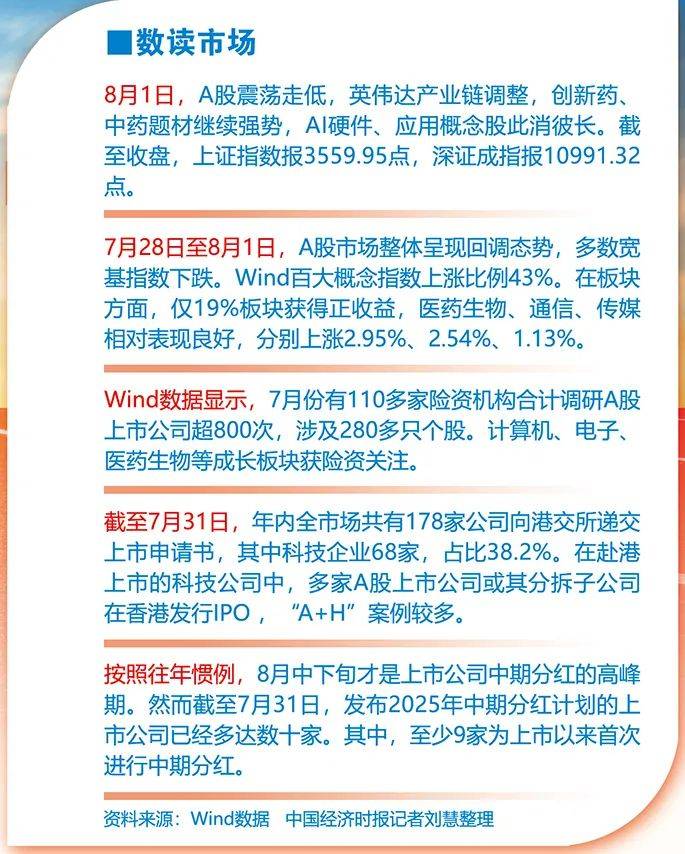
资本市场丨人工智能板块盈利分化 呈现行业阶段性特征
Sou Hu Cai Jing· 2025-08-04 03:04
接受中国经济时报记者采访的业内人士表示,近年来,人工智能行业进入快速发展期,人工智能技术的深度应用推动相关企业的商业化发展,也带来算力 需求急剧增加,行业市场规模不断拓展、盈利整体增加。 编者按 在资本市场中,行业板块的动态一直是投资者关注的焦点。近期,创新药、CPO概念(算力)与半导体、人工智能等板块热度居高不下,创新"赛道"备受 市场关注。创新药关乎人类健康与医疗进步,在政策扶持、技术突破下蓬勃发展,具备全球竞争力的企业将通过差异化创新和国际化布局打开成长天花 板;受益于全球AI算力需求爆发及技术迭代加速,CPO概念板块下半年将维持高景气度;人工智能行业进入快速发展期,技术的深度应用推动相关企业商 业化发展,盈利整体增加。本期《资本市场》聚焦创新行业,以期为市场提供有价值的参考。 ■中国经济时报记者 孙兆 随着上市公司陆续披露业绩预告,A股半年报行情正式启幕。2025年上半年,A股人工智能板块表现出了强劲的发展态势。截至7月28日,A股人工智能板 块中有21家企业发布了2025年中报预报,其中17家预计上半年净利润同比实现正增长,占比近81%。而从净利润中值来看,上述21家公司2025年上半年整 体实现净 ...
金十图示:2025年08月04日(周一)中国科技互联网公司市值排名TOP 50一览




news flash· 2025-08-04 02:59
Core Viewpoint - The article presents the market capitalization rankings of the top 50 Chinese technology and internet companies as of August 4, 2025, highlighting significant players in the industry and their respective valuations in billions of USD [1]. Group 1: Top Companies by Market Capitalization - TSMC leads the ranking with a market capitalization of $121.99 billion [3]. - Tencent Holdings follows in second place with a valuation of $63.46 billion [3]. - Alibaba ranks third with a market cap of $27.92 billion [3]. - Xiaomi Group is fourth with a market capitalization of $18.07 billion [3]. - Pinduoduo holds the fifth position with a valuation of $15.62 billion [3]. Group 2: Additional Notable Companies - Meituan ranks sixth with a market cap of $9.45 billion [4]. - NetEase is seventh with a valuation of $8.06 billion [4]. - SMIC (Semiconductor Manufacturing International Corporation) is eighth with a market cap of $5.24 billion [4]. - Dongfang Fortune ranks ninth with a valuation of $5.11 billion [4]. - JD.com is in tenth place with a market capitalization of $4.46 billion [4]. Group 3: Rankings and Changes - Kuaishou is ranked eleventh with a market cap of $4.16 billion [5]. - Tencent Music holds the twelfth position with a valuation of $3.18 billion [5]. - Baidu is thirteenth with a market cap of $2.96 billion [5]. - Li Auto ranks fourteenth with a valuation of $2.70 billion [5]. - Beike is fifteenth with a market capitalization of $2.17 billion, showing an increase in ranking by 11 spots [5].

10家湾区国企上榜世界500强,5家广深国企“跑”进榜单
Sou Hu Cai Jing· 2025-08-02 08:16
Group 1 - The "Fortune" Global 500 list serves as a benchmark for measuring international competitiveness among enterprises, with 130 Chinese companies making the list this year, including 85 state-owned enterprises [1] - The threshold for entering the Global 500 has increased due to improved operating conditions for listed companies, highlighting the challenges faced by state-owned enterprises in terms of transformation and sustainable growth [1] - In the Guangdong-Hong Kong-Macao Greater Bay Area, there are 10 state-owned enterprises on the list, primarily located in Guangzhou, Shenzhen, and Hong Kong, with Guangzhou having the highest number [1] Group 2 - Among the 124 Chinese mainland companies on the list, 49 saw their rankings rise while 68 experienced declines, with most state-owned enterprises in the Greater Bay Area also facing ranking drops [2] - China Resources ranked 67th, improving by 5 positions, while China Electronics rose 8 places to 427th, marking its 15th consecutive year on the list [3] - GAC Group, which has been on the list for 13 years, fell 71 places to 252nd, reflecting broader challenges in the automotive industry despite rapid growth in electric vehicle production [4] Group 3 - Guangzhou Industrial Control, which debuted on the list in 2023, ranked 406th this year, maintaining stability despite external challenges [5] - Guangzhou Pharmaceutical Group ranked 459th and is the only Chinese company in the pharmaceutical sector to be listed, focusing on innovation and international expansion to maintain competitiveness [5] - Shenzhen Investment Holding is the only city-owned state enterprise from Shenzhen on the list, ranking 414th this year, with a focus on technology and finance [6]

上证智慧城镇指数下跌0.11%,前十大权重包含国电南瑞等
Jin Rong Jie· 2025-08-01 15:56
Group 1 - The Shanghai Composite Index decreased by 0.37%, while the Shanghai Smart Town Index fell by 0.11%, closing at 2418.75 points with a trading volume of 30.91 billion [1] - The Shanghai Smart Town Index has increased by 5.07% over the past month, 7.76% over the past three months, and 4.02% year-to-date [1] - The index series reflects the performance of listed companies influenced by changes in economic and consumption structures, focusing on themes such as intensive, intelligent, and green low-carbon development [1] Group 2 - The top ten weights in the Shanghai Smart Town Index are: Haier Smart Home (9.35%), Guodian NARI (9.17%), Tebian Electric (7.27%), Hengsheng Electronics (5.77%), Sichuan Changhong (3.86%), Yonyou Network (3.47%), Wingtech Technology (3.42%), Hongfa Technology (3.06%), YTO Express (2.91%), and China Software (2.86%) [1] - The index is composed entirely of companies listed on the Shanghai Stock Exchange, with a 100% market share [1] Group 3 - In terms of industry composition, the index sample shows that Information Technology accounts for 38.35%, Industry for 35.74%, Consumer Discretionary for 17.05%, Communication Services for 7.96%, and Utilities for 0.90% [2] - The index sample is adjusted biannually, with adjustments implemented on the next trading day following the second Friday of June and December [2] - Special circumstances may lead to temporary adjustments to the index, such as delisting of sample companies or corporate actions like mergers and acquisitions [2]




上半年中国软件业利润总额保持两位数增长
Zhong Guo Xin Wen Wang· 2025-08-01 13:02
Core Insights - The software and information technology services industry in China showed a positive performance in the first half of the year, with steady revenue growth and double-digit profit increases [1][2] - Software business revenue reached 70,585 billion RMB, a year-on-year increase of 11.9%, while total profits amounted to 8,581 billion RMB, growing by 12.0% [1] - Software exports totaled 28.3 billion USD, reflecting a growth of 5.3% compared to the previous year [1] Revenue Breakdown - Information technology services generated 48,362 billion RMB in revenue, marking a 12.9% year-on-year increase and accounting for 68.5% of the total industry revenue [1] - Cloud computing and big data services achieved a combined revenue of 7,434 billion RMB, growing by 12.1% [1] - Integrated circuit design revenue reached 2,022 billion RMB, with an impressive growth of 18.8% [1] - E-commerce platform technology services generated 5,882 billion RMB, reflecting a 10.2% increase [1] Software Products Performance - Software product revenue was 15,441 billion RMB, with a year-on-year growth of 10.6%, representing 21.9% of the total industry revenue [1] - Basic software product revenue reached 903 billion RMB, growing by 13.8% [1] - Industrial software product revenue was 1,445 billion RMB, with an increase of 8.8% [1] Regional Performance - The Beijing-Tianjin-Hebei region saw a software business revenue increase of 12.5% [2] - The Yangtze River Delta region experienced a revenue growth of 13.7% [2] - The top five provinces in software business revenue were Beijing, Guangdong, Jiangsu, Shandong, and Shanghai, with year-on-year growth rates of 12.6%, 9.0%, 14.4%, 12.9%, and 18.0% respectively [2]
金十图示:2025年08月01日(周五)中国科技互联网公司市值排名TOP 50一览


news flash· 2025-08-01 02:55
Core Insights - The article presents the market capitalization rankings of the top 50 Chinese technology and internet companies as of August 1, 2025, highlighting significant shifts in rankings and valuations [1]. Group 1: Market Capitalization Rankings - TSMC leads the list with a market capitalization of $125.32 billion [3]. - Tencent Holdings ranks second with a market capitalization of $64.22 billion [3]. - Alibaba has moved up to the third position with a market capitalization of $28.77 billion, showing a notable increase from its previous rank of 12 [3]. Group 2: Notable Companies and Changes - Xiaomi Group is ranked fourth with a market capitalization of $17.57 billion [3]. - Pinduoduo follows closely in fifth place with a market capitalization of $16.11 billion [3]. - Meituan and NetEase are ranked sixth and seventh, with market capitalizations of $9.46 billion and $8.25 billion, respectively [3][4]. Group 3: Additional Rankings - Semiconductor Manufacturing International Corporation (SMIC) is in eighth place with a market capitalization of $5.23 billion [4]. - JD.com is ranked tenth with a market capitalization of $4.54 billion [4]. - Kuaishou and Tencent Music are ranked 11th and 12th, with market capitalizations of $4.17 billion and $3.25 billion, respectively [4]. Group 4: Lower Rankings - Companies ranked from 25 to 50 include Kingdee International at $0.83 billion and Yuyuan at $0.40 billion, indicating a diverse range of valuations among the lower-ranked firms [5][6].

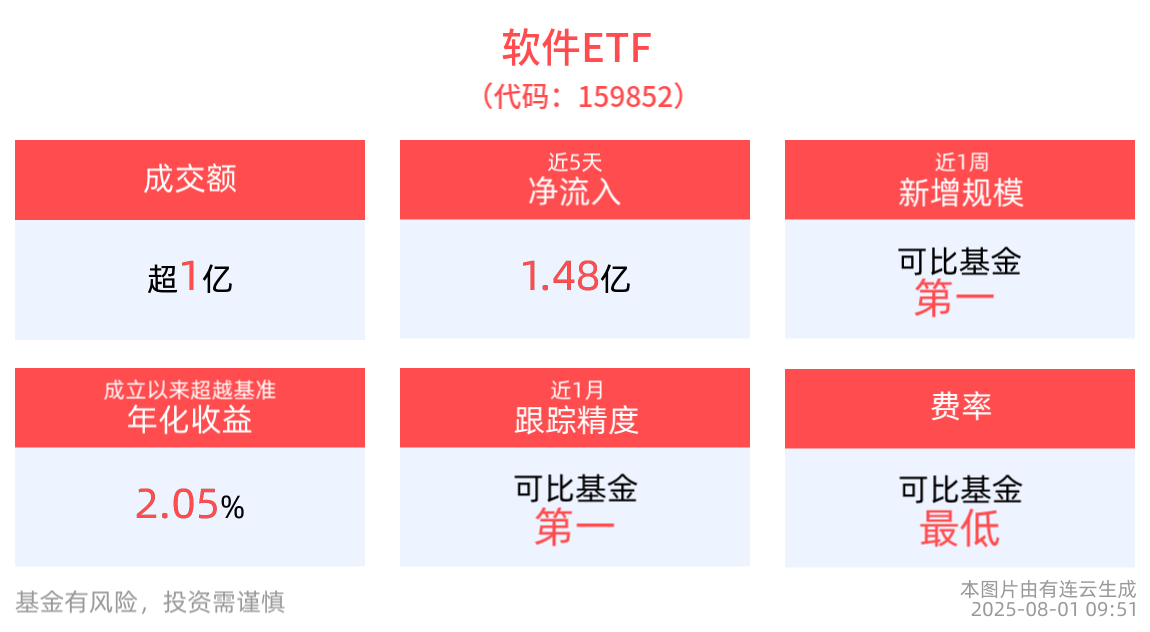
深入实施“人工智能+”行动,软件ETF(159852)红盘上扬,近5日“吸金”1.48亿元
Sou Hu Cai Jing· 2025-08-01 02:20
截至2025年8月1日 09:51,中证软件服务指数上涨0.29%,成分股深信服上涨5.32%,卫宁健康上涨3.31%,中国软件上涨1.90%,东华软件上涨1.73%,同花 顺上涨1.55%。软件ETF(159852)上涨0.35%。 流动性方面,软件ETF盘中换手2.51%,成交1.29亿元。拉长时间看,截至7月31日,软件ETF近1周日均成交4.07亿元,排名可比基金第一。 规模方面,软件ETF近1周规模增长1618.51万元,实现显著增长,新增规模位居可比基金第一。资金流入方面,拉长时间看,软件ETF近5个交易日内有4日 资金净流入,合计"吸金"1.48亿元。 截至7月31日,软件ETF近3年净值上涨8.43%。从收益能力看,截至2025年7月31日,软件ETF自成立以来,最高单月回报为39.35%,最长连涨月数为3个 月,最长连涨涨幅为69.40%,上涨月份平均收益率为9.75%。 7月31日国务院常务会议召开,会议审议通过《关于深入实施"人工智能+"行动的意见》。会议指出,要深入实施"人工智能+"行动,大力推进人工智能规模 化商业化应用,充分发挥我国产业体系完备、市场规模大、应用场景丰富等优势,推动 ...


A股今年前七月定增募资额同比增逾六倍,平均浮盈超六成
Di Yi Cai Jing· 2025-07-31 12:21
Group 1 - The average increase in stock price for 76 listed companies compared to their private placement issue price is 63.74% as of July 31 [1][4] - The private placement market has seen significant activity in the first seven months of 2025, with the number of placements and total fundraising both increasing compared to the same period last year [1][2] - The total amount raised through private placements reached 663.3 billion yuan, a 667.7% increase year-on-year [1][2] Group 2 - Major contributions to the fundraising increase include four large state-owned banks, which collectively raised 520 billion yuan through private placements [2][3] - Companies like AVIC Chengfei and Guotai Junan have also seen substantial private placement amounts, reaching 17.4 billion yuan and 10 billion yuan respectively [2][3] - The majority of private placements are concentrated in industries such as chemicals, machinery, hardware, electrical equipment, and automotive, with 36 companies participating [2] Group 3 - Project financing is the primary purpose for private placements, with 38 companies (50% of total) focusing on projects related to capacity expansion and new product lines [3] - Notable project financing includes Guotai Power raising 7 billion yuan for clean energy projects and Yandong Micro's 4 billion yuan for integrated circuit production [3] - 16 companies are using private placements to supplement working capital, with significant amounts raised by companies like Kaisa Bio and Jiadian [3] Group 4 - The rising stock prices of companies involved in private placements are attributed to expectations of mergers and acquisitions and industry trends driving profit increases [4] - Companies like Robotech and Dongshan Precision have seen stock price increases exceeding 300% and 100% respectively, driven by strategic initiatives [4] Group 5 - The active private placement market is beneficial for brokerage firms, with CITIC Securities participating in 14 placements and other firms like Guotai Junan and Zhongtai Securities involved in multiple projects [5] - Over 200 companies have announced private placement plans, with expected fundraising exceeding 240 billion yuan [5] - In July alone, 40 companies announced private placement plans, with a total expected fundraising of approximately 28.3 billion yuan [5] Group 6 - Yonghui Supermarket plans to raise up to 3.992 billion yuan for store upgrades and working capital through its private placement, marking its first issuance in 10 years [6] - Dongwu Securities is the only brokerage to announce a private placement in July, aiming to raise up to 6 billion yuan for various business enhancements [6] Group 7 - Companies in the wind power sector, such as Weili Transmission, are planning private placements to fund projects and improve profit margins through smart factory initiatives [7] - Jiangfeng Electronics aims to raise 1.948 billion yuan for integrated circuit equipment projects and working capital through its private placement [7]


