荣耀

Search documents
IDC:2025年Q4 vivo中国市场出货1200万台,排名第二
Feng Huang Wang· 2026-01-14 10:08
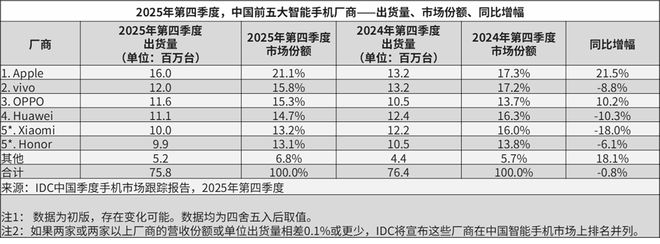
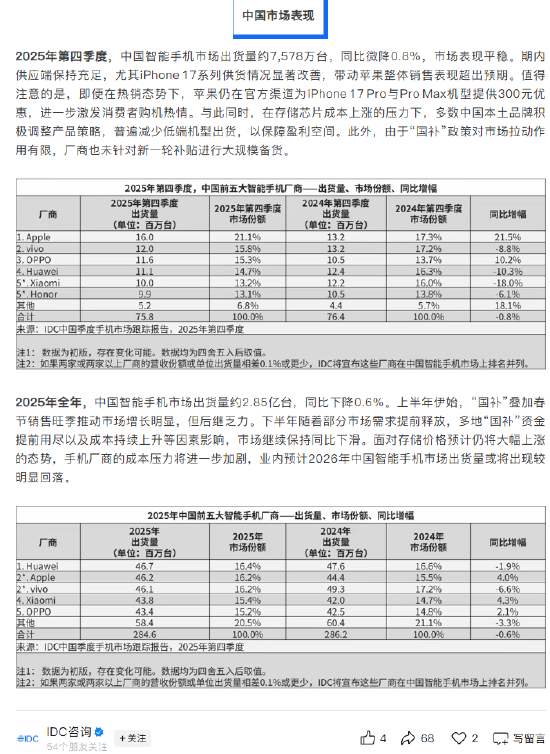
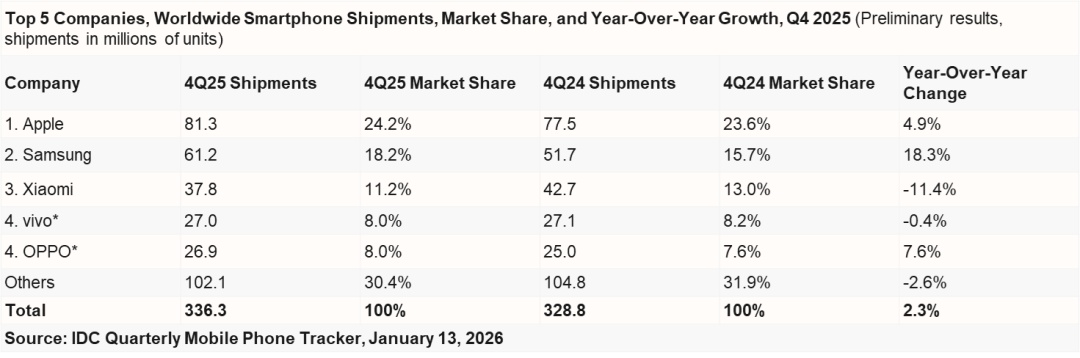
Core Insights - The report by IDC indicates that the Chinese smartphone market is expected to see a slight decline in shipments, with approximately 75.78 million units expected in Q4 2025, representing a year-on-year decrease of 0.8% [1] - Apple leads the market in Q4 2025, followed by vivo, OPPO, Huawei, and a tie between Honor and Xiaomi in fifth place [1] - For the entire year of 2025, the Chinese smartphone market is projected to ship around 285 million units, down 0.6% year-on-year [1] - The top five brands in terms of annual shipments in China for 2025 are Huawei, Apple, vivo, Xiaomi, and OPPO, with Honor falling out of the top five [1] - Globally, the total smartphone shipments are expected to reach approximately 1.26 billion units in 2025, reflecting a year-on-year growth of 1.9% [1] - The global smartphone shipments for Q4 2025 are projected to be 336.3 million units, showing a year-on-year increase of 2.3% [1]




南财快评|从广货到“新广货” 为何全球爆款频出?
2 1 Shi Ji Jing Ji Bao Dao· 2026-01-14 09:00
Core Viewpoint - The "Guangdong Products Going Global" spring campaign will kick off a series of promotional activities aimed at showcasing the diverse charm of Guangdong manufacturing, highlighting its evolution from traditional goods to advanced technology products like smart appliances and drones [1][2]. Group 1: Geographic and Trade Advantages - Guangdong's geographic location provides significant advantages for trade, facilitating industrialization and attracting foreign investment, which are foundational for the success of Guangdong products [2]. - The historical success of Guangdong products is attributed to its trade structure, which evolved from initial processing trades to attracting foreign capital and advanced manufacturing techniques, laying the groundwork for Guangdong's economic development [2]. Group 2: Technological Advancements and Industry Evolution - The current competitive edge of Guangdong products is driven by smart manufacturing, moving from traditional appliances to innovative products like smart glasses and drones, reflecting a shift towards intelligent production [3]. - Guangdong has established nine trillion-yuan industrial clusters, with projected revenues exceeding 19 trillion yuan by 2025, and is home to over 800,000 industrial enterprises, leading the nation in industrial output [3]. Group 3: Traditional and Emerging Industries - Traditional industries remain crucial for Guangdong's economic foundation, with significant contributions to the production of consumer electronics, such as televisions and air conditioners, and advancements in production efficiency through technology [4]. - Guangdong is a major hub for the smartphone industry, producing a significant portion of the world's smartphones and achieving breakthroughs in semiconductor technology, which supports the ongoing innovation in the sector [5]. Group 4: Future Prospects - Initiatives like "Smart Electric Guangdong," "Fashion in Guangdong," and "Guangdong Quality Products" are set to enhance the technological capabilities of Guangdong products, ensuring continuous innovation and market expansion [5].
从广货到“新广货”,为何全球爆款频出?
2 1 Shi Ji Jing Ji Bao Dao· 2026-01-14 08:49
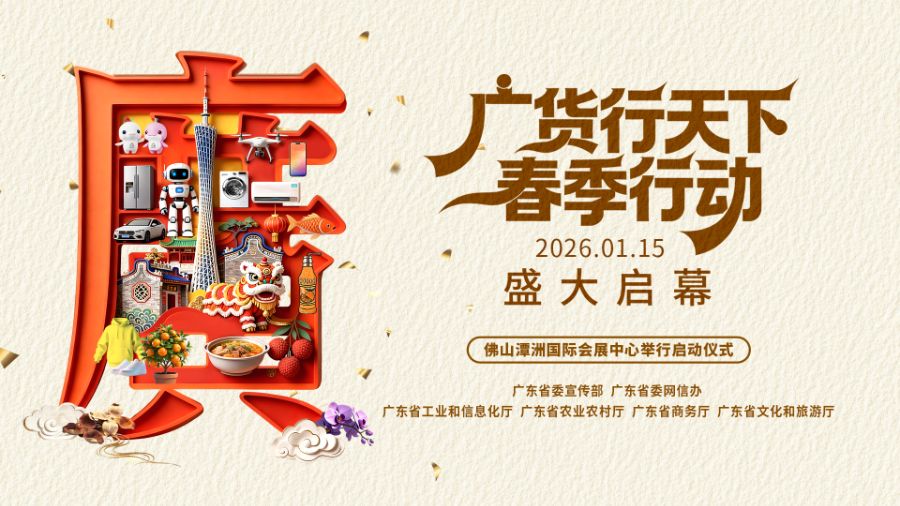
Core Viewpoint - The "Guangdong Products Going Global" spring promotional campaign is set to launch in Foshan, marking the beginning of the 2026 online promotional activities for Guangdong products, showcasing the diverse appeal of Guangdong manufacturing [2] Group 1: Geographic and Trade Advantages - Guangdong's geographic location, backed by the Nanling Mountains and facing the South China Sea, provides excellent conditions for foreign trade and industrialization, forming the foundation for the success of Guangdong products [3] - The evolution of trade structures has allowed Guangdong to continuously upgrade its products, with initial trade models attracting foreign investment and advanced manufacturing techniques, contributing to the wealth of Guangdong products [3] Group 2: Technological Advancements and Manufacturing - The current competitive edge of Guangdong products lies in intelligent manufacturing, moving from traditional appliances to smart devices like drones and robots, reflecting the region's adaptation to technological revolutions [4] - Guangdong is home to nine trillion-yuan industrial clusters, with projected revenues exceeding 19 trillion yuan by 2025, and it leads the nation in the number of industrial enterprises, producing a significant share of global consumer drones and smartphones [4] Group 3: Traditional and Emerging Industries - Traditional industries remain crucial for the legacy of Guangdong products, with ongoing transformations enhancing their viability through strategic investments in future industries [5] - Guangdong is a major hub for smartphone manufacturing, with significant advancements in technology, including breakthroughs in high-end chips and AI integration in mobile devices, further solidifying its position in the global market [6] Group 4: Future Prospects - Initiatives like "Smart Electric Guangdong Manufacturing" and "Fashion from Guangdong" are expected to further enhance the iterative upgrades of Guangdong products, indicating a promising future for the region's manufacturing sector [6]
“广货行天下”春季行动启动仪式将于1月15日在佛山举行
Nan Fang Ri Bao Wang Luo Ban· 2026-01-14 08:40
Core Insights - Guangdong's manufacturing sector is showcasing its diverse capabilities, from smart home appliances to high-end mobile phones, fashion apparel, gourmet food, and modern agriculture, emphasizing innovation and quality development [1][2][3] Food Industry - Guangdong's food industry is projected to achieve a revenue of 896.87 billion yuan in 2024, with soy sauce production accounting for over 60% of the national output and mooncake exports representing 90% of the total [2] - The industry is driven by digitalization, biotechnology, and regional collaboration, with major cities like Guangzhou, Foshan, and Dongguan each exceeding 100 billion yuan in food industry scale [2][3] Home Appliances - Guangdong's home appliance sector, representing nearly 50% of the national market, has established a robust supply chain with over 4,400 enterprises, including three with revenues exceeding 100 billion yuan [4][5] - Major companies like Midea and Hisense are localizing their research, production, and sales globally, with Midea operating 33 R&D centers and 43 manufacturing bases worldwide [5][6] Agriculture - Guangdong's agricultural sector is characterized by its "土特生金" (specialty products generate wealth) strategy, achieving a grain production capacity increase from 12.38 million tons in 2021 to 12.98 million tons in 2025 [7][9] - The province leads in various agricultural outputs, with total agricultural production value reaching 677.56 billion yuan in the first three quarters of 2025, marking a 4.9% year-on-year growth [7][9] Textile and Apparel - Guangdong's textile and apparel industry boasts 4,240 enterprises, accounting for 18.34% of the national total, with a production output of 3.44 billion garments in 2024 [15][16] - The industry is undergoing digital transformation, with companies implementing AI and big data for precise design and flexible production, significantly enhancing efficiency [15][16] Mobile Phones - Guangdong produces one in every three mobile phones globally, with a complete supply chain that allows for rapid assembly of 95% of components within a one-hour commute [10][11] - Innovations such as satellite communication technology and AI integration are being developed to enhance product capabilities and market reach [10][11] Cultural and Tourism - The "请到广东过大年" (Come to Guangdong for the New Year) campaign aims to enhance tourism through cultural experiences, with events showcasing traditional customs and local cuisine [12][13] - The initiative includes a series of activities and performances to attract visitors, emphasizing the cultural richness and festive atmosphere of Guangdong [12][13]
不只 Magic8 Pro Air,1 月 19 日还有荣耀“联名设计系列新品”发布会
Xin Lang Cai Jing· 2026-01-14 07:24
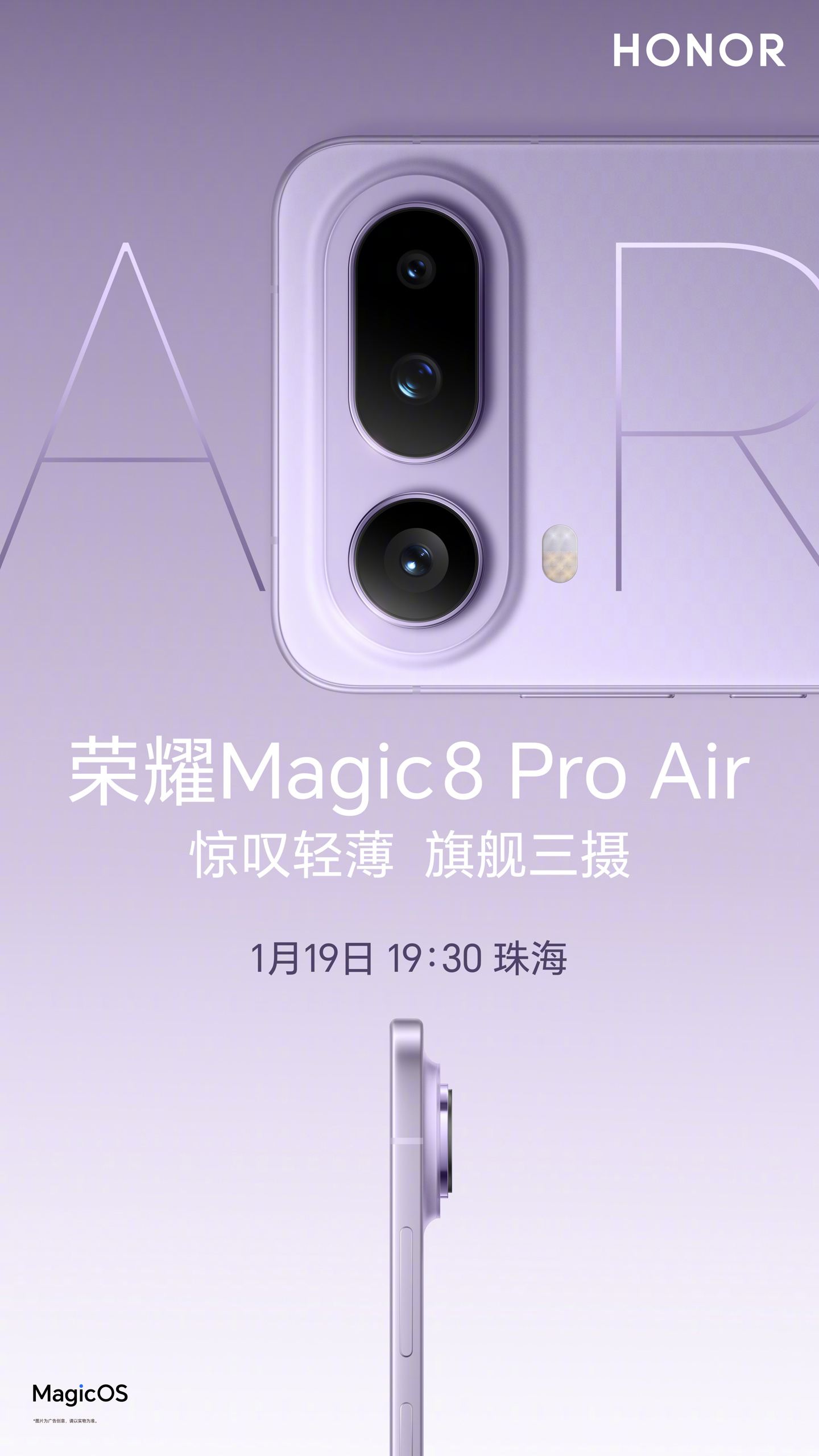
IT之家 1 月 12 日消息,今天上午,荣耀手机官微发文宣布:荣耀 Magic8 Pro Air 及荣耀联名设计系列新品发布会将于 1 月 19 日 19 时 30 分举办。 该机还内置 7200mAh 青海湖电池(典型值),支持 120W 有线超级快充 +80W 无线超级快充。另外,荣耀 Magic8 RSR 保时捷设计提供 16GB+512GB 和 24GB+1TB 两种规格。 荣耀 Magic8 RSR 保时捷设计预计配备 6.71 英寸 1.5K LTPO 显示屏,内置 7200mAh± 电池,支持 120W 有线快充、满血无线充电,主打 3D 超声波指纹 + 3D 人脸识别,支持 IP68/IP69/IP69K 防尘防水。 除此之外,荣耀于本月早些时候官宣了 Magic8 RSR 保时捷设计旗舰机。爆料称下一款搭载高通第五代骁龙 8 至尊版的"超大杯"机型是荣耀 Magic8 RSR 保 时捷设计,目前正在加速推进中,争取在春节前发布。 先前消息称,该机采用后置三摄:5000 万像素广角摄像头 + 2 亿像素潜望长焦摄像头 + 5000 万像素超广角摄像头,前置 5000 万像素超广角摄像头 + ...
6大趋势详解:谁说手机行业没有新东西了?
3 6 Ke· 2026-01-14 07:14
Group 1 - The core message of the articles highlights the ongoing transformation in the smartphone industry, driven by AI and new technologies, which poses a challenge to traditional smartphone growth as major companies shift focus towards AI-integrated devices [2][4][5] - Major brands like Honor, Samsung, and Infinix are introducing innovative products such as the AI-integrated ROBOT PHONE, a foldable OLED panel, and a smartphone with global satellite communication capabilities, respectively [2][4] - The global smartphone market is experiencing sluggish growth, with Apple, Samsung, and Xiaomi maintaining the top three positions, while Apple shows a strong recovery, surpassing Samsung for the first time in 14 years [5][7][8] Group 2 - Apple's resurgence is attributed to competitive product offerings and pricing strategies, with the iPhone 16e and iPhone 17 series performing well in the market, particularly in China where sales surged by 37% in October [7][8] - Samsung's stability is also linked to its pricing strategy, with a 7% decrease in average selling price and the introduction of high-value A-series products [10] - The Chinese smartphone market is characterized by volatility, with frequent shifts among the top five brands, and a notable decline in overall shipment volumes in the second quarter [13][15] Group 3 - The mid-range smartphone market is expanding, driven by consumer demand for high-quality, cost-effective products, with significant sales reported for models priced between 2000-2999 yuan [16][18] - High-end smartphones face challenges due to innovation stagnation, leading to a focus on system development and unique user experiences, with brands like Huawei and Xiaomi investing in proprietary operating systems [22][24] - AI is becoming a critical component in high-end smartphones, with brands leveraging AI to enhance ecosystem connectivity and user experience, as seen in Huawei's HarmonyOS and OPPO's AI features [27][30] Group 4 - Marketing strategies in the smartphone industry are evolving, with brands facing challenges in traditional marketing approaches, leading to a shift towards more relatable and engaging campaigns [33][36] - Instant retail is gaining traction, with brands like Apple and others adopting rapid delivery services to meet consumer demand for immediate gratification, significantly impacting sales during major shopping events [40][41] - The smartphone industry is undergoing significant changes, with AI, self-developed systems, and innovative marketing strategies driving a more dynamic and competitive landscape [45]
机构报告:2025年中国手机市场出货量约为2.85亿台 华为登顶
Xin Lang Cai Jing· 2026-01-14 07:13
Core Insights - The Chinese smartphone market is projected to see a slight decline in shipments, with an estimated total of 285 million units in 2025, representing a year-on-year decrease of 0.6% [1][4]. Market Performance - Huawei leads the market with a shipment of 46.7 million units and a market share of 16.4% in 2025 [3][6]. - Apple and Vivo are tied for second place, with shipments of 46.2 million and 46.1 million units, respectively, both holding a market share of 16.2% [3][6]. - Xiaomi and OPPO rank fourth and fifth, with shipments of approximately 43.8 million and 43.4 million units, respectively, both exceeding a 15% market share [3][6]. - The gap in shipments between the top and fifth brands is only 3.3 million units, indicating intense competition in the industry [1][4]. Future Outlook - IDC anticipates that the cost pressures on smartphone manufacturers will increase due to expected significant rises in storage prices, which may lead to a more pronounced decline in shipments in 2026 [1][4].
IDC:2025年第四季度全球智能手机出货量同比增长2.3% 达到3.363亿部
智通财经网· 2026-01-14 05:53
Core Insights - The global smartphone market is projected to grow by 2.3% year-on-year in Q4 2025, reaching 336.3 million units, driven by high-end model demand, strong performance of foldable phones, and consumer anticipation of price increases [1][2] - Apple and Samsung are the primary growth engines in the smartphone market, with year-on-year growth rates of 6.3% and 7.9% respectively, leading to a combined market share increase to 39% [2][3] - The overall smartphone market in 2025 is expected to reach 1.26 billion units, reflecting a 1.9% year-on-year growth despite challenges such as tariff fluctuations and supply chain disruptions [2][5] Global Market Performance - In Q4 2025, Apple shipped 81.3 million units, capturing 24.2% of the market share, while Samsung shipped 61.2 million units with an 18.2% market share [6] - The average selling price (ASP) of smartphones is expected to reach a historical high due to the strong performance of high-end models [3][5] - The overall market share of other manufacturers decreased slightly, with a total of 102.1 million units shipped, representing 30.4% of the market [6] Chinese Market Dynamics - The Chinese smartphone market saw a slight decline of 0.8% year-on-year in Q4 2025, with shipments around 75.8 million units [7][8] - Apple led the Chinese market with 16.0 million units shipped, achieving a market share of 21.1%, while vivo and OPPO faced challenges with year-on-year declines [8][9] - The overall annual shipment for the Chinese smartphone market is estimated at 284.6 million units, reflecting a 0.6% decrease compared to the previous year [9] Future Outlook - The smartphone market is expected to face challenges in 2026 due to a significant shortage of storage chips, which may lead to a market contraction [5] - Manufacturers' ability to manage supply chains and scale will be crucial in navigating the anticipated downturn [5] - Despite potential declines in shipments, the ASP is likely to continue rising due to increased costs [5]
开源证券:AI 成 CES2026 主旋律 硬件产业链迎上行周期
Ge Long Hui· 2026-01-14 05:51
Group 1: AI Integration and Hardware Innovation - AI remains the main theme of CES 2026, with a significant shift from software to physical world integration, empowering various AI terminals [1] - Generative AI is driving a new wave of innovation, with AI smartphones and AI PCs expected to benefit from consumer upgrade cycles, entering an upward trend [1] - AI glasses and embodied intelligent robots have transitioned from the "0 to 1" stage to the "1 to N" stage, with product shipments anticipated to maintain rapid growth [1] Group 2: AI Chip Development - Major tech companies like NVIDIA, AMD, Intel, and Qualcomm showcased advancements in AI chips at CES 2026, with continuous iteration in chip architecture and manufacturing processes [1] - NVIDIA announced the full production of the Vera Rubin platform, integrating six key chips and achieving a tenfold reduction in AI inference costs [1] - AMD's Helios platform, based on MI455X, demonstrated a tenfold performance improvement over previous generations, gaining recognition from leading clients like OpenAI [1] Group 3: Traditional Consumer Electronics - Lenovo introduced innovative AI PCs with rollable screens and foldable designs, enhancing AI interaction experiences through its "hybrid AI" strategy [2] - Dell and HP upgraded their flagship AI PC products, significantly improving edge AI performance [2] - Samsung and Honor showcased advancements in AI smartphones, with Samsung presenting a foldable OLED display and Honor unveiling the world's first robot phone [2] Group 4: New AI Terminals - New AI terminals, particularly AI glasses, are innovating rapidly, with Chinese brands leading the charge [2] - Thunderbird showcased the world's first eSIM smart AR glasses, marking a shift towards independent communication for AR devices [2] - AI models are moving beyond software, enabling personalized applications in emotional companionship, health, and pet care, indicating a new phase for the AI terminal industry [2] Group 5: Automotive and Robotics - NVIDIA's open-source Alpamayo system is lowering the development threshold for Level 4 autonomous driving, while Chinese automakers like Geely and Great Wall are advancing full-stack autonomous driving solutions towards mass production [3] - Innovations in mobility are diversifying, with products like the Strutt smart wheelchair and Verge solid-state battery electric motorcycle reshaping future travel experiences [3] - Embodied intelligence is gaining traction, with NVIDIA's Jetson Thor chip and Isaac platform fostering an open ecosystem, while Boston Dynamics and LG are pushing for large-scale industrial applications [3]


2025中国手机出货:苹果四季度第一,华为全年第一
Guan Cha Zhe Wang· 2026-01-14 05:44
Core Insights - The Chinese smartphone market is projected to have a shipment volume of approximately 75.78 million units in Q4 2025, showing a slight year-on-year decline of 0.8%, with an annual total of about 285 million units, down 0.6% from the previous year [1][3] Q4 2025 Market Performance - Apple leads the Q4 2025 shipments with 16 million units, capturing a market share of 21.1%, marking a significant year-on-year increase of 21.5% [2] - Vivo ranks second with 12 million units shipped, holding a market share of 15.8, but experiencing a decline of 8.8% year-on-year [2] - OPPO follows closely with 11.6 million units, a year-on-year increase of 10.2%, and a market share of 15.3% [2] - Huawei's shipments are approximately 11.1 million units, down 10.3% year-on-year, with a market share of 14.7% [2] - Xiaomi and Honor are tied for fifth place, with Xiaomi shipping 10 million units (down 18%) and Honor shipping 9.9 million units (down 6.1%) [2] Annual Market Overview - For the entire year of 2025, Huawei tops the market with 46.7 million units shipped, a slight decline of 1.9%, and a market share of 16.4% [4] - Apple follows closely with 46.2 million units, reflecting a 4% increase year-on-year, and a market share of 16.2% [4] - Vivo's annual shipments are 46.1 million units, down 6.6% from the previous year, also sharing a market share of 16.2% with Apple [4] - Xiaomi and OPPO have annual shipments of 43.8 million and 43.4 million units, respectively, with Xiaomi showing a growth of 4.3% and OPPO a growth of 2.1% [4] Global Smartphone Market Insights - The global smartphone shipments reached 1.26 billion units in 2025, with Apple and Samsung leading the market shares at 19.7% and 19.1%, respectively [5][6] - Despite challenges such as storage chip shortages, the global market is driven by high-end model growth and consumer anticipation of price increases [5][6] - The average selling price is expected to continue rising, even as overall shipments face pressure [6]