高通

Search documents
博通芯片,麻烦不小
半导体行业观察· 2025-03-24 01:23
Core Viewpoint - The article discusses the evolving relationship between Broadcom and its largest customer, Apple, particularly focusing on the potential impact of Apple switching to its own Wi-Fi chips, which could significantly affect Broadcom's revenue from this segment [2][5][8]. Group 1: Revenue Impact from Wi-Fi Chip Transition - Apple plans to replace Broadcom's Wi-Fi and Bluetooth chips with its internal Proxima chips in upcoming products, which could lead to a revenue loss for Broadcom estimated at $2.74 billion in 2025, decreasing to $3.24 billion by 2028 [7][8]. - The Wi-Fi chip segment currently contributes approximately 33.6% to Broadcom's revenue from Apple, but this is expected to drop to 4.3% in 2025 and further to 3.3% by 2028 [8][9]. - Broadcom's market share in the Wi-Fi chip market could decline from 24% to 12.5% if Apple transitions to its own chips, highlighting Broadcom's dependency on Apple for this revenue stream [9]. Group 2: RF Business Analysis - Broadcom supplies RF components to Apple, which accounted for about 65.2% of its revenue from Apple, with a previous agreement valued at $15 billion over three years [10][11]. - Despite the competitive landscape, Broadcom holds a significant position in the RF market, with a stable growth rate and a strong share of Apple's RF revenue, estimated at 32.7% [15][16]. - The RF business is crucial for Broadcom, and while it faces competition from Qualcomm and others, it has maintained a solid relationship with Apple, which is expected to continue in the near term [12][16]. Group 3: AI Chip Opportunities - Broadcom is collaborating with Apple on the Baltra AI chip, which is expected to be produced in 2026, potentially offsetting losses from the Wi-Fi chip transition [18][20]. - Apple's commitment to invest $50 billion over the next four years in AI infrastructure could create significant revenue opportunities for Broadcom, estimated at $12.53 billion annually from custom ASICs [21][22]. - The partnership with major tech companies like Google and Meta in the custom ASIC market positions Broadcom favorably to benefit from Apple's AI initiatives [19][22]. Group 4: Market Outlook and Valuation Concerns - Broadcom's optimistic market outlook, particularly in the custom accelerator space, has faced scrutiny as the company’s valuation has declined since reaching a $1 trillion market cap [24][29]. - The company’s revenue growth is projected to be strong, but there are concerns that the market's expectations for growth may be overly optimistic, particularly in light of competitive pressures from Nvidia and others [24][29]. - Broadcom's current market valuation appears high compared to its growth projections, suggesting potential downward pressure on its stock if growth does not meet expectations [28][29].



还了7万亿韩元债务,SK海力士真的赚翻了!
半导体芯闻· 2025-03-21 10:40
Core Viewpoint - SK Hynix has emerged as a leading supplier of high-bandwidth memory (HBM) for NVIDIA, driven by the booming demand for artificial intelligence (AI) semiconductors, resulting in record financial performance in the past year [1][2]. Financial Performance - SK Hynix achieved a record sales revenue of 66.193 trillion KRW and an operating profit of 23.467 trillion KRW, marking a significant rebound in the semiconductor industry [1]. - The company's total debt decreased by approximately 23% to 22.6837 trillion KRW, with nearly 7 trillion KRW repaid in the past year [2]. Market Dynamics - The company's sales in the U.S. surged 2.6 times, accounting for over 63% of total sales, primarily due to demand from major tech companies like NVIDIA [1][2]. - The successful mass production of the fifth-generation HBM3E product has helped maintain SK Hynix's leading position in the HBM market [1]. Investment and R&D - SK Hynix's R&D expenses reached a historic high of 4.9544 trillion KRW, increasing by 800 billion KRW from the previous year [3]. - Capital expenditures (CAPEX) nearly tripled to 17.956 trillion KRW, reflecting investments in HBM demand response and infrastructure [3]. Strategic Initiatives - The company announced the launch of its sixth-generation HBM4 prototype, aimed at addressing significant technological demands from market leaders like NVIDIA [2]. - SK Hynix's president is participating in the China Development Forum, engaging with global tech leaders to explore investment opportunities [3].

每周观察 | 英伟达GB300多项设计规格将升级;预计2028年全球人形机器人产值近40亿美元;2024年全球前十大IC设计厂商
TrendForce集邦· 2025-03-21 04:38
Group 1 - NVIDIA is expected to launch the GB300 chip in Q2 2025, with improvements in computing performance, memory capacity, network connectivity, and power management compared to the GB200 chip [1] - ODMs will require additional time for testing and customer validation, with production of GB300 chips and Compute Trays anticipated to start in May [1] - The GB300 system is projected to gradually increase its shipment scale after the design and mass production phases are finalized in Q3 [1] Group 2 - NVIDIA's open-source Isaac GR00T N1 humanoid robot model is expected to accelerate research and development, potentially leading to a global humanoid robot market value of nearly $4 billion by 2028 [2] - The model features a comprehensive dataset and multi-modal input, allowing researchers to train the robot using real and synthetic data [2] Group 3 - The top ten global IC design companies are projected to achieve a combined revenue of approximately $249.8 billion in 2024, reflecting a year-on-year growth of 49% [4] - NVIDIA is expected to account for 50% of this revenue, with a remarkable growth rate of 125% compared to the previous year [5] - The revenue figures for the top companies include NVIDIA at $124.4 billion, Qualcomm at $34.9 billion, and Broadcom at $30.6 billion, among others [5]


苹果基带,超过高通
半导体芯闻· 2025-03-20 10:26
Core Viewpoint - The article discusses the performance of Apple's new C1 chip in the iPhone 16e compared to Qualcomm's chips, highlighting that the iPhone 16e performs well in various network conditions despite lacking support for 5G millimeter wave technology [1][3]. Group 1: Performance Comparison - The iPhone 16e, equipped with the C1 chip, outperforms the iPhone 16 in poor network conditions, achieving a download speed of 57 Mbps compared to 27 Mbps for the iPhone 16 on T-Mobile's worst coverage [1]. - In ideal network conditions, the iPhone 16 still shows superior peak performance, reaching nearly 890 Mbps, while the iPhone 16e achieves around 627 Mbps [2]. - Despite the C1 chip not supporting millimeter wave technology, the iPhone 16e maintains competitive average download speeds, with 265 Mbps on T-Mobile compared to 357 Mbps for the iPhone 16 [3]. Group 2: Market Context - The article notes that the penetration and service range of millimeter wave technology in the U.S. is still low, and many other countries, including Taiwan, do not offer it to consumers, making its impact limited for most users [3].


全球前10大IC设计厂商营收暴增!
国芯网· 2025-03-18 04:00
Core Viewpoint - The article highlights the significant growth in revenue among the top global IC design companies, particularly emphasizing the dominance of NVIDIA in the semiconductor industry [2]. Group 1: Revenue Growth - The top 10 global IC design companies achieved nearly $250 billion in revenue last year, marking a substantial increase of 49% from approximately $167.64 billion in 2023 [2]. - NVIDIA led the revenue rankings with $124.38 billion, more than double its 2023 revenue of $55.27 billion, reflecting a year-on-year growth of 125% [2]. - Qualcomm, the second-largest company, reported revenue of $34.86 billion, significantly lower than NVIDIA's [2]. Group 2: Company Rankings - The top 10 IC design companies in terms of revenue are NVIDIA, Qualcomm, Broadcom, AMD, MediaTek, Marvell, Realtek Semiconductor, Novatek, Will Semiconductor, and MPS [2]. - The rankings of Realtek Semiconductor and Novatek swapped positions compared to 2023, while the other companies maintained their rankings [2]. - Broadcom, AMD, and MediaTek reported revenues of $30.64 billion, $25.79 billion, and $16.52 billion, respectively, with the remaining five companies each generating revenues below $10 billion [2].

苹果芯片,太多了!
半导体行业观察· 2025-03-18 01:36
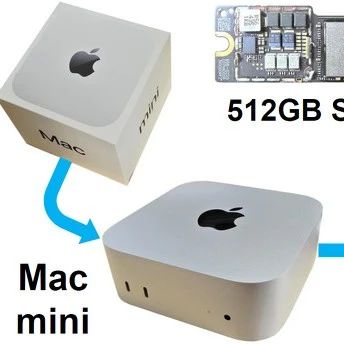
Core Viewpoint - Apple is set to continue its strong product launches in 2025, with a focus on semiconductor technology as a backbone for its products, including the iPhone 16e and Mac Studio [1][3]. Group 1: Product Launches and Specifications - The iPhone 16e is scheduled for release on February 28, 2025, featuring Apple's proprietary modem chipsets [1]. - The Mac Studio will be launched on March 12, 2025, with options for "M3 Ultra" or "M4 Max" versions, supporting up to 512GB of unified memory [1]. - The new Mac mini, set to release on November 8, 2024, will utilize the 3nm technology-based M4 Pro chip, significantly reducing its size and weight compared to the previous generation [3][8]. Group 2: Chip Development and Integration - Apple is actively developing not only its digital processors but also peripheral chips (power ICs and interfaces) to enhance processor performance, creating a complete system in chipsets [2][3]. - The integration of power ICs with processors has been a focus since Apple's acquisition of Dialog Semiconductor's power IC business in 2018, allowing for improved power management and performance [6][7]. - The upcoming products will feature Thunderbolt 5 interfaces, which offer double the speed of Thunderbolt 4, showcasing Apple's commitment to in-house chip development [7][9]. Group 3: Design and Efficiency - The design of the new Mac mini's circuit board has been optimized, resulting in a smaller footprint while maintaining processor packaging size, thanks to advancements in semiconductor technology [8]. - Apple's M4 Pro and M4 Max chips will share a significant amount of silicon, indicating a strategy of standardizing design assets to enhance development efficiency [12][13]. - The company emphasizes the use of its proprietary silicon and control chips across its product range, ensuring consistent performance and functionality [10][11].
特朗普,重创芯片公司
半导体行业观察· 2025-03-18 01:36
Core Viewpoint - The article discusses the significant financial losses experienced by major tech companies since Donald Trump's presidency began, highlighting a total loss of $204 billion and the negative impact of his economic policies on the semiconductor industry [2]. Group 1: Financial Impact on Tech Companies - Since Trump's inauguration, major tech companies have collectively lost $204 billion, contrasting with the initial optimism surrounding AI and semiconductor stocks [2]. - The semiconductor sector, which had seen stock price increases post-Trump's election victory, is now facing declines due to rising trade tensions and economic recession fears [2]. - Morgan Stanley has raised the risk of economic recession from 30% to 40%, reflecting investor concerns about Trump's economic policies [2]. Group 2: Semiconductor Companies' Performance - Nvidia's stock has dropped 14% this year, reflecting investor anxiety over demand for high-end technology and the impact of tariffs [6][8]. - TSMC's stock has fallen nearly 15% due to concerns over trade wars and rising production costs, despite announcing a $100 billion investment plan in the U.S. [9]. - Broadcom's stock has decreased by 17% this year, despite strong earnings, as it struggles to keep pace with Nvidia in the AI semiconductor market [12][14]. Group 3: Legislative and Policy Challenges - Trump's criticism of the $52 billion CHIPS Act, which aims to support domestic semiconductor manufacturing, adds complexity to the industry's outlook [3][4]. - The U.S. Commerce Department's dismissal of 40 staff members responsible for the CHIPS program suggests potential cuts to key semiconductor initiatives [4]. - Intel's future recovery is jeopardized by the uncertain fate of the CHIPS Act, which could have provided up to $8.5 billion in funding [15]. Group 4: Long-term Outlook for AI Market - Despite current challenges, the long-term outlook for the AI market remains optimistic, with projections indicating growth from $233 billion in 2024 to $1.77 trillion by 2032 [18].
存储大厂涨价,关注存储产业链
Huafu Securities· 2025-03-18 00:54
Investment Rating - The report maintains an "Outperform" rating for the electronic industry [5] Core Insights - The storage manufacturers have announced price increases, indicating a potential rebound in storage prices. Sandisk plans to raise prices by over 10% starting April 1, 2025, reflecting the upward trend in NAND Flash wafer prices due to supply constraints and reduced inventory [9] - The mismatch in supply and demand is identified as a primary reason for the price increase in storage. Major manufacturers like Micron and Samsung are reducing production, with Micron expecting a decline in NAND shipments in Q2 2025 and Samsung cutting its supply by 10%-15% [9] - The demand for storage is surging due to increased capital expenditures in AI, with major companies like Meta, Google, Amazon, and Microsoft projected to spend a total of $297.2 billion in 2025, a 36.8% increase year-on-year [9] - The widening supply-demand gap in the storage market is expected to reverse previous pessimistic forecasts, potentially leading to a new investment cycle in the storage sector [9] Summary by Sections Market Performance - The electronic industry index decreased by 0.62% in the week of March 10-14, 2025, ranking among the bottom three sectors [12] - The semiconductor sector saw a decline of 2.11%, while the components sector experienced the highest increase of 6.68% [14] Industry Dynamics - The semiconductor sector is undergoing significant changes, including the appointment of a new CEO at Intel and the rise of Northern Huachuang to the sixth position among global semiconductor equipment suppliers [32][39] - Northern Huachuang is the only Chinese semiconductor equipment manufacturer in the top ten, with a projected 39.4% growth in sales for 2024 [39] - The report highlights the impact of geopolitical tensions on the semiconductor industry, with U.S. tariffs prompting companies to relocate manufacturing to the U.S. [35] Consumer Electronics - Apple faces challenges in the Chinese market, with a projected 2% decline in iPhone sales in 2025 and a significant drop of 31.7% in wireless earphone sales [52][55] - The report notes that Apple is losing market share to domestic brands like Xiaomi and Huawei, which offer more affordable alternatives [55] Automotive Electronics - Global automotive sales increased by 49% in February 2025, reaching 1.2 million units, despite challenges posed by EU tariffs on Chinese electric vehicles [60] - NIO has implemented a 10% workforce reduction, reflecting broader trends in the automotive sector [63]
通信行业周报(3月10日-3月16日)-2025-03-17
Guoxin Securities Co., Ltd· 2025-03-17 12:21
Investment Rating - The communication industry is rated as "Cautiously Optimistic" with a focus on operators with sustained profit growth and enhanced network value, optical communication companies benefiting from traffic growth, and high-quality enterprises with continuous technological innovation [5][41]. Core Viewpoints - The communication sector has shown steady growth in traditional businesses while actively exploring new growth points through innovative applications. Despite recent market adjustments, valuation levels are recovering [5][41]. - The integration of 5G-A (5.5G) and AI is highlighted as a core trend, with expectations for AI to further lead the communication industry towards 6G exploration. Chinese companies are positioned as key players in driving global communication industry development [4][40]. Summary by Sections Market Review - From March 10 to March 16, 2025, the communication sector (CITIC) increased by 0.21%, underperforming the CSI 300 index, which rose by 1.59%, resulting in a 1.37 percentage point lag [2][12]. - Year-to-date, the communication industry has risen by 3.6%, ranking 18th among CITIC's primary industries [12][13]. - As of March 14, the CITIC communication industry had a TTM PE of 22.88 times, positioned at the 26.67 percentile [14]. Industry News - The MWC 2025 showcased the integration of 5G-A and AI, emphasizing the importance of AI in future industry trends. The event attracted over 2,700 exhibitors and highlighted the deep integration of communication technology with various industries [3][36]. - The GSMA's annual report indicated that by the end of 2024, global mobile internet users would reach 4.7 billion, with projections of 5.5 billion by 2030 [3][36]. Investment Recommendations - The report suggests maintaining a cautiously optimistic stance, focusing on operators with continuous profit growth, optical communication companies benefiting from traffic growth, and high-quality firms with strong core competitiveness [5][41].
【招商电子】存储行业深度报告:供需改善下NAND价格拐点趋近,高端存储和端侧创新带来增量需求
招商电子· 2025-03-17 08:02
Group 1 - The storage industry is experiencing significant differentiation across various segments, with high-end storage prices performing well while consumer product prices have dropped to cyclical lows [2][10] - The overall supply-demand balance is improving due to targeted production cuts by original manufacturers, leading to a potential price turning point for certain NAND products [3][20] - High-end storage demand remains strong, and the domestic replacement process is accelerating, with major manufacturers focusing on expanding HBM and eSSD production [4][28] Group 2 - The trend of storage expansion at the edge is confirmed, driven by the increasing penetration of AI in consumer products, leading to higher storage capacity requirements [5][36] - The integration of computing and storage is advancing, addressing the limitations of traditional architectures and enhancing innovation in storage solutions [6][38] - Investment recommendations for 2025 focus on companies benefiting from the recovery of consumer storage, breakthroughs in domestic high-end storage, and innovations in edge storage solutions [6][24] Group 3 - The capital expenditure guidance from major cloud service providers indicates robust growth in high-end storage demand, particularly for HBM and eSSD products [25][26] - Domestic storage manufacturers are rapidly catching up in high-end storage technology, with significant advancements in products like LPDDR5 and PCIe 5.0 SSDs [28][29] - The tightening of U.S. export controls is expected to accelerate the domestic replacement process in the storage industry, impacting both manufacturers and supply chains [31][32]