
德赛西威

Search documents
慧翰股份(301600) - 2025年11月11日投资者关系活动记录表
2025-11-12 09:46
Group 1: Company Development and Market Position - The company started with ICT core technology, focusing on Bluetooth, WiFi, and GPS modules, establishing a strong position in the wireless communication sector despite limited market size initially [2] - In 2012, the company entered the vehicle communication field, launching the first generation of vehicle networking intelligent terminal product TBOX1.0, becoming a primary supplier for SAIC Group [2] - By 2014, the company achieved a breakthrough with the mass production of SAIC's first intelligent connected vehicle, breaking the monopoly of foreign manufacturers in the vehicle intelligent terminal market [2][3] - The company has established long-term partnerships with major domestic and international automotive manufacturers, including SAIC, BYD, and Volvo, creating a stable cooperation network [3] Group 2: eCall Emergency Call System - The eCall system consists of a vehicle-mounted eCall terminal, mobile communication network, and PSAP call center, enhancing the timeliness of traffic accident rescue and reducing casualty rates [4] - The system can automatically trigger emergency calls upon detecting a collision, ensuring functionality even after severe accidents [4][5] - The company recognized the importance of eCall technology early on, tracking legislative developments since the EU's initial research in 2012, and obtained the first domestic EU eCall certification in 2019 [5] - The implementation of the national standard AECS on July 1, 2027, is expected to create a market increase worth billions, as existing products will need to be replaced with compliant ones [6][8] Group 3: Production Capacity and Strategy - The company employs a flexible production line strategy, focusing on core component production and ensuring stable product performance [7] - A strict external cooperation mechanism is in place to manage non-core component processing, ensuring compliance with automotive-grade standards [7] - The company is expanding its production capacity and upgrading technology to meet the anticipated surge in demand following the AECS implementation [8] Group 4: Competitive Advantage - The company emphasizes the need for strong capabilities in R&D, production management, quality control, and supply chain management to stand out in a competitive market [9] - Future strategies include continuous technological innovation and product optimization to enhance competitiveness and solidify market position [9]
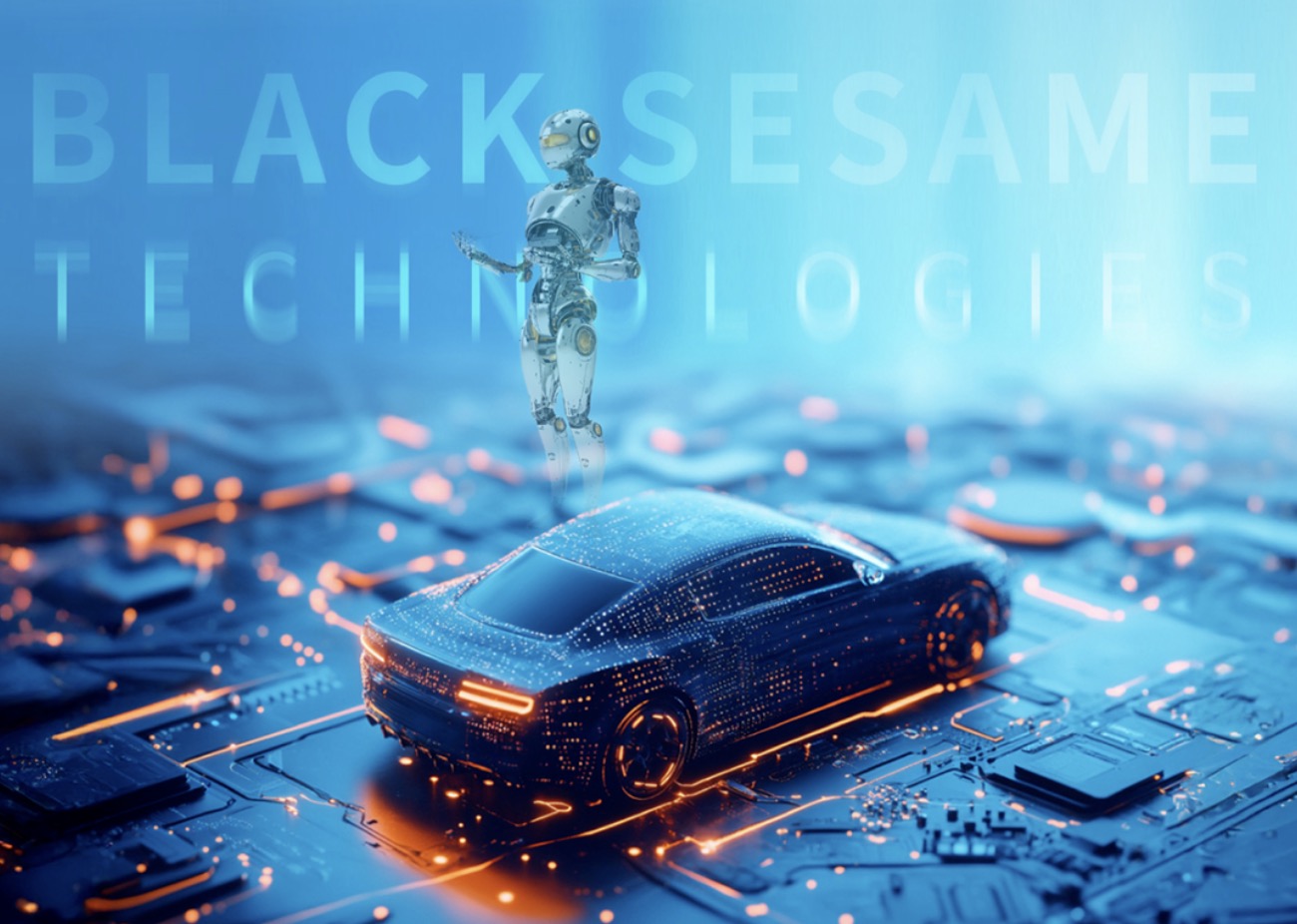
黑芝麻智能辅助智驾芯片上车德赛西威,构建“双脑冗余”架构
Ju Chao Zi Xun· 2025-11-12 05:45
Core Insights - Black Sesame Intelligence announced the successful integration of its flagship Huashan A1000 automotive-grade chip into Desay SV's new low-speed unmanned vehicle brand "Chuanxing Zhiyuan" S6 series, establishing a collaborative innovation model in the automotive electronics and chip industry [2] - The Huashan A1000 chip features a dual-brain redundancy architecture, enhancing safety for unmanned logistics operations by monitoring the main control system and taking over in case of anomalies [2] - Desay SV's focus on low-speed unmanned delivery aims to address urban last-mile logistics efficiency challenges, with safety redundancy being a core support for scalable operations [2] Company Performance - Desay SV reported a revenue of 7.692 billion yuan for Q3 2025, a year-on-year increase of 5.63%, and a total revenue of 22.337 billion yuan for the year-to-date, reflecting a 17.72% growth [4] - The net profit attributable to shareholders reached 1.788 billion yuan, up 27.08% year-on-year, with total assets growing by 26.81% to 27.242 billion yuan as of September 30 [4] - The company’s cash flow from operating activities surged by 169.3% to 2.26 billion yuan, supported by a successful fundraising of 4.393 billion yuan for expansion in facilities, production lines, and R&D [4] Technological Advancements - The Huashan A1000 chip has achieved ISO 26262 ASIL-B functional safety certification and AEC-Q100 Grade 2 automotive reliability certification, featuring a dual-core lockstep safety processor [3] - It offers 58 TOPS of high-performance computing power while maintaining low power consumption, capable of efficiently processing various sensor data and ensuring real-time responses in critical scenarios [3] - The chip operates within a wide temperature range of -40°C to 105°C, making it suitable for diverse outdoor and low-temperature storage applications [3] Strategic Developments - Black Sesame Intelligence is expanding its dual-line strategy in the smart automotive and robotics sectors, with the Huashan series focusing on driver assistance and the upcoming Huashan A2000 family embracing large models [5] - The Wudang series targets cross-domain computing, with the C1200 family innovating in electronic and electrical architecture, already receiving positive feedback in multiple scenarios [5] - The company plans to launch a robotics product line, leveraging its automotive technology to reduce development barriers and accelerate product deployment [5] Industry Collaboration - The partnership between Black Sesame Intelligence and Desay SV highlights the importance of upstream and downstream collaboration in the industry, with potential for further expansion in smart logistics and robotics [6] - As Desay SV deepens its focus on unmanned delivery and Black Sesame continues to iterate its chip technology, both companies are positioned to drive new momentum in the smart industry [6]


中国汽车零部件- 跨越边界增长:零部件供应商走向全球-China Auto Parts-Growing Beyond Borders – Parts Suppliers Going Global
2025-11-12 02:20
Summary of China Auto Parts Industry Conference Call Industry Overview - **Industry**: China Auto Parts - **Focus**: Global expansion of auto parts suppliers due to deteriorating domestic margins and improving product quality [1][2][3] Key Insights Global Expansion Trends - **Accelerating Global Expansion**: Chinese auto parts suppliers are shifting from exports to offshoring, aiming to capture a US$240 billion opportunity and increase overseas market share to 10% by 2030, with a projected 12% CAGR from 2025 to 2030 [2][57]. - **Push-Pull Dynamic**: Domestic price competition and margin pressure are pushing suppliers to limit domestic exposure, while advancements in product quality and technology are pulling them towards global markets [3][29]. Market Dynamics - **Domestic Margin Pressure**: Average net margins for auto parts suppliers fell from 11.6% in 2022 to 9.9% in 2024, with over 50% of companies experiencing gross margin declines in 1H25 [76][84]. - **Export Growth**: China's auto parts export value grew at a CAGR of 10% from 2019 to 2024, up from 1% CAGR in 2014-2019 [25][52]. Strategic Shifts - **From Exports to Offshoring**: Suppliers are expected to establish offshore plants, with net margins for these plants projected to be 10-15 percentage points lower than exports [4][34]. - **Popular Offshore Locations**: Key sites for offshore plants include Mexico, Eastern Europe, North Africa, and Southeast Asia, chosen for their competitive labor and energy costs [35][96]. Company-Specific Insights Preferred Suppliers - **Strong Candidates for Global Expansion**: - **Xingyu (601799.SS)**: Low but expanding overseas exposure, expected to accelerate revenue through project wins [5][41]. - **Desay (002920.SZ)**: Similar profile to Xingyu, with potential for overseas revenue growth [5][41]. - **Minth (0425.HK)** and **Keboda (603786.SS)**: Sizable and improving overseas exposure, expected to grow earnings amid tariff disruptions [5][41]. Downgrades - **Sanhua (002050.SZ)** and **Tuopu (601689.SS)**: Downgraded due to slowing EV parts outlook and market optimism already priced in [5][41]. Financial Projections - **Market Share Growth**: Expected to capture 10.1% of overseas market share by 2030, with production value increasing at a CAGR of 32% from 2025 to 2030 [57][58]. - **Investment Ratings**: - **Overweight (OW)**: Xingyu, Desay, Minth, Keboda - **Equal Weight (EW)**: Fuyao, Sanhua, Tuopu - **Underweight (UW)**: Recodeal, Hirain [9][42]. Additional Considerations - **Challenges in Domestic Market**: Suppliers face a dilemma with JV OEMs offering decent margins but declining volumes, while local OEMs provide volume but at lower margins [28][62]. - **Quality Improvements**: Chinese suppliers have made significant advancements in product quality, enabling them to compete for global OEM contracts [3][88]. Conclusion The China auto parts industry is undergoing a significant transformation as suppliers seek to expand globally in response to domestic margin pressures and competitive dynamics. Key players are positioned to benefit from this shift, while others face challenges that may impact their growth prospects.



财联社汽车早报【11月12日】
Xin Lang Cai Jing· 2025-11-12 01:19
Group 1: Policy Adjustments and Market Trends - Hubei Province announced adjustments to the 2025 automobile trade-in subsidy policy, suspending the scrap update subsidy and optimizing the issuance of qualification vouchers to better meet consumer demand and promote healthy development of the automotive market [1] - The China Association of Automobile Manufacturers reported that from January to October, China's automobile production and sales reached 27.69 million units, with a year-on-year growth of over 10%. Notably, in October, new energy vehicle sales exceeded 50% of total new car sales for the first time, reaching 51.6% [1][2] - The implementation of the national trade-in policy has shown significant effects, with market order improving and price competition becoming more rational, as new car launches are breaking previous price limits rather than simply reducing prices [3] Group 2: Corporate Developments - John Roth will take over as the new president of General Motors China starting December 1, succeeding Steve Hill, who will assume a new role as Senior Vice President of Global Export and Retail Innovation [5][6] - The leadership change at General Motors aims to support the ongoing recovery of the Chinese market and promote growth in global exports [6] Group 3: Technological Advancements - Black Sesame Intelligence announced that its flagship product, the Huashan A1000 chip, has been successfully integrated into Desay SV's new low-speed unmanned vehicle, enhancing the safety of logistics operations [4]
黑芝麻智能助力川行致远无人车实现安全冗余新突破
Zheng Quan Ri Bao Wang· 2025-11-11 13:11
Core Insights - Hezhima Intelligent Technology Co., Ltd. announced the successful integration of its flagship product, the Huashan A1000 automotive-grade high-performance auxiliary driving chip, into the new low-speed unmanned vehicle brand "Chuanxing Zhiyuan" S6 series by Desay SV Automotive [1][2] - The S6 series utilizes a "dual-brain redundancy" architecture, where the Huashan A1000 chip acts as a safety backup brain, ensuring safe delivery operations in various environments [1] Group 1 - The Huashan A1000 chip has passed multiple authoritative automotive certifications and features a dual-core lockstep safety processor and an independent safety island [1] - The chip supports various sensor data processing and ensures real-time response in critical scenarios, enhancing operational safety [1] - The collaboration aims to enhance the competitiveness of low-speed unmanned vehicles in high-safety-demand scenarios while solidifying Hezhima's position in the low-speed unmanned delivery chip market [2] Group 2 - The S6 series is designed to address the "last mile" logistics efficiency issue in urban areas, with safety redundancy being a core support for its large-scale operations [1] - The Huashan A1000 chip is equipped with rich automotive-grade interfaces and a flexible computing architecture for efficient system collaboration [1] - Hezhima will continue to provide safety redundancy support for the large-scale deployment of the Chuanxing Zhiyuan S6, helping to establish market advantages [2]
2025Q3板块业绩分化,客车及零部件业绩亮眼:——汽车行业专题研究
Guohai Securities· 2025-11-11 12:33
Investment Rating - The report maintains a "Recommended" rating for the automotive sector [1] Core Views - The automotive industry has shown a mixed performance in Q3 2025, with significant growth in bus and parts sectors, while passenger vehicle profits continue to decline due to intensified competition [1][4] - The overall automotive wholesale sales reached 8.71 million units in Q3 2025, reflecting a year-on-year increase of 15.8% [4][28] - The report highlights the impact of policies such as vehicle trade-in and subsidies, which are expected to support passenger vehicle sales in 2024 and 2025 [4][41] Summary by Sections Recent Trends - The automotive sector outperformed the Shanghai and Shenzhen 300 index with a 23.8% increase from January to October 2025, while the index rose by 17.9% [10] - The parts sector has shown remarkable performance, with significant stock price increases among component companies [22] Revenue and Profit - In Q3 2025, the automotive industry generated revenue of CNY 1,058.55 billion, up 10.1% year-on-year, with a net profit of CNY 40.41 billion, reflecting a 9.1% increase [38][41] - The passenger vehicle segment reported revenue of CNY 544.06 billion, a 7.7% increase, but net profit fell by 18.6% [39][41] - The bus segment saw a revenue increase of 30.1% year-on-year, with net profit soaring by 95.4% [40][41] - The parts sector achieved revenue of CNY 395.66 billion, up 11.0%, with net profit increasing by 26.3% [41] Key Companies and Forecasts - The report identifies key companies benefiting from the current market dynamics, including Li Auto, BYD, and Great Wall Motors, among others [4][5] - It emphasizes the potential for high-end and intelligent vehicle segments to drive future growth, recommending investments in companies positioned for these trends [4][5] Market Dynamics - The report anticipates that the industry will continue to evolve around "new energy expansion and price competition," with further profit differentiation expected [42]
【周观点】小鹏科技日完善AI布局,继续看好汽车板块
东吴汽车黄细里团队· 2025-11-11 09:09
Investment Highlights - This week's sector performance ranking: SW Commercial Passenger Vehicles (+0.8%) > SW Auto Parts (-0.2%) > SW Autos (-1.2%) > SW Commercial Freight Vehicles (-3.2%) > SW Passenger Vehicles (-3.4%) [4][13] - Top five stocks covered this week include Weichai Power, China National Heavy Duty Truck Group H, Naisite, NIO-SW, and Jifeng Co., Ltd. [4][13] Research Outcomes - The team released Q3 performance summaries and reports on Top Group, Xusheng Group, Guangyang Co., and Bertley, as well as a report on Xingyuan Zhuomei [5][13] Industry Core Changes 1. Tesla's $1 trillion compensation plan was approved, with performance targets including the delivery of 20 million vehicles, 10 million active FSD users, 1 million Robotaxi commercial operations, delivery of 1 million Optimus robots, and an adjusted annual EBITDA target of $400 billion [6][13] 2. XPeng's Technology Day introduced VLA 2.0, the first fully self-developed Robotaxi, the new generation humanoid robot IRON, and two flight systems [6][8][13] 3. Seres, Pony.ai, and WeRide officially listed on the Hong Kong Stock Exchange [6][8][13] Current Automotive Sector Configuration - The automotive industry is at a crossroads: the electric vehicle (EV) boom is nearing its end, while automotive intelligence is in a "dark before dawn" phase, and robotics innovation is in the 0-1 stage. Three main investment opportunities are present during this transition [9][15] - **AI Smart Vehicle Main Line**: Focus on Robotaxi/vans first, followed by C-end applications. Key downstream targets include: - Robotaxi perspective: Integrated models (Tesla, XPeng, Qianli Technology); technology providers + operational sharing models (Horizon Robotics, Baidu, Pony.ai, WeRide); transformation of ride-hailing/taxi services (Didi, Cao Cao Mobility, Ruqi Mobility, Dazhong Transportation, Jinjiang Online) [9][15] - Robovan perspective: Desay SV, Zhongyou Technology, Kaile Co., etc. [9][15] - C-end vehicle sales perspective: Complete vehicles (XPeng, Li Auto, Huawei, Xiaomi, etc.) [9][15] - **Upstream Supply Chain Key Targets**: - B-end vehicle OEMs: BAIC Blue Valley, GAC Group, SAIC Group, etc. [9][15] - Core suppliers: Testing (China Automotive Research, China Automotive Industry Group, etc.), chips (Horizon Robotics, Black Sesame Intelligence), domain controllers (Desay SV, Jingwei Hirain, Joyson Electronics, Coboda, etc.), sensors (Sunny Optical Technology, Hesai Technology, Suteng Juchuang), steer-by-wire chassis (Bertley, Naisite, Zhejiang Shibao), lights (Xingyu Co., Ltd.), glass (Fuyao Glass) [9][15] - **AI Robotics Main Line**: Preferred components (Top Group, Joyson Electronics, Xinquan Technology, Precision Forging Technology, Fuda Co., Ltd., Xusheng Group, Aikedi, etc.) [9][15] - **Dividend & Good Pattern Main Line**: Buses (Yutong Bus), heavy trucks (China National Heavy Duty Truck A-H, Weichai Power), two-wheelers (Chunfeng Power, Longxin General) [10][15]

黑芝麻智能:华山A1000成功搭载于德赛西威全新低速无人车品牌 “川行致远”S6系列
Mei Ri Jing Ji Xin Wen· 2025-11-11 08:20
Core Viewpoint - The flagship product of Hezhishama, the Huashan A1000 automotive-grade high-performance auxiliary driving chip, has been successfully integrated into Desay SV's new low-speed unmanned vehicle brand "Chuanxing Zhiyuan" S6 series, providing a dual-brain redundancy architecture for safe logistics operations [1] Group 1 - Hezhishama's Huashan A1000 chip serves as a core component in the dual-brain architecture [1] - The integration aims to enhance safety for end logistics unmanned operations [1] - Desay SV's new unmanned vehicle brand focuses on low-speed applications [1]
小鹏 VLA2.0 发布:智能驾驶体现更强大的泛化性:智联汽车系列深度之 39
Shenwan Hongyuan Securities· 2025-11-10 12:57
Investment Rating - The report maintains a positive outlook on the investment potential of companies involved in the development of VLA2.0 technology, particularly focusing on Xiaopeng Motors and its partners [4][36]. Core Insights - The VLA2.0 model demonstrates enhanced generalization capabilities, achieving performance similar to human drivers in certain scenarios, such as navigating complex roads with minimal human intervention [3][5]. - The technology is expected to spill over into other fields of embodied intelligence, including robotics and low-altitude economy applications [4][29]. - The report highlights the significant investment in training the VLA2.0 model, which consumed 30,000 computing units and over 2 billion yuan in training costs, utilizing nearly 100 million training data points [2][14]. Summary by Sections Section 1: Xiaopeng's VLA2.0 Release - Xiaopeng's VLA2.0 is designed to be more efficient and responsive, capable of handling various road conditions seamlessly, including complex intersections and narrow roads [9][12]. Section 2: Algorithm Development - The VLA model has a clear historical evolution, transitioning from single-modal processing to multi-modal understanding and execution, enhancing its application in the industry [20][22]. Section 3: Computing Power - Turing Chip - The Turing chip, which supports the VLA2.0 model, features independent ISP and enhanced perception capabilities, crucial for recognizing challenging environmental conditions [32][34]. Section 4: Investment Targets - Key investment targets identified include Xiaopeng Motors, Desay SV, Geek+, and Tianzhun Technology, which are positioned to benefit from advancements in VLA technology [4][36]. Section 5: Appendix - The report includes a comparison of mainstream VLA algorithms, highlighting various technical paths and architectures that have emerged in the field [41][42].
智联汽车系列深度之39:小鹏VLA2.0发布:智能驾驶体现更强大的泛化性
Shenwan Hongyuan Securities· 2025-11-10 10:50
Investment Rating - The report maintains a positive outlook on the industry, particularly highlighting the advancements represented by Xiaopeng's VLA2.0 in enhancing algorithmic capabilities for intelligent driving [5][6]. Core Insights - The VLA2.0 demonstrates significantly improved generalization capabilities, achieving human-like feedback in certain scenarios, such as navigating complex roads with minimal human intervention [5][6]. - The report emphasizes the potential for technology spillover from VLA2.0 into other embodied intelligence fields, including robotics and low-altitude economies [5][31]. - Key investment targets identified include Xiaopeng Motors, Desay SV, Xizhi Jia, and Tianzhun Technology [5][38]. Summary by Sections Section 1: Xiaopeng's VLA2.0 Release - Xiaopeng's VLA2.0 was launched with claims of higher efficiency and faster response times, capable of handling various road conditions seamlessly [12][15]. - The second-generation VLA eliminates the traditional language translation step, allowing for direct conversion from visual input to action, which retains more information [15][16]. Section 2: Algorithm Development - The VLA model has a clear historical evolution, enhancing its capabilities over time from single-modal processing to multi-modal understanding and execution [19][24]. - The report notes the ongoing divergence in investment strategies within the market due to the non-convergence of technical solutions, highlighting the impact of the second-generation VLA on industry applications [29][30]. Section 3: Computing Power - Turing Chip - The Turing chip, which supports the VLA2.0, features independent ISP and enhanced perception capabilities, crucial for recognizing challenging environmental conditions [34][36]. - The chip is designed to support low bandwidth, which is beneficial for AI inference and autonomous driving, resulting in lower power consumption and reduced latency [34][36]. Section 4: Investment Targets - The report identifies key investment targets including Xiaopeng Motors, Desay SV, Xizhi Jia, and Tianzhun Technology, indicating their relevance in the intelligent driving sector [38][39].