
贝达药业

Search documents
创新药赛道火爆!机构密集调研+资金大幅加仓,仅13股
Zheng Quan Shi Bao Wang· 2025-08-11 01:43
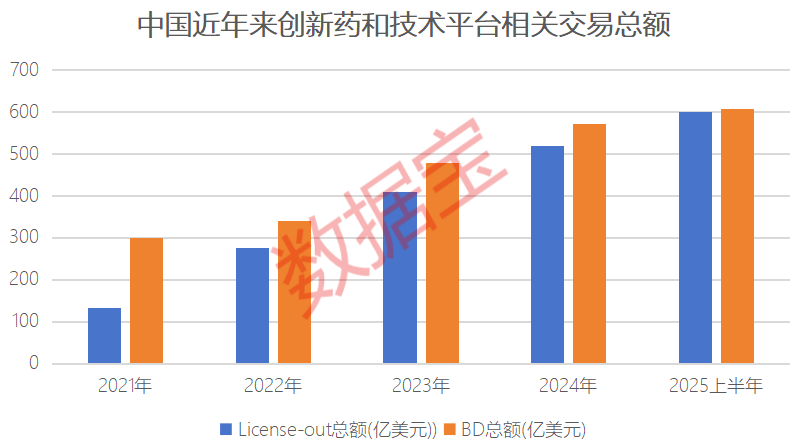
Core Viewpoint - China's innovative pharmaceuticals have transitioned from being followers to key players in global medical innovation, achieving significant breakthroughs in core treatment areas such as metabolic diseases and oncology, with a surge in new drug approvals and international progress [1][3]. Group 1: Market Trends - The attention of A-share investors towards innovative pharmaceuticals has significantly increased this year, with numerous companies actively disclosing their R&D and clinical progress [2]. - The total value of license-out transactions for innovative drugs in China is projected to exceed $60 billion by mid-2025, surpassing the total for 2024, with 16 transactions exceeding $1 billion each [3]. - The market size of China's innovative drugs reached 679 billion yuan in 2022, expected to exceed 1 trillion yuan by 2026 and reach 1.12 trillion yuan by 2027 [6]. Group 2: International Expansion - Chinese innovative drug companies are accelerating their international business, with 81 companies generating over 100 billion yuan in overseas revenue from 2022 to 2024, accounting for more than 14% of their total revenue [7]. - The proportion of China's innovative drug transactions in the global market has increased from 10.8% in 2015 to approximately 52.5% by August 2023 [6]. Group 3: Policy and Financial Support - The Chinese government has implemented policies to support the high-quality development of innovative drugs, significantly reducing the time from drug approval to inclusion in the medical insurance directory from about 5 years to approximately 1 year [8]. - From 2015 to 2024, the financing in China's innovative drug sector exceeded 1.23 trillion yuan, providing strong momentum for industry growth [9]. Group 4: R&D Investment - The number of companies in the pharmaceutical and biotechnology sector has increased from over 220 in 2015 to nearly 500 currently, with R&D investment in the sector exceeding 140 billion yuan in 2024, a fivefold increase since 2015 [9]. - Among the 81 innovative drug companies, R&D investment rose from approximately 8.8 billion yuan in 2015 to over 57.8 billion yuan in 2024, with R&D intensity increasing from 3.29% to 8.04% [9]. Group 5: Company Developments - Companies such as Betta Pharmaceuticals and Rundu Co. have reported significant advancements in their innovative drug pipelines, with Betta's drug expected to be approved by June 2025 and Rundu's drug completing phase III clinical trials [12]. - The stock performance of companies involved in innovative drugs has surged, with some companies experiencing average increases of over 50% since May 1, 2023 [13]. Group 6: Institutional Interest - 13 companies have received significant institutional interest this year, with some experiencing over 30% increase in financing, indicating strong market confidence in innovative drug investments [14]. - Companies like BeiGene and TaiGen Biotechnology are projected to see substantial profit growth in 2025 and 2026, with BeiGene potentially turning profitable this year [15].




艾力斯员工持股平台要减持套现12亿元,大单品伏美替尼还能“单打”多久?
Guo Ji Jin Rong Bao· 2025-08-09 10:21
Core Viewpoint - The company Ailis (688578.SH) announced plans for a share reduction by its employee stock ownership platforms due to funding needs, potentially affecting up to 3% of its total shares, corresponding to a maximum value of over 1.2 billion yuan based on recent market capitalization [1][3]. Group 1: Share Reduction Announcement - Ailis plans to reduce up to 13,500,000 shares, representing no more than 3.00% of its total share capital, starting from September 1, 2025 [1]. - The company's market capitalization was reported at 42.5 billion yuan as of August 8, 2023 [1]. Group 2: Employee Stock Ownership Platforms - The shares held by the employee stock ownership platforms were acquired through equity incentives before the IPO, resulting in significant appreciation in value [3]. - The Shanghai Aixiang platform held 10.11% of Ailis prior to the IPO, with an initial investment of 59.57 million yuan, which has appreciated substantially [3]. Group 3: Key Shareholders - Jeffery Yang Guo, a core founder's son, holds 25.6236 million shares valued at approximately 2.422 billion yuan, making him the largest shareholder [3]. - Chairman and General Manager Du Jinhao holds 10.8 million shares valued at around 1.021 billion yuan, ranking him second among shareholders [4]. Group 4: Market Trends - There is a growing trend of share reductions by employee stock ownership platforms in the market, with other companies like United Imaging Healthcare also announcing similar plans [4]. - The stock market has shown positive trends, prompting many companies to liquidate shares through employee platforms [4]. Group 5: Financial Performance - Ailis reported revenues of 790 million yuan, 2.018 billion yuan, and 3.558 billion yuan for the years 2022, 2023, and 2024, respectively, with net profits of 131 million yuan, 644 million yuan, and 1.43 billion yuan [6]. - In Q1 of the current year, Ailis achieved a revenue of 1.098 billion yuan, a 48% year-on-year increase, and a net profit of 410 million yuan, a 34% increase [7]. Group 6: Product Dependency and Competition - Ailis heavily relies on its lung cancer drug, Vomeletinib, which has captured over 80% of the market share in its category, but faces increasing competition from other EGFR TKI products [8][9]. - The competitive landscape includes several other approved products, with Ailis's Vomeletinib projected to generate around 4.5 billion yuan in 2025 [8].

贝达药业股价微跌0.12% 创新药出海战略持续推进
Jin Rong Jie· 2025-08-08 17:30
Core Viewpoint - Beida Pharmaceutical's stock price has shown a slight decline, while the company focuses on the development and production of innovative anti-tumor drugs, particularly targeting lung and breast cancer treatments [1] Company Overview - Beida Pharmaceutical's stock price as of August 8, 2025, is 67.35 yuan, down 0.12% from the previous trading day [1] - The trading volume for the day was 102,400 lots, with a transaction amount of 685 million yuan, and a price fluctuation of 4.30% [1] - The company has received FDA approval for its self-developed drug, Ensartinib, which is set to launch in the North American market in 2024 [1] Research and Development Focus - Beida Pharmaceutical is optimizing its R&D pipeline by concentrating resources on core projects [1] - The company has chosen to independently manage the North American sales of Ensartinib to build its international commercial capabilities [1] - The company’s board secretary indicated that this move will help accumulate essential overseas commercialization experience for the future [1] Financial Flow - On the day of reporting, Beida Pharmaceutical experienced a net outflow of 41.97 million yuan in principal funds, with a cumulative net outflow of 230 million yuan over the past five days [1]
破同质化困局,创新药产业迎 “中国加速度”
2 1 Shi Ji Jing Ji Bao Dao· 2025-08-08 04:11
Core Insights - The Chinese pharmaceutical industry is transitioning from "generic" to "innovative" drugs, entering a phase of explosive growth after years of technological accumulation and industry maturation [1][3] - In the first half of this year, China approved 43 innovative drugs, a 59% increase year-on-year, marking a historical high for the same period [1] - Business development (BD) activities have exceeded 50 cases with a total value surpassing $48 billion, indicating strong market interest in domestic innovations [1] Industry Trends - The Chinese innovative drug sector has moved from initial exploration to a mature growth phase, significantly reducing the time gap for drug approval compared to the U.S. from 10 years in 2010 to 3.7 years in 2024 [3] - The industry faces challenges of high homogeneity in drug development, with 29% of all drug applications targeting the top 20 drug development targets [3][4] - Companies are focusing on creating differentiated advantages by targeting unmet clinical needs or developing new products in less explored areas [4] Policy and Capital Support - The Chinese government has introduced a comprehensive support system for innovative drugs, including 16 measures covering research, insurance access, and clinical use [5][6] - Recent regulatory changes have facilitated capital access for innovative drug companies, allowing them to secure funding for research and development [5][6] Globalization and Market Expansion - Chinese pharmaceutical companies are increasingly becoming key contributors to global innovation, with nearly half of the global BD transactions exceeding $50 million involving Chinese firms [2][7] - The trend of "license out" and strategic partnerships is becoming more prevalent as companies seek to expand their international presence [8][9] - The cost advantages in clinical trials in China, where the cost per participant is about one-third of that in the U.S., are enhancing the competitiveness of Chinese biotech firms [9] Technological Innovation - The application of AI technologies is revolutionizing the Chinese innovative drug sector, improving efficiency in drug development and clinical research [9] - Companies are integrating AI into their processes to enhance research efficiency and data value, which is crucial for global competitiveness [9]

精准医疗概念7日主力净流出9350.36万元,千红制药、塞力医疗居前
Sou Hu Cai Jing· 2025-08-07 23:07
Core Insights - The precision medicine sector experienced a slight increase of 0.62% on August 7, with a net outflow of main capital amounting to 93.50 million yuan [1] - A total of 23 stocks within the sector saw gains, while another 23 stocks faced declines [1] Capital Flow Analysis - The companies with the highest net outflows were: - Qianhong Pharmaceutical: 187 million yuan - Saily Medical: 139 million yuan - Zhifei Biological: 134 million yuan - Betta Pharmaceuticals: 104 million yuan - Junshi Biosciences-U: 78.25 million yuan [1] Notable Stock Performances - The following companies showed significant net inflows: - Berry Genomics: 207 million yuan, with a price increase of 5.26% - Lide Man: 158 million yuan, with a price increase of 20.02% - Kehua Bio: 143 million yuan, with a price increase of 9.96% - Da'an Gene: 60.09 million yuan, with a price increase of 2.98% - Sanbo Brain Science: 57.30 million yuan, with a price increase of 5.12% [1]


推动产业交流和资本对接 深交所举办生物医药主题创享荟活动
Zhong Guo Zheng Quan Bao· 2025-08-07 21:57
Core Insights - The innovative drug industry is experiencing robust growth, with the innovative drug index rising by 50.2% year-to-date as of August 7 [1] - The China National Medical Products Administration approved 43 innovative drugs in the first half of the year, a 59% increase year-on-year, nearing the total of 48 for the entire year of 2024 [2] - The industry is seeing a shift towards deeper strategic collaborations in overseas licensing, moving from simple product exports to comprehensive partnerships [4] Industry Growth and Trends - The innovative drug sector is benefiting from ongoing drug review reforms and policy incentives, leading to a revitalization of the capital market [2] - Companies like Tigermed are establishing integrated platforms to support clinical research across all stages globally [2] - The R&D expenditure of Shijiazhuang Pharmaceutical Group has increased from 1.583 billion HKD in 2018 to approximately 5.19 billion HKD in 2024, reflecting a consistent double-digit growth [2] International Expansion - In the first half of the year, upfront payments for overseas licensing of innovative drugs exceeded 2.5 billion USD, with total transaction amounts nearing 50 billion USD, comparable to the previous year's figures [4] - Shijiazhuang Pharmaceutical Group has completed four overseas licensing agreements this year, with a total contract value of approximately 9.7 billion USD [4] - The potential for sustainable business development (BD) partnerships depends on the core capabilities of Chinese innovative drug companies [4] AI in Drug Development - AI technology is significantly transforming drug development by shortening research cycles and reducing costs, with applications expanding rapidly [7] - The integration of AI with automation in production processes is expected to enhance quality and reduce costs, promoting sustainable practices [7] - Companies like De Rui Zhi Yao are leveraging AI to drive new drug development, with several innovative drugs already in clinical stages [7][8]

深交所举办生物医药主题创享荟活动
Zhong Guo Zheng Quan Bao· 2025-08-07 21:11
Industry Overview - The innovative drug industry has shown robust growth this year, with the innovative drug index rising by 50.2% as of August 7 [1] - The National Medical Products Administration reported that 43 innovative drugs were approved in the first half of the year, a 59% increase year-on-year, nearing the total of 48 expected for the entire year of 2024 [1] Company Insights - Tigermed, a leading clinical research organization (CRO) in China, has established an integrated platform covering all stages from preclinical to clinical processes, ensuring global project synchronization [2] - The R&D expenditure of CSPC Pharmaceutical Group has increased from 1.583 billion HKD in 2018 to approximately 5.19 billion HKD in 2024, reflecting a consistent double-digit growth [2] Market Dynamics - The innovative drug sector is experiencing a resurgence driven by policy support and companies strengthening their competitive edge [2] - In the first half of this year, the upfront payments for innovative drug licensing exceeded 2.5 billion USD, with total transaction amounts nearing 50 billion USD, comparable to the total for the previous year [3] International Collaboration - Chinese innovative drug companies are increasingly engaging in overseas licensing transactions, with CSPC announcing four licensing agreements this year, totaling approximately 9.7 billion USD [3] - The shift from single product output to deeper strategic collaborations in international markets is a notable trend [3] AI in Drug Development - AI technology is rapidly transforming drug development, significantly shortening research cycles and reducing costs [4] - The integration of AI with automation in production processes is expected to enhance production quality and lower costs, promoting sustainable practices [5] - Companies like De Rui Zhi Yao are leveraging AI to drive new drug development, with several innovative drugs already in clinical stages [5]
从跟随到领跑:中国创新药企加速出海步伐 借力资本市场提升创新与商业化能力
Zheng Quan Ri Bao Wang· 2025-08-07 12:11
Group 1: Industry Overview - The Chinese innovative drug sector has experienced significant growth, with the innovative drug index rising by 49.74% year-to-date as of August 7, 2025, outperforming the broader market [1] - The sector is witnessing an increase in research and development achievements, large business development (BD) transactions, and a faster pace of international expansion among biopharmaceutical companies [1] - The Shenzhen Stock Exchange has introduced a third set of listing standards to support high-quality, unprofitable companies in the biopharmaceutical and medical device sectors, enhancing market inclusivity [1] Group 2: Internationalization of Chinese Drug Companies - In the first half of 2025, the overseas BD transaction amount for Chinese pharmaceutical companies reached $60 billion, surpassing the total for 2024, reflecting improved R&D efficiency and cost advantages [2] - Companies like Betta Pharmaceuticals are pushing for internationalization, with their product, Ensartinib, receiving FDA approval in 2024, marking a significant step in their global commercial capabilities [2] - The proportion of Chinese companies in overseas licensing deals with upfront payments exceeding $50 million has increased from 4% five years ago to 42% currently, indicating a shift in global pharmaceutical dynamics [2] Group 3: Market Recognition and Support - Global markets are increasingly recognizing the innovation of Chinese enterprises, supported by favorable domestic policies and market conditions [3] - The collaboration between local companies and multinational pharmaceutical firms is raising the industry's ceiling, enhancing corporate value and market perception [3] - Companies are advised to leverage their strengths and consider various internationalization strategies, including licensing, mergers, and acquisitions [3] Group 4: Financing and Capital Market Support - The capital market plays a crucial role in supporting the long and costly R&D cycles of innovative drugs, with the Shenzhen Stock Exchange providing lifecycle services through IPOs and mergers [5] - Companies are diversifying their financing tools, with examples of successful fundraising leading to significant market valuations, such as Kelun Pharmaceutical's subsidiary surpassing a market cap of 100 billion [5] - There are calls for regulatory support to allow phased financing for early-stage innovations, as current restrictions pose challenges for fundraising [5] Group 5: Support for Startups and Early-Stage Companies - Startups in the innovative drug sector require financial backing, with recent developments allowing for knowledge property pledges and government risk compensation loans [6] - Local government-backed funds are emerging as key players in providing patient capital to support the growth of innovative drug companies [6] - Investment institutions are encouraged to provide comprehensive support to companies, from early identification of research achievements to ongoing assistance in commercialization [6]
海西新药二闯港交所:“学霸”夫妻掌舵,报告期内毛利率均超80%
Mei Ri Jing Ji Xin Wen· 2025-08-07 11:17
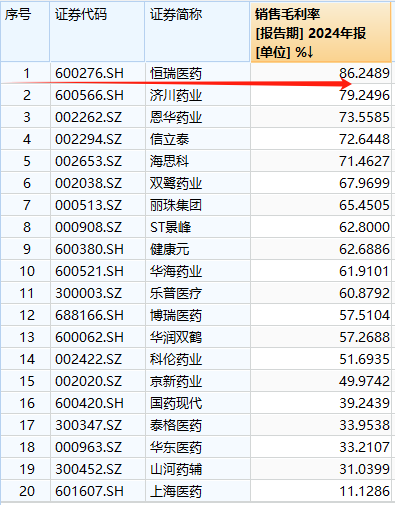
Core Viewpoint - Haixi New Drug has submitted its IPO application to the Hong Kong Stock Exchange, marking its second attempt after the first one lapsed in January 2023. The updated application includes financial data for 2024 and the first five months of 2025, with plans to raise funds for drug development and commercialization efforts [1][2]. Company Overview - Established on March 27, 2012, Haixi New Drug is a commercial-stage pharmaceutical company based in Fuzhou, Fujian Province, focusing on the research, development, production, and sales of pharmaceutical products [2]. - The company has a product portfolio that includes generic drugs for various diseases, with 14 generic drugs approved by the National Medical Products Administration, four of which are included in the national centralized procurement [3][2]. Financial Performance - Revenue for Haixi New Drug during the reporting period was approximately CNY 212 million, CNY 317 million, CNY 467 million, and CNY 249 million, with net profits of approximately CNY 69 million, CNY 117 million, CNY 136 million, and CNY 90 million respectively [5]. - The company’s gross profit margins were reported at 81%, 83.3%, 83%, and 84% during the same periods, ranking second among 20 generic drug companies in A-shares [6][9]. Market Position and Product Distribution - The majority of Haixi New Drug's revenue comes from sales to distributors, who then supply hospitals and pharmacies. The four generic drugs included in centralized procurement contributed significantly to revenue, although the contribution from the leading product, Anbili, decreased from 78.4% in 2022 to 29.3% in the first five months of 2025 [3][4]. - By treatment area, revenue primarily came from products for digestive and cardiovascular diseases, with the share of digestive system products declining from 78.4% in 2022 to 29.6% in the first five months of 2025, while cardiovascular products increased from 4.2% to 52.6% [4]. Research and Development - Haixi New Drug has a research team of 112 members, with approximately 27% holding doctoral or master's degrees, and an average industry experience of about 19 years [2]. - The company has established a global patent portfolio consisting of 36 patents, with 17 patents granted in various jurisdictions including the US, Canada, and several European countries [2]. Cash Position - As of May 31, 2025, Haixi New Drug reported cash and cash equivalents of approximately CNY 46.26 million, a significant decrease from CNY 254 million at the end of 2023 [9].
重组蛋白概念下跌1.29%,10股主力资金净流出超5000万元
Zheng Quan Shi Bao Wang· 2025-08-07 08:51
Core Viewpoint - The recombinant protein sector experienced a decline of 1.29% as of the market close on August 7, with several companies within the sector showing significant drops in stock prices [1][2]. Market Performance - The top-performing concept sectors included rare earth permanent magnets (+3.24%), brain-computer interfaces (+2.69%), and hyperbaric oxygen chambers (+2.56%), while the recombinant protein sector was among the worst performers [2]. - Within the recombinant protein sector, companies such as Zhifei Biological, ShenZhou Cell, and Dezheng Health saw the largest outflows of main funds, with net outflows of 1.22 billion, 1.12 billion, and 1.10 billion respectively [2][3]. Fund Flow Analysis - The recombinant protein sector experienced a net outflow of 867 million in main funds today, with 37 stocks seeing outflows, and 10 stocks having outflows exceeding 50 million [2]. - The stocks with the highest net inflows included Borui Pharmaceutical, Rejing Biological, and Marumi Biological, with inflows of 2.33 billion, 16.48 million, and 16.39 million respectively [2][4]. Stock Performance - Notable declines in stock prices within the recombinant protein sector included: - Zhifei Biological: -1.06% - ShenZhou Cell: -4.57% - Dezheng Health: -1.65% - Beida Pharmaceutical: -2.53% - Maiwei Biological: -5.31% [2][3]. - Conversely, stocks that increased in value included: - *ST Suwu: +4.63% - Marumi Biological: +3.55% - Fulejia: +1.17% [1][4].


