
Waymo

Search documents
自动驾驶难跨最后1厘米:估值千亿美元的Waymo竟需美版“外卖小哥”关车门
智通财经网· 2026-02-13 07:07
Group 1 - Waymo is conducting a pilot project in Atlanta, allowing delivery drivers from DoorDash to close the doors of its autonomous vehicles for a fee, highlighting the reliance on human intervention for basic tasks despite advanced technology [1][2] - A DoorDash driver was reportedly offered $11.25 to close a Waymo vehicle's door, indicating the company's strategy to utilize gig economy workers for operational tasks [1] - Waymo's valuation reached $126 billion in a recent funding round, and it is a key component of Alphabet's "Other Bets" segment, which aims to address significant issues across various industries [2] Group 2 - The "Other Bets" segment of Alphabet reported an operating loss of $7.5 billion last year, which includes $2.1 billion in equity compensation expenses attributed to Waymo [2] - Waymo is also compensating users from independent roadside assistance company Honk to close the doors of its autonomous taxis, with payments up to $24 for closing a door in Los Angeles [2] - The company is expanding its autonomous taxi services across six markets in the U.S. and plans to extend to more cities this year [2]

全球自动驾驶商业化提速,天弘中证人工智能主题指数基金(A/C:011839/011840)紧跟产业发展浪潮
Xin Lang Cai Jing· 2026-02-13 05:10
Group 1: AI Industry Developments - Recent advancements in domestic AI companies have established generational advantages in video generation, intelligent programming, and computing power, breaking foreign technology monopolies [1] - ByteDance's Seedance 2.0 has set a new benchmark for AI video generation globally, while Zhiyu GLM-5's open-source release marks a significant step towards domestic computing power independence from Nvidia [1] - Major upgrades from companies like DeepSeek, Kimi, Alibaba Tongyi, and Baidu Wenxin have shifted focus from parameter competition to industry adaptation, with Baidu Wenxin 5.0 achieving a parameter scale of 2.4 trillion, leading globally [1] Group 2: Market Trends and Projections - 2026 is projected to be a critical year for AI technology commercialization, with large model capabilities and autonomous driving scaling up, driving deep integration of AI with new productive forces [2] - The Chinese government's "New Generation Artificial Intelligence Development Plan (2026-2030)" aims for an annual growth rate of at least 20% in AI computing infrastructure investment, with the global AI server market expected to exceed $250 billion by 2026 [2] - AI penetration in sectors like finance, healthcare, and manufacturing has surpassed 30%, with the enterprise AI solutions market projected to grow at a CAGR of 35% from 2024 to 2026 [2] Group 3: Investment Insights - The Tianhong CSI Artificial Intelligence Theme Index Fund has a scale of 3.394 billion yuan as of December 31, 2025, with A-class shares at 780 million yuan and C-class shares at 2.614 billion yuan [4] - The fund's historical performance for 2025 shows A-class shares yielding 64.98% and C-class shares yielding 64.66%, indicating strong returns [4] - The fund's tracking error for A-class and C-class shares is 1.34% and 1.02% respectively, positioning it favorably among similar AI index funds [5]
X @TechCrunch
TechCrunch· 2026-02-13 04:42
Waymo is asking DoorDash drivers to shut the doors of its self-driving cars https://t.co/heSsEPxw8m ...

出行经济的全球大航海时代悄然开始
3 6 Ke· 2026-02-13 04:20
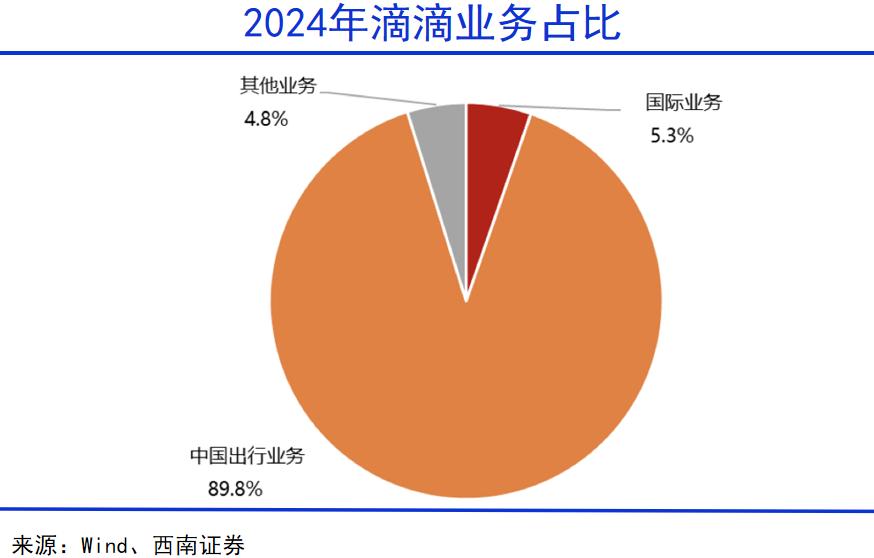
Core Insights - The article discusses the evolution and globalization of the Chinese mobility industry, highlighting key players like Didi and Cao Cao Mobility, and their strategies for international expansion [1][2][5][10]. Group 1: Didi's International Expansion - Didi began its international journey in 2015 by investing in various global ride-hailing platforms, including Grab and Lyft, and later focused on deeper market penetration in Latin America, particularly Brazil [2][5]. - By 2023, Didi had 55 million active users and 1.5 million drivers in Brazil, covering over 3,300 towns, marking a significant achievement in its international strategy [2]. - Didi's international business saw over 20% growth in Q3 2025, with a total order volume of 1.162 billion, indicating its status as a benchmark for Chinese mobility companies going global [8]. Group 2: Cao Cao Mobility's Strategy - Cao Cao Mobility, backed by Geely, achieved a Gross Transaction Value (GTV) of 17 billion yuan in 2024, making it the second-largest ride-hailing platform in China with a market share of 5.4% [9]. - The acquisition of Yao Mobility and Geely Business Travel expanded Cao Cao's service network to 12 international cities, enhancing its global footprint [9]. - Cao Cao's integration with Geely's ecosystem allows for localized operations and shared vehicle development capabilities, positioning it favorably against competitors [9][10]. Group 3: Autonomous Driving Expansion - The autonomous driving sector is a critical extension of the mobility industry, with companies like WeRide and Pony.ai aggressively pursuing global markets [11][16]. - WeRide received approval to operate a fully autonomous Robotaxi service in Abu Dhabi, marking a significant milestone in global autonomous driving commercialization [14][17]. - The competition in the autonomous driving space is intensifying, with companies like Waymo and Tesla also making significant advancements and investments [20][21]. Group 4: New Entrants and Market Dynamics - New players like Hello Mobility are expanding their business models to include two-wheeled and four-wheeled services, supported by Ant Group [21][23]. - The mobility industry in China is projected to reach 8 trillion yuan in 2024, with expectations to grow to 10 trillion yuan by 2029, indicating a robust market potential [21][25]. - The shift towards international markets is also seen in the mapping and location services sector, as companies adapt to new technological trends and consumer demands [24][25]. Group 5: Future Outlook - China's automotive exports reached 7.098 million units in 2025, solidifying its position as the world's largest automotive exporter for the third consecutive year [25]. - The article emphasizes the need for mobility companies to adapt their business models and technologies for international markets, particularly in autonomous driving and ecosystem development [25][26]. - The future of the global mobility economy is expected to be dynamic, with numerous companies vying for market share in an increasingly competitive landscape [26].

X @Bloomberg
Bloomberg· 2026-02-13 03:56
Waymo is enlisting DoorDash drivers in Atlanta to close robotaxi doors that have been left open, letting the driverless vehicles continue on their way https://t.co/00HChyHwqr ...
大西洋月刊:美国还没准备好迎接人工智能对就业的影响
美股IPO· 2026-02-13 03:27
Core Argument - The article discusses the profound impact of artificial intelligence (AI) on the job market, suggesting that the U.S. is unprepared for the potential disruptions it may cause to employment and economic stability [1]. Group 1: Historical Context and Current Trends - The establishment of the U.S. Bureau of Labor Statistics (BLS) aimed to measure labor conditions and create fair outcomes amidst industrial changes, highlighting the importance of data in understanding economic realities [5][6]. - The BLS has documented significant job growth in various sectors, such as a 907% increase in mobile food service jobs since 2000, indicating a dynamic labor market [6]. - However, the BLS is limited in its predictive capabilities, particularly regarding the impact of emerging technologies like AI on the workforce [7]. Group 2: AI's Impact on Employment - AI is rapidly transforming job functions, enabling tasks to be completed more efficiently than ever before, which raises concerns about job displacement [8][9]. - Predictions from industry leaders suggest that AI could lead to a 10% to 20% increase in unemployment rates and potentially eliminate half of entry-level white-collar jobs within the next decade [10]. - A Reuters/Ipsos survey indicates that 71% of Americans fear AI will lead to permanent job losses, reflecting widespread anxiety about the future of work [9]. Group 3: Economic Resilience and Job Creation - Economists argue that capitalism has a strong resilience, often leading to job creation following technological advancements, as seen with ATMs and software like Excel [8]. - The BLS forecasts a 3.1% employment growth rate over the next decade, which, while lower than previous years, still represents the addition of 5 million jobs [8]. Group 4: The Role of Policy and Corporate Responsibility - There is a growing concern that corporate leaders are prioritizing automation and efficiency over employee welfare, leading to potential mass layoffs [22][23]. - The article suggests that CEOs are under pressure to demonstrate the benefits of AI quickly, often resulting in job cuts rather than exploring ways to integrate AI while supporting their workforce [22][23]. - Proposals for policies such as retraining programs and a robot tax to support displaced workers are discussed, but there is skepticism about their implementation [33][28]. Group 5: Political and Social Implications - The political landscape is characterized by a lack of proactive measures to address the challenges posed by AI, with many lawmakers adopting a hands-off approach [26][27]. - The article emphasizes the need for a coordinated response to the potential upheaval caused by AI, suggesting that without intervention, the consequences could be severe for both the economy and society [30][31].




Waymo is paying DoorDash gig workers to close its robotaxi doors
CNBC· 2026-02-13 02:10
Core Insights - Waymo is piloting a program in Atlanta to compensate DoorDash drivers for closing doors left ajar on its autonomous vehicles, highlighting the need for human intervention in certain basic operations despite advanced technology [2][4]. - The company is also collaborating with Honk, an independent roadside assistance service, to pay users for similar tasks, with reports indicating payments of up to $24 in Los Angeles for closing a Waymo door [5]. - Waymo's valuation stands at $126 billion following a recent financing round, and it is a key component of Alphabet's Other Bets segment, which aims to leverage technology to address significant industry challenges [4]. Financial Performance - Alphabet's Other Bets segment, which includes Waymo, reported an operating loss of $7.5 billion last year, which encompassed a $2.1 billion stock-based compensation charge attributed to Waymo [5]. - Waymo's operational costs are impacted by the need to employ gig workers for tasks that could eventually be automated, indicating a reliance on human labor in the short term [4]. Market Expansion - Waymo has begun deploying its next-generation robotaxi and currently operates its fully autonomous service in six U.S. markets, with plans for further expansion within the year [6].

贵金属闪崩,美股全线大跌!白宫称希望美伊“一个月左右”达成协议,千亿元级央企重组项目进展火速
Jin Rong Jie· 2026-02-13 00:16
Market Dynamics - Precious metals experienced a sharp decline, with gold dropping over 4% and silver falling over 11%, reflecting ongoing market concerns about the disruptive impact of AI [1] - WTI crude oil futures fell by 2.77% to $62.84 per barrel, while Brent crude dropped by 2.71% to $67.52 per barrel, amid geopolitical tensions regarding Iran [1] Corporate Developments - China Shenhua's acquisition plan to purchase assets from its controlling shareholder has been approved, with a transaction value of approximately 133.6 billion yuan, and the company's market capitalization reaching 845.6 billion yuan [2] - Co-creation Data announced a procurement contract for servers worth up to 11 billion yuan, which will account for over 50% of the company's latest audited net assets [2] - OpenAI launched its new AI model, GPT-5.3-Codex-Spark, based on Cerebras Systems chips, aiming to compete in the AI programming assistant market [2] Investment Trends - Southbound funds recorded a net inflow of approximately 4.567 billion HKD, with over 50 billion HKD invested in ETFs this year, indicating strong interest in Hong Kong stocks [5] - Korean investors have shown significant interest in Hong Kong stocks, with notable purchases in various ETFs and tech companies [6] Industry Insights - The construction machinery sector is witnessing a recovery, with excavator sales increasing by 49.5% year-on-year, indicating improved economic activity and infrastructure investment [9] - The solid-state battery industry is accelerating, with major automakers planning to launch models using this technology by 2026-2027, potentially leading to a market size exceeding $120 billion by 2030 [10] Technological Advancements - A research team from Peking University has developed a high-performance quantum key distribution network, showcasing advancements in quantum technology [14] - Samsung Electronics has begun delivering its latest HBM4 chips, becoming the first company to mass-produce this technology [15]
中东实测翻车,Robotaxi还是有点傻?
汽车商业评论· 2026-02-12 23:06
Core Viewpoint - The article discusses the rapid development of autonomous driving technology, particularly Robotaxi services, in the UAE, highlighting the ambitious goals set by the government and the involvement of leading Chinese tech companies in this sector [4][9][14]. Group 1: Autonomous Driving Goals and Infrastructure - The UAE aims for at least 25% of all trips to be autonomous by 2030, which is expected to reduce carbon emissions by 15% and accident rates by 18% [4]. - The government is investing heavily in infrastructure, including 5G networks and standardized road systems, to facilitate the deployment of autonomous vehicles [11][9]. - Abu Dhabi has completed nearly 30,000 autonomous vehicle trips, covering a total distance of 430,000 kilometers, due to supportive policies and infrastructure [11]. Group 2: Chinese Companies' Involvement - Chinese companies like WeRide, Baidu, and Pony.ai are actively participating in the UAE's autonomous driving market, with WeRide launching public Robotaxi services in Abu Dhabi as early as 2021 [14][16]. - By 2026, WeRide plans to expand its Robotaxi fleet in the Middle East to 1,000 vehicles, with a long-term goal of tens of thousands by 2030 [16]. - Baidu's Apollo Go has also entered the market, aiming to deploy 100 autonomous taxis by the end of 2025 and expand to at least 1,000 by 2028 [16]. Group 3: Challenges and Market Dynamics - The development of Robotaxi services in the Middle East faces challenges such as technological adaptation, operational complexity, and geopolitical uncertainties [20]. - The article notes that while the UAE presents a favorable environment for autonomous driving, the global market remains competitive, with companies needing to prove their business viability [20][27]. - The article highlights the potential job displacement for traditional drivers, but also suggests that new roles will emerge in the autonomous vehicle ecosystem [31].


X @Bloomberg
Bloomberg· 2026-02-12 22:40
Alphabet’s Waymo is enlisting DoorDash drivers in Atlanta to close robotaxi doors that have been left open, letting the driverless vehicles continue on their way https://t.co/BCTYeEFzwv ...