南方电网

Search documents
明确了!国网、南网将实现跨电网常态化交易
news flash· 2025-07-11 16:02
Group 1 - The core viewpoint of the article is that the National Development and Reform Commission and the National Energy Administration have issued a plan to normalize electricity trading across grid operating areas, which will support electricity supply during the summer peak period and explore long-term green electricity trading agreements [1] Group 2 - The implementation of a normalized electricity trading mechanism is expected to enhance the stability and reliability of electricity supply during the summer months [1] - The initiative aims to facilitate the establishment of multi-year green electricity trading contracts, promoting sustainable energy practices [1]
方案批复!国网南网获准建设全国性“网上电力商城”,跨经营区电力交易如何收取通道费、该收多少?专家详细解读
Mei Ri Jing Ji Xin Wen· 2025-07-11 15:33
Core Viewpoint - The approval of the "Cross-Grid Normalized Electricity Trading Mechanism Plan" by the National Development and Reform Commission and the National Energy Administration marks a significant step towards establishing a unified national electricity market, allowing for the free flow of electricity resources across different grid operating areas [1][2]. Group 1: Mechanism Overview - The new mechanism creates a "national online electricity mall," enabling electricity trading between the State Grid and Southern Grid under a unified set of rules, facilitating the free flow of electricity resources nationwide [2]. - Approximately 40,000 power generation enterprises will be able to sell electricity across the country, enhancing the overall electricity supply and supporting domestic circulation [6][7]. Group 2: Green Electricity Trading - The plan emphasizes "green electricity trading," addressing the mismatch between green electricity supply in regions like Northwest China and demand in economically developed eastern regions [3][5]. - The establishment of cross-regional green electricity trading is seen as a crucial solution to the supply-demand imbalance of green electricity in China [3]. Group 3: Operational Details - The cross-grid electricity trading will be organized by various entities, including the Beijing Power Trading Center and the Southern Power Grid's dispatch control center, ensuring accurate matching of electricity purchase and sale demands [6][8]. - The trading process will initially involve grid companies acting on behalf of local users to participate in cross-grid electricity purchases, with future plans to include distributed energy generation enterprises [7]. Group 4: Transmission and Costs - The plan outlines the transmission costs for cross-regional transactions, with a specific rate of 2.56 cents per kilowatt-hour for transactions not involving Fujian and Guangdong provinces, ensuring fair cost distribution [10]. - The existing transmission channels, such as "Jiangcheng DC" and "Min-Guang DC," are currently utilized for significant electricity transactions, ensuring reliable supply during peak demand periods [8][9]. Group 5: Future Considerations - The electricity grid companies are encouraged to monitor supply and demand dynamics closely and consider cross-regional electricity purchases when local supply is insufficient [11]. - There is a need for enhanced management and technical support systems to ensure the safe and stable operation of the electricity grid and to facilitate market participation for various stakeholders [11].

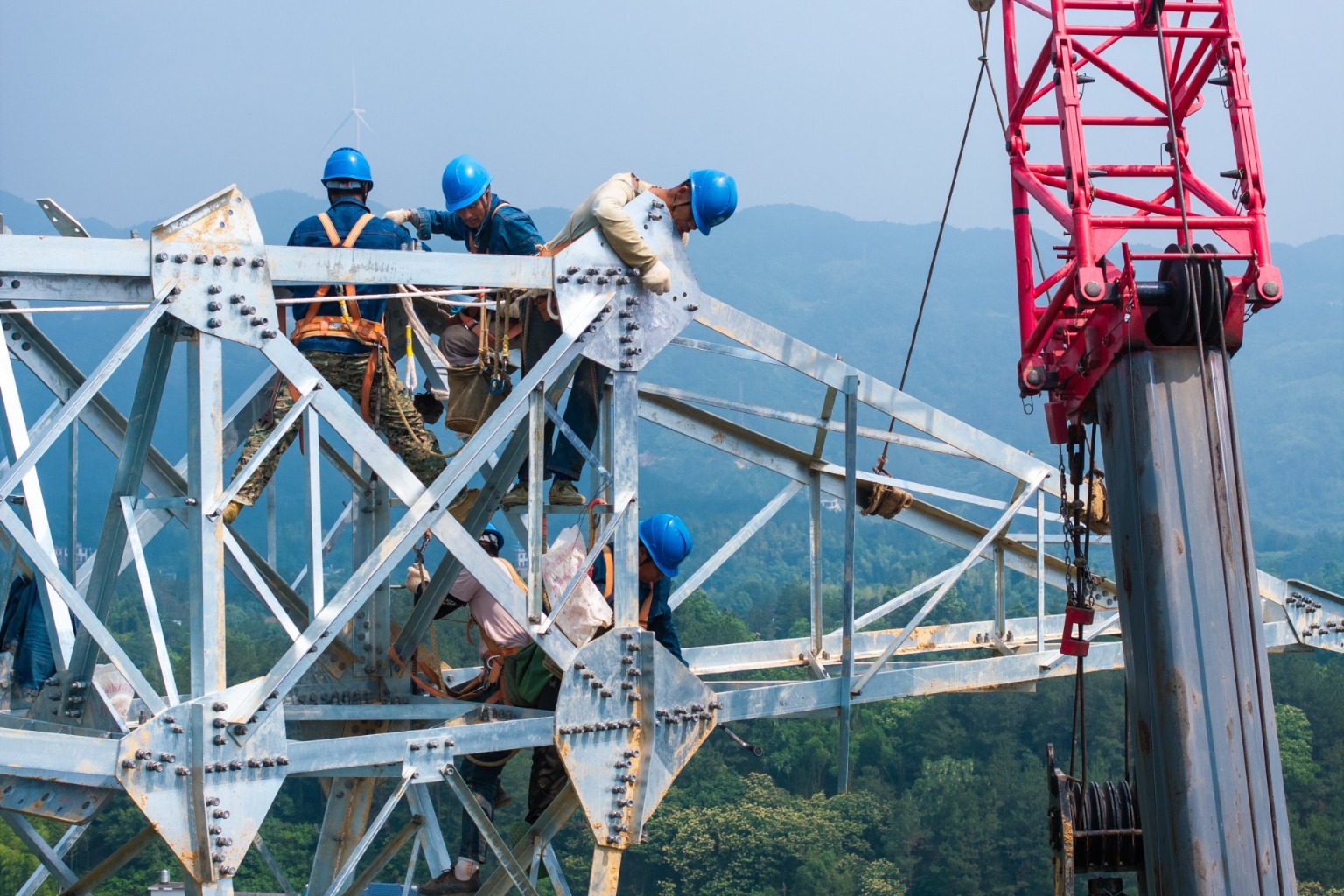
电力跨经营区交易常态化,绿电全国流动按下“加速键”
2 1 Shi Ji Jing Ji Bao Dao· 2025-07-11 13:31
Core Viewpoint - The newly approved cross-grid electricity trading mechanism aims to enhance the efficiency of electricity distribution from renewable sources in Xinjiang and other regions to major consumption centers like Guangdong and Shanghai, marking a significant step towards a unified national electricity market system [1][2]. Group 1: Mechanism Overview - The State Development and Reform Commission and the National Energy Administration have jointly approved a plan for cross-grid electricity trading, which includes rules for medium- and long-term electricity transactions, green electricity trading, and spot trading [1][4]. - The plan addresses the historical barriers between the State Grid and Southern Grid, allowing for more flexible and larger-scale electricity transactions across regions [2][3]. Group 2: Trading Capacity and Infrastructure - Currently, there are two established interconnection channels between the State Grid and Southern Grid, with ongoing construction of additional channels to enhance trading capacity [3]. - A significant cross-regional electricity transaction has been initiated, involving over 2 billion kilowatt-hours of electricity from Guangdong, Guangxi, and Yunnan to be delivered to Shanghai, Zhejiang, Anhui, and Fujian [3]. Group 3: Trading Rules and Structure - The trading structure will be organized by multiple entities, including the Beijing Power Trading Center and the Guangzhou Power Trading Center, ensuring collaborative transaction results and settlements [4]. - The plan specifies different trading scenarios, such as large-scale direct current projects and flexible power supply between adjacent provinces, to ensure market integrity and balance [5][6]. Group 4: Green Electricity Trading - The plan emphasizes green electricity trading, allowing renewable energy projects to participate as individual trading units, thus facilitating easier access for power users to purchase green electricity [7][8]. - Various trading methods, including centralized bidding and bilateral trading, are outlined, along with a clear process for green certificate transfer to ensure traceability and market integrity [7][9]. Group 5: Future Goals and Implementation - The plan sets short-term, medium-term, and long-term goals, including pilot projects for demand-based trading and green electricity transactions by the end of 2025 [6][10]. - Continuous improvements in channel construction, transaction processes, and market coordination are planned to transition from sporadic trading to a fully normalized trading environment [10].
覆盖全国的“网上电力商城” 4大亮点带你看懂跨电网经营区常态化交易
Yang Shi Xin Wen· 2025-07-11 10:56
Key Points - The new trading mechanism breaks down barriers, allowing electricity trading to occur freely across operational zones, enhancing market operations for various types of transactions including medium to long-term, green electricity, and spot trading [1] - The mechanism introduces a "one registration, shared by all" approach, enabling market participants to register in one location and access resources nationwide, eliminating institutional and technical barriers [1] - Green electricity trading is facilitated, with individual renewable energy projects recognized as basic trading units, allowing for easier transactions between regions [3][4] - The trading mechanism does not impose transaction fees for cross-grid trading, and electricity prices will fluctuate based on market conditions, providing more choices for market participants [5] - The establishment of this trading mechanism enhances the overall electricity supply capacity, creating a nationwide "online electricity marketplace" that improves resource utilization and strengthens the grid's ability to respond to regional and seasonal shortages [6]
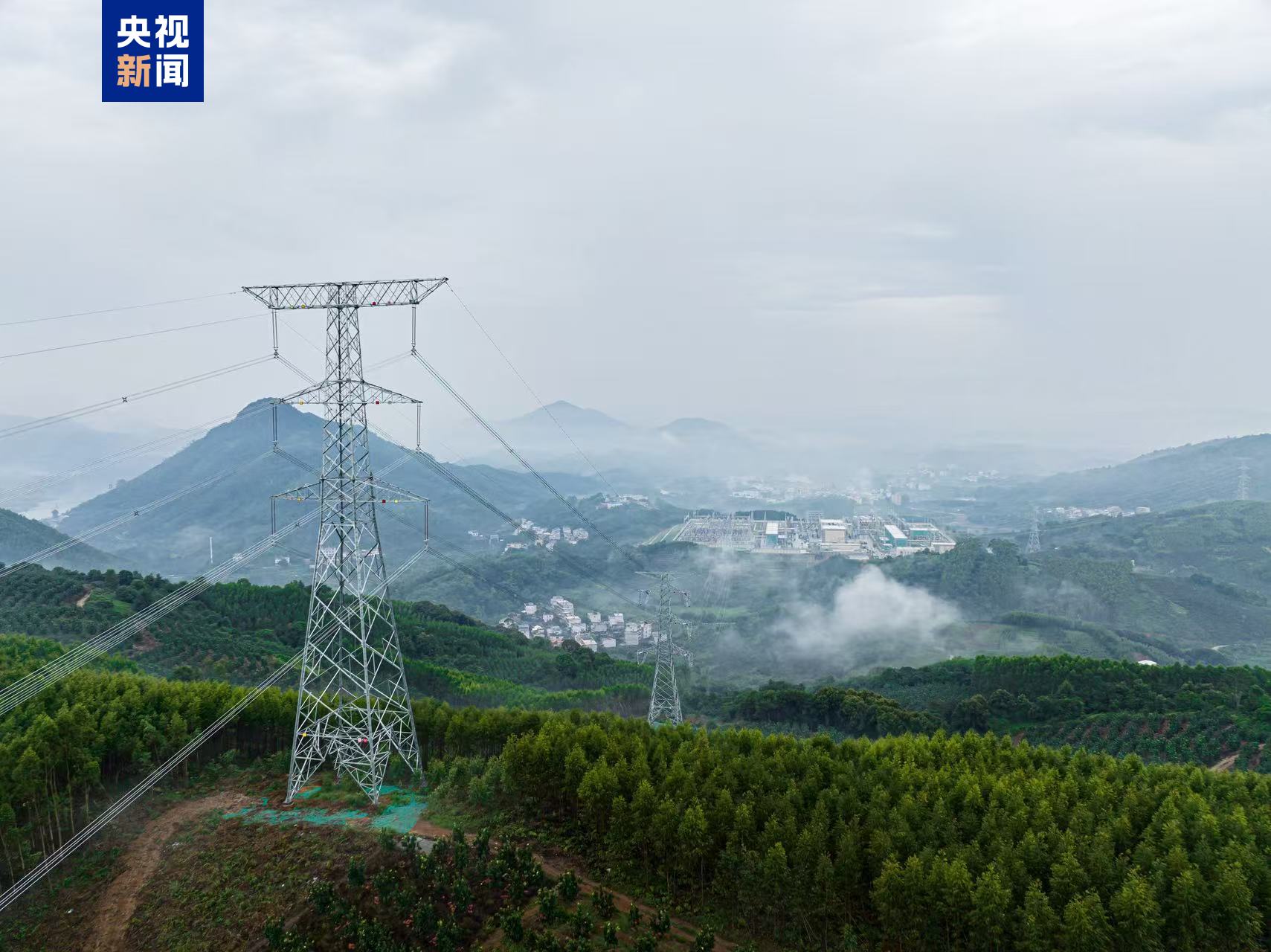
全国统一电力市场体系筑基能源新时代
Zhong Guo Dian Li Bao· 2025-07-11 09:12
Core Viewpoint - The establishment of a nationwide unified electricity market system in China marks a significant transformation in the allocation of electricity resources, enhancing market efficiency and supporting the country's energy transition goals [1][5]. Market Mechanism and Structure - The basic market mechanism has been established, with a unified "1+N" rule system being developed, including long-term, spot, green electricity, and green certificate trading rules [1][2]. - A multi-level market framework has formed, covering various regions and timeframes, and including different trading products such as electricity and ancillary services [2][3]. Market Growth and Transactions - The scale of market transactions has seen substantial growth, with cross-provincial market transactions expected to reach 1.4 trillion kilowatt-hours in 2024, a tenfold increase since 2016 [2][4]. - The total market transaction volume increased from 1.1 trillion kilowatt-hours in 2016 to 6.2 trillion kilowatt-hours [2]. Regional Market Developments - The construction of provincial electricity spot markets has accelerated, with 22 regions now covered, and several provinces transitioning to formal operations [3][4]. - The Southern Regional Electricity Market has achieved significant milestones, moving towards a unified market and competitive bidding [3]. Cross-Regional Trading Mechanisms - A breakthrough in cross-regional electricity trading has been achieved, with normalized operations between the State Grid and Southern Grid, marking a key advancement in the unified electricity market [4]. - By 2024, market-based electricity transactions are projected to account for 63% of total electricity consumption, highlighting the growing role of market mechanisms in resource allocation [4][5]. Integration of Renewable Energy - The integration of renewable energy into the electricity market is accelerating, with market transactions for renewable energy expected to exceed 1 trillion kilowatt-hours in 2024 [5]. - The unified electricity market system is crucial for supporting China's energy structure transformation and achieving carbon neutrality goals [5].
广东用电负荷突破1.6亿千瓦,15城创下用电新高
Di Yi Cai Jing· 2025-07-10 03:19
Group 1 - The recent high-temperature weather has led to a rapid increase in electricity load across multiple regions, with many areas setting new records for electricity consumption [2][3] - On July 9, the maximum electricity load of the Southern Power Grid reached 252 million kilowatts, marking a historical high for the year [2] - Guangdong province has consistently ranked first in electricity load and consumption for the past decade, with a peak load of 164 million kilowatts on July 9, an increase of 6.86 million kilowatts or 4.38% compared to last year [2][3] Group 2 - The electricity load during peak evening hours in Guangdong remains high, with a maximum load of 15698 million kilowatts recorded on July 7, just 270 million kilowatts shy of the midday peak [3] - The Southern Power Grid serves a population of 273 million people and anticipates a peak load of 270 million kilowatts during the summer peak season [3] - Nationwide, the maximum electricity load reached 1.465 billion kilowatts on July 4, an increase of approximately 200 million kilowatts compared to the end of June [3] Group 3 - The "China Power Supply and Demand Analysis Report (2025)" predicts that the newly installed power generation capacity will reach 660 million kilowatts by 2025, a growth of 53.2% year-on-year [4] - Renewable energy is becoming the main source of new electricity generation, currently accounting for about 25% of total electricity generation [4] - The electricity sector has seen significant investment interest, with the electricity index rising by 2.89% from July 1 to 9, outperforming major stock indices [4]


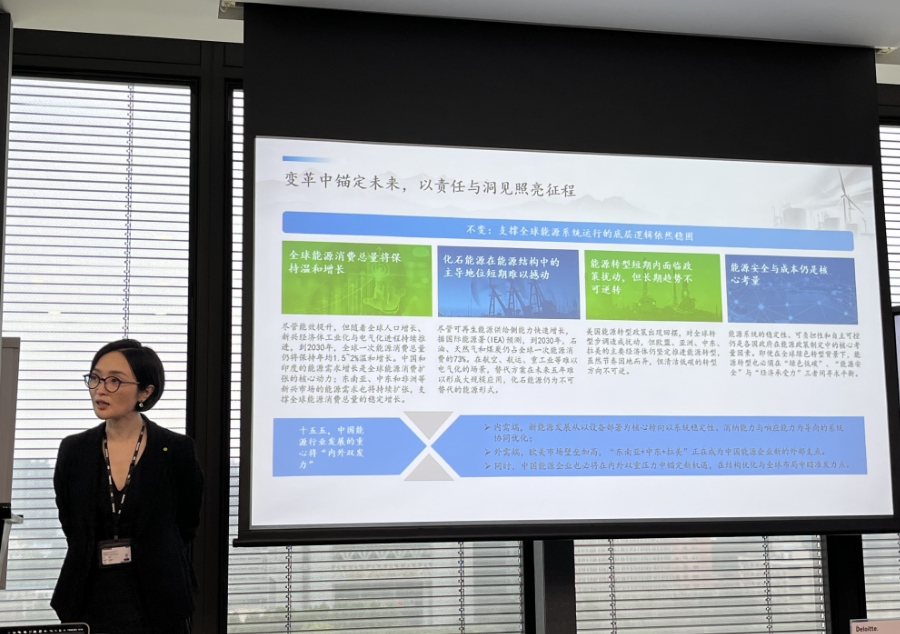
德勤:新型电力系统建设将是“十五五”前中期重要主题 灵活性改造、智能化升级等将成投资重点
Mei Ri Jing Ji Xin Wen· 2025-07-09 15:20
Core Insights - The report by Deloitte China outlines key issues in the energy sector during the 14th Five-Year Plan period, emphasizing the construction of a new power system and the transformation of the energy structure [1][2][3] Group 1: New Power System Construction - The construction of a new power system will be a significant theme in the early to mid-term of the 14th Five-Year Plan, focusing on flexibility upgrades and intelligent enhancements to improve system resilience [1] - The demand for intelligent upgrades in the new power system is expected to create a market scale of several trillion yuan over the next five to ten years [2] - The support and promotion of policies are essential for the construction of the new power system, with market mechanisms gradually becoming a crucial driving force [2] Group 2: Global Energy Structure Changes - During the 14th Five-Year Plan, the global energy structure will undergo deep adjustments, with moderate growth in total energy consumption and a continuous rise in clean energy investment and emerging market demand [2][3] - The average annual growth rate of the global energy technology and digital integration market is projected to exceed 12% over the next five years [2] Group 3: Energy Security and Transition - China faces external challenges from the restructuring of international rules while also needing to drive energy transition and ensure energy security [3] - Traditional energy sources will continue to play a crucial role in key areas such as power supply, industrial support, and transportation over the next five years, acting as a stabilizing force [3] - Emerging energy forms like wind, solar, hydrogen, and energy storage are rapidly growing, promoting global decarbonization and fostering a new round of technological and industrial upgrades [3]
ST易事特(300376) - 2025年7月8日投资者活动调研记录
2025-07-08 10:16
Group 1: Company Overview and Changes - The company transitioned to a structure without a controlling shareholder after the largest shareholder transferred 18% of shares to a state-owned entity in 2020 [1][2] - The introduction of state-owned capital has provided financial, business, and governance support, enhancing project bidding competitiveness and focusing on core business areas [2] Group 2: Financial Performance - In 2024, the company achieved a revenue of CNY 3.044 billion, with a gross margin increase of 5.3 percentage points to 34.61% [3] - The company’s cumulative installed capacity for energy storage exceeded 6.5 GWh, participating in national projects [3][4] Group 3: Technological Advancements - The company invested CNY 241 million in R&D, representing 7.92% of total revenue, focusing on next-generation energy storage converters with a maximum conversion efficiency of 99% [3][4] - AI integration has enhanced operational efficiency, with AI algorithms improving battery lifecycle predictions and charging efficiency [5][6] Group 4: Market Position and Product Development - The company has established a strong market position in high-end power supply needs across finance, communication, and transportation sectors [3] - Liquid cooling technology for data centers has evolved from an optional solution to a mainstream configuration, with penetration rates rising from 15% in 2022 to nearly 50% by 2025 [7] Group 5: Risk Management and Compliance - The company plans to apply for the removal of risk warnings after completing financial corrections and meeting regulatory requirements by December 31, 2025 [8][9] - The company is committed to maintaining operational stability and investor confidence despite recent challenges [9][10]

欧洲大停电“镜鉴”:中国该如何防范、化解大停电风险?
3 6 Ke· 2025-07-08 03:08
Group 1 - The unprecedented power outage in Europe has raised alarms about global energy security, prompting discussions on how China can prevent similar incidents [1] - The State Grid of China is actively researching ways to enhance grid resilience and is focusing on improving stability management, predictive capabilities for renewable energy, and fault defense mechanisms [1][3] - The transition of China's power system is significant, with a notable increase in renewable energy sources leading to changes in grid characteristics and operational theories [1][3] Group 2 - A recent large-scale power outage in Spain, Portugal, and southern France affected over 50 million people, highlighting the risks associated with high proportions of renewable energy in the grid [2] - The investigation into the outage identified three main causes: insufficient voltage regulation, voltage fluctuations, and improper disconnection of power plants, with blame being shared between grid operators and power plants [2] - In 2023, Portugal generated 61% of its electricity from renewable sources, while Spain's renewable energy generation reached 56% of total consumption in 2024, indicating a trend towards higher renewable energy integration [2] Group 3 - The increasing integration of renewable energy sources like wind and solar is causing significant challenges in frequency and voltage regulation, raising the risk of grid failures and large-scale outages [3][4] - As of now, renewable energy installations in the State Grid's operational area exceed 1,325 GW, accounting for 46.9% of total capacity, while in the Southern Grid, renewable capacity is approaching 50% [3][4] - The National Energy Administration has issued guidelines to enhance the safety management of renewable energy integration into the grid, addressing the challenges posed by the rapid increase in renewable energy installations [3][4] Group 4 - The characteristics of the new power system, defined by high proportions of renewable energy and power electronic devices, pose risks to grid stability due to the lack of inertia and voltage support from renewable sources [4][6] - Accurate forecasting of renewable energy output is essential for mitigating the rapid changes in voltage and frequency caused by high renewable penetration [4][6] Group 5 - To effectively integrate high levels of renewable energy, the flexibility of the power system must be improved, which includes enhancing the capabilities of coal-fired power plants and developing pumped storage hydropower [7][8] - As of the end of 2023, the total installed capacity of flexible power sources in China was approximately 496 GW, representing only 16.9% of total capacity, which is below the target of 24% by 2025 [8] - Pumped storage hydropower is expected to reach a total capacity of around 66 GW by the end of 2025, but its growth is limited by geographical constraints and long construction cycles [8][9] Group 6 - Demand-side response capabilities are crucial for managing power supply and demand balance, particularly during peak load periods, and have been recognized as a key element in the new power system [11][12] - The demand-side response can help alleviate peak loads, such as those caused by air conditioning, which accounted for 40% of peak load in Zhejiang province during extreme heat [11][12] - Industries like textiles, steel, and aluminum have significant demand-side flexibility, with potential adjustable loads reaching up to 35% and 20% respectively, indicating opportunities for enhancing grid resilience [15]
特高压建设提振电力设备商业绩
Zhong Guo Zheng Quan Bao· 2025-07-07 20:52
Group 1 - The approval of the two ultra-high voltage (UHV) projects, namely the ±800 kV UHV DC transmission project from Southeast Tibet to the Guangdong-Hong Kong-Macao Greater Bay Area and the ±800 kV UHV DC transmission project from Inner Mongolia to Beijing-Tianjin-Hebei, signifies a strong momentum for the continuous advancement of UHV construction in China [1][2][3] - The Southeast Tibet to Guangdong-Hong Kong-Macao project has a rated transmission capacity of 10 million kW and a dynamic investment of 53.168 billion yuan, highlighting its significant role in China's energy strategy [1] - The Inner Mongolia to Beijing-Tianjin-Hebei project has a rated transmission capacity of 8 million kW and a dynamic investment of 17.178 billion yuan, which will enhance power supply security in Hebei province and support the clean energy consumption increase [2] Group 2 - The continuous advancement of UHV construction is crucial for addressing the imbalance between energy resource distribution in western regions and power demand in eastern coastal areas, with UHV technology being a core solution for the "West-to-East Power Transmission" initiative [3] - The State Grid Corporation of China plans to invest over 650 billion yuan in 2025, while the Southern Power Grid will invest 175 billion yuan, indicating a significant focus on UHV projects [3] - The demand for key equipment such as transformers, switches, and cables is expected to surge, leading to rapid development in the upstream and downstream sectors of the industry [3][4] Group 3 - Companies like T时代电气 and 中国西电 are positioned to benefit from the growing demand for power semiconductor devices and have secured significant contracts for UHV projects, with total winning bids amounting to 1.443 billion yuan [4] - 平高电气 has maintained a leading market share in UHV projects and reported record-high single-bid amounts, indicating strong order backlogs [4] - Analysts believe that UHV equipment manufacturers with stable or increasing bidding shares will see significant performance support as a result of the ongoing UHV project launches and tenders [4]