
银河通用

Search documents
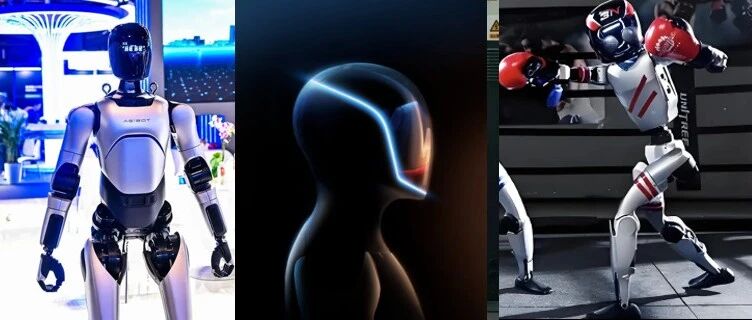
「智元机器人」完成股改,独立IPO?
Robot猎场备忘录· 2025-11-11 07:17
Core Viewpoint - Zhiyuan Robotics has completed its corporate restructuring and is preparing for an IPO, transitioning from a limited liability company to a joint-stock company, indicating a significant step towards public listing [2][3]. Corporate Changes - Zhiyuan Robotics has changed its name from "Zhiyuan Innovation (Shanghai) Technology Co., Ltd." to "Zhiyuan Innovation (Shanghai) Technology Co., Ltd." [3]. - The company has undergone a change in corporate type from a foreign-invested limited liability company to a joint-stock company [3]. IPO Plans - Following the corporate restructuring, Zhiyuan Robotics is expected to pursue an IPO, with speculation on whether it will be a shell listing, independent IPO, or a dual-track approach [3][5]. - Reports suggest that Zhiyuan Robotics is planning to launch its IPO in Hong Kong in 2026, with a target valuation between HKD 40 billion and 50 billion, equivalent to approximately RMB 36.3 billion to 45.5 billion [5]. Market Reactions - The acquisition of a 66.99% stake in the Sci-Tech Innovation Board listed company, Shuangwei New Materials, for approximately RMB 2.1 billion has led to speculation about a potential shell listing, despite official denials from Zhiyuan Robotics [4]. - Following the acquisition, Shuangwei New Materials experienced a significant stock price surge, achieving a record of 11 consecutive trading limits [4]. Industry Context - The article highlights that several humanoid robotics companies, including Zhiyuan Robotics and Yushu Technology, are racing to complete their IPOs, which is crucial for securing additional funding [8]. - The humanoid robotics sector is experiencing a surge, with multiple companies undergoing corporate restructuring and preparing for public offerings, indicating a growing interest and investment in this field [9].


首发|Monolith第四年,曹曦又募了35亿
投中网· 2025-11-11 00:53
Core Insights - Monolith has successfully raised two new funds, totaling approximately $488 million (around 3.5 billion RMB), marking a significant achievement in fundraising within a challenging market environment [2][3][5] - The firm has surpassed 10 billion RMB in assets under management within four years, establishing itself as a leading player among emerging VC firms in China [3][4] - The new funds reflect a strategic focus on artificial intelligence and a market-oriented investment approach, with a notable emphasis on maintaining a high proportion of market-driven LPs [3][11][12] Fundraising Highlights - The new funds were raised quickly, with the dollar fund achieving its target in just one month, indicating strong demand from existing LPs [7][8] - Monolith's first dollar fund has performed well, contributing to the positive sentiment and renewed interest in Chinese tech assets among global investors [9][18] - The firm has chosen to limit the total fundraising amount despite high demand, reflecting a disciplined approach to capital management [8][11] Market Trends - The narrative around the revaluation of tech assets, particularly in AI, continues to attract global investors, contributing to a recovery in dollar fund fundraising [4][6] - There is a growing interest from LPs in Chinese tech assets, with new LPs from Europe, the Middle East, and Southeast Asia actively seeking exposure [9][18] - The valuation gap between Chinese and U.S. AI companies presents significant investment opportunities, as many Chinese firms are currently undervalued compared to their U.S. counterparts [18][19] Investment Strategy - Monolith's investment strategy has evolved to focus more on AI applications and hardware, moving away from a broader investment scope [17] - The firm aims to leverage its market position to invest in early-stage opportunities within the AI sector, which is seen as a key growth area [17][18] - The successful fundraising and strategic focus on AI are expected to enhance Monolith's competitive edge in the VC landscape [3][4][12]

瑞承:成本高且应用有限,大规模落地需要多久
Jin Tou Wang· 2025-11-10 11:02
Core Insights - Humanoid robots are rapidly evolving, moving away from their early clumsy forms to exhibit human-like appearances and diverse functionalities [1][4] - The industry is driven by technological advancements, capital investment, and market demand, with China being the largest industrial robot application market globally [3] Design and Functionality - Mainstream humanoid robots feature a human-like structure with a torso, head, neck, and limbs, utilizing dexterous hands, two-fingered claws, or wheeled designs to balance cost and functionality [1] - The capabilities of humanoid robots span performance, labor, and interaction, including dance, household chores, and basic conversational abilities [1][2] Technical Limitations - Current humanoid robots face significant technical limitations, including repetitive dance movements and slow task execution in household settings [1][2] - Interaction capabilities are restricted, relying on remote control, joint mapping, or voice commands, lacking true AI autonomy [2] Market Segmentation - The application of humanoid robots is divided into enterprise-level (To B) and consumer-level (To C) markets, with the To B sector focusing on entertainment, industrial manufacturing, and healthcare [2] - The To C market aims to replace traditional household roles, but current offerings have limited practical value compared to existing automation solutions [2] Industry Dynamics - The robot industry is experiencing growth in revenue and production, with over 20 leading companies planning IPOs, 16 of which are Chinese [3] - Competitive strategies vary, with companies like Yushu Technology focusing on affordable models and Galaxy General leveraging retail scenarios for intelligent service [3] Future Outlook - The humanoid robot industry is still in its early stages, facing challenges in intelligence and cost, but advancements in synthetic data and simulation technologies are paving the way for improved decision-making and adaptability [3][4]
银河通用联合清华推出灵巧手模型DexNDM
Cai Jing Wang· 2025-11-10 07:05
Core Viewpoint - Galaxy General, in collaboration with Tsinghua University, has launched the DexNDM model, which enables a universal dexterous hand to perform stable rotations of complex objects like large books and long rods under any wrist posture and axis [1] Group 1 - The DexNDM model allows for remote control to execute complex operations such as grasping, rotating, and twisting [1] - Continuous rotation of objects within the hand is considered a key indicator of the dexterity of the dexterous hand and is viewed as a high-difficulty task in the industry [1]
机器人“会用手”了!银河通用首破手掌任意朝向旋转难题,拧螺丝、砸钉子样样精通
量子位· 2025-11-10 00:30
Core Insights - The article discusses the breakthrough of the DexNDM model developed by Galaxy Universal, which enables dexterous hands to perform complex tasks such as in-hand rotation and tool usage, bridging the gap between simulation and real-world applications [2][4][55]. Group 1: DexNDM Model Capabilities - DexNDM allows for stable in-hand rotation of various objects, regardless of their size or shape, achieving cross-object and cross-pose manipulation [5][6]. - The model can operate under challenging wrist postures, enabling continuous rotation of long objects and stable manipulation of small items [6][17]. - It enhances the robot's ability to perform complex tasks like screw tightening and furniture assembly, marking a significant leap from simple grasping to dexterous manipulation [21][64]. Group 2: Technical Innovations - DexNDM employs a joint-wise neural dynamics model, allowing each joint to independently predict its next state, improving data efficiency and generalization across different tasks [8][10]. - The model utilizes an automated data collection strategy to generate rich contact data without manual intervention, enhancing learning efficiency [11][14]. - A residual policy network is trained to bridge the gap between simulation and reality, facilitating the transfer of learned strategies to real-world scenarios [15]. Group 3: Importance of Dexterous Manipulation - Dexterous manipulation is crucial for robots to transition from basic capabilities to productive tasks, as it encompasses both motion and operational abilities [24][28]. - The ability to perform in-hand rotation and tool usage is seen as a pinnacle of dexterous manipulation, representing a significant challenge in robotics research [37][38]. - The advancements in dexterous manipulation are expected to lead to robots that can perform a wide range of tasks, moving beyond simple demonstrations to actual productive capabilities [58][65].
银河通用全新模型统一机器人导航任务,7B参数模型支持实时部署
具身智能之心· 2025-11-10 00:02
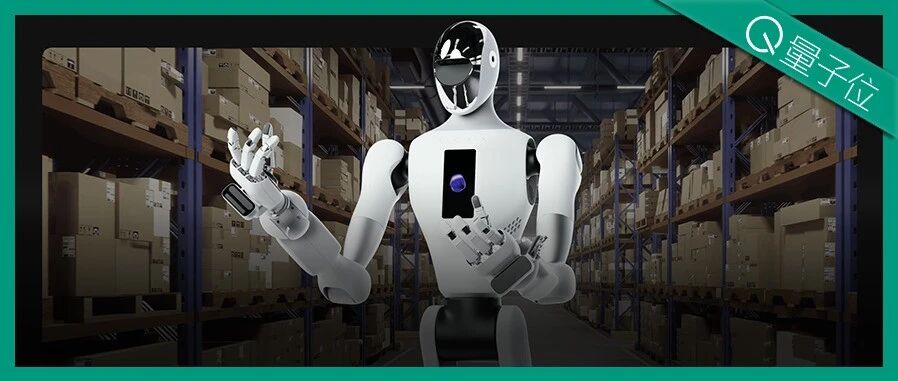
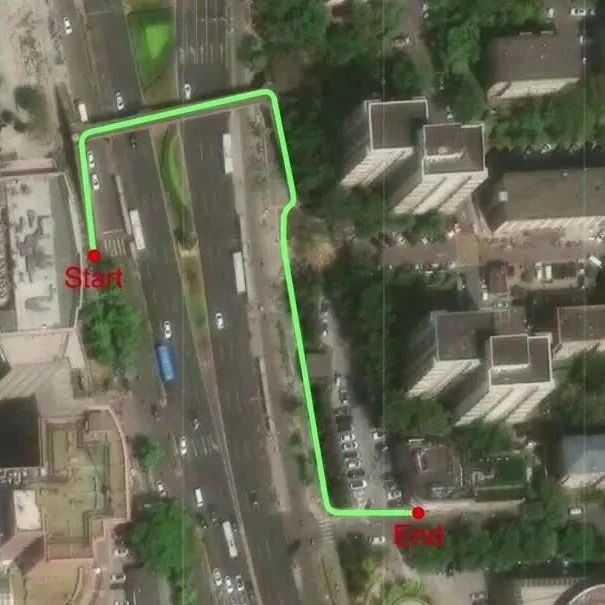
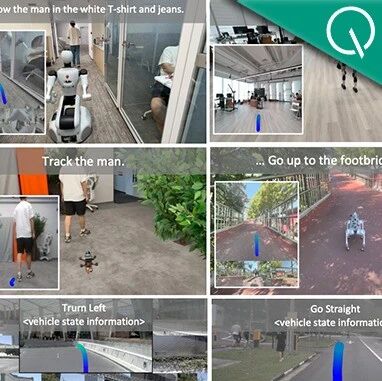
Core Insights - The article discusses the development of NavFoM, a foundational model for embodied navigation that aims to unify navigation tasks across different robots and scenarios, marking a significant technological leap from specialized to general-purpose navigation [1][29]. Group 1: Unified Navigation Paradigm - NavFoM is based on a fundamental idea of unifying different robot navigation tasks into a common paradigm: streaming video input from robots combined with natural language navigation instructions to predict action trajectories [3]. - The model supports multiple tasks such as visual language navigation, target search, target following, and autonomous driving, across various environments including indoor and outdoor settings, and is applicable to different types of robots like quadrupeds, wheeled robots, humanoids, drones, and cars [3][29]. Group 2: Model Structure and Efficiency - The model features TVI Tokens, which provide a scalable method for understanding images under different tasks and camera settings, enhancing the model's adaptability [5]. - To enable real-time deployment of the 7B parameter navigation model, the team introduced the Budget-Aware Token Sampling Strategy (BATS), which adaptively samples key frames under computational constraints to maintain performance while ensuring efficient operation on real robots [6][11]. Group 3: Training Data and Performance - The team trained NavFoM on 8 million navigation data entries, including various tasks and robot types, as well as 4 million entries of open-world question-answering data, effectively doubling the training volume compared to previous works [12][15]. - NavFoM achieved state-of-the-art (SOTA) and SOTA-comparable results across multiple public benchmarks without requiring task-specific fine-tuning, demonstrating its versatility and effectiveness [16][29]. Group 4: Future Implications - The development of NavFoM signifies a move towards generalization in embodied navigation models, enabling cross-industry applications and fostering further research in intelligent navigation technologies [29]. - The team aims to inspire new technologies, datasets, and benchmarks in the field of embodied navigation, accelerating innovation in intelligent services and production capabilities [29].
千余项技术产品集中亮相 乌镇“互联网之光”照见未来
Zhong Guo Xin Wen Wang· 2025-11-09 13:43
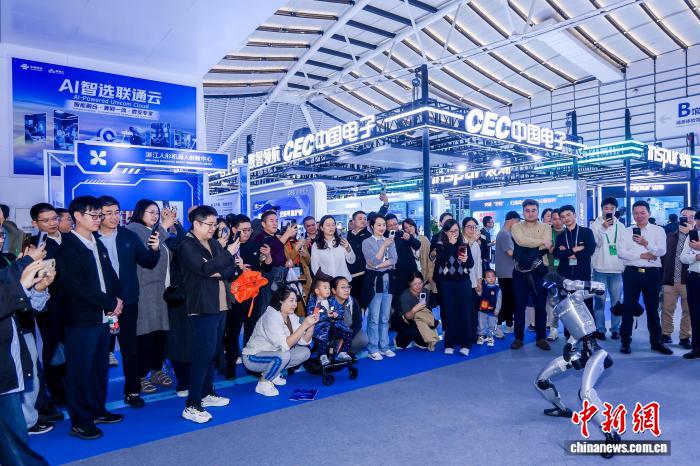
Group 1: Core Insights - The "Internet Light" Expo showcased over 600 companies and more than 1,000 technology products, highlighting the rapid integration of AI and digital technologies into daily life [1][3] - Smart retail solutions, such as automated coffee machines, are being developed to enhance consumer convenience and service density in areas traditionally underserved by convenience stores [3][5] - The market for smart wearable devices, particularly smart glasses, is experiencing accelerated growth, with significant sales achieved shortly after product launch [3][5] Group 2: Industry Transformation - AI technologies are driving significant changes across various industries, with innovations like industrial AI twin platforms enabling real-time simulations and training for robots [6][7] - The demand for personalized transformation in industries is leading to the development of low-code platforms that can produce tailored intelligent agents for specific applications [7][9] - The release of advanced computing infrastructure, such as the scaleX640 super node, is addressing the computational bottlenecks that hinder the widespread adoption of AI technologies [9] Group 3: Future Outlook - The integration of AI into consumer products and traditional industries is expected to reshape lifestyles and industry structures, paving the way for a more intelligent and efficient future [9][10]
银河通用全新模型统一机器人导航任务,7B参数模型支持实时部署
量子位· 2025-11-09 07:01
Core Viewpoint - The article discusses the development of NavFoM, a foundational model for embodied navigation that aims to unify navigation tasks across different robots and scenarios, moving from specialized to general-purpose navigation capabilities [1][20]. Group 1: Unified Navigation Paradigm - NavFoM is based on a fundamental idea of unifying navigation tasks for different robots into a common paradigm: streaming video input from robots combined with natural language navigation instructions to predict action trajectories [3][21]. - The model supports multiple tasks such as visual language navigation, target search, target following, and autonomous driving, across various environments including indoor and outdoor settings, and is applicable to different types of robots like quadrupeds, wheeled robots, humanoids, drones, and cars [3][21]. Group 2: Model Structure and Features - The model structure includes TVI Tokens, which provide a scalable method for the model to understand images under different tasks and camera settings [5]. - NavFoM employs a Budget-Aware Token Sampling Strategy (BATS) to adaptively sample key frames during navigation, ensuring efficient real-time deployment of the 7B parameter model while maintaining performance [6][11]. Group 3: Training Data and Performance - The team collected 8 million navigation data entries, including visual language navigation, target navigation, target tracking, and autonomous driving data, covering various robot types and scenarios [12][21]. - NavFoM achieved state-of-the-art (SOTA) and SOTA-comparable results across multiple public benchmarks without requiring task-specific fine-tuning, demonstrating its versatility and effectiveness [16][21]. Group 4: Future Implications - The development of NavFoM marks a significant step towards generalizing embodied intelligent navigation models, enabling scalable navigation technology across industries [20][21]. - The team aims to attract more attention to embodied navigation research and stimulate the emergence of new technologies, datasets, and benchmarks, facilitating innovation in intelligent services [21].
这些技术让人形机器人走出“猫步”
Ke Ji Ri Bao· 2025-11-08 01:57
Core Viewpoint - The development of humanoid robots is driven by the need for them to seamlessly integrate into human-designed environments, rather than merely mimicking human appearance [2][3]. Group 1: Human-like Robots - The "uncanny valley" effect leads to discomfort when robots closely resemble humans, but the goal is to create robots that can effectively operate in human environments [2]. - Humanoid robots are designed to utilize existing human environments and tools, making them more efficient without requiring significant modifications to the surroundings [2][3]. Group 2: Supporting Technologies - Achieving human-like movement and operation in robots involves complex systems, including motion control, intelligent perception, and AI decision-making [4][5]. - Key capabilities include dynamic balance for walking, precise manipulation using force control technology, and advanced AI for understanding and executing commands [4][5]. Group 3: Future Applications - The deployment of humanoid robots is expected to progress in three phases: starting with industrial applications, moving to commercial services, and finally entering household environments [6]. - Initial applications will focus on industrial manufacturing, where robots can replace human labor in repetitive tasks [6]. - Future commercial uses may include logistics, healthcare assistance, and operations in hazardous environments, while household applications will require the highest levels of safety and interaction capabilities [6].

国内机器人走出惊艳“猫步”引发热议,专家解读:是不是越像人越好?
Xin Lang Cai Jing· 2025-11-08 01:22
Core Viewpoint - The development of humanoid robots is driven by the need for them to seamlessly integrate into human-designed environments, rather than merely mimicking human appearance [2][3]. Group 1: Human-like Robots - The "uncanny valley" effect leads to discomfort when robots closely resemble humans, but this is a normal psychological response [2]. - Humanoid robots are designed to operate in environments built for humans, making them the most efficient form for performing tasks without requiring significant modifications to existing spaces [2][3]. - The goal is not to achieve a human-like appearance but to ensure functional compatibility with human environments, tools, and processes [2]. Group 2: Supporting Technologies - Achieving human-like movement and operation in robots involves complex systems, including motion control, intelligent perception, and AI decision-making [4][5]. - Key capabilities include dynamic balance and precise manipulation, which require advanced algorithms and sensor technologies [4]. - AI advancements allow robots to understand natural language commands and perform tasks autonomously, marking a significant shift from automation to intelligence [5]. Group 3: Future Applications - The deployment of humanoid robots is expected to progress in three phases: industrial, commercial, and finally domestic applications [6][7]. - Initial applications will focus on industrial manufacturing, where robots can replace human labor in repetitive and strenuous tasks [6]. - As costs decrease and intelligence improves, humanoid robots will expand into commercial services and hazardous environments, followed by household roles requiring high levels of safety and interaction [7][8].