
银河通用

Search documents
国内机器人走出惊艳“猫步”引发热议 专家解读:是不是越像人越好?
Ke Ji Ri Bao· 2025-11-08 01:00
Core Viewpoint - The development of humanoid robots is driven by the need for them to seamlessly integrate into human-designed environments, rather than merely mimicking human appearance [2][3]. Group 1: Human-like Robots - The "uncanny valley" effect leads to discomfort when robots closely resemble humans, but the goal is to achieve functional compatibility with human environments [2]. - Humanoid robots are designed to operate in spaces built for humans, making them more efficient without requiring extensive modifications to existing environments [2][3]. Group 2: Supporting Technologies - Achieving human-like movement and operation in robots involves complex systems, including motion control, intelligent perception, and AI decision-making [4][5]. - Key capabilities include dynamic balance for walking, precise manipulation for tasks, and advanced AI for understanding and executing commands [4][5]. Group 3: Future Applications - The deployment of humanoid robots is expected to progress in three phases: starting with industrial applications, moving to commercial services, and finally entering household environments [6]. - Initial applications will focus on industrial manufacturing, followed by roles in logistics, healthcare, and hazardous environments, with the ultimate goal of integrating into home settings for various domestic tasks [6].



小鹏IRON“脱皮证非人”、字节豪掷800多亿,人形机器人竞争太激烈啦
3 6 Ke· 2025-11-07 07:41
Group 1 - The humanoid robot industry is experiencing significant growth, with global financing expected to exceed 14 billion yuan by mid-2025, and Chinese companies accounting for 60% of this amount, approximately 8.4 billion yuan [4] - Domestic competition in the humanoid robot sector is intensifying, with major players like Baidu, Alibaba, Tencent, and ByteDance entering the market alongside unicorns like Yushutech and Zhiyuan Robotics [4][20] - ByteDance is actively recruiting humanoid robot experts with high salaries and plans to invest 12 billion USD (approximately 85.45 billion yuan) in AI chip development this year [2] Group 2 - The latest generation of Xpeng's humanoid robot, IRON, features advanced capabilities, including a natural walking gait, supported by a powerful AI brain consisting of a physical world model and three Turing chips, achieving a total computing power of 2250 TOPS [6][8] - Yushutech has introduced the Unitree H2, a humanoid robot capable of walking, dancing, and performing martial arts, with a focus on commercial applications [10] - The Galbot robot from Galaxy General is being used as a cashier in a smart convenience store, showcasing strong generalization abilities and advanced multimodal learning capabilities [12][14] Group 3 - Major companies are making substantial investments in humanoid robotics, with JD.com planning to invest over 10 billion yuan to support 100 robot brands, while Xiaomi has committed 2 billion yuan over five years to develop humanoid robots [27][34] - Baidu is collaborating with UBTECH to enhance humanoid robots' cognitive capabilities through its AI cloud platform, positioning itself as a key player in the field [28] - Tencent has been focusing on foundational research in robotics since 2018 and is now transitioning to real-world applications with its humanoid robot "Xiao Wu," capable of performing tasks in home environments [29][31]

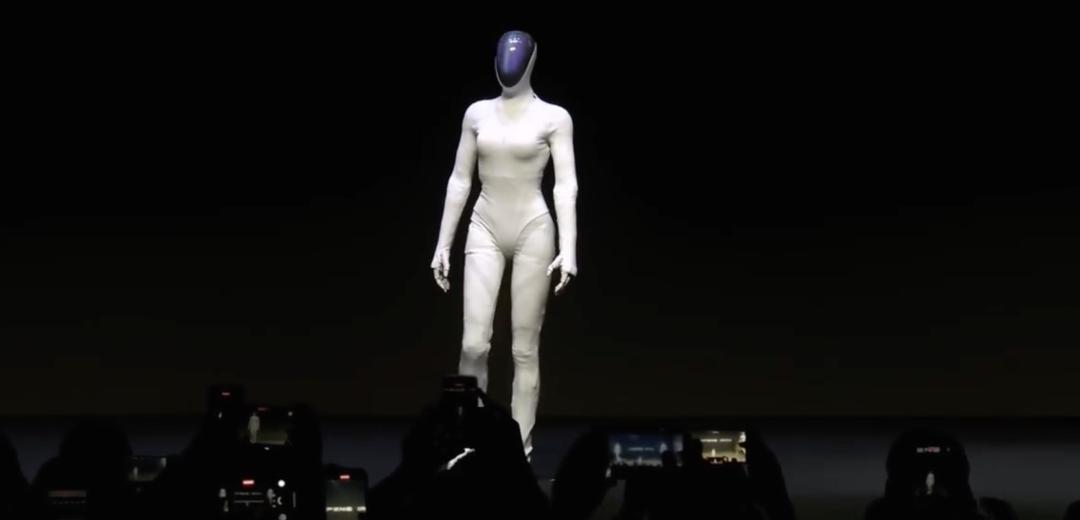
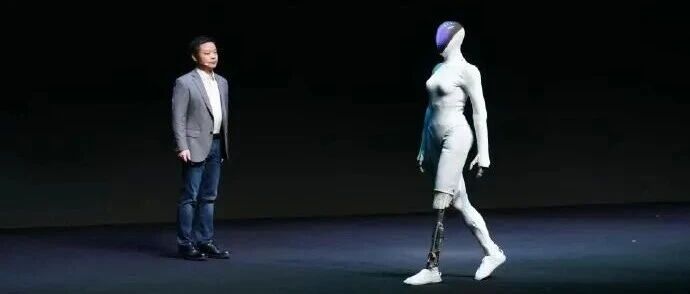
机器人“猫步”惊艳市场,何小鹏“两度自证”
财联社· 2025-11-07 02:14
以下文章来源于科创日报 ,作者张真 在昨晚举办的小鹏X9超级增程技术发布会上,小鹏再度就"IRON机器人内藏真人"质疑作出回 应。过程中,小鹏机器人IRON先是走着猫步出场,随后由工作人员在通电情况下剪开其腿部覆 盖件进行公开展示,包括腿部的晶格肌肉与机械结构一览无遗。 在发布会现场,小鹏汽车董事长、首席执行官何小鹏直言 "希望这是最后一次证明" 。他略带情 绪地指出:"大家不愿意相信一个极其强大的机器人技术来自一家中国的公司,有时候我们心中 的成见是一座大山。" 在11月5日的"2025小鹏科技日"上,小鹏机器人IRON以猫步姿态首度亮相,并遭到网友质疑 称"感觉是个真人在努力扮演机器人"。次日上午,何小鹏在其个人微博发布一镜到底无剪辑视 频,以证明IRON机器人及其技术的真实性。视频中,工作人员拉开IRON背后的拉链,全方位展 示其控制器、运输固定器等内部构造。 何小鹏表示:"今天这一次自证让我很开心,我们更多的供应链企业更愿意帮助小鹏一起去推动 机器人能够更快速的量产。"此前何小鹏曾声称,机器人如果过了技术和产品的拐点,会达到20 万亿美元的市场。公司的目标是在2026年底实现规模量产高阶人形机器人。 ...
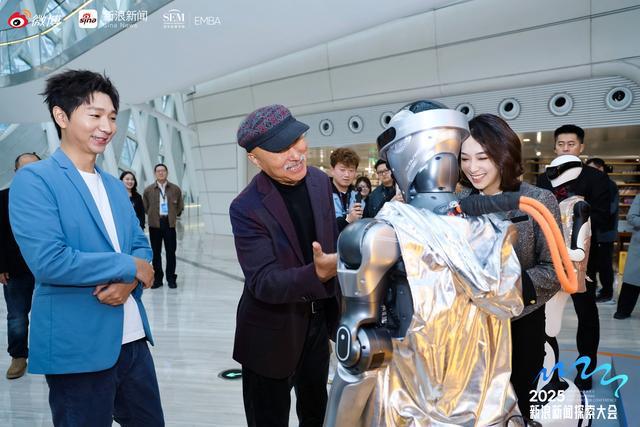
陈佩斯与机器人“琴唱合鸣”背后 藏着怎样的创新生态
Huan Qiu Wang Zi Xun· 2025-11-07 00:03
Core Insights - The article highlights the successful integration of AI and robotics into daily life in Haidian, showcasing a collaborative environment where technology is not just a tool but a part of human interaction [3][4][12] Group 1: AI and Robotics Integration - The event featured interactive robots that engaged with the audience, demonstrating a shift from cold technology to a more human-like interaction [3][4] - Haidian has created a complete ecosystem that allows innovation to transition from laboratories to real-life applications, emphasizing the importance of a supportive environment for AI development [4][6] Group 2: Infrastructure and Support - Haidian has established the largest single intelligent computing cluster in Beijing, providing local businesses with access to efficient computing power without the need for expensive infrastructure [6] - The region promotes data utilization through collaborative networks and high-quality data annotation, essential for effective AI algorithms [6][8] Group 3: Talent Development - Haidian has a robust talent cultivation system, with over 80% of the city's AI talent based in the area, supported by top universities and research institutions [8][10] - Initiatives like the Beijing Youth AI Academy aim to nurture talent from a young age, ensuring a continuous pipeline of skilled professionals [8][10] Group 4: Industry Structure - By 2025, Haidian is expected to host 297 embodied intelligence companies and 167 robotics firms, focusing on a systematic layout around core components of AI technology [11][12] - The region emphasizes a "chain" approach to industry development, fostering collaboration among companies to enhance innovation efficiency [11][12] Group 5: Future Directions - The focus for the next decade will be on embodied intelligence, where robots will not only think but also interact with their environment, with applications in healthcare, education, and more [14][15] - Haidian aims to become a global leader in AI innovation, setting standards and creating a trillion-dollar industry cluster [14][15]
(缓发)告别“追风口”,AI时代投资策略之变
2 1 Shi Ji Jing Ji Bao Dao· 2025-11-06 05:17
Core Insights - The influx of capital into AI and robotics is significant, with the financing amount in the robotics sector reaching 38.624 billion yuan in the first eight months of 2025, 1.8 times that of the previous year [1] - There is a growing concern among investors about the high valuations of companies in the humanoid robot sector, many of which lack stable business models [1] - The investment strategy is shifting from chasing trends to focusing on technological barriers and the integration of industry and academia [2][4] Investment Strategy Shift - The current investment landscape emphasizes patience in R&D cycles and a clear understanding of commercialization paths, contrasting with the previous focus on rapid growth and market share [2] - Investors are now prioritizing technical backgrounds and execution capabilities of founding teams over merely selecting promising sectors [2][3] - The complexity of AI and robotics industries necessitates a systematic approach to investment, focusing on the entire supply chain rather than isolated segments [5] Market Dynamics - The AI and robotics sectors are characterized by high technical intensity, making it difficult for new entrants to compete once a technological barrier is established [3] - The investment logic has evolved to prioritize unique technical routes, patent portfolios, and sustained R&D investment over traditional metrics like user engagement [3][4] - The AI hardware sector is becoming a popular area for former executives from large companies to start new ventures, indicating a shift in talent dynamics [7] Sector-Specific Insights - Different investment firms are focusing on various niches within AI and robotics, such as AI in healthcare, embodied intelligent robots, and core component manufacturing [6][10] - The importance of understanding specific industry needs and the ability to integrate technology into practical applications is emphasized, particularly in high-barrier sectors like healthcare [9][10] - The concept of "death valley" highlights the challenges faced by startups in transitioning from technology development to market application, underscoring the need for strong management and operational capabilities [8][10] Conclusion - The investment approach in the AI and robotics sectors is transitioning from a focus on market trends to a deeper understanding of technological capabilities and team dynamics, indicating a maturation of the investment landscape [11]
软银与OpenAI成立合资公司;宇树科技王兴兴:当下具身机器人发展阶段类似于ChatGPT发布前的1-3年左右丨AIGC日报
创业邦· 2025-11-06 00:08
Group 1 - Amazon has issued a cease-and-desist letter to Perplexity, accusing it of computer fraud for allowing its AI shopping agent, Comet, to shop on behalf of users without clear disclosure, violating Amazon's terms of service [2] - Perplexity responded by claiming that Amazon is using its competitive products to suppress smaller rivals and that users should have the right to choose their preferred AI shopping agents [2] - The launch of NavFoM, a navigation foundation model by Galaxy General in collaboration with several universities, supports both indoor and outdoor scenarios and can adapt to various robotic platforms [2] Group 2 - SoftBank and OpenAI have established a joint venture named "SB OAI Japan" to exclusively promote Crystal Intelligence in Japan, with plans for an IPO in 2026 [2] - The founder of Yushu Technology, Wang Xingxing, stated that the current development stage of embodied robots is similar to the first 1-3 years before the release of ChatGPT, emphasizing the importance of large models in robotics [2]



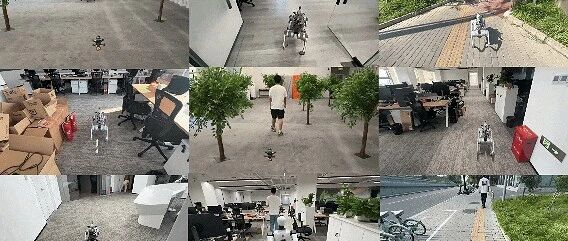
多任务、全场景、跨本体通用移动:银河通用发布环视导航基座大模型
具身智能之心· 2025-11-06 00:03
Core Viewpoint - The article discusses the advancements in navigation models for robots, particularly focusing on the launch of the NavFoM (Navigation Foundation Model) by Galaxy General Robotics, which represents a significant leap in the capabilities of robotic navigation systems, allowing for more autonomous and adaptable robots in various environments [3][9][27]. Group 1: Technological Advancements - The NavFoM is the world's first cross-entity panoramic navigation foundation model, unifying various navigation tasks such as Vision-and-Language Navigation, Object-goal Navigation, Visual Tracking, and Autonomous Driving into a single framework [3][9]. - NavFoM allows robots to autonomously perceive their environment and make navigation decisions in unknown settings, moving beyond simple following tasks [9][10]. - The model employs a unified learning paradigm that enables knowledge sharing across different tasks and robot forms, enhancing the efficiency of training and application [13][14]. Group 2: Key Features - NavFoM supports both indoor and outdoor scenarios, operates in zero-shot conditions without the need for mapping or additional training data, and can adapt to various robot types, including quadrupeds, wheeled humanoids, drones, and cars [11][12]. - The model incorporates two key innovations: TVI Tokens for understanding time and direction, and BATS strategy for efficient sampling of video data, allowing for real-time responses while conserving computational resources [17][19]. - The training dataset for NavFoM includes over 8 million cross-task navigation data points and 4 million open-ended question-answer pairs, significantly enhancing its learning capabilities [21][23]. Group 3: Application and Impact - NavFoM has demonstrated state-of-the-art performance in various international benchmarks, showcasing its ability to generalize across tasks and environments without the need for task-specific fine-tuning [25]. - The model has successfully driven various robot forms to execute complex tasks, marking a significant step towards the realization of embodied intelligence in navigation systems [25][27]. - The introduction of NavFoM is seen as a foundational element for a comprehensive navigation system that can support a wide range of applications, from indoor navigation to urban environments, effectively transforming robotic capabilities [29][30].
腾讯研究院AI速递 20251106
腾讯研究院· 2025-11-05 16:01
Group 1: Generative AI Developments - Google announced Project Suncatcher, planning to launch two prototype satellites with Trillium TPU by early 2027, utilizing solar energy for AI computation [1] - Anthropic introduced a new paradigm called "code execution," reducing token consumption from 150,000 to 2,000, achieving a 98.7% efficiency improvement [2] - Open-Sora Plan company launched Uniworld V2, excelling in Chinese language processing and detail control, outperforming OpenAI's GPT-Image-1 in benchmarks [3] Group 2: Browser and AI Integration - QQ Browser's version 19.8.0 introduced an "AI+" floating window feature integrating 14 AI tools for various tasks, enhancing user experience [4] Group 3: Geographic AI Enhancements - Google upgraded Earth AI with new foundational models for remote sensing, demographic dynamics, and environmental analysis, significantly improving performance metrics [5][6] Group 4: Robotics Innovations - Xiaopeng showcased the next-generation IRON humanoid robot with 82 degrees of freedom and a total computing power of 2250 TOPS, setting a new standard in humanoid robotics [7] - Generalist launched a new embodied foundational model GEN-0, trained on over 270,000 hours of real-world data, demonstrating significant advancements in robotic capabilities [8] Group 5: Navigation and AI Collaboration - Galaxy Generalist collaborated with multiple universities to introduce the NavFoM model, unifying various navigation tasks and enhancing spatial understanding [9] Group 6: Startup Methodologies - ElevenLabs operates with 350 employees divided into 20 autonomous product teams, each required to achieve product-market fit within six months or face dissolution [10]

银河通用发布环视导航基座大模型 NavFoM
Bei Jing Shang Bao· 2025-11-05 14:16
北京商报讯(记者 陶凤 王天逸)11月5日,银河通用宣布,公司联合北京大学、阿德莱德大学、浙江大 学等团队,推出了全球首个跨本体全域环视的导航基座大模型——NavFoM(Navigation Foundation Model)。 据称,作为基座大模型,其自身可以做到同时支持室内和室外场景,未见过的场景 Zero-Shot 运行,无 需建图和额外采集训练数据;支持自然语言指令驱动的目标跟随和自主导航等不同细分导航任务;可快 速低成本适配机器狗、轮式人形、腿式人形、无人机、甚至汽车等不同尺寸的异构本体。 除此之外,该模型允许开发人员以之为基座,通过后训练,进一步进化成满足特定导航要求的应用模 型。 ...
揽月动力完成数千万元天使轮融资
Xin Lang Cai Jing· 2025-11-05 02:49
Core Insights - Shenzhen Langyue Power Technology Co., Ltd. has completed several million yuan in angel round financing, with investors including Galaxy General, Luzhou Laojiao Group's Jinjue Investment, Jianyin International, and L2F Light Source Entrepreneur Fund [1] - The funds raised will primarily be used for the productization of the first dual-wheel humanoid robot and preparation for scene implementation [1] - Langyue Power focuses on the research and commercialization of robots with strong interaction and complex operations [1]