江淮汽车

Search documents
传江汽集团高层密会任正非,智能化转型缺技术,跨界合作是唯一出路?
Sou Hu Cai Jing· 2026-01-07 07:25
Core Viewpoint - The meeting between Jiangqi Group and Huawei marks a significant milestone in their collaboration, focusing on the intelligent transformation of the automotive industry and the expansion of cooperation in key areas such as automotive intelligence and enterprise digitalization [1][6]. Group 1: Strategic Cooperation - Jiangqi Group's deepening strategic partnership with Huawei is seen as a necessary path to overcome its bottlenecks in intelligent transformation and achieve high-quality development [3][5]. - The collaboration aims to enhance Jiangqi's capabilities in smart driving and smart cockpit technologies, which are becoming critical competitive factors in the automotive market [3][5]. - Jiangqi's sales of new energy passenger vehicles declined by 25.64% year-on-year in the first three quarters of 2025, highlighting the need for technological advancement [3]. Group 2: Technological Empowerment - Huawei's technological expertise in AI, big data, and cloud computing is crucial for Jiangqi to fill its gaps in intelligent technology and transition from a manufacturing to a technology-driven enterprise [5][8]. - The S800 model, co-developed by Jiangqi and Huawei, achieved over 10,000 deliveries within a year, setting a record for luxury new energy sedans in China [5][8]. Group 3: Future Development and Investment - The recent meeting outlines a clearer roadmap for future cooperation, focusing on joint efforts in core technologies and enhancing operational efficiency through Huawei's digital solutions [8][11]. - Jiangqi plans to raise 3.5 billion yuan for the development of a high-end intelligent electric platform, which will integrate Huawei's solutions, indicating a strong commitment to their partnership [8][11]. Group 4: Industry Trends - The collaboration between Jiangqi and Huawei reflects a broader trend in the automotive industry towards cross-industry cooperation, essential for navigating the complexities of intelligent transformation [9][11]. - The automotive sector is evolving from being merely a physical transportation tool to becoming a digital intelligent terminal, necessitating deeper integration with technology companies [11].


九识智能自动驾驶物流配送车阜阳生产基地正式投产
Xin Lang Cai Jing· 2026-01-07 04:56
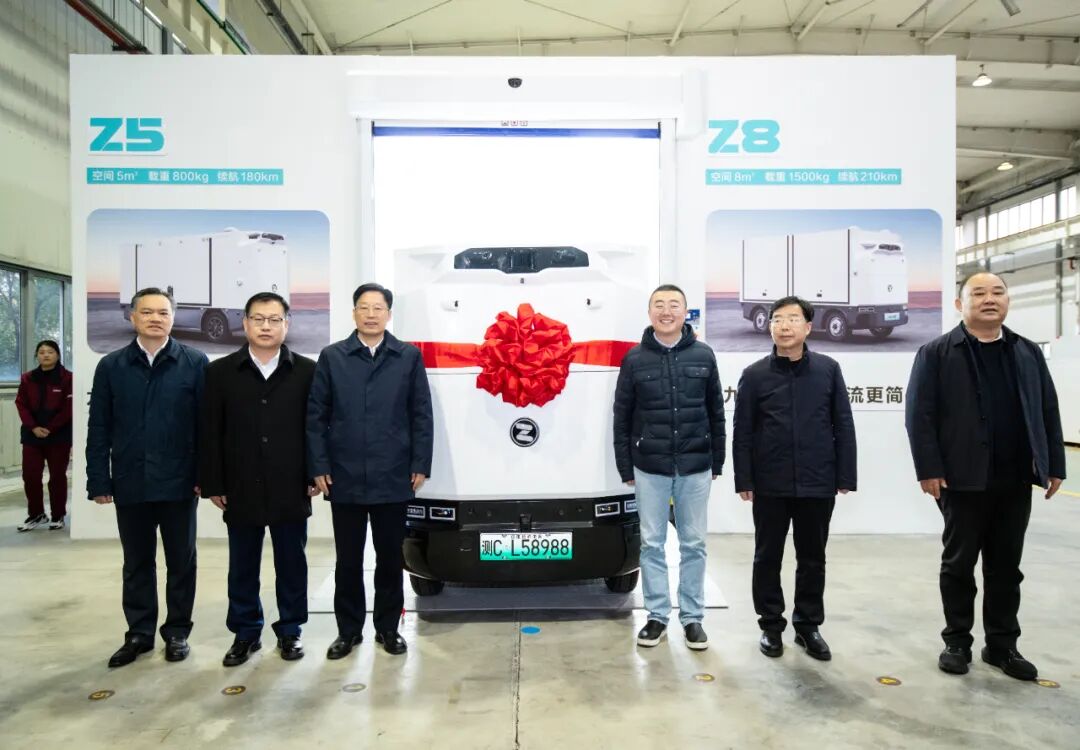
Core Viewpoint - The official launch of the autonomous logistics delivery vehicle production line by Jiushi Intelligent at the Jiangqi Group's Fuyang production base marks a significant milestone in the collaboration between Fuyang City, Jiushi Intelligent, and Jianghuai Automobile, aimed at advancing technological and industrial innovation integration [1][3][9]. Group 1: Company Developments - Jiushi Intelligent has invested 1 billion yuan in Fuyang, planning to establish a production base with an annual capacity of 20,000 autonomous logistics delivery vehicles [7][13]. - The project from initiation to the first vehicle off the line took only two months, showcasing the rapid execution capabilities of Jiushi Intelligent and its partners [11]. Group 2: Strategic Goals - The collaboration aims to leverage Fuyang's advantages in talent, transportation, logistics, and industrial support to create a leading production base and ecosystem for autonomous logistics vehicles [3][9]. - Jiushi Intelligent plans to develop a comprehensive ecosystem covering research and development, manufacturing, operation, and service, contributing to improved urban operational efficiency and innovative urban governance models [5][11]. Group 3: Industry Impact - The partnership is expected to enhance the integration of technology and manufacturing, with a focus on creating a robust supply chain and industry ecosystem for smart connected new energy vehicles [1][3]. - Jiushi Intelligent is recognized as a leading player in the autonomous driving sector, having achieved large-scale operations in urban logistics with its self-developed L4 autonomous driving technology [7][13].
项兴初拜访任正非先生 共谋智能汽车新篇章
Sou Hu Cai Jing· 2026-01-07 03:41
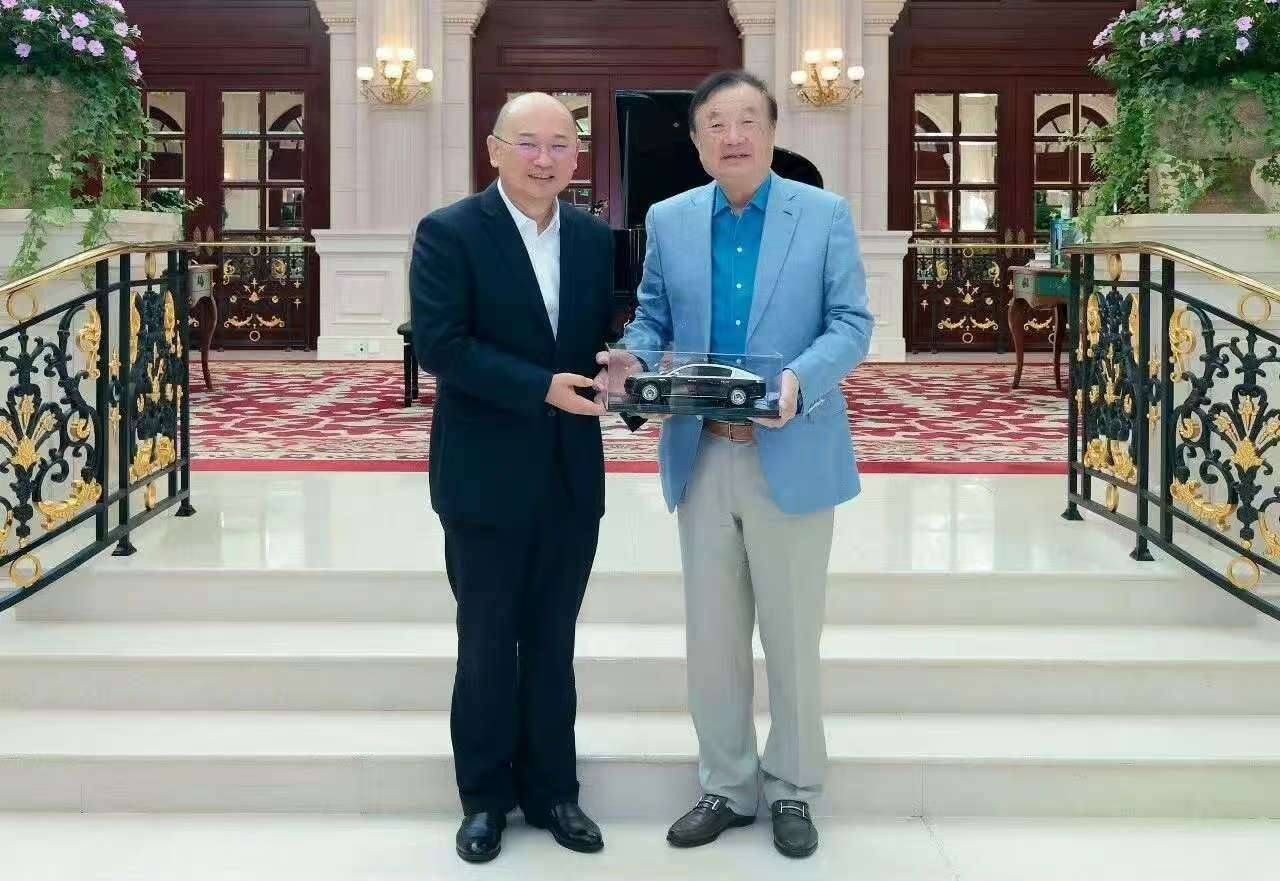
项兴初拜访任正非先生。 展望未来,江汽集团与华为将进一步拓宽合作领域,在汽车智能化、企业数智化等关键领域持续深化合 作,共同推动新能源汽车产业实现高质量发展,为中国汽车强国建设注入新动能。(江汽宣 文/图) 1月5日,江汽集团控股公司党委书记、董事长、总经理项兴初率团队赴深圳,拜访华为公司创始人任正非 先生等。双方围绕汽车产业智能化变革趋势、合作项目进展及未来规划等,进行了全面深入的交流。 ...
三星无折痕折叠屏OLED面板亮相CES;江淮汽车公布多模态飞行汽车专利,可降低噪音和能耗丨智能制造日报
创业邦· 2026-01-07 03:22
Group 1 - Jianghuai Automobile Group has announced a patent for a multi-modal flying car that can reduce noise and energy consumption, featuring foldable wings and vertical lift fans for flight control [2] - AMD's CEO revealed at CES that the next-generation AI chip MI455 GPU, built on 2nm and 3nm processes, is expected to enhance AI performance by 1000 times within four years [2] - Star River Power plans to launch the "Ceres-1 Sea Launch (Remote 7)" commercial rocket soon, with the mission code named "Wanghai Tide" [2] - Samsung showcased a crease-free foldable OLED panel at CES 2026, which may be used in the upcoming Galaxy Z Fold8 and potentially in Apple's first foldable iPhone, promising a seamless display experience [2]

江淮汽车公布飞行汽车相关专利
Qi Cha Cha· 2026-01-07 01:52
Core Viewpoint - Jianghuai Automobile has recently applied for a patent for a "multi-modal flying car," indicating its commitment to innovation in the automotive and aerospace sectors [1] Summary by Relevant Sections Patent Details - The patent describes a multi-modal flying car that includes biomimetic flying wings and ducted fans [1] - The biomimetic flying wings are designed to fold and extend on both sides of the vehicle, expanding during flight mode and retracting for ground driving mode [1] - Multiple sets of vertically downward ducted fans are installed in both the front and rear compartments of the vehicle for vertical lift control [1] - The ducted fans are embedded within the vehicle's body, and the outlet of the duct features adjustable grilles that can be closed during ground driving mode and adjusted during flight mode to control airflow direction [1] Benefits of the Invention - The invention aims to reduce noise and energy consumption of flying cars while increasing their range [1]
汽车早餐 | 江汽集团董事长项兴初拜访任正非;蔚来第100万辆量产车正式下线;英伟达L4级自动驾驶出租车将于2027年上路
Zhong Guo Qi Che Bao Wang· 2026-01-07 01:38
Group 1: Domestic News - The Ministry of Commerce announced that from 2024 to 2025, China aims to achieve 18.3 million vehicle trade-ins, with nearly 60% being new energy vehicles [2] - In 2024, the national scrapped vehicle recovery is projected to reach 17.67 million units, with an annual growth rate of 45.8% [2] - The second-hand vehicle transactions are expected to reach 39.686 million units [2] Group 2: Traffic and Safety Initiatives - Beijing is planning to implement a "no-cost first aid" policy for traffic accident victims, ensuring they receive immediate medical care without upfront costs [3] Group 3: Insurance and Financial Support - Guangdong is optimizing insurance services for new energy vehicles and exploring the development of intelligent driving liability insurance products to support the growth of the new energy vehicle industry [4] - The province is encouraging insurance institutions to provide various insurance products related to consumer goods [4] Group 4: Transportation Policies - Henan province will exempt hydrogen-powered trucks from toll fees on expressways until the end of 2027 and offer a 50% discount for electric trucks [5] Group 5: Automotive Industry Performance - In the UK, new car registrations are projected to reach 2.02 million in 2025, a 3.5% increase from 2024, with pure electric vehicle sales growing approximately 25% [6] - Lucid Motors reported a total production of 18,378 vehicles in 2025, a 104% increase, and deliveries of 15,841 vehicles, a 55% increase [9] - Chery Group set a sales target of 3.2 million vehicles for 2026, representing a 14.03% growth from 2025 [10] - NIO's one-millionth production vehicle has been officially launched, marking a significant milestone for the company [11] Group 6: Technological Advancements - NVIDIA announced plans to test its Level 4 autonomous taxi service in 2027, utilizing its full-stack autonomous driving technology [7] - Hyundai Motor Group plans to deploy Boston Dynamics' Atlas robots in its U.S. factories starting in 2028 [8] - Geely and Qianli Zhijia jointly launched a new smart driving brand, G-ASD, covering intelligent driving capabilities from Level 2 to Level 4 [13] - Hesai Technology has been selected by NVIDIA as a lidar partner for its DRIVE AGX Hyperion 10 platform, aimed at enabling Level 4 autonomous driving [14]





汽车早报|蔚来第100万台车下线 奇瑞集团2026年销量目标为320万辆
Xin Lang Cai Jing· 2026-01-07 00:37
Group 1: Industry Overview - In the first eleven months of 2025, China's automotive exports to countries along the "Belt and Road" reached $129.47 billion, a year-on-year increase of 15.1%, accounting for 59.8% of total automotive exports [1] - The total number of exported vehicles was 4.981 million, representing a 24.7% increase year-on-year, while the export of new energy vehicles reached 1.633 million, up 83.5% [1] Group 2: Market Trends - The China Automobile Circulation Association forecasts a "good start" for the automotive market in January 2026, with a consumer index of 97.7 in December 2025, indicating an increase from the previous month [2] - The demand index for December 2025 was 90.3, showing improvement, driven by pent-up demand from the end of 2025 and pre-festival purchasing needs in January 2026 [2] Group 3: Company Performance and Goals - Chery Group has set a sales target of 3.2 million units for 2026, representing a 14.03% increase from 2025 [3] - NIO's 1 millionth vehicle rolled off the production line, with CEO Li Bin stating a goal of maintaining annual sales growth of 40%-50% [4] - NIO and CATL signed a five-year strategic cooperation agreement to deepen collaboration in technology, ecology, and market [5] - NIO also signed agreements with Chery and Jianghuai Automobile to establish a collaborative innovation platform [6] Group 4: Competitive Landscape - Tesla announced a five-year 0% interest financing plan for its Model 3/Y/Y L vehicles, with low down payments and monthly payments [7] - BYD surpassed Tesla in sales in both Germany and the UK, with a sevenfold increase in sales in Germany to 23,306 units, while Tesla's sales dropped to 19,390 units [10] - Ford reported a 6.0% year-on-year increase in U.S. sales for 2025, totaling 2,204,124 vehicles [11] - Lucid delivered 15,841 new vehicles in 2025, marking a 55% year-on-year increase [11] Group 5: Innovations and Developments - Anhui Jianghuai Automobile Group announced a patent for a multi-modal flying car designed to reduce noise and energy consumption [8] - Sony and Honda's joint venture plans to launch its first electric vehicle, "AFEELA1," in Japan in 2027, featuring AI dialogue capabilities [12] - Volkswagen is recalling over 356,000 vehicles in the U.S. due to a software issue affecting rearview camera displays [13]
安徽江淮汽车集团股份有限公司 关于向特定对象发行股票申请获得 中国证券监督管理委员会同意注册批复的公告
Zhong Guo Zheng Quan Bao - Zhong Zheng Wang· 2026-01-06 23:47
本公司董事会及全体董事保证本公告内容不存在任何虚假记载、误导性陈述或者重大遗漏,并对其内容 的真实性、准确性和完整性承担法律责任。 证券代码:600418 证券简称:江淮汽车 公告编号:2026-001 安徽江淮汽车集团股份有限公司 关于向特定对象发行股票申请获得 中国证券监督管理委员会同意注册批复的公告 登录新浪财经APP 搜索【信披】查看更多考评等级 安徽江淮汽车集团股份有限公司(以下简称"公司")于近日收到中国证券监督管理委员会出具的《关于 同意安徽江淮汽车集团股份有限公司向特定对象发行股票注册的批复》(证监许可〔2025〕3022号), 主要内容如下: 董事会 2026年1月7日 一、同意你公司向特定对象发行股票的注册申请。 二、你公司本次发行应严格按照报送上海证券交易所的申报文件和发行方案实施。 三、本批复自同意注册之日起12个月内有效。 四、自同意注册之日起至本次发行结束前,你公司如发生重大事项,应及时报告上海证券交易所并按有 关规定处理。 公司将按照上述批复文件和相关法律法规的要求及公司股东会的授权,在规定期限内办理本次向特定对 象发行股票的相关事宜,并及时履行信息披露义务,敬请广大投资者注意投 ...
江淮汽车(600418)披露向特定对象发行股票获证监会同意注册批复,1月6日股价下跌0.26%
Sou Hu Cai Jing· 2026-01-06 14:12
《江淮汽车关于向特定对象发行股票申请获得中国证券监督管理委员会同意注册批复的公告》 以上内容为证券之星据公开信息整理,由AI算法生成(网信算备310104345710301240019号),不构成 投资建议。 截至2026年1月6日收盘,江淮汽车(600418)报收于50.25元,较前一交易日下跌0.26%,最新总市值为 1097.46亿元。该股当日开盘50.3元,最高50.8元,最低49.61元,成交额达26.07亿元,换手率为2.38%。 公司近日发布公告称,安徽江淮汽车集团股份有限公司于近日收到中国证券监督管理委员会出具的《关 于同意安徽江淮汽车集团股份有限公司向特定对象发行股票注册的批复》(证监许可〔2025〕3022 号),批复同意公司向特定对象发行股票的注册申请。批复自同意注册之日起12个月内有效。公司需严 格按照报送上海证券交易所的申报文件和发行方案实施发行,并在发生重大事项时及时报告。公司将根 据批复要求及股东会授权,在规定期限内办理相关事宜并履行信息披露义务。 最新公告列表 ...
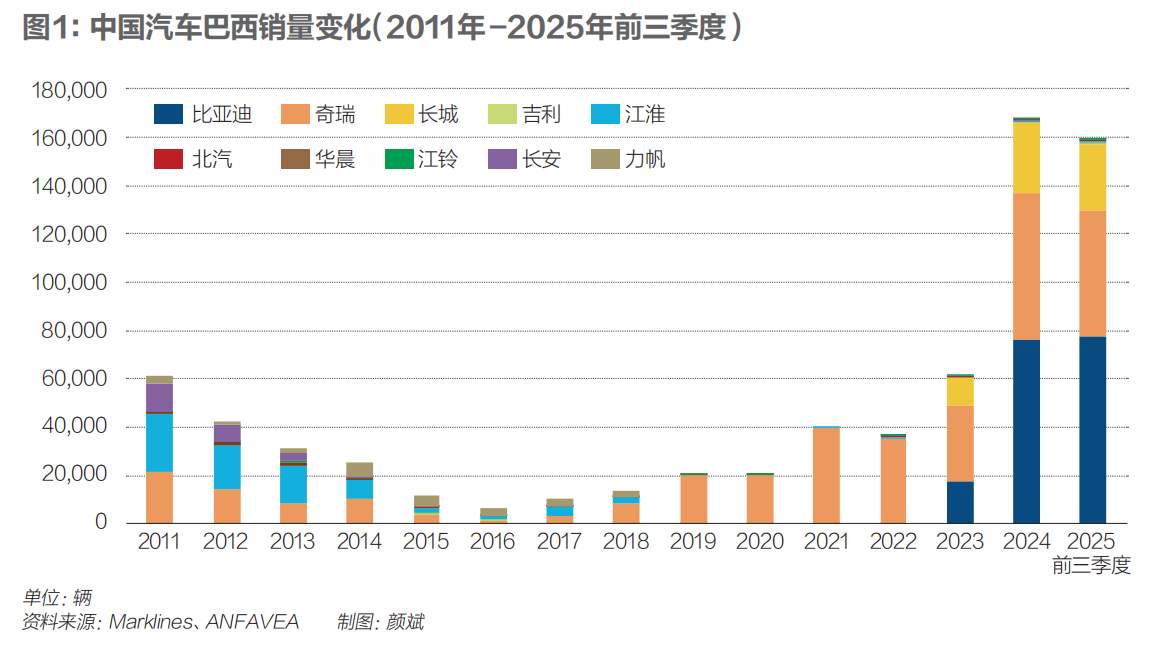
中国车企深入巴西腹地
Cai Jing Wang· 2026-01-06 13:38
Core Insights - Chinese automotive brands are rapidly establishing a foothold in the Brazilian market, with nearly 40% representation at the São Paulo International Motor Show, showcasing a significant shift in market dynamics [1][3] - The success of Chinese companies in Brazil hinges on their ability to localize supply chains and enhance after-sales services, addressing past shortcomings [1][4] Group 1: Market Presence and Strategy - The São Paulo International Motor Show marked a collective appearance of Chinese brands, with notable participation from companies like BYD, Great Wall, and Chery, indicating a strong market presence [1][2] - Chinese brands are adopting high pricing strategies, with BYD's Tang L model priced at 399,900 reais (approximately 530,000 RMB), reflecting a shift towards the premium segment [1] - The overall market share of Chinese automotive companies in Brazil has surpassed 10%, establishing them as emerging players in the local automotive industry [3] Group 2: Historical Context and Evolution - The journey of Chinese automotive companies in Brazil can be divided into distinct phases: the initial wave from 2009 to 2014, a rebuilding phase from 2015 to 2020, and a resurgence starting in 2021 [7] - The first wave (2009-2014) was characterized by low-cost strategies and heavy marketing, but faced challenges due to a lack of localization and subsequent government policies that increased import taxes on non-localized vehicles [8][11] - The second phase saw companies like Chery pivoting to local partnerships, which helped improve brand perception and sales, with CAOA Chery achieving a 122% sales increase by 2018 [12] Group 3: Technological and Market Adaptation - The current wave (2021 onwards) is marked by significant capital investment and a focus on local production, with companies like Great Wall acquiring existing factories to establish a manufacturing base [13] - Chinese companies are leveraging advanced technologies in electric and hybrid vehicles, with BYD and Great Wall forming a duopoly in the Brazilian new energy vehicle market [14][20] - The adaptation to local market conditions includes developing vehicles that cater to Brazil's unique energy structure, particularly the prevalence of ethanol as a fuel source [27][28] Group 4: Challenges and Opportunities - The Brazilian automotive market presents challenges such as a highly unequal income distribution and specific consumer preferences for smaller vehicles due to parking constraints [23][24] - Chinese brands are addressing these challenges by offering compact, technologically advanced vehicles that appeal to middle-class consumers, moving away from the low-cost strategy of the past [25] - The Brazilian government's "MOVER" plan aims to stimulate local investment in high-efficiency vehicles, providing a framework for Chinese companies to align their strategies with national goals [29][32] Group 5: Future Outlook - The success of Chinese automotive companies in Brazil will depend on their ability to integrate technology transfer, deepen local market engagement, and enhance supply chain capabilities [33] - The potential for Chinese brands to act as a catalyst for innovation in the Brazilian automotive sector is recognized by the government, which seeks to leverage their presence for broader industrial upgrades [19][32]