跨界协同

Search documents
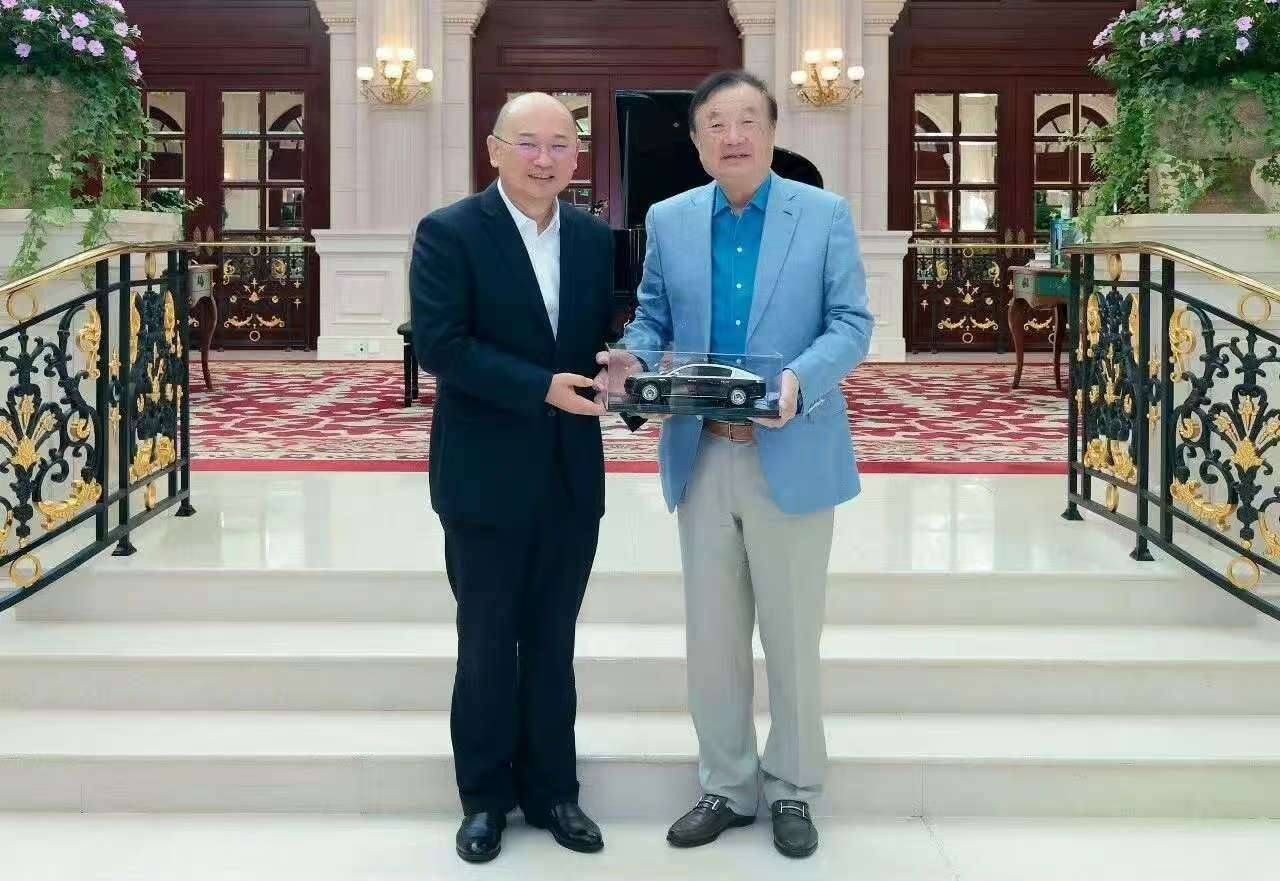
传江汽集团高层密会任正非,智能化转型缺技术,跨界合作是唯一出路?
Sou Hu Cai Jing· 2026-01-07 07:25
Core Viewpoint - The meeting between Jiangqi Group and Huawei marks a significant milestone in their collaboration, focusing on the intelligent transformation of the automotive industry and the expansion of cooperation in key areas such as automotive intelligence and enterprise digitalization [1][6]. Group 1: Strategic Cooperation - Jiangqi Group's deepening strategic partnership with Huawei is seen as a necessary path to overcome its bottlenecks in intelligent transformation and achieve high-quality development [3][5]. - The collaboration aims to enhance Jiangqi's capabilities in smart driving and smart cockpit technologies, which are becoming critical competitive factors in the automotive market [3][5]. - Jiangqi's sales of new energy passenger vehicles declined by 25.64% year-on-year in the first three quarters of 2025, highlighting the need for technological advancement [3]. Group 2: Technological Empowerment - Huawei's technological expertise in AI, big data, and cloud computing is crucial for Jiangqi to fill its gaps in intelligent technology and transition from a manufacturing to a technology-driven enterprise [5][8]. - The S800 model, co-developed by Jiangqi and Huawei, achieved over 10,000 deliveries within a year, setting a record for luxury new energy sedans in China [5][8]. Group 3: Future Development and Investment - The recent meeting outlines a clearer roadmap for future cooperation, focusing on joint efforts in core technologies and enhancing operational efficiency through Huawei's digital solutions [8][11]. - Jiangqi plans to raise 3.5 billion yuan for the development of a high-end intelligent electric platform, which will integrate Huawei's solutions, indicating a strong commitment to their partnership [8][11]. Group 4: Industry Trends - The collaboration between Jiangqi and Huawei reflects a broader trend in the automotive industry towards cross-industry cooperation, essential for navigating the complexities of intelligent transformation [9][11]. - The automotive sector is evolving from being merely a physical transportation tool to becoming a digital intelligent terminal, necessitating deeper integration with technology companies [11].


从手术室到芯片车间:兴业银行武汉分行金融助力民营医疗净化龙头跨界突围
Sou Hu Cai Jing· 2025-12-26 09:01
Group 1 - The core viewpoint of the article highlights the significant advancements in the cleanroom technology sector, particularly in the semiconductor and medical fields, with Wuhan Huakang Century Clean Technology Co., Ltd. being a leading player in this industry [1][2] - The company has established a strong technical moat in the medical cleanroom sector, having won numerous contracts and completed projects for top hospitals and national laboratories, showcasing its industry leadership [1] - The demand for ultra-clean production environments in emerging industries like semiconductors and new displays is creating a new market opportunity worth trillions, prompting the company to expand its operations into electronic cleanroom engineering [1] Group 2 - The financial needs during the company's transition period are complex, requiring comprehensive solutions that align with its development pace, which led to the creation of a tailored financial service package by Industrial Bank's Wuhan branch [2] - The collaboration between the bank and the company has been efficient, with the entire process from demand matching to approval taking only one month, demonstrating the bank's commitment to supporting the company's strategic growth [2] - Huakang Medical's electronic cleanroom division has made a strong start, securing nearly 600 million yuan in orders within 10 months and aiming for a strategic target of 1 billion yuan for the year, exemplifying innovation-driven industrial upgrades [2]

汽车行业“破内卷”: 技术与资本双轮驱动 迈向全球竞合新周期
Zhong Guo Zheng Quan Bao· 2025-12-19 22:44
Core Insights - The automotive industry is experiencing a struggle between scale expansion and profit pressure, with a significant drop in profit margins from 7.8% in 2017 to 4.5% in 2025, despite a sales volume of 24.783 million vehicles and a new energy vehicle penetration rate exceeding 50.3% [1] - The industry is focusing on regulating price competition, achieving globalization, and leveraging technological breakthroughs to reshape capital value [1] Group 1: Industry Competition and Pricing - Price competition has significantly impacted the industry ecosystem, with a capacity utilization rate of only 72.2% in 2024, and state-owned enterprises and electric vehicle startups at 64% and 66% respectively [2] - After policy intervention, the number of discounted models decreased, leading to a 7.9% year-on-year revenue growth and a profit increase of 4.4% in the first ten months of 2025, reversing the declining trend [2] - Consumer behavior is shifting towards more rational decision-making, prompting companies to invest in technology R&D and service optimization to build long-term competitiveness [2] Group 2: Export Growth and Market Expansion - In 2025, China's automotive exports reached 6.346 million units, a year-on-year increase of 8.7%, with new energy vehicle exports doubling to 2.315 million units [3] - The future opportunities in the automotive market lie in overseas market expansion, with a focus on establishing a strong presence in both domestic and international markets [3] - By 2026, Chinese automakers plan to have an overseas production capacity of 3 million units, with over 2 million units expected to be operational [3] Group 3: Technological Innovation - 2026 is anticipated to be a pivotal year for automotive technology innovation, with significant breakthroughs expected in battery technology, intelligent driving, and onboard computing power [4] - The introduction of L3 autonomous driving trials is seen as a crucial step towards industrialization, necessitating synchronized technological and regulatory advancements [4] - The penetration rate of L2 driving assistance features in new passenger vehicles is projected to exceed 70% by 2026, with costs for hardware significantly decreasing [5] Group 4: Industry Transformation - The automotive industry is undergoing a profound transformation from scale-driven to value-driven growth, integrating technology, services, and ecosystems [6] - The focus is shifting from capacity expansion to leveraging technological innovation and global collaboration, aiming to establish global standards and enhance the export model [6]
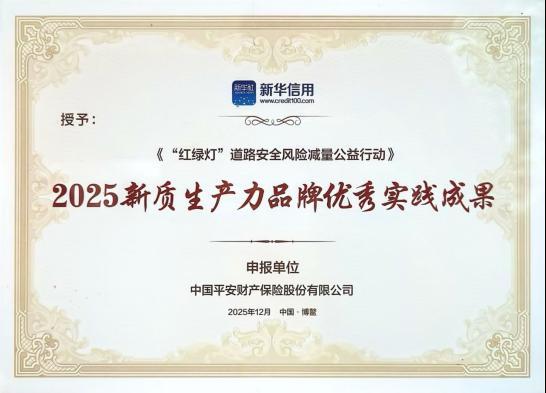
2025新质生产力品牌实践成果发布,平安“红绿灯”公益行动获评“优秀实践成果”
Xin Hua She· 2025-12-05 10:52
Group 1 - The "2025 Brand Credit Construction Forum" aims to integrate the credit system with the modern industrial system, focusing on "credit empowering brand new three transformations" [1] - A number of representative practical cases were recognized as "2025 New Quality Productive Force Brand Excellent Practice Achievements," covering various fields such as finance, culture and tourism, and ecology [1] - The Ping An Insurance "Traffic Light" public welfare action was selected as a financial sector case, highlighting its role in promoting road safety [1] Group 2 - The construction of the social credit system is becoming an important support for linking social responsibility and enhancing governance effectiveness [3] - Institutions in the financial and public service sectors are increasingly exploring new service models that integrate risk prevention with public welfare attributes, shifting from "post-event handling" to "pre-event prevention" [3] - The "Traffic Light" public welfare action has donated 8,044 safety facilities, completed 1,404 road segment renovations, and educated approximately 182,000 people on traffic safety, significantly reducing traffic accident rates [3] Group 3 - Experts at the forum emphasized that in the context of the digital economy, data-driven and cross-sector collaboration are crucial for enhancing public service efficiency and building trustworthy brands [3] - The integration of "credit + technology + governance" not only aids in precise risk prevention but also provides practical references for constructing an intelligent and integrated social governance ecosystem [3] - The Ping An "Traffic Light" initiative exemplifies cross-sector collaboration and precise risk prevention through "police-insurance linkage" and "data-driven" approaches, reflecting a new quality of productive force in intelligent and integrated development [3] Group 4 - The published practical achievements reflect the active exploration of various industries in promoting safe development and fulfilling social responsibilities [5] - Future efforts will focus on deepening cross-sector collaboration and innovating governance models, which are essential for promoting high-quality development and building a higher-level safety ecosystem [5]
皮肤健康赛道痛点待解:如何从“流量故事”迈向“科学资产”?
2 1 Shi Ji Jing Ji Bao Dao· 2025-11-28 06:46
Core Insights - The functional skincare industry has experienced rapid growth in recent years, driven by a rising rational consumer mindset that favors efficacy and safety in skincare products [2][3] - Despite the industry's expansion, there are significant issues such as insufficient evidence for product efficacy claims, inadequate monitoring of adverse reactions, and a lack of seamless integration between skin problem diagnosis and daily care [2][3] Industry Trends - The skin health industry is transitioning towards standardization and scientific development, with a focus on the role of dermatologists in managing skin issues through a comprehensive approach [3][5] - The market for functional skincare products in China is projected to reach 62.3 billion yuan by 2026, with a compound annual growth rate of 13.9% [8] Collaborative Efforts - There is a call for collaboration among hospitals, universities, research institutions, and companies to create a comprehensive development system for cosmetics that includes basic research, target selection, clinical validation, and scientific communication [3][5] - The integration of clinical insights from dermatologists into product development is essential for addressing market challenges and ensuring that products meet clinical needs [8][10] Consumer Demand - Consumer preferences are shifting from single-issue solutions to holistic approaches that address overall skin health, necessitating a more integrated view of skincare that includes medical and cosmetic products [7][9] - The demand for personalized skincare solutions based on individual skin conditions and needs is increasing, highlighting the importance of tailored skincare regimens [8][9] Regulatory Environment - Regulatory bodies are emphasizing the need for substantiated efficacy claims for skincare products, moving away from exaggerated or one-sided assertions [5][8] - The industry is expected to adopt evidence-based practices and establish unified standards for efficacy and safety evaluations, promoting sustainable development [8][10]

霸王茶姬创始人迎娶光伏女神,奶茶和阳光到底谁强势?
Sou Hu Cai Jing· 2025-11-25 05:09
Core Insights - The marriage between Zhang Junjie, founder of Bawang Tea Ji, and Gao Haichun, a leader in Trina Solar, symbolizes a strategic coupling of two major industries in China: new tea beverages and photovoltaic energy [2][3] - The two industries are on divergent paths as they approach 2025, with new tea beverages facing a slowdown while photovoltaic energy is experiencing a cyclical downturn [3][9] New Tea Beverage Industry - Bawang Tea Ji is set to go public on NASDAQ in April 2025, becoming the first Chinese new tea beverage company to list in the U.S., with an initial market value nearing $6 billion [3] - The growth rate of the Chinese new tea beverage market has significantly declined from over 25% in 2021 to an expected 6% in 2024, and further down to 1.5% by 2028, indicating a shift from rapid expansion to competition for existing market share [3] - Bawang Tea Ji's flagship product contributes 61% of its GMV, but the company faces challenges in product diversification and has seen a substantial increase in marketing expenses, which rose 11 times to 1.1 billion yuan over three years [3][5] - The company plans to expand into North America, but faces high material costs and a misalignment between consumer preferences for high-sugar drinks and its positioning as a "healthy tea" brand [3][5] Photovoltaic Industry - Trina Solar has experienced a 22.16% decline in revenue year-on-year for the first three quarters of 2024, with a net loss of 847 million yuan, marking its worst performance in recent years [5][6] - The photovoltaic industry is facing challenges such as overcapacity, intense price competition, and changing policy environments, which have led to a restructuring of investment logic [5][6] - Trina Solar is shifting its strategy from component sales to providing integrated energy storage solutions, aligning with global trends towards distributed and intelligent energy systems [6][9] - The photovoltaic sector is expected to undergo a significant clearing process, with a recovery anticipated around 2026 to 2027 [6][9] Comparative Analysis - Both industries have recently faced market corrections, with Bawang Tea Ji's stock price down nearly 40% from its peak and Trina Solar's market value dropping over 75% from its historical high [9][10] - New tea beverages are categorized as discretionary consumption, heavily influenced by economic cycles and consumer confidence, while photovoltaic energy is seen as a foundational infrastructure for the energy revolution, driven by policy and technology [9][10] - The long-term outlook for photovoltaic energy remains positive despite short-term challenges, while new tea beverages are viewed as a fleeting trend with limited growth potential [10][11]

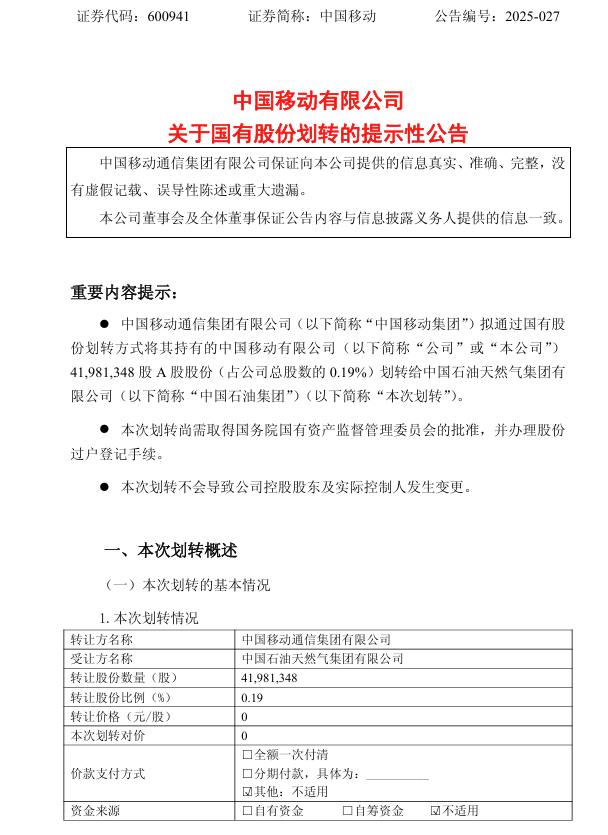
央企巨头公告:4198万股 0元划转
Zhong Guo Zheng Quan Bao· 2025-11-03 15:24
Core Viewpoint - China Mobile Group plans to transfer 41,981,348 A-shares (0.19% of total shares) of China Mobile to China National Petroleum Corporation (CNPC) at a price of 0 yuan, aiming to strengthen strategic collaboration between the two state-owned enterprises in technology and energy sectors [2][7][9]. Group 1: Share Transfer Details - The share transfer involves China Mobile Group transferring 41,981,348 shares to CNPC, which will hold 0.19% of China Mobile post-transfer [5][7]. - The transfer price is set at 0 yuan, with no applicable payment method [5][9]. - Following the transfer, China Mobile Group's ownership in China Mobile will decrease from 69.05% to 68.85% [7]. Group 2: Strategic Collaboration - The share transfer is part of a broader strategy to enhance collaboration between China Mobile and CNPC, focusing on areas such as information technology and smart energy [9]. - In September, CNPC announced a similar transfer of 541 million A-shares to China Mobile Group, indicating a reciprocal strategic partnership [9]. - Both companies signed a strategic cooperation agreement in January 2024 to promote the integration of new information technologies with the energy sector [9][10]. Group 3: Future Initiatives - In May 2025, China Mobile will assist CNPC in launching a large AI model project, showcasing the deepening of their strategic partnership [10]. - China Mobile aims to leverage its technological capabilities to support CNPC in exploring AI applications in the energy and chemical sectors [10].


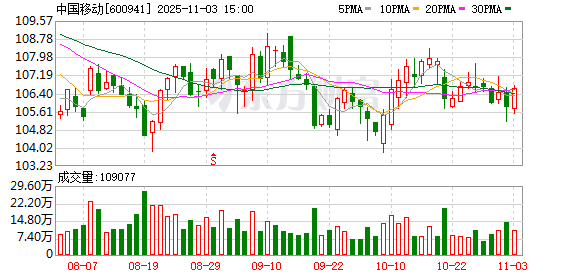
央企巨头公告:4198万股,0元划转
Zhong Guo Zheng Quan Bao - Zhong Zheng Wang· 2025-11-03 15:19
Core Viewpoint - China Mobile Group plans to transfer 41,981,348 A-shares (0.19% of total shares) to China National Petroleum Corporation at a price of 0 yuan, which will reduce its stake in China Mobile from 69.05% to 68.85% [1][3][4] Group 1: Share Transfer Details - The share transfer involves China Mobile Group transferring 41,981,348 shares to China National Petroleum Corporation, which will now hold 0.19% of China Mobile's total issued shares [3] - The transfer price is set at 0 yuan, and the payment method is not applicable [3] - After the transfer, China Mobile Group's ownership percentage will decrease from 69.05% to 68.85% [3][4] Group 2: Strategic Collaboration - The share transfer aims to enhance strategic collaboration between China Mobile Group and China National Petroleum Corporation, focusing on areas such as information technology and smart energy [5] - In September, China National Petroleum Corporation announced a similar transfer of 541 million A-shares to China Mobile Group, which increased China Mobile Group's stake in China National Petroleum Corporation from 0.10% to 0.39% [5] - The cross-shareholding between these state-owned enterprises reflects a strategic and business-level "cross-industry collaboration" [5] Group 3: Future Cooperation - Both companies signed a strategic cooperation agreement in January 2024 to promote deep integration of new-generation information technology and the energy industry [5] - They plan to collaborate in various areas, including basic communication services, enterprise digital transformation, 5G innovation applications, international business, marketing, and financial capital [5] - In May 2025, China Mobile will assist China National Petroleum Corporation in launching a large model project, indicating a deepening of their strategic partnership [6]

第三届全国城乡规划专业研究生教育年会召开
Zhong Guo Zi Ran Zi Yuan Bao· 2025-10-23 07:32
Core Viewpoint - The third National Urban and Rural Planning Graduate Education Annual Conference emphasizes the need for innovative planning education systems to support the modernization of urban development in China [1] Group 1: Conference Highlights - The conference was held in Xi'an with the theme "Innovative Planning Education System for Modernization of People's Urban Development" [2] - Keynote speeches were delivered by the Director of the National Urban and Rural Planning Graduate Education Guidance Committee and the Deputy Minister of Natural Resources [1] Group 2: Planning Reform Emphasis - The conference stressed the importance of understanding urban development laws and transitioning planning work from technical operations to value creation [1] - It highlighted the need for planning reforms to focus on human-centered approaches, resource efficiency, distinctive development, governance capabilities, and coordinated planning [1] Group 3: Collaboration and Talent Development - The conference called for enhanced collaboration between natural resource departments and planning education institutions to create a shared digital platform [1] - It aims to deepen cooperation across various sectors and accelerate the cultivation of high-quality planning talent that meets the requirements of Chinese-style modernization [1] Group 4: Cultural and Historical Confidence - The conference urged the importance of historical and cultural confidence, integrating traditional planning wisdom with ecological civilization concepts and high-quality development [1] - It aims to leverage digital transformation, educational innovation, and cross-sector collaboration to contribute to sustainable urban development globally [1]
第四大提锂路线出现:铝矿提锂
高工锂电· 2025-09-26 10:43
Core Viewpoint - A new lithium resource acquisition path is emerging from the aluminum industry in China, referred to as the "fourth lithium extraction route," which aims to reduce reliance on imported lithium resources and address technical challenges faced by the aluminum industry [1][2]. Group 1: Trends and Changes - China is facing dual pressures in the new energy and traditional industrial sectors, becoming the world's largest lithium consumer, accounting for approximately 45% of global consumption [3]. - However, domestic lithium resource reserves only account for 6% of global totals, leading to a high dependency on imports, projected to be 72.4% in 2024 [4]. - This contradiction between being a "demand country" and a "resource-poor country" poses significant challenges to supply chain security [5]. Group 2: Industry Collaboration - As the largest aluminum producer globally, China is also troubled by lithium elements, as many bauxite ores naturally contain lithium [6]. - In traditional alumina production processes, lithium can accumulate in electrolytic cells, causing operational issues when concentrations exceed 7%, leading to increased energy consumption and equipment wear [7]. - The urgent demand for lithium in the new energy sector, combined with the aluminum industry's need to remove lithium, has fostered cross-industry collaboration, transforming lithium from an "industrial burden" to a "new energy resource" [7]. Group 3: Participating Companies and Technical Paths - Chinese alumina companies and technology firms are accelerating the industrialization of lithium extraction from bauxite along two main technical paths [8]. - The first path involves extracting lithium directly from sodium aluminate solution, with projects like that of Luoyang Xin'an New Energy Co., which aims to produce 8,500 tons of battery-grade lithium carbonate annually [9][11]. - The second path focuses on recovering lithium from solid waste generated during aluminum electrolysis, with a collaboration between Suotong Development and Northeast University achieving over 85% lithium recovery from spent aluminum electrolyte [12][13]. - This technology not only provides low-carbon lithium resources for the new energy sector but also enhances the efficiency of aluminum electrolysis, reducing energy consumption and extending equipment lifespan [13]. Group 4: Future Outlook - As these technologies mature and are promoted, extracting lithium from aluminum by-products is transitioning from theory to practice, opening a new domestic lithium resource acquisition avenue for China [14].