
科大讯飞

Search documents
AI应用爆发前夜,大模型等待黎明
Tai Mei Ti A P P· 2026-01-18 12:01
Core Insights - The AI industry continues to gain momentum in 2026, with significant stock performance in the A-share market, particularly in AI application sectors [1] - Minimax has successfully launched on the Hong Kong stock market, achieving a market capitalization exceeding 100 billion [2] - Major tech companies are preparing for an AI application battle, with Alibaba, ByteDance, and Tencent all investing heavily in AI applications [4] Industry Trends - The rapid iteration of large models is evident, with 29 versions released by 11 tech companies in just 206 days, averaging a new version every 7.1 days [7][8] - User demand for AI applications is surging, with Doubao's monthly active users surpassing 200 million and Qianwen APP reaching 30 million in just 23 days [9] - The AI market in China is projected to grow to 993 billion by 2030, with a compound annual growth rate of 35.5% from 2024 to 2030 [10] Investment and Financials - Major companies are significantly increasing their capital expenditures on AI, with Baidu planning 30 to 50 billion, Tencent 70 to 100 billion, and Alibaba potentially increasing its 380 billion investment due to high demand [11] - AI companies are accelerating their IPOs, with multiple firms, including Zhiyuan AI and Minimax, recently listing on the Hong Kong Stock Exchange [12][14] - AI talent is in high demand, with salaries reaching up to one million and companies offering competitive packages to attract top talent [15] Challenges and Market Dynamics - Despite the growth, profitability remains a challenge, with Zhiyuan AI reporting losses exceeding 6.2 billion from 2022 to mid-2025, and Minimax over 8.7 billion from 2023 to Q3 2025 [18] - The competitive landscape remains unchanged as all major internet platforms integrate AI, leading to a potential homogenization of services [19][22] - The cost of using large models is decreasing rapidly, with significant price reductions observed in 2024, which is essential for the explosion of AI applications [27] Future Outlook - The AI industry is expected to experience an application explosion, with companies believing that revenue growth will eventually cover model costs [36] - The survival of companies in the AI sector will determine who defines the future, emphasizing the importance of endurance in the current challenging environment [37]
《经济日报》关注贵州:扩大智算规模 完善产业生态
Xin Lang Cai Jing· 2026-01-18 08:11
Core Insights - Guizhou is significantly enhancing its computing power industry, focusing on intelligent computing to support the national "East Data West Computing" strategy and facilitate digital transformation across various sectors [3][4] Group 1: Development of Computing Power - Guizhou has established 50 data centers by 2025, with a total computing power exceeding 150 EFLOPS, nearly doubling from 2024, and over 90% of this capacity is in intelligent computing [3] - The province has become one of the strongest regions in China for intelligent computing capabilities and resources, with 48 computing service providers aggregated at the national integrated computing network hub [3] Group 2: Infrastructure and Network Support - Guizhou has built a robust network infrastructure, including a national-level internet backbone direct connection point and an international internet data dedicated channel, making it one of the few provinces with all three major information infrastructure components [3] Group 3: Collaborative Development and Future Plans - The province is creating a new collaborative development model for the computing power industry, attracting major companies like Huawei Cloud and iFlytek to establish industry-leading projects [4] - Guizhou aims to further enhance the quality of its computing power industry by implementing more substantial measures and attracting additional projects to expand its digital intelligence industry cluster [4]

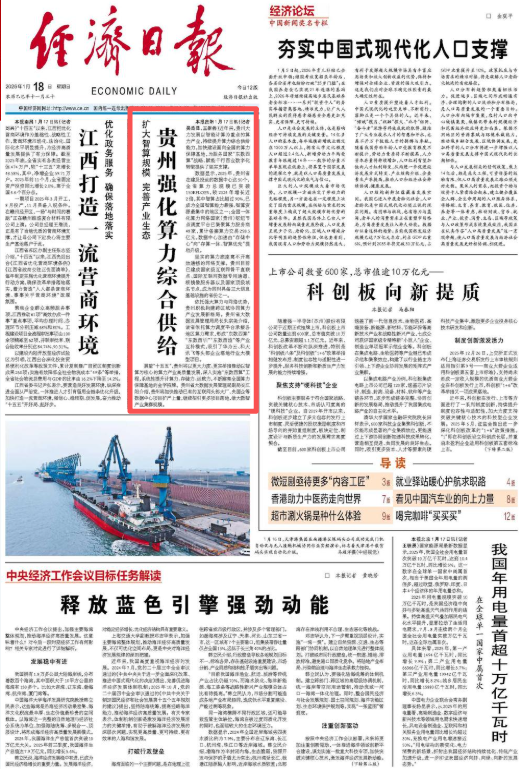
贵州强化算力综合供给
Jing Ji Ri Bao· 2026-01-18 08:01
Core Insights - Guizhou is significantly advancing its computing power industry, focusing on intelligent computing, to support the national "East Data West Computing" strategy and facilitate digital transformation across various sectors [1][2] Group 1: Industry Development - By 2025, Guizhou plans to have 50 data centers in operation, with total computing power exceeding 150 EFLOPS, representing nearly a twofold increase from 2024, and over 90% of this capacity will be in intelligent computing [1] - Guizhou has become one of the regions with the strongest intelligent computing capabilities and the most concentrated resources in the country, with 48 computing service providers aggregated at the national integrated computing network hub [1] Group 2: Infrastructure and Support - The province has established a robust network infrastructure, including a national-level internet backbone direct connection point and an international internet data dedicated channel, making it one of the few provinces with all three major information infrastructure components [1] - The computing power scheduling platform in Guizhou is facilitating cross-regional collaboration and attracting major companies like Huawei Cloud and iFlytek to establish industry-leading model projects [1] Group 3: Future Plans - Looking ahead to the 14th Five-Year Plan, Guizhou aims to enhance the quality of its computing power industry with a focus on intelligent computing, while continuing to attract more data center projects and expand existing ones [2]
北大、BIGAI重磅推出TacThru传感器 实现触觉、视觉双感知突破操作精度直线飙升
机器人大讲堂· 2026-01-18 04:03
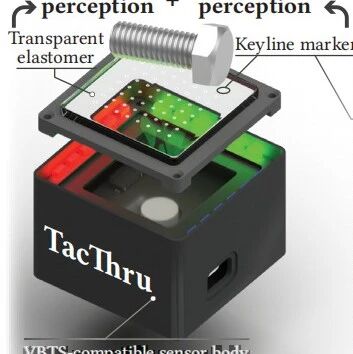
Core Viewpoint - The TacThru sensor developed by a research team from Peking University and Beijing General Artificial Intelligence Research Institute integrates tactile and visual perception, enhancing the precision of robots in delicate operations and contact-intensive tasks [3][4]. Group 1: Sensor Design and Functionality - TacThru employs a fully transparent elastic material, allowing the embedded camera to "see through" and capture tactile signals simultaneously, eliminating the need for complex mode-switching [10]. - The sensor features innovative "Keyline Markers," designed with concentric circles that maintain visibility even in complex backgrounds, enhancing tracking capabilities [12]. - Utilizing a Kalman filter algorithm, TacThru can accurately track the displacement of 64 markers, processing each frame in just 6.08 milliseconds, supporting high-frequency perception and real-time operations [15]. Group 2: Learning Framework and Data Integration - The TacThru-UMI imitation learning framework combines the TacThru sensor with a Transformer-based diffusion policy, creating an end-to-end learning system that intelligently integrates multimodal signals [16][19]. - The system processes four types of inputs: global visual information from a wrist camera, close-range visual images from TacThru, tactile data from marker displacements, and proprioceptive information from the robot, enabling dynamic attention allocation based on the scenario [19]. Group 3: Performance Validation - In five typical robotic operation tasks, TacThru-UMI achieved an average success rate of 85.5%, significantly outperforming pure visual (55.4%) and traditional tactile-visual solutions (66.3%) [20][24]. - In the "tissue extraction" task, TacThru excelled by capturing the position and deformation of soft tissues in real-time, achieving a much higher success rate compared to traditional methods [21]. - The "bolt sorting" task demonstrated TacThru's ability to distinguish subtle geometric and color differences, achieving an 85% success rate, far exceeding the 45% of traditional solutions [22]. Group 4: Paradigm Shift in Robotic Operations - TacThru represents a shift from single-sensor reliance to multimodal collaboration in robotic operations, allowing robots to adaptively choose between visual and tactile feedback [25]. - This transition expands operational boundaries, enhances robustness in complex environments, and lowers application barriers by being compatible with existing manufacturing processes [25].
【数智周报】 谷歌DeepMind CEO:中国的AI模型仅落后美国几个月;DeepSeek开源相关记忆模块Engram;微软在人工智能上的支出将达到5...
Tai Mei Ti A P P· 2026-01-18 02:38
Group 1 - Keda Xunfei's Chairman Liu Qingfeng stated that the domestic AI infrastructure has taken initial shape, with domestic large models matching international standards despite having half the parameters [2] - Michael Burry warned that the era of tech giants earning huge profits with minimal investment is ending, primarily due to AI, and investors should focus on Return on Invested Capital (ROIC) rather than revenue growth [3] - A BlackRock survey revealed that while investors are optimistic about AI, they are shifting their investment focus towards energy and infrastructure suppliers, with only one-fifth considering large US tech companies as attractive investment opportunities [4] Group 2 - Demis Hassabis, CEO of Google DeepMind, indicated that Chinese AI models are only a few months behind those in the US and Western countries, with significant advancements made by Chinese developers [5] - DeepSeek released a new paper on conditional memory, significantly improving model performance in various tasks, and has open-sourced a related memory module [6] - Wang Xiaochuan, CEO of Baichuan Intelligent, mentioned that the company has 3 billion yuan on hand and may initiate an IPO plan in 2027 [7] Group 3 - Zhiyu and Huawei launched the first domestically trained multimodal SOTA model on local chips, achieving a full training process on the Ascend Atlas 800T A2 device [8] - Kuaishou announced that Keling AI's revenue exceeded $20 million in December 2025, with an annual recurring revenue (ARR) of $240 million [9] - Yongyou Network projected a net loss of 1.3 to 1.39 billion yuan for 2025, although it expects to reduce losses compared to the previous year [10] Group 4 - JD.com and Lenovo deepened their "hybrid AI" cooperation, launching new products at CES 2026, with a focus on strategic collaboration around smart devices and services [11] - Alibaba's Qianwen app integrated with various services, allowing users to order food and book flights through AI, marking a significant upgrade in functionality [12] - Alipay and partners released China's first AI commercial agreement, aimed at creating a universal language for AI tasks across platforms [13] Group 5 - Yunhai Medical launched the "YunJian AI Spirit," a product that reduces long-term costs for users by offering unlimited access to traditional Chinese medicine infrared algorithms [14] - Zhiyuan purchased thousands of hours of robot training data for various tasks [15] - Meituan released the open-source "ReThink" model, achieving state-of-the-art performance in several benchmarks [16] Group 6 - Teslian introduced the upgraded T-Cluster 512 super node architecture, designed for high-performance AI model training, with a total computing power exceeding 500 PFlops [17] - Keda Xunfei launched a marketing AI platform based on the "SuperAgent" framework, enhancing efficiency in marketing strategies [18] - The first domestically trained text-to-image model was released by Zhiyu and Huawei, completing the entire training process on local chips [19] Group 7 - Tencent Cloud ADP launched the first "AI-native Widget," enhancing task delivery experiences through natural language interaction [20] - Anthropic implemented stricter measures to prevent third-party tools from bypassing rate limits, affecting several developer projects [21] - Google announced a partnership with Walmart to expand AI model shopping capabilities, allowing direct transactions through its AI application [22] Group 8 - Mark Zuckerberg initiated the "Meta Compute" project, aiming to build substantial AI infrastructure by 2030, with a focus on collaboration with governments [23] - Meta plans to lay off hundreds of employees in its Reality Labs department, shifting focus from the metaverse to AI [24] - Alphabet's market value surpassed $4 trillion for the first time, joining a select group of companies [24] Group 9 - Nvidia and Eli Lilly will jointly invest $1 billion to establish an AI drug laboratory over the next five years [26] - The US relaxed export controls on Nvidia's H200 chips to China, potentially impacting the AI hardware market [27] - Microsoft announced a plan to limit the impact of data center energy costs and water usage on local communities [29] Group 10 - OpenAI is reportedly seeking US hardware suppliers for its planned consumer devices and cloud data center expansion [32] - Elon Musk's lawsuit against OpenAI is set to go to trial in late April [33] - OpenAI and Cerebras announced a partnership worth over $10 billion to deploy a large-scale AI inference platform [34] Group 11 - Zivariable Robotics completed a 1 billion yuan A++ round of financing, backed by major investors including ByteDance and Meituan [35] - Qiangnao Technology submitted a confidential IPO application in Hong Kong [36] - OpenAI agreed to acquire the AI health application Torch for approximately $100 million [37] Group 12 - K2 Lab, founded by a former DingTalk executive, secured tens of millions in seed funding to develop an AI-driven content e-commerce agent [38] - Alibaba Cloud completed a strategic investment in ZStack, achieving a controlling stake [39] - Skild AI raised nearly $1.4 billion in funding, reaching a valuation of over $14 billion [40] Group 13 - WeLab completed a $220 million D-round strategic financing, the largest single round since its inception [41] - Merge Labs, a brain-machine interface startup, raised $252 million in seed funding, with OpenAI as a major investor [42] Group 14 - A report indicated that by 2026, the Chinese tech giants index is expected to surpass the US tech giants in profitability growth for the first time since 2022 [43] - China is accelerating the establishment of a data property registration system to enhance data circulation and value [44] - Storage prices are expected to surge by 40%-50% in Q4 2025 and again in Q1 2026 due to increased demand from AI and server capacity [45] Group 15 - A new AI model developed by US researchers can predict the risk of approximately 130 diseases based on sleep data [46] - Foreign investment firms are increasingly incorporating AI into their research processes in the Chinese market [47] - UBS believes the probability of an AI bubble in China is low, with monetization relying on cloud services and advertising [48] Group 16 - The number of AI companies in China has exceeded 6,200, with applications expanding across various industries [49]




【数智周报】 谷歌DeepMind CEO:中国的AI模型仅落后美国几个月;DeepSeek开源相关记忆模块Engram;微软在人工智能上的支出将达到5亿美元;美国放宽对英伟达H200芯片出口中国的管制
Sou Hu Cai Jing· 2026-01-18 02:15
Group 1 - Keda Xunfei's Chairman Liu Qingfeng stated that the domestic AI infrastructure has taken initial shape, with domestic large models matching international standards despite having half the parameters [2] - Michael Burry warned that the era of tech giants earning huge profits with minimal investment is ending, primarily due to AI, and investors should focus on Return on Invested Capital (ROIC) rather than revenue growth [3] - A BlackRock survey revealed that while investors are optimistic about AI, they are shifting their focus to energy and infrastructure suppliers, with only one-fifth considering large US tech companies as attractive investment opportunities [4] Group 2 - Demis Hassabis, CEO of Google DeepMind, indicated that Chinese AI models are only a few months behind those in the US and have made significant advancements in the past year [5] - DeepSeek released a new paper on conditional memory, significantly improving model performance in various tasks, and has open-sourced a related memory module [6] - Baichuan Intelligence's CEO Wang Xiaochuan mentioned that the company has 3 billion yuan on hand and may initiate an IPO plan in 2027 [7] Group 3 - Zhiyun and Huawei have open-sourced a new image generation model, GLM-Image, which is the first SOTA multimodal model trained entirely on domestic chips [8] - Kuaishou Technology announced that Keling AI's revenue exceeded $20 million in December 2025, with an annual recurring revenue (ARR) of $240 million [9] - Yongyou Network expects a net loss of 1.3 to 1.39 billion yuan for 2025, a reduction in loss compared to the previous year [10] Group 4 - JD.com and Lenovo deepened their "hybrid AI" cooperation, launching new products at CES 2026, with a focus on strategic collaboration around smart devices and services [11] - Alibaba's Qianwen app has integrated with various Alibaba ecosystem services, allowing users to perform complex tasks like ordering food and booking flights [12] - Alipay and partners launched China's first AI commercial agreement, ACT, designed to facilitate collaboration between AI and e-commerce platforms [13] Group 5 - Yunhai Medical released the "YunJian AI Spirit," a product that reduces long-term costs for users of infrared medical technology [14] - Zhiyuan purchased thousands of hours of robot training data for various tasks [15] - Meituan launched the open-source "ReThink" model, which significantly reduces training costs for new tools in real-world scenarios [16] Group 6 - Teslin introduced the upgraded T-Cluster 512 super node architecture, achieving over 500 PFlops of total computing power [17] - Keda Xunfei launched a marketing AI platform based on the "SuperAgent" framework to enhance efficiency in marketing strategies [18] - The first domestically trained text-to-image model, GLM-Image, was released by Zhiyun and Huawei [19] Group 7 - Tencent Cloud ADP launched the first "AI native Widget," enhancing task delivery experiences through natural language interaction [20][21] - Anthropic implemented stricter measures that disrupted several AI programming tools, affecting developers' projects [22] - Google announced a partnership with Walmart to expand AI model shopping capabilities, allowing direct transactions through its AI assistant [23] Group 8 - Mark Zuckerberg announced the "Meta Compute" project, aiming to build substantial AI infrastructure by 2030, while also planning layoffs in the Reality Labs department [24][29] - Alphabet's market value surpassed $4 trillion, joining a select group of companies [25] - Google and Apple finalized a multi-year AI collaboration agreement to support Siri with Google's AI technology [26] Group 9 - Nvidia and Eli Lilly plan to invest $1 billion in an AI drug lab over the next five years [27] - The US relaxed export controls on Nvidia's H200 chips to China [28] - Microsoft announced a plan to limit the impact of data center energy costs and water usage [30] Group 10 - Gemini launched personal smart products that allow users to personalize their experience through connected applications [31] - Microsoft is expected to spend $500 million on AI initiatives, including partnerships with Anthropic [32] - OpenAI is seeking US hardware suppliers for its planned consumer devices and robotics expansion [33] Group 11 - Elon Musk's lawsuit against OpenAI is set to go to trial in late April [34][35] - OpenAI and Cerebras announced a partnership worth over $10 billion to deploy a large-scale AI inference platform [36] - Zhi Variable Robotics completed a 1 billion yuan A++ round of financing, attracting investments from major firms [37] Group 12 - Qiangna Technology submitted a confidential IPO application in Hong Kong [38] - OpenAI acquired the AI health application Torch for approximately $100 million [39] - K2 Lab, founded by a former DingTalk executive, secured seed funding for its AI-driven content e-commerce platform [40] Group 13 - Alibaba Cloud completed a strategic investment in ZStack, achieving a controlling stake [41] - Skild AI raised nearly $1.4 billion, reaching a valuation of over $14 billion [42] - WeLab completed a $220 million D-round financing, marking its largest single round to date [43] Group 14 - Merge Labs, a brain-machine interface startup, raised $252 million in seed funding, with OpenAI as a major investor [44] Group 15 - A report indicated that by 2026, the Chinese tech giants index is expected to surpass the US tech giants in profitability growth for the first time since 2022 [45] - China is accelerating the establishment of a data property registration system [46] - A report predicted a significant increase in storage prices due to rising demand from AI and server capacity [47] Group 16 - A new AI model developed by US researchers can predict the risk of about 130 diseases based on sleep data [48] - Foreign investment firms are increasingly incorporating AI into their research processes in China [49] - UBS stated that the probability of an AI bubble in China is low, with monetization relying on cloud and advertising [50] Group 17 - The number of AI companies in China has exceeded 6,200, with applications expanding across various industries [51]



扩大智算规模 完善产业生态 贵州强化算力综合供给
Jing Ji Ri Bao· 2026-01-17 22:11
Group 1 - Guizhou is focusing on developing a computing power industry centered around intelligent computing, enhancing its comprehensive supply capacity to support the national "East Data West Computing" strategy and facilitate digital transformation across various sectors [1] - By 2025, Guizhou plans to have 50 data centers in operation, with a total computing power exceeding 150 EFLOPS, nearly doubling from 2024, and over 90% of this capacity will be in intelligent computing [1] - The province has established a national integrated computing power network hub, gathering 48 computing service providers and recording a total of 25.85 billion yuan in computing power transactions [1] Group 2 - Guizhou aims to promote high-quality development of the computing power industry with a focus on intelligent computing during the 14th Five-Year Plan, enhancing computing, storage, and transportation capabilities [2] - The province plans to accelerate the expansion of existing data center projects from major internet companies and state-owned enterprises while attracting more projects to grow the digital intelligence industry cluster [2]
第三届“大模型 大未来”人工智能大模型基准测试发展大会在成都举行
Zheng Quan Ri Bao Wang· 2026-01-17 04:13
Group 1 - The third "Large Model, Great Future" AI benchmark testing development conference was held in Chengdu, focusing on cutting-edge technologies and application scenarios in the AI field, with participation from nearly 100 companies and over 200 attendees [1] - Sichuan Province has invested over 370 million yuan in its first innovation project, achieving significant milestones such as the development of leading immersive liquid-cooled servers and the "machine wolf" showcased at the "93" military parade [2] - The AI industry in Sichuan is projected to exceed 200 billion yuan in revenue by 2025, with a growth rate of over 30% due to the establishment of collaborative mechanisms and the development of key cities [2] Group 2 - The National University Large Model Innovation Development Alliance awarded new memberships to key enterprises, including Haiguang Information and China Mobile, enhancing collaboration between academia and industry [3] - Fifteen innovative application cases of the "Nest Fire" large model were announced, covering critical sectors such as education, finance, healthcare, energy, and agriculture, providing valuable references for industry development [3] - A white paper on the core value alignment capability assessment in educational scenarios was released, offering important insights for model optimization and future standard formulation [3]
上海交通大学与节卡机器人共建通用智能机器人联合研究中心
机器人大讲堂· 2026-01-17 04:04
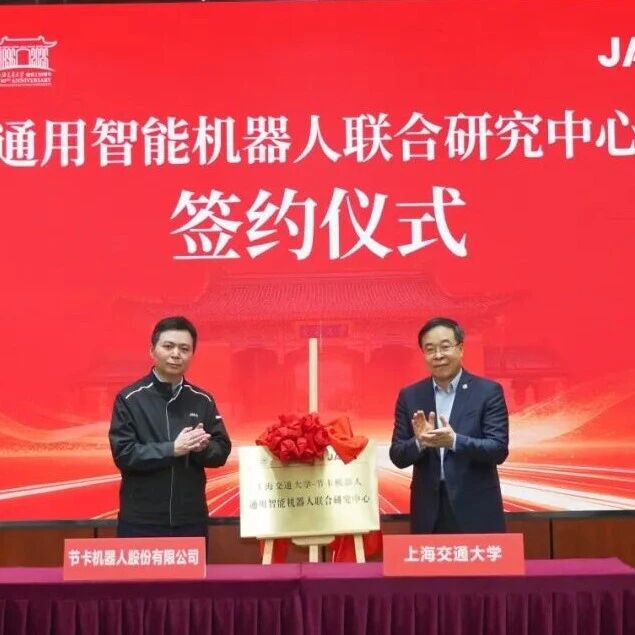
上海交通大学作为国内顶尖高等学府,拥有多学科交叉的科研底蕴,在机器人基础理论、核心部件研发等领域 积累深厚。 前不久, 上海交通大学 在2025年度增设具身智能本科专业, 该专业将融合人工智能、机械动 力、计算机科学与技术等多学科前沿知识,旨在培养跨"感知-决策-控制-本体设计"的复合型创新人才,填补现 有教育体系相关人才缺口。 节卡机器人作为全球领先的通用智能机器人公司,产品覆盖全球100多个国家和地区,广泛应用于汽车、电 子、新能源、精密制造与商业服务领域,沉淀了丰富的产业化应用经验。 节卡机器人目前还 已形成了从核心 部件到整机、从软件算法到场景解决方案的全栈布局,拥有轮式人形 JAKA Kargo、具身平台 JAKA Lumi 等产品。 ▍持续 发力具身智能 近日,上海交通大学与节卡机器人股份有限公司签署协议,共建 通用智能机器人联合研究中心 (以下简 称"联合研究中心"),聚焦通用智能机器人核心技术突破与产业应用,深化产学研深度协同创新。 ▍ 合作双方有何背景? 据悉,节卡机器人与 上海交通大学 共建的通用智能机器人联合研究中心, 将瞄准产业核心需求,攻关具身智 能关键技术、智能传感系统 设计制造等 ...
科大讯飞推出SuperAgent应用框架,驱动营销关系演进至B2A2C丨最前线
3 6 Ke· 2026-01-17 03:21
Group 1 - The core viewpoint of the article emphasizes the need for a shift from experience-driven to intelligence-driven marketing, facilitated by the introduction of the SuperAgent application framework by iFlytek [1] - The marketing industry is facing a deep-seated dilemma due to fragmented data across platforms, which hinders the effective application of AI, as highlighted by Ronen Mense from AppsFlyer [1] - The complexity of global marketing is increasing exponentially, with diverse market levels and significant cultural differences, making traditional manpower insufficient to address these challenges [1] Group 2 - AI is evolving from a functional tool to a foundational architecture that must address real business pain points to drive industry transformation, as stated by iFlytek's senior vice president [2] - There is a consensus that single technological breakthroughs are inadequate for solving systemic issues, necessitating an ecological restructuring of the marketing industry [2] - The traditional marketing collaboration model is changing, requiring cross-functional workflows to optimize strategies and improve creative processes [2] Group 3 - A forward-looking judgment presented by iFlytek's vice president indicates that SuperAgent will evolve marketing relationships from B2A (Brand to Agent) to B2A2C (Brand to Agent to Consumer), positioning AI as a smart bridge between brands and consumers [3]