
诺诚健华

Search documents
探索价值投资在创新药领域的深度适配与融合 | 巴伦精选
Tai Mei Ti A P P· 2025-09-21 01:41
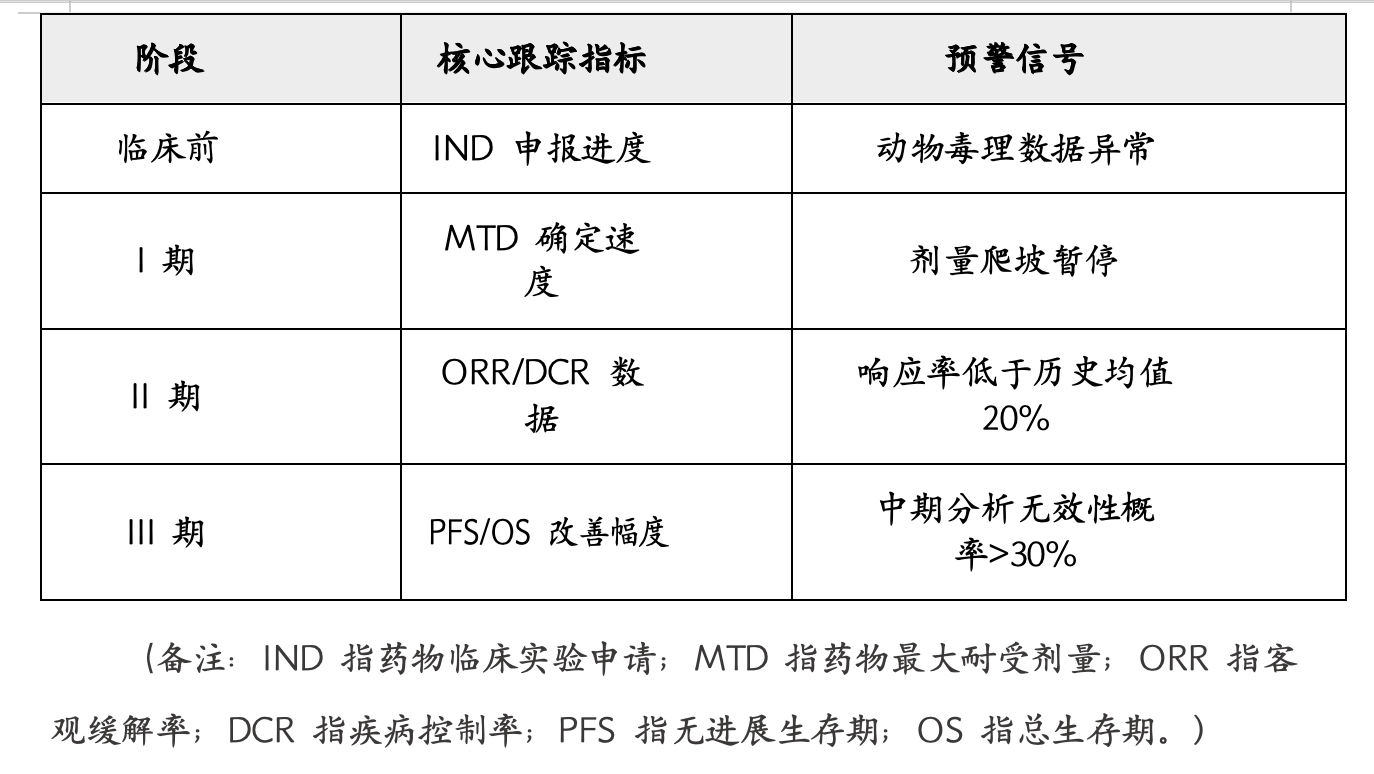
Core Insights - The article discusses the challenges of applying traditional value investment principles to the innovative pharmaceutical sector, highlighting the need for a tailored approach that incorporates dynamic probability management and phase-specific investment strategies [1][3][4]. Investment Strategy - Investment in innovative pharmaceuticals should differentiate between three stages: R&D, commercialization, and maturity, matching different durations of capital accordingly [2][4]. - A three-dimensional evaluation system should be constructed to assess pipeline value, utilizing a valuation method based on peak sales, success probabilities, and discount factors [2][6]. - A recommended asset allocation strategy includes 20% of funds in early-stage projects, 50% in projects at commercialization inflection points, and 30% in cash flow-generating assets [2][5]. Traditional Value Investment Conflicts - Traditional value investment principles conflict with the characteristics of innovative pharmaceuticals, such as the non-permanence of competitive advantages, non-linear profitability, and the failure of safety margins [3][4]. - The concept of a "moat" is challenged by the temporary nature of patent protections, leading to significant revenue declines post-patent expiration [3]. - The high failure rates in clinical trials, particularly in Phase III, create substantial risks that can lead to drastic market value losses [3][4]. Dynamic Valuation Approach - A shift from static asset valuation to dynamic probability-based valuation is necessary, incorporating a three-dimensional assessment of clinical, commercial, and technical platform values [6][7]. - The proposed valuation formula calculates enterprise value by summing the product of pipeline peak sales, success probabilities, and discount factors [7][9]. Risk Management Framework - A systematic risk management framework is essential to address the inherent risks throughout the R&D and commercialization phases [10][11]. - A "steady dual-drive allocation strategy" is suggested, balancing investments in high-certainty assets with those in high-growth potential companies [12]. - A Bayesian mechanism for dynamic tracking of portfolio companies is recommended, utilizing a monitoring matrix and decision trees to manage risks proactively [13]. Conclusion - The article emphasizes the need for a redefined investment framework in the innovative pharmaceutical sector, focusing on duration matching, probability-based valuation, and dynamic risk management to capture industry opportunities effectively [14].

短线防风险 181只个股短期均线现死叉
Zheng Quan Shi Bao Wang· 2025-09-19 08:29
Core Points - The Shanghai Composite Index closed at 3820.09 points, with a decline of 0.30% and a total trading volume of 23494.13 billion yuan [1] - A total of 181 A-shares experienced a death cross, where the 5-day moving average fell below the 10-day moving average [1] Group 1: Stocks with Significant Death Cross - Changshan Pharmaceutical (300255) saw a decline of 3.71% with a 5-day moving average of 46.98 yuan, which is 1.63% lower than the 10-day moving average [1] - Zero Point (301169) decreased by 1.44%, with a 5-day moving average of 45.25 yuan, 1.33% lower than the 10-day moving average [1] - Dongxin Peace (002017) dropped by 5.00%, with a 5-day moving average of 26.02 yuan, 1.28% lower than the 10-day moving average [1] Group 2: Additional Stocks with Death Cross - Xiyu Co. (000960) increased by 0.73%, but its 5-day moving average of 21.23 yuan is 1.20% lower than the 10-day moving average [1] - ST Lifang (300344) fell by 1.98%, with a 5-day moving average of 5.14 yuan, 1.19% lower than the 10-day moving average [1] - Zhongse Co. (000758) had a slight increase of 0.16%, with a 5-day moving average of 6.62 yuan, which is 1.12% lower than the 10-day moving average [1]
Good Afternoon之后,创新药还能“上车”吗?
Xin Lang Cai Jing· 2025-09-18 12:41
来源:市场资讯 (来源:ETF万亿指数) 美联储降息终于落地了降。 25bp符合预期,点阵图显示年内还要降两次,有点鸽派;但是鲍威尔的表态又"不够鸽派",so,有点纠 结。 所以,涨跌都有理,有句话说的好,符合预期就是利好兑现,跌。 对了,还有Good Afternoon的梗... 如果鲍威尔说"Good Afternoon",就是偏鹰派,不降息或者降息没超预期,跌。 如果他说"Hello Everyone",那就是鸽,要降息,涨! 华尔街机构也早早的部署好了AI系统,第一时间捕捉到他舌头的微小变化,来决定买卖了... 有点失望的是,鲍威尔这回的开场是"Good Afternoon"。 自这之后,美股先涨后跌,大A似乎也复制了同样的走势,不得不服啊这预判。 那,今天聊聊降息下,大家比较关注的创新药板块,调整后还没有没有机会。 一、创新药,三重压力下暂时回调 港股通创新药ETF(520880)在连续9个交易日调整后,场内却延续高频溢价,买盘资金依然强势,这 辆创新药高速列车是否在等待更多人上车? 港股通创新药ETF基金经理丰晨成解读,近期调整主要源于三重因素叠加: 1、行业催化空窗期:缺乏大BD(商务拓展)催化 ...

特应性皮炎专题报告:掘金百亿AD蓝海:现有疗法仍可优化,双抗药物有望破局
SINOLINK SECURITIES· 2025-09-16 09:16
Investment Rating - The report indicates a positive outlook for the atopic dermatitis (AD) market, highlighting significant unmet medical needs and potential for new therapies, particularly in small molecules and biologics [4][10][12]. Core Insights - Atopic dermatitis is a chronic, recurrent inflammatory skin disease characterized by severe itching, affecting approximately 600-700 million patients globally, with around 67 million in China, indicating a substantial unmet demand for effective treatments [1][18][20]. - Recent advancements in small molecules and biologics have marked a new phase in AD treatment, with several new products entering the market, although the number remains limited [1][10][32]. - JAK inhibitors have shown excellent efficacy but come with safety concerns, while TYK2 inhibitors are emerging as a promising new option due to their selective action and potentially better safety profile [2][11][12]. - Biologics targeting IL-4Rα and IL-13 have demonstrated significant efficacy in improving skin lesions, with IL-31 showing strong itch relief capabilities [3][12][13]. - The development of dual/multi-target antibodies is seen as a new strategy to enhance treatment efficacy by combining the advantages of different targets [4][13][21]. Summary by Sections Investment Highlights - The AD market has immense potential, with a pressing need for effective therapies [4][10]. - The patient population is large, with over 600 million affected globally, necessitating urgent treatment options [1][18]. Disease Characteristics - AD is characterized by chronic inflammation and severe itching, significantly impacting patients' daily lives [1][14]. - The disease burden is heavy, with a complex pathogenesis involving multiple factors, primarily driven by Th2-type inflammation [21][24]. Current Treatment Landscape - Traditional therapies have safety concerns, leading to a shift towards biologics and small molecules [32][35]. - JAK inhibitors are the most approved class of drugs for AD, but they carry black box warnings due to safety issues [11][12]. - Emerging therapies, particularly TYK2 inhibitors, show promise for better safety and efficacy [2][11]. Biologics and Emerging Therapies - Currently approved biologics include IL-4Rα, IL-13, TSLP, and IL-31, with ongoing research into additional targets [3][12][13]. - Dual/multi-target antibodies are being explored to improve treatment outcomes and extend dosing intervals [4][13][21]. Market Potential - The report emphasizes the significant market potential for AD treatments, with projected growth driven by increasing patient numbers and the introduction of innovative therapies [4][10][20].


创新药进入快速成长期,恒生医药ETF(159892)连续3日获得资金净流入
Mei Ri Jing Ji Xin Wen· 2025-09-16 02:51
Core Insights - The domestic innovative pharmaceutical companies are experiencing a surge in overseas expansion, with BD transaction amounts reaching new highs, making outbound licensing a key pathway for China's pharmaceutical industry to engage in global competition and achieve industrial upgrades [1] Group 1: Market Trends - In the first half of 2025, the total transaction value of China's innovative drugs reached $63.55 billion, surpassing the total for the entire year of 2024 and accounting for approximately 40% of the global license-out transaction total [1] - Leading innovative drug companies have completed multiple product lines or international layouts, maintaining stable and rapid revenue growth, with some companies successfully turning losses into profits [1] Group 2: Company Performance - BeiGene achieved a net profit of 450 million yuan in H1, marking its first profitable period [1] - Innovent Biologics reported a net profit of 834 million yuan, continuing its profitability trend [1] Group 3: Market Reactions - In the secondary market, ETFs focused on innovative drugs and CXO sectors experienced declines, with the Hang Seng Medical ETF (159892) and the Hong Kong Stock Connect Medical ETF (520510) both dropping over 1% [1] - Innovent Biologics saw a decline of over 6%, with other companies like Legend Biotech, InnoCare Pharma, JD Health, and Alibaba Health also leading the downturn [1] - Despite the market declines, the Hang Seng Medical ETF has seen three consecutive days of capital inflow [1]
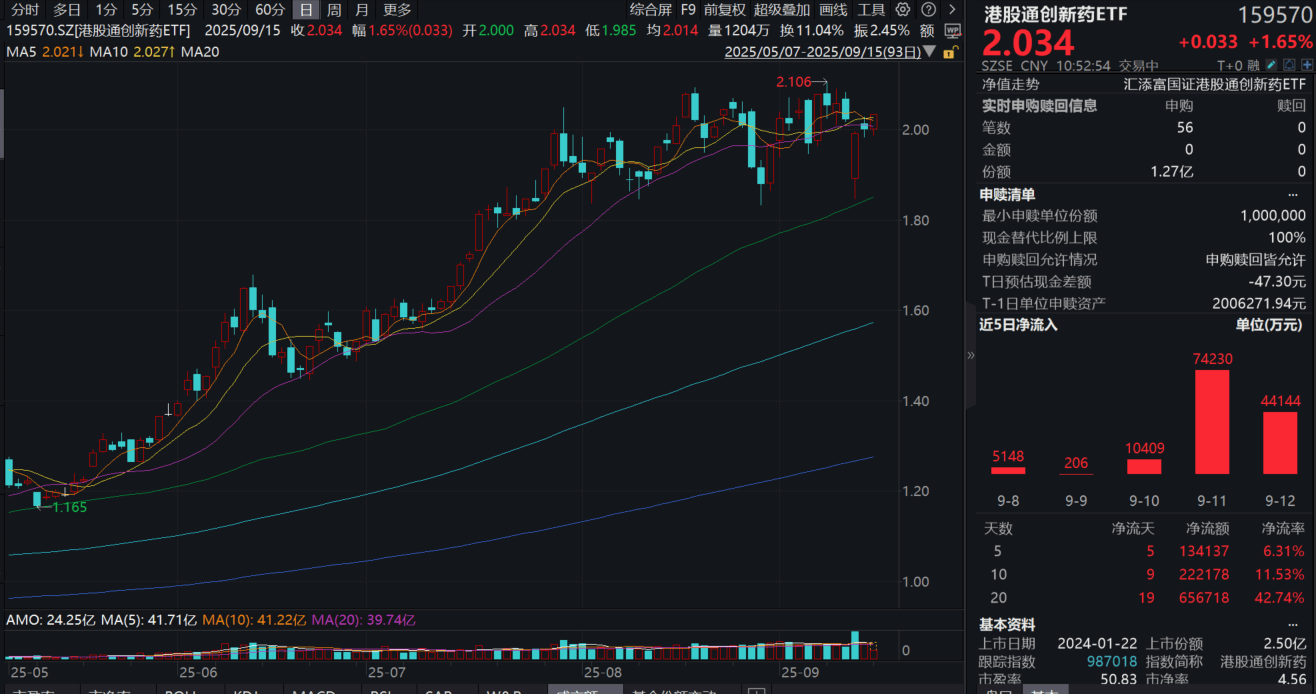
港药再度大涨!港股通创新药ETF(159570)涨近2%,近3日疯狂吸金超14亿元!创新药再迎出海+会议+政策三重催化
Sou Hu Cai Jing· 2025-09-16 02:48
Core Viewpoint - The Hong Kong innovative drug ETF (159570) has seen significant growth, with a recent increase of nearly 2% and a rapid transaction volume exceeding 1.5 billion yuan in just three days, indicating strong market interest and liquidity in the sector [1][3]. Market Performance - As of September 15, the latest scale of the Hong Kong innovative drug ETF (159570) surpassed 22.5 billion yuan, leading in both scale and liquidity among its peers [1]. - The index components of the ETF showed mixed performance, with notable gains from companies like药捷安康 (over 50% increase) and 同源康医药 (over 14% increase), while others like 诺诚健华 and 百济神州 experienced declines [3]. Industry Trends - The continuous growth of Chinese innovative drugs in international markets is driven by collaborations with multinational corporations (MNCs), which benefit from China's efficient and cost-effective R&D pipelines [4]. - The innovative drug sector is currently in a transitional phase, with increased focus on international expansion and the realization of value through milestones and competitive advantages [4]. Clinical Developments - At the World Lung Cancer Conference (WCLC), several clinical data updates for Chinese innovative drugs were presented, particularly highlighting the promising results of ADC therapies [5]. - The release of clinical data for drugs like HLX43 and Eiza-bren indicates significant advancements in treatment efficacy for specific cancer patient populations [5]. Policy Environment - The National Healthcare Security Administration (NHSA) is set to release the 2025 medical insurance drug list, which will significantly impact companies involved in negotiations for drug inclusion [5]. - The approval of orphan drugs and imported PD-1/L-1 drugs for the insurance directory reflects a supportive policy environment for innovative drug development [5]. Financial Outlook - The anticipated easing of monetary policy by the Federal Reserve is expected to improve liquidity in the market, which could positively influence the financing environment for innovative drug companies [6]. - The A+H share innovative drug index has shown substantial growth, suggesting a favorable investment climate and potential for increased capital inflow [6]. Investment Recommendations - The Hong Kong innovative drug ETF (159570) is highlighted as a key investment vehicle, with a significant increase of over 109% in the past year, outperforming other indices [7][8]. - Investors are encouraged to focus on the underlying assets and the potential for T+0 trading, which enhances liquidity and trading flexibility [9].
港股创新药概念股震荡走弱,歌礼制药-B跌近8%
Xin Lang Cai Jing· 2025-09-16 02:28
港股创新药概念股震荡走弱,歌礼制药-B跌近8%,诺诚健华跌超6%,复星医药、中国生物制药、石四 药集团纷纷下挫。 ...
【医药生物】创新药IND审批缩短至30天,看好国产创新产业链——医药生物行业跨市场周报(202509014)(王明瑞/黄素青)
光大证券研究· 2025-09-15 23:04
Group 1 - The A-share pharmaceutical and biotechnology index fell by 0.36%, underperforming the CSI 300 index by 1.75 percentage points and the ChiNext index by 2.37 percentage points, ranking 28th among 31 sub-industries [4] - The Hong Kong Hang Seng Healthcare Index dropped by 1.43%, underperforming the Hang Seng Index by 4.83 percentage points [4] Group 2 - Recent progress in drug development includes NDA applications for HRS9531 by Heng Rui Pharmaceutical and several other drug applications by companies like Zhi Xiang Jin Tai and Kang Ning Jie Rui [5] - Clinical trials are ongoing for various drugs, including the phase III trial of Velolizumab by Shu Tai Shen and phase II trials for HP515 by Hai Chuang Pharmaceutical and mesutoclax by Nuo Cheng Jian Hua [5] Group 3 - The National Medical Products Administration announced a significant reduction in IND approval time to 30 days, enhancing the efficiency and predictability of clinical research for innovative drugs [6] - The government's support for the entire innovative drug development chain is being implemented, aiming to establish a high-quality development system for innovative drugs in China [6] Group 4 - The investment strategy for 2025 emphasizes structural selection of investment opportunities, focusing on the core contradiction between payment willingness and ability [7] - Three payment channels within the pharmaceutical industry are identified: in-hospital payments, out-of-pocket payments, and overseas payments, with a positive outlook on policy support for in-hospital payments and expanding public demand [8]

淋巴瘤诊疗加速突破:创新药与规范诊疗共筑健康防线
Zhong Guo Xin Wen Wang· 2025-09-15 22:50
Core Insights - Lymphoma is the 10th most common cancer globally and has a rapidly increasing incidence rate, with approximately 100,000 new cases reported annually in China, over 50% of which are in individuals aged 60 and above [1] - The Chinese government has made significant advancements in the diagnosis, classification, staging, and treatment of lymphoma, including the implementation of quality control measures for cancer treatment [1][4] - The approval of innovative drugs, such as tanzimab and lenalidomide for treating relapsed/refractory diffuse large B-cell lymphoma (DLBCL), marks a significant step forward in lymphoma treatment in China [2][3] Group 1: Disease Statistics and Trends - Lymphoma is one of the fastest-growing malignant tumors, with a notable increase in younger patients [1] - DLBCL accounts for 30%-40% of adult non-Hodgkin lymphoma (NHL) cases in Western countries and 35%-50% in China, with a median onset age of 50-70 years [3] Group 2: Government Initiatives and Guidelines - The National Cancer Center has initiated pilot projects for standardized diagnosis and treatment quality control for lymphoma, with 60 institutions selected for this purpose in 2023 [1] - The "Healthy China Action - Cancer Prevention and Control Action Implementation Plan (2023-2030)" aims to enhance cancer prevention and control systems, improve early diagnosis and treatment capabilities, and increase the overall five-year survival rate for cancer to 46.6% by 2030 [4] Group 3: Drug Development and Market Impact - The conditional approval of tanzimab for relapsed or refractory follicular lymphoma and its combination with lenalidomide for DLBCL patients represents a significant advancement in treatment options [2] - Clinical studies indicate that tanzimab combined with lenalidomide shows promising efficacy, with an overall response rate (ORR) of 57.5% and a complete response (CR) rate of 41.3% in global studies, and an ORR of 73.1% in Chinese patients [3]
中新健康丨淋巴瘤诊疗加速突破:创新药与规范诊疗共筑健康防线
Zhong Guo Xin Wen Wang· 2025-09-15 12:48
Core Insights - Lymphoma is the 10th most common cancer globally and has the fastest-growing incidence rate among malignant tumors, with approximately 100,000 new cases annually in China, over 50% of which are in individuals aged 60 and above [1][2] - The Chinese government has made significant progress in lymphoma diagnosis, treatment guidelines, and quality control measures, including the establishment of pilot programs for standardized treatment [1][4] - The approval of innovative drugs, such as tanzimab and lenalidomide for treating relapsed/refractory diffuse large B-cell lymphoma (DLBCL), marks a significant advancement in lymphoma treatment options [2][3] Industry Developments - The National Medical Products Administration conditionally approved tanzimab for adult patients with relapsed or refractory follicular lymphoma in November 2022, and its combination therapy for DLBCL was approved in May 2023 [2][3] - Clinical studies show promising results for tanzimab, with an overall response rate (ORR) of 57.5% and a complete response (CR) rate of 41.3% in global studies, while Chinese patients showed an ORR of 73.1% [3] - The 2023 "Healthy China Action - Cancer Prevention and Control Implementation Plan" aims to enhance cancer prevention and treatment capabilities, targeting a 5-year survival rate of 46.6% by 2030 [4][5]