
国货航

Search documents
国货航12月19日获融资买入646.74万元,融资余额2.36亿元
Xin Lang Cai Jing· 2025-12-22 01:41
Core Viewpoint - On December 19, Guohang Airlines experienced a stock price increase of 0.80%, with a trading volume of 85.73 million yuan, indicating a positive market response to the company's performance and activities [1]. Financing Summary - On the same day, Guohang Airlines had a financing buy-in amount of 6.47 million yuan, while the financing repayment was 12.70 million yuan, resulting in a net financing outflow of 6.23 million yuan. The total financing and securities balance reached 237 million yuan [1][2]. - The current financing balance is 236 million yuan, accounting for 4.38% of the circulating market value [2]. Securities Lending Summary - On December 19, Guohang Airlines repaid 2,500 shares in securities lending and sold 9,400 shares, with a selling amount of 59,000 yuan based on the closing price. The remaining securities lending volume is 124,300 shares, with a balance of 780,600 yuan [2]. Company Overview - Guohang Airlines, established on November 14, 2003, and listed on December 30, 2024, is a major player in the domestic air logistics service sector, providing professional and reliable solutions for air cargo transportation needs. The company's main business segments include air freight services (71.01%), comprehensive logistics solutions (22.65%), air cargo station services (5.95%), and other services (0.39%) [2]. - As of September 30, 2025, the company reported a revenue of 16.64 billion yuan, reflecting a year-on-year growth of 16.92%, and a net profit attributable to shareholders of 1.84 billion yuan, marking a significant increase of 66.21% [2]. Shareholder Information - As of September 30, 2025, Guohang Airlines had 135,000 shareholders, a decrease of 17.77% from the previous period, with an average of 6,362 circulating shares per shareholder, which is an increase of 21.60% [2]. - The top ten circulating shareholders include major ETFs, with Huatai-PB CSI 300 ETF holding 14.44 million shares, an increase of 126,700 shares from the previous period, while other ETFs like E Fund and Huaxia have seen reductions in their holdings [3].
国货航12月18日获融资买入405.93万元,融资余额2.43亿元
Xin Lang Cai Jing· 2025-12-19 01:35
12月18日,国货航涨0.65%,成交额9499.52万元。两融数据显示,当日国货航获融资买入额405.93万 元,融资偿还830.97万元,融资净买入-425.04万元。截至12月18日,国货航融资融券余额合计2.43亿 元。 融资方面,国货航当日融资买入405.93万元。当前融资余额2.43亿元,占流通市值的4.53%。 机构持仓方面,截止2025年9月30日,国货航十大流通股东中,华泰柏瑞沪深300ETF(510300)位居第 一大流通股东,持股1444.26万股,相比上期增加12.67万股。易方达沪深300ETF(510310)位居第二大 流通股东,持股1051.64万股,相比上期减少36.20万股。华夏沪深300ETF(510330)位居第三大流通股 东,持股784.87万股,相比上期减少10.24万股。嘉实沪深300ETF(159919)位居第五大流通股东,持 股676.94万股,相比上期减少8.19万股。香港中央结算有限公司位居第六大流通股东,持股669.57万 股,相比上期减少276.71万股。 责任编辑:小浪快报 资料显示,中国国际货运航空股份有限公司位于北京市顺义区天柱路29号院1幢1至9 ...
“心脏”梗阻!飞机交付缺口超5300架!全球航空产业链修复路漫漫|人民智行
Zheng Quan Shi Bao Wang· 2025-12-17 04:48
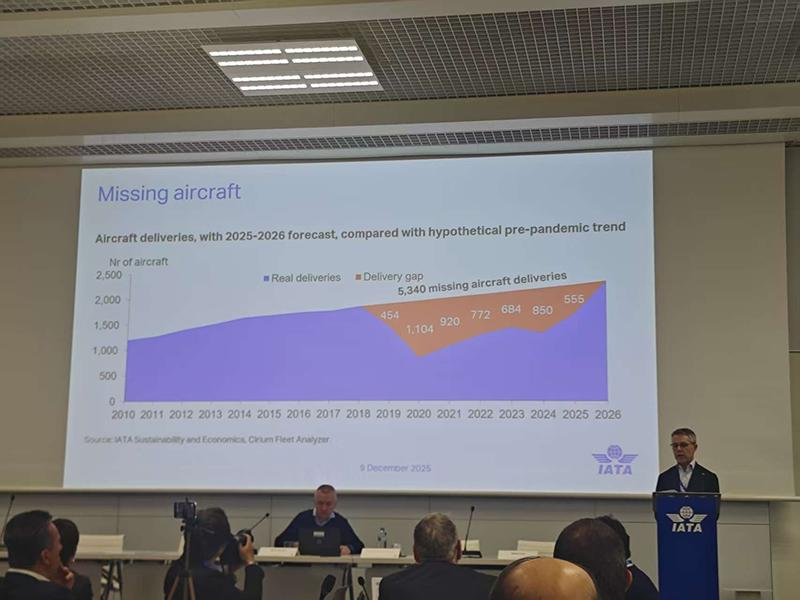
Core Insights - The global aviation industry is facing a significant supply-demand imbalance, with over 5,300 aircraft delivery gaps and 17,000 backlogged orders, leading to a prolonged struggle within the industry [1][5][6] - The International Air Transport Association (IATA) warns of a heated competition affecting the entire supply chain, which could hinder revenue growth, green transformation, and passenger travel costs for airlines [1][5] - The shortage of engines, technical faults, slow production ramp-up, and geopolitical risks are major factors contributing to the supply chain bottlenecks [1][9] Industry Overview - The number of grounded aircraft remains historically high, exceeding 5,000, as evidenced by recent actions from various airlines and industry players [3][4] - Engine issues are a primary cause of aircraft grounding, with airlines like JetBlue and Cathay Pacific experiencing significant operational disruptions due to engine faults [3][4] - The aviation industry's supply-demand conflict has reached a critical stage, with expectations of rising engine and material prices due to shortages [5][6] Market Dynamics - IATA projects that global passenger traffic will reach 4.98 billion by 2025 and 5.2 billion by 2026, marking a 4.4% increase from 2025, despite the backlog of orders expected to exceed 17,000 aircraft by the end of 2025 [5][7] - The backlog represents 60% of the current fleet, a significant increase from the historical range of 30%-40% [5][6] - The delivery gap is projected to widen, with airlines still pursuing fleet expansion despite delivery challenges [6][7] Supply Chain Challenges - The supply chain bottlenecks are attributed to multiple factors, including engine supply shortages, certification issues, and trade barriers, which collectively hinder industry capacity [8][9] - Engine production has slowed due to quality optimization efforts, leading to a mismatch between aircraft production rates and engine availability [9][10] - Tariff pressures have increased manufacturing costs, further straining the supply chain and impacting profitability for airlines and manufacturers [11] Operational Impacts - The aging fleet is leading to higher maintenance costs and reduced fuel efficiency, with the average age of the global airline fleet reaching historical highs [12] - The reliance on suboptimal aircraft models limits airlines' ability to optimize capacity based on route demand, potentially missing revenue opportunities [13] - The aviation industry is facing additional costs exceeding $11 billion by 2025 due to supply chain bottlenecks, which could affect passenger fares and service quality [14] Strategic Recommendations - Policy support is crucial for addressing the supply-demand imbalance, including international cooperation to reduce trade barriers and enhance supply chain resilience [15] - Airlines are encouraged to optimize fleet management and improve operational efficiency to mitigate short-term pressures [15][16] - The Chinese aviation sector is seen as a potential game-changer, with advancements in domestic aircraft and engine technology that could reshape the global aviation landscape [15][19]


需求增长遇上“心脏”梗阻 全球航空产业链修复路漫漫
Zheng Quan Shi Bao· 2025-12-16 22:21
Core Viewpoint - The global aviation industry is facing a significant supply-demand imbalance, with over 5,300 aircraft delivery gaps and 17,000 backlogged orders, leading to a prolonged struggle for the industry as demand rebounds by the end of 2025 [1][4]. Group 1: Supply Chain Challenges - The aviation supply chain is experiencing severe bottlenecks, impacting revenue growth, green transformation, and passenger travel costs for airlines [1]. - Engine supply shortages are a critical issue, with many new aircraft unable to be delivered on time due to a lack of engines, leading to increased maintenance costs and operational challenges [7][10]. - The average age of the global airline fleet has risen to historical highs, with the passenger fleet averaging 12.8 years, which increases maintenance costs and hinders fuel efficiency improvements [10]. Group 2: Market Dynamics - The International Air Transport Association (IATA) predicts that global passenger traffic will reach 4.98 billion by 2025, with a 4.4% increase expected in 2026, despite the backlog of orders [4][6]. - Airlines are still pursuing fleet expansion plans despite delivery challenges, driven by increasing global demand and competitive pressures [5]. - Aircraft leasing has become a vital strategy for airlines to expand capacity, with leasing companies seeing significant revenue growth [6]. Group 3: Economic Impact - The supply chain bottlenecks are projected to cost the global aviation industry over $11 billion by 2025, affecting fuel, maintenance, and engine leasing costs [11]. - Rising operational costs are leading to increased ticket prices and a decline in passenger experience due to flight delays and service reductions [11][12]. - The aviation industry is under pressure to enhance its green transformation efforts, with a significant drop in fuel efficiency growth expected due to an aging fleet [10]. Group 4: Future Outlook - The industry is urged to build a more resilient supply chain to address the ongoing supply-demand imbalance, which is seen as a long-term battle [1][13]. - There is a call for increased international cooperation and policy support to mitigate supply chain risks and enhance strategic investments in core technologies [12]. - China's advancements in aircraft manufacturing and engine technology are viewed as potential game-changers in the global aviation landscape [8][12].
需求增长遇上“心脏”梗阻全球航空产业链修复路漫漫
Zheng Quan Shi Bao· 2025-12-16 18:09
国际航协理事长威利·沃尔什日前接受记者采访时发出警示:一场波及全产业链的白热化较量已然到 来。航空供应链瓶颈全面冲击行业,若不加快破局,航空公司的营收增长、绿色转型与旅客出行成本都 将持续承压。 超过5300架的飞机交付缺口、17000架的积压订单,停航飞机数量连续创下历史高位……2025年岁末, 全球航空产业需求反弹,却被供需矛盾拖入一场漫长博弈。 作为飞机的"心脏",发动机的扰动因素频发,技术故障、产能爬坡缓慢以及地缘政治衍生风险相互交 织,大量新机身"等心装配"正成为产业链常态。失衡的天平正引发一系列连锁反应,航空公司调度灵活 性受限,机队平均机龄拉长,在推高维修成本的同时,也拖累了行业绿色转型步伐。而运力紧张与运营 成本飙升的代价,也正向终端旅客一侧蔓延。 多数受访者认为,解锁困局是一场长期战役。如何构建韧性供应链体系,对于航空产业来说迫在眉睫。 随着国产大飞机实力提升及航空动力突破,中国能否成为全球航空变局中的新变量,成为市场关切。 这种"高水位",从近期多国航空公司及产业链公司动作中也找到佐证:法国空客公司部分客机因飞行控 制软件易受强烈太阳辐射影响紧急停飞、巴拿马航空暂停往返委内瑞拉首都航班、印 ...
A股指数样本大换血:千亿指数基金调仓,新质生产力成主线
2 1 Shi Ji Jing Ji Bao Dao· 2025-12-15 13:30
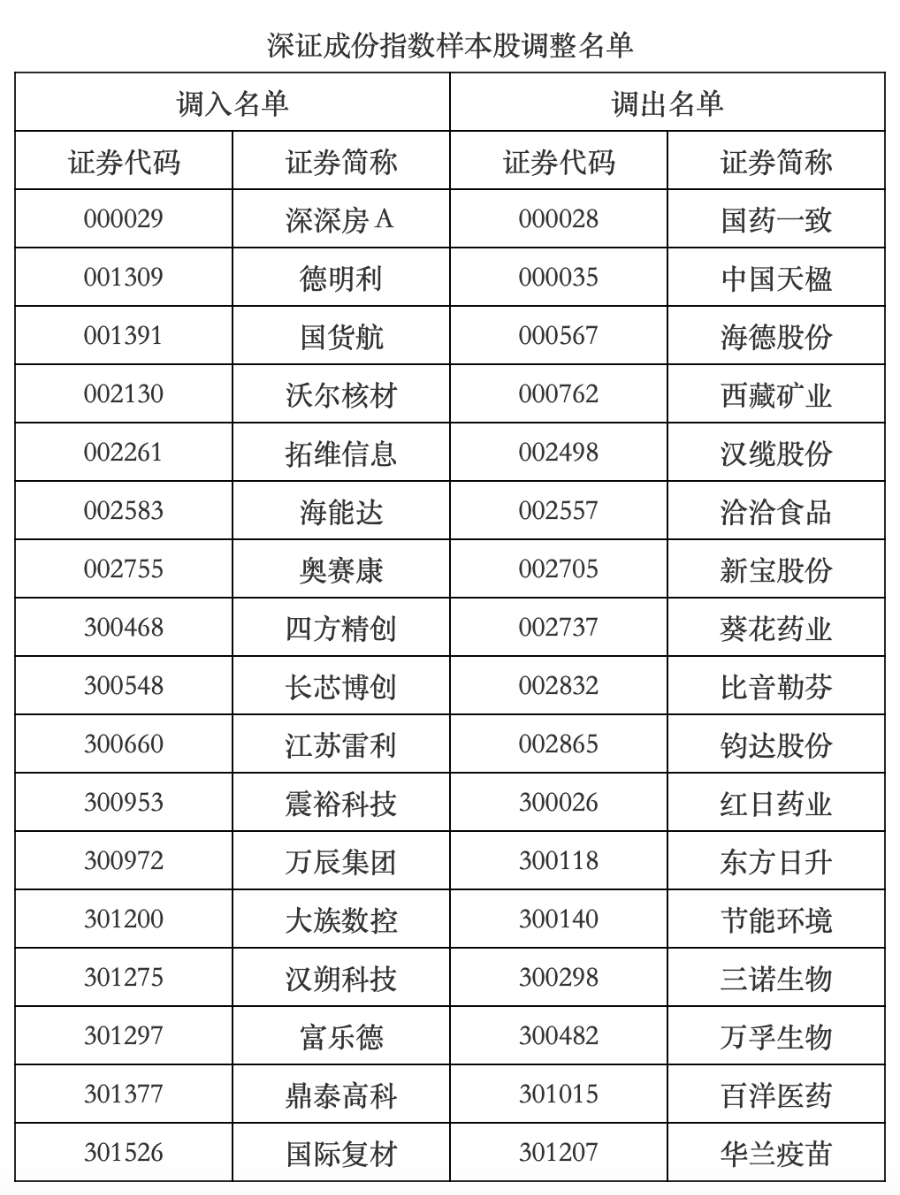
Core Viewpoint - The recent adjustments to major indices in the A-share market, including the Shenzhen Component Index and the ChiNext Index, reflect a significant shift towards "new quality productivity" sectors, indicating a structural change in investment focus within the market [1][4]. Group 1: Index Adjustments - The Shenzhen Component Index replaced 17 sample stocks, the ChiNext Index replaced 8, the Shenzhen 100 replaced 7, and the ChiNext 50 replaced 5 [1][2]. - The adjustments are part of a broader trend of index "metabolism" in the A-share market, following similar changes in the Shanghai Stock Exchange indices [1][4]. - The total scale of index funds tracking these indices exceeds 250.728 billion yuan, with previous adjustments in the Shanghai market affecting over 1 trillion yuan in funds [1][6]. Group 2: Sector Focus - The adjustments have led to a significant increase in the weight of industries related to "new quality productivity," such as semiconductors, AI, and renewable energy, while traditional sectors are being phased out [4][8]. - The strategic emerging industries now account for 93% of the ChiNext Index, with the Shenzhen 100 Index seeing a rise to 81% in this category [4][8]. - The Shenzhen Component Index has a manufacturing weight of 76%, marking it as the highest among capital market indices in China [5]. Group 3: Market Dynamics - The adjustments are expected to trigger substantial passive fund reallocations, with newly included stocks likely to experience increased trading activity due to concentrated buying [6][7]. - There is a potential for short-term price increases for stocks added to the indices, while those removed may face selling pressure [7]. - The adjustments are seen as a long-term reflection of market structure optimization and investment philosophy guidance [7][8]. Group 4: Company Performance - Nearly 60% of the companies in the adjusted Shenzhen Component Index have implemented quality improvement and stock repurchase plans, with over 30% planning stock buybacks [8]. - The Shenzhen 100 Index companies have distributed a total of 302.2 billion yuan in dividends this year, accounting for 55% of the total dividends in the Shenzhen market [8].
A股重要调整,今日生效
Nan Fang Du Shi Bao· 2025-12-15 01:29
深证成指、创业板指等指数的样本调整于今天(12月15日)正式实施,而上证50、科创50、中证A50等 指数的样本调整已于12月12日收市后正式生效。 根据此前公告,沪深300指数更换11只样本,华电新能、东山精密、指南针、胜宏科技等调入指数; 中证500指数更换50只样本,和而泰、华虹公司、东方雨虹、天合光能等调入指数; 中证1000指数更换100只样本,仕佳光子、永鼎股份、王府井、德科立等调入指数; 中证A50指数更换4只样本,华工科技、光启技术、中际旭创、胜宏科技等调入指数; 中证A100指数更换6只样本,东方财富、胜宏科技、中科曙光、赛力斯等调入指数; 中证A500指数更换20只样本,国泰海通、芯原股份、指南针等调入指数; 上证50指数更换4只样本,上汽集团、北方稀土、中科曙光等调入指数; 上证180指数更换7只样本,国投资本、中天科技、瑞芯微等调入指数; 科创50指数更换2只样本,翱捷科技、盛科通信等调入指数。 同时,根据深交所发布的关于调整深证成指、创业板指、深证100、创业板50等指数样本股的公告,深 证成指、创业板指、深证100、创业板50等指数样本股定期调整将于2025年12月15日正式生效。 ...
国货航(001391.SZ):公司在北京主要依托于国航系腹舱运力,开展航空货运服务
Ge Long Hui· 2025-12-11 15:13
答:公司在北京主要依托于国航系腹舱运力,开展航空货运服务。 格隆汇12月11日丨国货航(001391.SZ)在投资者关系中表示,有被问到:请介绍下公司在北京运力布局情 况。 ...
国货航:今年公司三大板块毛利率均实现同比增长
Ge Long Hui· 2025-12-11 15:12
Core Viewpoint - The company reported a year-on-year increase in gross margins across its three main business segments, driven by five key factors [1] Group 1: Business Segments Performance - The aviation segment has continued to increase capacity and optimize route layouts [1] - The cargo station segment has strengthened capacity building and is exploring digital and automated development [1] - The integrated logistics solutions segment has expanded its cross-border e-commerce business and emphasized revenue growth from freight forwarding, while further developing contract logistics market operations [1] Group 2: Cost Management and External Factors - Fuel prices are currently in a relatively favorable range, effectively reducing pressure on aviation fuel costs [1] - The company has deepened internal lean management, achieving solid results in cost control [1]
国货航(001391.SZ):2025年11月以来,全球整体关税政策呈现缓和态势
Ge Long Hui· 2025-12-11 15:09
Core Viewpoint - The company is closely monitoring the impact of tariff policies from the US and other regions on its business, highlighting a trend of easing global tariff policies since November 2025 [1] Economic Context - China's economy grew by 5.3% year-on-year in the first half of the year, demonstrating strong resilience and development potential [1] - The company emphasizes the importance of enhancing economic resilience and vitality in the face of trade protectionism and the variability of international tariff policies [1] Strategic Focus - The company aims to align with the national "dual circulation" development strategy, supporting innovation and growth in Chinese manufacturing and facilitating industrial and consumption upgrades [1] - There is a commitment to continuously expand the route network and strengthen communication and collaboration with upstream and downstream partners to enhance the scale and quality of China's logistics imports and exports [1] Risk Management - The company plans to strengthen its operational management and risk resilience while actively responding to policy changes and market reactions in collaboration with partners [1] - The focus is on achieving high-quality and sustainable development through proactive engagement with stakeholders [1]