
基石资本

Search documents
深圳市创业投资同业公会会长陈玮—— 构建贯穿“募投管退”全链条创投生态中枢
Zheng Quan Shi Bao· 2025-07-24 18:25
Core Insights - Shenzhen has emerged as a leading hub for venture capital in China, alongside Beijing and Shanghai, due to its early exploration and establishment of local venture capital practices and significant government-led funds [1][3] Group 1: Current Trends in Shenzhen's Venture Capital Industry - The number and scale of funds in Shenzhen have seen six consecutive increases, with 3,429 private equity venture capital funds registered by the end of 2024, managing a total of 410.34 billion yuan, which is a 2.25 times increase since 2018, reflecting an annual growth rate exceeding 20% [1] - The fundraising structure has improved, with long-term capital increasing its share; by 2024, government guidance funds, social security, and insurance capital contributed 238.11 billion yuan, a year-on-year increase of 16.74%, accounting for 59.01% of total investments [1] - The top 10% of institutions manage 74% of the fund size, with six funds exceeding 5 billion yuan in total size reaching 68.65 billion yuan, marking an 11.02% year-on-year growth [1] Group 2: Key Investment Areas - Prominent sectors attracting investment include semiconductors and hard technology (30%), new energy and energy storage (18%), and biomedicine and medical devices (20%), with artificial intelligence and robotics comprising 14% [2] - Emerging markets such as low-altitude economy and digital economy are also witnessing some trading activity [2] Group 3: Ecosystem and Strategic Initiatives - Shenzhen Venture Capital Association has developed a comprehensive venture capital ecosystem over 25 years, managing over 70% of the city's fund size and connecting over 100 high-growth tech companies, LP institutions, and professional service providers [2] - The association addresses fundraising challenges by hosting annual LP conferences to connect with 100 active market-oriented mother funds and government guidance funds, and organizes seminars on mergers and acquisitions to explore exit strategies [2] - The association has established a cross-border private equity investment fund committee to promote international development and orderly cross-border capital flow, facilitating connections with global resources [2] Group 4: Government Support and Policy Environment - The venture capital industry is receiving unprecedented attention and support from national and local governments, with a series of policies being introduced to foster development [3] - The successful issuance of the first batch of technology innovation bonds for venture capital institutions in June is seen as a significant institutional innovation, indicating a shift from debt capital to equity investment [3]

VC/PE半年IPO成绩单
投资界· 2025-07-17 07:23
Core Viewpoint - The IPO market for Chinese companies is showing signs of recovery in the first half of 2025, with an increase in the number of IPOs and the average return on investment for VC/PE-backed companies [3][23]. VC/PE Institutions IPO Performance - In the first half of 2025, there were 73 IPOs supported by VC/PE for Chinese companies, involving 346 institutions, marking a year-on-year increase of 35.2% [5][13]. - The total market value of shares held by VC/PE institutions in newly listed companies reached approximately 105.88 billion yuan, a year-on-year increase of 65.6% [5][13]. - 15 VC/PE institutions held shares worth over 30 billion yuan as of June 30, 2025, totaling more than 825.58 billion yuan [5]. IPO Quantity and Financing - The total financing amount for VC/PE-supported IPOs in the first half of 2025 was approximately 56.54 billion yuan, representing a year-on-year increase of 51.7% [13]. - The penetration rate of VC/PE in the Chinese IPO market reached 67.0%, with A-shares showing a penetration rate of 82.4%, an increase of 7.4 percentage points from the previous year [17]. Average Return on Investment - The average return multiple for VC/PE-backed IPOs in the first half of 2025 was 3.74 times, with A-shares averaging 3.41 times and overseas markets averaging 4.07 times [20]. - The average return on A-shares has shown a greater increase compared to overseas markets [20]. Market Outlook - The IPO market is expected to continue its recovery, with signs of increased issuance pace and support for high-quality, unprofitable tech companies [23]. - Despite the positive signals, the number of IPOs is not expected to return to the peak levels seen in 2021 in the short to medium term [23].

杭州还是太超前了,这些创投青年正在定义产业未来
创业邦· 2025-07-16 09:34
Group 1 - The event features a diverse lineup of industry leaders and founders from various technology and investment sectors [1][2][3] - Notable participants include CEOs and founders from companies like One Knowledge Intelligent, Daily Interaction, and Dingxiangyuan [1][3][9] - The event aims to foster discussions on innovation and investment opportunities within the technology landscape [1][2][3] Group 2 - Key figures from venture capital firms such as Peakview Capital and Meihua Venture Capital are also participating, indicating strong interest from the investment community [7][11] - The presence of experts from major tech companies like Tencent Cloud highlights the event's focus on artificial intelligence and technological advancements [2][3][8] - The event is expected to provide insights into emerging trends and potential investment strategies in the tech sector [1][2][3]
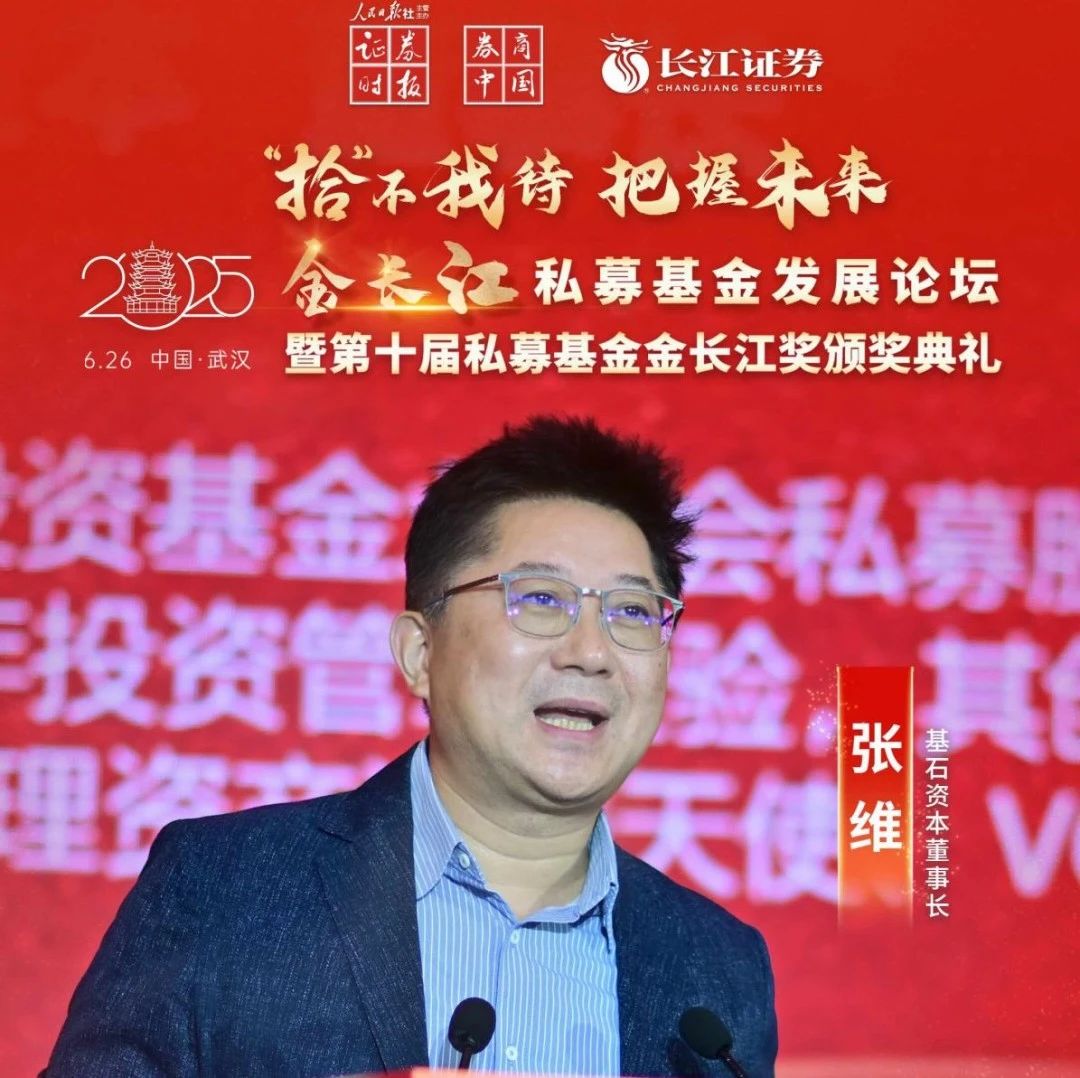
基石资本张维:“做多中国”的核心密码在于支持民营企业、培育和保护企业家精神
券商中国· 2025-07-06 07:33
Core Viewpoint - China is experiencing a unique dual opportunity window in the context of the Fourth Industrial Revolution, necessitating innovation incentives and capital market reforms to unlock development potential [1][3]. Group 1: Achievements and Challenges in China's Manufacturing Sector - China has made significant breakthroughs in manufacturing, becoming the world's largest exporter of automobiles for two consecutive years and projected to have integrated circuits as its top export item in 2024, with an export value of $159.5 billion [2]. - Despite these achievements, China faces a semiconductor trade deficit exceeding $200 billion, indicating a low self-sufficiency rate in chips, with imports being predominantly high-end while exports remain focused on mid to low-end products [2][3]. Group 2: The Role of Capital in Innovation - Long-term capital support is crucial for technological innovation, with the need for "patient capital" that aligns with the lengthy timelines required for companies to go public [5]. - The median time from establishment to IPO for A-share companies is 13.4 years (2001-2024) compared to 11 years for U.S. companies, highlighting the challenges faced by Chinese firms in accessing capital markets [5][7]. Group 3: Encouraging Entrepreneurial Spirit - The essence of stimulating innovation lies in creating significant wealth effects, which can motivate entrepreneurs to innovate and invest [6]. - Confidence among private entrepreneurs is largely influenced by positive expectations regarding policies, legal frameworks, and the overall business environment [6]. Group 4: Capital Market Reforms - Capital market reforms are essential for unlocking potential, with a focus on creating a more inclusive environment for companies, including those that are not yet profitable [7][9]. - The upcoming implementation of a third set of standards on the ChiNext board aims to support high-quality, unprofitable innovative companies in going public, reflecting a shift towards a more market-driven approach [8]. Group 5: Learning from Global Markets - The U.S. capital market's ability to accommodate unprofitable companies has been a significant factor in its innovation ecosystem, contrasting sharply with the low percentage of loss-making IPOs in China [7][9]. - The emphasis on a market-oriented and rule-of-law approach in the registration system is seen as a way to stimulate entrepreneurship and investment across society [8][9].
★24家创投机构募资155亿"浇灌"科技型企业
Zheng Quan Shi Bao· 2025-07-03 01:56
Core Viewpoint - The official launch of the "Technology Board" in the bond market provides a new fundraising pathway for equity investment institutions, allowing them to issue technology innovation bonds to support private equity fund establishment and expansion [1][2]. Group 1: Market Participation and Scale - As of May 8, 24 equity investment institutions have registered to issue technology innovation bonds, with an expected total scale of 15.5 billion yuan [1]. - Among these, 14 institutions, including Yuanhe Holdings and Luxin Venture Capital, announced an expected issuance scale of 6 billion yuan [1]. - Ten other institutions, including Junlian Capital and Qiming Venture Partners, are in the registration process, with seven being private enterprises [1]. Group 2: Fund Utilization and Government Support - The funds raised will be directed towards investments in technology innovation sectors such as information technology and intelligent manufacturing [2]. - The launch of the technology innovation bonds reflects government support for technological innovation and recognition of the venture capital industry [2]. - The new bond issuance framework aims to create favorable financial policy conditions for venture capital institutions to better serve early and mid-stage technology companies [2]. Group 3: Challenges and Regulatory Considerations - There are concerns regarding the feasibility of relying solely on debt fundraising due to restrictions on fund contribution ratios, indicating that this method will serve as a supplementary channel [2]. - The qualification criteria for issuing bonds require institutions to have rich investment experience, outstanding management performance, and excellent management teams [3]. - The current rating system for private equity investment institutions is primarily AA or AAA, which is necessary for entering the whitelist of bond-issuing entities [3][4]. Group 4: Risk Mitigation and Market Dynamics - The new policy attempts to address traditional bond issues such as short durations and high costs by simplifying information disclosure and allowing innovative bond terms [3]. - A dual credit enhancement model is being explored to mitigate risks associated with bond issuance, involving collaboration between the central bank, local governments, and market-based credit enhancement institutions [5]. - The introduction of risk-sharing tools for technology innovation bonds aims to alleviate fundraising difficulties in the equity investment market and reduce financing costs for small technology enterprises [5]. Group 5: Participation of Private Investment Institutions - The majority of the bond-issuing entities are state-owned investment institutions, raising questions about how to encourage private investment institutions to participate [6]. - Regulatory thresholds and entry standards should consider the characteristics of private institutions, focusing on historical performance and management capabilities as part of the credit assessment [6]. - The actual market size for buyers of technology innovation bonds and the operational feasibility of the issuance process and regulatory mechanisms need to be evaluated [6].
★政策加力支持创新资本融资 民营经济再添新动能
Zheng Quan Shi Bao· 2025-07-03 01:56
Core Viewpoint - The recent policies released by multiple ministries signify a new phase of institutional benefits for the development of China's private economy, particularly focusing on venture capital's role in supporting technological innovation [1][2]. Group 1: Policy Initiatives - The joint release of the "Several Policy Measures to Accelerate the Construction of a Technology Finance System" emphasizes the role of venture capital in supporting technological innovation and encourages the development of private equity secondary market funds [1][2]. - The People's Bank of China and the China Securities Regulatory Commission have announced measures to support the issuance of technology innovation bonds, broadening financing channels for technology enterprises [2]. Group 2: Venture Capital's Role - Venture capital institutions are identified as key players in the innovation ecosystem, acting as value discoverers and risk-sharers for the private economy [1]. - The characteristics of venture capital, including high-risk tolerance and long-term value anchoring, enable it to support technological innovation effectively [1]. Group 3: Market Developments - The first private venture capital "technology innovation bond" was successfully issued by Shenzhen-based Oriental Fortune, utilizing a dual credit enhancement model involving both national and local guarantees [3]. - As of May 26, 20 private equity institutions have announced the issuance of technology innovation bonds, with a total scale reaching 20.57 billion yuan [3]. Group 4: Innovative Financing Solutions - Yuanhe Holdings set a benchmark in the market by issuing a technology innovation bond with a scale of 600 million yuan and a low interest rate of 1.92%, directing funds towards strategic emerging industries [4]. - The recent policies are seen as a way to supplement long-term funding sources for private equity funds, promoting early-stage investments in hard technology [4].
国资创投考核“松绑” 单项目可100%亏损
Jing Ji Guan Cha Wang· 2025-06-28 00:46
Core Viewpoint - The adjustment of government policies has transformed the investment atmosphere in state-owned venture capital, shifting from a cautious approach to a more proactive investment strategy, particularly in high-risk early-stage technology projects [2][4][14]. Policy Changes - Multiple regions, including Hubei and Sichuan, have introduced mechanisms allowing for 100% loss tolerance on individual investment projects, aimed at encouraging innovation and supporting early-stage investments [3][6][14]. - The Hubei government has established a seed fund to provide stronger financial support for startups, emphasizing a collaborative mechanism between government-guided funds and state-owned funds [5][6]. Investment Environment - The loosening of assessment criteria for state-owned capital has effectively addressed the "fear of loss" among investment managers, thereby activating the early-stage investment market [4][12]. - The introduction of "due diligence compliance responsibility exemptions" has alleviated concerns among investment personnel, promoting a more risk-tolerant investment culture [4][12]. Strategic Focus - The policies are designed to guide capital towards hard technology sectors, enhancing technological innovation and industrial upgrading, which are crucial for national competitiveness [4][7][14]. - The government aims to create a virtuous cycle of investment that allows for initial losses in exchange for long-term strategic gains, particularly in emerging industries and cutting-edge technologies [5][14]. Market Impact - The new policies signal a government commitment to fostering innovation and tolerance for failure, which is expected to boost market confidence and attract more private capital into early-stage investments [15]. - The changes are anticipated to stimulate investment activity, encouraging state-owned venture capital firms to explore new technologies and business models, thereby enhancing the overall investment environment [15].

【深圳特区报】深圳具身智能产业成资本“香饽饽” 今年多家深企获创投资本真金白银支持
Sou Hu Cai Jing· 2025-06-23 23:37
Group 1 - The core viewpoint of the articles highlights the booming investment landscape in the field of embodied intelligence, particularly in Shenzhen, where numerous companies are attracting venture capital due to their advanced technological capabilities [1][4][8] - Shenzhen has become a hub for embodied intelligence enterprises, supported by a complete industrial chain and abundant innovation resources, which provides rich investment opportunities for venture capital [1][7] - The recent financing activities of several Shenzhen companies, such as Pacini, Digital Huaxia, and Cloud Whale, indicate a strong interest from both venture capital and industry capital in the embodied intelligence sector [4][5][6] Group 2 - Pacini, a leading company in tactile perception and embodied intelligence, recently completed a significant financing round, raising hundreds of millions of RMB to support its core technology iteration and production line expansion [4] - Digital Huaxia specializes in emotional interaction robots, while Zhifang has developed an industry-leading end-to-end VLA (Visual-Language-Action) technology, and Cloud Whale is a leader in household cleaning robots, showcasing diverse technological strengths among Shenzhen companies [6] - The Shenzhen government plans to establish a 10 billion RMB fund focused on artificial intelligence and embodied robotics, aiming to invest in high-growth companies and alleviate financing challenges in the sector [7][8]
50天内连获2轮重磅融资!帕西尼再揽数亿元,加速构建具身智能核心技术
机器人圈· 2025-06-19 09:56
Core Viewpoint - The article highlights the recent funding round completed by "Paxini" in the field of tactile perception and embodied intelligence, emphasizing the strong backing from various prominent investors and the strategic importance of this funding for the company's future development [1][2]. Investment Overview - The latest funding round raised several hundred million RMB, with participation from notable investors such as TCL Venture Capital, Yida Capital, and SenseTime, among others [1]. - This funding is the second significant investment for "Paxini" within two months, following a strategic investment from BYD, indicating strong investor confidence in the company's technology and market potential [1][2]. Technology and Product Development - "Paxini" specializes in 6D Hall array-based multi-dimensional tactile perception technology, positioning itself as one of the few companies capable of high-precision, scalable production of tactile sensors [3]. - The company has developed a comprehensive technology stack that includes hardware packaging, data collection, algorithm integration, and the construction of embodied intelligence models, enabling applications across various sectors such as 3C precision assembly and medical care [3][6]. Data and Model Advancements - The company has established a large-scale data collection factory in Tianjin, aiming to enhance efficiency and quality in the collection of multi-modal physical interaction data [8]. - "Paxini" has created the MotionSharing DB dataset, which provides high-quality tactile data to support the development of embodied intelligence models, enhancing their ability to generalize across tasks and scenarios [7]. Strategic Positioning - The completion of this funding round marks a strategic acceleration for "Paxini" in the fields of tactile sensing and embodied intelligence, aiming to create a closed-loop system that integrates high-precision tactile sensing, extensive data accumulation, and intelligent decision-making [7]. - The company is positioned to become a leading force in the global embodied intelligence data field, contributing significantly to the advancement of robotics and intelligent systems [8].

基石资本斩获QFII牌照 全球化投资布局再进阶
Zheng Quan Shi Bao Wang· 2025-06-18 10:14
Group 1 - The China Securities Regulatory Commission (CSRC) is accelerating the implementation of key measures for capital market opening by optimizing the Qualified Foreign Institutional Investor (QFII) system, including expanding the number of tradable futures and options to 100 [1] - Starting from October 9, 2025, QFIIs will be allowed to participate in on-exchange ETF options trading, limited to hedging purposes, as part of the CSRC's efforts to enhance the QFII system [1] - The CSRC has already relaxed restrictions for QFIIs on participating in domestic commodity futures and options this year, aiming to broaden the investment scope for foreign institutional investors [1] Group 2 - Domestic private equity firms are increasingly looking overseas for growth opportunities due to intensified competition in the domestic market, with firms like KeyStone Capital obtaining QFII qualifications to expand their services [2] - The approval of the QFII qualification for Hong Kong Yangtze River Asset Management allows KeyStone Capital to provide asset management services to overseas investors, enhancing their operational capabilities [2] - The shift towards overseas markets is driven by several factors, including strong performance in the Hong Kong capital market and the interest of foreign investors in the Chinese market [3] Group 3 - Cool River Venture HK Limited, founded by ByteDance co-founder Zhang Yiming, has obtained a Hong Kong asset management license, indicating a trend of private equity firms diversifying their investment strategies [3] - The move to international markets is seen as a way for private equity firms to attract long-term capital from sovereign funds, pensions, and funds of funds, aligning with their current need for stable, long-term investments [3] - The anticipated reforms in the QFII system are expected to attract more foreign capital into the A-share market, providing new opportunities for private equity firms to expand their operations abroad [3]