
LG Display

Search documents
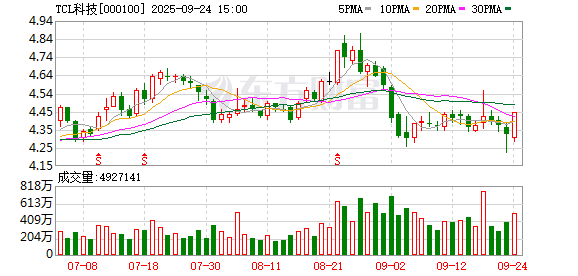
TCL在广州投下全球首创项目 “世界显示之都”诞生“新物种”
2 1 Shi Ji Jing Ji Bao Dao· 2025-09-24 12:21
Core Insights - The new display industry has become a focal point in global technology competition, with increasing penetration in flexible, foldable displays, and AI glasses [2] - Chinese display panel manufacturers have achieved nearly 50% of the global OLED market share in Q2 this year, marking a historical high [2][6] - TCL's investment in the world's first 8.6-generation printed OLED production line in Guangzhou is expected to significantly enhance China's position in the new display industry [3][8] Industry Developments - Major cities like Guangzhou, Hefei, and Beijing are emerging as winners in the new display industry, with TCL's T8 project set to commence in November with an investment of approximately 29.5 billion yuan [3][10] - The competition among leading panel manufacturers is increasingly focused on high-end display technologies like OLED, with Samsung and LG Display shutting down LCD factories to pivot towards OLED [4] - The investment in the T8 project is seen as a critical move for Guangzhou to develop a high-end display industry and to address long-standing issues of high costs and low yield in medium-sized OLED production [8][10] Market Trends - The IT device OLED market is experiencing a "gold rush," prompting accelerated construction and mass production of display production lines, with investments exceeding 50 billion yuan in the first half of the year [5] - Major Chinese panel manufacturers, including BOE and Visionox, have announced investments in 8.6-generation OLED production lines, totaling 63 billion yuan and 55 billion yuan respectively [6] - The T8 project aims to process approximately 22,500 glass substrates monthly, positioning China as a leader in high-generation AMOLED technology [8] Future Outlook - The T8 project is expected to achieve mass production between 2027 and 2028, coinciding with a surge in demand for medium-sized OLEDs, thereby enhancing Guangzhou's display industry ecosystem [12] - The display industry's future will involve deeper integration with various sectors, moving beyond traditional screens to applications like flexible displays and smart glasses [13][14] - Guangzhou's strategy to become a "world display capital" involves attracting major projects and fostering industry clusters, with a focus on technological innovation and market competitiveness [15][16]


手机厂商与面板巨头加深捆绑
2 1 Shi Ji Jing Ji Bao Dao· 2025-09-22 04:47
Core Viewpoint - The smartphone industry is witnessing a shift from a traditional "buyer-supplier" relationship to a collaborative model where manufacturers engage deeply in the definition, development, and production of display technologies, reshaping the competitive landscape of the display panel industry [2][4][8]. Group 1: New Collaboration Paradigm - Smartphone manufacturers are no longer passive purchasers but are becoming strategic partners with panel manufacturers, engaging in joint research and deep customization [2][4]. - OPPO has invested over 1 billion in establishing its own "display science production line," allowing it to control the entire process from design to production [4][5]. - The collaboration between Xiaomi and TCL Huaxing has evolved into a long-term partnership, creating an "innovation display joint laboratory" to streamline technology development and production [5][8]. Group 2: Industry Dynamics - The traditional supply chain structure is being transformed from a linear model to a networked "industry alliance," enhancing the bargaining power of smartphone manufacturers [8][9]. - Chinese panel manufacturers are expected to capture over 70% of the global smartphone panel market by 2025, providing manufacturers with more options and stronger negotiation capabilities [8][10]. - The shift to deep collaboration is accelerating technological iteration and redefining market competition rules, moving the focus from macro parameters to underlying technologies [10][11]. Group 3: Technological Advancements - The competition in the smartphone market is increasingly centered around display technology, with companies like OPPO and Tianma developing advanced features such as precise light control at ultra-low brightness [10][11]. - The joint development model allows manufacturers to align market needs with technological paths early in the research phase, significantly reducing the time from lab to market [10][11]. - The relationship between Apple and Samsung exemplifies a unique "co-opetition," where stringent standards and large orders from Apple drive Samsung to innovate continuously [6][10].

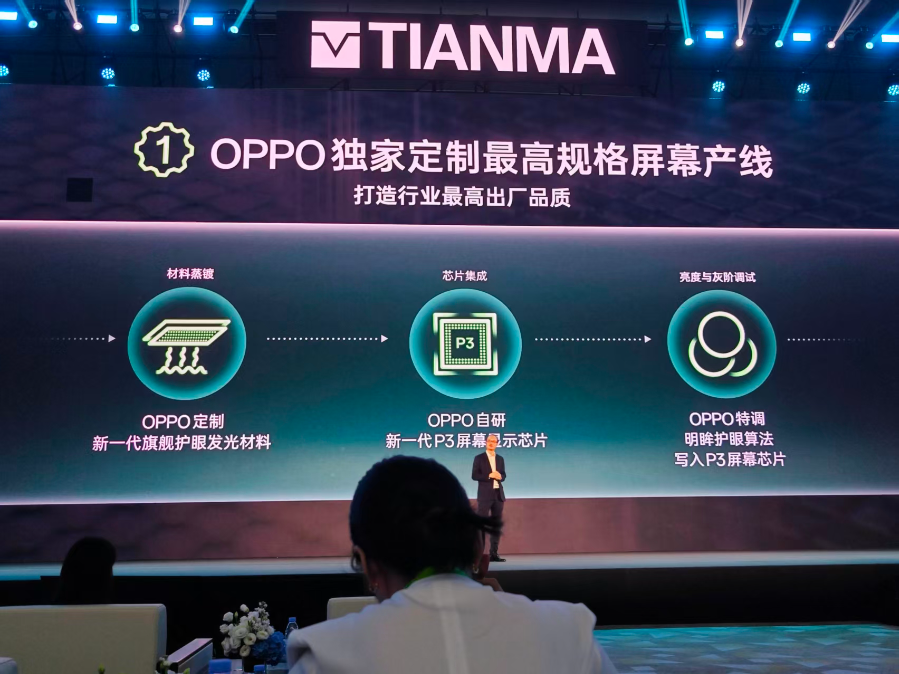
手机屏幕之变:厂商与面板巨头捆绑改写行业规则
2 1 Shi Ji Jing Ji Bao Dao· 2025-09-21 12:41
Core Insights - The article discusses the emergence of a new collaboration paradigm between smartphone manufacturers and panel suppliers, moving from a traditional "buyer-supplier" relationship to a more integrated "co-creation" model [2][9] - This shift is driven by the need for differentiation in a saturated smartphone market, where screen quality and experience are critical competitive factors [1][10] Group 1: Industry Dynamics - Smartphone manufacturers are increasingly engaging in the definition, research, and production of display technologies, forming strategic partnerships with panel manufacturers for joint development and exclusive supply [2][10] - The traditional supply chain structure is evolving from a linear "pyramid" model to a more networked "industry alliance," allowing for greater collaboration and shared risk [9][10] - The rise of Chinese panel manufacturers like BOE, TCL Huaxing, and Tianma is changing the competitive landscape, with predictions that their market share in the global smartphone panel market will exceed 70% by 2025 [9][10] Group 2: Case Studies - OPPO has invested over 1 billion yuan to establish its own "display science production line," allowing it to control the entire process from design to production, thus creating a significant technological barrier [5][10] - Xiaomi and TCL Huaxing have developed a "Joint Innovation Laboratory" to streamline the process from technology research to mass production, enhancing their collaborative capabilities [5][10] - The relationship between Apple and Samsung exemplifies a unique "co-opetition" dynamic, where Apple drives Samsung to innovate through stringent standards and large orders, influencing industry-wide technology trends [7][10] Group 3: Technological Advancements - The focus of competition has shifted from macro parameters like resolution and refresh rates to micro-level technologies, such as precise light control algorithms developed by Tianma and OPPO [10][11] - The collaborative model allows for faster alignment of market needs with technological capabilities, significantly reducing the time from research to market [11] - However, the deep customization and joint development require substantial upfront investment, raising questions about potential impacts on product pricing and consumer repair costs [11][12]
韩媒:京东方有望获更多苹果OLED手机订单
WitsView睿智显示· 2025-09-17 10:09
Core Viewpoint - Samsung Display is set to become the exclusive supplier of flexible OLED panels for Apple's upcoming foldable iPhone series, with an expected supply of 10 million panels for the year. The price of foldable OLED panels is approximately three times higher than traditional flat OLED panels, and it is anticipated that the price for Apple will be about 25% higher than previous supplies to Samsung Electronics' MX division. However, Apple plans to significantly reduce orders for flat OLED panels from Samsung Display by about 50%, shifting those orders to LG Display and BOE [2]. Group 1 - Samsung Display will supply 10 million flexible OLED panels for Apple's foldable iPhone series in 2024 [2] - The price of foldable OLED panels is expected to be about three times higher than traditional flat OLED panels [2] - Apple will reduce its orders for flat OLED panels from Samsung Display by approximately 50%, reallocating those orders to LG Display and BOE [2] Group 2 - Apple is shifting its sales strategy from emphasizing performance and differentiation among models to enhancing the performance of standard models, particularly with the iPhone 17 series [5] - The small OLED panel market is facing challenges as the profitability of these panels approaches its limits, necessitating a balance between acceptable pricing and minimum profit margins for manufacturers [5][6] - Korean display companies, including Samsung Display, are betting on CoE technology to create thinner, more efficient panels without relying on polarizers, which could enhance product competitiveness [6][7]



投资者简报-存储器、特种工程塑料、中国数据中心与光模块-Investor Presentation Asia Pacific-Tuesday TMT Webcast Memory, SPE, China IDC vs. Transceiver
2025-09-17 01:51
Summary of Key Points from the Conference Call Industry Overview - **Industry Focus**: The conference call primarily discusses the semiconductor industry, particularly in the context of memory technology and production equipment in Asia Pacific, with a specific emphasis on NAND technology and its evolution due to AI advancements [1][4][21][23]. Core Insights and Arguments - **NAND Technology and AI**: The integration of AI is expected to significantly impact NAND technology, enhancing its capabilities and applications [21][26]. - **Investment Themes**: Various investment themes are highlighted, including advanced packaging, high bandwidth memory (HBM), and flash memory, which are crucial for edge AI applications [9][11]. - **Equipment Impact**: The call outlines how different types of semiconductor production equipment are affected by industry drivers, including steppers, coater/developers, and memory testers, indicating a diverse range of equipment that will see varying levels of demand [9][11]. Equipment and Performance Metrics - **Performance Metrics**: The call provides specific metrics on equipment performance, such as throughput rates for fan-out packaging, indicating a significant increase in efficiency with new technologies [11]. - **Adoption of FOPLP**: The advantages of adopting Fan-Out Panel Level Packaging (FOPLP) are discussed, showcasing improvements in carrier size, usable area, and throughput compared to traditional methods [11]. Analyst Ratings and Coverage - **Analyst Ratings**: The document includes a list of companies within the South Korean technology sector, detailing their stock ratings and recent price points, indicating a mix of overweight, equal-weight, and underweight ratings across various firms [77][79]. - **Market Positioning**: Companies like Samsung Electronics and SK hynix are highlighted as key players in the semiconductor market, with ongoing investment banking relationships noted for several firms [36][38]. Additional Important Information - **Research Disclosures**: The call emphasizes the importance of understanding potential conflicts of interest in research, as Morgan Stanley may have business relationships with the companies discussed [2][31][35]. - **Global Market Context**: The performance of the semiconductor industry is expected to be in line with broader market benchmarks, suggesting a stable outlook for investors [4][50]. This summary encapsulates the critical insights and data points from the conference call, providing a comprehensive overview of the semiconductor industry's current landscape and future prospects.
传韩国已完成显示用离子注入设备技术开发
WitsView睿智显示· 2025-09-16 07:24
Core Viewpoint - The completion of the ion implantation equipment development project, initiated by the South Korean government, marks a significant step towards domestic production and commercialization of display ion implantation equipment, which has historically relied on Japanese suppliers [2][3]. Group 1: Project Overview - The ion implantation equipment development project started in 2021 and was initially scheduled to conclude in December 2022, but was extended to June 2023, taking a total of four years [2]. - The project aimed to support domestic small and medium-sized equipment companies in developing technology for ion implantation equipment, with major display companies like Samsung Display and LG Display participating in performance evaluation and commercialization [2]. Group 2: Technical Development and Applications - The project has successfully developed ion implantation equipment compatible with 8.6-generation glass substrates, which is crucial for next-generation investment needs [2]. - Ion implantation equipment applies high current to low-temperature polycrystalline silicon (LTPS) to convert it into low-resistance conductive materials, enhancing the performance of oxide thin-film transistors (TFTs) and OLED panels [2]. Group 3: Market Implications - The completion of the technology development is expected to facilitate the commercialization of ion implantation equipment in South Korea, potentially leading to an import substitution effect [3]. - However, transitioning from development to mass production requires rigorous performance stability and long-term reliability testing, which is critical for the equipment's market viability [3]. - The existing preference for established suppliers in mass production poses challenges for new entrants in the South Korean equipment market [3].

华安证券:国内外IT尺寸用OLED产线建设和量产进入加速周期
智通财经网· 2025-09-15 07:04
Core Viewpoint - The report from Huazhong Securities indicates that IT applications (displays and laptops) are becoming a new growth engine for OLED panels by Q2 2025, driven by increased supply capacity, broader OEM adoption, and consumer demand for high-end displays [1][3][4] Group 1: Industry Developments - Samsung Display (SDC) is expected to start trial production of OLED panels for Apple's first OLED MacBook Pro by the end of this year, with mass production slated for the end of Q2 2026 [1] - TCL Technology Group announced plans to invest approximately RMB 29.5 billion in building an 8.6-generation printed OLED production line in Guangzhou, which will have a monthly processing capacity of about 22,500 glass substrates [2] - Domestic manufacturers are actively constructing OLED production lines, which will lay the foundation for future IT-sized OLED applications [4] Group 2: Market Dynamics - According to Counterpoint Research, as of Q2 2025, domestic OLED panels are accelerating their penetration into the global market, with Samsung Display holding a 37% market share, followed by BOE at 15% and Visionox at 14% [3] - The demand for IT panels (displays and laptops) has seen significant growth, attributed to the adoption of high-end products and diversified supplier participation [3]

三星电子拟扩大京东方液晶面板采购量 明年份额或增至10%
Ju Chao Zi Xun· 2025-09-14 14:49
Core Viewpoint - Samsung Electronics is negotiating with BOE for the supply of over 4 million TV LCD panels in 2024, which would represent a significant increase in BOE's share of Samsung's total panel procurement from 4% to 10% [2][3][4] Group 1: Supply Chain Dynamics - The planned procurement from BOE will account for 10% of Samsung's annual TV LCD panel purchases, which are approximately 40 million units [2] - Other major suppliers for Samsung in 2024 include TCL Huaxing and Huike, with expected supplies of 8-9 million and around 6 million panels, respectively [2] - If BOE successfully supplies over 4 million panels, it may replace LG Display in Samsung's supply chain, indicating a shift in supplier dynamics [2][3] Group 2: Technology and Production Capacity - The panels supplied by BOE will primarily utilize IPS technology, which enhances viewing angles, a capability currently shared with LG Display [3] - The acquisition of LG Display's Guangzhou factory by Huaxing also adds IPS production capacity, potentially altering the supply landscape for Samsung's IPS TV panels [3] Group 3: Market Context and Future Outlook - Samsung has reduced its TV shipment target for 2023 from 38 million to 36 million units due to weak global demand, with actual shipments expected to be around 30 million [3] - The annual shipment volume for Samsung TVs is projected to remain at approximately 30 million units for both 2023 and 2024 [3] - The expansion of cooperation with BOE reflects Samsung's strategy for supply chain diversification and recognition of the technological capabilities of Chinese panel manufacturers [4]
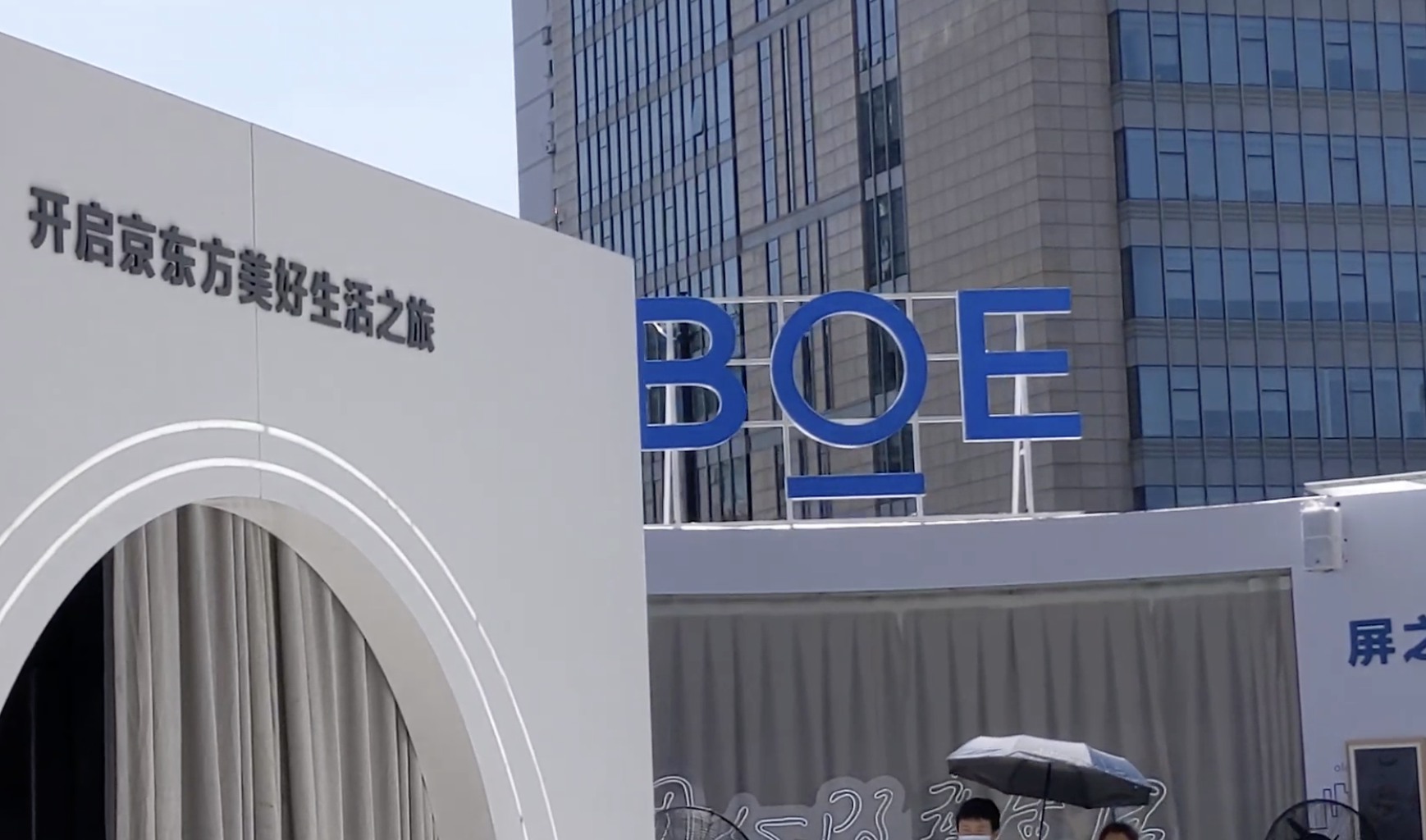
国内外IT尺寸用OLED产线建设和量产进入加速周期,OLED面板检测设备值得关注
Huaan Securities· 2025-09-14 12:10
Investment Rating - Industry investment rating: Overweight [1] Core Viewpoints - Samsung Display is set to start mass production of OLED panels for Apple's MacBook Pro by the end of Q2 2026 [4][8] - Domestic OLED production lines are being actively constructed, with a focus on large-sized IT applications, which is expected to expand the OLED market [5][6] - The demand for IT panels (monitors and laptops) is experiencing significant growth, driven by high-end product adoption and diversification among suppliers [6] Summary by Sections - **OLED Production and Market Penetration** - TCL Technology Group announced a joint investment to build an 8.6-generation printed OLED production line in Guangzhou, with a total investment of approximately RMB 29.5 billion [5] - According to Counterpoint Research, domestic OLED panels are expected to accelerate their penetration into the global market by Q2 2025, with Samsung Display holding a 37% market share [5] - **IT Panel Demand and Growth** - The demand for smartphones and TVs is stabilizing but remains weak compared to the same period last year, while IT panels are becoming a new growth engine for OLED [6] - The construction of 8.6-generation AMOLED production lines by BOE and Visionox will lay the foundation for future applications in IT-sized OLED [6] - **Investment Recommendations** - Key companies recommended in the panel detection equipment sector include Jingzhida, with other equipment companies such as Jingce Electronics and Aolide also highlighted [10]


直击IFA2025,国际足联主席点赞海信
Guan Cha Zhe Wang· 2025-09-12 07:17
Core Viewpoint - Hisense's partnership with FIFA is groundbreaking, leveraging advanced display technology to enhance the viewing experience for billions of global audiences during the 2026 World Cup [1][18]. Group 1: Partnership and Sponsorship - Hisense officially announced its role as the global official sponsor for the 2026 World Cup at the IFA event in Berlin [1][4]. - FIFA President Infantino praised Hisense's display technology, emphasizing its significance for global audiences [1][22]. Group 2: Technological Advancements - Hisense is focusing on three core themes: "Colorful, AI, Passion," utilizing leading RGB-Mini LED and AI technologies to improve the viewing experience [4]. - The introduction of the world's first RGB color control AI chip, the XinXin H7, allows for unprecedented control with 3×10240 partitioning, achieving the highest color accuracy in the industry [11][13]. - Hisense's new U7S Pro model, featuring RGB-Mini LED technology, aims to provide an exceptional viewing experience ahead of the World Cup [16]. Group 3: Historical Context and Market Impact - The relationship between football and television has evolved since the first televised football match in 1936, with each World Cup historically pushing new display technology [6][8]. - The 2026 World Cup is expected to accelerate the adoption of RGB-Mini LED technology, enhancing the visual experience for millions [14][20]. - Hisense's pricing strategy positions its high-end RGB-Mini LED televisions as accessible to a broader audience, transforming the market landscape [15][16]. Group 4: Future Outlook - The advancements in display technology are set to redefine the viewing experience, making high-quality visuals available to a wider audience [20][22]. - Hisense's commitment to innovation and accessibility in display technology aligns with the growing demand for immersive viewing experiences in sports [18][22].

