
赛诺菲

Search documents
GSK Leaps Into Buy Zone On Surprise Departure Of CEO Emma Walmsley
Investors· 2025-09-29 13:15
GSK (GSK) stock jumped back into a buy zone Monday after announcing Chief Executive Emma Walmsley will step down at the end of the year. She will be succeeded by Luke Miels, the current chief commercial officer. Prior to joining GSK in 2017, Miels has worked across the globe at AstraZeneca (AZN), Roche (RHHBY) and Sanofi (SNY). Walmsley has led GSK for nine years and says it's time to hand the reins over to someone new. "2026 is a pivotal year for GSK to define its path for the decade ahead, and I believe t ...

CAC 40 Flat In Lackluster Trade
RTTNews· 2025-09-29 11:36
Market Performance - French stocks are exhibiting a mixed performance with the benchmark CAC 40 showing a slight increase of 2.89 points or 0.04% to 7,873.57, fluctuating between 7,872.29 and 7,901.23 [1] - Investors are cautious due to a lack of market triggers and are looking forward to important economic data later in the week [1] Sector Performance - Luxury stocks are experiencing some support, with companies like Kering, STMicroElectronics, EssilorLuxottica, Hermes International, Eurofins Scientific, Stellantis, and LVMH gaining between 1.1% and 1.8% [1] - Other companies such as Thales, Bureau Veritas, Accor, Unibail Rodamco, Dassault Systemes, Capgemini, and Airbus are also seeing gains, ranging from 0.3% to 0.7% [2] Declining Stocks - TotalEnergies is down approximately 1.25%, while Veolia Environment, Engie, Societe Generale, Orange, Sanofi, Michelin, and Euronext are declining between 0.5% and 1% [3] Economic Indicators - The economic sentiment indicator in the Euro Area increased to 95.5 in September from a revised 95.3 in August, slightly surpassing market expectations of 95.2 [3] - Euro Area consumer confidence improved to -14.9 in September from -15.5 in August, aligning with preliminary estimates [3]


自免行业报告(一):双靶协同拓展治疗边界,重视TSLP类双抗迭代潜力-中邮证券
Sou Hu Cai Jing· 2025-09-29 10:26
Core Insights - The report by Zhongyou Securities focuses on the development of drugs in the autoimmune (self-immune) field, analyzing market demand, dual-antibody research priorities, and related investment targets [1][3]. Market Demand - The autoimmune field has a large patient base and long medication cycles, leading to the potential for blockbuster drugs, such as Dupilumab (Dupi), which has annual sales exceeding $10 billion. Key indications like atopic dermatitis (AD), asthma, and chronic obstructive pulmonary disease (COPD) have millions of affected patients, with nearly 9 million patients accessible to biological agents [1][2]. - Existing therapies still have unmet needs, including the need for long-acting formulations to reduce dosing frequency and improve efficacy, as well as expanding the patient population currently limited by screening criteria [1][2]. Dual-Antibody Research Focus - From the perspective of type 2 inflammation mechanisms, targets can be categorized into upstream (e.g., TSLP, IL-33) and downstream (e.g., IL-4, IL-13). Single-target monoclonal antibodies have limited efficacy, making dual antibodies an important direction due to their synergistic effects. In respiratory diseases, the TSLP×IL-13 (or IL-4R) dual antibody shows significant advantages, with clinical data indicating better reductions in FeNO and eosinophils compared to single-target drugs [2][3]. - The report emphasizes the potential of TSLP dual antibodies, highlighting leading global progress from companies like Sanofi (Lunsekimig) and Pfizer (triple antibodies), as well as domestic advancements from companies like Kangnuo (CM512) and Innovent (IBI3002) [2][3]. Investment Targets - Key investment targets include Kangnuo (CM512), which is leading in domestic progress, Innovent (IBI3002), and Qianxin Biotechnology (QX030N), with a focus on dual-antibody development [3]. Conclusion - Overall, TSLP dual antibodies in the autoimmune field show significant potential and may become the next generation of blockbuster drugs, driven by high patient numbers and unmet medical needs [1][3].

自免行业报告(一):双靶协同拓展治疗边界,重视TSLP类双抗迭代潜力
China Post Securities· 2025-09-29 08:56
Investment Rating - The industry investment rating is "Strong Outperform" [2] Core Insights - The report emphasizes the potential of TSLP-targeted bispecific antibodies in addressing unmet needs in the autoimmune sector, particularly in asthma and atopic dermatitis [4][6] - The success of Dupilumab (Dupi) illustrates the demand for long-acting, multi-indication therapies in a market characterized by high patient numbers and chronic conditions [5][15] - The report identifies a significant market opportunity driven by high disease prevalence and the need for new therapeutic options [5][15] Summary by Sections High Disease Prevalence Creates Market Opportunities - The report highlights the large patient populations for conditions like asthma and atopic dermatitis, with millions affected, indicating a substantial market for new treatments [14][15] - Existing therapies have unmet needs, particularly in terms of long-acting formulations and improved efficacy [18][19] Focus on Bispecific Antibodies - The report suggests prioritizing bispecific antibodies that target TSLP and IL-13, as they have shown clinical promise in enhancing efficacy and expanding patient populations [6][22] - Companies such as 康诺亚, 信达生物, 荃信生物, and 联邦制药 are identified as key players in this space [6] Respiratory Diseases and Bispecific Antibodies - In the respiratory disease sector, particularly asthma and COPD, the report notes the need for long-term management and the potential of bispecific antibodies to address this challenge [25][37] - The market for asthma biologics is projected to reach approximately $7.5 billion by 2023, with significant growth expected [25][28] Clinical Data and Efficacy - The report discusses the clinical efficacy of various biologics, noting that Dupilumab and Tezepelumab have shown significant improvements in asthma control and quality of life [34][35] - The combination of TSLP and IL-4R is highlighted as a promising therapeutic strategy, with early clinical data supporting its potential [37][47]
财说|甘李药业30亿大单能带来多少业绩?
Xin Lang Cai Jing· 2025-09-29 00:34
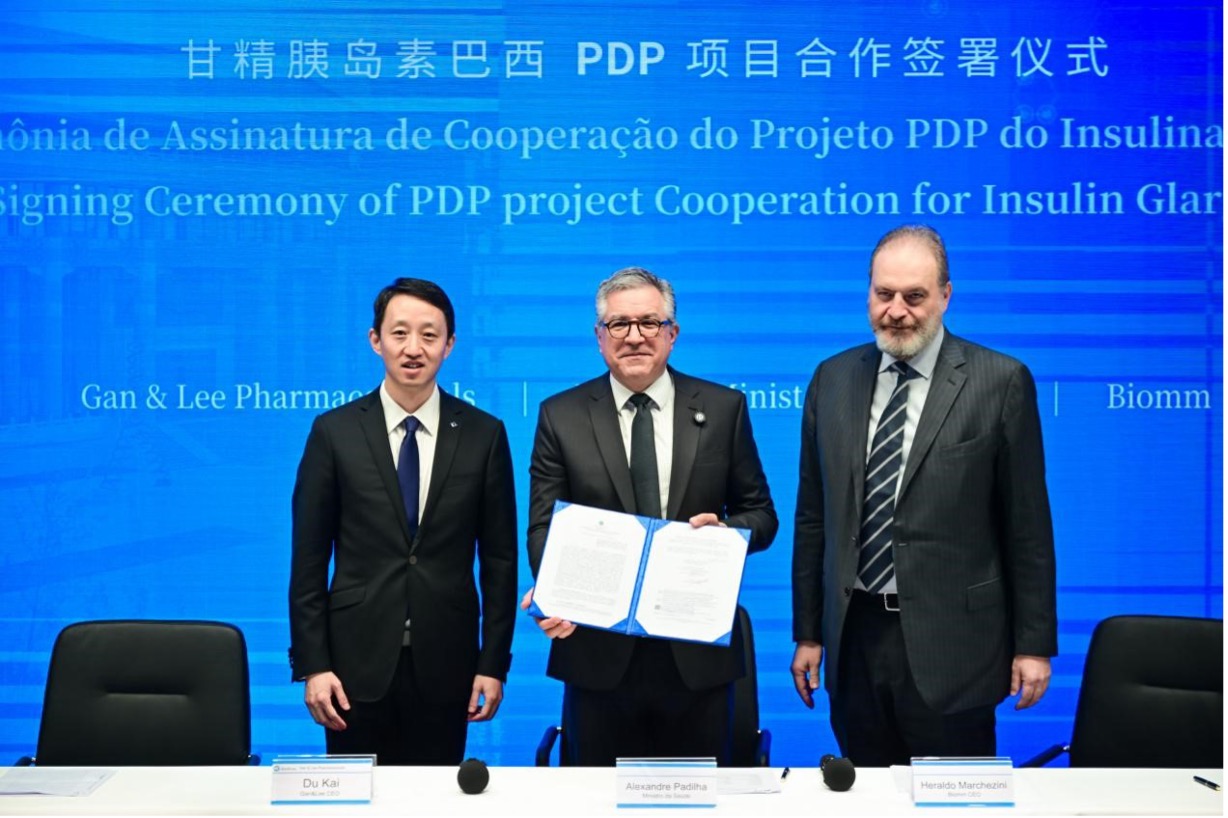
Core Viewpoint - Ganli Pharmaceutical has become the first Chinese pharmaceutical company to enter Brazil's PDP medical project, signing agreements with Fiocruz and BIOMM, with a total expected amount of no less than 3 billion yuan, which will positively impact the company's performance in 2025 and beyond [1][3]. Group 1: Project Details - The PDP model involves technology transfer, production line establishment, and national procurement, with Ganli Pharmaceutical responsible for delivering cell lines and process packages, and training for 168 technical tasks within 30 months [2]. - The total investment for the project is 130 million Brazilian Reais (approximately 160 million yuan), with a commitment from the SUS system to purchase 200 million units of insulin over 10 years, starting with a target of 20 million units in the first year, accounting for 58% of Brazil's total demand [2]. Group 2: Financial Implications - The contract's total amount is expected to contribute approximately 10% to the company's revenue over 10 years, averaging 300 million yuan annually, although the gross margin may be lower than domestic operations [3]. - In the first half of 2025, Ganli Pharmaceutical reported revenue of 2.067 billion yuan, a year-on-year increase of 57.18%, and a net profit of 604 million yuan, a year-on-year increase of 101.96% [6]. Group 3: Risks and Challenges - The project faces challenges such as exchange rate fluctuations, policy changes, and technical hurdles, with the Brazilian Real having fluctuated by 17% against the US dollar in the past 18 months [5]. - Ganli Pharmaceutical must deliver 160 key devices within 18 months, with 40% of these dependent on Chinese manufacturing, which could delay the construction plan if shipping routes are disrupted [5]. Group 4: Market Position and Strategy - Following the first round of centralized procurement, Ganli Pharmaceutical adjusted its business model, reducing its sales team by 37% and shifting its strategy towards digital marketing and grassroots penetration [6]. - The company has increased its R&D investment to 5.52 billion yuan in the first half of 2025, representing 26.7% of its revenue, indicating a focus on accelerating product development in response to market changes [7]. Group 5: International Expansion - Ganli Pharmaceutical has signed preliminary cooperation agreements with Egypt and Indonesia, which could potentially contribute over 1 billion yuan in revenue if similar terms to Brazil are replicated [10]. - The company's international revenue reached 222 million yuan in the first half of 2025, a year-on-year increase of 75.08%, accounting for 10.72% of total revenue, indicating significant growth potential in international markets [10].

Trump’s Market Mayhem: A Masterclass in Controlled Chaos
Stock Market News· 2025-09-28 18:00
Trade Policy Impact - President Trump announced new tariffs effective October 1, 2025, including 100% on imported branded pharmaceuticals, 25% on heavy-duty trucks, 50% on kitchen cabinets, and 30% on upholstered furniture, aimed at protecting domestic industries [2][3] - The pharmaceutical sector reacted variably, with domestic companies like Merck, Eli Lilly, and Johnson & Johnson seeing stock price increases due to exemptions for those investing in US manufacturing [3][4] - Asian pharmaceutical stocks, particularly Indian firms, faced declines, with Sun Pharma's shares dropping 5% and Biocon's by 3.3%, while the Nifty Pharma index fell 2.54% [4] Heavy-Duty Truck Industry - The 25% tariff on imported heavy-duty trucks negatively impacted European manufacturers like Daimler Truck, which could face a €700-800 million earnings hit, while American manufacturer Paccar Inc. saw stock gains of 5-7% [5] - Volvo Group, manufacturing all North American trucks domestically, also experienced stock price increases of nearly 3% [5] Kitchen Cabinets and Furniture - The 50% tariff on kitchen cabinets and 30% on upholstered furniture led to mixed market reactions, with domestic manufacturers like MasterBrand benefiting, while import-reliant retailers like RH and Williams-Sonoma suffered declines [6] Semiconductor Industry - A proposed policy requiring a 1-to-1 domestic-to-imported chip ratio boosted US chipmakers like Intel and GlobalFoundries, whose shares rose by 5.5% and 9% respectively, while Asian competitors saw declines of 2-6% [7] Market Reactions - The Dow Jones Industrial Average reached an all-time high of 42,313.00, while the S&P 500 and Nasdaq Composite experienced declines of 0.50% and 0.55% respectively [10] - Analysts noted that Trump's trade policy is seen as a tool for redistributing competitive advantage rather than a universal shock, leading to selective investment strategies [11]
趋势研判!2025年中国化疗药物行业全景速览:随着癌症患者人数不断增多,市场对化疗药物的需求持续增长,国内企业不断上市,市场竞争加剧[图]
Chan Ye Xin Xi Wang· 2025-09-28 01:32
Core Viewpoint - The chemotherapy drug market in China is experiencing growth due to increasing cancer patient numbers and rising consumer spending, despite competition from targeted therapies. Chemotherapy drugs remain dominant due to their stable efficacy, broad anti-cancer properties, and relatively low prices [1][4][5]. Group 1: Industry Overview - Chemotherapy drugs are a crucial method for cancer treatment, classified into various types such as alkylating agents, antimetabolites, and plant-derived anticancer drugs [2][3]. - The demand for chemotherapy drugs in China is projected to reach 3.858 billion units with a market size of 135.59 billion yuan in 2024, led by plant alkaloids and antimetabolites [5][6]. - The global chemotherapy drug market is expected to grow from 33.53 billion USD in 2024 to 36.84 billion USD in 2025, with the Asia-Pacific region holding a significant share [4][5]. Group 2: Market Dynamics - The Chinese chemotherapy drug market is characterized by a dual driving force of strong demand for certain drug types while facing pressure from generics and targeted therapies [5][10]. - The production of chemotherapy drugs in China is anticipated to increase to 3.432 billion units by 2025, reflecting a growth trend in domestic manufacturing capabilities [6][10]. - The competitive landscape is intensifying with local companies like Heng Rui Medicine and Qilu Pharmaceutical making significant strides in both generic and innovative drug development [10][11]. Group 3: Regulatory Environment - The Chinese government has implemented supportive policies to encourage the development of innovative cancer treatment drugs, providing a favorable environment for industry growth [8][9]. - The industry is witnessing accelerated drug approval processes and procurement policies that favor local manufacturers, enhancing competition [10][11]. Group 4: Future Trends - The chemotherapy drug sector is expected to evolve towards precision medicine, with advancements in targeted therapies and combination treatments [11]. - Innovations in drug delivery systems, such as nanotechnology, are anticipated to enhance treatment efficacy and patient outcomes [11].





Enanta Pharma To Report Respiratory Syncytial Virus Trial Results On Sep.29
RTTNews· 2025-09-27 09:35
Core Insights - Enanta Pharmaceuticals Inc. (ENTA) is set to hold a conference call on September 29, 2025, to discuss topline results from its RSVHR study, which evaluates Zelicapavir for treating respiratory syncytial virus (RSV) in high-risk adults [1] Industry Overview - Respiratory syncytial virus (RSV) is responsible for severe lung infections, particularly affecting high-risk populations such as premature babies, young infants, and children. In the U.S., there are approximately 2.1 million hospitalizations and outpatient visits for children under 5 years old due to RSV [2] - Adults aged 65 and older, as well as individuals with weakened immune systems, are also at significant risk for RSV infections [2] Competitive Landscape - Several RSV vaccines are currently available, including AstraZeneca/Sanofi's Beyfortus, Pfizer's Abrysvo, and GSK's Arexvy, aimed at preventing RSV disease in high-risk infants and older adults [3] - Antivirals like Virazole are utilized to treat severe lower respiratory tract infections in hospitalized infants and young children [3] Company-Specific Information - The RSVHR study by ENTA includes patients over 65 years and those with conditions such as congestive heart failure, chronic obstructive pulmonary disease, or asthma. The primary objective is to assess the treatment effect on the resolution time of symptoms like shortness of breath and wheezing [4] - ENTA's stock has fluctuated between $4.09 and $13.37 over the past year, closing at $7.90, with a 1.94% increase on the last trading day. In after-hours trading, the stock rose by 17% to $9.28 [4]

新药品关税“雷声大雨点小”?瑞银:主要药企已在美投资数百亿美元,可获完全豁免
美股IPO· 2025-09-27 02:02
Core Viewpoint - The recent announcement of a 100% tariff on imported drugs by President Trump is expected to have minimal actual impact on the pharmaceutical industry, as most large companies have already committed significant investments in U.S. production facilities, allowing them to qualify for tariff exemptions [1][3][5]. Group 1: Tariff Announcement and Implications - President Trump announced a 100% tariff on various imported products, including patented and branded drugs, effective from October 1 [3]. - Companies that have begun construction on pharmaceutical manufacturing facilities in the U.S. will be exempt from these tariffs, which is defined as having "broken ground" or being "under construction" [3][4]. Group 2: Investment Commitments by Pharmaceutical Companies - Major pharmaceutical companies have pledged substantial investments in U.S. production, with AstraZeneca and Roche each committing $50 billion, GlaxoSmithKline $30 billion, Novartis $23 billion, UCB $2 billion, and Sanofi $20 billion [6]. - Analysts suggest that the anticipated impact of the 100% tariff is likely to be low due to these significant investments [5][7]. Group 3: Market Reactions and Global Supply Chain - Following the tariff announcement, Asian stock markets declined, particularly affecting Asian pharmaceutical stocks, while European pharmaceutical stocks remained relatively stable [4]. - The complexity and interconnectivity of the global pharmaceutical supply chain are highlighted by the fact that nearly 90% of U.S. biotechnology companies rely on imported components for at least half of their approved products [8].

新药品关税“雷声大雨点小”? 瑞银:主要药企已在美投资数百亿美元,可获完全豁免
智通财经网· 2025-09-27 00:13
Core Viewpoint - The announcement of a 100% tariff on imported drugs by President Trump is expected to have minimal actual impact due to existing investments by major pharmaceutical companies in U.S. production facilities [1][2]. Group 1: Tariff Announcement and Immediate Market Reaction - President Trump announced a new round of high tariffs on various imported products, including a 100% tariff on patented and branded drugs, effective October 1 [1]. - Following the tariff announcement, Asian stock markets declined, particularly affecting Asian pharmaceutical stocks, while European pharmaceutical stocks remained relatively stable [1]. Group 2: Expected Impact of the Tariff - Analysts believe the new tariff policy will have limited real-world impact, as major pharmaceutical companies have already established significant production capabilities in the U.S. [2][3]. - The policy is seen more as a symbolic gesture aimed at encouraging the pharmaceutical industry to return to the U.S. rather than a serious attempt to disrupt drug imports [2]. Group 3: Investments by Pharmaceutical Companies - Major pharmaceutical companies have committed substantial investments in U.S. production, with AstraZeneca and Roche each pledging $50 billion, GlaxoSmithKline $30 billion, Novartis $23 billion, UCB $2 billion, and Sanofi $20 billion [3]. - Nearly all major pharmaceutical companies have announced large-scale investment plans related to local manufacturing in the U.S. [4]. Group 4: Complexity of the Pharmaceutical Supply Chain - Approximately 90% of U.S. biotechnology companies rely on imported components for at least half of their approved products, highlighting the complexity and interconnectedness of the global pharmaceutical supply chain [4].

