阿里

Search documents
腾讯突发重磅!大降价
21世纪经济报道· 2025-02-27 12:58
Core Viewpoint - Tencent has launched its new foundational model, Hunyuan TurboS, which aims to enhance its competitive edge in the rapidly evolving large model sector [1][4]. Model Architecture and Cost Reduction - Hunyuan TurboS utilizes an innovative Hybrid-Mamba-Transformer architecture, which effectively reduces the computational complexity and cache usage compared to traditional Transformer structures, leading to lower training and inference costs [4][5]. - The Mamba architecture, based on State Space Model (SSM), introduces a selective mechanism that allows efficient processing of long sequence data, addressing the high costs associated with training and inference of long texts [4][5][6]. Performance Metrics - Hunyuan TurboS has been benchmarked against other models, achieving notable scores in various categories such as MMLU (89.5), GPQA-diamond (57.5), and HumanEval (91.0), indicating its strong performance in knowledge and reasoning tasks [7]. Pricing Strategy - The pricing for Hunyuan TurboS has significantly decreased, with input costs set at 0.8 yuan per million tokens and output costs at 2 yuan per million tokens, making it more accessible compared to its predecessor [8]. Market Response and Product Integration - Following the launch of Hunyuan TurboS, Tencent's AI assistant, Tencent Yuanbao, has rapidly gained popularity, surpassing Doubao in downloads and reaching the second position in the Apple Store's free app rankings in China [14][15]. - The integration of Hunyuan TurboS into Tencent Yuanbao has led to multiple significant updates, enhancing its capabilities and user experience [16]. Stock Market Reaction - Tencent's aggressive shift towards AI has positively impacted its stock price, which reached a high of 522 HKD, the highest since August 2021, before settling at 495 HKD [21].



腾讯,重磅发布!
证券时报· 2025-02-27 12:47
Core Viewpoint - Tencent has officially launched the new generation fast-thinking model, Turbo S, which significantly improves response speed and efficiency compared to previous models [1][2]. Group 1: Model Features and Performance - Turbo S is designed to provide "instant responses," doubling the output speed and reducing the first-word latency by 44% compared to earlier models like DeepSeek-R1 and Hunyuan T1 [2]. - The model combines fast and slow thinking capabilities, allowing it to efficiently handle both intuitive and logical reasoning tasks, thus enhancing overall problem-solving intelligence [4][5]. - In various industry-standard benchmarks, Turbo S has demonstrated competitive performance against leading models such as DeepSeek-V3, GPT-4o, and Claude, particularly excelling in knowledge, mathematics, and reasoning tasks [5][6]. Group 2: Cost and Accessibility - The pricing for Turbo S has been significantly reduced, with input costs at 0.8 yuan per million tokens and output costs at 2 yuan per million tokens, making it more accessible compared to previous versions [7]. - Developers and enterprise users can access Turbo S through APIs on Tencent Cloud, while ordinary users will gradually experience it through the Tencent Yuanbao platform [2][9]. Group 3: Integration and Market Position - Tencent has integrated DeepSeek models into over ten of its products, enhancing functionalities across various applications such as WeChat, QQ Music, and Tencent Docs [10]. - The integration of DeepSeek has positioned Tencent as a key player in the AI application sector, leveraging its extensive user base and ecosystem to gain a competitive edge [11][12]. - Following the integration of DeepSeek-R1, Tencent Yuanbao quickly rose to become the second most downloaded free app in the Apple App Store in China, surpassing competitors [10]. Group 4: Strategic Implications - The emergence of DeepSeek has reshaped the competitive landscape of the AI industry, with Tencent focusing on AI applications while Alibaba leads in AI infrastructure [11]. - Tencent's strategy of combining its Hunyuan models with DeepSeek is aimed at building a robust competitive advantage in the AI application space, potentially leading to significant growth in its stock price and market valuation [11][12].

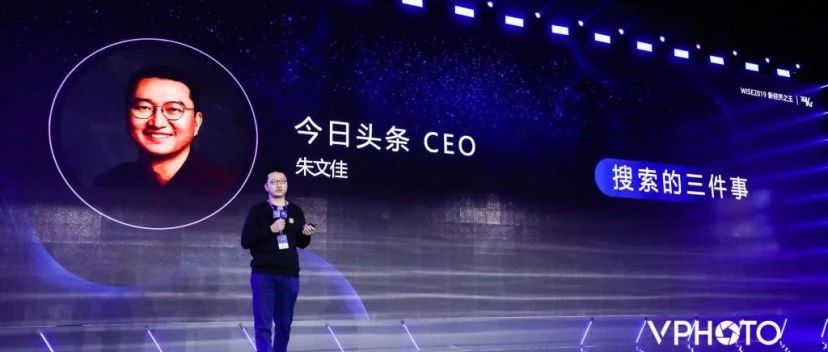
Z Waves|朱文佳:被“半架空”的字节Seed掌舵人,百度系在字节晋升最快的高管,今日头条最年轻的负责人
Z Finance· 2025-02-27 11:36
Core Viewpoint - The article highlights the significant role of Zhu Wenjia in ByteDance's AI development, particularly in leading the Seed department and the creation of the Doubao large model, amidst challenges and competition in the AI landscape [1][2][3]. Group 1: Zhu Wenjia's Background and Role - Zhu Wenjia, previously a key figure at Baidu, joined ByteDance in 2015 and quickly rose to prominence, becoming the CEO of Toutiao in 2019 [4][5]. - Under his leadership, Toutiao experienced a notable increase in daily active users (DAU), reaching 140 million by early 2020, reflecting a growth rate of 7.09% compared to February [9]. - Zhu's focus on integrating search and recommendation engines was pivotal for Toutiao's evolution into a comprehensive information platform [8]. Group 2: Challenges and Adjustments - Zhu faced challenges when Dr. Wu Yonghui, former VP at Google DeepMind, joined ByteDance, leading to structural changes in the large model team, which resulted in Zhu being partially sidelined [2][25]. - Despite setbacks, Zhu's expertise in AI and technology management remains crucial as ByteDance navigates the competitive AI landscape [23][25]. Group 3: AI Development and Achievements - In 2023, ByteDance established its first large model research team, with Zhu at the helm, leading to the launch of the "Yunque" model and the formation of the Flow department focused on AI applications [12][15]. - By November 2024, ByteDance's Doubao product achieved nearly 60 million monthly active users, surpassing competitors like Baidu's Wenxin Yiyan by approximately 50 million users, showcasing ByteDance's dominance in the AI sector [18][19]. Group 4: Future Prospects - The article suggests that Zhu Wenjia's transition towards model application indicates a strategic shift for ByteDance as it adapts to the evolving AI landscape, with expectations for continued innovation and user engagement [25][27]. - The company is positioned to leverage its extensive user data across various platforms, enhancing the synergy between its products and AI capabilities [10][11].
专家访谈汇总:DeepSeek催生AI耳机概念股
阿尔法工场研究院· 2025-02-27 10:31
Group 1: DeepSeek and AI Industry Transformation - DeepSeek's technological innovation, particularly the application of Scaling Law theory, significantly enhances AI model performance [1][3] - The Scaling Law theory indicates that AI model performance is proportional to the amount of parameters, data, and computation, with simultaneous improvements leading to substantial performance gains [3] - DeepSeek optimizes model performance and reduces costs, promoting AI technology applications in traditional industries such as SMEs, healthcare, and finance, thereby stimulating the growth of computing power demand [3] - DeepSeek collaborates with domestic chip manufacturers like Huawei Ascend and Haiguang to enhance the adaptability and development of domestic chips, further strengthening the autonomy of domestic computing power [3] - Through distillation technology and algorithm optimization, DeepSeek significantly reduces model storage requirements and computational load, enabling efficient inference of AI models on smart terminals like smartphones and headphones [3] - Multiple domestic smartphone manufacturers have integrated DeepSeek's AI models, with smart wearable devices (e.g., AI headphones) becoming important scenarios for edge AI applications [3] - DeepSeek-R1 represents a breakthrough in China's open-source AI field, boasting high performance, low cost, and open-source advantages, laying a foundation for future market growth with its global influence and rapidly growing user base [3] Group 2: Investment Research and Large Language Models - Automation programming plugins support multi-mode programming, file operations, command line integration, and multi-model API calls within VSCode, enabling automatic file reading, dependency installation, code execution, and error correction [4] - Large language models can transform subjective factors in investment decisions into quantifiable variables, assisting investors in conducting more efficient quantitative analysis when developing investment models [4] - The model can automatically extract market trends, industry chain information, and corporate financial data from analyst reports, providing valuable input data for quantitative investment models [5] - The model employs sentiment analysis techniques to help research personnel extract relevant emotions and viewpoints from news, social media, and reports, further optimizing the understanding of market dynamics in quantitative investment models [5] - Intelligent agents like ChatGPTTask and Operator can automate tasks such as regularly obtaining information and browsing the web, allowing research personnel to focus more on value-creating work [5] - By constructing knowledge bases, research personnel can easily extract information from historical data and reports, even obtaining relevant answers through direct inquiries [5] - For research institutions that prefer not to invest heavily in hardware and operational costs, large model API services from platforms like OpenRouter, Huoshan Engine, and Alibaba Cloud are available [5] - Tools like Ollama simplify the installation and operation processes of large models while ensuring data privacy and security [5] Group 3: Industry Trends and Future Outlook - The government emphasizes strengthening independent innovation, reflecting a high level of importance placed on technological innovation by representatives of various technology companies [5][8] - The State-owned Assets Supervision and Administration Commission (SASAC) released implementation points for the "AI+" special action, indicating continued policy support for future technological innovation, which enhances market confidence [8] - Due to the ongoing release of policy dividends and continuous deepening of industrial innovation, AI and leading domestic companies are expected to remain the main focus for future allocations [8] - Alibaba plans to invest more in cloud and AI infrastructure over the next three years than in the past decade, demonstrating its commitment and strategic layout in the AI field [8] - The demand for inference computing power is expected to grow rapidly in the short term as AI applications expand, particularly driven by the inference needs of large models, which will become a significant driving force in the computing power industry [8]
UCL强化学习派:汪军与他的学生们
雷峰网· 2025-02-27 10:15
Core Viewpoint - The article discusses the evolution and significance of reinforcement learning (RL) in China, highlighting key figures and their contributions to the field, particularly focusing on Wang Jun and his influence on the development of RL research and education in China [2][46]. Group 1: Historical Context and Development - Wang Jun's journey in AI began with information retrieval and recommendation systems, where he achieved significant academic recognition [4][8]. - His transition to reinforcement learning was influenced by his experiences in advertising, where he recognized the parallels between decision-making in advertising and RL principles [12][14]. - The establishment of the RL China community marked a pivotal moment in promoting RL research and education in China, addressing the lack of resources and formal education in the field [49][50]. Group 2: Contributions and Innovations - Wang Jun and his students have made substantial contributions to RL, including the development of SeqGAN and IRGAN, which integrate RL with generative adversarial networks for improved performance in various applications [23][24]. - The introduction of multi-agent systems in RL research has been a significant focus, with applications in complex environments such as advertising and gaming [27][28]. - The establishment of MediaGamma allowed for practical applications of RL in real-time advertising, showcasing the commercial viability of RL algorithms [17][18]. Group 3: Educational Initiatives and Community Building - The formation of RL China has facilitated knowledge sharing and collaboration among researchers and students, significantly enhancing the learning environment for RL in China [49][52]. - The publication of "Hands-On Reinforcement Learning" has provided accessible educational resources, bridging the gap between theory and practice for students [53]. - Wang Jun's mentorship has fostered a new generation of RL researchers, emphasizing the importance of exploration and innovation in academic pursuits [26][43]. Group 4: Future Directions and Challenges - The integration of RL with large models and embodied intelligence represents a promising frontier for future research, aiming to address the challenges of generalization across different tasks and environments [56][62]. - The ongoing exploration of RL applications in real-world scenarios, such as robotics and automated decision-making, highlights the potential for RL to impact various industries significantly [61][62]. - Despite setbacks in some projects, the commitment to advancing RL research and its applications remains strong among Wang Jun and his students, indicating a resilient and forward-looking approach to the field [56][62].

方法论 | 为何管理总是“差点意思”?专业性正确,本质性错误
高毅资产管理· 2025-02-27 09:14
Core Viewpoint - Management appears easy to understand but is challenging to execute effectively due to a lack of understanding of the essence behind management tools and methods [4][5][6]. Group 1: Reasons Management is Difficult - The first reason is a lack of deep understanding of the essence of management, leading to "professionally correct but fundamentally wrong" practices [6][12]. - The second reason is the difficulty in achieving consistent directional alignment within management systems, where individual components may not work together effectively [14][15]. - The third reason is the challenge of maintaining rigor and persistence in management practices, as many organizations seek quick fixes rather than sustained efforts [23][24]. Group 2: Importance of Basic Management Skills - Successful companies share common underlying principles, despite variations in their operational methods [25][26]. - Management systems are fundamentally consistent across organizations, but specific practices may differ [26][27]. - Emphasizing the importance of common sense in management can lead to better decision-making and problem-solving [27][28]. Group 3: Management Frameworks and Practices - Management frameworks should focus on four main directions: service growth, motivation, leadership development, and risk management [26]. - Understanding the difference between "tactics" and underlying principles is crucial for effective management [32][33]. - Continuous success requires building organizational capabilities rather than relying solely on initial successes [32][33].

追觅真在非洲挖出大金矿了吗?有公司称要颠覆扫地机器人市场,云鲸最受伤丨鲸犀情报局
雷峰网· 2025-02-27 04:41
Group 1 - The rumor about ZhiMi discovering a gold mine in Africa is deemed baseless, possibly a smokescreen by interested parties [1] - A lawn mower company plans to invest over 1 billion in R&D to disrupt the sweeping robot market, raising curiosity about potential innovations [1] - A former employee of Ecovacs died suddenly while working for a competitor, leading to internal suggestions for a significant compensation to regain employee loyalty, which were not adopted [1] Group 2 - A Shenzhen pool robot company is criticized for unethical practices, including using fake reviews and corporate espionage, leading to widespread disdain from competitors [2] - An outsea logistics company intended to bid for two aircraft from China Southern Airlines but was outmaneuvered by a partner who purchased them first [3] Group 3 - Alibaba's smart speaker business is declining, prompting the formation of a 200-person team to pivot towards AI glasses [4] - The lawn mower export market is experiencing intense competition, with total shipments exceeding 200,000 units in 2024, driven by aggressive pricing strategies [5] Group 4 - Anker is attempting to implement a cultural transformation by learning from a successful company, involving a closed-door meeting to strategize on corporate culture changes [6] - A Shenzhen sweeping robot company has secured several hundred million in funding, claiming to focus on embodied intelligence to attract investment [7] Group 5 - After being acquired by Cainiao, DExpress is facing internal conflicts and challenges in adapting to new management expectations, leading to significant internal strife [7]

中信建投证券2025年度-人工智能-投资策略会
2025-02-26 16:22
Summary of Key Points from the Conference Call Industry Overview - The conference focused on the **Artificial Intelligence (AI)** and **robotics** industry, particularly the advancements in humanoid robots and their market potential [1][4][11]. Core Insights and Arguments 1. **Rapid Iteration of AI Performance**: The emergence of large models and improvements in training algorithms have led to rapid iterations in AI performance, akin to Moore's Law, enhancing learning and adaptability [1][3]. 2. **Embodied Intelligence**: A significant direction in AI development is embodied intelligence, which involves interaction with the physical world for perception and decision-making. Humanoid robots are key carriers of this intelligence, with potential market sizes surpassing automotive and consumer electronics [1][4]. 3. **Advancements in Robotics Technology**: Recent progress in robotics includes faster model iterations and expanded application scenarios, laying a foundation for market growth [1][7]. 4. **Dual-System Architecture**: The application of dual-system architecture in humanoid robots has improved action fluidity and training efficiency, enabling better adaptability to new objects through zero-shot learning capabilities [1][8][9]. 5. **Market Dynamics**: The humanoid robot industry is characterized by intense competition, with various companies making strides in human-robot interaction and training, while supply chain costs are rapidly decreasing, accelerating commercialization [1][11][12]. Additional Important Insights 1. **Impact of AI on Smart Manufacturing**: AI's rapid development has profound implications for the smart manufacturing sector, necessitating higher efficiency in data center infrastructure due to increased computational demands [2]. 2. **Commercialization of AI**: The year 2025 is expected to see accelerated commercialization of AI, with a shift from pre-training to reasoning models, driving rapid growth in computational power demand [40][41]. 3. **Cost Reduction in Supply Chains**: The decline in component prices, with some key parts dropping to around 1,000 RMB, is facilitating earlier-than-expected large-scale production in the humanoid robot sector [12][13]. 4. **Future Market Potential**: The humanoid robot market is projected to grow significantly, with mass production leading to lower prices, making it feasible for households to own humanoid robots [4][13]. 5. **Collaboration and Empowerment**: Companies are increasingly collaborating with those possessing large model capabilities to enhance automation and intelligence in their products [4]. Companies to Watch - Notable companies in the humanoid robot space include **Tesla**, **EX**, **Zhiyuan Robotics**, and **UBTECH**, all of which have plans for mass production [4][19]. - **Huichuan Technology** and **Estun** are also highlighted for their transitions into humanoid robotics [19]. Investment Opportunities - Beyond humanoid robots, investment opportunities in the **engineering machinery sector** are emphasized, particularly companies leveraging AI for enhanced capabilities [20]. Conclusion The conference highlighted the transformative potential of AI and robotics, particularly in the humanoid robot sector, with significant advancements in technology, market dynamics, and investment opportunities anticipated in the coming years.
全面迈向成熟,原生鸿蒙的破局之道是?
36氪· 2025-02-26 13:44
Core Viewpoint - The expansion of the HarmonyOS ecosystem is gaining unstoppable momentum, with significant advancements in application development and cross-device integration, positioning it as a strong competitor in the global operating system market [1][4]. Vertical Application Ecosystem Explosion - HarmonyOS has surpassed expectations with over 20,000 native applications launched within a year, addressing user concerns about application scarcity and achieving a 99% satisfaction rate in daily usage [6][16]. - The system aims to provide unique value to developers and users, moving beyond being a mere alternative to iOS or Android, with a focus on integrating AI capabilities for enhanced user experiences [7][17]. - The AI assistant "Xiao Yi" offers advanced interaction capabilities, allowing users to engage with third-party applications in ways not available on iOS or Android [8][9]. Horizontal Multi-Domain Layout - Huawei plans to have all new devices, including smartphones, tablets, and wearables, ship with HarmonyOS by 2025, indicating a strategic shift towards a unified operating system across its product lines [11][12]. - The introduction of a "new form factor" smartphone designed specifically for HarmonyOS is anticipated to enhance user experience significantly, particularly in large-screen devices [13]. - HarmonyOS is also expanding into other device categories, such as headphones and smartwatches, with features that enhance user interaction and connectivity [14]. Transition from Quantitative to Qualitative Change - The ecosystem is evolving from a focus on quantity to quality, creating a complete "application-device-scenario" closed-loop that enhances user experience and attracts more developers [16][17]. - The goal for 2025 includes reaching 100,000 applications, with a focus on essential but low-frequency applications in sectors like government and enterprise [18]. - The ongoing evolution of HarmonyOS is driven by innovation and transformation, positioning it as a key player in the interconnected world of smart devices [18].

DeepSeek突然宣布:最高降价75%!
21世纪经济报道· 2025-02-26 12:08
Core Viewpoint - DeepSeek has launched a time-limited discount for its API services, significantly reducing the prices for its models during off-peak hours, aiming to enhance user experience and encourage usage [1][2]. Pricing Structure - The API pricing for DeepSeek models is measured in "million tokens," where a token represents the smallest unit of natural language text. The main models are DeepSeek-Chat (V3) and DeepSeek-Reasoner (R1) [2][4]. - During standard hours (08:30-00:30 Beijing time), the input price for V3 is ¥0.5 per million tokens, and for R1, it is ¥1. The output prices are ¥8 for V3 and ¥16 for R1. In the off-peak hours (00:30-08:30), the input price for both models drops to ¥0.25, and the output price is reduced to ¥4 [2][3][4]. Model Specifications - Both DeepSeek-Chat and DeepSeek-Reasoner have a context length of 64K tokens. The maximum reasoning chain length for R1 is 32K, while both models have a maximum output length of 8K tokens [3][5]. API Service Resumption - After a 19-day suspension due to server resource constraints, DeepSeek has reopened API recharge services, allowing developers to continue using their existing balance [4][6]. Open Source Initiative - DeepSeek has initiated an "Open Source Week," where it plans to release five software libraries over five days, aiming to accelerate its technology ecosystem and share advancements in artificial general intelligence (AGI) with the global developer community [6][8]. - The first open-sourced library, FlashMLA, is optimized for Hopper GPU, while DeepEP, a communication library for MoE model training, has also been made public [7][8]. Industry Trends - The trend towards open source in the AI model sector is gaining traction, with DeepSeek's success prompting other companies to reconsider their strategies. The debate between open and closed source models continues, with notable shifts in attitudes among major players [10][11][12]. - DeepSeek's emergence has highlighted the viability of the open-source model, demonstrating that it can be a strategic path for rapid market capture and technological innovation [14].