银华

Search documents
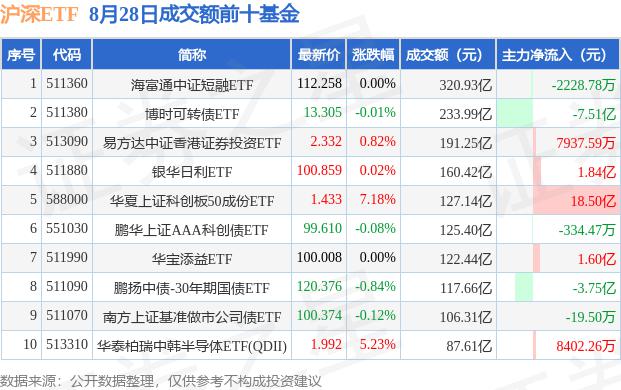
8月28日沪深ETF成交额前十,短融ETF居首
Zheng Quan Zhi Xing· 2025-08-28 07:45
Market Performance - On August 28, the A-share market closed with the Shanghai Composite Index at 3843.6, up 1.14%, and the Shenzhen Component Index at 12571.37, up 2.25% [1] ETF Fund Performance - Among the top 10 ETFs by trading volume, 4 funds experienced gains with an average increase of 3.31%. The Short Bond ETF (511360) led with a trading volume of 32.093 billion yuan [1] - The top 10 ETFs included the following notable performances: - The Short Bond ETF (511360) had a latest price of 112.258 with a trading volume of 32.093 billion yuan and a net outflow of 22.2878 million yuan [2] - The Huaxia Shanghai Stock Exchange Sci-Tech Innovation Board 50 ETF (588000) saw a significant increase of 7.18% with a trading volume of 12.714 billion yuan and a net inflow of 185 million yuan [2] - The Huatai-PineBridge China-Korea Semiconductor ETF (513310) increased by 5.23% with a trading volume of 8.761 billion yuan and a net inflow of 84.0226 million yuan [2]

指数化投资趋势显著 ETF总规模突破5万亿元大关
Shang Hai Zheng Quan Bao· 2025-08-26 20:25
Group 1 - The core viewpoint is that the trend of index investment is significant, with the total scale of domestic ETFs exceeding 5 trillion yuan, indicating that ETFs have become an important stabilizer in the capital market [1][2][6] - As of August 25, the total number of ETFs reached 1,273, with a combined scale of 5.07 trillion yuan, marking the first time the total scale has surpassed 5 trillion yuan [2] - The number of ETFs with a scale exceeding 100 billion yuan has increased from 66 at the end of last year to 101 by August 25 this year, with 7 products exceeding 100 billion yuan [2][3] Group 2 - The ETF product spectrum continues to expand, with 234 new ETFs established this year, surpassing the total number for the entire previous year [4] - The introduction of new ETFs includes the first batch of Sci-Tech Innovation Board ETFs, enhancing the investment ecosystem of the Sci-Tech Innovation Board [4] - The bond ETF market is also expanding, with the first batch of 8 benchmark credit bond ETFs and 10 Sci-Tech bond ETFs launched this year, showing rapid growth in scale [5] Group 3 - The "Action Plan for Promoting High-Quality Development of Index Investment in the Capital Market" aims to significantly increase the scale and proportion of index investment, enhancing the asset allocation function of index funds [6] - Industry insiders view ETFs as a crucial stabilizer in the market, with expectations for continued growth in scale [6]
基金早班车丨权益类ETF规模年内增逾两成四,历史首破四万亿
Sou Hu Cai Jing· 2025-08-26 00:41
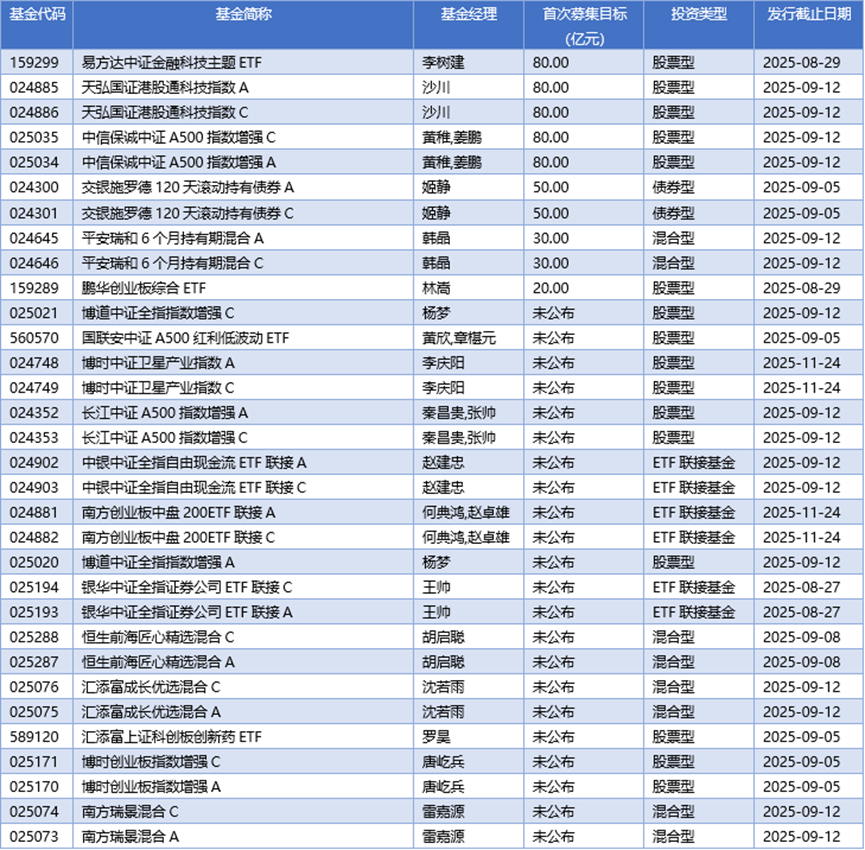
Group 1 - The total scale of domestic equity ETFs reached 41,170.94 billion yuan as of August 25, marking an increase of 7,982.72 billion yuan or 24.05% since the beginning of the year, setting a historical high [1] - The A-share market saw all three major indices rise, with the Shanghai Composite Index up 1.51% to 3,883.56 points, the Shenzhen Component Index up 2.26% to 12,441.07 points, and the ChiNext Index up 3% to 2,762.99 points, with total trading volume exceeding 31,411.37 billion yuan [1] - The issuance of public funds remained robust in August, with 157 new funds launched by August 25, a month-on-month increase of 5.37%, setting a new record for the year [2] Group 2 - The newly launched funds on August 25 included 32 funds, primarily equity and mixed funds, with the E Fund's China Securities Financial Technology Theme ETF targeting a fundraising goal of 8 billion yuan [2] - Over 90% of Fund of Funds (FOF) have reported positive performance this year, indicating strong momentum for incremental capital [2] - The top-performing fund on August 25 was the Huatai-PB Quality Growth Mixed A, with a daily growth rate of 8.0703% [6] Group 3 - The top-performing equity fund was the Caitong Integrated Circuit Industry Stock A, with a daily growth rate of 7.4611% [7] - The top-performing bond fund was the Baoying Rongyuan Convertible Bond A, with a daily growth rate of 2.0384% [7] - The top-performing mixed fund was again the Huatai-PB Quality Growth Mixed A, with a daily growth rate of 8.0703% [7] Group 4 - The total number of new funds launched in August included 125 equity funds, accounting for 79.62% of the total, with 96 being stock funds [2] - The market's positive sentiment is expected to continue, with the Shanghai Composite Index remaining above 3,800 points [2] - The issuance of new funds has maintained a level above 140 for two consecutive months, indicating strong investor interest [2]
再迎实质性突破!从“降费让利”到“机制重构”,公募基金费率改革进入深水区
券商中国· 2025-08-25 15:48
Core Viewpoint - The public fund industry in China is undergoing a significant reform aimed at enhancing investor trust and promoting high-quality development, marking the beginning of a new era for public funds [1] Fee Rate Reform - The fee rate reform is advancing from cost reduction to a structural overhaul, with a focus on three phases: management fees, transaction fees, and sales fees [2] - The introduction of floating fee rate funds is expected to become a regular practice, aligning the interests of fund managers with those of investors [3][5] - Since July 2023, over 3,500 public funds have reduced management fees, saving investors hundreds of billions of yuan [3] Floating Fee Rate Funds - The first batch of 26 new floating fee rate funds raised a total of 25.865 billion yuan, with an average fundraising size of about 1 billion yuan, outperforming the overall market [3] - The second batch of floating fee rate funds has seen increased innovation in investment strategies and stricter fee reduction thresholds [4] - The floating fee rate model aims to deepen the alignment of interests between fund managers and investors, promoting better performance [4][5] Sales Fee Regulations - New regulations on sales fees are expected to be publicly consulted, which may include lowering service fees and eliminating certain commissions [6] - The reduction in sales fees may shift the focus of sales channels from short-term gains to long-term asset management services [6][9] Industry Pain Points - The fee rate reform addresses three major pain points in the public fund industry: misalignment of interests, potential conflicts of interest, and sales-driven models [8][9] - The reform is seen as a crucial step towards the maturity and high-quality development of the public fund industry [10] Future Directions - The reform is entering a new phase where the focus will be on creating a new ecosystem that deeply binds the interests of investors and fund managers [11] - There is a need for a diversified fee structure that reflects the complexity of fund management and the value provided to investors [11] - A shift from a sales-driven model to a buyer-service model is essential for the industry's long-term development [12]

首批科创债ETF,大消息!
Zhong Guo Ji Jin Bao· 2025-08-22 07:30
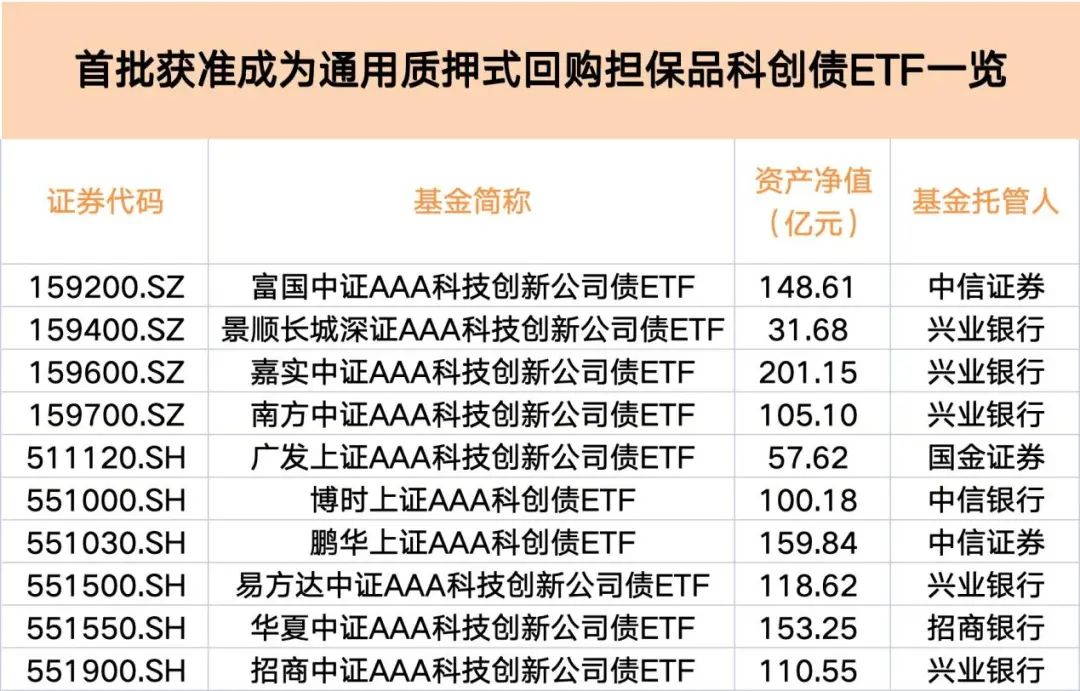
Group 1 - The first batch of 10 Sci-Tech Bond ETFs has been approved to serve as collateral for general repurchase agreements, marking a significant development in the market [1][2] - The approval allows these ETFs to enhance liquidity and enables investors to engage in repurchase financing, thereby improving capital efficiency [4] - The total scale of Sci-Tech Bond ETFs has approached 120 billion yuan, with a notable increase of over 300% compared to the initial issuance scale [5][6] Group 2 - Eight out of the ten Sci-Tech Bond ETFs have entered the "billion club," with the Jiashi ETF being the only one exceeding 20 billion yuan in scale [6] - A total of 14 fund companies have collectively submitted applications for a second batch of Sci-Tech Bond ETFs, indicating strong market interest and potential expansion [6]
投资者冲进人工智能ETF!基金经理:现在的AI和2021年的新能源类似
Sou Hu Cai Jing· 2025-08-22 06:53
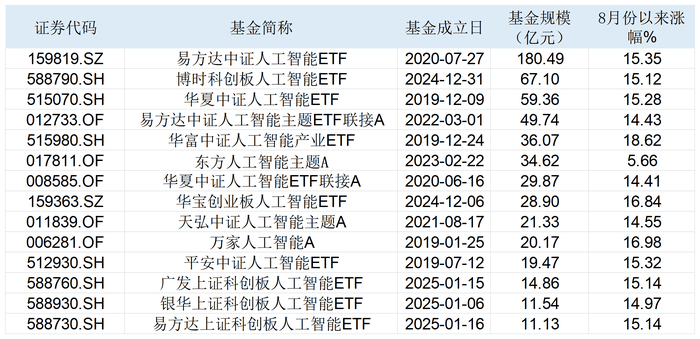
Core Viewpoint - The recent World Humanoid Robot Games held in Beijing from August 14 to 17 has attracted market attention, leading to a significant surge in artificial intelligence (AI) concept stocks since August [1] Group 1: Market Performance - As of August 21, the CSI Artificial Intelligence Industry Index recorded a return of 24.08% over the past month, outperforming the CSI 1000 Index and the CSI 300 Index, which returned 9.7% and 4.96% respectively [2] - There are currently 63 AI-themed funds in the market, with a total scale of 732.13 billion yuan, of which 14 funds exceed 10 billion yuan in size. Since August, all 63 AI-themed funds have achieved returns exceeding 10% [2] - The Huafu CSI Artificial Intelligence Industry ETF (515980.SH) has a return of 18.62% this month, while the Wanji AI fund has a return of 16.98% [2] Group 2: Fundraising and New Products - The Huatai-PB CSI Sci-Tech Innovation Board AI ETF, originally scheduled for fundraising from August 19 to 25, ended its fundraising early on August 20 after just two days. Similarly, the Penghua CSI Sci-Tech Innovation Board AI ETF shortened its fundraising period to eight days, raising 8.07 billion yuan, with 98.35% held by individual investors [7] - On August 20, six fund managers, including E Fund and Huatai-PB, collectively submitted applications for the CSI Sci-Tech Innovation and Entrepreneurship AI ETF, which tracks a new index comprising 50 companies involved in AI resources, technology, and applications [8] Group 3: Industry Outlook - The current surge in the AI sector is driven by increasing global computing power demand, particularly due to the generative AI wave, which is expected to benefit the domestic computing power industry chain [9] - Future investment focus in the AI sector will center on performance realization and competitive landscape, with an emphasis on companies with high order visibility and solid technical barriers [10] - The AI sector is currently leading the market, similar to trends seen in the semiconductor and new energy sectors in previous years, indicating a strong bullish sentiment as long as industry trends remain clear [10]
今天,这两类ETF上涨!
Zhong Guo Zheng Quan Bao· 2025-08-21 12:45
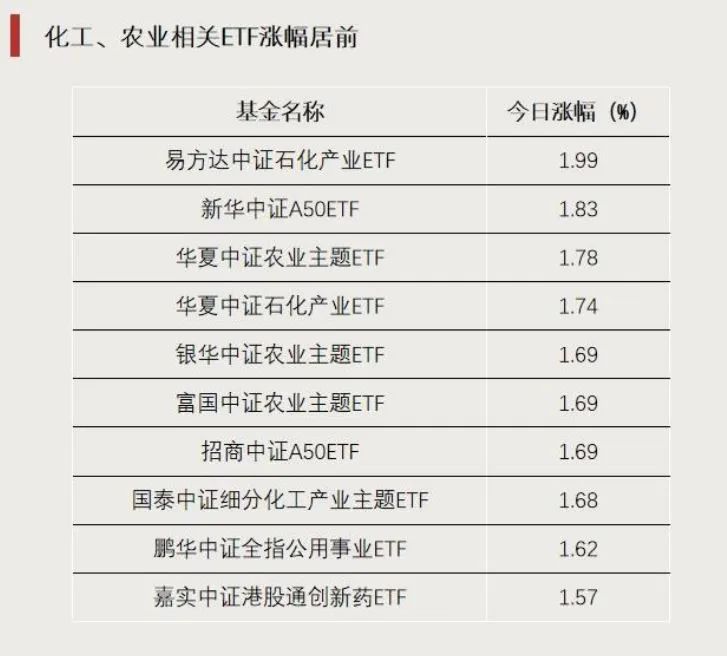
Core Insights - The total net inflow of ETFs in the market reached 3.476 billion yuan as of August 20, with significant inflows into Hong Kong-related ETFs, broad index ETFs like ChiNext and SSE 50, and thematic ETFs in sectors such as securities, chemicals, photovoltaics, and artificial intelligence [1][8] ETF Market Activity - On August 21, the total trading volume of ETFs in the market was 378.1 billion yuan, with Hong Kong securities, Hong Kong innovative drugs, and CSI A500-related ETFs leading in trading volume [2][6] - Chemical and agricultural-related ETFs showed the highest gains on August 21, with several ETFs exceeding a 1% increase, driven by the rise of large-cap blue-chip stocks [3][4] Top Performing ETFs - The top performing ETFs on August 21 included: - E Fund CSI Petrochemical Industry ETF: 6.61% increase - New China CSI A50 ETF: 1.83% increase - Huaxia CSI Agricultural Theme ETF: 1.78% increase - Other notable ETFs also showed gains above 1% [4][3] Significant Inflows - Major inflows were observed in the following ETFs: - Pengyang CSI 30-Year Treasury Bond ETF: 2.286 billion yuan - Guotai Junan CSI All-Share Securities Company ETF: 2.191 billion yuan - E Fund ChiNext ETF: 1.868 billion yuan - Other ETFs in the internet and innovative drug sectors also received substantial inflows [11][8] Market Trends - The total scale of the ETF market has surpassed 4.8 trillion yuan, with a year-to-date increase of 1.11 trillion yuan, indicating rapid expansion in the ETF sector [12]
盘前资讯 | 第二批科创债ETF即将上报
Sou Hu Cai Jing· 2025-08-20 01:27
Group 1 - The second batch of Sci-Tech Innovation Bond ETFs is set to be submitted, with 14 fund companies including ICBC Credit Suisse, Huaxia, Tianhong, and others participating [1] - On August 19, data from Wind indicated that four ETFs had a net inflow exceeding 1 billion yuan in a single day, including the GF CSI Hong Kong Innovative Drug ETF and the Penghua SSE AAA Sci-Tech Innovation Bond ETF [1] - The Ministry of Finance reported that from January to July, the revenue from major tax items included 255.9 billion yuan in stamp duty, representing a year-on-year increase of 20.7%, with securities transaction stamp duty at 93.6 billion yuan, up 62.5% year-on-year [1]
券商估值仍具上升空间
Zhong Zheng Wang· 2025-08-19 10:02
Market Performance - The Shanghai Composite Index has reached a new high not seen since August 20, 2015, surpassing the previous peak set on February 18, 2021 [1] - The average daily trading volume in the two markets has exceeded 20 trillion yuan, indicating a significant increase in market activity [1] Brokerage Sector Insights - The performance of brokerage stocks is closely tied to market conditions, with the recent increase in trading volume likely to boost brokerage firms' earnings [1] - The margin trading balance in the two markets has remained above 2 trillion yuan for two consecutive weeks, reflecting positive market sentiment and benefiting brokerage businesses [1] ETF and Investment Opportunities - The brokerage ETF (159842) has the lowest management fee rate of 0.15% and a custody fee of 0.05%, making it an attractive option for investors looking to reduce holding costs [1] - The brokerage sector is expected to attract incremental capital as active equity funds currently have a lower allocation to brokerages compared to performance benchmarks [2] Future Outlook - Several listed brokerages have begun to disclose their semi-annual reports for 2025, indicating a potential improvement in earnings for the third quarter driven by rising market risk appetite and trading volume [1] - The brokerage sector index (399975) has not yet surpassed its high from November 8 of the previous year, suggesting there may still be room for upward movement [2]
指数基金成了 “香饽饽”,主动管理难道要 “凉了”?
Sou Hu Cai Jing· 2025-08-15 12:32
Group 1 - The core viewpoint of the articles highlights the significant shift in the investment landscape, where passive index funds, particularly ETFs, have gained prominence over active equity funds since 2021, reflecting a growing preference for beta returns over alpha returns [2][3][19] - The rise of passive index investing is attributed to its ability to provide market-average returns with lower fees and reduced volatility, making it more appealing to individual investors [10][19] - Data shows that from 2022 to 2024, active equity funds faced challenges such as net value drawdowns and shrinking scales, while passive index funds experienced substantial growth, especially during market rallies [3][19] Group 2 - The performance comparison of different types of equity funds over the past five years indicates that passive index funds have lower average maximum drawdowns and positive returns across various time frames, demonstrating their risk-return advantage [7][19] - The top-performing index funds in recent years have shown remarkable returns, with some achieving over 100% growth in one year, underscoring the effectiveness of passive investment strategies [9][16] - Active management remains relevant, as some actively managed funds have outperformed their benchmarks, particularly in volatile market conditions, suggesting that both passive and active strategies can complement each other in a diversified investment approach [15][18]