
大成基金

Search documents
基金公司密集公告 开通不同份额转换业务
Zhong Guo Zheng Quan Bao· 2025-08-08 07:18
Core Viewpoint - The recent trend in the mutual fund industry is the introduction of conversion services between different share classes of the same fund, aimed at enhancing flexibility for investors, particularly institutional ones, in adjusting their investment strategies and holding periods [1][4]. Group 1: Fund Share Classes - Various share classes such as C shares and D shares have become increasingly common in mutual funds, catering to different investor needs regarding fees, sales channels, and subscription thresholds [2][3]. - C shares are favored by individual investors for short-term investments due to their fee structure, which does not include a subscription fee but charges a daily service fee [2][4]. - D shares are designed for institutional investors, facilitating large capital inflows and outflows [2][4]. Group 2: Conversion Services - Multiple fund companies have announced the opening of conversion services for different share classes within the same fund, allowing investors to switch between classes based on their investment needs [2][3]. - For example, Dachen Fund and Fuguo Fund have initiated conversion services for several of their funds starting from May 6 and May 20, respectively [2][3]. - The conversion process involves redeeming the original share class and paying the difference in subscription fees, which can be beneficial for investors looking to optimize their costs based on their holding periods [4][5]. Group 3: Investor Flexibility - The ability to convert between share classes provides investors with more options to respond to market conditions and personal investment strategies, potentially improving returns and reducing losses [4][6]. - The conversion process is more time-efficient compared to redeeming and re-subscribing, saving up to two trading days [6]. - Direct sales investors face lower conversion costs, as they only need to pay the redemption fee for the outgoing fund, with no additional subscription fee for the incoming fund [5][6].
吸引多策略玩家入场 四只信用债ETF跻身百亿俱乐部
Zhong Guo Zheng Quan Bao· 2025-08-08 07:17
Core Insights - The recent inclusion of credit bond ETFs in the pledged repo trading has significantly boosted trading activity, with two benchmark market-making credit bond ETFs exceeding transaction volumes of 10 billion yuan on June 11 [1][2] - The rapid influx of capital has led to four credit bond ETFs, established for less than six months, joining the "100 billion club" [1][2] Trading Activity - On June 11, the Southern CSI Benchmark Market-Making Corporate Bond ETF recorded a transaction volume exceeding 15.5 billion yuan, marking an increase of over 7 billion yuan from the previous trading day and setting a new single-day transaction record [2] - Other ETFs, such as the E Fund CSI Benchmark Market-Making Corporate Bond ETF, also saw significant trading volumes, with over 9 billion yuan, while several others surpassed 6 billion yuan [2] Fund Inflows - In the past month, four major credit bond ETFs have seen net inflows exceeding 5 billion yuan, with the E Fund and Southern ETFs leading the way [3] - The inclusion of credit bond ETFs in the pledged repo has enhanced liquidity and provided a tool for liquidity management, allowing investors to use these ETFs for financing during tight liquidity periods [3] Investment Strategies - The inclusion of credit bond ETFs in pledged repo trading is viewed as a key measure to address developmental shortcomings, significantly enhancing their investment appeal [4] - Investors can utilize a "buy ETF - pledge financing - reinvest" leverage strategy to increase returns, improving overall capital efficiency for institutional investors [4] - Various investment strategies, including pure bond strategies, multi-asset strategies, and structured investment strategies, can benefit from leveraging credit bond ETFs [4]
悄然“逆袭” 超百只主动权益基金净值创新高
Zhong Guo Zheng Quan Bao· 2025-08-08 07:16
Core Viewpoint - A significant number of active equity funds are experiencing a performance turnaround, with over 180 funds reaching new historical net asset value highs as of June 25, driven by market uptrends and favorable external factors [1][2]. Group 1: Performance of Active Equity Funds - Over 180 active equity funds have achieved historical net asset value highs, with more than half of these funds established for over a year, and some for nearly 14 years [1][2]. - The fund with the highest increase is Jin Yuan Shun An Yuan Qi, which has risen over 450% since its inception in November 2017, primarily investing in small-cap stocks [2][3]. - Other notable funds include Guangfa Multi-Factor and Dacheng Jingheng, with increases of over 340% and nearly 300% respectively, focusing on quantitative investment strategies [2][3]. Group 2: Overall Market Performance - Approximately 80% of active equity funds have seen positive performance this year, with around 1,100 funds increasing by over 10% [4]. - The fund with the highest overall market increase is Huatai PineBridge Hong Kong Advantage Selection, which has risen over 90%, primarily investing in the Hong Kong pharmaceutical sector [4]. - Longcheng Pharmaceutical Industry Selection has also performed well, with a year-to-date increase of 78.59%, focusing on innovative pharmaceutical stocks [4][5]. Group 3: Investment Strategies and Market Outlook - The market is seeing a consensus on three main investment directions: innovative pharmaceuticals, technology, and dividend stocks, with a "barbell" strategy gaining popularity [6][7]. - Fund managers suggest focusing on high-potential international and commercialized stocks in the innovative pharmaceutical sector, anticipating a strong market continuation [6][7]. - In a declining interest rate environment, dividend assets are becoming increasingly attractive, especially for long-term investors seeking stable returns [7][8].
权益基金哪家强?最新榜单出炉
Shang Hai Zheng Quan Bao· 2025-08-08 07:16
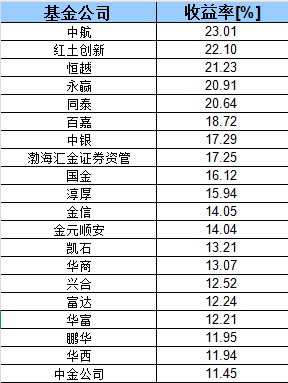
Group 1 - The average return rate of equity funds from 170 public fund institutions reached 6.08% in the first half of 2025, with notable performers like Zhonghang Fund achieving a return of 23.01% [1][2] - Several public fund institutions, including Hongtu Innovation, Hengyue, Yongying, and Tongtai, reported annual returns exceeding 20%, while over 20 institutions, including Guojin, Huashang, and Penghua, had returns above 10% [1][2] Group 2 - Over the past decade, the performance of equity investments among public fund institutions has varied significantly, with institutions like Wanjia, Dacheng, and Hongta Hongtu doubling their investment returns [3] - The top-performing equity funds from July 1, 2015, to June 30, 2025, include Wanjia Fund with a return of 151.15%, followed by Dacheng and Hongta Hongtu with returns of 120.64% and 117.93% respectively [4][5] Group 3 - In the last three years, only 23 out of 156 public fund institutions achieved positive returns, with Huarun Yuanda leading at 34.65% [7][8] - A significant number of public fund institutions experienced losses, with 103 institutions reporting losses exceeding 10% over the past three years, including major firms like GF Fund and China Europe Fund [9] Group 4 - In contrast to equity funds, fixed income funds showed more stable performance, with only two out of 70 public fund institutions reporting losses over the past decade [10][11] - The highest return for fixed income funds in the last ten years was achieved by Everbright Baodexin at 74.80%, with several other institutions exceeding 50% returns [12]

QDII基金密集发行 引发投资者踊跃认购
Zheng Quan Shi Bao Wang· 2025-08-08 06:59
Group 1 - The overseas market volatility has increased, prompting many funds to seek opportunities for bottom-fishing globally, with fund companies actively launching suitable products [1][2] - Currently, there are 4 QDII funds available for sale, with 6 QDII funds established this year and several more awaiting approval [1][2] - The first ETF investing in the French market, the Huaan France CAC40 ETF, has begun issuance, with a cap of 300 million RMB due to QDII quota limitations [1] Group 2 - The investment focus of QDII funds has primarily been on the US and Hong Kong markets, making tools for investing in the European market relatively scarce [1] - The average return of QDII funds this year is -13.4%, with many funds targeting Germany, the US, and Japan experiencing net value declines exceeding 20% [2] - Despite some QDII funds showing losses, fund companies remain optimistic about product deployment at the current market conditions [3]
基金限购潮起,要业绩不要规模,这轮牛市特有的味道?
Xin Lang Cai Jing· 2025-08-08 06:33
Core Viewpoint - Recent trend in the fund industry shows a shift from aggressive expansion to limiting purchases and controlling scale, reflecting a more cautious approach by fund companies in response to market dynamics [1][5][8] Group 1: Fund Limitation Trends - In the past two weeks, 255 funds have suspended large purchases, with 57 funds halting subscriptions, indicating a widespread adoption of purchase limits across various fund types [1][5] - The current wave of fund limitations is driven by a diverse range of factors, including fund capacity, strategy sustainability, and client structure stability, rather than solely performance-driven reasons [1][5][8] Group 2: Performance-Driven Limitations - High-performing funds such as Yongying Ruixin Mixed and GF Growth Navigator have announced large purchase limits due to significant year-to-date gains, with some funds seeing net value increases of over 60% [2][3] - The Hong Kong Advantage Selection Fund (QDII) has achieved a return rate of 144.41% this year and has limited subscriptions to prevent irrational inflows that could dilute existing investors' interests [3][7] Group 3: Risk Management and Strategy - Fund companies are implementing purchase limits as a risk control measure to maintain strategy effectiveness and protect existing investors, rather than simply responding to liquidity issues [4][8] - The trend of limiting purchases is also influenced by regulatory changes, shifting the focus from scale-driven incentives to performance-driven strategies among fund managers [6][8] Group 4: Market Dynamics and Investor Behavior - The current market environment reflects a sensitive period of style rotation, with small-cap stocks outperforming and fund companies adopting defensive strategies through purchase limits [7][8] - The limitations are not only a response to high demand but also a strategic choice to ensure a stable and manageable investor base, moving away from the perception of limits as a signal of "hot products" [8]
资金,蜂拥而入!
天天基金网· 2025-08-08 05:05
Core Viewpoint - The article highlights a significant inflow of funds into equity ETFs and active equity funds, indicating a market rebound and renewed investor interest in equity investments [2][3][10]. Fund Inflows - On August 6, over 70 billion yuan flowed into equity ETFs, marking a reversal in the trend of fund outflows seen earlier in August [2][3]. - Notable net subscriptions were recorded for several ETFs, including 12.05 billion yuan for the Southern CSI 1000 ETF and over 5 billion yuan for both the E Fund CSI A500 ETF and Southern CSI 500 ETF [3]. - Hong Kong-themed ETFs also attracted substantial investments, with a net subscription of 21 billion yuan on the same day [3]. Fund Purchase Restrictions - Several high-performing active equity funds have implemented purchase restrictions to ensure stable operations and protect existing investors' interests. For instance, the China Europe Digital Economy Mixed Fund suspended large purchases exceeding 1 million yuan starting August 6 [4][5]. - This trend of limiting large subscriptions has been observed across nearly 30 funds since July, including the Yongying Ruixin Mixed Fund and the GF Growth Leading Mixed Fund [4]. New Fund Issuance - The new fund issuance market has shown significant recovery, with seven active equity funds exceeding 1 billion yuan in issuance since July. The Dachen Insight Advantage Mixed Fund alone raised 24.61 billion yuan [6]. - "Fixed income plus" products are also seeing proportional allocations due to high demand, as evidenced by the Southern Stable Growth Bond Fund, which had its fundraising cut short after reaching the 50 billion yuan cap [6]. Investment Trends - The "fixed income plus" strategy is gaining traction, as investors seek to enhance yield while maintaining a controlled risk profile amid declining 10-year treasury yields [8]. - The report from Huatai Securities indicates that equity funds are becoming a key channel for reallocating household savings, with a notable increase in the number of stock and mixed fund applications since mid-July [10]. Market Outlook - The overall sentiment among institutions remains optimistic, with active equity fund positions rising to relative highs. As of August 1, the average stock position for ordinary equity funds was approximately 90.34%, up 1.05 percentage points from July 25 [10]. - The expectation of continued policy support and the upcoming disclosure of semi-annual earnings from listed companies are anticipated to enhance investment opportunities, particularly in technology, high-end manufacturing, and high-dividend sectors [11].

结构性行情持续演绎 基金年内业绩首尾相差近150个百分点
Shang Hai Zheng Quan Bao· 2025-08-07 18:28
Core Insights - The average return of actively managed equity funds has significantly improved, reaching 15.1% year-to-date as of August 6, with over 500 funds hitting historical net asset value highs [1][2] - There is a stark performance disparity among funds, with top performers achieving returns close to 130% while laggards have seen declines exceeding 18% [1][3] - The strong performance of leading funds is attributed to successful investments in sectors such as innovative pharmaceuticals, technology, and new consumer trends [2][3] Performance Summary - As of August 6, 127 actively managed equity funds have returns exceeding 50%, with 23 funds surpassing 80%, and 6 funds doubling their net asset value this year [2] - Specific funds like Changcheng Pharmaceutical Industry Select Mixed Fund and Bank of China Hong Kong Stock Connect Pharmaceutical Mixed Fund have returns of 129.97% and 117.54% respectively [2] - Funds focusing on innovative pharmaceuticals have been particularly successful, with several funds achieving returns over 90% in related sectors [2] Fund Management Trends - A significant number of high-performing funds are now implementing purchase limits due to increased investor interest and inflows, with nearly 30 funds announcing restrictions on large subscriptions [4] - Recent fund issuance has also seen a resurgence, with several funds raising over 1 billion yuan, indicating a growing market interest [4] - The trend of increasing fund management activity suggests that equity funds are becoming a key avenue for reallocating household savings [4] Market Outlook - The ongoing supportive policies for the capital market are expected to enhance investor risk appetite, with potential catalysts in technology, high-end manufacturing, and consumer sectors [5] - The release of semi-annual earnings from listed companies is anticipated to improve the effectiveness of investment strategies, particularly in sectors with concentrated catalysts [5]
中科信息:8月7日接受机构调研,南方基金、生命人寿等多家机构参与
Zheng Quan Zhi Xing· 2025-08-07 15:08
Core Viewpoint - Zhongke Information (300678) is focused on providing information technology solutions based on intelligent recognition and analysis technology, with applications in various sectors including government, tobacco, and oil and gas industries [2][5]. Group 1: Business Overview - The company primarily offers information technology solutions, including both software and hardware, with a focus on high-speed machine vision and intelligent analysis technology [2][5]. - Key application areas include smart governance, intelligent manufacturing, and smart health, with a strong emphasis on digital transformation across various industries [2][3]. - The company has a leading market position in providing digital solutions for major government meetings and is the only global supplier capable of offering detection technology for the entire lifecycle of banknote printing [2][3]. Group 2: Recent Developments - The artificial intelligence anesthesia robot, developed in collaboration with Sichuan University West China Hospital, has entered clinical trials after four years of research, demonstrating its capability in surgical anesthesia assistance [4]. - The intelligent loading robot and intelligent paving robot are currently in testing phases, with plans for industrial promotion in the future [4]. Group 3: Financial Performance - In Q1 2025, the company reported a main revenue of 53.1853 million yuan, a year-on-year decrease of 39.0%, and a net profit attributable to shareholders of 3.19 million yuan, down 57.96% [5]. - The company's debt ratio stands at 24.2%, with an investment income of 50.408 million yuan and a gross profit margin of 38.38% [5].
宏信证券ETF日报-20250807
Hongxin Security· 2025-08-07 09:03
Report Summary 1. Market Overview - The Shanghai Composite Index rose 0.16% to close at 3639.67, the Shenzhen Component Index fell 0.18% to 11157.94, and the ChiNext Index dropped 0.68% to 2342.86. The total trading volume of A-shares in the two markets was 1852.7 billion yuan. The top-performing sectors were non-ferrous metals (1.20%), beauty care (0.99%), and real estate (0.82%), while the worst-performing were pharmaceutical biology (-0.92%), power equipment (-0.74%), and communications (-0.47%) [2][7]. 2. Stock ETFs - The top-traded stock ETFs included Huaxia CSI A500 ETF (down 0.10%, premium rate -0.09%), Southern CSI A500 ETF (unchanged, premium rate -0.03%), and Huaxia Shanghai Science and Technology Innovation Board 50 ETF (down 0.09%, premium rate -0.20%) [3][8]. 3. Bond ETFs - The top-traded bond ETFs were Haifutong CSI Short-term Financing Bond ETF (up 0.01%, premium rate 0.01%), Penghua Shanghai Stock Exchange AAA Sci-tech Innovation Bond ETF (up 0.06%, premium rate -0.02%), and Boshi CSI Convertible and Exchangeable Bond ETF (down 0.06%, premium rate 0.02%) [4][10]. 4. Gold ETFs - Gold AU9999 rose 0.38% and Shanghai Gold rose 0.17%. The top-traded gold ETFs were Huaan Gold ETF (up 0.21%, premium rate 0.27%), E Fund Gold ETF (up 0.22%, premium rate 0.25%), and Boshi Gold ETF (up 0.25%, premium rate 0.30%) [13]. 5. Commodity Futures ETFs - Huaxia Feed Bean Meal Futures ETF rose 0.25% with a premium rate of 0.19%, Jianxin Yisheng Zhengzhou Commodity Exchange Energy and Chemical Futures ETF fell 0.45% with a premium rate of -0.04%, and Dacheng Non-ferrous Metals Futures ETF rose 0.30% with a premium rate of 0.43% [14][15]. 6. Cross-border ETFs - The previous trading day, the Dow Jones Industrial Average rose 0.18%, the Nasdaq rose 1.21%, the S&P 500 rose 0.73%, and the German DAX rose 0.33%. Today, the Hang Seng Index rose 0.69% and the Hang Seng China Enterprises Index rose 0.55%. The top-traded cross-border ETFs were E Fund CSI Hong Kong Securities Investment Theme ETF (up 0.67%, premium rate 1.26%), GF CSI Hong Kong Innovative Drug ETF (down 3.05%, premium rate -2.68%), and Huaxia Hang Seng Technology ETF (up 0.13%, premium rate 0.78%) [16][17]. 7. Money Market ETFs - The top-traded money market ETFs were Yin Hua Ri Li ETF, Hua Bao Tian Yi ETF, and Jian Xin Tian Yi Money Market ETF [18][20].