绿城中国

Search documents
2.2万/㎡起拍!番禺黄沙岛挂牌一宗江景靓地!
Sou Hu Cai Jing· 2025-09-20 14:10
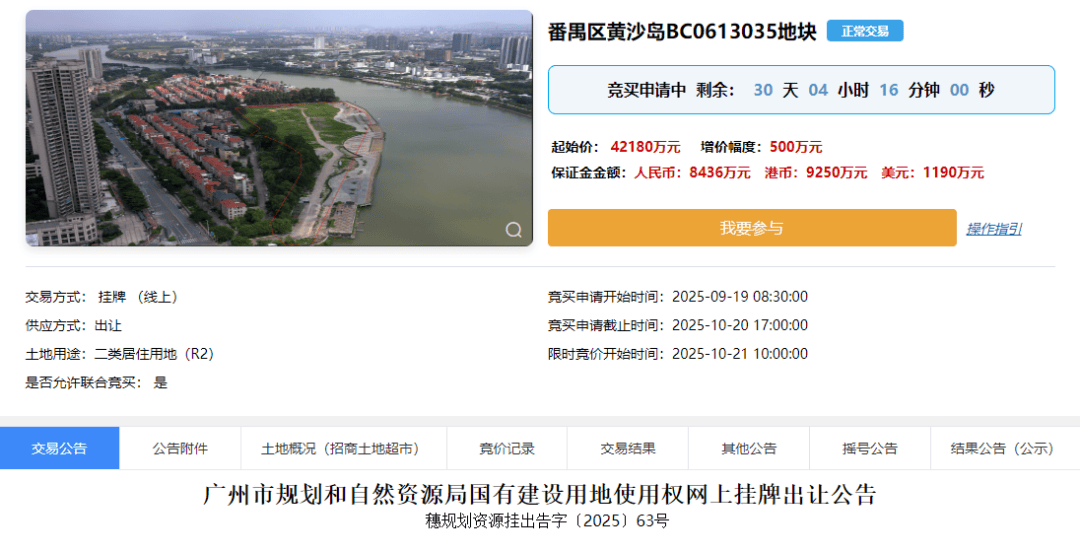
Core Insights - The newly released land parcel in Panyu features an ultra-low plot ratio of 1.1, a prime river view, and a height limit of 24 meters, making it a potential "scarce product" in Guangzhou's real estate market following the relaxation of the "villa ban" [2] - Major developers such as Greentown, Panyu Real Estate, Longfor, Yuexiu, Poly, and Jinmao have shown interest in this land parcel [2] - This is the first low-density residential land with a plot ratio below 1.1 released in Panyu in nine years, following the 2016 sale of a similar parcel [2] Location and Amenities - The land is strategically located near Panyu Square, with major shopping centers and municipal facilities within a 1.5-kilometer radius, including Aeon Mall and Panyu Square TOD project [4] - The site is approximately 1 kilometer from the Panyu Square station, which connects four metro lines, enhancing accessibility [6] Development Plans - The planning document for the Huangsha Island site has been approved, aiming to leverage waterfront resources to create high-quality living spaces and enhance the overall spatial quality of the area [8] - The plan includes an additional residential area of approximately 19,200 square meters, a community service complex, and public facilities, along with 38,800 square meters of public green space [8] - The project will not be entirely residential; about 25,000 square meters will be allocated for a riverside park, enhancing privacy for residents [8] Architectural and Infrastructure Features - The proposed building heights range from 10.5 to 16 meters, creating a "low in front, high in back" skyline [10] - The plan includes new access roads to improve traffic connectivity, with the project developers responsible for the construction of these roads [10]

海淀宝山豪宅,首战打响了
Sou Hu Cai Jing· 2025-09-20 11:31
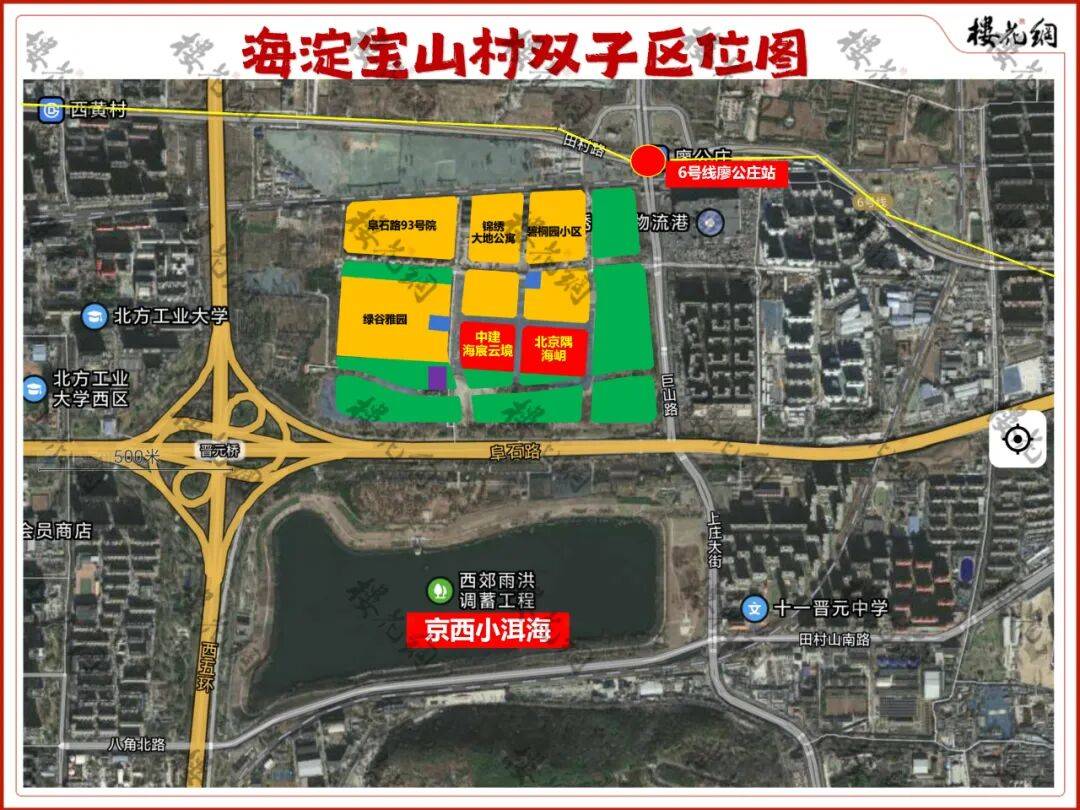
Core Viewpoint - The article discusses the competitive landscape between two new residential projects in Haidian, Beijing, named "Haicheng Yuanzheng" and "Beijing Yuhai Xuan," highlighting their unique branding and positioning strategies in the real estate market [4][7]. Company Analysis - The developers of the two projects are different entities: China State Construction's Zhongjian Yipin for "Haicheng Yuanzheng" and Beijing Guoqi's Jinyu Real Estate for "Beijing Yuhai Xuan," indicating no ownership ties between them [4]. - Both projects are positioned as affordable luxury homes, learning from previous developments in the area that targeted different market segments [8]. Market Context - The article notes that the Haidian real estate market is currently seeing a variety of projects, with several in the pipeline, including "Haicheng Yuanzheng" and "Beijing Yuhai Xuan," which have already released planning documents [23]. - The competitive dynamics are expected to be interesting, as both projects share similar naming conventions and target demographics, suggesting a potential for rivalry in marketing and sales strategies [6][9]. Project Details - "Haicheng Yuanzheng" and "Beijing Yuhai Xuan" are located adjacent to each other, with "Haicheng Yuanzheng" to the west and "Beijing Yuhai Xuan" to the east, emphasizing their close proximity and competitive nature [4]. - The article provides insights into the architectural and planning aspects of both projects, including land use and building layouts, which are crucial for understanding their market appeal [10][12][14]. Sales and Pricing - The article references a table detailing the current sales status of various projects in Haidian, indicating a competitive pricing environment with varying degrees of success in sales [24]. - The anticipated supply of units from both projects is part of a broader trend in the Haidian market, which is seeing a mix of new launches and ongoing sales efforts [23].
被指“8元物业费却现多处烟头”,实探绿城晓风印月:口碑销售夹击下的“灰色时刻”
Hua Xia Shi Bao· 2025-09-20 08:42
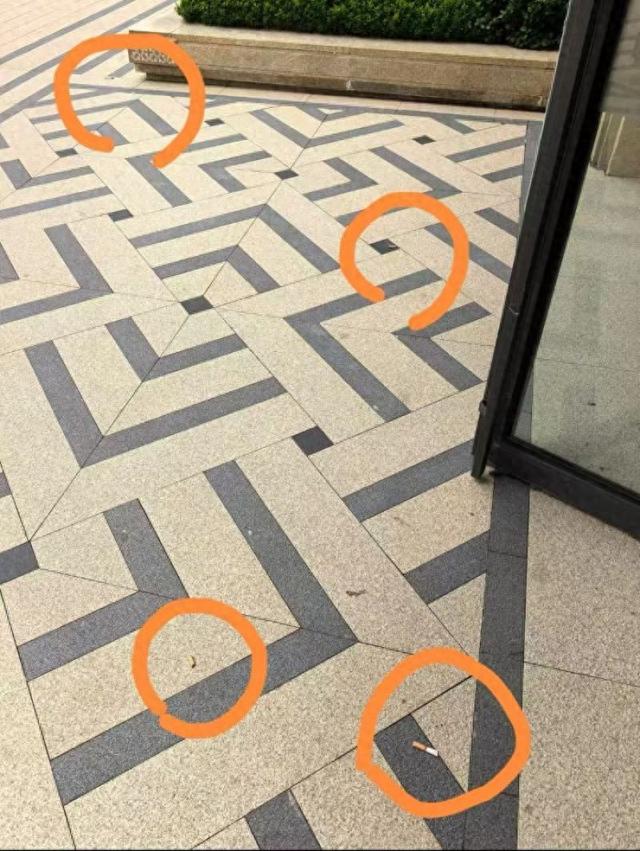
Core Viewpoint - The "Green City Xiaofeng Yinyue" project has faced significant challenges in reputation and sales, primarily due to subpar property management and aesthetic criticisms, leading to a decline in market visibility and competitiveness [2][3][11]. Property Management Issues - Residents have reported dissatisfaction with property management, citing a monthly fee exceeding 8 yuan per square meter while receiving inadequate services, including uncleaned litter and poor maintenance of common areas [2][8][10]. - The property management has acknowledged these issues and stated that they are being addressed, including agreements with tenants of affordable rental housing to maintain the community environment [3][10]. Sales Performance - As of mid-September, "Green City Xiaofeng Yinyue" still has over 200 unsold units, with only about 300 of the 600 available units sold since its launch [11][12]. - The average selling price has decreased by over 10,000 yuan per square meter from its initial launch price of 88,000 yuan per square meter, reflecting a broader trend of declining property values in the area [11][12]. Market Context - The overall market for new homes in the Chaoyang District, where the project is located, is under pressure, with a significant inventory of unsold properties [15][16]. - Recent policy changes in Beijing aimed at stimulating the housing market may not significantly impact the sales of "Green City Xiaofeng Yinyue," as potential buyers remain hesitant [16]. Competitive Landscape - Compared to other projects in the same area, "Green City Xiaofeng Yinyue" is perceived as less competitive in terms of price-to-value ratio, with other developments offering better designs and pricing [12][13]. - The project was initially well-received due to its brand image from previous successful developments by Green City Group, but current performance indicates a shift in market perception [7][11].
投资分化 | 2025年9月房地产企业新增土地储备报告
Sou Hu Cai Jing· 2025-09-19 11:46
Core Insights - The report indicates a seasonal decline in land acquisition by real estate companies, with a focus on core cities and risk control strategies [6][10][14] - The land supply in second and third-tier cities is rebounding, with an emphasis on revitalizing idle land through market-oriented methods [16][19][20] Group 1: Land Acquisition Trends - In the first eight months of 2025, the top 50 real estate companies added a total of 3,624.23 million square meters of land, a year-on-year increase of 7.19% [10][13] - The monthly land acquisition area for the top 50 companies in August was 225.64 million square meters, a month-on-month decrease of 54.03% [10][14] - Major players like China Overseas Land & Investment, China Merchants Shekou, and Poly Developments led in land reserves, with respective areas of 309.37 million, 275.64 million, and 267.19 million square meters [13][14] Group 2: Market Dynamics - The supply of residential land in first, second, and third-tier cities reached 577 plots, with a total planned building area of 3,748.90 million square meters, a month-on-month increase of 43.52% [16][18] - The starting floor price for supplied land was 3,709 yuan per square meter, down 5.64% month-on-month [16][19] - The average premium rate for land transactions was 4.76%, indicating a competitive but cautious market environment [24][28] Group 3: Policy and Market Response - Local governments are encouraged to adopt market-oriented approaches to activate idle land, with a focus on improving land utilization efficiency [19][20][39] - The issuance of local government bonds reached 9,776 billion yuan in August, slightly down from previous months, indicating ongoing financial support for land acquisition and urban development [20][23] - The trend of "direct repurchase" of land plots is gaining traction, providing stability for real estate companies amid market fluctuations [24][28]




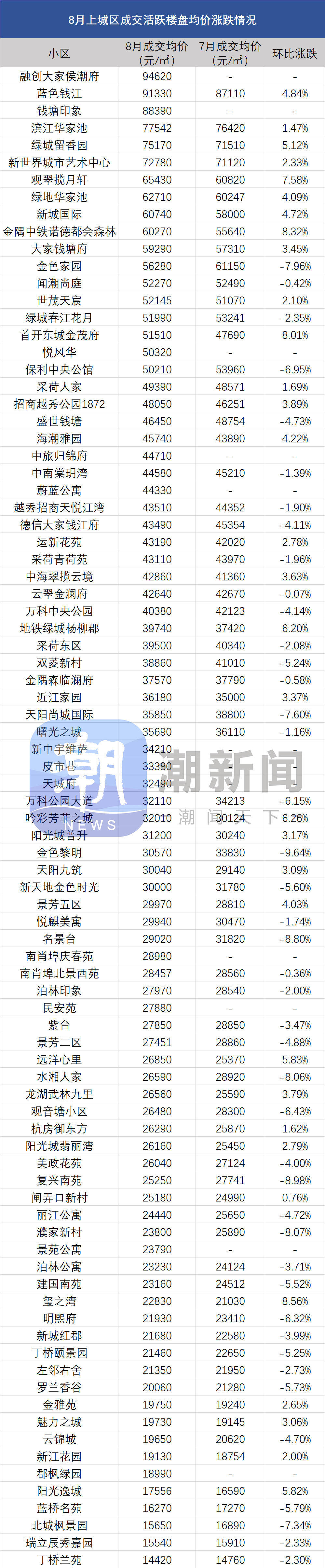
最新二手房涨跌榜出炉!杭州降价小区变少了
Sou Hu Cai Jing· 2025-09-19 10:48
Core Insights - The second-hand housing market in Hangzhou showed relative stability in August, with a slight increase in average prices despite a decline in transaction volume [1] - The average net signed price for second-hand residential properties in August was 28,178 yuan per square meter, reflecting a month-on-month increase of 0.2% and a year-on-year increase of 2.0% [1] - The proportion of price-reducing properties in various districts decreased, with less than 50% of properties in key urban areas experiencing price drops, contrasting with previous months where price reductions were more common [1] Price Trends - In August, several properties in the Shangcheng District saw price increases, with notable examples including: -融创大家侯潮府 at 94,620 yuan per square meter -蓝色钱江 at 91,330 yuan per square meter, up 4.84% from July -绿城留香园 at 75,170 yuan per square meter, up 5.12% from July [1] - Conversely, some properties experienced price declines, such as: -金色家园 down 7.96% -保利中央公馆 down 6.95% [1] District Performance - The performance of various districts in Hangzhou varied, with the following highlights: - In the Gongshu District, 云河宸元 increased by 6.55% to 73,720 yuan per square meter [4] - In the Xihu District, 绿城西溪诚园 rose by 2.12% to 60,010 yuan per square meter [7] - In the Xiaoshan District, 湘湖壹号 decreased by 8.15% to 81,240 yuan per square meter [16] Market Dynamics - The overall market dynamics indicate a shift towards price stabilization in the second-hand housing sector, with fewer properties experiencing price drops and a slight uptick in average prices across several districts [1][4][7]
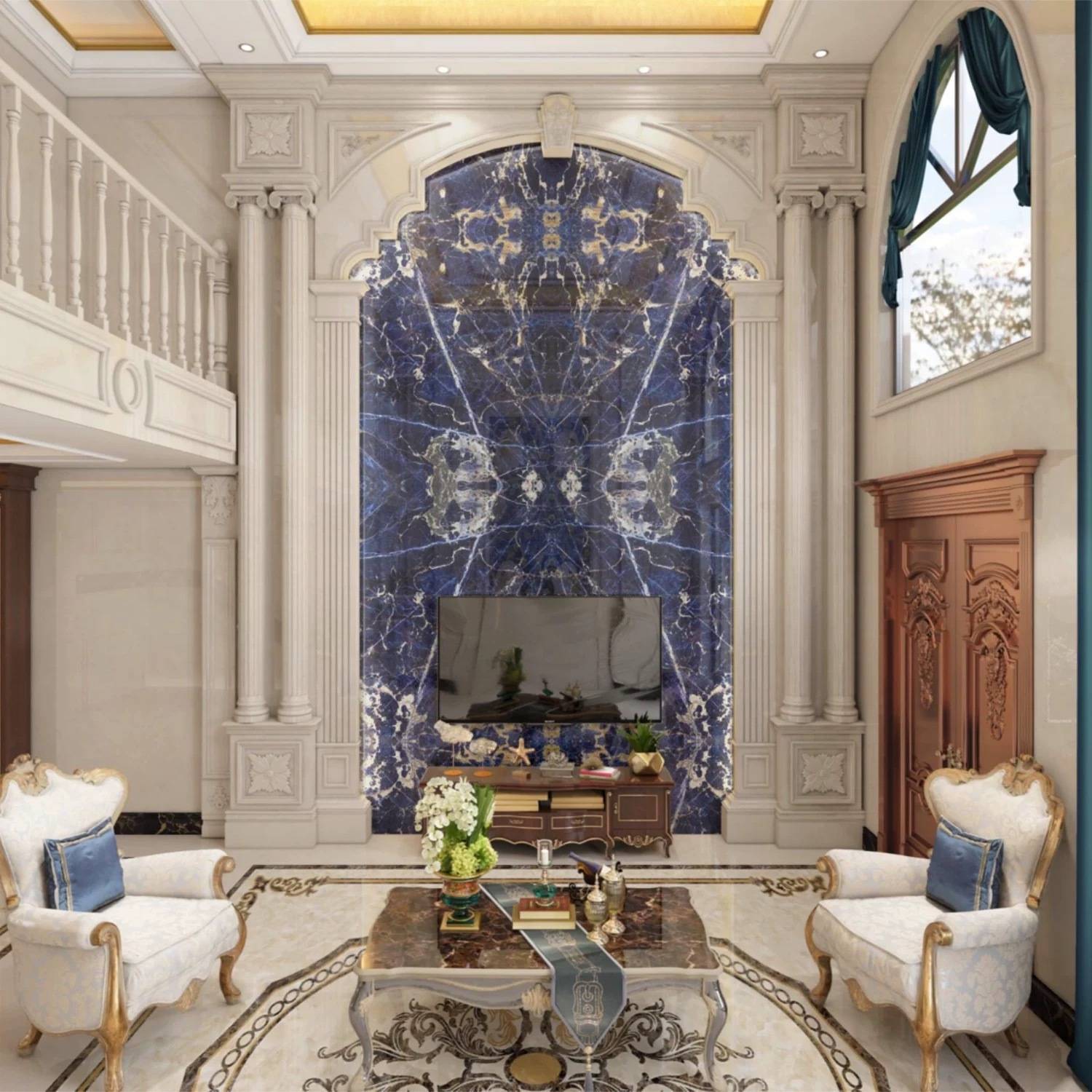
广州楼市“奢石斗阔竞赛”调查:一块石头撑起的高端梦
Sou Hu Cai Jing· 2025-09-19 10:19
Core Insights - The luxury stone trend has become a standard feature in high-end residential properties in Guangzhou, evolving from an optional upgrade to a necessary element for developers aiming to enhance product appeal [1][8] - The competition among developers has intensified, with luxury stones being used as a differentiation tool in a saturated market, reflecting a shift in consumer preferences towards materials that convey a sense of sophistication rather than ostentation [8][9] Group 1: Market Trends - Luxury stones are now prevalent in high-end residential projects, with developers incorporating various types of stones such as Shangri-La jade, Victoria jade, and Pandora stone into their designs [4][5] - The demand for luxury stones is driven by a younger, high-net-worth clientele who prefer subtle elegance over flashy materials, leading to a shift in the types of stones used in high-end properties [8][9] - The luxury stone market has seen a significant increase in supply, with developers releasing premium land parcels to meet the growing demand for high-end residential properties [9] Group 2: Pricing and Profitability - The price of luxury stones varies widely, ranging from over 200 yuan to 30,000 yuan per square meter, depending on the type and quality, with some high-end stones commanding a premium due to their perceived exclusivity [9][10] - Developers are leveraging the high-profit margins associated with luxury stones, which often carry a premium price tag due to their branding and marketing strategies [9][10] - The marketing of luxury stones often includes narratives that enhance their perceived value, such as sourcing stories that emphasize their uniqueness and rarity [10] Group 3: Quality and Authenticity Concerns - There is a growing concern regarding the authenticity of luxury stones, as some marketed as "luxury" may be artificially processed or dyed materials rather than genuine natural stones [11][12] - The lack of standardized identification and pricing for luxury stones has led to market confusion, with varying quality and pricing structures complicating consumer choices [14] - Experts have noted that while luxury stones can enhance aesthetic appeal, their functional performance may not always surpass that of high-quality engineered stones [14]
万字干货 | 克而瑞 CEO 张燕发布《 2025 房地产行业 AI 应用发展报告》
克而瑞地产研究· 2025-09-19 09:42
Core Viewpoint - The article emphasizes the critical role of artificial intelligence (AI) in driving innovation and transformation within the real estate industry, highlighting the need for collaboration and the establishment of industry standards to facilitate AI integration and application [2][4][5]. Group 1: AI Application Development - 2025 is identified as a pivotal year for the explosion of AI technology, with significant advancements in foundational models and various intelligent applications [3]. - The report by the CEO of Ke Rui Group outlines the current state, challenges, and future trends of AI applications in the real estate sector, based on extensive research of leading real estate companies [3]. Group 2: Policy and Strategic Focus - The current period is characterized as a golden age for AI policy benefits, with the government introducing a series of "AI+" and "urban renewal" policies aimed at deepening the integration of AI with traditional industries [4][5]. - The focus of these policies is on three core areas: deep integration of AI with traditional industries, building a new framework for digital China, and achieving high-quality urban development [5]. Group 3: Investment Trends in Real Estate - During the 14th Five-Year Plan, leading real estate companies saw a peak in digital investment at 150 million yuan in 2021, followed by a decline in subsequent years, indicating a cautious approach towards AI investment despite its anticipated importance [14]. - Over 90% of leading real estate companies expect AI to be operational within 1-2 years, but only about 40% anticipate an annual growth rate of 10-30% in AI investment [14]. Group 4: AI Application Characteristics - The real estate industry exhibits a dual characteristic in AI investment, with over one-third of enterprises (mainly state-owned enterprises) investing over 10 million yuan, while most remain at the million-yuan pilot stage [19]. - Domestic large models dominate the technology selection, with an average of 2.9 models adopted to meet diverse business needs, indicating a trend towards practical and adaptable technology architecture [19]. Group 5: AI in Real Estate Lifecycle - AI applications are identified in five core business scenarios within the real estate lifecycle: investment decision-making, design and construction, marketing services, property services, and real estate operations [29][30]. - AI is transforming investment decision-making from experience-based judgments to data-driven strategies, enhancing efficiency in construction processes, and revolutionizing marketing and customer engagement [30]. Group 6: Challenges in AI Implementation - The primary challenges in AI application include technology and talent shortages, with many enterprises still evaluating the reliability of AI technologies and facing difficulties in utilizing unstructured data [22][24]. - Data silos are a significant issue, with over 70% of companies experiencing moderate to severe data isolation, hindering effective data integration and AI training [26]. Group 7: Talent Shortage and Organizational Response - A shortage of composite AI talent, particularly those who understand both business and technology, is a critical bottleneck for enterprises [28]. - Companies are actively addressing this by providing systematic AI skills training and gradually replacing repetitive roles with AI, indicating a shift towards internal transformation and external talent acquisition [28]. Group 8: Future Directions and Collaboration - The article concludes that the release of AI application value is a long-term process, requiring strategic patience and systematic implementation across various paths, including high-quality data construction and talent cultivation [59]. - Ke Rui and the China Real Estate Association's AI Application Subcommittee are collaborating to launch an industry AI application development cooperation plan, aiming to summarize and promote intelligent practices in the real estate sector [61].
每日债券市场要闻速递(2025-09-19)
Xin Lang Cai Jing· 2025-09-19 08:24
Group 1 - China reduced its holdings of US Treasury bonds by $25.7 billion in July, marking the lowest level since 2009 [1] - Bridgewater's founder warns that the US debt crisis poses a threat to the monetary system [1] - Analysts note that the Bank of England's reduction in long-term government bond sales indirectly acknowledges that previous actions harmed public finances [1] Group 2 - BlackRock states that foreign capital inflow will drive a rebound in Indian bonds [1] - The Ministry of Science and Technology reports that 288 entities have issued over 600 billion yuan in technology innovation bonds [1] - Xiamen plans to issue 9.224 billion yuan in local bonds, including 1.461 billion yuan in "special" new special bonds [1] Group 3 - China Pacific Insurance completed the issuance of 15.556 billion Hong Kong dollars in zero-coupon convertible bonds [1] - China Railway Construction Real Estate successfully issued 1 billion yuan in corporate bonds with a coupon rate of 2.52% [1] - Guangzhou Port Group's second phase of corporate bond issuance for 2025 has a determined interest rate of 1.96% [1] - Greentown plans to pay interest on 1 billion yuan medium-term notes, with the current interest rate for this period set at 3.95% [1] - Huaxia Happiness's "20 Happiness 01" corporate bond is due on September 21, and a repayment plan is being formulated [1]
国联民生证券:25H1地产行业利润率改善拐点或现曙光 调结构优土储成主流
智通财经网· 2025-09-19 06:38
Core Viewpoint - The real estate industry is experiencing a divergence in performance among different types of companies, with state-owned enterprises showing resilience while private and mixed-ownership firms face significant losses. The industry is expected to enter a bottoming phase after a rapid decline in gross profit margins [1][2]. Performance Analysis - In the first half of 2025, the 50 sample real estate companies reported total revenue of 1,204.9 billion yuan, a year-on-year decrease of 16.1%. State-owned enterprises saw a revenue increase of 4.9%, while private and mixed-ownership firms experienced declines of 32.1% and 26.1%, respectively [1]. - The net profit attributable to shareholders was a loss of 87 billion yuan, representing a 39% increase in losses year-on-year. State-owned enterprises maintained positive profitability, while private firms reported losses of 97.7 billion yuan and mixed-ownership firms lost 9.8 billion yuan [1]. - The gross profit margin stood at 11.68%, down 0.29 percentage points from the full year of 2024, indicating that the industry may have exited the rapid decline phase and is now stabilizing [1]. - The selling and administrative expense ratio was 4.89%, a decrease of 0.62 percentage points compared to 2024, reflecting ongoing cost reduction efforts [1]. Sales and Investment Trends - In the first half of 2025, the total sales amount for the top 100 real estate companies was 1,782 billion yuan, down 11% year-on-year. However, leading improvement-focused firms like China Jinmao and CIFI Holdings showed positive growth [2]. - The number of private enterprises in the top 30 decreased from 21 in 2020 to 7 in the first half of 2025, indicating a consolidation trend [2]. - Real estate companies are adopting a sales-driven investment strategy, focusing on core cities and regions, with land acquisition intensity showing signs of recovery. The land acquisition intensity for 14 typical firms from 2021 to the first half of 2025 averaged between 0.21 and 0.47, with some firms exceeding 0.6 [2]. Asset Management - In the first half of 2025, 16 typical real estate companies reported total assets of 10,187.5 billion yuan, a decrease of 2.9% from the end of 2024. The interest-bearing debt increased by 0.4% to 2,714.6 billion yuan, while the asset-liability ratio decreased by 0.8 percentage points to 71.5% [3]. - Short-term debt remains a concern, with 30.4% of total interest-bearing debt being short-term, down 1.8 percentage points from the end of 2024 [3]. - The average financing cost was 3.63%, a decrease of 30 basis points compared to the full year of 2024, with several firms achieving the lowest financing costs in the industry [3]. - Improvement-focused firms demonstrated higher asset liquidity, with companies like CIFI Holdings and China Jinmao having less than 15% of their total inventory as completed stock [3]. Investment Recommendations - The current real estate market shows a divergence between new and second-hand housing, with quality new projects in core cities performing well. Companies are encouraged to actively reduce old inventory and enhance liquidity through quality land reserves [4]. - In the context of a transitioning housing market, competition among firms will focus on asset quality, product quality, service, and brand influence. Recommendations include leading firms that continue to acquire land in core urban areas, such as Greentown China, CIFI Holdings, and China Overseas Land & Investment [4].



如何破除“内卷”困局——中国房地产业“内卷”的现状、原因与应对策略
Xin Lang Cai Jing· 2025-09-19 00:39
Core Viewpoint - The Chinese real estate market is undergoing profound changes, shifting from rapid growth to a phase of high-quality development, with "involution" reflecting the structural challenges and competition within the industry [1][10]. Group 1: Current Status of "Involution" in the Real Estate Industry - "Involution" in the real estate sector manifests as intensified competition among companies, diminishing marginal returns, insufficient innovation, and overall declining industry efficiency [2]. - The land market is characterized by "stable prices and reduced volume," with companies adopting more cautious land acquisition strategies, particularly in core cities, leading to fierce competition for premium land parcels [3]. - In the first half of 2025, the total area of commercial land transactions in 300 cities was 250 million square meters, down 8% year-on-year, marking a new low since 2010 [3]. - High land prices are squeezing profit margins for companies, necessitating high selling prices to maintain basic profitability, which contrasts sharply with the current market conditions [4]. Group 2: Product and Service Homogeneity - The phenomenon of product homogeneity is widespread, with many companies lacking innovation, resulting in residential projects that are similar in design and features, making it difficult to establish unique competitive advantages [5]. - The introduction of new regulations has led to a focus on high usable area, but the effectiveness of this approach has diminished as market saturation increases, with significant drops in sales rates in cities like Chengdu and Wuhan [5]. - The real estate intermediary sector is also experiencing severe competition, with small agencies engaging in price wars, leading to a significant increase in the number of second-hand homes listed for sale [5]. Group 3: Industry Development Weakness and Profit Decline - Sales performance continues to decline, with the sales volume of the top 100 real estate companies in August 2025 down 17.6% year-on-year, and cumulative sales down 13.1% [7]. - Over 50% of listed real estate companies reported losses in the first half of 2025, indicating a shift from a high-profit era to a low-profit environment [8]. - The average management fee for many construction projects has dropped to 1%-2%, compared to around 5% for leading companies before [8]. Group 4: Inventory Pressure and Extended Sales Cycle - The total inventory of residential properties reached 41.978 million square meters by the end of July 2025, with an increasing trend in the sales cycle, which rose to 25.5 months [9]. - The inventory situation is particularly severe in third- and fourth-tier cities, where half of the cities have a sales cycle exceeding 30 months [9]. - The second-hand housing market is also facing intensified competition, with a significant number of listings leading to price reductions [9]. Group 5: Causes of "Involution" in the Real Estate Industry - The "involution" phenomenon is driven by multiple factors, including macroeconomic changes, supply-demand reversals, industry model transitions, and insufficient corporate capabilities [10]. - The shift from high-speed growth to high-quality development has led to a mismatch between outdated growth logic and emerging new drivers [10]. - The tightening financial environment has created "debt anxiety" for companies, forcing them to focus on cash flow preservation, often through price reductions [12]. Group 6: Strategies to Address "Involution" - Companies need to focus on product innovation and differentiation strategies to break through the "involution" cycle, emphasizing unique product offerings that meet real customer needs [20][21]. - Embracing urban renewal opportunities and transitioning to a dual strategy of heavy and light asset operations can help companies navigate the current market pressures [22][23]. - Enhancing marketing innovation and customer experience is crucial for building differentiated competitive advantages in a market with increasingly diverse customer demands [24][25]. - Improving operational efficiency and cost control through refined management practices is essential for companies to thrive in a challenging environment [26].