
常熟银行

Search documents
金融行业双周报(2026、1、9-2026、1、22):银行:超配(维持)-20260123
Dongguan Securities· 2026-01-23 08:34
Investment Ratings - Banking: Overweight (Maintain) [1] - Securities: Market Weight (Maintain) [1] - Insurance: Overweight (Maintain) [1] Core Insights - The financial indices for banks, securities, and insurance have shown declines of -5.20%, -2.43%, and -7.46% respectively, while the CSI 300 index decreased by -0.29% during the same period [11] - The report indicates a marginal decrease in social financing growth, with December 2025 seeing an increase of 2.21 trillion yuan, which is a year-on-year decrease of 0.65 billion yuan [44] - The report highlights that the recent adjustment of margin requirements from 80% to 100% aims to promote long-term healthy development in the securities market [46] - The insurance sector's research value for the standard life insurance product interest rate is at 1.89%, with a buffer of 14 basis points before triggering a downward adjustment [47] Summary by Sections Market Review - As of January 22, 2026, the banking sector ranked last among 31 industries, with a decline of -5.20% [11] - Notable performers include Changshu Bank (+4.14%) and Pacific Securities (+3.35%), while China Life Insurance saw a decline of -4.29% [11] Financing and Credit - In December 2025, corporate bonds contributed significantly to social financing, with a year-on-year increase of 1.7 billion yuan [44] - The report indicates a decrease in household loans, reflecting a need for further stimulation in consumer spending and real estate purchases [44] Securities Insights - The increase in margin requirements is expected to lower leverage levels and guide funds towards rational participation in the market [46] - The average margin balance has exceeded 2.7 trillion yuan, indicating an uptick in leveraged trading activity [46] Insurance Insights - The current interest rate for standard life insurance products is stable, with a potential downward adjustment threshold set at 1.75% [47] - The report suggests that the 10-year government bond yield is stabilizing, reducing the likelihood of triggering the downward adjustment mechanism in the short term [47] Investment Recommendations - For banks, the report recommends focusing on regional banks with strong performance, such as Chengdu Bank and Ningbo Bank [44] - In the insurance sector, companies like China Pacific Insurance and Ping An are highlighted for their growth potential [47] - In the securities sector, firms like Zheshang Securities and CITIC Securities are recommended due to their strong fundamentals and market positioning [46]
实力银行理财、商业银行、养老金管理人荣膺济安群星汇多项殊荣奖项 私募基金评选隆重上线
Zhong Guo Jing Ji Wang· 2026-01-23 08:02
1月23日,中国资管群星汇颁奖典礼暨私募基金高质量发展论坛在京召开,论坛由济安金信及华泰 证券共同举办,邀请在2025年表现优异的银行理财、商业银行、养老金管理人、私募基金等资管机构、 主流媒体行业精英共探发展趋势、分享前沿洞见,共建开放、协作、共赢的金融生态圈。 此次论坛上,重磅发布2025年养老金产品及管理人"群星汇"多项大奖榜单。本次颁奖盛典在予以表 彰优秀资管管理人的同时,全新增设私募基金评选赛道。 济安金信作为中国证监会备案、具备证券投资基金公开评级与评奖双资质的独立第三方机构,始终 秉持"公平、公正、公开"的原则,以科学、独创的评级体系助力行业生态建设,致力于"济安群星汇"资 管评奖,推动行业健康有序发展。 "济安群星汇"的奖项评选是济安金信以济安研究院五大研究中心为 载体,中国人民大学金融信息中心为学术指导单位,联合上海金融与发展实验室、龙马学院、中央财经 大学银行业研究中心等权威研究机构行业专家联手打造。 获得2025年度济安群星汇理财公司综合奖——群星奖的机构是:光大理财有限责任公司、信银理财 有限责任公司、招银理财有限责任公司、南银理财有限责任公司和华夏理财有限责任公司。 获得2025年度 ...
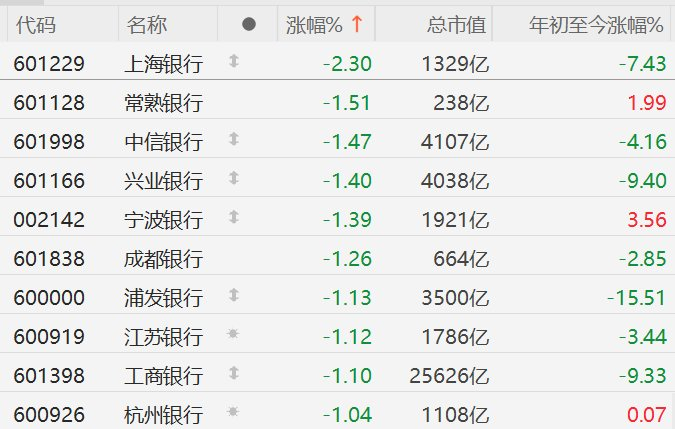
A股银行股普跌
Ge Long Hui A P P· 2026-01-23 07:20
| 代码 | 名称 | | 涨幅%↑ | 总市值 | 年初至今涨幅% | | --- | --- | --- | --- | --- | --- | | 601229 | 上海银行 | 1 | -2.30 | 1329亿 | -7.43 | | 601128 | 常熟銀行 | | -1.51 | 238亿 | 1.99 | | 601998 | 中信銀行 | 1 | -1.47 | 4107亿 | -4.16 | | 601166 | 兴业银行 | 1 | -1.40 | 4038亿 | -9.40 | | 002142 | 宁波银行 | 1 | -1.39 | 1921亿 | 3.56 | | 601838 | 成都银行 | | -1.26 | 664亿 | -2.85 | | 600000 | 浦发银行 | 1 | -1.13 | 3500亿 | -15.51 | | 600919 | 江苏银行 | 兼 | -1.12 | 1786亿 | -3.44 | | 601398 | 工商银行 | 1 | -1.10 | 25626亿 | -9.33 | | 600926 | 杭州银行 | 张 | -1.04 | ...






常熟挺起硬脊梁
Xin Lang Cai Jing· 2026-01-22 22:14
Group 1 - The core viewpoint of the articles highlights the economic growth and industrial development of Changshu, with a projected GDP exceeding 320 billion yuan and a growth rate of 5.8% for the past year [1][2] - Changshu's industrial output value reached 513.2 billion yuan, marking a significant milestone by surpassing 500 billion yuan, with a 6% increase in industrial added value [2][3] - The city aims to build a "three main and six new" industrial system to foster new development momentum and advantages, focusing on automotive, equipment manufacturing, and textile industries as the main sectors [2][4] Group 2 - The government emphasizes the importance of innovation and strategic planning to enhance the quality and efficiency of economic growth, aiming for a modern industrial system [3][4] - Changshu is actively attracting major projects and investments, particularly in high-tech and innovative sectors, to strengthen its economic foundation [3][5] - The establishment of the "Intelligent Computing Future City" aims to position Changshu as a hub for AI and smart technology, with significant investments in related projects [6][7] Group 3 - The textile and apparel industry in Changshu is undergoing a transformation driven by AI technology, with companies like Bosideng leading innovations in product development and manufacturing processes [7][8] - The city is focused on nurturing a tiered cultivation mechanism for technology-driven SMEs, high-tech enterprises, and innovative leading companies to enhance the resilience of the industrial supply chain [8][9] - Changshu's financial institutions, such as Changshu Rural Commercial Bank, are committed to supporting local enterprises and projects, ensuring robust financial backing for economic growth [10] Group 4 - The city is dedicated to creating a friendly environment for talent, aiming to increase the total talent pool to 500,000 by 2026, with a focus on attracting skilled professionals in key industries [9][10] - Changshu plans to enhance cultural and recreational offerings for its residents, celebrating its 40th anniversary as a national historical and cultural city through various community engagement activities [11][12] - The recent snowfall symbolizes a prosperous year ahead, reflecting the city's commitment to modernization and innovation in its development practices [1][11]
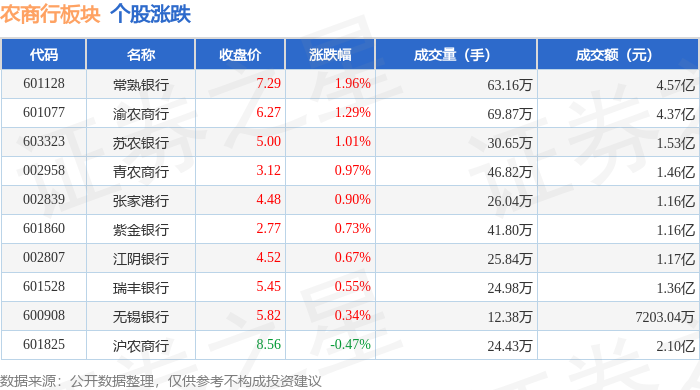
农商行板块1月22日涨0.58%,常熟银行领涨,主力资金净流入9380.13万元
Zheng Xing Xing Ye Ri Bao· 2026-01-22 09:01
Core Viewpoint - The rural commercial bank sector experienced a rise of 0.58% on January 22, with Changshu Bank leading the gains, while the Shanghai Composite Index and Shenzhen Component Index also saw slight increases [1] Group 1: Market Performance - The Shanghai Composite Index closed at 4122.58, up 0.14% [1] - The Shenzhen Component Index closed at 14327.05, up 0.5% [1] - Changshu Bank's stock price increased by 1.96% to 7.29, with a trading volume of 631,600 shares and a transaction value of 457 million yuan [1] Group 2: Individual Stock Performance - Yunnan Rural Commercial Bank's stock rose by 1.29% to 6.27, with a trading volume of 698,700 shares and a transaction value of 437 million yuan [1] - Jiangyin Bank's stock price increased by 0.67% to 4.52, with a trading volume of 258,400 shares and a transaction value of 117 million yuan [1] - Wuxi Bank's stock price rose by 0.34% to 5.82, with a trading volume of 123,800 shares and a transaction value of 72 million yuan [1] Group 3: Fund Flow Analysis - The rural commercial bank sector saw a net inflow of 93.8 million yuan from main funds, while retail investors experienced a net outflow of 80.29 million yuan [1] - Yunnan Rural Commercial Bank had a main fund net inflow of 37.2 million yuan, but retail investors had a net outflow of 26.99 million yuan [2] - Changshu Bank experienced a main fund net inflow of 15.36 million yuan, with retail investors seeing a net inflow of 33.52 million yuan [2]




数字人民币2.0:从M0到M1的质变
GF SECURITIES· 2026-01-22 05:07
Investment Rating - The report provides a "Buy" rating for all major banks analyzed, indicating a positive outlook for the banking sector [7]. Core Insights - The digital renminbi has entered its 2.0 era, transitioning from a central bank liability (M0) to a commercial bank liability (M1), allowing it to earn interest and be included in deposit insurance and reserve requirements [6][14]. - This transformation positions China as the first economy to offer interest on its central bank digital currency (CBDC), fundamentally altering its monetary attributes and creating a new financial paradigm in the digital economy [27]. - The digital renminbi's interest-bearing feature enhances user motivation to hold it, shifting its perception from a mere payment tool to a viable store of value, thus promoting its integration into everyday financial activities [27][28]. Summary by Sections 1. Digital Renminbi 2.0 Era - The digital renminbi (e-CNY) is now classified as a digital deposit currency, which can earn interest and is managed under a new regulatory framework [14]. - Major state-owned banks have begun offering interest on digital renminbi wallet balances, marking a significant shift in its utility and appeal [14][27]. 2. Development Progress and Application Status - The development of the digital renminbi began in 2014, with significant milestones including pilot tests in various cities and the establishment of a comprehensive operational framework by 2025 [32][33]. - As of November 2025, the digital renminbi has processed 34.8 billion transactions amounting to 16.7 trillion yuan, with extensive coverage across multiple provinces and cities [37]. 3. Global CBDC Development Trends - The report identifies three main trends in global CBDC development: active retail CBDC initiatives, innovation in payment systems, and cautious approaches in some countries like the U.S. [6]. - China's proactive stance in developing its CBDC positions it favorably in the global digital economy landscape, particularly in cross-border trade applications [30].




常熟农商银行1月22日起发售2026年个人大额存单
Jin Tou Wang· 2026-01-22 03:10
个人大额存单是由常熟农商银行发行,面向个人客户的记账式大额存款凭证,是存款类金融产品,属一 般性存款。本次个人大额存单最小起存金额为20万元,额度有限。 2026年1月21日,常熟农商银行发布公告称,常熟农商银行将于2026年1月22日起发售常农2026年个人大 额存单。 ...
【银行】“一揽子”贷款财政贴息政策影响几何?——1月20日贷款财政贴息四项政策点评(王一峰/赵晨阳)
光大证券研究· 2026-01-21 23:07
Core Viewpoint - The article discusses a series of financial subsidy policies aimed at promoting consumption and investment, particularly focusing on small and micro enterprises, personal consumption loans, and service industry loans [4][5]. Group 1: Policy Overview - On January 20, the Ministry of Finance, in collaboration with other departments, released a comprehensive set of financial subsidy policies to support small and micro enterprises, optimize personal consumption loans, and enhance service industry loans [4]. - The policies are designed to be "convenient and efficient," "precise and effective," and "standardized and efficient," with a focus on increasing subsidy amounts, broadening support areas, extending subsidy periods, and simplifying processes [5]. Group 2: Impact on Investment and Consumption - The new subsidy policies are expected to significantly enhance the scale of financial support compared to previous measures, thereby stimulating loan demand in relevant sectors and promoting effective investment and consumption [5][6]. - Specific measures include reducing financial burdens on small and micro enterprises, extending loan terms for service industry operators, and optimizing personal consumption loan subsidies to alleviate residents' interest payment pressures [6][7]. Group 3: Financial Projections - The estimated scale of the new subsidy policies is projected to be between 100 billion to 200 billion by 2026, with a significant portion allocated to small and micro enterprise loans and optimized personal consumption loans [8]. - The actual disbursement of subsidies may vary due to factors such as the scope of supported industries, the structure of client bases, and the willingness of the private sector to expand [8]. Group 4: Implications for the Banking Sector - The coordinated policies are expected to positively influence the banking sector's performance, particularly in small and micro finance and retail sectors, potentially catalyzing a favorable market environment for banks [9]. - As of January 20, A-share banks have seen a cumulative decline of 4.3%, underperforming the HS300 index by approximately 6.2 percentage points, indicating a potential opportunity for recovery in the banking sector due to these new policies [9].

尾盘,又有大动作
Sou Hu Cai Jing· 2026-01-21 11:29
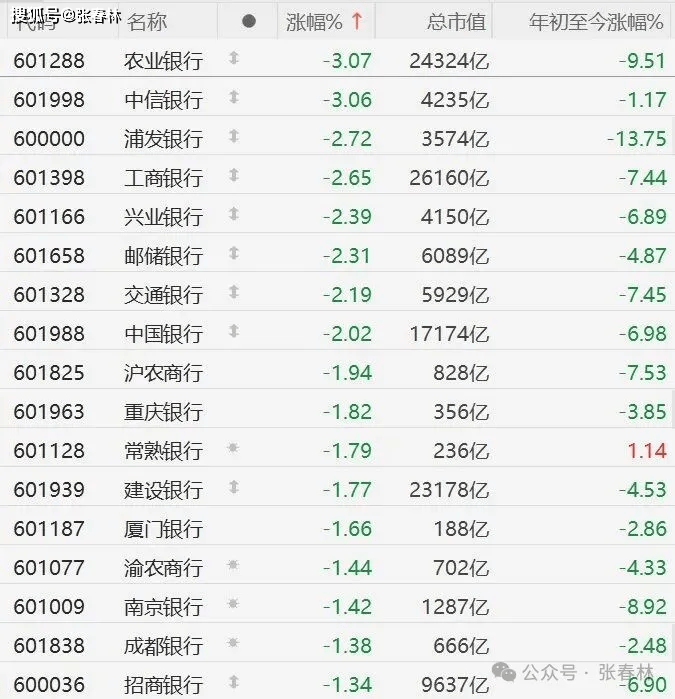
Market Overview - The market experienced a high and then a pullback, with the STAR 50 Index rising over 3%, indicating a mixed sentiment among investors [1] - Large funds are actively managing the market to prevent rapid index increases, aiming for a slow bull market [2] Index and Sector Performance - The Shanghai Composite Index is expected to fluctuate around the 4100-point mark, with an upper limit of 4190 points and a lower limit of 4000 points, suggesting a range-bound trading environment [3] - Key sectors showing strong performance include metals, gold, chips, and lithography machines, with the STAR 50 Index catching up after lagging behind other indices [3] Stock Performance - Traditional consumer stocks, particularly in the liquor sector, are experiencing a decline, while other sectors remain active [4] - A detailed table shows various banks' stock performance, with significant declines noted for major banks like Agricultural Bank (-9.51%) and Industrial and Commercial Bank (-7.44%) [5] Liquor Industry Insights - The liquor sector is anticipated to enter a new cycle around 2026, driven by economic recovery and potential monetary easing from the Federal Reserve [6][7] - Historical cycles of the liquor industry since 2003 indicate that demand has been influenced by various economic factors, suggesting a pattern that could repeat [6] Investment Strategy - The current market sentiment suggests a preference for sectors like chips and aerospace, while traditional sectors like liquor are viewed with skepticism [8] - The concept of contrarian investing is highlighted, emphasizing the challenges and potential rewards of investing in underperforming sectors [9]
1月20日贷款财政贴息四项政策点评:“一揽子”贷款财政贴息政策影响几何?
EBSCN· 2026-01-21 11:17
Investment Rating - The report maintains a "Buy" rating for the banking industry, indicating an expected investment return exceeding the market benchmark index by more than 15% over the next 6-12 months [29] Core Insights - The "package" loan interest subsidy policies aim to stimulate consumption and investment, focusing on enhancing effective domestic demand through financial and fiscal collaboration [2][7] - The new policies are expected to significantly increase the scale of interest subsidies compared to previous measures, with a projected subsidy scale of approximately 1000 to 2000 billion yuan for 2026 [17][19] Summary by Sections Loan Subsidy Policies - The policies include four main areas: subsidies for small and micro enterprises, equipment updates, service industry operators, and personal consumption loans, with a focus on key industries such as new energy vehicles and medical equipment [4][6] - The subsidy rate for small and micro enterprise loans is set at 1.5 percentage points, with a maximum loan amount of 50 million yuan per entity, potentially providing up to 150,000 yuan in subsidies [4][6] - The equipment update loan subsidy has been increased from 1% to 1.5%, expanding the scope to include technology innovation loans and related fields [4][6] - The personal consumption loan subsidy has removed previous restrictions, allowing for broader eligibility and a maintained subsidy rate of 1% [5][6] Economic Impact - The policies are designed to alleviate financial burdens on small and micro enterprises, encouraging investment and job stability, particularly in high-tech and essential service sectors [7][8] - The expected increase in loan demand from these sectors is anticipated to support the overall credit recovery in the economy, particularly for retail and service industries [7][8] Market Outlook - The report suggests that the coordinated fiscal and monetary policies will positively impact the banking sector's loan volume and pricing, particularly benefiting banks focused on small and micro enterprises and retail finance [23] - The banking sector has seen a decline in stock performance, and the new policies are expected to act as a catalyst for recovery, especially in the context of the "opening red" period for banks [23]