徐福记

Search documents
写着写着就没了!好丽友等多个零食品牌突遭下架,从独有品牌到大众品牌:山姆的会员“特权”缩水了?
Mei Ri Jing Ji Xin Wen· 2025-07-15 14:31
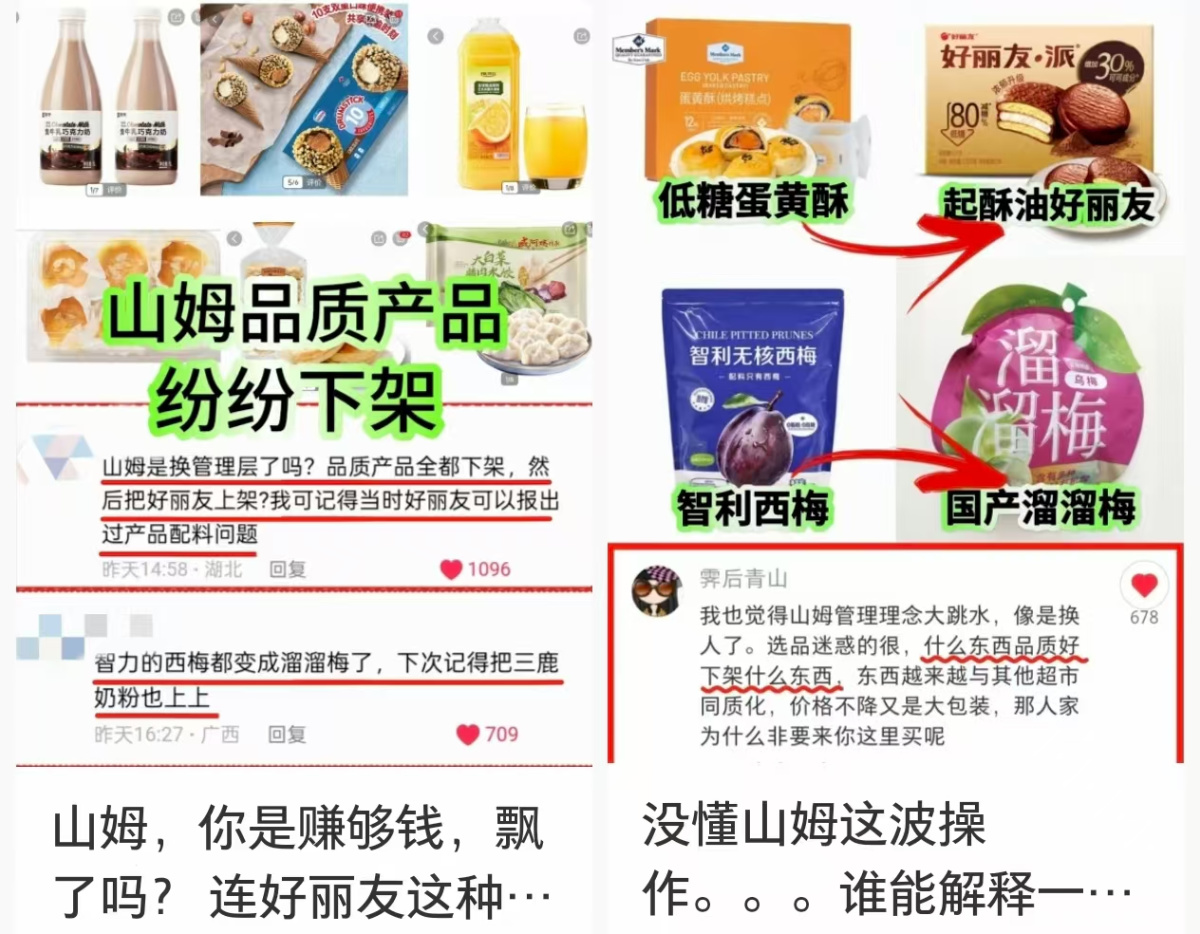
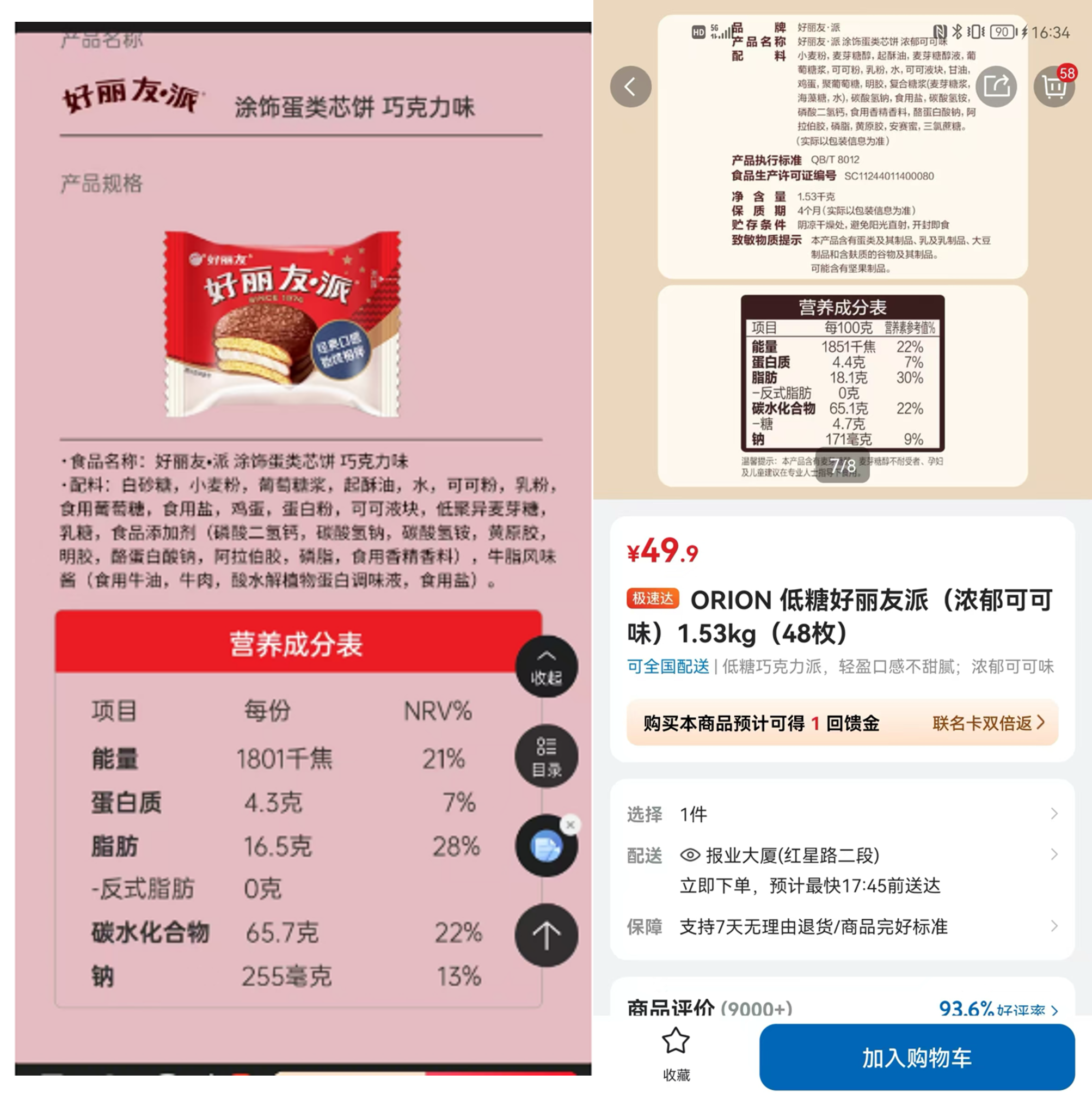
Core Viewpoint - Sam's Club is facing a trust crisis as it introduces common brands like Haoliyou and Weilong, which has led to dissatisfaction among members who expect premium products for their membership fees [1][4][12]. Group 1: Product Controversies - The introduction of "low-sugar" Haoliyou pie has sparked debate, with members questioning the need for such products that are readily available in regular supermarkets [4][12]. - The "special supply" version of Haoliyou pie claims to reduce sugar by 80% and increase cocoa content by 30%, but the differences from the classic version are not significant [4][8]. - The pie's ingredient list includes several artificial sweeteners, leading to consumer feedback that it remains too sweet despite the reduced sugar content [8][9]. Group 2: Brand Positioning and Changes - Brands like Weilong and Xu Fu Ji have altered their product presentations for Sam's Club, with unique packaging and formulations that differ from their standard offerings [12][23]. - The "panpan" branding for products from Panpan Food has been criticized for misleading consumers into thinking they are imported goods due to the upscale packaging [25][27]. - Sam's Club has been noted for its strategy of introducing popular brands with modified packaging, which may not always align with the premium image expected by its members [30][33]. Group 3: Sales and Market Strategy - As of April 2023, Sam's Club has 54 locations in China, with plans to exceed 60 by the end of the year, indicating a strong growth trajectory [33]. - Three stores have already surpassed annual sales of $500 million (approximately 3.67 billion RMB), with expectations for this number to increase significantly by 2025 [33].


山姆线上下架好丽友!选品“不上心”,中产不买账了
21世纪经济报道· 2025-07-15 14:23
Core Viewpoint - The recent controversy surrounding Sam's Club is primarily due to its product selection strategy, which has led to customer dissatisfaction and negative feedback regarding the introduction of "low-sugar Holley Pie" while popular items were quietly removed from shelves [1][10]. Product Selection Changes - Sam's Club has introduced new products from popular brands like Holley, Wei Long, and Xu Fu Ji, while simultaneously removing previously popular items such as egg yolk pastries and caramel layered cookies [1]. - The removal of certain high-value products has raised concerns among members, with some expressing intentions to cancel their memberships [1][10]. Customer Feedback and Reactions - Following the introduction of the low-sugar Holley Pie, many customers reported being unable to find the product on the Sam's Club app, leading to significant online discussions and trending topics on social media [3]. - Sam's Club customer service confirmed that the product had been removed from online listings, although it remained available in some physical stores [5]. Brand and Corporate Responses - A representative from Walmart acknowledged the discussions regarding product selection and stated that customer feedback would be considered in future product strategies [7]. - Sam's Club has indicated that it will take legal action against misinformation and defamation related to its brand and management [7]. Membership and Revenue Insights - As of June 2025, Sam's Club is projected to have over 9 million paid members, generating membership fee revenue exceeding 2.34 billion yuan based on a fee of 260 yuan per year [13]. - The membership model is a core competitive advantage for Sam's Club, acting as an agent for consumers in selecting quality products [13]. Brand Dependency on Sam's Club - Major brands like Holley, Wei Long, and Xu Fu Ji are increasingly reliant on Sam's Club as a strategic sales channel, which has become a significant revenue source for Walmart amid market fluctuations [15]. - There is a risk for brands to lose pricing power and become mere suppliers to Sam's Club, as the retailer has gained significant control over product offerings [16]. Ongoing Dynamics Between Brands and Retailers - The relationship between brands and Sam's Club is characterized by a tug-of-war, with brands seeking to maintain some level of control and insight into consumer preferences beyond what retailers provide [17]. - The ongoing dynamics suggest that the negotiation and collaboration between brands and Sam's Club will continue to evolve [18].
吵上热搜、上百条差评,山姆紧急回应
Nan Fang Du Shi Bao· 2025-07-15 13:45
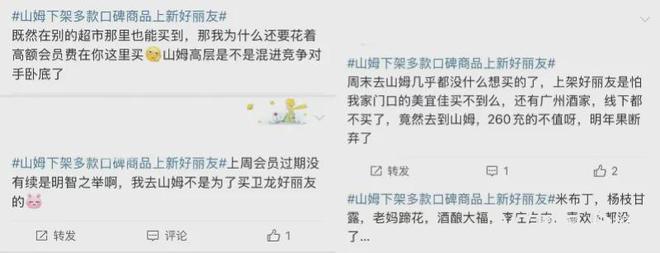
Core Viewpoint - Sam's Club has faced backlash from members for introducing products from brands like Holley, Panpan, and Xu Fu Ji while discontinuing popular items, leading to questions about its product selection strategy and perceived decline in quality [1][4][10] Group 1: Product Selection and Member Feedback - Recent product introductions at Sam's Club include Holley, Panpan, and Xu Fu Ji, which some members argue are available in regular supermarkets, questioning the value of a membership [1][4][10] - Members have expressed dissatisfaction with the discontinuation of high-repurchase-rate products, with specific complaints about the removal of items like rice pudding and old mom's hoof flower [10][11] - Walmart has acknowledged the discussions on social media regarding Sam's product selection and stated that member feedback will be considered in future product strategies [30][31] Group 2: Brand Responses and Product Differentiation - Holley has stated that the products offered at Sam's are exclusive to the club, but further details were not provided [31] - Some brands have indicated that products provided to Sam's are specially customized to meet the preferences of its members, aiming for a healthier and higher-quality offering [31][32] - Experts suggest that Sam's Club must maintain a unique value proposition that cannot be easily replicated by regular retail channels to retain its membership base [34][35] Group 3: Consumer Sentiment and Market Position - Consumers have criticized the new low-sugar Holley products for still being overly sweet, indicating a disconnect between product marketing and actual taste [15][20] - The introduction of well-known brands like Holley and Panpan has raised concerns about the perceived lack of differentiation in Sam's product offerings, which could lead to member attrition if not addressed [34][35] - Analysts emphasize the importance of continuously evolving product offerings to meet changing consumer demands and preferences, highlighting the need for Sam's to avoid a "mediocre" selection strategy [34][36]
山姆卖“好丽友们”引“众怒”,但“好丽友们”进山姆是一种必然
Guan Cha Zhe Wang· 2025-07-15 12:58
Core Insights - Sam's Club is facing criticism regarding its product selection capabilities, particularly after the launch of a new product that has received negative reviews from members [1][4][8] - The company has experienced significant sales growth, with sales in China expected to exceed 100 billion yuan in 2024, contributing to two-thirds of Walmart China's performance [9][11] - There is a shift in product sourcing, with over 70% of products now sourced from Chinese suppliers, indicating a focus on local brands and products [12][13] Product Selection and Member Feedback - A new product, a special edition of the Good Friend cake, has been criticized for being too sweet and not meeting the expectations of members regarding its "low sugar" and "rich cocoa" claims [4][8] - Members have expressed distrust towards the Good Friend brand due to perceived discrepancies in product formulations between domestic and international versions [8] - The dynamic nature of Sam's product selection is highlighted, with a focus on maintaining a curated selection of around 4,000 SKUs to ensure quality and value for members [8][11] Expansion and Market Strategy - Sam's Club plans to open 6-7 new stores annually, with a target of over 60 stores by 2026, indicating aggressive expansion in the Chinese market [9][11] - The rapid expansion may be influencing product selection processes, leading to potential changes in supplier relationships and product offerings [11] - Local partnerships are being established, allowing local brands to enter Sam's shelves, which not only expands sales channels for these brands but also enhances Sam's reputation for quality [11][12] Management Changes and Strategic Focus - The retirement of the previous China president and the appointment of Jane Ewing has led to a restructuring of regional management to better respond to local market demands [12][13] - Ewing's strategy appears to continue the previous leadership's focus while intensifying the pursuit of growth, particularly through local sourcing and enhancing supply chain resilience [12][13] - The shift towards more domestic brands is seen as a strategic move to improve procurement efficiency and maintain product quality [12][13]

上新“好丽友”的山姆,让会员破防了!
阿尔法工场研究院· 2025-07-15 11:57
Core Viewpoint - Sam's Club is facing challenges in retaining its membership base due to recent product selection changes and quality control issues, leading to perceptions of homogenization with regular supermarkets [2][12][30]. Group 1: Product Selection Changes - Sam's Club has introduced popular mass-market brands like Holley Friend, Wei Long, and Xu Fu Ji, while discontinuing previously popular items such as egg yolk pastries and caramel layered cookies, causing dissatisfaction among members [2][10][12]. - The introduction of the "low-sugar Holley Friend pie," which claims to reduce sugar by 80% and increase cocoa content by 30%, has received significant criticism, with over 300 negative reviews citing it as too sweet [5][7][9]. - Members express concerns that the shift towards more common brands dilutes the unique value proposition of Sam's Club, which was originally perceived as a premium shopping experience [19][20]. Group 2: Membership and Revenue Insights - Sam's Club, a high-end membership store under Walmart, has over 500 million paid members and 48 stores in China, with membership fees set at 260 yuan for regular members and 680 yuan for premium members [25][26]. - Walmart's fiscal report for 2025 indicates that Sam's Club's membership fee revenue has grown by over 35%, despite ongoing quality issues [26][30]. - The club's unique positioning as a "middle-class supermarket" is being challenged as competitors like Costco and Hema introduce similar membership models, prompting Sam's Club to reassess its competitive advantages [19][30]. Group 3: Quality Control Issues - Sam's Club has faced numerous complaints regarding product quality, including reports of moldy cakes and contaminated dairy products, leading to over 10,000 complaints on consumer platforms [27][29]. - The frequency of quality control failures has negatively impacted the brand's reputation, raising questions about its ability to meet the expectations of its core middle-class clientele [30]. Group 4: Market Position and Competition - The retail landscape in China is becoming increasingly competitive, with Sam's Club needing to redefine its value proposition amidst the rise of other paid membership supermarkets [30]. - As the paid membership model becomes standard in the industry, Sam's Club must identify new differentiators to maintain its appeal to consumers who expect premium offerings [30].

山姆陷入选品争议,付费会员不买账了?
Xin Lang Zheng Quan· 2025-07-15 10:40
Core Viewpoint - The recent product selection strategy adjustment at Sam's Club has sparked significant backlash from members, primarily centered around the perception of "diminished membership value" [1] Product Selection Changes - Popular products such as sun cakes, rice puddings, low-sugar egg yolk pastries, and mango sago have been removed from shelves, leading to member dissatisfaction [2] - The removal of these items is attributed to packaging date labeling issues, with plans to reintroduce them after resolution [2] - New products from domestic brands like Holi, Liu Liu Mei, and Wei Long have been introduced, but they have faced criticism for not meeting quality expectations and deviating from Sam's Club's high-quality image [3] Quality Control Issues - There have been reports of declining quality in fresh produce and baked goods, raising concerns among members about product standards [4] - Management changes in early 2025 led to a shift in product selection logic, favoring high-profit, mass-market items over low-margin, specialty products, which has been perceived as prioritizing short-term gains over member experience [4] Market Competition - Sam's Club has over 5 million active members and generates over 1.3 billion yuan in annual membership fees, making it a key revenue source for Walmart China [5] - Increased competition from Costco and Hema X membership stores poses a threat, as these competitors offer differentiated product selections [5] - The need to quickly reconstruct a "curated + exclusive" product strategy is critical for retaining core users and market share [5] Consumer Psychology - Members expect high-quality products and a unique shopping experience in exchange for their membership fees, which has been compromised by the recent product changes [5] - The shift towards more common supermarket offerings has led to feelings of dissatisfaction and a sense of being undervalued among members [5] Supply Chain Management - Rapid expansion of store locations has increased membership but also placed significant pressure on the supply chain [6] - The decision to replace some imported goods with domestic alternatives has resulted in perceived quality degradation among members [6] - Balancing cost control with quality assurance in supply chain management is a pressing challenge for Sam's Club [6] Industry Trends - The retail industry is moving towards more refined and differentiated offerings, with increasingly diverse consumer demands [7] - The controversy surrounding Sam's Club's product selection serves as a warning for the industry to maintain brand positioning, protect member rights, and continuously optimize products and services [7]
上架好丽友沪溪河等引争议,山姆变成普通超市?沃尔玛回应
Nan Fang Du Shi Bao· 2025-07-15 10:34
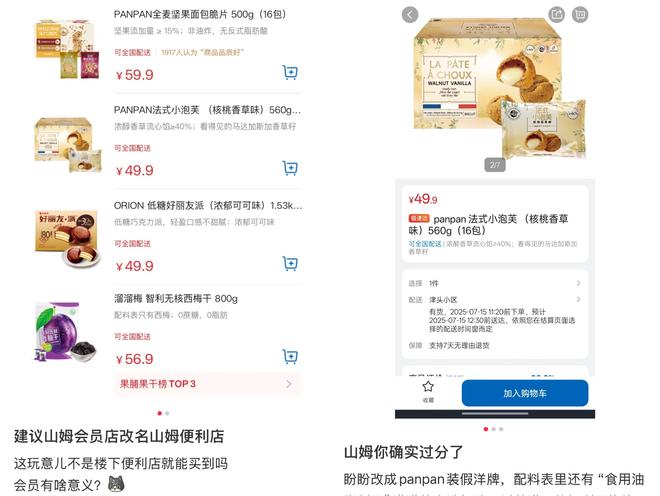
Core Viewpoint - Sam's Club has faced backlash from members for introducing products from brands like Holley, Panpan, and Xu Fu Ji, which are perceived as available in regular supermarkets, raising questions about the value of membership [1][15][19] Product Selection and Member Feedback - Recent product introductions at Sam's Club include Holley, Panpan, and Xu Fu Ji, which have led to member complaints about the lack of unique offerings [1][5][19] - Members have expressed dissatisfaction with the removal of high-repurchase-rate products in favor of items that can be found in regular supermarkets [1][19] - Walmart has acknowledged the discussions on social media regarding product selection and is considering member feedback in future strategies [14][15] Brand and Product Specifics - Products from Holley and Panpan are being sold at Sam's Club without prominent branding on packaging, leading to confusion among consumers [5][9][19] - A specific example includes Panpan's "French-style small puff" which is marketed with French text but is actually a Panpan product [2] - Sam's Club's pricing strategy includes items like a box of nuts from Hu Xi He priced at 48.9 yuan and a low-sugar Holley cake at 49.9 yuan, both marketed as "Sam's exclusive" [5][7] Market Positioning and Strategy - Experts suggest that Sam's Club must maintain a unique value proposition that cannot be easily replicated by regular supermarkets to justify its membership model [18][19] - The introduction of customized products for Sam's Club by brands like Holley and Xu Fu Ji indicates a shift towards more tailored offerings, although consumer perception remains critical [15][19] - Analysts emphasize the need for Sam's Club to differentiate its product offerings to meet the evolving demands of its target demographic, particularly middle-class consumers [18][19]

下架蛋黄酥上架好丽友,260 元会费不香了?山姆会员店 “中产滤镜” 碎了
Jing Ji Guan Cha Bao· 2025-07-15 07:20
Core Viewpoint - Recent product adjustments at Sam's Club have sparked widespread consumer concern, with members questioning the quality of selected products as popular items are being replaced with lower-rated alternatives [1][2]. Group 1: Product Changes and Consumer Reactions - Sam's Club has removed high-repurchase items such as sun cakes and low-sugar egg yolk pastries, replacing them with products like low-sugar Holi-Ryu pies, which have received significant negative feedback from consumers [1][2]. - The low-sugar Holi-Ryu pie, launched in June 2025, claims to reduce sugar by 80% and increase cocoa content by 30%, but has been criticized for its actual sweetness and controversial ingredients [2]. - The brand image of Holi-Ryu has been tarnished due to past controversies regarding ingredient transparency, leading to consumer skepticism despite official clarifications [2]. Group 2: Membership and Brand Positioning - Sam's Club's membership fee remains stable at 260 yuan for regular members and 680 yuan for premium members, a pricing strategy that has been in place since 2016 [4]. - The store's branding as a "middle-class supermarket" is challenged by recent product selections that align more closely with ordinary supermarkets, leading to a perception of decreased exclusivity [3][4]. - Despite the controversies, Sam's Club reported strong financial performance in Q1 2025, with net sales reaching $6.7 billion, a 22.5% year-on-year increase, and a 40% growth in membership numbers [5]. Group 3: Quality Control Issues - Sam's Club has faced multiple quality control issues over the past year, including reports of moldy cakes and spoiled milk, resulting in over 10,000 complaints on consumer platforms [6]. - The ongoing product selection controversy adds to the challenges faced by Sam's Club in maintaining its high-end positioning while expanding its membership base [6].
山姆十万火急,得抓紧研究P图
半佛仙人· 2025-07-15 04:00
Core Viewpoint - The article discusses the recent backlash against Sam's Club for offering a large number of non-Sam's branded products, leading to dissatisfaction among members who feel their membership fees are not justified [2][3]. Group 1: Customer Sentiment - Customers are frustrated that many products available at Sam's Club can be found at local convenience stores without the need for a membership fee [2][3]. - The emotional value associated with shopping at Sam's Club is diminishing, prompting members to question the value of their membership [3]. Group 2: Proposed Solutions - The author suggests that Sam's Club should focus on enhancing its branding by prominently displaying its logo on products, even if they are from other brands [5][6]. - The recommendation is to make the Sam's logo extremely visible on products to improve customer perception and satisfaction [7][8]. Group 3: Brand Identity - The article emphasizes that the uniqueness of Sam's Club's offerings should be highlighted, as this is a core competitive advantage [14][21]. - It argues that even if products are sourced from the same manufacturers, the branding and quality standards can differentiate them significantly [17][18]. Group 4: Implementation Strategy - The author believes that the strategy of enhancing product packaging with the Sam's logo is a simple yet effective way to address customer concerns quickly [10][24]. - The focus should be on immediate implementation of this branding strategy to improve customer feedback and overall perception of the brand [9][24].
下架口碑商品上新好丽友派惹恼会员,山姆曾于年初变更负责人
Qi Lu Wan Bao· 2025-07-15 03:36
Core Viewpoint - Recent concerns have arisen regarding the product selection at Sam's Club, with many customers expressing dissatisfaction over the removal of popular items and the introduction of new products that do not meet their expectations [1][4][5]. Product Selection Issues - Customers have criticized the removal of high-repurchase-rate items such as sun cakes, rice puddings, and low-sugar egg yolk pastries, while expressing disappointment with newly introduced products like low-sugar Holiland cakes and Lulumei [1][4]. - The customer service response indicated that product removal information is based on the Sam's Club app, and they will strive to improve product quality in the future [4]. Brand Perception and Membership Value - Members feel that the introduction of mainstream brands like Holiland, Xu Fu Ji, and Weilong is diluting the unique value proposition of Sam's Club, which was originally perceived as a premium shopping experience [5][8]. - A member expressed that if Sam's Club's product selection becomes similar to that of regular supermarkets, the justification for paying the annual membership fee diminishes [5][8]. Customer Feedback and Concerns - There has been significant feedback from members on social media regarding the perceived decline in product quality, with some even writing to the headquarters to express their concerns [5][8]. - The core competitiveness of Sam's Club in China is believed to lie in its food safety standards and product differentiation, which are at risk if the store continues to homogenize with ordinary supermarkets [8].