
招商证券

Search documents
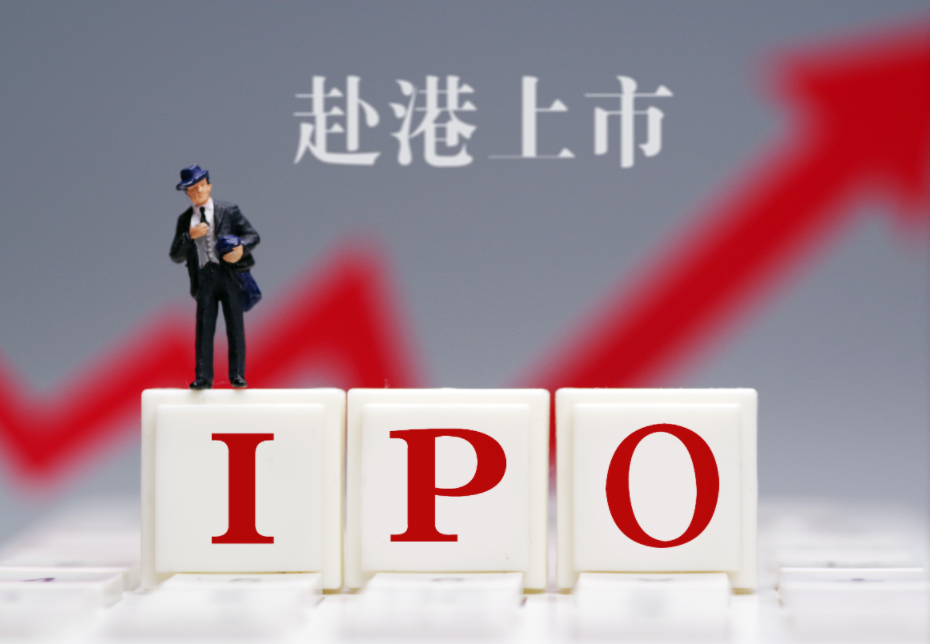
除夕港股收红 超400家企业排队IPO
Huan Qiu Wang· 2026-02-17 01:28
Group 1 - The Hong Kong stock market showed positive performance during the New Year holiday, with the Hang Seng Index rising by 0.52%, the Hang Seng China Enterprises Index increasing by 0.42%, and the Hang Seng Technology Index up by 0.13% [1] Group 2 - Since 2026, 143 companies have completed IPO applications, with 120 being first-time submissions. As of February 16, there are still 401 new stock applications pending in the Hong Kong market, including 4 companies that have passed the hearing [3] - Deloitte China predicts that the Hong Kong IPO market in 2026 may surpass last year, with approximately 160 new stocks expected to raise no less than 300 billion HKD [3] - The distribution of companies waiting for IPO includes 81 in the software services sector, 71 in pharmaceuticals and biotechnology, 51 in hardware equipment, and 26 in semiconductors [3] - Recently listed technology companies have attracted significant interest from international long-term investors, with a notable focus on AI, semiconductors, embodied robotics, and biomedicine [3] Group 3 - Chinese securities firms are accelerating their investments in Hong Kong, with Dongwu Securities approved for a capital increase of 2 billion HKD for its Hong Kong subsidiary on February 13 [4] - Huazhang Securities and Northeast Securities have also received approval for capital increases of 500 million HKD each for their Hong Kong subsidiaries [4] - Since the beginning of 2026, Guangfa Securities and Huatai Securities have completed H-share refinancing of 6.1 billion HKD and 10 billion HKD, respectively, aimed at strengthening their overseas business [4] - In December 2025, China Merchants Securities announced a capital increase of up to 9 billion HKD for its wholly-owned subsidiary, with the first phase targeting a capital increase of no more than 4 billion HKD for its Hong Kong subsidiary [4]

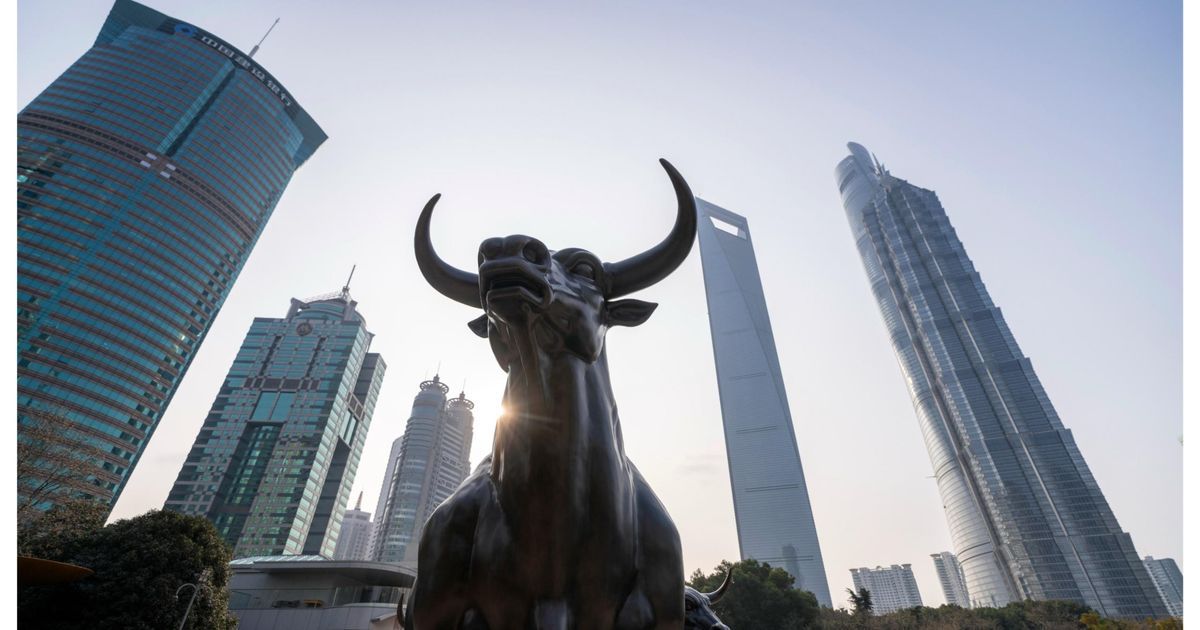
China's stock bull run falters with corporate earnings set to underwhelm
Business· 2026-02-15 01:19
Economic Outlook - A worsening earnings picture is leading to a negative outlook for Chinese equities, with concerns that Lunar New Year holiday spending may not be sufficient to boost earnings [1] - Corporate profit pre-announcements indicate a "major deterioration" for Q4 2025, with negative alerts outnumbering positive ones by 14.8% among over 2,000 A-share companies [4] Consumer Demand - Economic indicators highlight weak consumer demand as government stimulus programs are being scaled back, contributing to concerns about the upcoming holiday's impact on earnings [2][6] - China's economic growth slowed to 4.5% last quarter, marking the weakest pace since the end of Covid lockdowns, with producer prices falling 1.4% year-on-year [5] Market Sentiment - Sentiment towards Chinese stocks is currently weak, influenced by investor caution before the long holidays, lack of new catalysts, heightened regulatory scrutiny, and intense competition [3] - The MSCI China Index has only risen 0.8% this year, contrasting with a 2.8% gain in the MSCI All World Index and significant increases in South Korea and Taiwan [3] Regulatory Environment - Increased regulatory intervention, including tightened margin financing rules, is adding to market caution and affecting investor sentiment [7] Industry Performance - Earnings are diverging across industries, with metal miners and companies in the AI supply chain performing well, while electric vehicle manufacturers like BYD and Great Wall Motor are struggling due to poor sales [8][9] - Overall A-share earnings are projected to grow about 6.5% year-on-year for 2025, primarily driven by policy support rather than a fundamental shift in market conditions [10]
招商证券:美国核心通胀顽固、能源下行存疑,降息时点仍是迷雾
智通财经网· 2026-02-14 12:07
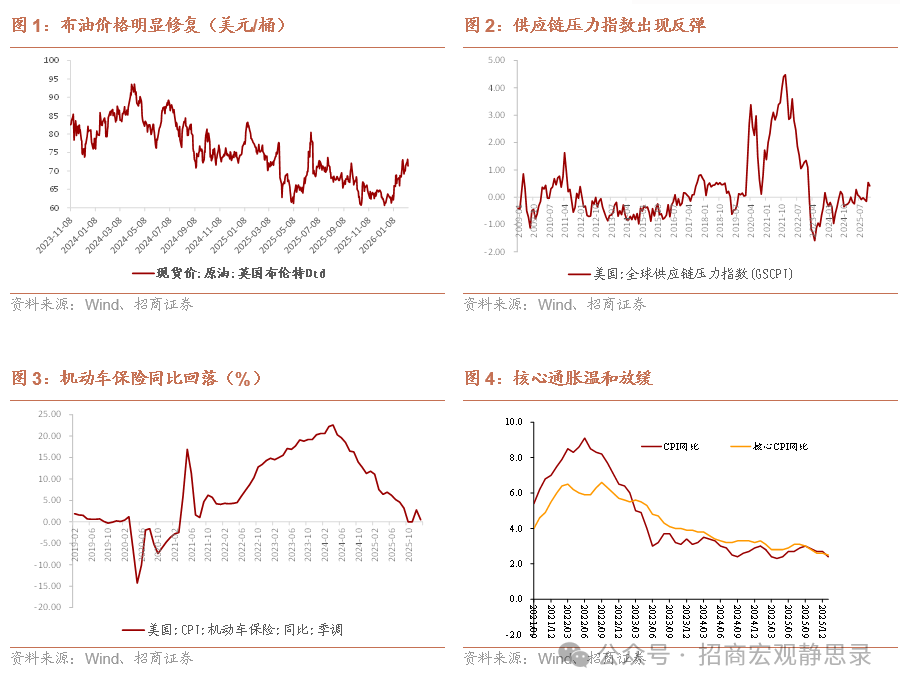
Core Viewpoint - The January CPI in the U.S. is 2.4% year-on-year, lower than the market expectation of 2.5%, primarily driven by declines in energy prices and used car prices. The core CPI month-on-month increase of 0.3% meets expectations, with moderate trends in rent and persistent price increases in some services. Despite the cooling inflation, overseas markets still anticipate two rate cuts in June as a high-probability scenario due to stable non-farm employment and statements from Federal Reserve officials [2][4]. Inflation Data Summary - January CPI month-on-month is 0.2% (previous value 0.3%), and year-on-year is 2.4% (previous value 2.7%). Core CPI month-on-month is 0.3% (previous value 0.2%), and year-on-year is 2.5% (previous value 2.6%) [1][2]. - Energy prices in January decreased by 1.5% month-on-month (previous value 0.3%), significantly contributing to the cooling inflation. Energy commodities fell by 3.3% month-on-month (previous value -0.3%), with gasoline down 3.2% (previous value -0.3%) and fuel oil down 5.7% (previous value -0.8%) [2][3]. Food Prices and Core CPI - Food prices increased moderately in January, with an overall month-on-month increase of 0.2% (previous value 0.7%). Household food prices rose by 0.2% (previous value 0.6%), while non-household food prices increased by 0.1% (previous value 0.7%). Beef prices fell by 0.4% (previous value 1.1%) due to tariff reductions [3][4]. - The core CPI month-on-month increase of 0.3% (previous value 0.2%) shows a slowdown in rent prices, with rent items rising by 0.2% (previous value 0.4%). Some service prices continue to rise, with overall service CPI increasing by 0.4% (previous value 0.3%) [3][4]. Vehicle Prices and Market Reactions - Prices for new and used vehicles are under pressure from demand-side cooling, with the CPI for used cars and trucks down 1.8% month-on-month (previous value -0.9%). The CPI for new transportation tools rose by 0.1% (previous value 0.0%) [4]. - Following the data release, the 2-year U.S. Treasury yield fell by 3.4 basis points to around 3.41%, and the 10-year yield decreased by 3.6 basis points to approximately 4.06%. The dollar index remained stable around 96.9 [2][4].
增资、发债、新设、担保......开年中金、广发、华泰等多家券商为出海筹措“弹药”
Xin Lang Cai Jing· 2026-02-14 10:35
Core Viewpoint - Chinese securities firms are increasingly expanding their overseas operations, with multiple major and mid-sized firms announcing initiatives for international capital operations at the beginning of the year [1][2]. Group 1: Recent Developments - On February 13, major firms including CITIC Securities, CICC, and Zhongtai Securities announced guarantees for their overseas subsidiaries [2]. - GF Securities reported a change in registered capital from 7.606 billion RMB to 7.825 billion RMB due to a completed H-share placement, with funds aimed at enhancing overseas subsidiary capital [2]. - GF Securities plans to list its zero-interest convertible bonds on the Vienna MTF [3]. Group 2: Industry Trends - GF Securities is not the first to pursue overseas financing; Huatai Securities recently issued 10 billion HKD in zero-interest convertible bonds for international business support [5]. - Since 2025, over ten securities firms have made significant strides in international business, with firms like Western Securities and Dongwu Securities establishing wholly-owned subsidiaries in Hong Kong [6]. - The push into overseas markets represents a shift for Chinese securities firms from local intermediaries to global traders, driven by the need for risk hedging and capital flow [6]. Group 3: Performance Metrics - As of mid-2025, 13 out of 16 comparable A-share listed securities firms reported over 10% year-on-year growth in overseas business revenue [7]. - Notable revenue figures include CITIC Securities at 6.912 billion RMB (up 13.57%), CICC at 4.024 billion RMB (up 75.66%), and Haitong Securities at 2.459 billion RMB (up 76.21%) [8]. Group 4: Future Outlook - Experts predict that a significant number of quality domestic enterprises will connect with global markets through Hong Kong, creating opportunities for IPOs and cross-border capital services [9]. - The competitive edge in overseas business will increasingly focus on cross-border derivatives and FICC (Fixed Income, Currency, and Commodity) operations [10]. - Chinese securities firms are expanding beyond Hong Kong to Southeast Asia and the Middle East, establishing a comprehensive international business landscape [10]. Group 5: Strategic Considerations - The future growth potential for Chinese securities firms lies in cross-border wealth management, offshore RMB-related businesses, and investment banking in emerging markets [11]. - Firms are advised to build a composite team that understands both international rules and Chinese industries, while also enhancing cross-cultural integration [12].






2025中国平板出货量:华为蝉联第一,苹果份额仍在下滑
Guan Cha Zhe Wang· 2026-02-14 09:01
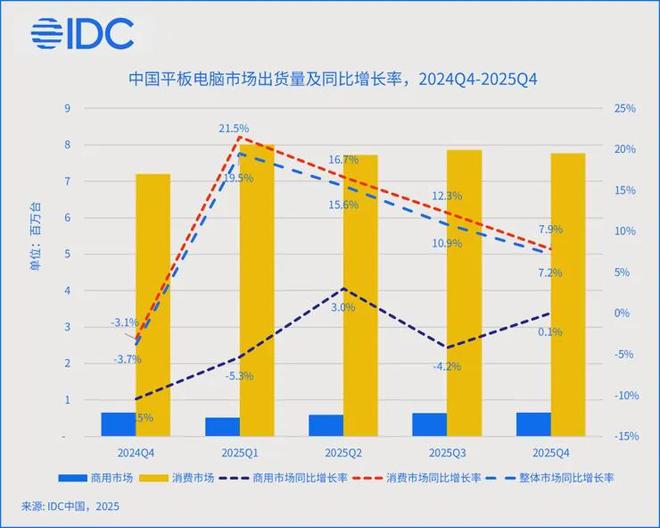
Core Insights - The Chinese tablet market is projected to ship 33.76 million units in 2025, reflecting a year-on-year growth of 13.1% driven by a combination of a replacement cycle and the "national subsidy" policy stimulating consumer confidence and purchasing decisions [1] - The market is transitioning from being policy-driven to being driven by product and demand as the "national subsidy" policy begins to tighten in certain regions, leading to a slowdown in growth rates in the fourth quarter compared to the first three quarters [1] Market Performance - In 2025, the top five tablet manufacturers in China are Huawei (29.2%), Apple (24.5%), Xiaomi (13.1%), Lenovo (9.7%), and Honor (8.6%) [2] - In the fourth quarter of 2025, Apple leads with a market share of 26.7%, followed by Huawei at 24.9%, Lenovo at 13.1%, Xiaomi at 11%, and Honor at 7.7% [2] Manufacturer Analysis - Huawei remains the top seller in the Chinese tablet market for 2025, despite a 3.1 percentage point decline in market share compared to 2024. The launch of the MatePad Edge in the fourth quarter has enhanced its product positioning for office and multi-scenario use [3][4] - Apple, while second in market share for the year, saw a decline of nearly 10 percentage points from 33.6% in 2023. The fourth quarter saw a rebound in market share due to the new iPad Pro and strong performance of the iPad Air series during promotional events [4] - Xiaomi experienced double-digit growth in 2025 but faced challenges in the fourth quarter due to tightening subsidy policies and insufficient new product stimulation [4] - Lenovo's tablet shipments grew significantly, with a notable increase in market share in the fourth quarter, attributed to the competitive pricing of its products and the rising interest in smaller tablets [4] - Honor maintained its fifth position in market share for both the year and the fourth quarter, focusing on product upgrades and expanding its presence in the commercial market [5] Future Outlook - The IDC anticipates that the strong performance of the tablet market in 2025 will lay a foundation for future growth, but rising cost pressures from key components will require manufacturers to optimize supply chains and product planning [6] - The tablet market is expected to evolve towards AI and multi-scenario applications, necessitating better integration of AI functionalities into frequently used scenarios to enhance product value and user experience [6]

中密控股:接受招商证券等投资者调研

Mei Ri Jing Ji Xin Wen· 2026-02-14 06:59
Group 1 - The company Zhongmi Holdings announced that it will accept investor research on February 13, 2026, with Liang Yutao, the director of the board office and securities affairs representative, participating in the reception and answering investor questions [1] Group 2 - The article highlights a significant investment success by Xu Xin, known as the "Queen of Venture Capital," who achieved an 18-fold return on a single investment, contributing to her wealth exceeding 10 billion yuan [1]
2025巨亏超230亿!美团发布盈利预警,一季度将延续亏损!网友:真是实打实的百亿补贴!
雪球· 2026-02-14 04:58
Market Overview - The three major U.S. stock indices closed mixed, with the Dow Jones up 0.1%, the Nasdaq down 0.22%, and the S&P 500 up 0.05%. The Russell 2000 small-cap index rose approximately 1.2%. All three indices recorded declines over the past week, with the Nasdaq showing the largest drop, indicating cautious market sentiment [1]. - Most popular tech stocks declined, with Nvidia and Apple dropping over 2%, and Google, Meta, and Broadcom falling over 1%. Investor concerns about the potential impact of artificial intelligence on traditional industries have heightened risk-averse sentiment [3]. Economic Indicators - The U.S. January CPI year-on-year decreased from 2.7% to 2.4%, the lowest since May 2025, while the core CPI fell from 2.6% to 2.5%, the lowest since March 2021. The core CPI rose 0.3% month-on-month, slightly above December's 0.2% increase [9][10]. - Following the CPI report, traders increased their expectations for interest rate cuts this year, with a 50% chance of three cuts by year-end. The probability of a cut in April is 30%, and over 80% for June [10]. Company-Specific News - Meituan issued a profit warning, expecting a net loss of approximately RMB 233 billion to RMB 243 billion for the fiscal year 2025, a stark contrast to a net profit of RMB 358.08 billion in 2024. This represents a significant reversal of nearly RMB 600 billion [16][18]. - The core reason for Meituan's drastic performance change is the profit collapse in its most profitable segment, "core local business," which is expected to incur an operating loss of RMB 68 billion to RMB 70 billion in 2025, compared to an operating profit of RMB 524.15 billion in 2024. This is attributed to unprecedented competition in the industry and strategic increases in ecosystem investments [18][20]. - Meituan plans to increase investments in marketing, rider incentives, and operational efficiency to counteract the losses, while also expanding its overseas business [20]. Market Sentiment and Trends - The Hang Seng Tech Index has shown weakness, declining 6.26% since February, influenced by liquidity shocks. Analysts suggest that the fundamentals and bullish logic for the Hong Kong tech sector remain unchanged [21]. - The performance of the Hang Seng Tech Index in February may be driven by macroeconomic data, policy pricing, and earnings verification, with U.S. inflation and employment data being key factors affecting valuation elasticity in Hong Kong tech stocks [21].


青岛港股价回调受板块走弱资金流出等多因素影响
Jing Ji Guan Cha Wang· 2026-02-14 03:14
Core Viewpoint - Qingdao Port's recent stock price decline is attributed to overall sector weakness, short-term funding pressure, and market sentiment [1] Sector Performance - On February 13, 2026, the A-share shipping and port sector fell by 3.44%, significantly underperforming the broader market (Shanghai Composite Index down 1.26%) [2] - During the same period, the port concept index decreased by 1.77% [2] - The shipping market is experiencing weakened shipping volumes due to factory closures before the Spring Festival, leading to downward pressure on freight rates [2] Funding Situation - On February 13, Qingdao Port saw a net inflow of 5.42 million yuan, following several days of net outflows [3] - For instance, on February 12, the net selling of financing reached 8.60 million yuan, with the financing balance dropping to 64.16 million yuan, the lowest in nearly a year [3] - The trading volume on that day was 151 million yuan, nearly a 50% decrease compared to 298 million yuan on February 6, indicating reduced market participation [3] Stock Price Situation - As of February 13, Qingdao Port's stock price fell below the 5-day and 10-day moving averages (9.34 yuan and 9.50 yuan, respectively) [4] - The KDJ indicator showed the J line at -21.65, indicating short-term overselling [4] - The Bollinger Band's middle support level is at 9.21 yuan, with the closing price at 9.06 yuan, approaching the lower band at 8.31 yuan, suggesting potential further declines if breached [4] Company Fundamentals - For the first three quarters of 2025, the company's net profit attributable to shareholders grew by 6.33% year-on-year, but Q3 revenue declined by 2.17% year-on-year [5] - Despite optimizing logistics costs through the "return to" model at the pulp terminal and opening several new routes, there are concerns about the overall growth slowdown in the port industry [5] - Zheshang Securities noted that the company's dividend yield remains stable (3.83% over the past 12 months), but valuation improvements require performance elasticity verification [5] Industry and Risk Analysis - Geopolitical conflicts (e.g., fluctuations in the Red Sea shipping route) and the timing of the Spring Festival are impacting shipping demand [6] - A report from招商证券 indicated that the average container freight rate at Qingdao Port decreased by 28.7% month-on-month in January 2026 [6] - The market holds a cautious outlook on the short-term supply-demand dynamics in the port sector [6] Summary - The recent decline in Qingdao Port's stock price is a result of sector weakness, funding outflows, technical adjustments, and industry cycle factors [7]
招商证券:招商证券始终将风险管理置于各项业务的核心地位
Zheng Quan Ri Bao Zhi Sheng· 2026-02-13 13:09
Core Viewpoint - The company emphasizes the importance of risk management in all its business activities, adhering to regulatory requirements and internal risk control standards [1] Group 1: Risk Management - The company places risk management at the core of its business operations [1] - All investment activities are conducted in strict compliance with regulatory requirements and internal risk control standards [1] - The company employs diversified asset allocation and dynamic management to effectively mitigate potential market volatility [1] Group 2: Future Outlook - The company aims to balance returns and risks in its future operations [1] - The commitment to creating sustainable value for investors remains a priority [1]
招商证券:2025年年报将在2026年3月28日正式披露
Zheng Quan Ri Bao Zhi Sheng· 2026-02-13 13:09
Core Viewpoint - The company acknowledges investor concerns regarding short-term stock performance and emphasizes its commitment to enhancing long-term value through core business strengthening and optimizing shareholder returns [1] Financial Reporting - The company announced that the 2025 performance report will be disclosed on January 27, 2026, and the annual report will be officially released on March 28, 2026 [1]