美年健康

Search documents
未知机构:宏景科技千问最强推理模型maxthinking发布应用板块-20260128
未知机构· 2026-01-28 02:10
Summary of Conference Call Notes Company and Industry Involved - **Company**: Alibaba Group - **Industry**: Artificial Intelligence (AI) and Technology Core Points and Arguments - **Launch of Qwen3-Max-Thinking Model**: Alibaba officially released its flagship reasoning model, Qwen3-Max-Thinking, which has over 1 trillion parameters and a pre-training data volume of 36 trillion tokens, making it the largest and most capable model from Alibaba to date [1][2] - **Performance Improvements**: The new model has achieved significant performance leaps, setting global records in multiple key performance benchmarks through extreme scale expansion in total parameters, reinforcement learning, and reasoning computation [2] - **Enhanced Native Agent Capabilities**: The model features a new testing time expansion mechanism that improves reasoning performance while being more economical, significantly enhancing the native agent's ability to autonomously call tools during conversations [2] Key Applications and Collaborations - **AI Applications in Specific Industries**: Alibaba is positioned as the core of an AI ecosystem, focusing on vertical industry AI transformations and scenario implementations. Key collaborations include: - **Damai Entertainment**: Optimizing promotional strategies in the entertainment ticketing scene using large models [2] - **Hang Seng Electronics**: A leader in financial technology, collaborating with Alibaba on financial vertical large models [2] - **Shiji Information**: Covering hotel and retail scenarios, facilitating industry digitization based on Alibaba's ecosystem [2] - **Computing Power for Large Models**: Alibaba's infrastructure supports the training of large models, with key partners including: - **Data Port**: Core IDC supplier for high concurrency computing needs [3] - **Hangzhou Steel**: Important computing power node in the Yangtze River Delta through the "Zhejiang Cloud" project [3] - **Runjian Co.**: Supports Alibaba's AI expansion and regional computing power through the "China-ASEAN Smart Computing Cloud" [3] - **AI Healthcare Applications**: The Alibaba Health model, "Afu," connects the entire medical chain, with key partners including: - **Alibaba Health**: Core entity responsible for the full chain of pharmaceutical e-commerce and intelligent diagnosis [3] - **Weining Health**: Provides necessary IT support for hospital system integration with Afu [3] - **Meinian Health**: Strategic partner offering extensive health check data for model calibration and AI report interpretation [3] - **Huaren Health**: Offline retail touchpoint for Afu health services [3] - **Sichuang Medical**: Supplies smart medical IoT hardware and system support for Afu's implementation in hospitals [3] Important but Overlooked Content - **Risk Factors**: There are potential risks associated with the new model's capabilities not meeting expectations, the commercialization of AI applications falling short, and stock price volatility for certain targeted companies [4]

太平洋医药日报:英矽智能ISM8969获FDA批准临床
Xin Lang Cai Jing· 2026-01-27 12:31
Market Performance - The pharmaceutical sector increased by +0.29% on January 26, 2025, outperforming the CSI 300 index by 0.19 percentage points, ranking 8th among 31 sub-industries in the Shenwan classification [1] - Among sub-industries, vaccines (+7.99%), in vitro diagnostics (+3.73%), and blood products (+3.47%) showed the best performance, while hospitals (-2.01%), medical R&D outsourcing (-1.36%), and offline pharmacies (-1.18%) lagged behind [1] - Top three individual stock gainers were Maike Biological (+20.03%), Cap Bio (+20.03%), and Zhijiang Biological (+20.01%), while the biggest losers were Weikang Pharmaceutical (-8.50%), Medisi (-7.28%), and Meinian Health (-6.08%) [1] Industry News - Recently, InSilico Medicine announced that its self-developed oral NLRP3 inhibitor ISM8969 has received IND approval from the FDA for the treatment of Parkinson's disease [2] - The upcoming Phase 1 clinical trial will assess the safety, tolerability, and pharmacokinetic characteristics of ISM8969 in healthy volunteers, aiming to determine the recommended dosage for subsequent studies [2] - ISM8969 is an innovative NLRP3 inhibitor with ideal blood-brain barrier penetration characteristics, targeting pathological inflammatory responses to support neuronal survival and function in neurodegenerative disease patients [2] - The drug candidate was discovered and optimized using InSilico Medicine's AI platform, Chemistry42 [2] Company News - Jiuan Medical (002432) expects to achieve a net profit attributable to shareholders of 2.02-2.35 billion yuan in 2025, representing a year-on-year growth of 21.05%-40.83%, with a non-recurring net profit forecast of 2.07-2.40 billion yuan, up 23.18%-42.81% [3] - Sanofi Guojian (688336) anticipates a revenue of 4.20 billion yuan in 2025, a significant year-on-year increase of 251.76%, with a net profit of 2.90 billion yuan, up 311.35%, and a non-recurring net profit of 2.80 billion yuan, reflecting a staggering growth of 1038.21% [3] - Dabo Medical (002901) forecasts a net profit of 580-610 million yuan in 2025, a growth of 62.55%-70.96%, with a non-recurring net profit of 455-485 million yuan, up 59.42%-69.93% [3] - Microchip Biotech (688321) expects a revenue of 910 million yuan in 2025, a year-on-year increase of 38.32%, with a net profit of 53 million yuan, marking a return to profitability, and a non-recurring net profit of 38 million yuan, also indicating a return to profitability compared to the previous year [3]




未知机构:20260126医药日报速递沪指报收413261点涨幅0-20260127
未知机构· 2026-01-27 02:05
Summary of Key Points from Conference Call Records Industry Overview - The pharmaceutical industry is experiencing mixed performance in the stock market, with the Shanghai Composite Index closing at 4132.61 points, down 0.09%, and the Shenzhen Component Index at 14316.64 points, down 0.85% [1][1] - The Shenwan Pharmaceutical Industry Index closed at 8648.35 points, up 0.29%, while the Hang Seng Healthcare Index in Hong Kong closed at 4032.36 points, down 1.58% [1][1] Company-Specific Insights Positive Performers - **Mikron Biotech**: Stock increased by 20.03% [1][1] - **Kepu Biotech**: Stock increased by 20.03% [1][1] - **Zhijiang Biotech**: Stock increased by 20.01% [1][1] - **Yixintang**: Expected net profit for 2025 is projected to be between 260 million to 330 million RMB, a significant increase of 127.79% to 189.12% year-on-year [4][5] - **Microchip Biotech**: Expected revenue for 2025 is 910 million RMB, a 38.32% increase, with a net profit turnaround to 53.46 million RMB from a loss of 115 million RMB [5][5] - **Tonghua Dongbao**: Expected net profit for 2025 is 1.242 billion RMB, recovering from a loss of 42.72 million RMB in the previous year [5][5] - **Minohua**: Expected net profit for 2025 is projected to be between 100 million to 123 million RMB, a significant increase of 49.69% to 84.11% [6][6] - **Sanofi Guojian**: Expected revenue for 2025 is projected to be 4.2 billion RMB, a substantial increase of 251.76% [7][7] Negative Performers - **Guangji Pharmaceutical**: Expected net loss for 2025 is projected to be between 518 million to 399 million RMB, a significant increase from a loss of 295 million RMB in the previous year [2][2] - **International Medicine**: Expected revenue for 2025 is projected to decline to 4.06 billion to 4.08 billion RMB, a 15.7% year-on-year decrease, with a net loss projected between 315 million to 295 million RMB [4][4] - **Huahai Pharmaceutical**: Expected net profit for 2025 is projected to decline by 70% to 80% from 1.119 billion RMB in the previous year [7][7] Regulatory Approvals - **Bohui Innovation**: Received medical device registration for a nucleic acid testing kit for reproductive tract pathogens [1][1] - **Hengrui Medicine**: Approved for clinical trials of SHR-1049 injection [2][2] - **Qianjin Pharmaceutical**: Received drug registration for aluminum magnesium carbonate chewable tablets [3][3] - **Wantai Biological Pharmacy**: HPV vaccine passed WHO PQ periodic review [4][4] - **Shisi Pharmaceutical Group**: Received new specification approval for compound potassium hydrogen phosphate injection [9][9] Additional Insights - The performance of the pharmaceutical sector is highly variable, with some companies showing significant growth while others are facing substantial losses. - Regulatory approvals are crucial for companies to enhance their product offerings and potentially improve financial performance in the future.
医疗服务板块1月26日跌1.41%,美迪西领跌,主力资金净流出13.18亿元
Zheng Xing Xing Ye Ri Bao· 2026-01-26 09:34
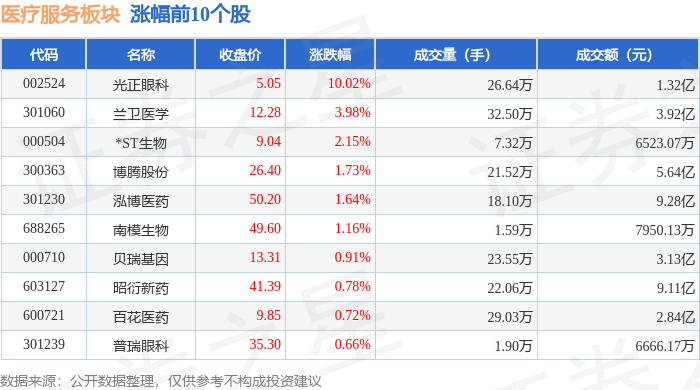
Market Overview - The medical services sector experienced a decline of 1.41% on January 26, with Meidisi leading the drop [1] - The Shanghai Composite Index closed at 4132.61, down 0.09%, while the Shenzhen Component Index closed at 14316.64, down 0.85% [1] Stock Performance - Notable gainers in the medical services sector included: - Guangzheng Eye Hospital (002524) with a closing price of 5.05, up 10.02% on a trading volume of 266,400 shares and a transaction value of 132 million [1] - Lanwei Medical (301060) closed at 12.28, up 3.98% with a trading volume of 325,000 shares and a transaction value of 392 million [1] - Major decliners included: - Meidisi (688202) closed at 60.88, down 7.28% with a trading volume of 71,600 shares and a transaction value of 444 million [2] - Meinian Health (002044) closed at 7.26, down 6.08% with a trading volume of 3.7675 million shares and a transaction value of 2.776 billion [2] Capital Flow - The medical services sector saw a net outflow of 1.318 billion from institutional investors, while retail investors had a net inflow of 1.011 billion [2] - The capital flow for specific stocks showed: - Boteng Co. (300363) had a net outflow of 39.83 million from institutional investors [3] - Guangzheng Eye Hospital (002524) had a net inflow of 39.29 million from institutional investors [3] - Lanwei Medical (301060) had a net inflow of 24.71 million from institutional investors [3]





ETF盘中资讯|刚刚,全市场规模最大医疗ETF(512170)再失半年线,场内频现溢价,“抄底”资金单周爆买逾8亿元
Sou Hu Cai Jing· 2026-01-26 03:53
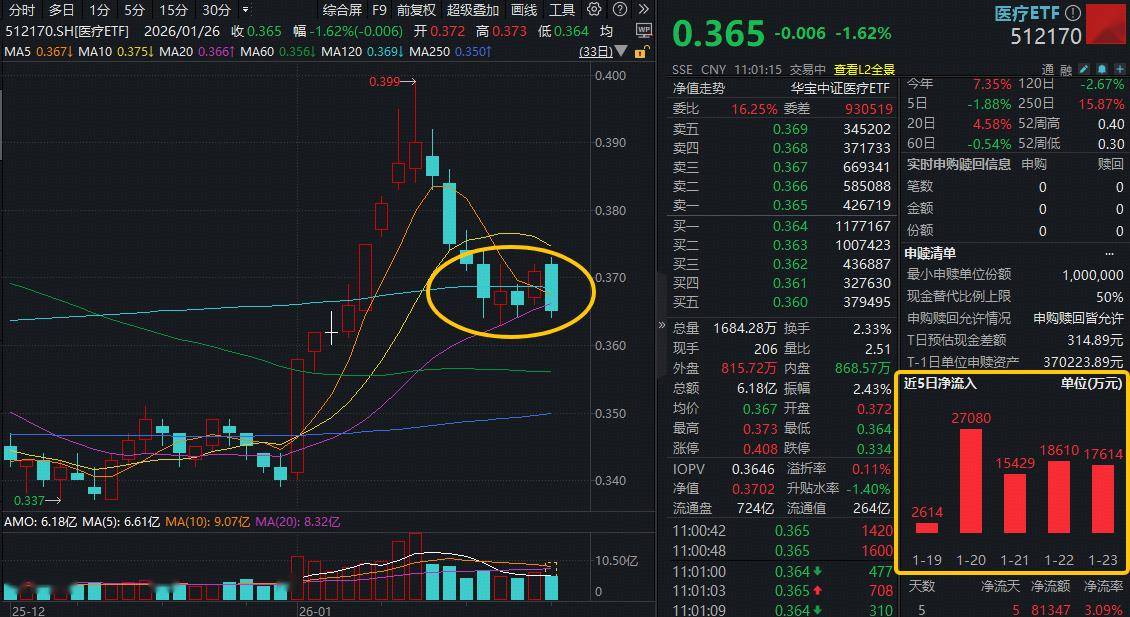
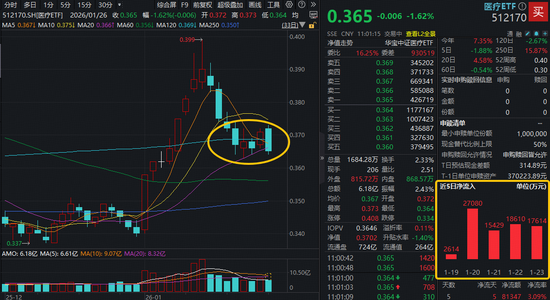
Group 1 - The A-share medical sector weakened on January 26, with AI medical and brain-computer interface concepts leading the decline, as Meien Health dropped by 6% and Weining Health and Sanbo Brain Science fell over 5% [1] - The largest medical ETF in the market (512170) declined by more than 1.6%, losing its half-year line, with real-time transactions exceeding 600 million yuan [1] - Despite the overall decline, the medical ETF (512170) showed high-frequency premiums in the market, indicating active buying interest, with a weekly increase in positions exceeding 813 million yuan [1] Group 2 - CITIC Securities recently published a weekly review of the pharmaceutical industry, indicating that policy impacts will eventually clear, and companies will gradually recover after strategic adjustments, with the medical device sector undergoing dual recovery in valuation and performance [3] - The report suggests increasing allocation to the medical device sector by 2026, with major investment opportunities arising from performance recovery, overseas expansion, brain-computer interfaces, and AI medical technologies, potentially leading to multi-bagger stocks in a tech bull market [3] - The CXO sector is experiencing rapid growth due to advancements in ADC and peptide drugs, with increasing demand for related CXO services, and segments like small nucleic acids and CGT are expected to develop quickly [3] Group 3 - The largest medical ETF (512170) has a fund size of 26.8 billion yuan, making it the largest in the market among medical ETFs [3] - The medical ETF and its linked fund (012323) cover 12 AI medical and brain-computer interface concept stocks, with over 50% weight in medical devices and nearly 25% in CXO [3] - For those interested in Hong Kong stock medical opportunities, the Hong Kong Stock Connect Medical ETF (159137) focuses on medical innovation, gathering core leaders in various pharmaceutical fields, including medical devices, AI medical, CXO, and innovative drugs [3]
刚刚,全市场规模最大医疗ETF(512170)再失半年线,场内频现溢价,“抄底”资金单周爆买逾8亿元
Xin Lang Cai Jing· 2026-01-26 03:25
Group 1 - The A-share medical sector weakened on January 26, with AI medical and brain-computer interface concepts leading the decline, as Meien Health dropped by 6% and Weining Health and Sanbo Brain Science fell over 5% [1][6] - The largest medical ETF in the market (512170) fell by more than 1.6%, losing its half-year line, with real-time transactions exceeding 600 million yuan [1][6] - Notably, the medical ETF (512170) showed high-frequency premiums in the market, indicating active low-buying funds, with a weekly increase of over 813 million yuan [1][6] Group 2 - CITIC Securities recently published a weekly review of the pharmaceutical industry, indicating that policy impacts will eventually clear, and corporate strategic adjustments will lead to gradual recovery, particularly in the medical device sector, which is undergoing dual recovery in valuation and performance [3][8] - The report suggests increasing allocation to the medical device sector by 2026, with main investment opportunities arising from performance recovery, overseas expansion, brain-computer interfaces, and AI medical technologies, potentially leading to multi-fold stock growth in a tech bull market [3][8] - The CXO sector is experiencing rapid growth due to advancements in ADC and peptide drugs, with increasing demand in related fields such as small nucleic acids and CGT, indicating long-term growth potential [3][8] Group 3 - The medical ETF (512170) has a fund size of 26.8 billion yuan, making it the largest among medical ETFs in the market [3][8] - The ETF covers over 50% weight in medical devices and nearly 25% in CXO, including 12 AI medical and brain-computer interface concept stocks [3][8] - For those interested in Hong Kong stock medical opportunities, the Hong Kong Stock Connect Medical ETF (159137) is highlighted as a high-elasticity T+0 tool, focusing on medical innovation and gathering core leaders in various medical fields [3][8]
易方达改革红利混合:2025年第四季度利润1.49亿元 净值增长率8.74%
Sou Hu Cai Jing· 2026-01-24 13:01
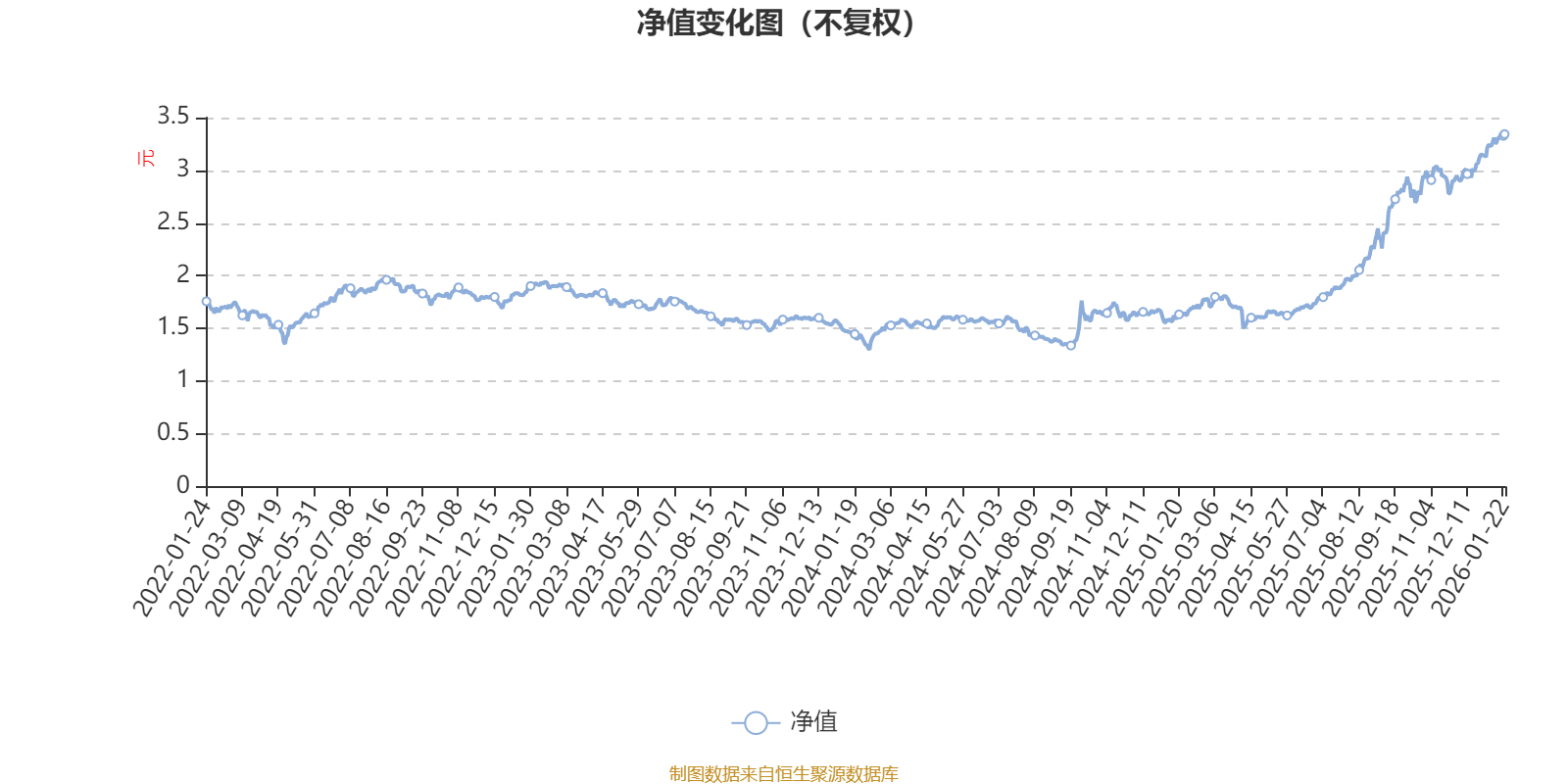
Core Viewpoint - The E Fund Reform Dividend Mixed Fund (001076) reported a profit of 149 million yuan in Q4 2025, with a weighted average profit per fund share of 0.2411 yuan, and a net value growth rate of 8.74% for the period [2]. Fund Performance - As of January 22, the fund's unit net value was 3.343 yuan, with a one-year cumulative net value growth rate of 103.59%, ranking 2nd among comparable funds [2][3]. - Over the past three months, the fund's net value growth rate was 19.82%, ranking 11th out of 185 comparable funds; over the past six months, it was 77.54%, ranking 2nd out of 185 [3]. - The fund's three-year net value growth rate was 77.07%, ranking 8th out of 176 comparable funds [3]. Risk and Return Metrics - The fund's Sharpe ratio over the past three years was 1.0696, ranking 7th out of 176 comparable funds [7]. - The maximum drawdown over the past three years was 33.13%, with the largest single-quarter drawdown occurring in Q1 2021 at 28.24% [9]. Investment Strategy and Outlook - The fund manager anticipates a continuation of an active market in 2026, with structural opportunities expected to emerge, driven by macro liquidity easing, supply-demand structure improvement, policy catalysts, and valuation recovery [2]. - The fund maintains an average stock position of 87.31% over the past three years, with a peak of 92.71% at the end of 2022 and a low of 74.88% in Q3 2021 [12]. Fund Composition - As of Q4 2025, the fund's total size was 1.914 billion yuan [14]. - The top ten holdings included Dongshan Precision, Zhongji Xuchuang, Huashu High-Tech, Mingyang Smart Energy, Xinyi Sheng, Xinwangda, Century Huatong, Juhua Co., Industrial Fulian, and Meinian Health [17].
AI应用的“妖风”还能吹多久?
虎嗅APP· 2026-01-23 10:16
Core Viewpoint - The article discusses the volatility and potential of AI application stocks, highlighting the recent surge and subsequent decline in their prices, emphasizing the need for logical investment rather than speculative trading [3][4][6]. Group 1: AI Application Market Dynamics - The AI application market saw a significant surge starting January 9, driven by the IPO of MiniMax, which rose over 90%, boosting market confidence in AI commercialization [3][4]. - Following the initial excitement, many AI companies issued announcements clarifying their limited revenue from AI, leading to a sharp price correction in the sector [4][5]. - The article suggests that while the current market may present opportunities, investors should focus on companies with genuine value and sustainable business models [4][7]. Group 2: GEO Model in Advertising - The article introduces the GEO (Generative Engine Optimization) model as a transformative approach in advertising, allowing users to input specific demands and receive optimized product recommendations directly from AI [9][11]. - The GEO market is projected to grow significantly, with estimates of $2.9 billion in China and $11.2 billion globally by 2025, indicating a shift from traditional SEO to AI-driven marketing strategies [11][12]. - Companies that own AI models and user behavior data are expected to be the primary beneficiaries of the GEO model, similar to how Google and Baidu benefited during the SEO era [12][13]. Group 3: AI in Healthcare - The AI healthcare sector has shown strong performance, with companies like 泓博医药 and 迪安诊断 seeing over 50% gains year-to-date, driven by increasing market interest [22][24]. - Government policies are increasingly supportive of AI in healthcare, with initiatives aimed at integrating AI into medical services and diagnostics [24][25]. - The article notes that advancements in AI healthcare applications, such as OpenAI's ChatGPT Health, are enhancing market sentiment and could lead to further growth in the sector [26][29]. Group 4: AI in Financial Technology - The financial technology sector has also experienced growth, with a 14% increase in the financial technology ETF as of January 14, 2026 [37]. - AI is expected to enhance the capabilities of both internet finance companies and financial IT firms, improving customer engagement and operational efficiency [38][39]. - However, the article cautions that while AI can improve operational efficiencies, it may not fundamentally change the poor business models prevalent in financial IT companies [40].

出资激增,上市公司加速入场做LP
FOFWEEKLY· 2026-01-23 10:08
Core Viewpoint - The article highlights the active participation of listed companies in private equity investments, with a total investment amount of 9.881 billion yuan in December, indicating a significant increase in investment activity compared to previous months [3][6][7]. Group 1: Investment Overview - In December, 71 listed companies contributed to 64 private equity funds, with a total of 74 investment transactions reported [3][6]. - The average investment amount per transaction was 1.34 million yuan, with the total disclosed investment amount reaching 9.881 billion yuan [6]. - The average scale of funds participated in by listed companies in December showed a significant increase compared to November, indicating a rising trend in investment [7]. Group 2: Geographic Distribution - Guangdong had the highest number of listed companies participating in investments, followed by Zhejiang [15]. - In terms of investment scale, Beijing's listed companies had the largest contributions, exceeding 1 billion yuan [15]. Group 3: State-Owned vs. Non-State-Owned Investments - In December, state-owned enterprises made 16 investments totaling 3.728 billion yuan, while non-state-owned enterprises made 58 investments with a total of 6.154 billion yuan [10]. Group 4: Industry Distribution - The materials sector had the highest investment amount in December, followed by the industrial sector [13]. - In terms of the number of investments, information technology companies led, followed closely by industrial companies [13]. Group 5: Investment Size Distribution - The majority of investments were in the range of 1-5 million yuan, accounting for 33% of total investments, while investments between 5-10 million yuan made up 27% [20]. - By the number of transactions, most investments were below 1 million yuan, representing 72% of total transactions [20]. Group 6: Active Companies and Investment Events - The article lists several active companies and their intended investments, including firms like Zhejiang Jingxing Paper Industry and Longbai Group, indicating a diverse range of sectors involved in private equity [28][29].

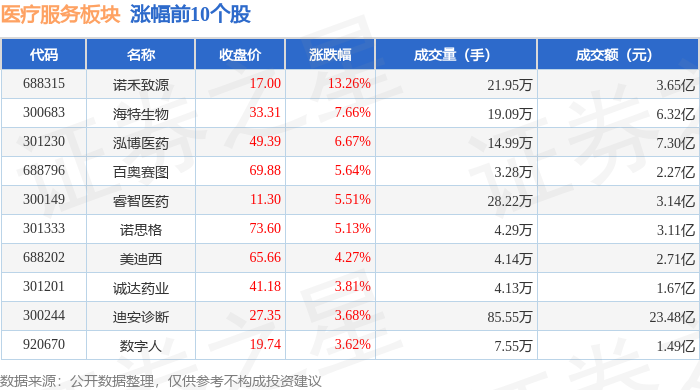
医疗服务板块1月23日涨1.19%,诺禾致源领涨,主力资金净流入9.91亿元
Zheng Xing Xing Ye Ri Bao· 2026-01-23 09:04
Core Viewpoint - The medical services sector experienced a rise of 1.19% on January 23, with notable gains from companies like Nuohua Zhiyuan, which led the sector's performance [1]. Group 1: Market Performance - The Shanghai Composite Index closed at 4136.16, up 0.33%, while the Shenzhen Component Index closed at 14439.66, up 0.79% [1]. - The medical services sector saw significant individual stock movements, with Nuohua Zhiyuan (688315) closing at 17.00, up 13.26%, and Hai Te Biological (300683) closing at 33.31, up 7.66% [1]. Group 2: Trading Volume and Value - Nuohua Zhiyuan had a trading volume of 219,500 shares and a transaction value of 365 million yuan [1]. - Hai Te Biological recorded a trading volume of 190,900 shares with a transaction value of 632 million yuan [1]. Group 3: Capital Flow - The medical services sector saw a net inflow of 999.1 million yuan from institutional investors, while retail investors experienced a net outflow of 1.069 billion yuan [2]. - The capital flow data indicates that major stocks like Diyan Diagnosis (300244) had a net inflow of 288 million yuan from institutional investors [3].