
贝因美

Search documents
经历2025年“结构性回暖”婴幼儿奶粉市场新一年增长点在哪
Sou Hu Cai Jing· 2026-01-01 23:12
Core Viewpoint - The Chinese milk powder market is experiencing a counter-cyclical recovery in 2025 despite ongoing pressure from declining newborn numbers, driven by strategic shifts in companies, policy support, and a focus on high-end products [4][9]. Group 1: Market Performance - The domestic milk powder market shows significant performance differentiation and overall recovery, with companies like Yili, Beingmate, and Ausnutria reporting revenue and profit growth in their infant formula segments [5]. - Yili's milk powder and dairy products revenue grew by 14.26% year-on-year, achieving a market share of 18.1%, making it the leading brand in China [5]. - Ausnutria reported a revenue of 3.887 billion yuan, a 5.6% increase year-on-year, with a net profit growth of 24.1% [5]. Group 2: Strategic Shifts - The recovery is attributed to strategic adjustments, product structure optimization, and deep channel cultivation rather than market expansion [7]. - Companies are focusing on high-end and differentiated products, with parents willing to pay a premium for clinically validated high-quality products [7]. - The acceptance of high-end milk powder in lower-tier cities is increasing, with sales growth in these areas surpassing that of first and second-tier cities [7]. Group 3: Policy Impact - Recent national policies, including a child-rearing subsidy of 3,600 yuan per eligible child and free preschool education, are expected to inject approximately 32.4 billion yuan into the milk powder market [8]. - These policies are designed to reduce family childcare costs and have led to a noticeable increase in stock prices for milk powder companies [8]. Group 4: Future Outlook - Experts suggest that while the industry shows signs of recovery, the low birth rate remains a concern, and companies must build diverse growth strategies for the long term [9]. - Short-term strategies should focus on policy adaptation and channel deepening, while product innovation should extend into specialized nutrition and all-age dietary needs [9]. - The industry is expected to see increased concentration, with leading companies gaining more advantages amid stricter regulations and rising costs [9].



年度盘点|高端化与政策红利加持 2025奶粉市场逆势回暖
Nan Fang Du Shi Bao· 2025-12-30 09:57
Core Insights - The Chinese infant formula market in 2025 is characterized by a dual landscape of challenges and opportunities, with declining birth rates and intense competition on one side, and a recovery in performance for several leading dairy companies on the other [1] - The recovery in the infant formula sector is attributed to strategic adjustments by companies, product innovation, and supportive government policies, leading to a structural rebound after a period of deep adjustment [1] Company Performance - Major dairy companies like Yili, Ausnutria, and Beingmate have reported revenue and profit growth in the infant formula segment, reversing previous trends of slowing growth [2] - Yili's revenue from dairy products grew by 14.26% year-on-year, with infant formula retail sales achieving double-digit growth and a market share of 18.1%, making it the market leader in China [2] - Ausnutria's revenue reached 3.887 billion yuan, a 5.6% increase year-on-year, with net profit rising by 24.1% [2] - The performance of foreign brands like Danone and a2 Milk also showed positive growth, although some domestic brands faced challenges [3] Market Dynamics - The infant formula market is expected to see a retail market growth rate of around 5% in 2025, driven by a rebound in birth rates and supportive policies [3] - The shift in consumer preferences towards high-end products is evident, with the proportion of consumers purchasing formula priced above 300 yuan increasing from 21% to 26% [3] Strategic Adjustments - Companies are shifting focus from market share expansion to value creation, emphasizing product innovation and quality enhancement in response to a saturated market [4] - The competition has moved towards high-end and differentiated products, with companies like Ausnutria and Yili investing in specialized formulas and research [4] Market Expansion - The low-tier cities and rural markets are becoming significant growth areas, with increased acceptance of high-end infant formula products [5] - Companies are accelerating their channel penetration into these markets, with initiatives like Yili's "township station" plan and Mengniu's focus on maternal and infant stores [5] Policy Impact - Recent government policies, including a cash subsidy for families with infants and free preschool education, are expected to stimulate demand in the infant formula market [6] - The implementation of these policies is projected to release approximately 32.4 billion yuan annually for infant care, with a significant portion likely directed towards formula purchases [6] Future Trends - The industry is expected to transition from cyclical recovery to structural growth, with companies needing to develop diversified growth strategies [8] - Product innovation is anticipated to focus on specialized nutritional needs, with segments like adult nutrition and special formulas for children gaining traction [9] - Digital transformation and consumer engagement are becoming critical competitive advantages as younger parents increasingly prefer online research and purchasing [9] - The industry may see accelerated consolidation, with leading companies likely to expand their market share through mergers and acquisitions [9]
年度盘点|高端化与政策红利加持,2025奶粉市场逆势回暖
Sou Hu Cai Jing· 2025-12-30 09:52
Core Insights - The Chinese infant formula market in 2025 is characterized by a dual landscape of challenges and opportunities, with declining birth rates and intense competition on one side, and a recovery in performance for several leading dairy companies on the other [1] - The recovery in the infant formula sector is attributed to strategic adjustments by companies, product innovation, and the implementation of supportive national policies [1] Company Performance - Major dairy companies like Yili, Ausnutria, and Beingmate have reported revenue and profit growth in the infant formula segment, reversing previous trends of slowing growth [2][4] - Yili's infant formula and dairy product revenue increased by 14.26% year-on-year, achieving a market share of 18.1%, while Ausnutria's revenue grew by 5.6% with a net profit increase of 24.1% [2][4] - The performance of foreign brands such as Danone and a2 Milk also showed positive growth, although some leading companies faced pressure, indicating structural differentiation within the industry [6] Market Trends - The retail market for infant formula is expected to grow at around 5% in 2025, driven by a rebound in birth rates and supportive policies [6] - The proportion of consumers purchasing premium infant formula (over 300 yuan) increased from 21% to 26%, reflecting a trend towards higher quality products among younger parents [6] Strategic Shifts - The industry is shifting from a focus on market share expansion to value creation, with companies investing in high-end and functionally differentiated products [10] - Companies are enhancing their supply chains and digital efficiencies to improve profitability, with examples like Ausnutria's EBITDA growth of 29.7% [13] Policy Impact - New national policies, including a cash subsidy for families with infants and free preschool education, are expected to stimulate demand in the infant formula market [15][18] - The implementation of these policies is anticipated to lower childcare costs and boost consumer confidence, leading to increased sales for dairy companies [15][18] Future Outlook - The industry is expected to transition from cyclical recovery to structural growth, with companies needing to diversify their growth strategies [19][21] - Product innovation is crucial, with a focus on specialized nutrition for various age groups and health needs, as well as digital transformation to enhance consumer engagement [20][21] - The consolidation of the industry may accelerate, with larger companies likely to acquire smaller firms to expand their market share [20][21]
贝因美12月29日获融资买入1465.55万元,融资余额3.52亿元
Xin Lang Cai Jing· 2025-12-30 01:28
Group 1 - On December 29, Beiyinmei's stock price decreased by 0.97%, with a trading volume of 171 million yuan [1] - The financing data shows that on the same day, Beiyinmei had a financing purchase amount of 14.6555 million yuan and a financing repayment of 17.7085 million yuan, resulting in a net financing buy of -3.0530 million yuan [1] - As of December 29, the total balance of margin trading for Beiyinmei was 352 million yuan, accounting for 5.33% of its circulating market value, which is above the 50th percentile level over the past year [1] Group 2 - As of September 30, Beiyinmei had 147,900 shareholders, an increase of 3.24% compared to the previous period [2] - For the period from January to September 2025, Beiyinmei achieved an operating income of 2.033 billion yuan, a year-on-year decrease of 2.59%, while the net profit attributable to shareholders increased by 48.07% to 106 million yuan [2] - Beiyinmei has distributed a total of 961 million yuan in dividends since its A-share listing, with no dividends distributed in the last three years [2]

核心市场增长乏力,阳光乳业的“新鲜”故事如何继续讲下去
Xin Lang Cai Jing· 2025-12-29 08:24
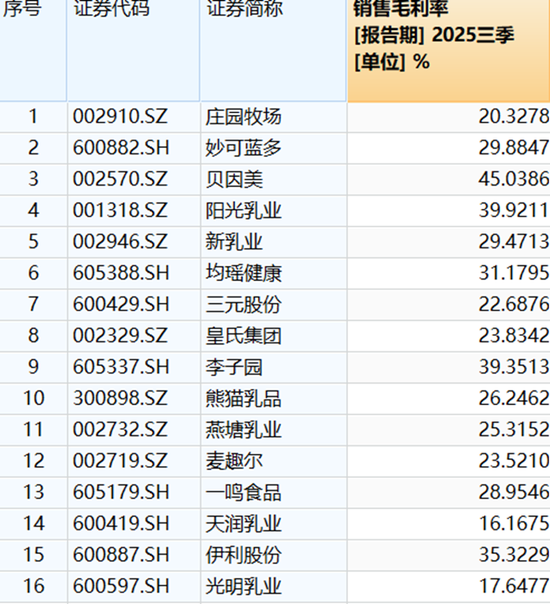
Core Viewpoint - Sunshine Dairy (001318.SZ) announced plans for stock reduction by its major shareholder, with a total of up to 8,479,800 shares, representing no more than 3% of the company's total share capital. Earlier, from June to August, the shareholder sold 1.28% of the total share capital through concentrated bidding on the Shenzhen Stock Exchange. Despite a 40% increase in stock price this year, the company's operational performance showed a decline in revenue and net profit in Q3, with a 10.29% year-on-year drop in net profit attributable to the parent company [1][8]. Company Overview - Sunshine Dairy, established in 1956 as a state-owned enterprise, became the first listed dairy company in Jiangxi Province in May 2022. The company focuses on the research, production, and sales of liquid milk and dairy beverages, with low-temperature dairy products being its core offering, accounting for over 80% of revenue from 2022 to 2024, slightly decreasing to 78.37% in the first half of this year [2][9]. Business Model and Distribution - The company relies on a unique distribution model that includes self-owned farms, local processing, and short cold chain delivery, primarily reaching consumers through a "milk delivery to home" approach. In its core market of Nanchang, the company uses a single-layer distribution model, while in surrounding cities, it allows regional distributors to develop lower-tier distributors, maintaining a two-tier structure [2][9]. Financial Performance - Sunshine Dairy's gross profit margin for the first three quarters of this year was 39.92%, ranking second among 16 listed dairy companies, only behind Beiyinmei's 45.04% [3][10]. However, the company's revenue from its main product, low-temperature dairy, is projected to decline by 10.76% in 2024 and 9.61% in the first half of 2025, which is expected to negatively impact overall performance [6][12]. Market Challenges - The company faces significant competition from national dairy giants like Yili and Mengniu, which have strengthened their positions in the low-temperature fresh milk segment. These competitors leverage their national supply chains and product innovation, diluting Sunshine Dairy's core differentiation of "local freshness" [7][14]. Additionally, the company has struggled to convert the increase in the number of external distributors into revenue growth, with revenue from outside Jiangxi declining by 30.64% in the latest period [4][11]. Strategic Decisions - Sunshine Dairy had planned to invest 143 million yuan in the second phase of its Anhui project to expand production capacity. However, the company announced the termination of this investment due to a slowdown in domestic dairy consumption and market volatility, indicating that existing capacity is sufficient to meet demand [5][13].
2025年1-11月全国酒、饮料和精制茶制造业出口货值为206.2亿元,累计下滑1.4%
Chan Ye Xin Xi Wang· 2025-12-28 02:00
Core Viewpoint - The beverage manufacturing industry in China is experiencing a decline in export value, with significant year-on-year decreases reported for 2025 [1] Industry Summary - In November 2025, the total export value of the beverage and refined tea manufacturing industry reached 1.71 billion, marking a year-on-year decrease of 14.5% [1] - From January to November 2025, the cumulative export value for the industry was 20.62 billion, reflecting a slight year-on-year decline of 1.4% [1] - The data indicates a concerning trend for the beverage sector, suggesting potential challenges ahead for companies involved in this industry [1] Company Summary - Listed companies in the beverage sector include Chengde Lulu (000848), Sunshine Dairy (001318), Huangshi Group (002329), Beingmate (002570), Western Pastoral (300106), Pinwa Food (300892), Panda Dairy (300898), Sanyuan Foods (600429), Bright Dairy (600597), Miaokelan Duo (600882), Yili Group (600887), and Liziyuan (605337) [1] - These companies may face pressures due to the declining export values, which could impact their financial performance and market positioning [1]

2025年11月中国乳品进口数量和进口金额分别为22万吨和10.85亿美元
Chan Ye Xin Xi Wang· 2025-12-28 01:46
上市企业:阳光乳业(001318),皇氏集团(002329),贝因美(002570),麦趣尔(002719),燕塘 乳业(002732),庄园牧场(002910),新乳业(002946),西部牧业(300106),品渥食品 (300892),熊猫乳品(300898),海融科技(300915),天润乳业(600419),三元股份 (600429),光明乳业(600597),妙可蓝多(600882),伊利股份(600887),一鸣食品 (605179),佳禾食品(605300),骑士乳业(832786) 数据来源:中国海关,智研咨询整理 相关报告:智研咨询发布的《2026-2032年中国乳制品行业市场运营态势及投资前景趋势报告》 知前沿,问智研。智研咨询是中国一流产业咨询机构,十数年持续深耕产业研究领域,提供深度产业研 究报告、商业计划书、可行性研究报告及定制服务等一站式产业咨询服务。专业的角度、品质化的服 务、敏锐的市场洞察力,专注于提供完善的产业解决方案,为您的投资决策赋能。 根据中国海关数据显示:2025年11月中国乳品进口数量为22万吨,同比下降3.1%,进口金额为10.85亿 美元,同比增长9.7%。 ...

今日最惨个股!一字涨停开盘,跳崩重跌收盘,打板的懵了
Sou Hu Cai Jing· 2025-12-26 19:26
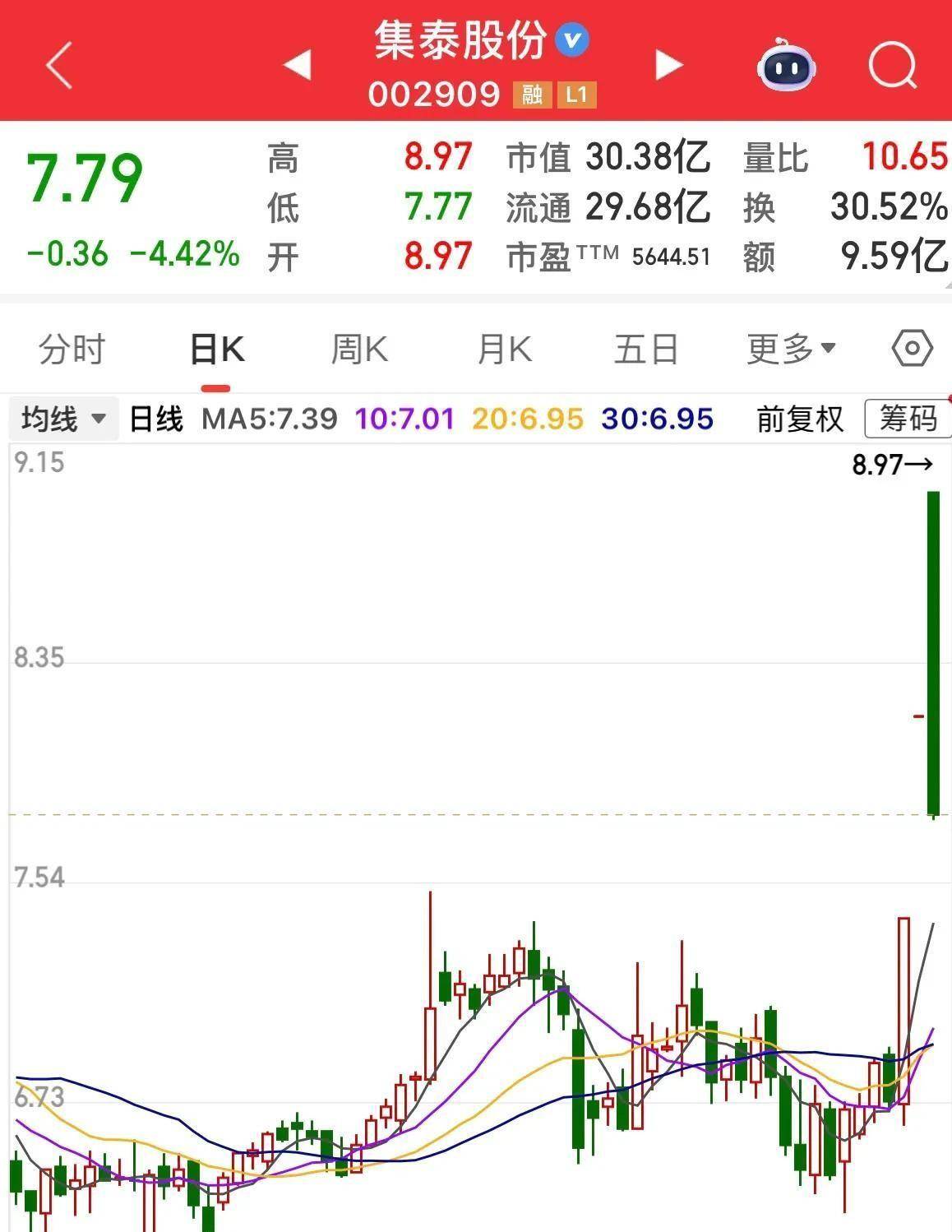
Core Viewpoint - The article discusses the phenomenon of "flash crashes" in the A-share market, exemplified by the dramatic price drop of Jitai Co., which experienced a rapid decline after a strong opening, highlighting the risks associated with stocks driven by speculative concepts rather than solid fundamentals [1][3]. Group 1: Stock Performance - Jitai Co. opened with a third consecutive limit-up but plummeted by 4.42% by the end of the day, resulting in significant losses for late buyers [1]. - The stock's performance reflects a broader trend in the market where nearly 3,800 stocks rose, yet Jitai Co. faced a stark reversal [1]. - The concept-driven rise of Jitai Co. is indicative of a pattern where stocks can experience extreme volatility, often leading to substantial losses for investors [3]. Group 2: Causes of Flash Crashes - Flash crashes can occur for various reasons, including unexpected poor performance or a sudden loss of interest in a speculative concept [2][3]. - Stocks that experience flash crashes often lack solid performance backing, making them vulnerable to rapid declines [6]. - The reliance on single concepts for stock price surges, as seen with Jitai Co.'s "liquid cooling concept," is a common trait among stocks that face sudden crashes [3][5]. Group 3: Market Dynamics - The article highlights the role of major market players or "whales" who manipulate stock prices by creating hype around certain concepts, leading to inflated prices before offloading their shares [8][12]. - These players often maintain an illusion of strength in the stock to attract more retail investors, which ultimately facilitates their exit at high prices [8][12]. - The phenomenon of flash crashes is exacerbated in stocks with high volatility and speculative trading, particularly in the ST (Special Treatment) sector, which is prone to dramatic price swings [10][12]. Group 4: Investor Behavior - Investors are cautioned against blindly following market trends and should focus on the underlying fundamentals of companies rather than speculative hype [12]. - The article emphasizes the importance of thorough research and analysis of a company's financial health and business model to avoid the pitfalls of speculative trading [12].

3.55亿主力资金净流入,乳业概念涨3.73%
Zheng Quan Shi Bao Wang· 2025-12-19 09:41
Group 1 - The dairy sector has seen a rise of 3.73%, ranking second among concept sectors, with 34 stocks increasing in value, including Zhuangyuan Pasture which hit the daily limit, and Huanlejia, Qishi Dairy, and Xibu Dairy with increases of 15.90%, 6.42%, and 6.25% respectively [1][2] - The dairy sector attracted a net inflow of 355 million yuan from main funds today, with 23 stocks receiving net inflows, and 5 stocks exceeding 30 million yuan in net inflow, led by Huanlejia with a net inflow of 129 million yuan [2][3] - The top stocks by net inflow ratio include Yisheng Co., Yiyaton, and Huanlejia, with net inflow ratios of 13.68%, 10.97%, and 10.65% respectively [3][4] Group 2 - The dairy sector's inflow ranking shows Huanlejia leading with a daily increase of 15.90% and a turnover rate of 9.98%, followed by Beiyinmei with a 3.23% increase and a turnover rate of 10.27% [3][4] - Other notable stocks include Zhuangyuan Pasture with a 9.99% increase and a turnover rate of 25.09%, and Sanyuan Co. with a 3.39% increase and a turnover rate of 6.32% [3][4] - Stocks such as Yili Co. and Jinyuan Rice also saw increases of 0.72% and 3.73% respectively, with net inflows of 328.74 million yuan and 647.99 million yuan [4][5]


贝因美涨2.10%,成交额2.58亿元,主力资金净流入557.75万元
Xin Lang Cai Jing· 2025-12-19 03:01
Group 1 - The core viewpoint of the news is that Beiyinmei's stock has shown significant fluctuations, with a year-to-date increase of 50.12% and a recent rise of 2.10% on December 19, reaching a price of 6.32 yuan per share [1] - As of September 30, Beiyinmei reported a revenue of 2.033 billion yuan for the first nine months of 2025, a year-on-year decrease of 2.59%, while the net profit attributable to shareholders increased by 48.07% to 106 million yuan [2] - The company has a market capitalization of 6.826 billion yuan and has seen a net inflow of main funds amounting to 5.5775 million yuan on December 19 [1] Group 2 - Beiyinmei's main business revenue composition includes 89.20% from milk powder, 4.69% from other supplements, 3.54% from rice flour, 1.71% from supplies, and 0.86% from other categories [1] - The company has not distributed any dividends in the last three years, with a total payout of 9.61 billion yuan since its A-share listing [3] - As of September 30, the number of shareholders increased by 3.24% to 147,900, with an average of 7,302 circulating shares per person, a decrease of 3.14% [2]