
渠道下沉

Search documents
农夫山泉2025年净利润超158亿元!拟现金分红111.34亿元
Sou Hu Cai Jing· 2026-03-24 11:33
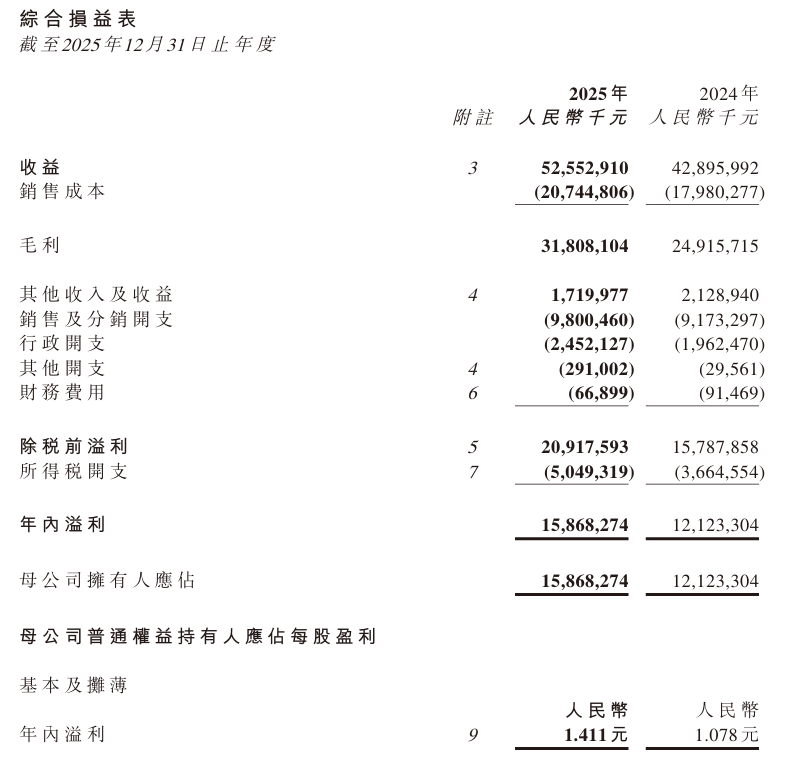
Core Viewpoint - Nongfu Spring (09633.HK) reported a significant growth in revenue and net profit for the year 2025, indicating strong performance despite industry challenges [1] Financial Performance - Revenue for 2025 reached RMB 52.55 billion, a year-on-year increase of 22.5% compared to RMB 42.90 billion in 2024 [2] - Net profit for 2025 was RMB 15.87 billion, reflecting a 30.9% increase from RMB 12.12 billion in 2024 [2] - The earnings per share for 2025 was RMB 1.411, up from RMB 1.078 in 2024 [2] Dividend Distribution - The company declared a final dividend of RMB 0.99 per share, totaling approximately RMB 11.13 billion in dividends [1] - The dividend payout ratio is around 70% [1] Market Position and Strategy - Despite a slowdown in the packaged water industry and intensified competition in tea and juice segments, Nongfu Spring achieved performance well above industry averages through product premiumization and deeper market penetration [1] - The net profit growth rate of 30.9% significantly outpaced revenue growth, indicating enhanced economies of scale and cost control capabilities [1]


宝胜国际净利腰斩,想靠平替版lululemon翻身
Sou Hu Cai Jing· 2026-03-13 05:36
Core Viewpoint - The main theme for BaoSheng International over the past year has been inventory reduction and betting on new brands, as the company faces significant declines in revenue and profit due to increased competition and reliance on major international brands [1][4]. Financial Performance - For the fiscal year ending December 31, 2025, BaoSheng International reported a revenue of 17.132 billion yuan, a year-on-year decrease of 7.2% [1]. - Operating profit fell to 362 million yuan, down 49% year-on-year, marking the company's worst performance in nearly a decade [1]. - Profit attributable to shareholders was 211 million yuan, a decrease of 57.1% compared to 491 million yuan in the same period of 2024 [1]. Store Operations - The company closed over 100 stores in the past year, reducing the total number of stores to 3,310 [1]. - Direct store sales experienced a decline of 10% to 20%, with a net reduction of 138 stores in Greater China by the end of 2025 [2]. Inventory and Cash Flow - As of the end of 2025, inventory amounted to 5.02 billion yuan, an increase of 1.5% from the previous year, with the average inventory turnover period extending from 145 days to 160 days [3]. - Cash and cash equivalents decreased by 54.9% to 640 million yuan, with bank balances dropping from 2.703 billion yuan to 1.822 billion yuan [3]. Strategic Initiatives - To reduce dependence on major brands like Nike and Adidas, the company is focusing on developing its proprietary brand matrix, with a particular emphasis on the Korean yoga brand XEXYMIX [4]. - The company plans to enhance its online operations and has seen digital sales contribute over 30% to total revenue, with live streaming sales growing by over 70% [3][4]. Future Outlook - BaoSheng International aims to diversify its brand portfolio, penetrate lower-tier markets, and upgrade its digital capabilities as key strategies for overcoming current challenges [5]. - The company is also expanding its multi-brand outlet store network and strengthening partnerships with franchisees to enhance market penetration [5].
理财子样本切片:巨量资金的迁徙、妥协与突围
Hua Er Jie Jian Wen· 2026-02-26 21:17
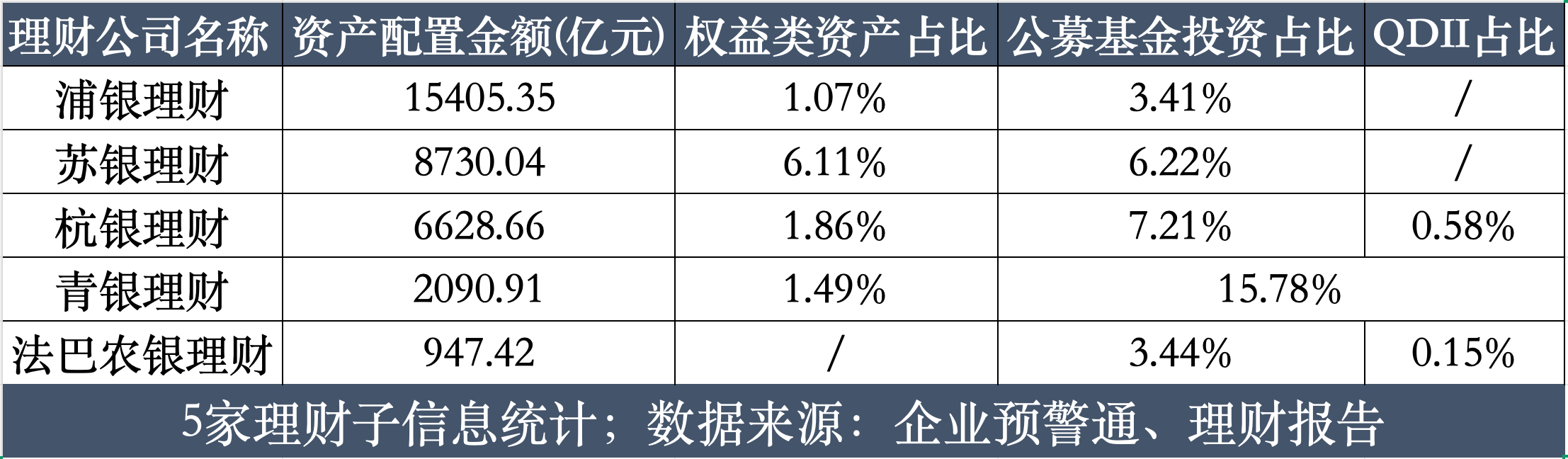
Core Viewpoint - The ongoing trend of macro liquidity easing and declining deposit rates is reshaping the asset-liability structure of domestic residents, leading to a significant migration of wealth termed "deposit migration," which is becoming a core source of growth for the asset management industry [1] Group 1: Industry Dynamics - As of February 26, five financial institutions reported a total wealth management product scale of 3.19 trillion yuan, reflecting a year-on-year growth of 24.21%, with some institutions nearing a 40% growth rate [1] - The financial management subsidiaries of banks are becoming the primary recipients of the massive outflow of funds, indicating a deep restructuring of the industry landscape [1] - The asset allocation of these institutions shows a dominant preference for fixed-income products, with solid returns being prioritized over equity investments due to low risk tolerance among clients [2][4] Group 2: Asset Allocation Trends - The proportion of fixed-income products remains overwhelmingly high among the sample institutions, with some institutions reporting nearly 100% allocation to fixed-income assets [3] - Despite a favorable stock market, funds are not flowing into equity investments due to clients' low risk appetite, which is reflected in the conservative strategies adopted by financial institutions [4][5] - The allocation to public funds is increasing significantly, with institutions like Su Yin Wealth Management increasing their public fund allocation from 0.5% to 6.22% in 2025 [10] Group 3: Market Opportunities - The upcoming maturity of over 50 trillion yuan in fixed-term deposits by 2026 is expected to drive further migration of funds into wealth management products, as clients seek stable alternatives [6][7] - The demand for wealth management in county-level markets is poised for explosive growth, as local economies become more active and incomes rise, presenting a significant opportunity for financial institutions [19][20] Group 4: Competitive Landscape - The growth rates of wealth management subsidiaries vary significantly, with institutions like Hang Yin Wealth Management achieving a 38.53% increase, while others like Qing Yin Wealth Management show minimal growth [16][17] - The competition is shifting towards channel expansion, with institutions focusing on building extensive distribution networks to tap into the county market, which is seen as the next growth frontier [19][20] - The differentiation in the wealth management market is increasingly dependent on the ability to reach clients effectively and manage customer relationships, rather than solely on investment capabilities [22]
北新建材20251230
2025-12-31 16:02
Summary of North New Building Materials Conference Call Company Overview - **Company**: North New Building Materials - **Industry**: Building materials, specifically gypsum board, waterproofing, and coatings Key Points Gypsum Board Business - The gypsum board business has shown strong performance in home decoration and renovation sectors, with growth rates exceeding overall market levels. Home decoration now accounts for 35% of the business, while renovation and secondary decoration exceed 40% [2][5] - A price increase for gypsum boards was implemented at the end of October 2025, with expectations for gradual price increases in the fourth quarter. Future sales are projected to exceed the 2021 peak, reaching 3.8 to 4.0 billion square meters over the next five years [2][10] - The high-end product segment of Taishan Gypsum has increased its share to 30%-35% in the first three quarters of 2025, contributing over 50% of revenue and profit due to higher prices and margins [2][11] - Foreign brands in the gypsum board market have focused on profitability and have not engaged in large-scale price cuts, primarily producing through OEM for the mid-to-low-end market [2][12] Waterproofing Business - The waterproofing segment has seen significant growth, with a 80%-90% increase in the first three quarters of 2025, aided by the acquisition of Yuanda Hongyu and the establishment of new business divisions [2][18] - The number of distributors has increased to over 5,000, with partnerships formed with major construction companies [2][18] Coatings Business - The coatings segment, particularly Carpoly, has performed well with significant growth in artistic coatings and stone-like paints. A double-digit growth is expected in 2026, with strong demand in rural exterior wall applications [2][20] Market Dynamics and Strategy - The company maintains a 40% dividend payout ratio while actively pursuing international expansion through new bases in Tanzania, Uzbekistan, and Thailand, which are already profitable [3][21] - The company is adapting to market changes by focusing on high-end products and innovative solutions, while also managing production capacity to avoid oversupply [14][15] - The competitive landscape includes both domestic and foreign brands, with North New Building Materials holding a market share of approximately 67%-68% [16] Future Outlook - The company is optimistic about the real estate market stabilizing, which could lead to increased demand for gypsum boards. The waterproofing sector is expected to continue its growth trajectory as smaller companies exit the market [6][18] - The coatings business is projected to maintain double-digit growth in the coming year [6][20] Additional Insights - Inventory levels among gypsum board distributors are currently low, with most holding one to two months' worth of stock due to price fluctuations [7] - The company is enhancing its digital and smart production capabilities to improve efficiency and reduce costs [15][17] This summary encapsulates the key insights and strategic directions of North New Building Materials as discussed in the conference call, highlighting the company's performance across its various business segments and its outlook for future growth.

年度盘点|高端化与政策红利加持,2025奶粉市场逆势回暖
Sou Hu Cai Jing· 2025-12-30 09:52
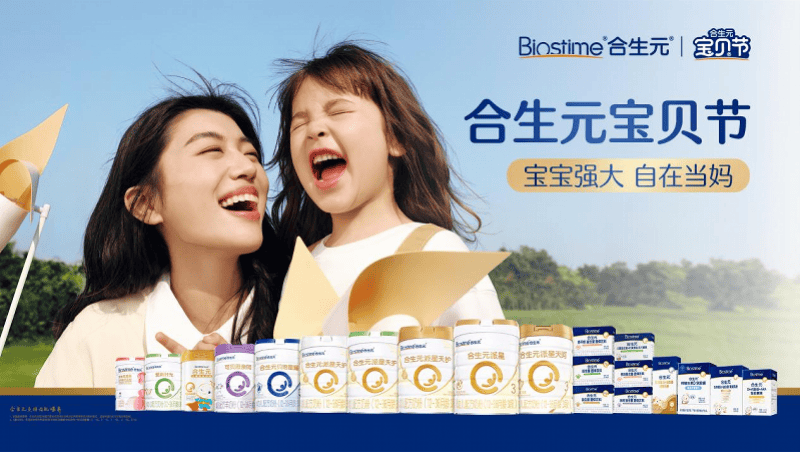
Core Insights - The Chinese infant formula market in 2025 is characterized by a dual landscape of challenges and opportunities, with declining birth rates and intense competition on one side, and a recovery in performance for several leading dairy companies on the other [1] - The recovery in the infant formula sector is attributed to strategic adjustments by companies, product innovation, and the implementation of supportive national policies [1] Company Performance - Major dairy companies like Yili, Ausnutria, and Beingmate have reported revenue and profit growth in the infant formula segment, reversing previous trends of slowing growth [2][4] - Yili's infant formula and dairy product revenue increased by 14.26% year-on-year, achieving a market share of 18.1%, while Ausnutria's revenue grew by 5.6% with a net profit increase of 24.1% [2][4] - The performance of foreign brands such as Danone and a2 Milk also showed positive growth, although some leading companies faced pressure, indicating structural differentiation within the industry [6] Market Trends - The retail market for infant formula is expected to grow at around 5% in 2025, driven by a rebound in birth rates and supportive policies [6] - The proportion of consumers purchasing premium infant formula (over 300 yuan) increased from 21% to 26%, reflecting a trend towards higher quality products among younger parents [6] Strategic Shifts - The industry is shifting from a focus on market share expansion to value creation, with companies investing in high-end and functionally differentiated products [10] - Companies are enhancing their supply chains and digital efficiencies to improve profitability, with examples like Ausnutria's EBITDA growth of 29.7% [13] Policy Impact - New national policies, including a cash subsidy for families with infants and free preschool education, are expected to stimulate demand in the infant formula market [15][18] - The implementation of these policies is anticipated to lower childcare costs and boost consumer confidence, leading to increased sales for dairy companies [15][18] Future Outlook - The industry is expected to transition from cyclical recovery to structural growth, with companies needing to diversify their growth strategies [19][21] - Product innovation is crucial, with a focus on specialized nutrition for various age groups and health needs, as well as digital transformation to enhance consumer engagement [20][21] - The consolidation of the industry may accelerate, with larger companies likely to acquire smaller firms to expand their market share [20][21]

徽酒三国杀,决战社区“最后一公里”
阿尔法工场研究院· 2025-12-22 00:03
Core Viewpoint - The Anhui liquor industry is collectively shifting towards community-focused sales models, with companies like Kuozi Jiao, Gujing Gongjiu, and Yingjia Gongjiu opening local liquor shops to directly engage with consumers [1][10]. Group 1: Market Dynamics - The traditional sales model relied heavily on distributors, but the new "liquor shop" approach requires companies to engage directly with consumers, shifting from brand-centric to retail-centric thinking [1][2]. - The competitive landscape has changed significantly, with Kuozi Jiao's market position declining, Gujing Gongjiu leading in scale and growth, and Yingjia Gongjiu surpassing Kuozi Jiao to become the second-largest player [5][6]. Group 2: Financial Performance - In the first three quarters of 2025, Kuozi Jiao reported a revenue of 3.174 billion yuan and a net profit of 742 million yuan, reflecting year-on-year declines of 27.24% and 43.39% respectively, with a 92.55% drop in net profit for Q3 [8][12]. - Gujing Gongjiu's revenue was 16.425 billion yuan and net profit 3.96 billion yuan, down 13.87% and 16.57% year-on-year [8]. - Yingjia Gongjiu's revenue reached 4.516 billion yuan with a net profit of 1.511 billion yuan, showing declines of 18.09% and 24.67% respectively [9]. Group 3: Consumer Behavior and Market Trends - The demand for liquor has slowed, with a notable decrease in corporate group purchases and business banquets, leading to a reassessment of consumption structures towards community retail and personal consumption [16][17]. - The competition among Anhui liquor brands is shifting from scale expansion to intense competition at the retail level [18]. - The traditional year-end negotiations between liquor companies and distributors are changing, with companies adopting a more cautious approach in setting sales targets [19]. Group 4: Strategic Implications - Kuozi Jiao's move to open community liquor shops symbolizes a strategic shift to regain direct consumer engagement amid market pressures [14][20]. - The industry faces a critical challenge in transitioning from a reliance on wholesale distribution to a focus on direct sales and consumer engagement [21][22].


海天味业拟派发17.54亿特别分红 稳健经营前三季负债率仅15.38%
Chang Jiang Shang Bao· 2025-12-21 23:19
Core Viewpoint - Hai Tian Flavor Industry, known as the "soy sauce king," has announced a significant dividend plan, proposing a special dividend of 1.754 billion yuan (including tax) and committing to a cash dividend ratio of no less than 80% of net profit for the next three years [1][2]. Financial Performance - For the first three quarters of 2025, Hai Tian reported revenue of 21.628 billion yuan, a year-on-year increase of 6.02%, and a net profit attributable to shareholders of 5.322 billion yuan, up 10.54% year-on-year [1][3]. - The company's cash flow is robust, with cash on hand reaching 22.476 billion yuan and a low debt-to-asset ratio of 15.38% as of the end of the third quarter [3]. Dividend Policy - The total dividend for 2025 is expected to reach 3.273 billion yuan (including tax), which represents 61.50% of the net profit for the first three quarters [1][2]. - Since its listing in 2014, Hai Tian has maintained a consistent cash dividend policy, with a payout ratio exceeding 60% for many years, reaching 75.24% in 2024 [2]. Market Challenges - Despite stable overall performance, Hai Tian faces challenges during the industry's transformation period, with revenue growth slowing to 2.48% and net profit growth to 3.40% in the third quarter of 2025 [4]. - The core soy sauce business saw a revenue growth rate of only 4.9% in the third quarter, significantly down from 9.2% in the first half of the year [4]. Strategic Initiatives - To address traditional channel bottlenecks, Hai Tian is implementing a dual transformation strategy focusing on "channel sinking" and "product upgrading," with online channel revenue reaching 1.245 billion yuan, a year-on-year increase of 32.11% [5]. - The company is enhancing its product offerings by investing in healthier options and expanding into vinegar and cooking wine categories, aligning with consumer trends towards clean-label products [5][6]. Global Expansion - Hai Tian's global strategy includes the construction of a production base in Indonesia, expected to be operational by the end of the year, which will reduce transportation time to Southeast Asian markets [6]. - The company has raised 10.01 billion HKD from its Hong Kong listing, with approximately 20% allocated for overseas market expansion, although current overseas revenue accounts for less than 5% of total income [6].

福建前首富许世辉交棒200亿食品帝国 许阳阳接掌达利食品直面业绩双降考题
Chang Jiang Shang Bao· 2025-11-16 23:23
Core Viewpoint - The transition of leadership at Dali Foods Group from founder Xu Shihui to his daughter Xu Yangyang marks a significant moment in the company's history, as it completes the family succession of a food giant with nearly 20 billion yuan in annual revenue [1][3]. Company Overview - Dali Foods Group, founded by Xu Shihui, has grown from a small factory with a monthly rent of 300 yuan to a well-known food empire with annual revenues approaching 20 billion yuan [1][14]. - The company is recognized for its popular brands, including Dali Garden, Kebi, and Haochidian, which have reshaped the snack industry in China [1][14]. - Xu Shihui's business model, characterized by "hit products following trends, celebrity endorsements, affordable pricing, and channel penetration," has been pivotal to the company's success [1][16][20]. Leadership Transition - Xu Yangyang, who has been with Dali Foods for 17 years, is now tasked with leading the company and addressing the challenges it faces in a changing market [3][21]. - The company has experienced a decline in both revenue and net profit in recent years, indicating the need for strategic adjustments under the new leadership [2][22]. Market Challenges - Dali Foods is facing significant pressure from the evolving Chinese consumer market, particularly due to the rise of e-commerce, which has diminished the effectiveness of traditional distribution channels [2][22]. - Recent financial data shows a downward trend in revenue and profit, with 2023 projections indicating further declines [22]. Strategic Considerations - Xu Yangyang's challenge will be to innovate and adapt the company’s strategies to meet new consumer demands, focusing on digitalization, youth engagement, and international expansion [22].
日本方便面回暖,日清食品内地2025前三季度增长5.4%,华西、华北带头复苏
3 6 Ke· 2025-11-11 03:56
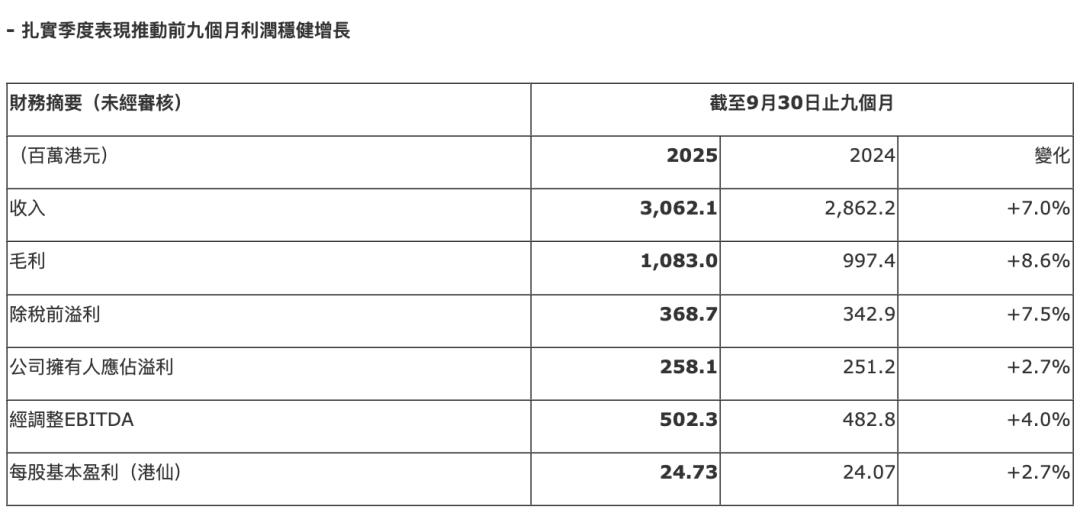
Core Insights - Nissin Foods reported a revenue of HKD 30.62 billion (approximately RMB 28.04 billion) for the first three quarters ending September 30, 2025, representing a year-on-year growth of 7.0% [1][2] - The net profit for the same period was HKD 2.58 billion (approximately RMB 2.36 billion), showing a year-on-year increase of about 2.7% [1][2] - The gross profit margin improved from 34.8% to 35.4%, attributed to the strong sales of high-margin cup noodles and enhanced production efficiency [2] Financial Performance - Revenue for the nine months ending September 30, 2025, was HKD 3,062.1 million, up from HKD 2,862.2 million, a 7.0% increase [2] - Gross profit rose to HKD 1,083.0 million, an 8.6% increase from HKD 997.4 million [2] - Profit before tax increased by 7.5% to HKD 368.7 million from HKD 342.9 million [2] - Adjusted EBITDA grew by 4.0% to HKD 502.3 million from HKD 482.8 million [2] - Basic earnings per share rose to 24.73 cents from 24.07 cents, reflecting a 2.7% increase [2] Regional Performance - Revenue from Hong Kong and other regions grew by 9.5% to HKD 1.20 billion, driven by stable sales of instant noodles and rising demand in overseas markets [2] - Revenue from mainland China was HKD 18.60 billion (approximately RMB 17.03 billion), with a modest year-on-year growth of 5.4%, accounting for about 60% of total revenue [2][3] Strategic Adjustments - The company is shifting its sales strategy from an over-reliance on e-commerce to strengthening offline channels, particularly in core markets like South China [5] - Nissin aims to maintain profit margins by controlling promotional expenses and avoiding price hikes despite rising raw material costs [5][6] - The company is focusing on product upgrades and cost optimization, with recent investments in new product lines targeting health-conscious consumers [6] Market Challenges - The demand for instant noodles in China is slowly recovering, with management noting a resurgence in sales in previously struggling regions [3][6] - The competitive landscape has intensified, with Nissin facing challenges from both external competitors and changing consumer preferences [10][11] - The company's market share in China has declined significantly, dropping to around 4% in 2023 from a peak of 14.5% in 2018 [11] Future Outlook - Nissin is investing approximately RMB 240 million in new facilities in Zhuhai, Guangdong, to enhance production efficiency and meet growing demand for high-end products [6][7] - The management remains optimistic about the recovery of the mainland market, projecting a 9.4% revenue growth in the first half of 2025 [6][7]
兔宝宝20251107
2025-11-10 03:34
Summary of the Conference Call for Rabbit Baby (兔宝宝) Company Overview - Rabbit Baby was established in 1992 and went public in 2005, headquartered in Zhejiang. The company primarily focuses on decorative materials and custom home decoration materials, mainly operating under the ODM model, collaborating with upstream suppliers to produce boards. The revenue is mainly derived from three segments: decorative materials (over 40%), brand licensing (over 20% gross margin), and custom home products (over 20% gross margin) [4][5][10]. Industry Insights - The man-made board industry includes plywood, fiberboard, and particleboard, with plywood holding over 60% market share. The market size for man-made boards in China is approximately 700 billion RMB, with about 30% related to furniture manufacturing. Although demand has recently declined due to the real estate market, long-term growth is expected due to renovation needs in the existing housing market [6][8]. Key Points and Arguments - **Market Expansion Strategy**: Rabbit Baby is expanding its market share through a channel penetration strategy, particularly in the white-label product sector, by establishing relationships with carpenters and increasing store presence in rural markets. This strategy has proven effective, especially in the custom furniture sector, where collaboration with small furniture manufacturers is expected to increase revenue share from this channel to over 30% by 2024 [2][12]. - **Performance and Financial Health**: The company has shown steady revenue growth and increased profits in the first three quarters, partly due to investment gains from the listing of Hanhai Group. The average net profit margin over the past decade is around 7%, with a return on equity (ROE) of approximately 19% [2][5]. - **Competitive Landscape**: The man-made board industry is highly fragmented, with around 10,000 companies and a total capacity of 300 million cubic meters. Leading companies like Wan Hua and Feng Lin are relatively concentrated, but the overall market remains dispersed. Rabbit Baby benefits from brand recognition and environmental certifications, appealing to health-conscious young consumers [7][8]. - **Shift in Consumer Preferences**: There is a notable shift from retail to custom home and furniture manufacturing channels, driven by younger consumers preferring ready-made or custom furniture. This trend has led Rabbit Baby to adapt its sales strategy, focusing more on partnerships with custom furniture manufacturers [9][12]. - **Adoption of ODM Model**: The company employs an ODM model to achieve asset-light operations, facilitating rapid expansion and quality control while enhancing brand premium. This model allows Rabbit Baby to maintain a strong market position despite the competitive nature of the industry [3][11]. Future Outlook - **Profit Forecast**: The projected net profit for Rabbit Baby from 2025 to 2027 is estimated at 750 million RMB, 880 million RMB, and 960 million RMB, respectively. The current valuation suggests an attractive dividend yield, making Rabbit Baby a potential investment opportunity [13]. Additional Insights - The company is actively expanding its presence in rural markets, where demand remains strong despite urban market challenges. The collaboration with over 20,000 small furniture manufacturers indicates significant growth potential in this segment [12]. This summary encapsulates the key insights and strategic directions of Rabbit Baby, highlighting its market positioning, financial performance, and future growth prospects in the man-made board industry.
