Stellantis N.V.

Search documents
美国电动汽车热潮退烧,底特律车企遭遇500亿美元重创
Xin Lang Cai Jing· 2026-02-13 16:24
Core Viewpoint - The decline in electric vehicle (EV) demand in the U.S. has led to significant financial losses for major automakers, prompting them to write down over $50 billion in EV-related assets due to a 30% drop in fourth-quarter sales [1] Group 1: Sales and Financial Impact - The three major Detroit automakers—General Motors, Ford, and Stellantis—reported a 30% decline in fourth-quarter sales [1] - These companies announced over $50 billion in write-downs related to their electric vehicle assets [1] Group 2: Reasons for Sales Decline - The expiration of the $7,500 federal tax credit has been identified as a key factor contributing to the sales decline [1] - Weak demand, coupled with relaxed energy efficiency requirements and cuts to federal tax incentives, has forced automakers to cancel projects and lay off employees [1] Group 3: Strategic Responses - General Motors is continuing to reduce its electric vehicle production [1] - Ford is shifting its strategy to focus on launching a low-cost electric pickup truck by 2027 [1] - Stellantis has sold its stake in its battery business, citing misjudgments regarding the pace of energy transition [1]


US consumers, businesses bore about 90% of Trump's tariffs, NY Fed study finds
New York Post· 2026-02-13 16:21
Group 1: Tariff Costs and Impact - A Federal Reserve Bank of New York study found that nearly 90% of the cost of President Trump's 2025 tariffs was borne by US firms and consumers, contradicting claims that foreign countries were responsible for the costs [1][4][9] - In the first eight months of 2025, 94% of tariff costs were absorbed by American businesses and consumers, with this share decreasing to 92% in September and October, and further to 86% in November as foreign exporters began to take on more costs [1][2][9] Group 2: Revenue and Economic Effects - The US collected $30 billion in customs duties in January alone, leading to a fiscal year-to-date total of $124 billion, which represents a 304% increase from the same period a year earlier [10] - For the calendar year 2025, tariff collections reached $287 billion, nearly tripling the previous year's total, with projections indicating that levies will raise $171.1 billion in 2026, marking the largest tax increase since 1993 [10] Group 3: Domestic Investment and Supply Chain Diversification - Tariffs have reportedly spurred domestic investment and supply-chain diversification, with companies like Stellantis pledging $13 billion, Toyota $10 billion, and Apple announcing $600 billion in US investment [12] - China's share of US imports has decreased to below 10% in 2025, down from nearly 25% in 2017, as Mexico and Vietnam have gained market share, which advocates argue reduces dependence on a single foreign supplier [13]


比亚迪第5、吉利第8!中国车企再度杀进全球前10!
电动车公社· 2026-02-13 16:04
Core Insights - The global automotive sales rankings for 2025 have been released, showing significant changes in positions among the top manufacturers, although no new entrants have appeared in the top 10 [1][2][3] Group 1: Toyota Motor Corporation - Toyota has retained its position as the global sales champion for the sixth consecutive year, achieving a 4.6% year-on-year growth in group sales [4] - In 2025, Toyota's global sales reached approximately 10.54 million vehicles, with North America contributing about 2.93 million vehicles (up 7.3% year-on-year) and China contributing around 1.78 million vehicles (up 0.2%) [6][7] - Despite challenges from U.S. tariffs and the rise of new energy vehicles in China, Toyota has shown resilience, although its electric vehicle sales remain low at only 1.9% of total sales [8][11] Group 2: Volkswagen Group - Volkswagen remains the second-largest automaker globally, with a slight decline of 0.5% in total sales to 8.98 million vehicles in 2025 [12][13] - The European market saw a 4.5% increase in sales, while the Chinese market experienced an 8% decline [13] - Volkswagen's electric vehicle sales grew significantly, with 983,100 units sold (up 32% year-on-year), increasing its share to 10.9% of total sales [15][16] Group 3: Hyundai Motor Group - Hyundai maintained its third position globally with a slight increase of 0.6% in sales, totaling 7.27 million vehicles [23] - The U.S. market is crucial for Hyundai, contributing 40% of its revenue, and the company plans to expand its production of hybrid models in the U.S. [27][29] - Hyundai aims for a sales target of 7.51 million vehicles in 2026, with more electric models planned [30] Group 4: Stellantis - Stellantis ranked fourth with stable sales of 5.42 million vehicles, but faced significant financial losses due to its electric vehicle transition [31][33] - The company is attempting to adjust its strategy, including partnerships with other manufacturers [35] Group 5: BYD - BYD's sales increased to 4.6 million vehicles in 2025, with overseas sales surpassing 1 million units (up 145% year-on-year) [37][38] - The company is seen as a strong contender in the global market, although it still has a long way to go to catch up with established giants like Toyota and Volkswagen [42][43] Group 6: General Motors - General Motors sold 4.51 million vehicles in 2025, with North America being its largest market, contributing 2.85 million vehicles [46][49] - The company is under pressure from its electric vehicle transition and reported significant financial losses [49][50] Group 7: Ford - Ford's sales reached 4.4 million vehicles, with strong performance in the U.S. market, where it sold over 2.2 million vehicles [51][54] - The company plans to launch multiple electric models to enhance its competitive edge [56] Group 8: Geely Holding Group - Geely moved up to the eighth position globally with a sales increase of 26% to over 4 million vehicles [58][60] - The group includes various brands and has a significant share of electric vehicle sales, indicating strong growth potential [66][67] Group 9: Honda - Honda's sales declined to 3.52 million vehicles, continuing a downward trend from the previous year [68][70] - The company faces challenges in the Chinese market, which has significantly impacted its overall performance [71][72] Group 10: Nissan - Nissan's sales fell to 3.1 million vehicles, with a notable decline in the Chinese market [73][75] - The company is focusing on the Americas for growth, as it navigates the challenges of the electric vehicle transition [75] Conclusion - The gap between the top four automakers and the rest is widening, indicating stronger competitive advantages for leading companies [76] - The automotive landscape is evolving, with potential shifts in rankings as newer players like BYD and Geely continue to grow [78][80]


1.8万亿豪赌:特朗普要撕毁北美贸易“军功章”?
Xin Lang Cai Jing· 2026-02-13 15:19
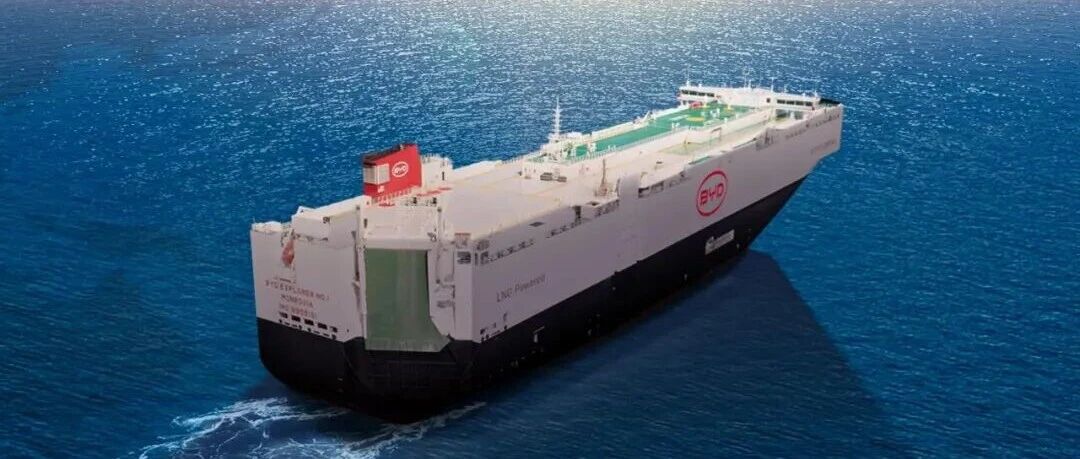
特朗普又一次把"美国优先"玩成了美国先疯,最近在北美贸易圈扔出的惊雷,足以让华尔街、底特律、 美国农场主集体失眠。 据彭博社2月11日爆料,以退群闻名全球的特朗普,居然开始认真盘算:退出自己亲手谈判、亲自签 字、亲自吹上天的《美墨加协定》(USMCA)。 一边是高达1.8万亿美元的三国贸易大盘,一边是特朗普说翻就翻的小船,一场荒诞、自私、毫无底线 的政治闹剧,就此拉开大幕。 首先,特朗普扬言退出美墨加协定,本质就是一场低成本、高回报的政治碰瓷。 用"掀桌子"当筹码,把全球最稳定的贸易圈当成竞选表演的背景板。 熟悉特朗普的人都知道,他最擅长的套路就是放风—恐吓—施压—捞好处,这套组合拳用了十几年,屡 试不爽。 这次时机更是卡得精准无比——今年7月,美墨加协定就要迎来强制审查与续签节点,相当于这份协议 的大限将至。特朗普偏偏选在这个节骨眼上发难,司马昭之心,路人皆知。 他嘴上骂骂咧咧,说加拿大、墨西哥占美国便宜,说协定不公平、不完美、不让美国赢麻,可这套说 辞,和他当年把USMCA捧成"美国工人历史性胜利"的嘴脸,简直判若两人。 前脚还在白宫庆功宴上得意洋洋地炫耀自己谈成了"人类历史最棒的贸易协议",后脚就把这份 ...
American Axle & Manufacturing (AXL) - 2025 Q4 - Earnings Call Presentation
2026-02-13 15:00
Fourth Quarter 2025 Earnings Call 3 Business Update Forward-Looking Statements In this presentation, Dauch Corporation ("Dauch") makes statements concerning its expectations, beliefs, plans, objectives, goals, strategies, and future events or performance, including, but not limited to, certain statements related to future capital expenditures, expenses, revenues, economic performance, synergies, financial conditions, market growth, dividend policy, losses and future prospects and business; and management st ...

Magna(MGA) - 2025 Q4 - Earnings Call Transcript
2026-02-13 14:02
Financial Data and Key Metrics Changes - In Q4 2025, sales increased by 2% to $10.8 billion, with adjusted EBIT margin expanding by 100 basis points to 7.5% [8][12] - For the full year, sales were $42 billion, slightly down due to softer volumes in North America and Europe, while adjusted EBIT margin rose by 20 basis points to 5.6% [9][12] - Adjusted EPS for Q4 rose by 29% to $2.18, and for the full year, it increased by 6% to $5.73 [8][9] - Free cash flow for the full year reached $1.9 billion, an increase of $849 million [9][18] Business Line Data and Key Metrics Changes - Three of the four segments posted higher sales year-over-year, with seating seeing an 8% increase, while complete vehicles were down 10% [16] - Body exteriors and structures, and seating segments posted strong increases in adjusted EBIT margin year-over-year [16][17] - Power and vision margins were negatively impacted by discrete items, but operational improvements are expected to drive margin expansion in 2026 [17][61] Market Data and Key Metrics Changes - Global light vehicle production was down 1% overall in Q4, with North America and China declining, while Europe saw an increase [13] - Magna's sales growth is expected to be near flat to up 3.5% in 2026, driven by new program launches and foreign currency translation benefits [21][22] Company Strategy and Development Direction - The company is focused on operational excellence initiatives, which contributed to margin expansion and are expected to continue delivering benefits in 2026 [10][27] - A disciplined approach to capital spending is emphasized, with plans to repurchase approximately 22 million shares under the NCIB [7][24] - The company aims to maintain strong free cash flow and EPS growth while reducing leverage [7][24] Management's Comments on Operating Environment and Future Outlook - Management expressed confidence in executing their capital allocation strategy and driving EPS growth alongside strong free cash flow [7][28] - The outlook for 2026 includes expectations for adjusted EBIT margin expansion of 40-100 basis points and free cash flow of $1.6 billion to $1.8 billion [7][22] Other Important Information - The company achieved significant operational milestones in 2025, including securing 90% of its 2028 business and receiving 151 customer awards for quality and performance [9][10] - The company has been recognized as one of the world's most ethical companies and most admired companies [11] Q&A Session Summary Question: Guidance for outgrowth ex complete vehicles of 1%-4% - Management attributed the outgrowth to operational excellence activities and new programs with favorable economic terms [31][34] Question: Operational excellence and commercial recoveries - Management indicated that operational excellence is a continuing journey with visibility on margin improvements, while commercial recoveries are expected to be neutral year-over-year [36][39] Question: Seating segment outlook and cost actions - Management confirmed that no incumbent seating programs have been lost, and the seating segment remains core and profitable despite some program roll-offs [44][46] Question: Free cash flow sustainability - Management expects free cash flow in the range of $1.6 billion to $1.8 billion to be sustainable, supported by disciplined CapEx [49] Question: Ford recall and warranty hit - Management clarified that one recall matter has been resolved, while another is ongoing, impacting margins in the power and vision segment [52][59] Question: Growth in power and vision segment - Management highlighted that growth is driven by new launches and operational improvements, with expectations for margin expansion in 2026 [61][62]

Did Car Emissions Standards Just Go Out The Tailpipe?
Seeking Alpha· 2026-02-13 12:30
Group 1: Auto Industry Challenges - The American auto industry is facing significant challenges, including competition from China, legacy costs, chip shortages, and regulatory changes, particularly regarding electric vehicles (EVs) and emissions standards [4][5] - General Motors (GM), Ford (F), and Stellantis (STLA) have collectively incurred $53 billion in write-offs since late 2025 related to their EV strategies and restructuring efforts [4] - The Trump administration's recent deregulation is expected to eliminate over $1.3 trillion in regulatory costs, which the administration claims will help reduce car prices [4] Group 2: Regulatory Environment - While greenhouse gas standards for CO2 will be canceled, federal laws against smog, soot, and nitrogen oxides will remain in effect, along with fuel economy rules governed by the Department of Transportation [5] - A legal battle continues with states like California seeking to maintain stricter regulations than those set by the federal government, complicating the market for automakers [5] Group 3: Market Trends and Economic Indicators - The current market shows a decline in major indices, with the Dow down 0.4%, S&P down 0.3%, and Nasdaq down 0.4% [7] - Crude oil prices have increased by 0.2% to $62.97, while gold prices have also risen by 0.2% to $4,959.90 [7]

年销2700万辆,中国汽车又一个世界冠军
3 6 Ke· 2026-02-13 09:55
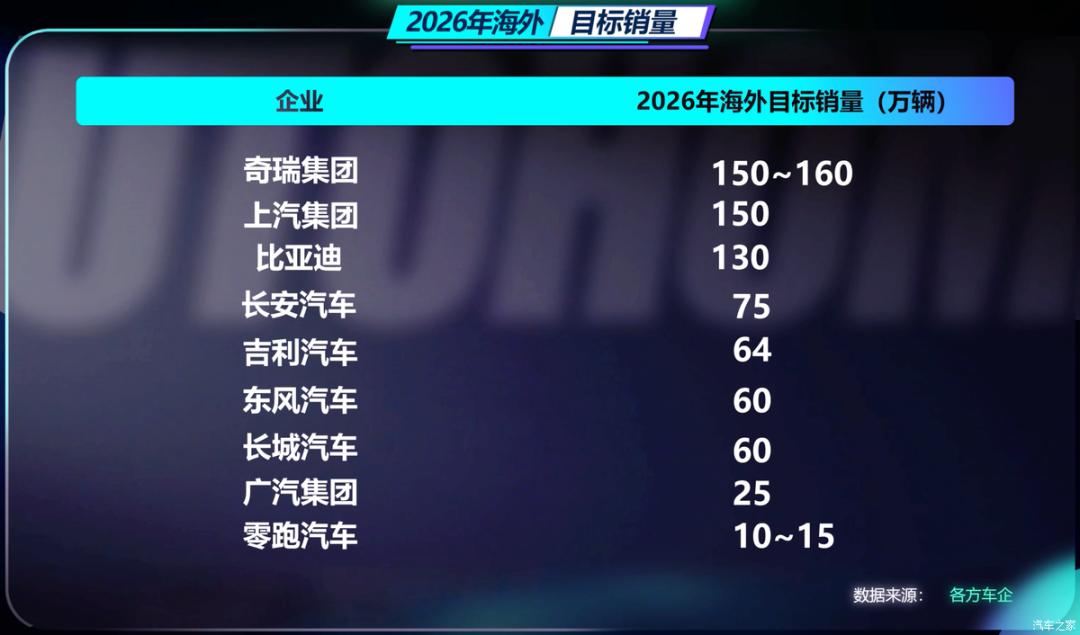
Core Insights - In 2025, Chinese automakers achieved a total global sales volume of 27 million vehicles, surpassing Japan for the first time in over 20 years, marking a significant milestone in the automotive industry [1] - Chinese automobile exports reached 8.32 million units in 2025, maintaining the title of the world's largest exporter for the third consecutive year, with Japan trailing at 4.21 million units [1] - Nine Chinese automakers have already set ambitious overseas sales targets for 2026, indicating confidence in continued growth in international markets [1][2] Group 1: Sales Performance - In 2025, Chery, SAIC, and BYD each exceeded 1 million units in overseas sales, with Chery selling 1.34 million units, representing nearly half of its total sales and a 17% increase year-on-year [3] - BYD's overseas sales surged by 145%, showcasing rapid growth from negligible figures to over 1 million units in just four years [3] - The overall export volume of Chinese automobiles grew by 29.9% in 2025, with December alone witnessing a remarkable 73.2% year-on-year increase, reaching 994,000 units [5] Group 2: Market Trends - The export of Chinese new energy vehicles (NEVs) reached 3.43 million units in 2025, a 70% increase, reflecting a growing global acceptance of electric vehicles [8] - In Europe, electric vehicles accounted for a record 19% of the market share in 2025, with Germany producing 1.67 million electric passenger cars, marking a 23% year-on-year growth [10] - Chinese brands are increasingly gaining traction in international markets, with significant sales growth in Australia and Europe, where they are becoming more competitive against traditional automakers [10][12] Group 3: Strategic Developments - Chinese automakers are expanding their presence in North America and Latin America, with Mexico becoming the largest market for Chinese car exports in 2025 [14] - Agreements with Canada allow Chinese companies to export electric vehicles at a reduced tariff rate, indicating a favorable trade environment [16] - The establishment of local supply chains and partnerships in various regions is a strategic move to enhance competitiveness and market penetration [16][17]





财经观察:中国车企出海加拿大,机遇还是险滩?
Huan Qiu Shi Bao· 2026-02-12 22:56
Core Viewpoint - Canada is actively pursuing a joint venture with Chinese automakers to establish an electric vehicle (EV) manufacturing plant aimed at global exports, reflecting a significant policy shift to reduce reliance on the U.S. automotive market and strengthen its domestic industry [1][4][5]. Group 1: Joint Venture and Collaboration - The Canadian government is in "active dialogue" with Chinese automakers to explore the establishment of an EV assembly plant in Canada, leveraging a joint venture model that combines Chinese vehicle platforms with Canadian labor and technology [2][4]. - Canadian companies like Magna International and Linamar are already engaged in business in China and are expected to participate in the joint venture, enhancing collaboration between local and Chinese firms [2][4]. Group 2: Policy Changes and Market Dynamics - The Canadian government has made significant adjustments to its EV import policy, allowing for an annual quota of 49,000 Chinese electric vehicles with a reduced tariff of 6.1%, a major shift from the previous 100% tariff [5][9]. - A recent survey indicates that 78% of Canadians support the new EV agreement with China, highlighting a broad public backing for diversifying trade away from the U.S. [5][6]. Group 3: Market Opportunities and Consumer Sentiment - The agreement is expected to lead to over 50% of imported Chinese EVs being priced below CAD 35,000, making them more accessible to Canadian consumers [7]. - Despite concerns about the impact on domestic industries and geopolitical implications, 62% of Canadians support allowing more Chinese EVs into the market, with many believing it will increase competition and lower prices [6][7]. Group 4: Infrastructure and Challenges - Current charging infrastructure in Canada, with 14,500 stations and 38,700 charging points, is deemed sufficient for the anticipated increase in EVs, but expansion is necessary to meet future demand [8]. - Concerns remain regarding after-sales service and the adequacy of infrastructure in remote areas, which could hinder the adoption of electric vehicles [7][8]. Group 5: Strategic Implications - The collaboration with Chinese automakers is seen as a pragmatic step for Canada to diversify its trade relationships and reduce dependency on the U.S. market, with experts suggesting that about 10% of Canada's EV sales could shift to Chinese manufacturers [9][10]. - The investment environment in Canada is under scrutiny, with experts advising caution regarding the sustainability of policies and the real market response to these changes [10].
Arteris(AIP) - 2025 Q4 - Earnings Call Transcript
2026-02-12 22:32
Financial Data and Key Metrics Changes - Total revenue for Q4 2025 was $20.1 million, up 16% sequentially and 30% year-over-year, exceeding guidance [20] - Full year 2025 total revenue reached $70.6 million, a 22% increase year-over-year [20] - Annual contract value plus royalties was $83.6 million, a 28% year-over-year increase, marking a new record [21] - Remaining performance obligations (RPO) totaled $117 million, representing a 32% year-over-year increase, another record high [21] - Non-GAAP gross profit for Q4 was $18.5 million, with a gross margin of 92% [22] - GAAP operating loss for Q4 was $8.5 million, compared to a loss of $7.1 million in the prior year [25] Business Line Data and Key Metrics Changes - Variable royalties increased by 50% year-over-year, with Q4 setting a new record [20] - FlexGen, an AI-driven smart NoC IP product, saw strong customer adoption, licensed for over 30 production device deployments [11] - Ncore, a cache coherent interconnect IP product, also experienced strength in licensing across various edge and server applications [12] Market Data and Key Metrics Changes - The largest impacts on revenue were seen in enterprise computing, automotive, and consumer electronics markets [7] - The number of large royalty reporters tripled in the last two years, indicating a diversified customer base [20] Company Strategy and Development Direction - The acquisition of Cycuity enhances Arteris' product portfolio, focusing on semiconductor cybersecurity assurance [8] - The company aims to address the growing need for cybersecurity in semiconductor designs, which is becoming a major issue [10] - Arteris is positioned to support semiconductor applications in the AI era across various sectors, including automotive and aerospace [17] Management's Comments on Operating Environment and Future Outlook - Management expressed confidence in the growth trajectory, expecting to report a non-GAAP operating profit as early as Q4 2026 [28] - The company anticipates continued strong demand for its products driven by the proliferation of AI-driven semiconductor designs [7] Other Important Information - Free cash flow was positive $3 million for Q4 and positive $5.3 million for the full year [26] - The company ended the year with $59.5 million in cash and no financial debt [26] Q&A Session Summary Question: Cross-sell opportunities and customer segments - Management highlighted that hardware security assurance is a major issue, opening significant cross-sell opportunities across the semiconductor industry [30][31] Question: NXP's increased use of Arteris solutions - Management confirmed that deploying multiple solutions increases average selling prices significantly, especially with the addition of Cycuity [35][36] Question: Strength in royalties and market segments - Management noted that the growth in royalties was due to both customer diversification and strength in various market segments, particularly automotive [37][38] Question: Impact of security acquisition on P&L - Management indicated that approximately $7 million of the projected revenue for 2026 would come from Cycuity, with expectations of breakeven by Q4 2026 [45][46]