
中国人民银行

Search documents
离岸央票市场“渠”成“水”到
Jing Ji Ri Bao· 2025-12-02 23:25
Core Viewpoint - The People's Bank of China (PBOC) is actively issuing offshore central bank bills to enhance liquidity and stabilize the RMB exchange rate, signaling a commitment to financial stability and the internationalization of the RMB [1][2]. Group 1: Issuance of Offshore Central Bank Bills - On November 24, the PBOC issued 45 billion RMB in central bank bills in Hong Kong, bringing the total issuance for the year to 300 billion RMB across six batches, indicating a trend towards normalization [1]. - Offshore central bank bills serve as high-credit, standardized financial instruments that help manage liquidity and influence interest rates, thereby increasing the cost of speculation on the RMB [1][2]. Group 2: Market Development and Internationalization - The issuance of offshore central bank bills is crucial for enhancing the offshore RMB market, providing high-quality financial products, and promoting the healthy development of the offshore RMB bond market [1][2]. - The balance of Hong Kong central bank bills is projected to grow from 80 billion RMB at the end of 2022 to 140 billion RMB by the end of 2024, reflecting a strong commitment to maintaining financial and exchange rate stability [1]. Group 3: Future Outlook and Market Infrastructure - To ensure the stable development of the offshore central bank bill market, it is essential to coordinate the internationalization of the RMB with domestic monetary policy and exchange rate reforms [2][3]. - There is a need to establish a more transparent issuance schedule and diversify the maturity structure of central bank bills to meet the asset allocation needs of international investors [3]. - Enhancing secondary market liquidity and exploring innovative applications of offshore central bank bills in cross-border collateral and liquidity management are critical for attracting international financial institutions [3].
中国人民银行公布11月各项工具流动性投放情况
Xin Hua Wang· 2025-12-02 14:43
Group 1 - The People's Bank of China announced a net liquidity injection of 100 billion yuan through Medium-term Lending Facility (MLF) in November, with a total injection of 1 trillion yuan and a withdrawal of 900 billion yuan [1] - In November, the net injection in the open market for government bonds was 50 billion yuan, while the net injection for central treasury cash management was 80 billion yuan [1] - The 7-day reverse repurchase agreements saw an injection of 4.8056 trillion yuan, with a withdrawal of 5.3618 trillion yuan, resulting in a net withdrawal of 556.2 billion yuan [1]
人民银行:11月公开市场国债买卖净投放500亿元
Bei Jing Shang Bao· 2025-12-02 12:27
公开市场业务方面,7天期逆回购净投放-5562亿元,其他期限逆回购净投放5000亿元,公开市场国债买 卖净投放500亿元,中央国库现金管理净投放800亿元。 北京商报讯(记者刘四红)12月2日,中国人民银行官网发布2025年11月中央银行各项工具流动性投放情 况,数据显示,11月,中央银行贷款方面,常备借贷便利净投放-3亿元,中期借贷便利净投放1000亿 元,抵押补充贷款净投放254亿元,其他结构性货币政策工具净投放1150亿元。 ...
中国央行:11月公开市场国债买卖净投放500亿元人民币
Sou Hu Cai Jing· 2025-12-02 11:35
智通财经APP获悉,12月2日,中国央行发布2025年11月中央银行各项工具流动性投放情况,其中11月 公开国债买卖净投放500亿元。 【免责声明】本文仅代表作者本人观点,与和讯网无关。和讯网站对文中陈述、观点判断保持中立,不 对所包含内容的准确性、可靠性或完整性提供任何明示或暗示的保证。请读者仅作参考,并请自行承担 全部责任。邮箱:news_center@staff.hexun.com 本文编选自中国人民银行,智通财经编辑:陈雯芳。 ...
银行的“不问”和“多问”
Mei Ri Shang Bao· 2025-12-01 23:27
Core Viewpoint - The new regulations from the People's Bank of China and other financial authorities aim to enhance anti-money laundering measures while addressing privacy concerns related to cash withdrawals over 50,000 yuan [1][2]. Group 1: Regulatory Changes - The requirement for individuals to register the source of funds for cash withdrawals exceeding 50,000 yuan has been removed, aligning with the previous draft [1]. - Banks will now assess the risk level before deciding whether to inquire further about the source and purpose of funds, moving away from a blanket questioning approach [1][2]. Group 2: Public Reaction and Concerns - The previous regulation faced backlash from the public, who felt that mandatory inquiries infringed on their privacy and reduced service satisfaction [2]. - Some customers expressed frustration with the process, indicating a desire for more autonomy over their funds [2]. Group 3: Operational Implications - The new approach allows for targeted inquiries based on risk assessment, which could improve efficiency and customer experience while still maintaining necessary oversight [2][3]. - The importance of bank staff's responsibility in questioning customers when suspicious transactions arise is emphasized, as it can prevent potential fraud [3].
人民银行:10月银行间债券市场现券成交26.6万亿元
Bei Jing Shang Bao· 2025-12-01 12:25
Group 1 - The People's Bank of China released the financial market operation report for October 2025, highlighting significant activity in the bond market [1] - In October 2025, the interbank bond market recorded a total transaction volume of 26.6 trillion yuan, with an average daily transaction of 1.5 trillion yuan, representing a year-on-year increase of 10.2% and a month-on-month increase of 3.9% [1] - Transactions with a single volume between 5 million and 50 million yuan accounted for 48.06% of the total transaction amount, while transactions over 90 million yuan made up 45.68%, with an average single transaction volume of 41.77 million yuan [1] Group 2 - The exchange bond market saw a transaction volume of 3.3 trillion yuan, with an average daily transaction of 193.79 billion yuan [1] - Commercial banks conducted 66,000 bond transactions, amounting to 58.73 billion yuan [1]
人民银行:10月债券市场国债发行11695.5亿元
Bei Jing Shang Bao· 2025-12-01 12:17
Core Viewpoint - The People's Bank of China reported on the financial market operations for October 2025, highlighting significant activity in the bond market with a total issuance of various bonds amounting to 63,574.6 billion yuan [1] Bond Market Issuance - In October 2025, the bond market issued a total of 63,574.6 billion yuan across different categories, including: - Government bonds: 11,695.5 billion yuan - Local government bonds: 5,604.7 billion yuan - Financial bonds: 8,010.8 billion yuan - Corporate credit bonds: 11,836.2 billion yuan - Credit asset-backed securities: 343.4 billion yuan - Interbank certificates of deposit: 25,649.0 billion yuan [1] Bond Market Custody Balance - As of the end of October, the total custody balance of the bond market reached 194.6 trillion yuan, with the following breakdown: - Interbank market custody balance: 171.7 trillion yuan - Exchange market custody balance: 22.9 trillion yuan - By bond type, the custody balances are as follows: - Government bonds: 39.4 trillion yuan - Local government bonds: 53.7 trillion yuan - Financial bonds: 44.2 trillion yuan - Corporate credit bonds: 34.4 trillion yuan - Credit asset-backed securities: 1.0 trillion yuan - Interbank certificates of deposit: 20.7 trillion yuan - Additionally, the custody balance of bonds at commercial bank counters was 2,425.2 billion yuan [1]
2026年起,存取超5万元免登记
Sou Hu Cai Jing· 2025-12-01 02:10
Core Viewpoint - The new regulations issued by the People's Bank of China and other financial authorities aim to prevent money laundering and terrorist financing while streamlining customer due diligence processes for financial institutions, particularly regarding cash transactions over 50,000 yuan [2][4]. Group 1: Regulatory Changes - Starting January 1, 2026, individuals will no longer need to register the source of funds or explain the purpose for cash deposits or withdrawals exceeding 50,000 yuan [2][3]. - The new regulations eliminate the previous requirement for banks to uniformly inquire about the source and purpose of funds for cash transactions over 50,000 yuan, aligning with public demand and reducing compliance burdens for ordinary depositors [4][5]. Group 2: Risk Management - The regulations specify that for transactions deemed to have a higher risk of money laundering or terrorist financing, financial institutions must implement enhanced due diligence measures and may adopt risk-matched money laundering risk management strategies [2][5]. - The new rules aim to balance anti-money laundering oversight with financial service efficiency, allowing for targeted control of high-risk transactions while minimizing disruptions for compliant customers [5]. Group 3: Background and Context - The new regulations follow a previous directive issued in January 2022, which was postponed due to technical reasons and feedback from smaller financial institutions regarding the need for adjustments in internal management and training [6].

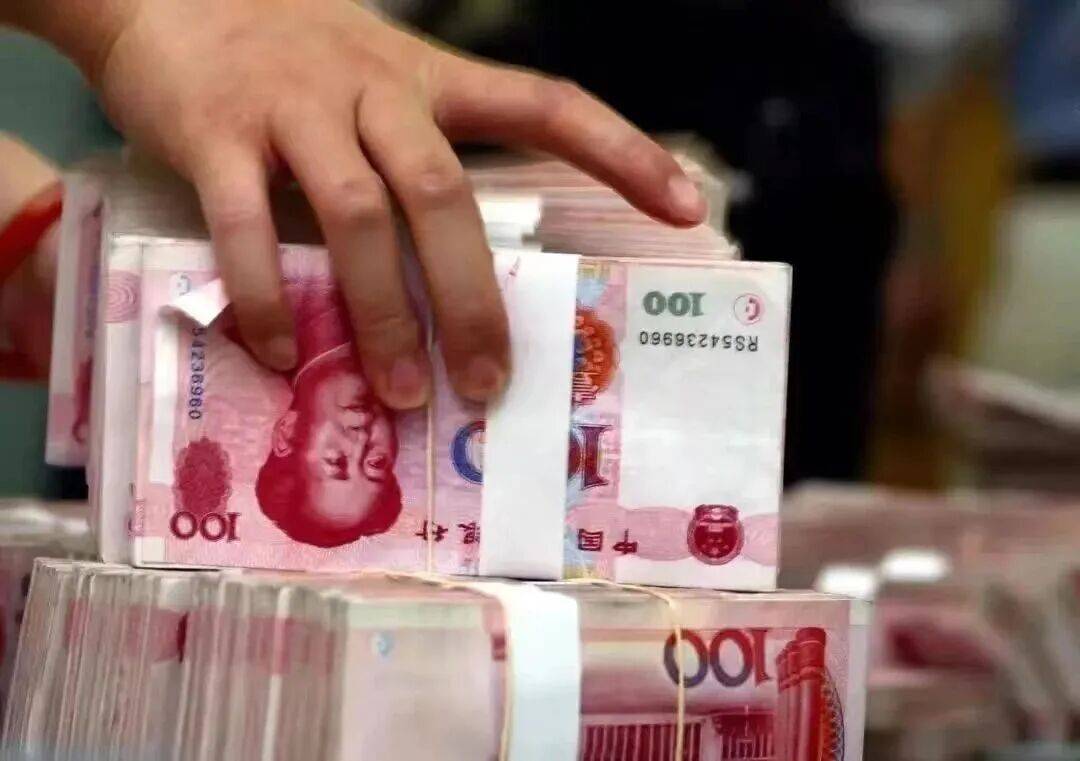
中国人民银行:开通跨境人民币捐赠绿色通道 支持香港火灾救援及善后
Jin Rong Shi Bao· 2025-12-01 01:09
Core Viewpoint - The People's Bank of China is facilitating a green channel for cross-border RMB donations to support rescue and relief efforts following the fire incident in Tai Po, Hong Kong [1] Group 1: Policy Implementation - The People's Bank of China has issued a notification to commercial banks to establish a cross-border RMB donation green channel [1] - Commercial banks are not required to review documentation and can directly transfer donation funds based on payment instructions from domestic entities or individuals [1] Group 2: Fund Management - Donations can be transferred directly to the Tai Po Hongfu Yuan Assistance Fund account (01287521901607) [1] - Banks are required to manage the reporting of cross-border payment information in accordance with the RMB Cross-Border Payment Information Management System (RCPMIS) [1]
央行:坚持对虚拟货币的禁止性政策
Zhong Guo Zheng Quan Bao· 2025-11-30 20:21
Core Viewpoint - The People's Bank of China (PBOC) will continue its prohibitive policy on virtual currencies and intensify efforts to combat illegal financial activities related to virtual currencies, aiming to protect the financial security of the public [1] Group 1: Regulatory Actions - The PBOC held a meeting to coordinate efforts against virtual currency trading speculation, noting a recent uptick in speculative activities and related illegal activities, which pose new challenges for risk prevention [1] - The meeting emphasized that virtual currencies do not have the same legal status as fiat currencies and should not be circulated as money in the market, categorizing related business activities as illegal financial activities [1] Group 2: Focus on Stablecoins - The meeting specifically addressed stablecoins, stating that they currently fail to meet requirements for customer identity verification and anti-money laundering, posing risks of being used for money laundering, fundraising fraud, and illegal cross-border fund transfers [1] Group 3: Collaborative Efforts - The PBOC called for enhanced collaboration among various units to improve regulatory policies and legal frameworks, focusing on key areas such as information flow and capital flow, to strengthen monitoring capabilities and rigorously combat illegal activities, thereby maintaining economic and financial order stability [1]