浦发银行

Search documents
上海人寿“有救了”?
Xin Lang Cai Jing· 2025-12-24 09:40
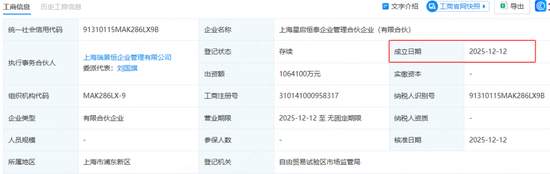
来源:险联社 "12月12日,浦发银行挑头的星启恒泰合伙企业成立,在太保寿险'入驻指导'2年多之后,上海人寿的风 险化解工作进入下一步。" 12月12日,一家名为"上海星启恒泰企业管理合伙企业(有限合伙)"的企业在上海自贸区成立,注册资 本106.4亿,第一大合伙人为浦发银行,持股比例58.331%,太平洋人寿为第三大合伙人,持股比例为 8.9841%。 其他股东还包括,上海国际集团有限公司、上海陆家嘴(集团)有限公司、上海瑞景恒企业管理有限公 司。 清一色上海本地国资企业。 | 工商体应 | 历史工周组图 | | | ■ 文本介绍 ( 工商官网快报) ■ 导出 0 | | --- | --- | --- | --- | --- | | 统一社会值用代码 | 91310115MAK286LX98 | 企业名称 | 上海墨层值都企业管理合伙企业(有限合伙) | | | 执行事务合伙人 | 上海强暴恒企业管理有限公司 | 登记状态 | 存续 成立日期 | 2025-12-12 | | | 爱派代表:刘国旗 | 用强影 | 1064100万元 实量通本 | | | 姐欣莉的代码 | MAK286LX-9 | 工商建 ...


股份制银行板块12月24日跌0.22%,中信银行领跌,主力资金净流出2.53亿元
Zheng Xing Xing Ye Ri Bao· 2025-12-24 09:10
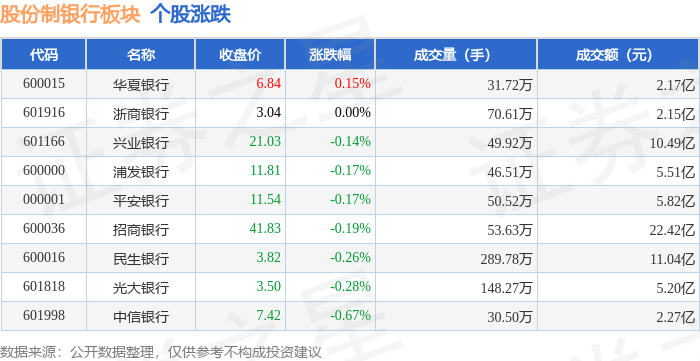
证券之星消息,12月24日股份制银行板块较上一交易日下跌0.22%,中信银行领跌。当日上证指数报收 于3940.95,上涨0.53%。深证成指报收于13486.42,上涨0.88%。股份制银行板块个股涨跌见下表: | 代码 | 名称 | 收盘价 | 涨跌幅 | 成交量(手) | 成交额(元) | | --- | --- | --- | --- | --- | --- | | 600015 | 华夏银行 | 6.84 | 0.15% | 31.72万 | 2.17亿 | | 601916 | 浙商银行 | 3.04 | 0.00% | 70.61万 | 2.15亿 | | 601166 | 兴业银行 | 21.03 | -0.14% | 49.92万 | 10.49 乙 | | 600000 | 浦发银行 | 11.81 | -0.17% | - 46.51万 | 5.51亿 | | 000001 | 平安银行 | 11.54 | -0.17% | 50.52万 | 5.82亿 | | 600036 | 招商银行 | 41.83 | -0.19% | 53.63万 | 22.42 乙 | | 600016 | ...




吉林电力股份有限公司 关于2025年度第三期超短期融资券 发行情况的公告
Zhong Guo Zheng Quan Bao - Zhong Zheng Wang· 2025-12-24 06:27
Group 1 - The company, Jilin Electric Power Co., Ltd., has received approval from the China Interbank Market Dealers Association to issue super short-term financing bonds with a registered amount of RMB 4 billion, valid for two years from the date of the notice [1] - The company completed the issuance of the third phase of super short-term financing bonds on December 18, 2025, with an issuance amount of RMB 600 million and a term of 270 days at a coupon rate of 1.77% [2] - The funds raised from this bond issuance, amounting to RMB 600 million, will be used to repay future maturing interest-bearing liabilities [2]

宏观叙事切换,2025年中国资产重估
Xin Lang Cai Jing· 2025-12-24 02:55
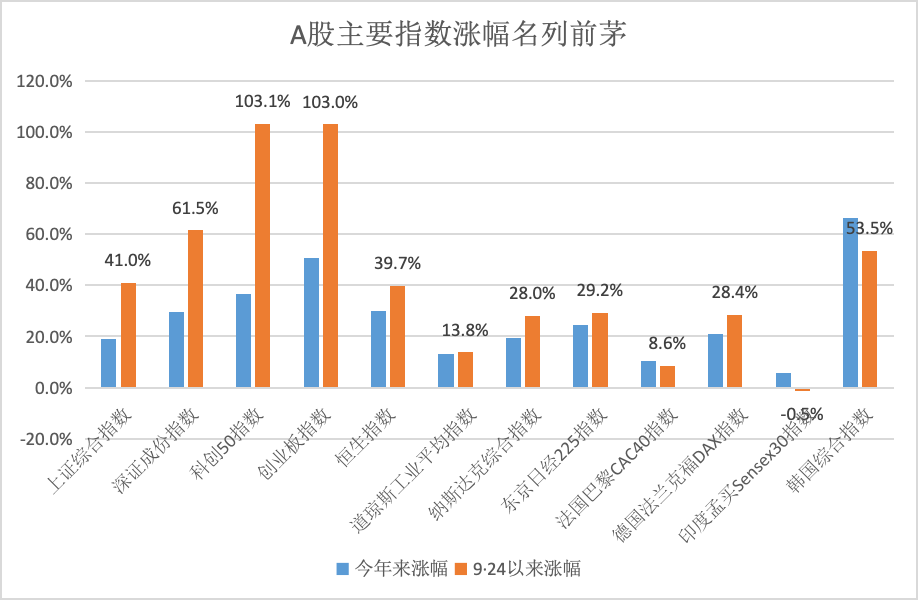
Group 1 - The core point of the article is that the financial landscape in China has undergone a significant transformation since September 24, 2024, marked by a series of supportive policies aimed at revitalizing the economy and financial markets, leading to a bullish trend in the stock market and a strengthening of the yuan [1][2][25]. - On September 24, 2024, the People's Bank of China introduced a new monetary policy tool specifically for supporting the stock market, with an initial funding of 500 billion yuan, which could be expanded if successful [1][2]. - Following the announcement, the Shanghai Composite Index surged by 4.15%, surpassing the 2800-point mark, while the yuan appreciated against the dollar, indicating a renewed confidence in the Chinese economy [1][2]. Group 2 - Over the past two years, the Chinese market faced challenges such as a downturn in the real estate sector and low consumer prices, leading to a bearish stock market and a bullish bond market, with significant depreciation pressure on the yuan [2][23]. - However, by the end of 2025, the performance of Chinese assets exceeded market expectations, with the yuan appreciating and the 10-year government bond yield rising above 1.8%, while the Shanghai Composite Index returned to around 4000 points, reflecting a 17% increase since the beginning of the year [2][23]. - The article highlights that the recovery of the Chinese market is attributed to effective market rescue measures and the strengthening of China's technological and industrial capabilities, which have enhanced economic resilience amid trade tensions [25][36]. Group 3 - The article discusses the new characteristics of market rescue efforts, emphasizing a collaborative approach involving multiple stakeholders, including the Central Huijin Investment Ltd. and various state-owned enterprises, to stabilize the stock market [10][30]. - A notable feature of this rescue operation is the establishment of a stabilization fund, which aims to mitigate irrational market fluctuations and ensure financial stability [31][32]. - The Central Bank's proactive measures, including the introduction of structural monetary policy tools and liquidity support, have been crucial in maintaining stability across the stock, bond, and foreign exchange markets [11][12][31]. Group 4 - The article identifies technological breakthroughs as a core driver of the 2025 bull market, particularly highlighting the emergence of China's AI model DeepSeek, which has garnered global attention and spurred a surge in the technology sector [13][14]. - The market narrative has shifted from a focus on traditional sectors to a significant emphasis on technology, with the technology sector's market capitalization exceeding 25% of the total A-share market [14][15]. - China's manufacturing sector remains robust, maintaining its position as the largest globally, and has shown resilience in trade negotiations, further bolstering investor confidence [35][36]. Group 5 - The article notes that the low interest rate environment in China has contributed to a shift of funds from savings to the stock market, driving up stock valuations [19][40]. - The current yield on 10-year government bonds is around 1.8%, which is relatively low compared to global standards, prompting discussions about the movement of deposits into riskier assets [19][41]. - The interplay between low interest rates and stock market performance has created a "low-rate bull market," with implications for asset pricing and wealth effects in the economy [21][22].
30个广东普惠金融优秀案例出炉!大咖共探高质量发展新路径
Nan Fang Du Shi Bao· 2025-12-24 02:51
Core Viewpoint - The article emphasizes the importance of developing inclusive finance in China, highlighting recent initiatives and conferences aimed at enhancing financial support for key sectors such as technology innovation and small and micro enterprises [1][2]. Group 1: Policy and Initiatives - The "14th Five-Year Plan" suggests a strong focus on inclusive finance, with the Central Economic Work Conference outlining financial support for expanding domestic demand and innovation [1]. - The People's Bank of China (PBOC) Guangdong Branch is actively implementing policies to improve financial services for small and micro enterprises, rural areas, and the private economy, aiming to enhance service coverage and satisfaction [1][2]. Group 2: Financial Data and Growth - By the end of October 2025, the balance of inclusive loans in Guangdong is projected to reach 4.9 trillion yuan, accounting for 16.4% of total loans, with a year-on-year growth of 7.9%, surpassing the overall loan growth rate by 2.3 percentage points [2]. - As of the third quarter of 2025, the balance of inclusive loans for small and micro enterprises in the banking sector is 36.5 trillion yuan, and inclusive agricultural loans stand at 14.1 trillion yuan, both showing an increase of approximately 1.2 trillion yuan since the beginning of the year [5]. Group 3: Innovations in Inclusive Finance - The report highlights various innovative models in inclusive finance, including digital product innovations by state-owned banks that enhance service delivery to small and micro enterprises and rural revitalization [5][6]. - Private banks are adopting unique strategies such as "Park Loans" targeting specific customer groups and supply chain finance that connects credit across the entire supply chain [6]. Group 4: Expert Insights and Recommendations - Experts suggest that the current phase of inclusive finance focuses on improving service effectiveness, with recommendations for large banks to deepen their outreach and for smaller banks to concentrate on local markets [7]. - The need for a robust risk management system and the integration of digital technologies into the inclusive finance ecosystem are emphasized as critical for sustainable development [7]. Group 5: Regional Practices and Case Studies - The city of Maoming is highlighted for its innovative financial practices that leverage local agricultural resources, offering tailored credit products for various agricultural cycles [9][10]. - The Guangdong Construction Bank's "All-Link Procurement Good Operation Loan Service Plan" exemplifies successful digital transformation in inclusive finance, achieving significant efficiency improvements in loan processing [11]. Group 6: Institutional Contributions and Collaborations - Various financial institutions, including the Industrial and Commercial Bank of China and local banks, are sharing their successful inclusive finance practices, focusing on supply chain financing and environmental sustainability [12][13].
双向开放 首单启航:浦发银行助力海南自贸港搭建跨境投资新桥梁
Sou Hu Cai Jing· 2025-12-24 02:33
Core Insights - The cross-border asset management pilot program in Hainan Free Trade Port has made significant progress with the successful launch of the first pilot product by SPDB in collaboration with Wanhua Securities, marking a substantial operational phase for the policy [1][2] Group 1: Business Development - Wanhua Securities, registered in Hainan, is the issuer and designer of the product, while SPDB provides sales and custody services, creating a closed-loop management mechanism for "cross-border fundraising - domestic investment" [1] - The pilot program is one of the first practical implementations following the release of the "Implementation Rules for Cross-Border Asset Management Pilot Business in Hainan Free Trade Port" by the People's Bank of China and other departments in July [1] Group 2: Financial Innovation - This initiative represents SPDB's proactive exploration in the field of cross-border financial innovation and is a significant step in supporting the construction of Hainan Free Trade Port [2] - The business expands the asset allocation channels for foreign investors and injects new vitality into the two-way opening of the capital market [2] - SPDB plans to deepen cooperation with various asset management institutions, focusing on cross-border asset management and offshore investment financing, to contribute to the high-level opening of Hainan Free Trade Port [2]
浦发银行深圳分行:以金融创新赋能专项资金高效监管
Sou Hu Cai Jing· 2025-12-24 02:23
Core Insights - The article highlights the innovative use of digital financial tools by Shanghai Pudong Development Bank (SPDB) Shenzhen Branch, focusing on effective management of special funds through technology and collaboration with government entities [1][4]. Group 1: Digital Financial Tools - SPDB Shenzhen Branch has successfully implemented digital RMB to distribute nearly 10 million yuan in financial support for the financial industry in Hengqin Guangdong-Macao Deep Cooperation Zone [2]. - The bank efficiently established digital RMB corporate wallets for 9 enterprises, ensuring the safe and precise distribution of large subsidy funds [2]. Group 2: Cloud Supervision and Fund Management - The "Cloud Supervision" product is applied in government engineering projects, providing a solution for fund management that allows full tracking from disbursement to usage [3]. - The online system has significantly reduced the time for fund approval and payment from potentially one day to just two to three minutes, enhancing fund utilization efficiency [3]. Group 3: Future Directions - SPDB Shenzhen Branch plans to deepen cooperation with the government and continue exploring innovative financial tools and service models to enhance the security, precision, and efficiency of special fund operations [4].
年内已有226家村镇银行正式解散
Zheng Quan Shi Bao· 2025-12-24 00:42
Group 1 - The core viewpoint of the article highlights the accelerated exit of village banks, with a total of 226 banks officially dissolved in 2023, exceeding the number expected for 2024 by 1.7 times [1][2] - The main modes of merger and restructuring for village banks this year are "village to branch" and "village to division," where banks are absorbed by their parent institutions, thus avoiding direct bankruptcy risks [2][3] - The involvement of major state-owned banks and foreign banks in the restructuring process marks a shift from smaller banks leading the mergers, indicating a broader approach to risk management and resource optimization [4][5] Group 2 - The "risk mitigation" team is expanding, with state-owned banks like ICBC and several joint-stock banks actively participating in the restructuring of village banks, which is seen as beneficial for both the parent banks and the village banks [4][6] - Foreign banks are also taking action, with HSBC and ANZ opting for direct dissolution of their village banks due to continuous losses, reflecting a strategic focus on wealth management and cross-border finance instead of the village banking sector [5][6] - The central economic work conference emphasizes the need for a structured reorganization of small financial institutions, focusing on market-driven and legal methods to enhance governance and ensure a smooth reform process [7]
浦发银行太原分行锚定“十五五”航向以金融之力赋能区域发展
Sou Hu Cai Jing· 2025-12-23 23:26
山西晚报·山河+讯(记者 张珍)近日,浦发银行太原分行携手山西股权交易中心、山西省上海商会成 功举办"'十五五'规划建议宏观政策解读与民营企业发展机遇分析专题讲座"。活动中,浦发银行科技金 融服务体系2.0正式亮相,这也是该行锚定"十五五"航向,以金融之力铸就区域发展新引擎的具体行 动。 作为活动主办方之一,浦发银行太原分行党委委员、副行长张卫华代表主办方致欢迎辞,现场分享 了"供应链金融+普惠服务""科技金融+产业赋能"等特色服务方案,介绍了针对民营企业的专属信贷产 品、线上化服务渠道及综合金融支持政策,为企业破解融资痛点、链接金融资源搭建了桥梁。山西股权 交易中心、山西省上海商会也分别从企业挂牌培育、资源对接合作等维度,分享了助力民营企业成长的 服务举措,为企业提供了多元化发展支持路径。 据了解,此次正式亮相的浦发银行科技金融服务体系2.0,包括了中试金融方案、A轮融资方案、数转贷 方案、数据资产融资方案、专精特新数字金融解决方案、并购重组方案、浦科出海方案等七大专属服务 方案。这既是浦发银行太原分行响应山西战略部署、落实浦发银行总行"数智化"战略的具体行动,更是 该行深耕科技金融赛道的坚定承诺。 浦发银 ...
2025年广东银行业普惠金融创新实践优秀案例公布 南都发布普惠金融深调研报告
Nan Fang Du Shi Bao· 2025-12-23 23:12
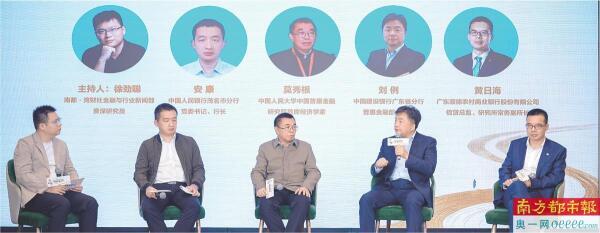
Core Viewpoint - The "China Inclusive Finance Tour" conference in Guangdong highlighted the new trends in inclusive finance 2.0, emphasizing the need for innovative practices and collaboration in the sector [6][7]. Group 1: Policy and Development - The "14th Five-Year Plan" emphasizes the development of inclusive finance, with recent central economic work meetings focusing on financial support for expanding domestic demand, technological innovation, and small and micro enterprises [6]. - The People's Bank of China (PBOC) Guangdong Branch has been actively implementing policies to enhance the financial service environment for small and micro enterprises, rural areas, and private economies, aiming to improve service coverage and satisfaction [8][9]. Group 2: Financial Performance - As of October 2025, the balance of inclusive loans in Guangdong reached 4.9 trillion yuan, accounting for 16.4% of total loans, with a year-on-year growth of 7.9%, surpassing the overall loan growth rate by 2.3 percentage points [9]. - The PBOC Guangdong Branch plans to continue implementing a moderately loose monetary policy and enhance the effectiveness of structural monetary policy tools to improve the level of inclusive financial services [9]. Group 3: Research and Reports - The "China Inclusive Finance Tour Innovation Deep Research Report (2025)" was released, indicating that by the end of Q3 2025, the balance of inclusive loans for small and micro enterprises reached 36.5 trillion yuan, and inclusive agricultural loans reached 14.1 trillion yuan, both showing significant growth [11]. - The report highlights that Guangdong, Zhejiang, and Jiangsu are leading in inclusive finance development, with Guangdong excelling in various metrics such as the balance of inclusive small micro loans and the number of credit accounts [11]. Group 4: Innovative Practices - The report identifies innovative models in inclusive finance, such as state-owned banks leveraging digital products and intelligent credit systems to support small micro enterprises and rural revitalization [12]. - Regional banks are exploring unique paths in inclusive finance by customizing products and collaborating with local governments to address financing challenges for small enterprises and agricultural entities [13][15]. Group 5: Roundtable Discussions - The roundtable discussion focused on the new trends in inclusive finance 2.0, emphasizing the need for comprehensive service offerings, digital upgrades, and collaborative mechanisms to enhance the effectiveness of financial services [14]. - The discussion also highlighted the importance of addressing the "last mile" issue in inclusive finance and the need for sustainable business models [12][14]. Group 6: Case Studies and Innovations - Various institutions shared their innovative practices, such as the "Smart Inclusive" ecosystem developed by Shanghai Pudong Development Bank, which utilizes data to enhance credit approval processes [18]. - Dongguan Rural Commercial Bank introduced a unique loan model linked to industrial wastewater management, showcasing a market-driven approach to environmental financing [19].