华能国际

Search documents
五大发电上半年净利创近十年同期新高,“量价双降”企业怎么办
Di Yi Cai Jing· 2025-09-01 23:40
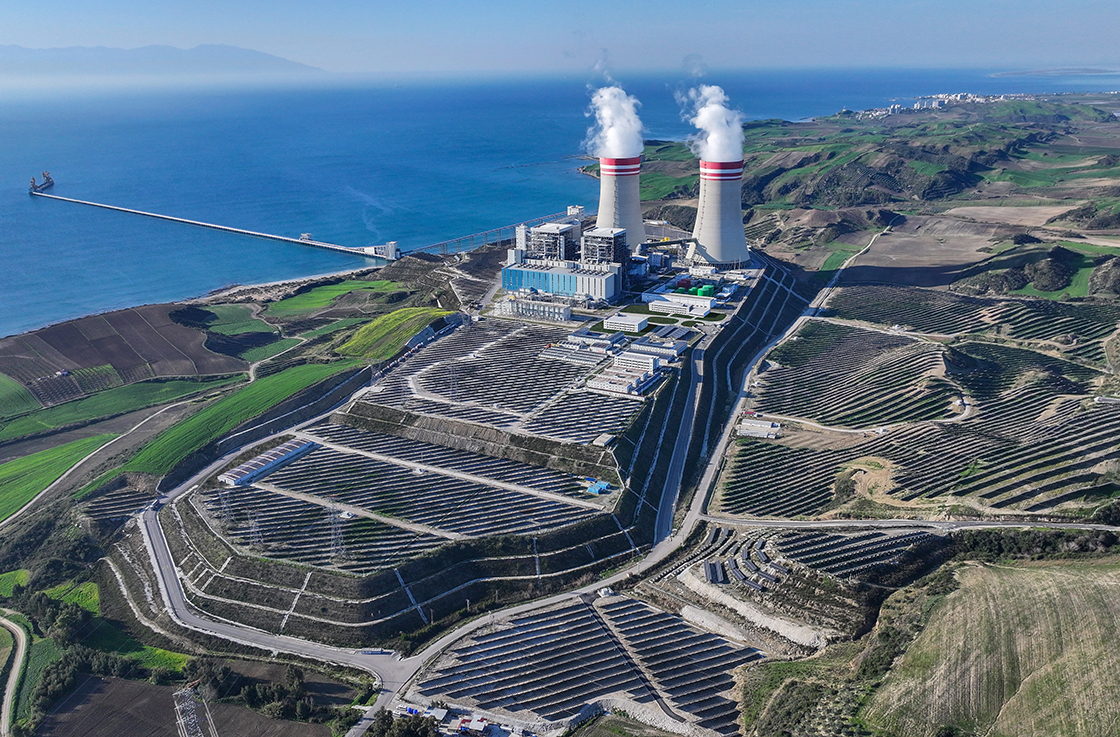
Core Viewpoint - The five major power generation companies in China reported a significant increase in net profits for the first half of the year, reaching a combined net profit of 24.267 billion yuan, the highest in nearly a decade, despite a decline in revenue due to falling electricity prices and generation volumes [1][2]. Group 1: Financial Performance - The five major power generation companies achieved a total net profit of 24.267 billion yuan, surpassing the total net profit for the same period in 2024, marking the highest net profit since 2016 [1]. - Among these companies, Huaneng International and Datang Power reported net profit increases of 24.26% and 47.25%, reaching 9.262 billion yuan and 4.579 billion yuan respectively, leading the group [1]. - Only Guodian Power experienced a decline in net profit, attributed to the previous year's transfer of a subsidiary, but its adjusted net profit excluding non-recurring items increased by over 56% to 3.41 billion yuan [1]. Group 2: Cost Factors - The decline in coal prices was a primary factor contributing to the collective profit growth of these companies, with the average price of thermal coal dropping by approximately 22.2% year-on-year to about 685 yuan per ton [2]. - Huaneng International's coal-fired power segment saw a net profit increase of 84% to 7.31 billion yuan, while Datang Power's coal-fired segment nearly doubled, reaching 3.148 billion yuan [2]. - Despite profit growth, the companies faced a nearly 10% decline in revenue, primarily due to reduced electricity generation and falling electricity prices [2]. Group 3: Market Dynamics - The implementation of market-based pricing for renewable energy has led to a collective decline in electricity prices and generation volumes, impacting overall revenue for the companies [2][3]. - Guodian Power highlighted the increased volatility and uncertainty in electricity prices due to the expansion of the electricity spot market, which is influenced by real-time supply and demand [3]. - The average on-grid electricity price for Huaneng International decreased by 2.7% to 485.27 yuan per megawatt-hour, which was less than the 9.2% decline in coal prices [3]. Group 4: Strategic Responses - In response to the challenges posed by the entry of renewable energy and the acceleration of the electricity spot market, China Power plans to adjust its trading strategies and enhance asset management to ensure competitive pricing [5]. - Guodian Power emphasized the importance of training and selecting traders, as well as utilizing big data and AI to improve market analysis and forecasting capabilities [5]. - The introduction of capacity pricing for coal-fired power plants has improved profitability and reduced losses, providing a more stable profit structure for these companies [4].





半年盘点|五大发电上半年净利创近十年同期新高,“量价双降”企业怎么办
Di Yi Cai Jing· 2025-09-01 13:24
Core Viewpoint - The five major power generation companies in China reported a significant increase in net profit for the first half of the year, driven primarily by a decrease in coal prices, despite a decline in operating revenue due to lower electricity prices and generation volumes [1][4]. Group 1: Financial Performance - The five companies collectively achieved a net profit of 24.267 billion yuan, marking the highest net profit for a half-year period since 2016 [1]. - Among these, Huaneng International and Datang Power reported net profit growth of 24.26% and 47.25%, reaching 9.262 billion yuan and 4.579 billion yuan respectively, leading the group [1]. - Only Guodian Power experienced a decline in net profit, attributed to a non-recurring loss from the previous year; however, its adjusted net profit increased by over 56% to 3.41 billion yuan [1]. Group 2: Cost Structure - The decline in coal prices was a major factor contributing to the profit increase, with the average price of coal at Qinhuangdao port dropping approximately 22.2% to about 685 yuan per ton [1]. - Huaneng International's average coal price for the first half was 917.05 yuan per ton, down 9.2%, while Guodian Power and Huaneng International reported decreases of 9.5% and 12.98% respectively [2]. Group 3: Revenue Challenges - Despite profit growth, the five companies faced a nearly 10% decline in operating revenue, primarily due to reduced electricity generation and falling electricity prices [4]. - The implementation of market-based pricing for renewable energy has led to a dual decline in both volume and price, impacting overall revenue [4]. - Guodian Power highlighted the increased volatility and uncertainty in electricity pricing due to the expansion of the electricity spot market [4]. Group 4: Market Strategy - Companies are adapting to the challenges posed by the entry of renewable energy and the acceleration of the electricity spot market by adjusting their trading strategies and enhancing asset management [6]. - The introduction of capacity pricing for coal-fired power plants has improved profitability despite a decrease in generation volume [5]. - Companies are focusing on the synergy between renewable energy and clean coal power to enhance their overall profitability and reduce losses [5][6].

中国 - 电力_7 月用电量反弹;太阳能装机量环比继续下降
2025-08-31 16:21
Summary of Key Points from the Conference Call Industry Overview - **Industry**: Power Sector in China - **Date**: August 25, 2025 - **Source**: Morgan Stanley Research Core Insights 1. **Power Consumption Growth**: National power consumption increased by 4.5% year-over-year (yoy) in the first seven months of 2025, compared to 3.7% in the first half of 2025. July 2025 saw a notable growth of 8.6% yoy, with all sub-sectors outpacing growth from 1H25 [2][8] 2. **Power Demand by Sector**: In July 2025, power demand growth by sector was as follows: primary (20.2% yoy), secondary (4.7% yoy), tertiary (10.7% yoy), and residential (18.0% yoy), all exceeding the growth rates of 1H25 [2][8] 3. **Total Power Generation**: Total power generation reached 5,470 billion kWh in 7M25, marking a 1.3% yoy increase. Solar and wind power generation rose significantly by 22.7% and 10.4% yoy, respectively, accounting for 17% of total power generation, up from 14% in 7M24 [3] 4. **New Power Capacity Additions**: China added 325 GW of power capacity in 7M25, a 75.7% yoy increase. This included 223 GW of solar capacity (up 81% yoy) and 54 GW of wind capacity (up 79% yoy). However, new installations in July were significantly lower than in May [4][8] 5. **Investment in Power Generation**: Investments in power generation capacity and power grid reached RMB 429 billion and RMB 332 billion in 7M25, reflecting increases of 3.4% and 12.5%, respectively [4] Additional Important Insights 1. **Decline in Monthly Installations**: Monthly new installations of solar and wind power in July were 11.0 GW and 2.3 GW, respectively, which represented a significant decline compared to 92.9 GW and 26.3 GW in May [4][8] 2. **Thermal Capacity Growth**: Newly installed thermal capacity increased by 16 GW in July, marking a 164% yoy increase, indicating a shift in energy generation strategy [4][8] 3. **Future Expectations**: The outlook for solar installations remains weak for the remainder of 2025, primarily due to low plant utilization rates [8] Conclusion The power sector in China is experiencing a rebound in consumption and generation, with significant growth in renewable energy sources. However, the decline in new installations of solar and wind power raises concerns about future capacity growth. The investment landscape appears positive, but challenges remain in maintaining momentum in renewable energy installations.

41名境内外记者参观雄安新区
Bei Jing Ri Bao Ke Hu Duan· 2025-08-30 23:40
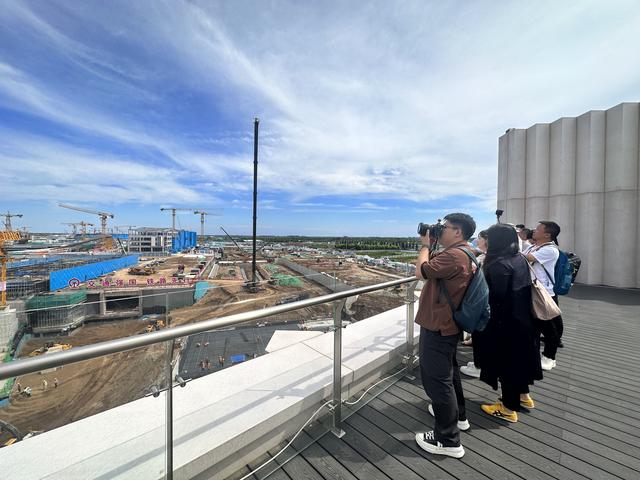
境内外记 者登上东西轴线指挥调度中心的观景平台,俯瞰雄安城际站片区建设进展,远眺建设成果。 本报记者 褚英硕摄 本报讯(记者 褚英硕)昨天,中国人民抗日战争暨世界反法西斯战争胜利80周年纪念活动新闻中心开 展第四场外出参观采访活动,41名境内外记者走进雄安新区,实地感受这座国家级新区的建设成果与发 展活力。 参与活动的记者来自10多个国家和地区的37家媒体,先后走访了"雄安印象"展馆、雄安未来之城场景汇 科创园、金湖公园、东西轴线指挥调度中心、中国电信智慧城市产业园及雄安新区中关村科技园,全方 位了解雄安新区的规划建设与创新实践。 在"雄安印象"展馆,数字科技打造的沉浸式体验让记者们耳目一新。坐在小木船上,眼前的全景大屏展 现的白洋淀风光与脚下的荷叶、锦鲤光影交相辉映,仿佛人在画中游;漫步"时光长廊",四周大屏中掠 过的栋栋高楼,生动呈现出雄安新区从规划到建设的变迁轨迹。展馆内的"雄安'三座城'"三维立体模 型,引得记者们纷纷驻足围观,这一模型展现了雄安"地上一座城、地下一座城、云上一座城"的立体空 间格局——地上是物理空间城市,地下涵盖智慧物流、立体交通、综合管廊等系统,云端则构建起"数 字孪生城市"。据讲 ...
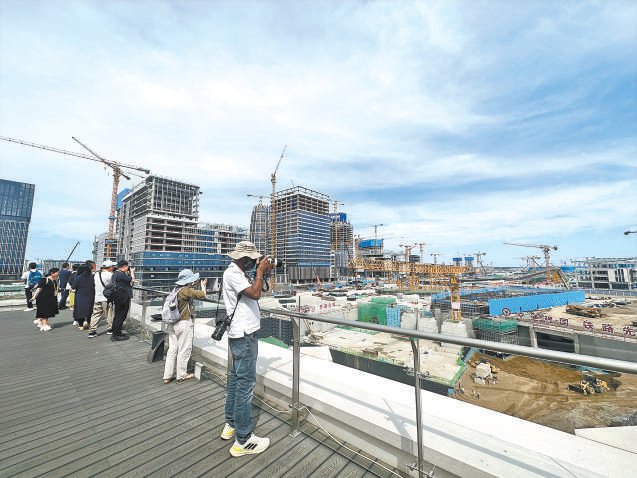
41名境内外记者参观雄安新区,用镜头记录“未来之城”
Bei Jing Ri Bao Ke Hu Duan· 2025-08-30 12:32
Core Viewpoint - The event showcased the construction achievements and development vitality of Xiong'an New Area, emphasizing its role as a national-level new area in China, coinciding with the 80th anniversary of the victory in the Anti-Japanese War and World Anti-Fascist War [1][14]. Group 1: Media Participation - A total of 41 journalists from 37 media outlets across more than 10 countries and regions participated in the visit to Xiong'an New Area [3][11]. - Journalists explored various sites including the "Xiong'an Impression" exhibition hall, Xiong'an Future City scenario innovation park, and the China Telecom Smart City Industrial Park, gaining comprehensive insights into the planning and construction of Xiong'an New Area [3][5]. Group 2: Construction Progress - The construction scene was described as bustling, with significant projects like the Xiong'an Intercity Station and the Beijing-Xiong'an Express Line station under rapid development [5][7]. - The underground space in the area includes layers for slow traffic, transportation transfer, and high-speed rail platforms, facilitating seamless transfers among various transport modes [9]. Group 3: Digital Twin City - The concept of a "Digital Twin City" was highlighted, where every building and road in Xiong'an has a corresponding digital model in the cloud, enhancing urban management through data and algorithms [11][13]. - The integration of smart technologies, such as the "Vehicle-Road-City Integration Service Platform," aims to optimize traffic management and alleviate congestion [11]. Group 4: Environmental and Technological Aspects - The development of green spaces is prioritized, with parks surrounding the city, reflecting the philosophy of "planting green first, then building the city" [13]. - The Xiong'an Future City scenario innovation park showcased advanced technologies in areas like smart agriculture, low-altitude technology applications, and artificial intelligence, indicating a strong focus on innovation and sustainable development [13].
“空气充电宝”来了
21世纪经济报道· 2025-08-29 14:38
Core Viewpoint - The article highlights the rapid growth and technological advancements in China's new energy storage sector, particularly focusing on compressed air energy storage (CAES) as a promising long-duration storage solution, with expectations of significant capacity increases by 2025 [1][5]. Group 1: New Energy Storage Capacity - By mid-2025, China's new energy storage capacity is projected to reach approximately 95 million kilowatts, representing nearly a 30-fold increase over five years [1]. - The National Energy Administration emphasizes the importance of new energy storage in ensuring power supply during peak summer demand [1]. Group 2: Compressed Air Energy Storage (CAES) - CAES technology utilizes surplus or low-cost electricity to compress air, storing it under high pressure for later use during peak demand periods, facilitating a "power-energy-power" conversion process [3]. - The recent successful verification of the world's highest pressure CAES underground cavern storage technology in Changsha marks a significant milestone in China's CAES development [3][6]. Group 3: Market Growth and Investment - The CAES sector is experiencing a surge in project bidding, with 14 projects initiated from January to May 2024, totaling 4.1 GW/18.7 GWh, a 33.3% increase compared to the same period in 2023 [9]. - The cumulative market space for CAES core equipment is expected to reach 18.5 billion yuan by 2025 and potentially surge to 85.4 billion yuan by 2030, driven by policy support and capital investment [9]. Group 4: Technological Advancements - CAES technology is diversifying, with various methods being explored, including traditional, advanced adiabatic, isothermal, underwater, liquid, and supercritical CAES [5]. - The industry is focused on overcoming efficiency and cost challenges by optimizing thermal management systems and insulation materials [8]. Group 5: Commercialization Efforts - Since the inclusion of new energy storage in government work reports in 2024, the CAES industry has seen significant capacity and scale improvements [8]. - The first non-combustion CAES power station successfully participated in peak summer demand management, showcasing the technology's operational capabilities [10].

“空气充电宝”来了|年中能源观察
2 1 Shi Ji Jing Ji Bao Dao· 2025-08-29 11:03
Core Viewpoint - The article highlights the rapid development and commercialization of new energy storage technologies in China, particularly focusing on compressed air energy storage (CAES) as a significant player in the energy sector, with projections indicating a substantial increase in installed capacity by 2025 [1][8]. Industry Overview - By mid-2025, China's new energy storage installed capacity is expected to reach approximately 95 million kilowatts, representing nearly a 30-fold increase over five years [1]. - New energy storage technologies include lithium-ion batteries, flow batteries, compressed air storage, and flywheel storage, with a notable emphasis on the diversification of storage solutions [2][5]. Compressed Air Energy Storage (CAES) - Recent advancements in CAES technology are making the concept of a "super charging treasure" a reality, with significant projects underway [3]. - The world's highest pressure CAES facility has successfully completed technology verification in Changsha, Hunan Province, marking a breakthrough in artificial cavern gas storage technology [4]. - CAES operates by using surplus or low-cost electricity to compress air, which is then stored under high pressure and released during peak demand, facilitating a "power-energy-power" conversion process [5]. Technological Developments - CAES technology has evolved through various stages, from 1 megawatt in 2013 to 300 megawatts with the recent projects, indicating a trend towards larger-scale applications [8]. - The CAES systems can be categorized into underground, ground, and underwater storage methods, with the Changsha project being a leading example of advanced artificial cavern storage technology [6]. Market Growth and Investment - The number of CAES projects and their bidding scale in China has significantly increased, with 14 projects initiated in the first five months of the year, totaling 4.1 GW/18.7 GWh, a 33.3% increase from the previous year [9]. - The market for CAES core equipment is projected to reach 18.5 billion yuan by 2025 and could surge to 85.4 billion yuan by 2030, driven by rapid industrial advancement and technological maturity [9]. Policy and Commercialization - The inclusion of new energy storage in government work reports since 2024 has positively impacted the CAES industry, leading to increased capacity and scale [8][10]. - CAES projects have begun participating in peak summer electricity supply, demonstrating their operational capabilities and integration into the energy grid [11].
构筑防线应对“剑鱼” 中国华能多措并举保发电
Zhong Guo Neng Yuan Wang· 2025-08-29 01:36
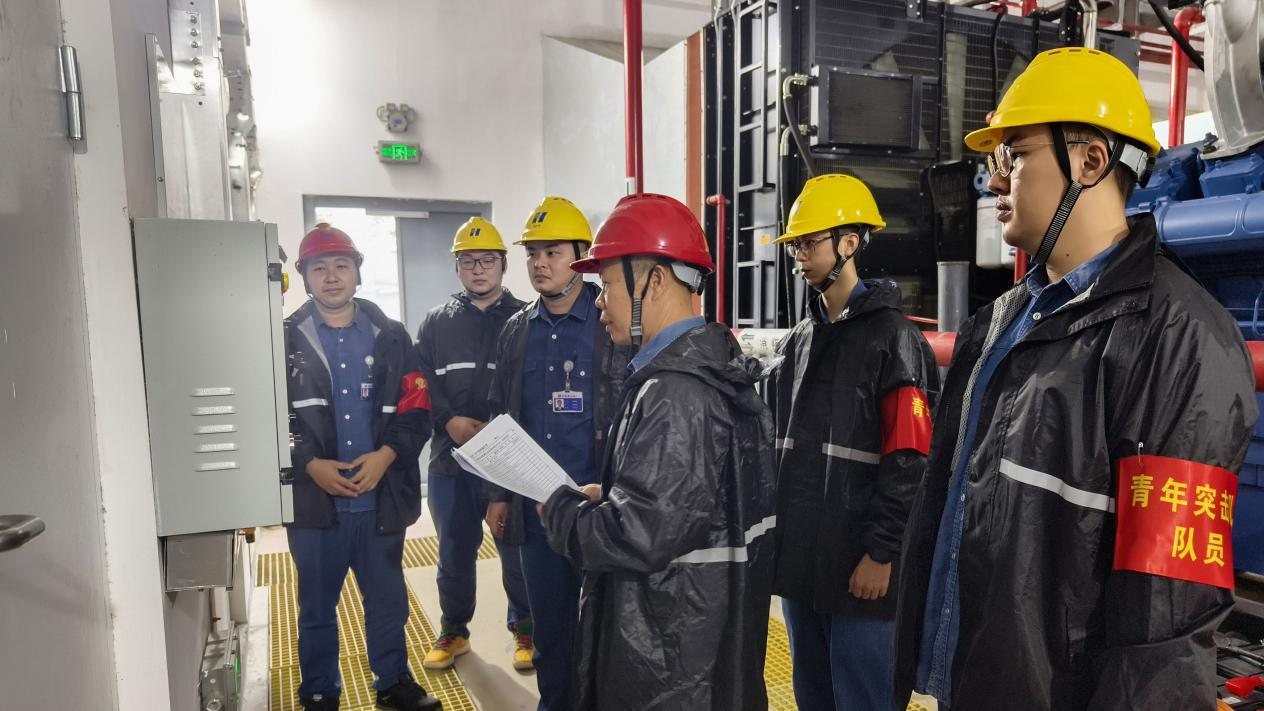
在全力抗台的同时,华能海南分公司保持发电机组"应开尽开",备用机组随时待命,为海南电网稳定运行提供保障。8月24日至25日, 华能海南分公司发电量达9208万千瓦时,占全省统调电量的38%。数据背后,是各岗位人员的坚守。 华能东方电厂内,生产部门以"不漏一处、不留死角"为标准,对照"防台防汛检查卡"逐项核查,同步细化极端天气下的事故预想方 案,实现风险早识别、隐患早处置。为降低台风影响,电厂第一时间暂停所有户外作业,重点针对厂区、戈枕水电设施、码头及煤场、光 伏场站等区域,全面落实防雨防风措施,对设备设施开展拉网式检查与加固。 华能海南清能分公司同步推进防台准备,华能文昌风电工程施工人员、临高海风海上作业人员全部安全撤离上岸;华能洋浦热电公司 巡查队伍冒雨对主厂房、循泵房、厂外光伏等重点区域开展排查,第一时间补充防雨帆布、备用排水泵等物资;华能海口电厂完成码头、 煤场大型机械锚定加固,对户外电气设备进行防雨包扎、清理排水系统,并开展厂用电中断实战演练,各项防御举措高效推进。 在华能海南昌江核电二期项目建设现场,昌江核电公司组建了349人值班"守护队",24小时巡视重要区域,密切跟踪雨情、风向、风速 变化,对照 ...
中国华能“黄海一号”入选世界经济论坛全球可再生能源案例!
Sou Hu Cai Jing· 2025-08-29 00:26
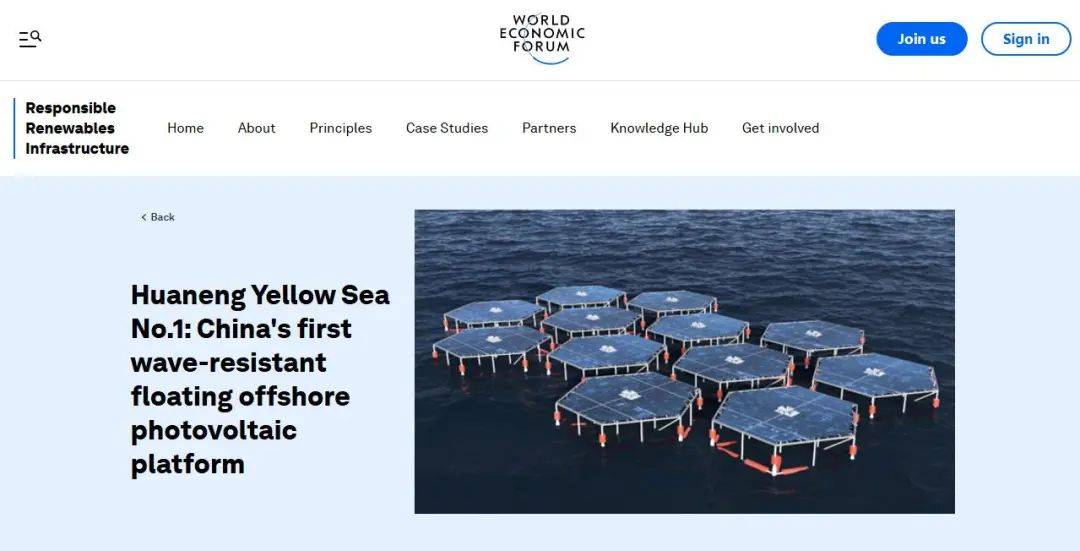
Group 1 - The World Economic Forum officially released the "Responsible Renewable Energy Initiative" global case collection during the Clean Energy Ministerial meeting held in Busan, South Korea [1] - China Huaneng Group's self-developed anti-wave floating offshore photovoltaic platform "Huang Hai No. 1" was successfully included in the case collection due to its technological innovation, environmental benefits, and sustainable development model [2] - "Huang Hai No. 1" is China's first deep-sea anti-wave floating offshore photovoltaic project, providing a reliable verification of deep-sea photovoltaic technology and offering a replicable and promotable technical practice path for large-scale offshore renewable energy development in China [4] Group 2 - The inclusion of "Huang Hai No. 1" in the World Economic Forum's global case collection signifies that China Huaneng's technological innovation and practical achievements in the floating offshore photovoltaic field have reached a world-leading level [4] - "Huang Hai No. 1" represents a significant breakthrough for China Huaneng in actively implementing the national "dual carbon" strategy and promoting the green transformation of the energy structure, providing a "Chinese solution" for global renewable energy development [4]
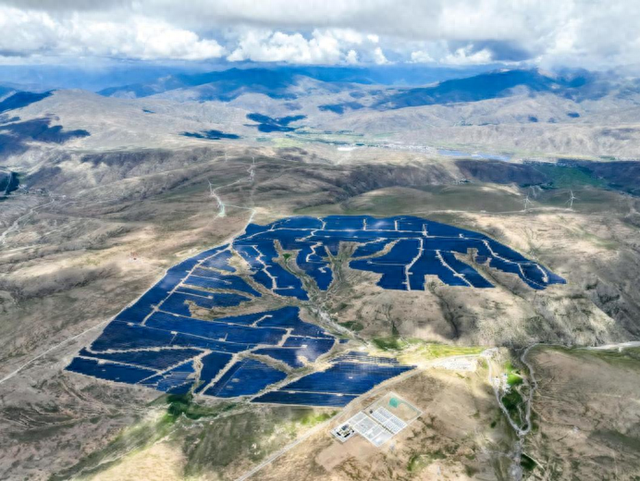
海拔4500米,“阳光变现计划”,真香!
Huan Qiu Wang· 2025-08-28 15:03
Core Viewpoint - The article highlights the successful implementation of the "Sunshine Monetization Plan" by China Huaneng at the largest solar storage power station in Tibet, showcasing its contributions to green energy and local economic development [1][3][20]. Group 1: Project Overview - The China Huaneng Jiawa Solar Storage Power Station has an installed capacity of 250,000 kilowatts, generating over 370 million kilowatt-hours of green electricity annually, which saves approximately 111,500 tons of standard coal and reduces carbon dioxide emissions by about 305,600 tons each year [3][5]. - The green electricity produced can meet the electricity needs of around 60,000 households, effectively addressing the peak electricity shortage in Tibet [5]. Group 2: Innovative Features - The project incorporates a unique design where photovoltaic arrays allow for livestock migration, enabling coexistence between power generation and pastoral activities [7][13]. - Advanced insulation technology has been employed to protect equipment from extreme cold, with customized thermal layers and heating systems ensuring operational stability in harsh conditions [9][11]. - A sophisticated energy storage system acts as a "super battery," storing excess solar energy during the day for use during peak demand or nighttime, ensuring continuous power availability [11]. Group 3: Economic Impact - Since its inception, the project has provided over 1,000 job opportunities for local herders, contributing approximately 14 million yuan to the local economy through equipment and housing rentals [18][20]. - The initiative fosters a strong connection between the enterprise and the local community, enhancing mutual benefits and promoting sustainable development [17][20]. Group 4: Strategic Importance - China Huaneng has been a pioneer in developing clean energy in Tibet since 2004, playing a crucial role in the region's economic growth and aligning with national strategies for energy security and green transition [20]. - The company is committed to sustainable development, contributing to ecological preservation and the construction of a beautiful and prosperous new Tibet [20].