
重庆银行

Search documents
重庆银行(01963) - 截至二零二五年八月三十一日止月份之股份发行人的证券变动月报表
2025-09-03 04:10
股份發行人及根據《上市規則》第十九B章上市的香港預託證券發行人的證券變動月報表 截至月份: 2025年8月31日 狀態: 新提交 致:香港交易及結算所有限公司 公司名稱: 重慶銀行股份有限公司 呈交日期: 2025年9月3日 I. 法定/註冊股本變動 | 1. 股份分類 | 普通股 | 股份類別 | H | | 於香港聯交所上市 (註1) | | 是 | | | --- | --- | --- | --- | --- | --- | --- | --- | --- | | 證券代號 (如上市) | 01963 | 說明 | H股 | | | | | | | | | 法定/註冊股份數目 | | | 面值 | | 法定/註冊股本 | | | 上月底結存 | | | 1,579,020,812 | RMB | | 1 RMB | | 1,579,020,812 | | 增加 / 減少 (-) | | | | | | RMB | | | | 本月底結存 | | | 1,579,020,812 | RMB | | 1 RMB | | 1,579,020,812 | | 2. 股份分類 | 普通股 | 股份類別 | A ...
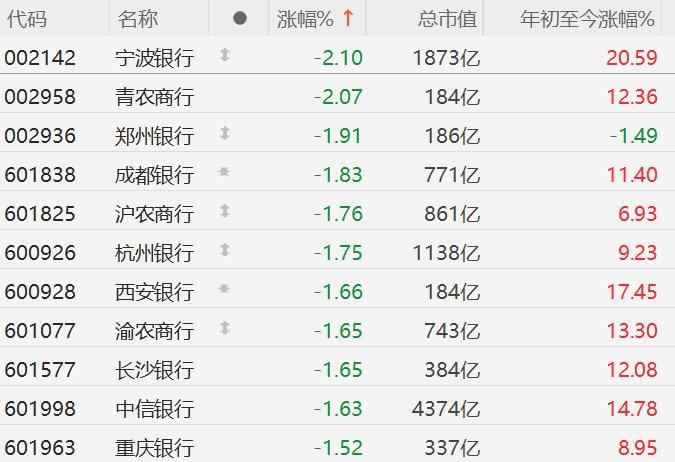
A股银行股普跌,宁波银行、青农商行跌超2%
Ge Long Hui A P P· 2025-09-03 03:49
Group 1 - The A-share market experienced a widespread decline in bank stocks, with several banks falling over 2% and others dropping more than 1% [1][2] - Notable declines included Ningbo Bank and Qingnong Commercial Bank, which fell by 2.10% and 2.07% respectively, while Zhengzhou Bank and Chengdu Bank also saw significant decreases [2] - The total market capitalization of Ningbo Bank is 187.3 billion, and Qingnong Commercial Bank stands at 18.4 billion, indicating their substantial presence in the market despite recent declines [2] Group 2 - Year-to-date performance shows that Ningbo Bank has increased by 20.59%, while Qingnong Commercial Bank has risen by 12.36%, suggesting a strong performance prior to the recent downturn [2] - Other banks such as Hu'nong Commercial Bank and Hangzhou Bank have also shown positive year-to-date growth, with increases of 6.93% and 9.23% respectively [2] - The overall trend indicates a challenging environment for bank stocks in the A-share market, with multiple institutions facing downward pressure [1][2]






从普惠冠军到催收标兵:银行人变形记 | 巴伦精选
Tai Mei Ti A P P· 2025-09-03 00:14
Core Viewpoint - The banking industry is undergoing a significant transformation as loan collection becomes a key focus due to rising non-performing loans, shifting the role of customer managers from sales to debt collection [1][5][9] Group 1: Transformation of Roles - Customer managers, once celebrated as champions of inclusive finance, are now primarily engaged in debt collection, reflecting a drastic change in their job responsibilities [1][2] - The transition from "new customer acquisition" to "debt recovery" has led to a standardized process for collections, including reminders and follow-ups based on the duration of overdue payments [2][3] - The emotional and psychological aspects of debt collection are emphasized, with customer managers needing to balance empathy and pressure in their communications with clients [4][9] Group 2: Rising Non-Performing Loans - The trend of increasing non-performing loans is evident, with several banks reporting rising delinquency rates in personal loans and real estate sectors [5][6] - Specific banks, such as Guiyang Bank and Qingnong Bank, have seen significant increases in their non-performing loan ratios, particularly in real estate [5][6] - The overall asset quality of banks is under pressure, prompting a shift in focus towards the recovery of non-performing loans as a critical revenue source [6][8] Group 3: Changes in Collection Strategies - Banks are increasingly forming in-house collection teams, moving away from outsourcing, to enhance control and efficiency in debt recovery [7][8] - The integration of technology, such as AI and data analytics, is being explored to automate and personalize the collection process, improving recovery rates [8] - The new approach to collections emphasizes a balance between achieving recovery targets and maintaining ethical standards in client interactions [9]
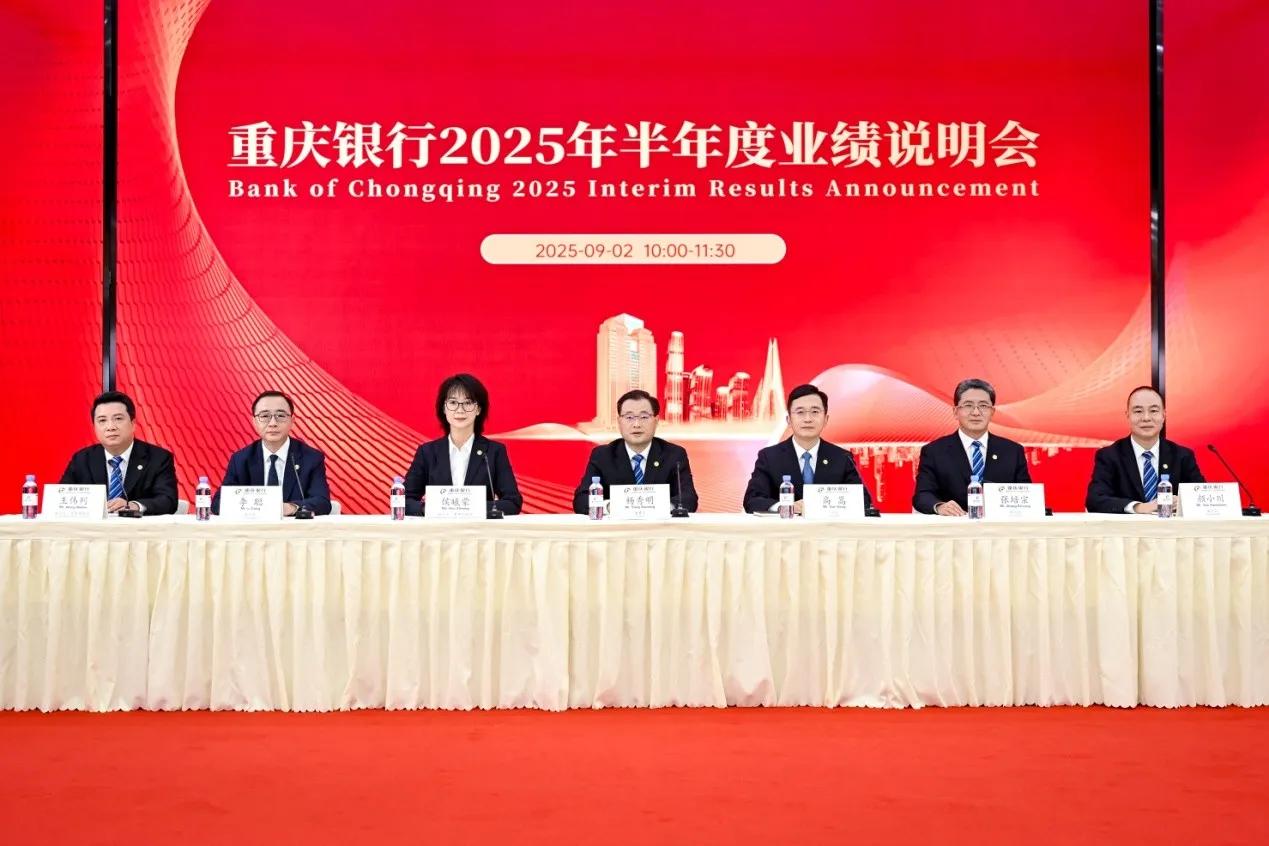
重庆银行2025年半年度业绩说明会召开 高质量发展再上新台阶 奋进“万亿”新征程
Cai Jing Wang· 2025-09-02 14:57
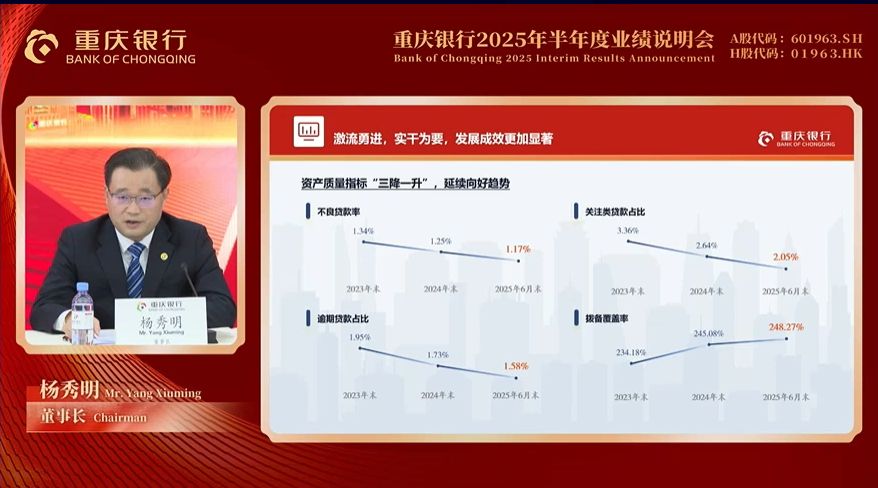
Core Viewpoint - Chongqing Bank has made significant progress in its operations and financial performance in 2025, achieving a total asset milestone of 1 trillion yuan and positioning itself as a leading city commercial bank in China [3][5]. Group 1: Financial Performance Highlights - As of July, the total assets of Chongqing Bank reached 1,008.7 billion yuan, marking it as the first city commercial bank in China to exceed this threshold [5]. - The bank's deposits and loans exceeded 540 billion yuan and 500 billion yuan, respectively, with year-to-date growth rates of 14.8% and 13.6% [5]. - The bank reported a revenue of nearly 7.7 billion yuan, net interest income exceeding 5.8 billion yuan, and a net profit close to 3.4 billion yuan, reflecting year-on-year growth of 7%, 12.2%, and 5.7% respectively [5]. Group 2: Strategic Initiatives and Market Position - The bank has actively supported national strategies such as the Chengdu-Chongqing Economic Circle and the Western Land-Sea New Corridor, providing nearly 140 billion yuan in credit support for regional projects [6][11]. - Chongqing Bank's loan growth in the first half of the year was 60 billion yuan, leading the financial institutions in Chongqing with a market share of 5.22%, an increase of 0.54 percentage points [5]. - The bank has implemented over 30 measures to support high-quality development in manufacturing and private sectors, with manufacturing loans growing by 26% year-on-year [6][12]. Group 3: Risk Management and Operational Efficiency - The bank's non-performing loan ratio stood at 1.17%, with a coverage ratio of 248.3%, indicating improved asset quality [5][19]. - The bank has enhanced its risk management framework, introducing new customer rating models and improving risk identification and disposal capabilities [19]. - The bank's net interest margin increased by 4 basis points to 1.39%, supported by effective asset-liability management [8][19]. Group 4: Innovation and Digital Transformation - Chongqing Bank has focused on digital innovation, enhancing its digital credit products and achieving a 35% increase in its digital loan offerings [8][14]. - The bank has developed a data-driven service system, improving customer acquisition efficiency by 28% and tripling the efficiency of its authorization review process [9][14]. - The bank has also launched new financial products, including green loans and specialized credit products for small and micro enterprises, contributing to a 99 billion yuan increase in inclusive loans [12][14].
城商行的二十年:展望“十五五”,谁是未来大赢家?
NORTHEAST SECURITIES· 2025-09-02 09:02
Investment Rating - The report rates the industry as "Outperforming the Market" [4] Core Insights - The report emphasizes that the evolution of local government financing behavior and regulatory adjustments over the past two decades have significantly influenced the financial sector. It predicts that the proportion of bank credit in local government debt will increase from 38% to 42% during the "14th Five-Year Plan" period, with an annual growth rate fluctuating between 10% and 17% [1][18][19] - City commercial banks (CCBs) have played a crucial role in supporting local government debt resolution, with their credit growth in government-related loans outpacing that of other banks. The report identifies a complementary relationship between CCBs' government-related loan growth and the issuance of urban investment bonds [1][2] - The report forecasts that CCBs will take on greater responsibilities in the future, driven by increasing state ownership, leadership changes reflecting regulatory attributes, and strong local government relationships. This will enhance local market competitiveness and provide growth opportunities for CCBs [2][18] Summary by Sections 1. Changes in Local Government Financing Structure - The report outlines the historical evolution of local government debt and financing needs, highlighting the significant role of regulatory and policy adjustments in shaping the financial sector [14][18] - It provides a detailed analysis of local government debt structure changes from 2008 to 2025, noting the shift from bank loans to urban investment bonds and shadow banking during various phases [19][24] 2. CCBs' Role in Debt Resolution - CCBs have shown proactive engagement in local government debt resolution, with their government-related loan growth significantly higher than that of other banks. The report indicates that CCBs have effectively supplied funds during periods of heightened repayment pressure [1][2][19] 3. Future Prospects for CCBs - The report identifies several CCBs, including Chongqing Bank, Xiamen Bank, and Shanghai Bank, as potential winners during the "14th Five-Year Plan" period, expecting them to achieve faster expansion and higher returns for investors [2][3] - It predicts that the overall valuation of CCBs will have substantial room for improvement, estimating a price-to-book (PB) ratio of 0.7x by the end of 2026 and 1.22x by the end of 2030 [2][3] 4. Investment Recommendations - The report recommends focusing on specific CCBs such as Chongqing Bank, Xiamen Bank, Shanghai Bank, Qilu Bank, and Chengdu Bank for potential investment opportunities [3][6]



城商行板块9月2日涨1.65%,齐鲁银行领涨,主力资金净流入3.41亿元
Zheng Xing Xing Ye Ri Bao· 2025-09-02 08:59
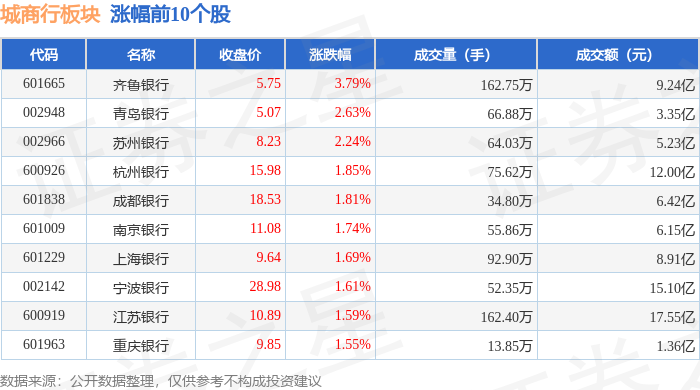
Group 1 - The city commercial bank sector increased by 1.65% on September 2, with Qilu Bank leading the gains [1] - The Shanghai Composite Index closed at 3858.13, down 0.45%, while the Shenzhen Component Index closed at 12553.84, down 2.14% [1] - Qilu Bank's closing price was 5.75, reflecting a 3.79% increase, with a trading volume of 1.6275 million shares and a transaction value of 924 million [1] Group 2 - The city commercial bank sector saw a net inflow of 341 million from main funds, while retail funds experienced a net outflow of 138 million [2] - Jiangsu Bank had a net inflow of 140 million from main funds, but a net outflow of 90.16 million from speculative funds [3] - The overall trading activity in the city commercial bank sector indicates a mixed sentiment among different types of investors, with main funds showing positive interest while retail and speculative funds withdrew [2][3]
业绩回升,夯实质效
HTSC· 2025-09-02 07:16
Investment Rating - The report maintains an "Overweight" rating for the banking sector [8]. Core Insights - The banking sector has shown a recovery in performance, with revenue and net profit growth of +1.0% and +0.8% year-on-year for H1 2025, respectively, indicating an improvement compared to Q1 2025 [14][29]. - Key focus areas include accelerated non-loan driven expansion, stable credit issuance, a recovery in deposits from a low base, narrowing interest margin declines leading to a recovery in net interest income, improved growth in non-interest income, and ongoing retail risk clearance [1][2][3]. Summary by Sections Market Overview - The banking sector has experienced a slight rebound with a +13.4% absolute return year-to-date as of August 29, 2025, although it slightly underperformed the broader market [13]. - The report anticipates a potential divergence in sector performance, favoring high-quality regional banks and high-dividend Hong Kong-listed banks for investment [13]. Profitability Breakdown - The net interest margin for listed banks was measured at 1.41% for H1 2025, showing a slight improvement from Q1 2025 [3][14]. - Non-interest income has seen a year-on-year increase of 10.7% in H1 2025, driven by a recovery in capital markets [3][15]. - The report highlights a need to monitor interest rate risks due to recent market volatility [3][15]. Asset and Liability Management - Total assets and liabilities for listed banks grew by +9.6% year-on-year as of H1 2025, with significant contributions from non-loan driven growth [2][16]. - The report notes a recovery in deposits, with a year-on-year increase of +8.3% in H1 2025, attributed to a low base effect from the previous year [2][17]. Risk Assessment - The non-performing loan (NPL) ratio remained stable at 1.23% as of H1 2025, with a provision coverage ratio of 238% [4][18]. - The report indicates a slight increase in retail loan NPLs, suggesting ongoing monitoring of retail credit risks [4][18]. Market Outlook - The report suggests that the narrowing of interest margin declines and reduced non-interest income volatility will support revenue and profit growth for banks in the near term [5][14]. - It emphasizes the importance of identifying quality stocks with structural opportunities in the banking sector, particularly those with strong performance and growth potential [5][14].


重庆银行成功举办2025年中报业绩说明会 开启“万亿元时代”新征程
Quan Jing Wang· 2025-09-02 06:37
9月2日,重庆银行(601963)(601963)2025年半年度业绩说明会如期举办,公司核心高管悉数亮相,与投资者共话未来发 展新蓝图。 中报显示,重庆银行今年上半年实现营业收入76.59亿元,同比增长7%;归属于股东的净利润31.90亿元,同比增长5.39%, 在城商行盈利普遍承压的环境中展现出强劲韧性。 图/重庆银行董事长杨秀明介绍"三降一增"情况 针对投资者关于公司资产规模突破1万亿元后布局有关情况,公司方面回应称:重庆银行始终坚持围绕国家重大战略,服务 实体经济,协同高效、共同作战,资产规模突破1万亿元将作为我们工作的新起点。接下来,重庆银行将重点围绕资产结构 优化、夯实与拓展客群、提升市场化定价能力等方面,推动业务迈上新台阶。 图/重庆银行中报业绩说明会投资者问答 公司表示,将保持战略定力,持续提升金融服务的专业性、有效性,为广大股东、客户和投资者创造更大的价值回馈。 值得指出的是,截至今年7月末,重庆银行集团口径资产总额突破1万亿元,达到10087亿元,提前完成其"十四五"战略规划 目标。 必须看到,在银行业整体面临息差收窄压力的背景下,重庆银行上半年以核心风控指标的"三降一增"实现了高质量发展 ...
重庆银行跌1.42%,成交额1.33亿元,近3日主力净流入597.51万
Xin Lang Cai Jing· 2025-09-01 14:24
Core Viewpoint - Chongqing Bank's stock has experienced a decline of 1.42% on September 1, with a trading volume of 133 million yuan and a total market capitalization of 33.703 billion yuan [1] Dividend Analysis - Chongqing Bank's dividend yields over the past three years were 5.83%, 5.86%, and 4.46% respectively [2] - The bank has launched various financial products to support rural revitalization, including "Rural Revitalization Loans" and "Live Pig Collateral Loans" [2] - The bank aims to enhance credit support for new agricultural operators and strengthen cooperation with government-backed financing guarantee companies [2] Fund Flow Analysis - The main capital flow for Chongqing Bank today showed a net outflow of 98,200 yuan, with a continuous reduction in main capital over the past two days [2] - The industry also experienced a net outflow of 790 million yuan, indicating a trend of capital withdrawal [2] Technical Analysis - The average trading cost of the stock is 9.60 yuan, with recent accumulation activity noted, although the strength of this accumulation is weak [4] - The current stock price is near a support level of 9.68 yuan, and a drop below this level could trigger a downward trend [4] Company Overview - Chongqing Bank, established on September 2, 1996, is located in Hong Kong and primarily provides corporate and personal banking products and services [5] - The bank's revenue composition includes 69.84% from corporate banking, 21.95% from personal banking, and 7.41% from funding operations [5] - As of June 30, the number of shareholders decreased by 7.52% to 34,200, while the average circulating shares per person increased by 8.34% [5] - For the first half of 2025, Chongqing Bank reported a net profit of 3.19 billion yuan, reflecting a year-on-year growth of 5.39% [5] Dividend Distribution - Since its A-share listing, Chongqing Bank has distributed a total of 6.88 billion yuan in dividends, with 4.23 billion yuan distributed over the past three years [6]
贵阳银行连续三个年中报“双降”:不良贷款率创历史新高
Guan Cha Zhe Wang· 2025-09-01 06:52
Core Viewpoint - Guiyang Bank's mid-year report for 2025 reveals a significant decline in both revenue and net profit, marking the third consecutive year of such performance, alongside a record high in non-performing loan ratio, indicating severe challenges in asset quality and profitability [1][2]. Financial Performance - Guiyang Bank reported a revenue of 6.5 billion yuan, a year-on-year decrease of 12.2%, and a net profit attributable to shareholders of 2.474 billion yuan, down 7.2% year-on-year [2]. - The bank's net interest margin fell to 1.53%, down 0.28 percentage points from the previous year and down 0.66 percentage points from 2023 [2]. - Net interest income for the period was 4.92 billion yuan, a decrease of 15.26%, with 1.6 billion yuan attributed to scale factors and 7.26 billion yuan to interest factors [2]. Comparison with Peers - In contrast to Guiyang Bank, several listed city commercial banks reported growth in net interest income, such as Jiangsu Bank with a 19.1% increase [3]. - Despite a higher net interest margin than Chongqing Bank, Guiyang Bank's significant drop in net interest income suggests potential internal structural or operational efficiency issues [3]. Asset Quality Concerns - As of June 30, Guiyang Bank's total assets reached 741.54 billion yuan, with total loans increasing to 343.46 billion yuan, a growth of 1.27% [4]. - The non-performing loan balance rose to 5.824 billion yuan, with a non-performing loan ratio climbing to 1.7%, the highest in its history [4]. - The bank's loan distribution shows real estate loans at 52.76 billion yuan, with a non-performing rate of 1.75%, while the wholesale and retail sector had the highest non-performing balance [4]. Loan Classification and Coverage - The proportion of normal loans decreased by 0.27 percentage points, while the shares of special mention, substandard, and loss loans increased [5]. - The provision coverage ratio stood at 238.64%, down 18.43 percentage points from the previous year, indicating a declining trend despite a slight increase from the first quarter [6]. - The capital adequacy ratio was reported at 14.97%, with tier 1 and core tier 1 capital ratios at 13.77% and 12.73%, respectively, showing a slight decline but remaining at a relatively high level among listed city commercial banks [7].