
OPPO

Search documents
非洲手机季度出货:小米增长34%,荣耀增长158%
Guan Cha Zhe Wang· 2025-12-02 06:08
Core Insights - The African smartphone market is experiencing a significant rebound, with Q3 2025 shipments expected to surge by 24% year-on-year, reaching 22.8 million units, following five consecutive quarters of decline [1][7] - This growth outpaces the global smartphone market's moderate recovery, driven by increased demand in key markets, currency stabilization, enhanced financing usage, and improved retail activities [1] Market Performance - Most markets in North Africa and Sub-Saharan Africa recorded double-digit growth in smartphone shipments, with Nigeria and Egypt each accounting for 14% of regional shipments [1] - Nigeria's market saw a remarkable 29% increase, attributed to the stabilization of the Naira and a refreshed lineup of models priced below $150, stimulating upgrade demand [1] - Egypt's growth of 19% was primarily fueled by a strong mid-range market, with brands aggressively targeting the $150 to $250 price segment [1] Regional Highlights - South Africa led the growth with a 31% increase, supported by the rise of prepaid models in the low and mid-range markets, new model launches, and increased retail promotions [2] - Kenya experienced a 17% growth, driven by the rising penetration of installment payment plans, which boosted demand for entry-level models [2] Brand Performance - Omdia reported that shipments of smartphones priced below $100 surged by 57%, while those above $500 grew by 52%, indicating a dual growth trend in the market [4] - Transsion's shipments increased by 25%, supported by strong demand in Algeria, Egypt, Morocco, Nigeria, Kenya, and South Africa, with popular models like TECNO's Camon40 and Infinix's Hot60 contributing to this growth [4] - Samsung maintained a presence in the high-end market with its Galaxy S24 series, but overall growth was modest at 5%, as consumers favored value models [4] Competitive Landscape - Xiaomi is accelerating its long-term strategy in Africa, planning to enter over 15 new markets and opening its first self-operated flagship store in Morocco, with strong sales in models priced below $150 [8] - OPPO is solidifying its market position in North Africa, focusing on Egypt, while Honor is achieving steady growth in South Africa through competitive models like Honor 200 Lite [8] Future Outlook - Despite the current growth, Omdia's analyst warns of a potential 6% decline in the African smartphone market in 2026 due to rising supply-side pressures, including increased BOM costs and currency weaknesses [8] - These pressures are expected to elevate average selling prices, particularly in the $80 to $150 range, posing new payment challenges for consumers [8]




500亿存储器牛股年涨超370%
21世纪经济报道· 2025-12-02 06:06
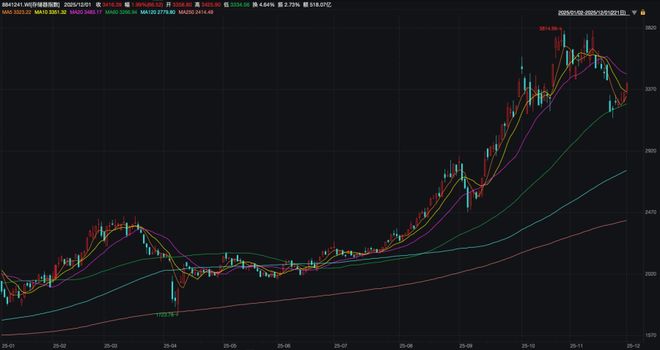
不过,据南方财经记者观察,在经历"寒潮"之后,该板块已呈现回暖趋势。 记者丨 朱治宣 孙静芳 实习生钟宸 存储器市场在11月中下旬突遇"寒潮",作为AI浪潮下的受益板块之一,存储器概念此前的上涨态势随着AI泡沫论等担忧受到剧烈影响,11月底 的板块骤降反映出市场的敏感性。 | 3368.25 昨收 3416.39 成交额 244.46亿 -48.14 -1.41% | 今开 | | | --- | --- | --- | | 上涨 == 2 | 平盘 1 - 下跌 = 26 | | | 最高价 3403.55 | 市盈率 | | | 3366.28 | | 最低价 | | 分时 五日 日K 周K 月K 更多 ◎ | | | | 叠加 设均线 MA 5:3414.54↓ 10:3423.09↑ 20:3035.32↑ | | | | 4024.07 | | | | 3814.95 > 1 | | | 截至12月1日,万得存储器指数(8841241.WI)收盘报3416.39点,当日涨幅达1.99%,已连续四个交易日上涨。存储器板块年初至今涨幅达到 97.7%(流通市值加权平均),东芯股份(688110.SH)、 ...


字节“造”手机:走华为造车的路,打阿里腾讯的脸?
Xin Lang Cai Jing· 2025-12-02 05:56
Core Viewpoint - ByteDance is set to release an AI-integrated smartphone in collaboration with ZTE, marking a significant move into hardware without directly manufacturing devices, leveraging its AI capabilities instead [1][2][3]. Group 1: ByteDance's Smartphone Strategy - ByteDance is collaborating with ZTE to launch an AI smartphone, where ByteDance leads the integration of its AI model, Doubao, while ZTE focuses on hardware design and manufacturing [1]. - The smartphone will feature a high-permission AI Agent that can execute complex tasks across applications, significantly enhancing user experience compared to traditional AI applications [1][2]. - This strategy allows ByteDance to embed its AI capabilities deeply into hardware without the need to produce its own devices, similar to Huawei's approach in the automotive sector [3][4]. Group 2: Comparison with Competitors - Other tech giants like Tencent and Alibaba are also developing AI Agents, with Tencent's WeChat aiming to create a comprehensive ecosystem that integrates various services within its platform [13][14]. - Alibaba's "Qianwen" project aims to create a personal AI assistant that can seamlessly integrate with its existing services, enhancing user experience through a closed-loop system [15]. - However, both Tencent and Alibaba face limitations in their ecosystems, as their AI Agents are constrained by the need for data sharing and permissions from third-party applications, which may hinder their effectiveness [16]. Group 3: Lessons from Past Experiences - ByteDance previously acquired Smartisan Technology but faced challenges in the smartphone market, leading to a strategic shift towards partnerships rather than direct hardware production [9][10]. - The decision to collaborate with Nubia reflects a learning curve from past experiences, allowing ByteDance to focus on its strengths in AI technology while avoiding the pitfalls of hardware manufacturing [11]. - This approach not only mitigates risks associated with hardware sales but also positions ByteDance as a technology provider, potentially redefining standards in the AI smartphone market [12].
AI超级入口之争战火升级
Hua Er Jie Jian Wen· 2025-12-02 03:40
Core Insights - The competition for AI Agents is intensifying among major tech companies, including Tencent, Alibaba, ByteDance, Huawei, and various hardware manufacturers, as they aim to establish themselves in the AI era [3][15] - ByteDance has launched the Doubao mobile assistant, which collaborates with smartphone manufacturers at the operating system level, marking a shift from developing its own AI phone to partnering with existing hardware providers [5][6] - The integration of AI Agents into mobile operating systems is seen as a critical turning point for AI technology to fully integrate into the real economy by 2025 [8] Industry Dynamics - The AI Agent landscape is evolving, with companies moving from traditional app development to creating intelligent agents that can autonomously interact with users and other applications [9][11] - The market for AI applications is growing rapidly, with mobile active users exceeding 729 million in China as of September 2025, indicating a significant shift in user engagement with AI technologies [9] - The competition is not just about technology but also about controlling user data and access to applications, which is reshaping the roles of app developers and hardware manufacturers [16][17] Technological Challenges - AI Agents face significant challenges related to data privacy and security, particularly concerning the use of "accessibility permissions" that can lead to unauthorized data access and potential privacy violations [20][22] - The development of AI Agents involves navigating complex legal and compliance issues, as existing frameworks may not adequately address the risks posed by these technologies [23][24] - The future of AI Agents is uncertain, with ongoing exploration of business models and data privacy responsibilities as the industry seeks to balance innovation with risk management [25]


首款“豆包助手”手机售罄,二手平台加价700起
第一财经· 2025-12-02 02:51
Core Viewpoint - The first "Doubao Assistant" phone developed by ZTE and ByteDance has sold out, with second-hand prices on platforms like Xianyu ranging from 4200 to 4999 yuan, exceeding the official price by 700 to 1500 yuan [3][6]. Group 1: Product Development and Sales - The "Doubao Assistant" phone is a collaboration where Doubao leads the AI assistant product definition and experience, while ZTE's Nubia handles hardware development and manufacturing [3]. - Nubia has not disclosed sales data yet, indicating that the initial release was limited [3]. - The official website shows that the phone is not completely out of stock, as developers can apply for an F code to purchase it [3]. Group 2: Software Updates and Future Plans - Nubia plans to maintain a software update frequency of approximately every two weeks until the end of Q1 2026 [4]. - Doubao is exploring partnerships with multiple phone manufacturers but does not have plans to develop its own phone [4]. Group 3: Industry Competition and Collaboration - Major domestic phone manufacturers currently do not have similar collaboration plans with Doubao, although they have existing partnerships with other AI service providers [5]. - The integration of voice assistants into operating systems represents a significant control over ecosystem traffic and future service business models for phone manufacturers [7]. - Doubao's strategy of partnering with smaller manufacturers may allow it greater control over model development, similar to Huawei's "Smart Selection Car" model [8].

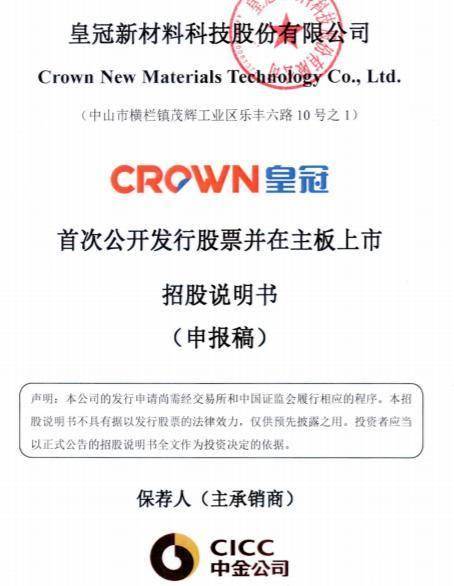
皇冠新材深主板IPO获受理:年入31.6亿,8家子公司2家盈利
Sou Hu Cai Jing· 2025-12-02 02:02
Core Viewpoint - Crown New Materials Technology Co., Ltd. has received approval for its IPO on the Shenzhen Stock Exchange, with a focus on functional new materials and a wide range of applications across various industries [2][3]. Company Overview - Crown New Materials specializes in the research, production, and sales of industrial-grade adhesives, electronic-grade adhesives, and functional film materials, positioning itself as a high-tech enterprise [2]. - The company's products are utilized in numerous well-known brands, including OPPO, vivo, Huawei, Apple, Google, Amazon, BYD, Tesla, and others [2]. Financial Summary - The total investment for the IPO is approximately 10.32 billion, with 9.2 billion intended for expansion projects and working capital [3]. - Revenue figures for the years 2022 to 2025 are projected to be 2.567 billion, 2.895 billion, 3.159 billion, and 1.592 billion respectively, with net profits of 206 million, 278 million, 302 million, and 155 million [5]. - The company’s total assets are expected to grow from 2.303 billion in 2022 to 3.560 billion by mid-2025, while the debt-to-asset ratio is projected to decrease from 43.76% in 2022 to 37.41% by mid-2025 [4]. Subsidiary Performance - As of the date of the prospectus, Crown New Materials has eight wholly-owned subsidiaries, with only two subsidiaries, Jiangsu Crown and Guangdong Crown, reporting profits in the first half of the year [6].
破解AI泡沫论:存储器指数回暖背后的风向标
2 1 Shi Ji Jing Ji Bao Dao· 2025-12-02 02:02
Core Viewpoint - The storage market experienced a significant downturn in late November due to concerns over the AI bubble, but has shown signs of recovery as of December 1, with the storage index rising 1.99% and a year-to-date increase of 97.7% [1][3] Market Trends - The storage sector is benefiting from the increasing demand for high-bandwidth memory (HBM) driven by AI applications, with major companies like OpenAI and NVIDIA securing substantial contracts for memory chips [3][4] - The supply chain dynamics have shifted, with a notable increase in prices for DDR4 memory and a halt in pricing for DDR5 and SSDs due to supply constraints [5] Regional Development - Guangdong has solidified its dominant position in the storage and AI hardware industry, with a significant number of storage index constituents based in the region, showcasing a multi-polar and deepened industrial layout [7][9] - Companies like Jiangbo Long are expanding their operations from Shenzhen to Zhongshan, indicating a strategic shift towards leveraging regional advantages [7] Industry Collaboration - The collaboration between various companies and local governments in Guangdong is fostering a robust ecosystem for the storage industry, with significant investments in advanced manufacturing and data center infrastructure [8][9] Future Outlook - The demand for storage is expected to remain strong, with projections indicating that supply constraints may not ease until at least the end of 2026, driven by both natural demand growth and supply-side reductions [5][6] - The structural changes in the storage industry, propelled by AI, are anticipated to create a prolonged upward cycle, supported by regional industrial collaboration [10][11]
首款“豆包助手”手机售罄 二手平台加价700起
Di Yi Cai Jing· 2025-12-02 01:37
Core Insights - The first "Doubao Assistant" phone has sold out, with second-hand prices ranging from 4200 to 4999 yuan, exceeding the official price by 700 to 1500 yuan [1] - The phone is a collaboration between ZTE and ByteDance, with Doubao leading the AI assistant's product definition and experience, while Nubia handles hardware development and manufacturing [1] - Nubia has not released sales data yet, as this is the first model with limited external sales [1] Product and Development - The Nubia M153 software will receive updates approximately every two weeks until the end of Q1 2026, with future update frequency to be announced later [3] - Doubao is exploring partnerships with multiple phone manufacturers but has no plans for self-developed phones [3] Market Position and Competition - Major domestic phone manufacturers currently do not have similar collaboration plans with Doubao [4] - Companies like Honor have existing collaborations with Volcano Engine for various functionalities, but specifics regarding Doubao's assistant remain unconfirmed [4] - Other manufacturers, such as OPPO and Vivo, have not confirmed any collaboration but are observing Doubao's upcoming technical solutions [4] Industry Dynamics - Existing voice assistants from major manufacturers are deeply integrated into their operating systems, representing control over ecosystem traffic and future service business models [5] - Smaller manufacturers may have more flexibility in collaborating with Doubao, allowing Doubao to maintain greater control over model development [5] - The collaboration model between Doubao and ZTE resembles Huawei's "Smart Choice Car" model, where Doubao retains model development authority while manufacturers focus on hardware [6] - The willingness of other application ecosystem companies to provide AI capabilities for Doubao's assistant remains uncertain [6]

射频行业大变局:写在Qorvo与Skyworks合并后
半导体行业观察· 2025-12-02 01:37
Core Viewpoint - The merger between Skyworks Solutions and Qorvo is a strategic response to market pressures, creating a new RF industry giant valued at up to $22 billion with annual sales of approximately $7.7 billion, aiming to save over $500 million in operating costs annually [2][5][53]. Group 1: Merger Details - The merger is structured as a "cash and stock" transaction, allowing the new entity to continue operating under the Skyworks Solutions name with the same NASDAQ ticker symbol SWKS [2][5]. - This merger marks a significant shift in the RF front-end industry, potentially restructuring the competitive landscape and signaling the end of an era for the two leading companies [5][6]. Group 2: Market Context - Skyworks and Qorvo have maintained a dominant position in the RF front-end market, particularly in China, despite larger competitors like Qualcomm and Broadcom having different business models [4][5]. - The RF industry has seen multiple mergers and acquisitions that have reshaped market dynamics, with this merger being particularly impactful due to its strategic focus on efficiency rather than competition [6][8]. Group 3: Industry Dynamics - The RF front-end industry is characterized by a high degree of order and stability, with a projected market size of approximately $15.4 billion by 2025, indicating significant growth potential [14]. - The industry has evolved through three stages: initial technological barriers, design capabilities, and now market strategies, with the current phase focusing on efficiency and cost reduction [19][51]. Group 4: Competitive Pressures - The RF front-end market is facing saturation, with global smartphone shipments plateauing around 1.2 billion units annually, leading to increased competition and reduced growth opportunities for major players [55][59]. - Both Skyworks and Qorvo have experienced declining profit margins due to rising competition from Chinese manufacturers and the need to maintain pricing power in a saturated market [60][66]. Group 5: Future Opportunities - The merger is seen as a strategic move to consolidate resources and enhance bargaining power within the supply chain, allowing the new entity to better navigate the competitive landscape [80]. - The restructuring of the RF industry presents a unique opportunity for Chinese manufacturers to transition from being technology followers to active participants in shaping industry standards [75][79].

首款“豆包助手”手机售罄,二手平台加价700起
Di Yi Cai Jing· 2025-12-02 01:30
Core Insights - The "Doubao Assistant" phone, developed by ZTE and ByteDance, has sold out, with second-hand prices ranging from 4200 to 4999 yuan, exceeding the official price by 700 to 1500 yuan [1][3] - Nubia, a subsidiary of ZTE, has not released sales data for the "Doubao Assistant" phone, indicating limited initial availability [1] - The phone is not entirely out of stock, as developers can apply for an F code to purchase it, although software functionality may not match mainstream flagship models [1] Collaboration and Market Position - Nubia is not the only partner for "Doubao Assistant," as ByteDance is in talks with multiple phone manufacturers, but no major collaborations have been confirmed yet [3] - Major phone manufacturers like Honor have existing partnerships with Volcano Engine, while OPPO and Vivo have not confirmed any collaboration with Doubao [3][4] - The current landscape shows that leading phone manufacturers have their own voice assistants, which are deeply integrated into their operating systems, representing control over ecosystem traffic and future business models [4] Competitive Landscape - The collaboration model between Doubao and ZTE resembles Huawei's "Smart Choice Car" model, where Doubao retains control over model development while manufacturers provide hardware [5] - There is potential for more second and third-tier manufacturers to explore this model, but the willingness of other application ecosystem companies to provide AI capabilities remains uncertain [5] - The competition among voice assistants is expected to extend beyond smartphones to other devices like headphones and smart glasses, indicating a broader market for AI integration [5]