宝洁公司

Search documents
Will Slowing Global Demand Dent PG's Emerging Market Strategy?
ZACKS· 2025-08-20 17:06
Core Insights - Procter & Gamble (PG) has relied on emerging markets like Latin America, Asia, and Africa for growth, but concerns arise about maintaining momentum amid slowing global demand [1][3] - Recent results indicate that PG's emerging markets continue to perform well, with volume growth in Latin America and India driven by strong brand presence and effective pricing strategies [2][8] - The company faces challenges in balancing short-term pressures with long-term opportunities, needing to adjust pricing and promotional strategies if consumer spending slows further [3] Emerging Market Strategy - PG's focus on affordability, innovation, and expanding distribution supports its long-term resilience in emerging markets [2][8] - The company's diversified portfolio and strong execution in these regions provide a buffer against weaker demand in developed economies [3] Competitive Landscape - Church & Dwight (CHD) and Colgate-Palmolive (CL) are also navigating slowing global demand with strategic discipline, focusing on brand strength and international growth [4][5][6] - CHD reported 5% organic sales growth in its international business, leveraging a strong portfolio and disciplined marketing [5] - Colgate's emerging market strategy includes premium innovation and pricing actions, despite facing challenges in certain regions [6] Financial Performance - PG's shares have declined approximately 5.5% year-to-date, compared to a 4.7% dip in the industry [7] - The company trades at a forward price-to-earnings ratio of 22.47X, higher than the industry's average of 20.17X [9] - The Zacks Consensus Estimate for PG's fiscal 2025 and 2026 EPS indicates year-over-year growth of 2.3% and 6.3%, respectively, although estimates have moved downward recently [10]


Consumer Strength Signal Flashing Short-Term Caution Sign
Schaeffers Investment Research· 2025-08-20 12:19
Core Insights - The Consumer Discretionary Select Sector SPDR Fund (XLY) is outperforming the Consumer Staples Select Sector SPDR Fund (XLP), indicating strong consumer spending power after basic needs are met [1][2] - The XLY's relative strength has reached above 1.20, the highest since the beginning of the year, suggesting healthy consumer strength [2] - Historical data shows that when the XLY/XLP relative strength exceeds 1.20, it has led to varying stock performance, with short-term returns generally being negative but longer-term returns showing more promise [4][5] Consumer Discretionary vs. Consumer Staples - The XLY includes major holdings like Amazon, Tesla, Home Depot, and Booking Holdings, which thrive on discretionary spending [1] - The XLP consists of essential goods providers such as Walmart, Costco, Procter & Gamble, and Coca-Cola, focusing on necessities [1] - The performance of XLY stocks has been better than XLP stocks following signals of relative strength [10] Historical Performance Analysis - In the short term, the S&P 500 averaged a loss of 0.82% over the next month after XLY/XLP signals, with only 33% of returns positive [5] - Over three months, the S&P 500 gained an average of 0.44%, with 44% of returns positive, compared to a typical return of 1.82% [5] - Longer-term returns (6-month and 12-month) show average returns of 3.52% and 10.82% respectively, indicating a more favorable outlook [5] Individual Signal Performance - The last five signals have resulted in positive S&P 500 returns every time over the next year, with a minimum return of 11.8% and an average of 26% [7] - Historical data from 1999 shows that the average returns for the XLY after signals are generally higher than those for the XLP [10] Returns After Signals - XLY returns after signals show an average of 0.66% for 1-month, 0.41% for 3-month, 4.15% for 6-month, and 15.42% for 12-month periods [11] - XLP returns after signals indicate an average of -0.48% for 1-month, -1.39% for 3-month, 2.16% for 6-month, and 8.95% for 12-month periods [12]

宝洁美容部门换帅,成为该部门首位印度裔CEO
Xi Niu Cai Jing· 2025-08-20 05:57
Group 1 - Procter & Gamble's (P&G) Beauty Division CEO R. Alexandra Keith will retire in February 2026, with Freddy Bharucha set to take over on December 1, 2023, leading a $15 billion global beauty product portfolio [2] - The Beauty Division includes brands such as SK-II, Olay, and Pantene, and is one of five main business segments within P&G [2] - Freddy Bharucha has been with P&G since 1995, holding various positions, including Global President of Personal Care prior to his upcoming role [2] Group 2 - For the fiscal year 2025, P&G's Beauty Division reported sales of 107.398 billion yuan, a 2% year-over-year decline, and net income of 19.486 billion yuan, down 8% [3] - The fourth quarter showed a slight increase of 0.2% in sales and a 4% rise in net profit, indicating initial success from strategic adjustments [3] - The leadership change in the Beauty Division is part of P&G's restructuring plan to ensure a smooth transition in its beauty business, amidst significant personnel changes across the company [3]

懂王继续重锤,关税阴云犹在,“全球央妈年会”即将召开!
Sou Hu Cai Jing· 2025-08-20 05:55
Group 1: Trade Policy Changes - The Trump administration has expanded the coverage of steel and aluminum tariffs by 50%, adding over 400 product categories including firefighting equipment, machinery, construction materials, and specialty chemicals made from steel and aluminum [2][3] - The expansion of tariffs aims to close loopholes and support the ongoing revitalization of the U.S. steel and aluminum industries, according to Jeffrey Kessler, Deputy Assistant Secretary for Industrial and Security [3] Group 2: Economic Impact - The new tariffs are estimated to affect at least $320 billion worth of imported goods, potentially increasing cost-push inflation pressures as domestic producers raise prices [3] - Several U.S. companies, including Procter & Gamble, Walmart, and Home Depot, have issued price increase warnings, indicating that the tariffs will lead to higher product prices [3] - A recent survey revealed that nearly one-third of U.S. businesses plan to raise prices within six months, reflecting a trend of passing higher input and import costs onto consumers [3] Group 3: Federal Reserve and Interest Rates - The tariffs have reignited discussions about inflation and interest rates, with President Trump urging the Federal Reserve to lower rates [4] - Treasury Secretary Mnuchin suggested that the Fed's benchmark rate should be reduced by 150-175 basis points, although this view has faced criticism [4] - Market expectations indicate a nearly certain 25 basis point rate cut by the Fed next month, with at least one more cut anticipated by the end of the year [4][5] Group 4: Federal Reserve's Policy Framework - The upcoming Jackson Hole conference is expected to see Fed Chair Powell address the monetary policy framework, with speculation that the Fed may shift away from the "flexible average inflation targeting" introduced during the COVID-19 pandemic [6] - Powell's actions and statements are closely watched as they could significantly influence global financial markets amid the intertwined issues of tariffs, inflation, and monetary policy [6]

Why The Meme-ification of Investing Is Here To Stay
From The Desk Of Anthony Pompliano· 2025-08-19 21:00
Market Trends & Investment Thesis - The government's continued money printing is a key investment thesis for the foreseeable future [2] - Accelerated debasement of the US dollar has led to a "casino culture" with increased speculation in sports betting, altcoins, and meme stocks [5] - All aspects of human life are being turned into lotteries, with minimal labor and occasional big wins [6] - Sophisticated investors are also speculating on memes, and the mainstream media downplays retail investors' activities [14] - Investors need to push out on the risk curve to build their investment portfolios or risk losing economic value due to government money printing [15] Investment Performance & Strategy - From 2002 to 2021, the average investor earned only 36% per year, significantly less than the S&P 500's 95% return during the same period [15][16] - Holding the S&P 500 is a timeless investing principle [16] Economic Indicators & Labor Market - The 3-month average youth unemployment rate jumped to 17% in July, the highest since 2020 [17] - The youth unemployment rate has climbed by about 5 percentage points over the last 2 years, signaling a potential weakening of the US labor market [17] Technology & Automation - AI is increasingly replacing entry-level jobs, contributing to the rising youth unemployment rate [19][20] - Humanoid robots are becoming capable of performing household tasks like folding laundry, potentially freeing up human labor for more productive activities [22][23]

个护新消费缘何崛起?
2025-08-19 14:44
Summary of Key Points from the Conference Call Industry Overview - The personal care industry is benefiting from the rise of new channels like Douyin, which drives innovation in product functionality and emotional value [1][3] - The beauty and personal care categories are characterized by high frequency and ease of innovation, showing resilience during economic fluctuations [1][9] - The market capacity in China is significantly large, with per capita consumption far below that of developed countries, indicating substantial growth potential [1][10] Core Insights and Arguments - The market size of the beauty and personal care industry is currently around 1 trillion yuan, with expectations to reach 3 to 5 trillion yuan in the medium to long term [10] - Content e-commerce platforms like Douyin help emerging domestic brands quickly establish market recognition and complete sales conversions [1][19] - The trend of domestic substitution is clear, but the pace varies across different categories, with new local brands rapidly gaining market share in the baby care sector [1][14] Competitive Landscape - The competitive landscape is changing, with traditional brands responding slowly to new demands due to their large scale and reliance on offline channels, while new brands are agile and quick to adapt [5][6] - Domestic brands face significant scale disadvantages compared to foreign groups, particularly in skincare and hair care categories [1][15][16] - The beauty and personal care industry can be divided into three competitive tiers: foreign brands with strong brand power, traditional domestic brands with regional recognition, and new domestic brands that excel in innovation [5][6] Product Innovation Trends - Product innovation in the beauty and personal care industry focuses on functionality and emotional appeal, with examples including the evolution of laundry detergents and shampoos [11][22] - Different categories exhibit varying innovation directions and rhythms, with skincare often relying on ingredient iteration and baby care focusing on category innovation [24] Market Dynamics and Consumer Behavior - Consumers are less sensitive to price changes in personal care products, allowing for acceptance of higher-priced innovative products [5][9] - The younger generation shows a higher marginal propensity to consume in beauty and personal care, despite lower actual income levels [10] Future Development Directions - The future of the beauty and personal care industry includes expanding product categories to achieve group growth, building multi-brand matrices to tap into domestic market potential, and exploring international markets [4][27] - Domestic brands are expected to leverage organizational efficiency and product innovation to capture market opportunities and grow into large-cap companies [26][27] Additional Insights - The concentration of the baby care category in China is significantly lower than in overseas markets, indicating potential for future consolidation [12] - Content e-commerce platforms are reshaping consumer perceptions of domestic brands, providing new opportunities for growth even as channel advantages may diminish [20][21]
Cleveland Browns Achieve True Circularity with PureFive™ Resin in Souvenir Cups
Globenewswire· 2025-08-19 12:30
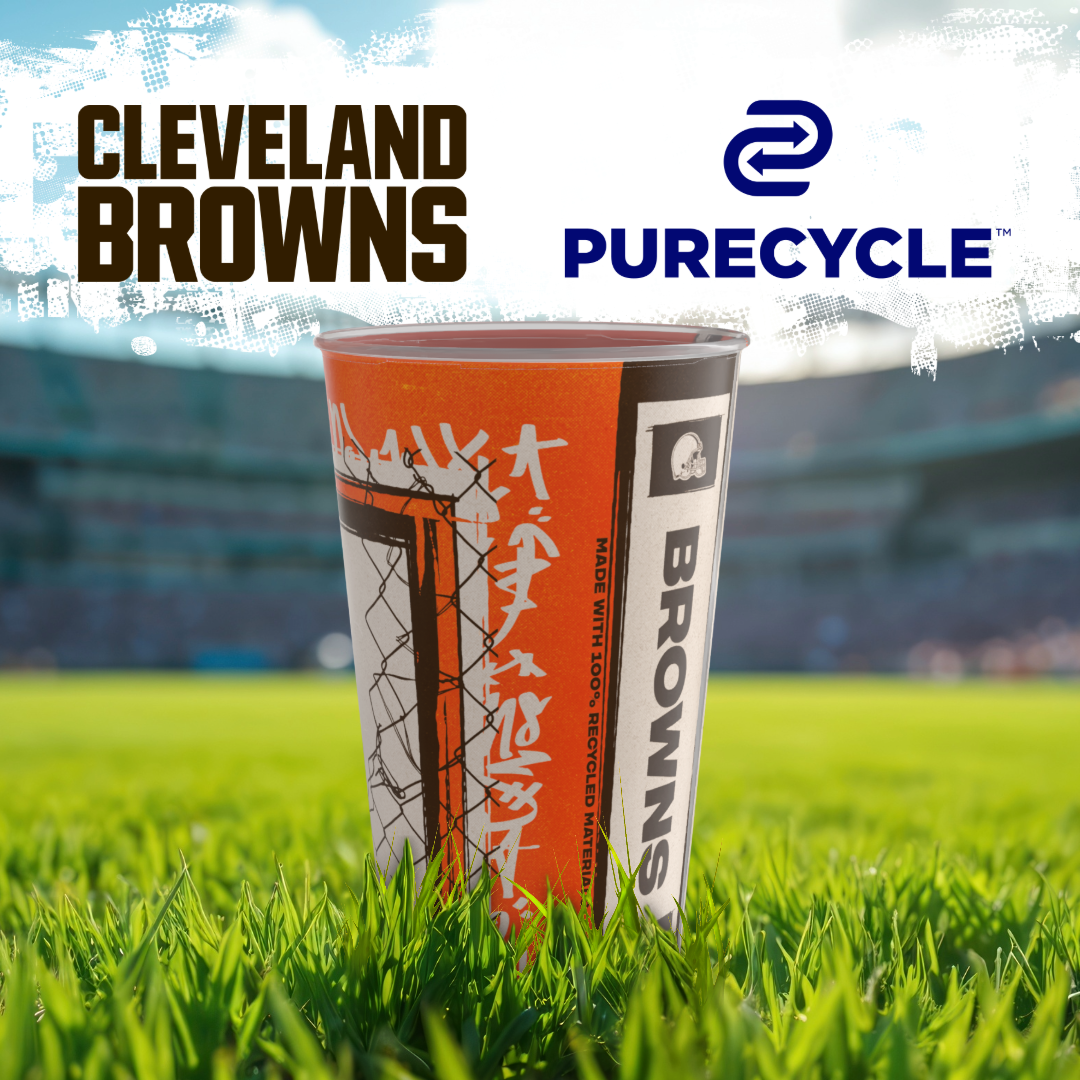
Core Insights - PureCycle Technologies, Inc. has partnered with the Cleveland Browns to introduce 100% PureFive™ resin in their 2025 line of player souvenir cups, enhancing sustainability efforts at Huntington Bank Field [1][2] - The collaboration aims to improve recycling practices by utilizing polypropylene plastic waste generated during games, which will be processed at PureCycle's Ironton, Ohio facility [1][2] - The Cleveland Browns are the first professional sports team to implement the Run It Back line of cups, which can contain up to 100% PureFive™ resin [4] Company Overview - PureCycle Technologies specializes in patented dissolution recycling technology that transforms polypropylene plastic waste into a renewable resource, producing PureFive™ resin that can be recycled multiple times [6] - The company has established a strong partnership with the Cleveland Browns, which has been ongoing for several years, focusing on educating fans about recycling and now providing sustainable souvenir cups [2][5] Industry Context - The introduction of sustainable products like the PureFive™ resin cups reflects a growing trend in the sports industry towards enhanced sustainability practices [2][5] - The challenge of creating sustainable polypropylene products lies in sourcing a resin that meets food safety and processing requirements, which PureCycle has addressed through its innovative recycling technology [5]

化妆品行业人才迎来爆发,11家头部企业去年增长超千人
Xin Lang Cai Jing· 2025-08-19 07:32
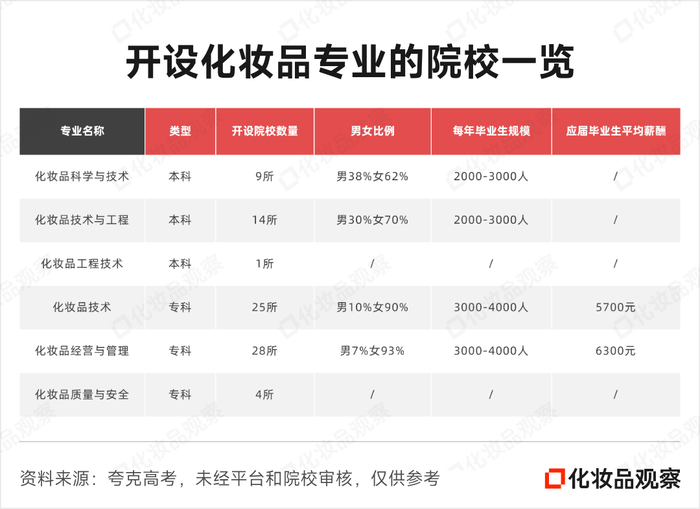
文|化妆品观察 再过半个月,小夏就要去上海一所大学报道了,她就读的专业是化妆品技术与工程。 "这个院校的专业在全国排名靠前,招生简章里介绍,有毕业生去了百雀羚、上美、自然堂等企业上 班,"小夏表示,这是她想要从事的工作。 距离小夏1300多公里、在北京就读化妆品技术与工程专业的小林,四年的本科学习生涯已经结束,他选 择读研。"我想从事研发岗,但是好的化妆品企业研发岗基本都不太招本科毕业生了,继续深造,将来 会有更多的机会。" 在广州学习化妆品科学与技术专业的小李,今年毕业到了一家检测机构上班。"有专业知识基础,入门 会比其他人快一些。" …… 不同的故事,每一年都在行业内上演。 据《化妆品观察》不完全统计,目前,全国共有超80所院校开设了含有化妆品三个字的专业,包括化妆 品科学与技术、化妆品技术与工程、化妆品技术等。有数据统计,4年后,相关专业的毕业生,总数将 超过1万人。 | | | | 开设化妆品专业的院校- | | | | --- | --- | --- | --- | --- | --- | | 专业名称 | 樂園 | 开设院校数量 | 男女比例 | 每年毕业生规模 | 应届毕业生平均薪酬 | | 化 ...
这才是特朗普不敢制裁中国的原因,鲁比奥说了实话,印度自吞苦果
Sou Hu Cai Jing· 2025-08-19 06:35
Group 1 - The article discusses Trump's hesitation to impose additional tariffs on China despite deteriorating US-India relations, indicating a fear of the negative repercussions of a trade war [3][5][12] - The implementation of the "reciprocal tariff" policy in April 2025 led to significant market turmoil, with major stock indices in Europe dropping over 4% and the Hong Kong Hang Seng Index plummeting by 13.22%, marking its largest single-day decline in history [5] - The US domestic market is also affected, with Procter & Gamble facing a $1 billion increase in tariff costs, leading to a 2.5% price hike on personal care products, and Walmart experiencing price increases exceeding 50% on some items [8] Group 2 - Secretary of State Rubio's comments reveal that sanctions on China for purchasing Russian oil could lead to uncontrollable global energy prices, with the US being the most affected [14][18] - China's refining capacity is projected to reach 960-970 million tons per year by 2025, with a significant portion of refined products being exported back to the international market, highlighting China's critical role in the global energy supply chain [14][16] - In contrast, India's refining capabilities are limited, with its export capacity being less than one-fifth of China's, making it unable to fill the market gap if China's supply is restricted [16][19] Group 3 - India's dependency on Russian energy and the US market creates a "double dependency" dilemma, as it relies heavily on China for electronic components, complicating its position in the geopolitical landscape [23] - The article emphasizes the structural weaknesses in India's refining industry, which is primarily composed of small to medium-sized refineries, leading to a lack of competitiveness compared to China's advanced facilities [25][27] - The US's "friend-shoring" strategy faces challenges, as India's manufacturing sector remains significantly smaller than China's, with logistics costs being 30% higher, indicating potential difficulties in shifting supply chains away from China [29]


抗老界,唯有它集齐了3大“国字”认证
FBeauty未来迹· 2025-08-19 04:41
Core Viewpoint - The article discusses the advancements in peptide-based anti-aging cosmetics, highlighting OLAY's innovative approach with its fifth-generation "Super Red Bottle," which aims to redefine skin structure and address aging effectively through a comprehensive understanding of protein homeostasis and peptide technology [3][4][18]. Group 1: OLAY's Innovations - OLAY's fifth-generation "Super Red Bottle" has undergone significant upgrades, incorporating a "three-step protein network reconstruction" technology that enhances skin firmness and elasticity [8][12]. - The product features a "7-weight champion peptide combination" that boosts collagen synthesis by 212%, elastin by 436%, and basement membrane proteins by 148% within 7 hours [12]. - The introduction of "superconducting botulinum peptides" technology enhances penetration by 134%, providing superior efficacy compared to traditional formulations [14][18]. Group 2: Market Position and Recognition - OLAY has received multiple authoritative certifications, including the first 3D efficacy verification for skincare products, establishing its leadership in peptide anti-aging research [26][27]. - The brand's 50 years of expertise in peptide research has been recognized through the publication of a white paper in collaboration with the China Fragrance and Flavor Industry Association, further solidifying its position in the industry [23][30]. - The product's efficacy has been validated through rigorous testing, including a unique experiment involving weights to measure facial contour changes, demonstrating its effectiveness in combating sagging skin [35][33]. Group 3: Industry Challenges and Trends - The peptide anti-aging market faces challenges due to the complexity and variety of peptide types, leading to a lack of market clarity and increased competition [6][7]. - Despite rapid innovation in peptide technology driven by AI and synthetic biology, many products remain focused on basic protein regeneration, resulting in significant market homogenization [20][22]. - OLAY's approach to redefining anti-aging strategies by focusing on structural issues rather than just protein production represents a significant shift in the industry [22][23].