康方生物

Search documents
港股创新药ETF(159567)跌1.27%,成交额12.58亿元
Xin Lang Cai Jing· 2025-09-19 12:24
Core Viewpoint - The Hong Kong Innovative Drug ETF (159567) has shown significant growth in both share volume and fund size since its inception, indicating strong investor interest in the innovative drug sector [1][2]. Fund Performance - As of September 18, 2024, the fund's share volume reached 8.17 billion shares, with a total size of 7.839 billion yuan, reflecting an increase of 1966.38% in share volume and 1974.81% in size compared to its initial figures on December 31, 2023 [1]. - The fund manager, Ma Jun, has achieved a return of 90.14% since taking over management on January 3, 2024 [2]. Trading Activity - The ETF recorded a trading volume of 12.58 billion yuan on September 19, 2024, with an average daily trading amount of 18.71 billion yuan over the last 20 trading days [1]. - Year-to-date, the ETF has accumulated a total trading amount of 206.404 billion yuan over 176 trading days, averaging 11.73 billion yuan per day [1]. Top Holdings - The ETF's major holdings include: - Innovent Biologics (9.52% holding, 263 million yuan market value) - WuXi Biologics (9.47% holding, 258 million yuan market value) - BeiGene (8.73% holding, 238 million yuan market value) - CanSino Biologics (7.62% holding, 208 million yuan market value) - China National Pharmaceutical Group (7.17% holding, 196 million yuan market value) [2].


月薪3万,也不敢吃“快餐界爱马仕”
3 6 Ke· 2025-09-19 08:48
Core Insights - The popularity of spicy hot pot (麻辣香锅) has not diminished despite perceptions of high prices, with major brands like Yang Guofu entering the market [1][25][34] - The pricing strategy of spicy hot pot often leads to consumer shock, with many feeling that the cost is disproportionate to the ingredients offered [4][10][21] - The market for spicy hot pot remains robust, with a significant number of new registrations for related businesses, indicating ongoing consumer interest [27][36] Industry Overview - The spicy hot pot industry has seen a registration of approximately 3,583 new businesses from January to November 2024, with over 29,000 existing establishments [27] - The market is characterized by a lack of dominant players, with over 54.2% of brands operating five or fewer locations, suggesting room for growth and consolidation [36] - The average monthly order volume in high-end urban areas can reach three times that of ordinary cities, indicating a strong demand in affluent markets [33] Consumer Behavior - Despite complaints about high prices, consumers continue to seek out spicy hot pot, with social media discussions reflecting both frustration and nostalgia for the dish [29][49] - The trend of home cooking spicy hot pot is rising, as consumers look for cost-effective alternatives to dining out [41][46] - The demographic of spicy hot pot consumers is primarily younger individuals, who express a complex relationship with the dish, balancing enjoyment with price sensitivity [34][49] Competitive Landscape - The spicy hot pot segment faces competition from similar offerings like hot pot and spicy noodles, leading to a blurred category distinction [39][40] - Brands are diversifying their menus to include complementary products, which has resulted in a reported 40% increase in overall dining revenue for some companies [29][36] - The industry is at a crossroads, with opportunities for growth tempered by rising operational costs and increasing competition [37][38]


港股药捷安康股价坐“过山车”,指数基金“躺枪”?
Guo Ji Jin Rong Bao· 2025-09-19 03:10
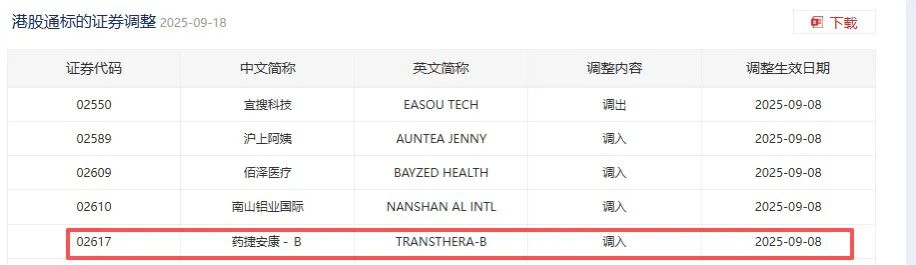
Core Viewpoint - The stock price of pharmaceutical company Yaojie Ankang experienced extreme volatility, with a trading range of nearly 124% on September 16, raising questions about the inclusion of the stock in index funds without prior notice [1][2][6]. Group 1: Stock Performance - Yaojie Ankang's stock price surged by 10 times within seven trading days starting from September 8, reaching a peak of 679.5 HKD per share before plummeting by 53.73% to 192 HKD per share on September 16 [2][3]. - The stock experienced further fluctuations, with an 8.96% increase on September 17, followed by a 12.43% decline on September 18 [2][6]. Group 2: Index Inclusion and ETF Impact - Yaojie Ankang was added to the Hong Kong Stock Connect list on September 8, coinciding with the start of its stock price volatility [3]. - Multiple ETFs tracking the National Index for Hong Kong Stock Connect Innovative Drugs experienced significant declines following Yaojie Ankang's stock price drop, with some ETFs falling over 2% on September 16 and 17 [6][8]. - The National Index's website had not updated the sample adjustments as of September 18, leading to confusion regarding the timing of Yaojie Ankang's inclusion in the index [6][9]. Group 3: Industry Concerns - Industry experts questioned the rapid inclusion of Yaojie Ankang in the index, as it did not meet the criteria of having a significant trading volume over the past year [9][10]. - The lack of prior announcement regarding the stock's inclusion raised concerns about the passive nature of index funds, which could lead to investors inadvertently buying at inflated prices [8][11]. - There is a call for improved index design and communication to prevent similar situations in the future, emphasizing the need for transparency in the inclusion process [10][11].
康方生物早盘涨近3% 近日CD47莱法利单抗获FDA孤儿药资格认定
Zhi Tong Cai Jing· 2025-09-19 01:45
Core Viewpoint - Kangfang Biotech (09926) has received Orphan Drug Designation from the FDA for its novel anti-CD47 humanized IgG4 monoclonal antibody, Lefacitinib (AK117), for the treatment of acute myeloid leukemia (AML) [1][2] Group 1: Company Developments - Kangfang Biotech's stock rose nearly 3% in early trading, currently up 1.98% at HKD 133.5, with a trading volume of HKD 150 million [1] - The Orphan Drug Designation will provide various incentives for the development and commercialization of Lefacitinib in the U.S., including tax credits for clinical trial costs, waiver of BLA application fees, and potential R&D funding [1] Group 2: Product Details - Lefacitinib specifically binds to CD47 expressed on tumor cells, blocking its interaction with the SIRPα receptor, which enhances macrophage phagocytosis of tumor cells and inhibits tumor growth [2] - The drug's unique design prevents red blood cell aggregation, significantly improving its safety and efficacy compared to other drugs targeting the same pathway, enhancing therapeutic convenience [2]
港股异动 | 康方生物(09926)早盘涨近3% 近日CD47莱法利单抗获FDA孤儿药资格认定
Zhi Tong Cai Jing· 2025-09-19 01:44
Core Viewpoint - Kangfang Biopharma (09926) received Orphan Drug Designation from the FDA for its novel anti-CD47 humanized IgG4 monoclonal antibody, Lefacitinib (AK117), for the treatment of acute myeloid leukemia (AML) [1][2] Group 1: Company Developments - Kangfang Biopharma's stock rose nearly 3% in early trading, currently up 1.98% at HKD 133.5, with a trading volume of HKD 150 million [1] - The FDA's Orphan Drug Designation provides various incentives for the development and commercialization of Lefacitinib, including tax credits for clinical trial costs, waiver of BLA application fees, and potential seven years of market exclusivity upon approval [1] Group 2: Product Information - Lefacitinib specifically binds to CD47 expressed on tumor cells, blocking its interaction with the SIRPα receptor, thereby enhancing macrophage phagocytosis of tumor cells and inhibiting tumor growth [2] - The unique design of Lefacitinib prevents red blood cell aggregation, significantly improving the drug's safety and efficacy compared to other drugs targeting the same pathway, enhancing therapeutic effectiveness and convenience [2]
暴涨1293%能稳住吗?药捷安康“闪崩”后又跌了
阿尔法工场研究院· 2025-09-19 00:05
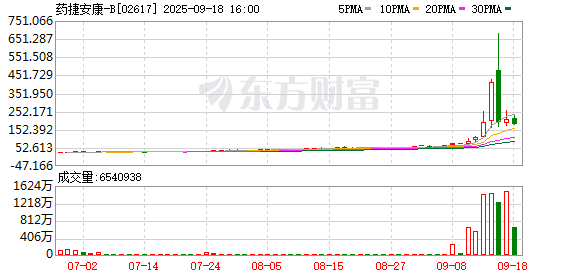
Core Viewpoint - The article discusses the recent volatility in the stock price of Yaojie Ankang (药捷安康), highlighting its significant price fluctuations and the impact of clinical trial news on its market performance [5][6][9]. Stock Performance Summary - On September 16, Yaojie Ankang's stock price surged nearly 60% at the opening, reaching a peak of 679.50 HKD per share, with a market cap exceeding 260 billion HKD. However, it closed down 53.73% on the same day, ending at 192.0 HKD per share [5][6]. - Following this, on September 17, the stock rebounded, closing up 8.96% at 209.2 HKD per share, with a total market cap of 83.03 billion HKD. By September 18, the stock fell again by 12.43% to 183.2 HKD per share [5][6]. - Since its IPO on June 23, the stock price has increased by 1293.16% from the initial offering price of 13.15 HKD per share [5]. Clinical Trial Developments - The primary driver behind the stock's recent surge was the announcement of a clinical trial for its core product, Tiengoni (替恩戈替尼), which received clinical trial approval from the National Medical Products Administration of China [9][10]. - Tiengoni is a multi-target kinase inhibitor that shows potential in treating various cancers, including cholangiocarcinoma, prostate cancer, liver cancer, and breast cancer. The company expects to complete the registration phase II clinical trial for cholangiocarcinoma by the second half of 2025 [11][12]. Financial Performance and Future Outlook - Yaojie Ankang has reported significant losses, totaling approximately 1 billion CNY over the past three and a half years, with losses of 252 million CNY in 2022, 343 million CNY in 2023, and 123 million CNY in the first half of 2024 [13][15]. - The company has raised over 1.7 billion CNY through multiple financing rounds since its establishment in 2014, relying heavily on external funding to support its operations and R&D efforts [15]. - Despite the promising developments, the company is still in the registration clinical phase and has not yet commercialized any products, indicating a long road ahead before potential market entry [15].

18A 暴富制造机
Bei Jing Shang Bao· 2025-09-18 15:07
Core Viewpoint - The recent volatility of the biotech company, Yaojie Ankang, in the Hong Kong stock market has raised questions about the investment value of the 18A sector, which consists of biotech companies without revenue or profit [2][12]. Group 1: Company Performance - Yaojie Ankang experienced a dramatic stock price increase of 130% on September 12, 2023, followed by a peak market capitalization of nearly HKD 1 trillion [3][5]. - The stock price surged to HKD 679.5 per share on September 16, 2023, before plummeting by 53.73% to close at HKD 192 per share, resulting in a market value loss of nearly HKD 200 billion within hours [3][5]. - Since its listing on June 23, 2023, Yaojie Ankang's stock price has increased nearly 13 times, with a cumulative increase of 1293.16% as of September 18, 2023 [5][10]. Group 2: Market Dynamics - The inclusion of Yaojie Ankang in multiple indices, including the Hang Seng Composite Index, led to significant passive fund buying, contributing to its rapid price fluctuations [6][7]. - The stock's low liquidity and small market capitalization made it susceptible to sharp price movements when large amounts of capital entered the market [7][9]. - The phenomenon of ETF arbitrage was highlighted, indicating that passive funds could inadvertently amplify stock price volatility [6][8]. Group 3: Investment Sentiment - The 18A sector has been characterized as a "wealth creation myth," with many investors questioning whether it represents a valuation bubble or a value opportunity [2][10]. - The market sentiment towards biotech companies has shifted from valuing potential to focusing on certainty, with investors now prioritizing market potential, pricing power, and cash flow capabilities [14][16]. - Despite recent downturns, there remains a belief among investors that value investing in the biotech sector will yield returns in the long run [11][12]. Group 4: Regulatory and Market Structure - The establishment of the 18A listing rules has been seen as a milestone in China's innovation drug ecosystem, allowing numerous biotech companies to access capital markets [10][13]. - Concerns have been raised about the need for index providers to adapt their rules to prevent short-term volatility from affecting stock valuations [9][16]. - The market's recognition of the biotech sector has increased, but the high technical barriers require investors to accurately assess the value of innovative drug companies [15][17].
坐上港股过山车,药捷安康的意外还会重演吗?
Xin Lang Cai Jing· 2025-09-18 11:46
Core Viewpoint - The stock of Yaoke Ankang experienced a dramatic rise and fall within a short period, reflecting the volatile nature of the market and investor sentiment towards innovative drug companies in Hong Kong [3][4]. Company Overview - Yaoke Ankang, a company focused on the drug Tinengotinib, saw its stock price surge by 10 times after its IPO three months ago, reaching a market capitalization close to 270 billion HKD [3][6]. - The company was included in the national index for innovative drugs, which attracted significant passive investment, leading to a rapid increase in stock price [3][8]. Market Dynamics - The stock price increased by 447% from September 8 to September 15, 2023, driven by positive clinical trial news and inclusion in major indices, but then plummeted by 53.73% on September 16 [3][8]. - The limited free float of shares (approximately 549,000 shares, or 1.38% of total shares) contributed to the stock's volatility, as it made the price more susceptible to market sentiment [3][6]. Investor Behavior - Investors in the secondary market tend to focus on short-term gains, often leading to speculative trading behaviors such as "chasing highs" and "panic selling" [3][7]. - The influx of mainland capital through the Hong Kong Stock Connect has intensified speculative trading in the innovative drug sector, which may undermine long-term investment confidence [9]. Future Outlook - The market's current enthusiasm for innovative drugs presents a unique opportunity for companies to secure funding for research and development, but it also raises concerns about the sustainability of such valuations [9][11]. - Yaoke Ankang's reliance on a single core asset and the timing of its IPO may hinder its ability to maintain a stable market valuation without significant clinical milestones [11][13].

港股创新药ETF(159567)涨0.21%,成交额25.65亿元
Xin Lang Cai Jing· 2025-09-18 11:00
来源:新浪基金∞工作室 9月18日,港股创新药ETF(159567)收盘涨0.21%,成交额25.65亿元。 港股创新药ETF(159567)成立于2024年1月3日,基金全称为银华国证港股通创新药交易型开放式指数 证券投资基金,基金简称为港股创新药ETF。该基金管理费率每年0.50%,托管费率每年0.10%。港股创 新药ETF(159567)业绩比较基准为国证港股通创新药指数收益率(经估值汇率调整)。 规模方面,截止9月17日,港股创新药ETF(159567)最新份额为81.71亿份,最新规模为77.68亿元。回 顾2024年12月31日,港股创新药ETF(159567)份额为3.95亿份,规模为3.78亿元。即该基金今年以来 份额增加1966.63%,规模增加1956.03%。 风险提示:市场有风险,投资需谨慎。本文为AI大模型自动发布,任何在本文出现的信息(包括但不 限于个股、评论、预测、图表、指标、理论、任何形式的表述等)均只作为参考,不构成个人投资建 议。 流动性方面,截止9月18日,港股创新药ETF(159567)近20个交易日累计成交金额377.58亿元,日均 成交金额18.88亿元;今年以来, ...
中国创新药企“闯美”,如何预防政策风险?
Hu Xiu· 2025-09-18 06:03
Core Viewpoint - The Trump administration is drafting an executive order that will impose three major restrictions on commercial transactions involving Chinese innovative drug patents or rights, focusing on national security reviews by the Committee on Foreign Investment in the United States (CFIUS) [1][2]. Summary by Sections Executive Order Details - The draft includes three main provisions: 1. Inclusion of Chinese innovative drug BD transactions in the CFIUS mandatory review list, ending the previous "low-risk automatic exemption" practice [2]. 2. FDA will implement "racial sensitivity supplementary reviews" for drugs relying on Chinese clinical data, requiring at least 20% comparative data from non-Asian populations [2]. 3. Establishment of a "key drug domestic production fund" to provide production subsidies for 15 categories of drugs, including antibiotics and acetaminophen, while implementing a "domestic priority" principle in federal procurement [2]. Market Reaction - The market reacted swiftly to the policy risks, with the Hong Kong innovative drug index (HK1105) dropping 3.82% on September 11, 2025, and the A-share innovative drug sector (BK1106) declining 2.17%, with over 80% of stocks in the sector experiencing pullbacks [3]. - The following day, the indices showed signs of recovery, indicating investors' responses to policy uncertainties and rational corrections [3]. Globalization Trends - Despite the geopolitical risks, the trend of Chinese innovative drugs going global remains intact, with total license-out transactions to Europe and the U.S. reaching $9.43 billion as of September 2025 [3]. - Major transactions include a $950 million licensing deal between BeiGene and Royalty Pharma, and a $6 billion global licensing agreement between 3SBio and Pfizer, highlighting a shift towards milestone payments and regional licensing [3]. Industry Challenges - The domestic market faces challenges, with annual growth in medical insurance fund spending (approximately 12%) lagging behind the growth in innovative drug R&D investment (approximately 25%) [4]. - The average reduction in medical negotiations remains high at 54%, and commercial health insurance coverage for innovative drugs is below 15%, creating a supply-demand imbalance that necessitates going global [4]. Risk Resilience Assessment - Goldman Sachs has categorized Chinese innovative drug companies into three risk resilience tiers based on their sensitivity to policy changes and operational capabilities [4][5]. - Companies with mature global layouts exhibit the strongest resilience, while those heavily reliant on domestic markets show the weakest resilience [5][10]. Strategic Defense Framework - A three-dimensional defense system is proposed to address risks associated with the executive order, focusing on transaction review, data compliance, and supply chain security [13]. - Strategies include conducting national security risk pre-assessments for transactions over $50 million and establishing partnerships with U.S. law firms to navigate regulatory challenges [14][15]. Conclusion - The construction of a quantifiable "risk resilience index" is essential for Chinese innovative drugs in the global 2.0 era, emphasizing the need for companies to embed policy hedging clauses in transaction structures and consider racial diversity data in clinical stages [23].