罗氏

Search documents
跨国医药研发生产商罗氏:美国总统特朗普关于药品定价的行政命令威胁到罗氏在美国投资500亿美元的计划。
news flash· 2025-05-14 14:03
跨国医药研发生产商罗氏:美国总统特朗普关于药品定价的行政命令威胁到罗氏在美国投资500亿美元 的计划。 ...

两个月内达成超50亿美元潜在规模交易,诺和诺德疯狂押注新一代减重疗法
Di Yi Cai Jing· 2025-05-14 13:40
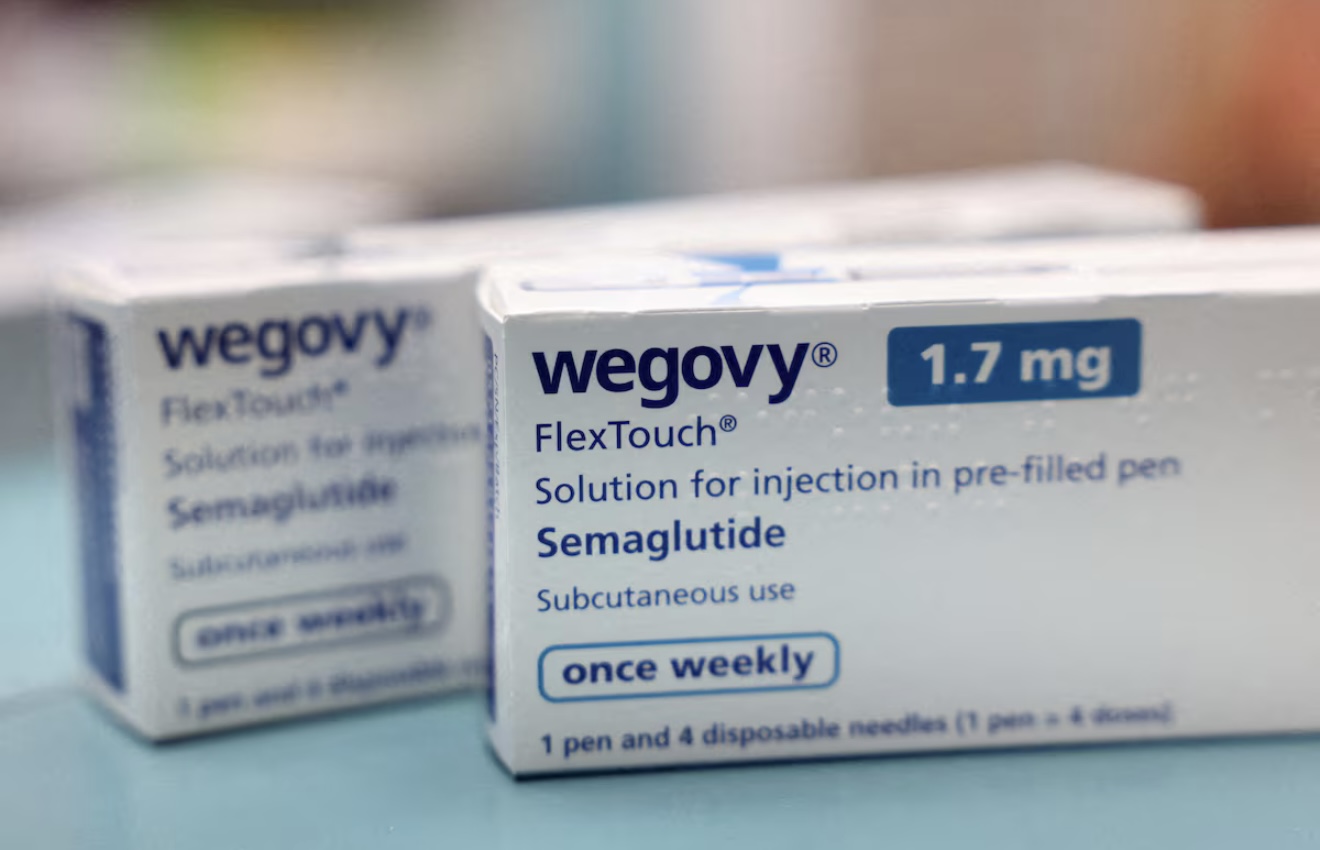
Group 1 - Novo Nordisk's market value has decreased by over 50% from its peak a year ago, primarily due to competitive pressures from Eli Lilly's GLP-1 drug, tirzepatide, which has shown superior weight loss efficacy compared to semaglutide [1][3] - Novo Nordisk has made significant investments in weight loss therapies, including a recent collaboration with Septerna to develop oral small molecule drugs for obesity and type 2 diabetes, with a potential deal value of up to $2.2 billion, including a $200 million upfront payment [1][3] - In March, Novo Nordisk entered into a $1 billion licensing agreement with Lexicon Pharmaceuticals for a drug targeting obesity and related metabolic disorders, and also acquired global rights for a three-target agonist weight loss drug from China National Pharmaceutical for up to $2 billion [3] Group 2 - Both Novo Nordisk and Eli Lilly are focusing on next-generation weight loss drugs, including oral formulations, with Novo Nordisk emphasizing its historical innovation in obesity and diabetes treatment [3][4] - The U.S. regulatory agency has accepted Novo Nordisk's application for the oral version of semaglutide, which, if approved, will be the first oral GLP-1 weight loss therapy [4] - Novo Nordisk is also exploring digital health solutions for obesity management, recently partnering with Ping An Health Technology to create a comprehensive service model for obesity management and public health education [4]


FDA改革引发震荡,早期新药试验或“出逃”美国
智通财经网· 2025-05-14 09:39
Core Insights - Some U.S. biotechnology companies are considering moving early drug trials outside the U.S. due to concerns over FDA staffing cuts and policy changes under the Trump administration, which may delay regulatory reviews [1][2][3] - The FDA has been regarded as the global gold standard for drug regulation, but recent changes have prompted companies to explore international markets like the EU and Australia for drug development [1][2][3] - Executives from various biotech firms indicate that the loss of confidence in the FDA could reshape drug development and increase costs for the struggling biotech industry [3][4] Group 1: Regulatory Environment - The restructuring of the FDA aims to simplify functions and reduce conflicts of interest, but it has raised concerns about the agency's stability [2] - Companies are increasingly seeking to collaborate with the European Medicines Agency (EMA) for drug approvals, reflecting a potential shift in strategy [2][3] - The FDA's recent staff departures have led to fears of delays in the review of trial data, impacting companies' plans for U.S. market entry [5][6] Group 2: Financial Implications - Conducting trials in Europe may incur additional costs, estimated at around $1 million for documentation and support, plus millions more for trial operations [3] - Some companies report that trial costs in Australia can be 30% to 40% lower than in the U.S., influencing their decision to conduct trials abroad [5] - The U.S. market, valued at approximately $635 billion annually, remains critical for companies, but the uncertainty surrounding the FDA may lead to a strategic shift [5][6] Group 3: Industry Sentiment - Executives express that the current situation forces discussions about alternative methods for drug development, with some prioritizing European markets due to high demand [3][4] - Despite the shift, major pharmaceutical companies like GSK, Merck, and Sanofi report no significant changes in their interactions with the FDA so far [5] - The sentiment among investors and executives suggests a cautious approach, balancing the need for U.S. approvals with the realities of the current regulatory environment [6]
免疫诊断市场发展趋势分析及“十五五”投资战略可行性评估预测报告(2025版)
Sou Hu Cai Jing· 2025-05-14 07:11
Group 1 - The core viewpoint of the news is the rapid growth and development of the immunodiagnostic market in China, highlighting its significance within the broader in vitro diagnostic industry [5][6][8] - The immunodiagnostic market size reached 50.3 billion yuan in 2023, with a year-on-year growth of 13%, accounting for approximately 42.45% of the in vitro diagnostic market share, an increase of 5.27% from the previous year [5][6] - The chemical luminescence immunodiagnostic technology is identified as the latest advancement in the field, with a market size of around 32.8 billion yuan in 2022 and a compound annual growth rate (CAGR) of 22.48% from 2017 to 2022, indicating its rapid adoption in clinical applications [6][7] Group 2 - The development trends in the immunodiagnostic market include a shift from biochemical diagnostics to immunodiagnostics and molecular diagnostics, driven by increasing demands for accuracy and precision in testing [6][8] - The market is witnessing a clear trend of domestic companies gradually closing the gap with multinational corporations in the chemical luminescence sector, which has been historically dominated by companies like Roche and Abbott [7][8] - The increasing focus on cost-effectiveness and the encouragement of domestic product procurement by government policies are expected to further boost the market for local brands in the immunodiagnostic sector [7][8]

Why Weight-Loss Developer Stocks Tumbled on Tuesday
The Motley Fool· 2025-05-13 23:08
Core Viewpoint - The weight-loss drug sector, currently a hot segment in the pharmaceutical market, experienced a decline in stock prices following President Trump's announcement regarding drug pricing reforms [1][2]. Group 1: Stock Market Reaction - Novo Nordisk, a leading company in obesity treatments, saw its share price drop nearly 4% [2] - Competitors Roche Holdings and Viking Therapeutics also experienced declines of approximately 3% and 2%, respectively [2]. Group 2: Government Initiatives - The White House is actively pursuing initiatives to lower drug prices, with President Trump signing an executive order aimed at this goal [3][4]. - A key requirement of the executive order is that U.S. drug prices must align with lower prices in foreign markets, with a compliance deadline of 30 days [4]. Group 3: Focus on Weight-Loss Drugs - Trump criticized the high prices of weight-loss drugs, citing a significant price difference between the U.S. and London for an unnamed medication [6]. - The two popular GLP-1 weight-loss treatments, Novo Nordisk's Wegovy and Eli Lilly's Zepbound, can exceed $1,000 for a month's supply [7]. Group 4: Future Implications - Although the executive order does not specifically mention weight-loss drugs, there is an expectation that GLP-1 treatments will be targeted for price reductions [8]. - The ambiguity of the executive order may have prevented a more severe stock market reaction from investors [9]. - Successful implementation of drug price reductions could disproportionately impact obesity drug developers compared to established pharmaceutical companies with diverse product lines [10].

罗氏(RHHBY.US)公布“帕妥珠单抗”乳腺癌Ⅲ期研究最新数据
Zhi Tong Cai Jing· 2025-05-13 07:43
Core Insights - Roche (RHHBY.US) announced statistically significant results from the final overall survival (OS) outcomes of the Phase III APHINITY study for patients with HER2-positive early breast cancer, showing a 17% reduction in death risk for those treated with Perjeta, Herceptin, and chemotherapy compared to those receiving Herceptin, chemotherapy, and placebo [1][2] Group 1 - The APHINITY study was a global, Phase III, randomized, double-blind, placebo-controlled trial involving 4,804 operable HER2-positive early breast cancer patients [1] - The primary endpoint of the study was invasive disease-free survival, with secondary endpoints including cardiac and overall safety, overall survival, and health-related quality of life [1] Group 2 - Ten-year survival rates showed that patients receiving the Perjeta regimen had a survival rate of 91.6%, compared to 89.8% for those receiving Herceptin, chemotherapy, and placebo (HR=0.83, 95% CI: 0.69-1.00, p=0.044) [2] - In the pre-specified subgroup of lymph node-positive patients, the death risk was reduced by 21% (HR=0.79, 95% CI: 0.64-0.97) [2] - The previously reported benefits in invasive disease-free survival were maintained (HR=0.79, 95% CI: 0.68-0.92), with no observed benefits in the lymph node-negative subgroup [2] - Safety profiles, including cardiac safety, were consistent with previous studies, with no new or unexpected safety signals identified [2]

创新药不会被政策“杀死”
新财富· 2025-05-13 06:27
Core Viewpoint - The article discusses the implications of former President Trump's healthcare policies, particularly the "Most Favored Nations" (MFN) pricing strategy, which aims to lower U.S. drug prices by aligning them with the lowest prices in other countries. This policy has sparked significant investment from multinational pharmaceutical companies in U.S. manufacturing and R&D capabilities, indicating a major shift in the global pharmaceutical industry landscape [3][4]. Group 1: MFN Pricing Policy - The MFN pricing policy mandates that U.S. Medicare and Medicaid drug prices cannot exceed the lowest prices in other developed countries, directly targeting the high drug prices in the U.S. [6][9] - The policy has faced criticism from various stakeholders, including the pharmaceutical industry, which views it as a potential threat to profitability, especially for innovative drugs still in early commercialization stages [6][7][9]. - Despite the potential benefits of controlling healthcare costs, the policy is seen as a high-pressure tactic that may lead to significant adjustments in global pricing strategies by pharmaceutical companies [7][9]. Group 2: Investment Trends in U.S. Pharmaceutical Manufacturing - Major pharmaceutical companies, including Merck, Roche, Novartis, and Eli Lilly, have announced substantial investments in U.S. manufacturing and R&D, totaling hundreds of billions of dollars, in response to the changing policy landscape [4][12][13]. - These investments are not merely for capacity expansion but are strategic moves to adapt to anticipated policy changes, with companies aiming to enhance supply chain resilience and local production capabilities [12][13][16]. - The shift towards domestic manufacturing is also driven by concerns over the reliance on foreign supply chains, particularly for essential drugs and raw materials [16]. Group 3: Impact on Different Segments of the Pharmaceutical Industry - The healthcare and tariff policies under Trump's administration have created a bifurcation within the pharmaceutical industry, where some companies face cost pressures while others benefit from regulatory changes [18][24]. - Companies heavily reliant on Medicare payments, particularly those producing biosimilars and chronic disease medications, are expected to face significant challenges due to tightening Medicaid budgets and reduced insurance coverage [20][21]. - Conversely, innovative drug companies may benefit from the maintenance of pricing power and expedited FDA approval processes, allowing them to navigate the market more effectively [22][23][24]. Group 4: Overall Industry Dynamics - The article highlights a transformative period for the global pharmaceutical industry, characterized by a shift from a "global manufacturing + free pricing" model to a more localized and regulated approach [24]. - The pressures from new policies necessitate that pharmaceutical companies reassess their operational strategies, focusing on cost control, supply chain security, and adaptability to regulatory changes [24]. - The evolving landscape presents both opportunities and risks, with companies needing to find long-term strategies to thrive amid uncertainty [24].


争夺千亿市场:制药巨头的减肥药混战
Hu Xiu· 2025-05-13 04:20
Core Insights - The weight loss drug market has become a highly competitive industry, with significant growth potential and various pharmaceutical companies vying for dominance [2][39] - The global weight loss drug market is projected to reach $130 billion by 2030, with current sales already at $50 billion, surpassing major brands like Coca-Cola [2][24] - The emergence of GLP-1 and GIP mechanisms has led to the development of next-generation weight loss drugs, with companies like Novo Nordisk and Eli Lilly leading the charge [3][10] Group 1: Market Dynamics - The weight loss drug market is experiencing rapid growth, with sales reaching $50 billion in 2024 and expected to grow 2-3 times in the future [2][24] - Major players in the market include Novo Nordisk, Eli Lilly, Roche, and Pfizer, each with unique strategies and drug pipelines [2][39] - The competition is not limited to established players; new entrants are also emerging, intensifying the race for market share [39] Group 2: Drug Mechanisms and Innovations - The primary mechanisms for weight loss drugs include GLP-1 and GIP, with GLP-1 being a key player in the development of first-generation drugs like semaglutide [3][10] - Semaglutide has shown significant weight loss results, with patients losing 15-20% of their body weight over a year, marking a breakthrough in obesity treatment [6][11] - Eli Lilly's dual-target drug, tirzepatide, combines GLP-1 and GIP, demonstrating even greater efficacy with weight loss of 20-22% [11][10] Group 3: Emerging Technologies and Future Prospects - Amylin is being explored as a new mechanism that may preserve muscle while promoting fat loss, with early-stage trials showing promise [12][15] - Companies like AbbVie are entering the Amylin space, indicating a growing interest in this mechanism as a potential game-changer in weight loss therapies [16][12] - The competitive landscape is evolving, with various companies exploring combinations of existing mechanisms to enhance efficacy and safety [31][39] Group 4: Clinical Trials and Regulatory Challenges - Novo Nordisk's CagriSema, a combination of semaglutide and Amylin, has faced setbacks in clinical trials, impacting investor confidence [18][19] - Eli Lilly's tirzepatide has shown strong market performance, benefiting from its dual mechanism and favorable safety profile [25][24] - The regulatory environment remains complex, with ongoing trials and the need for robust data to support new drug approvals [44][48] Group 5: Investment Considerations - The weight loss drug market is seen as a high-potential investment area, but the increasing competition may pressure profit margins [48][39] - Investors are closely monitoring the performance of key players and their drug pipelines, as well as the impact of new entrants on market dynamics [44][48] - The evolution of drug delivery methods, such as oral formulations, is expected to open new market opportunities and reshape the competitive landscape [40][41]
医药生物行业周报:医药生物行业双周报2025年第10期总第133期司美格鲁肽一季度登顶全球药王
Great Wall Glory Securities· 2025-05-13 01:23
Investment Rating - The investment rating for the pharmaceutical and biotechnology industry is "Positive" and the rating has been maintained [2] Core Viewpoints - The GLP-1 weight loss drugs are experiencing explosive growth globally and in China, with significant sales figures expected for the year [7] - The pharmaceutical and biotechnology industry index increased by 1.50%, ranking 16th among 31 primary industries, underperforming the CSI 300 index [5][15] - The industry PE (TTM) as of May 9, 2025, is 26.77x, showing an upward trend but still below the average [20] Industry Review - The pharmaceutical and biotechnology industry index increased by 1.50%, ranking 16th among 31 primary industries, underperforming the CSI 300 index which increased by 1.56% [5][15] - The medical equipment and pharmaceutical distribution sectors showed the highest gains, with increases of 3.92% and 2.38% respectively, while medical research outsourcing saw a decline of 0.65% [5][15] - As of May 9, 2025, the PE (TTM) for the pharmaceutical and biotechnology industry is 26.77x, up from 26.34x in the previous period, indicating a valuation increase [20] Investment Suggestions - The current trend in GLP-1 weight loss drugs indicates a golden development period for the industry, with significant sales growth expected both globally and in China [7] - The report suggests focusing on companies with solid clinical data, sufficient production capacity, and integrated supply chain capabilities [7] Important Industry News - The NMPA has released new regulations for the quality management of online sales of medical devices, effective from October 1, 2025 [25] - The approval of the first long-acting analgesic new drug in China, "Meloxicam Injection," marks a significant milestone in the industry [31] - Johnson & Johnson's "Guselkumab Injection" has been approved as the first IL-23 inhibitor for treating ulcerative colitis in China [33] - The investment of 2.04 billion RMB by Roche in a new biopharmaceutical production base in Shanghai highlights the ongoing commitment to local production and supply chain enhancement [43]


Trump Declares War On Pharma Drug Pricing, But The Stocks Aren't Tanking - Yet
Seeking Alpha· 2025-05-12 16:30
Group 1 - The article discusses the potential impact of President Trump's promise to impose tariffs of up to 25% on pharmaceutical products imported into the US, which could significantly affect the biotech and pharma industries [1] - The Haggerston BioHealth investing group provides insights for both novice and experienced biotech investors, including catalysts, buy and sell ratings, product sales forecasts, and detailed financial analyses of major pharmaceutical companies [2] - The analyst has a long position in several pharmaceutical companies, indicating a positive outlook on their performance [3]