
赛诺菲

Search documents
多发性硬化:百亿美金市场,BTKi发展前景广阔
KAIYUAN SECURITIES· 2025-07-30 01:46
Investment Rating - The investment rating for the biotechnology industry is "Positive" (maintained) [1] Core Insights - The global stock of multiple sclerosis (MS) patients is significant, with the market size exceeding $20 billion, primarily focused on relapsing forms of MS (RMS) [6][9] - BTK inhibitors are expected to fill the treatment gap in primary progressive MS (PPMS) and non-relapsing secondary progressive MS (nrSPMS) [7][9] - The anticipated release of clinical data for BTK inhibitors in the second half of 2025 is expected to enhance the attractiveness of the sector [9] Summary by Sections 1. Multiple Sclerosis Overview - MS is an immune-mediated inflammatory demyelinating disease of the central nervous system, characterized by "spatial" and "temporal" multiplicity [5][27] - The global and Chinese stock of MS patients is projected to reach 3.71 million and 60,000 respectively by 2030, with a CAGR of approximately 2.7% and 2.1% from 2025 to 2030 [19][22] 2. Market Size and Product Landscape - The global MS market is approximately $20 billion, with a focus on RMS treatments [6][40] - Existing products include monoclonal antibodies and oral therapies, with CD20 monoclonal antibodies expected to account for over 60% of sales by 2024 [6][46] 3. BTK Inhibitors and Clinical Development - BTK inhibitors are positioned to address unmet needs in the treatment of PPMS and nrSPMS, with several candidates in late-stage clinical trials [7][51] - Tolebrutinib and Fenebrutinib are expected to release pivotal clinical data in the second half of 2025, which could significantly impact their market potential [8][51] 4. Investment Recommendations - The ongoing clinical developments and the large patient base present significant investment opportunities in companies like 诺诚健华, 翰森制药, 云顶新耀, 恒瑞医药, and 百济神州-U [9]
2025WAIC:大厂回归,医疗AI爆火出圈
3 6 Ke· 2025-07-30 00:55
Core Insights - The article highlights the resurgence of medical AI at the WAIC, with major tech companies and startups re-engaging in the sector, indicating a shift in focus towards healthcare applications [1][2] Group 1: Medical AI Landscape - Major tech companies like Tencent, Alibaba, and ByteDance are refocusing on medical AI as a core business area, showcasing advanced AI solutions at WAIC [1] - Key topics discussed include AI drug development, clinical applications, and the democratization of healthcare, with participation from pharmaceutical and medical device companies [1] Group 2: Pathways of Medical AI Development - Pathway One: Fragmented AI is beginning to systematically empower healthcare, moving from isolated applications to integrated solutions that address broader healthcare needs [2][3] - The emergence of intelligent agents allows for proactive, goal-driven interactions in healthcare, enhancing the efficiency of medical processes [3][4] Group 3: Intelligent Agents and User Engagement - Intelligent agents like Tencent's "Health Management Assistant" integrate various health tools, enabling continuous user engagement and proactive health management [3][4] - Startups are also leveraging AI to enhance low-digitalization scenarios, such as simulating patient interactions for training purposes [5] Group 4: Clinical Applications and Specialized Models - Pathway Two: The focus is shifting from general applications to specialized clinical models, with companies like JD Health leading the way in developing tailored AI solutions for specific medical fields [6][7] - JD Health's "京医千询2.0" aims to enhance AI capabilities in clinical settings, focusing on evidence-based data and interactive simulations [6][7] Group 5: AI in Medical Imaging - Union Medical is noted for its advancements in medical imaging AI, showcasing a unique intelligent agent capable of detecting multiple chest abnormalities with high accuracy [8][9] - The intelligent agent demonstrates significant efficiency improvements in diagnostic processes, highlighting the potential of AI in enhancing clinical workflows [9] Group 6: Standardization and Regulation - The need for a comprehensive regulatory framework for medical AI is emphasized, with initiatives like the "AI Doctor" standard being introduced to ensure quality and safety in AI applications [11][12] - The establishment of standards is seen as a crucial step towards systematic and regulated development in the medical AI sector [12] Group 7: Future Outlook for Medical AI - Despite challenges in monetization and ethical considerations, there is optimism about the potential for medical AI to become an integral part of the healthcare ecosystem [13][14] - Collaborative efforts among government, healthcare institutions, and tech companies are paving the way for a more robust medical AI landscape, with the possibility of achieving viable business models in the near future [14]
特朗普拟对进口药品征收高额关税 谁最可能受影响
Zhi Tong Cai Jing· 2025-07-29 23:22
Core Viewpoint - The Trump administration plans to impose tariffs on imported pharmaceuticals, potentially reaching up to 200%, aimed at encouraging drug manufacturing to return to the U.S. [1] Group 1: Impact on Pharmaceutical Companies - Different companies will be affected by the tariffs to varying degrees, depending on their manufacturing network. AbbVie, Bristol-Myers Squibb, and Eli Lilly have a stronger U.S. manufacturing presence, while Novartis and Roche face higher risks due to lower U.S. production capacity [1][2] - Amgen and Biogen are identified as the most sensitive biotech companies to the tariffs, while Gilead Sciences and Vertex have lower risk exposure [2] - Companies may attempt to raise prices to offset increased costs, but significant price hikes could be politically unfeasible given the current scrutiny on drug prices [2] Group 2: Responses and Strategies - Roche has announced a $50 billion investment in the U.S. and emphasizes the need to exclude drugs and diagnostics from tariffs to protect patient access and future medical innovation [3] - Companies are evaluating alternative measures to mitigate cost increases, such as sourcing active pharmaceutical ingredients from regions outside Europe and exploring new contract manufacturers in non-European countries [5] Group 3: Manufacturing and Tax Strategies - Companies with strong U.S. manufacturing networks include AbbVie, AstraZeneca, Eli Lilly, Merck, and Pfizer, each having multiple major factories in the U.S. [4] - The complexity of the pharmaceutical supply chain makes it challenging to assess the full impact of tariffs, as factors like manufacturing locations and patent statuses play significant roles [3][4] - Ireland is highlighted as a potential target for tariffs due to its low corporate tax rates, with several companies having significant manufacturing operations there [4]
特朗普拟对进口药品征收高额关税 谁最可能受影响?
智通财经网· 2025-07-29 22:16
Core Viewpoint - The U.S. government, led by President Trump, plans to impose tariffs on imported pharmaceuticals, potentially reaching up to 200%, aiming to encourage domestic drug production [1][2] Group 1: Impact on Pharmaceutical Companies - Companies like AbbVie (ABBV.US), Bristol-Myers Squibb (BMY.US), and Eli Lilly (LLY.US) have a robust manufacturing base in the U.S., making them relatively stable against the tariff impact [1] - In contrast, Novartis (NVS.US) and Roche (RHHBY.US) face higher risks due to lower production capacity in the U.S. [1] - Amgen (AMGN.US) and Biogen (BIIB.US) are identified as the most sensitive biotech companies to the tariffs, while Gilead Sciences (GILD.US) and Vertex (VERX.US) are less affected [2] Group 2: Financial Implications - Analysts predict that the tariffs will significantly impact companies' free cash flow in the first two years post-implementation [2] - Companies may attempt to raise prices to offset costs, but substantial price increases could be politically unfeasible given the current scrutiny on drug prices [2] - Some firms might reduce R&D spending to counteract rising costs, although major cuts are unlikely due to the importance of innovation for long-term growth [2] Group 3: Responses from Companies - Roche has announced a $50 billion investment in the U.S. and emphasizes the need to exclude drugs and diagnostics from tariffs to protect patient access and future innovation [3] - Companies like Novartis, Zoetis (ZTS.US), AstraZeneca (AZN.US), and GlaxoSmithKline (GSK.US) have not immediately responded to requests for comments regarding the tariffs [3] Group 4: Manufacturing and Tax Strategies - Companies with strong U.S. manufacturing networks include AbbVie, AstraZeneca, Eli Lilly, Merck (MRK.US), and Pfizer (PFE.US), each having ten or more major factories in the U.S. [4] - Firms like AbbVie, Bristol-Myers Squibb, and Eli Lilly have a higher proportion of production in the U.S. compared to overseas [4] - The complexity of the pharmaceutical supply chain makes it challenging to assess the full impact of tariffs on pricing and availability [3][4] Group 5: Alternative Strategies - In response to potential cost increases from tariffs, companies are exploring alternative measures, such as sourcing active pharmaceutical ingredients from regions outside Europe and seeking new contract manufacturers in non-European countries [5]


欧股“十一罗汉”收盘播报|诺和诺德收跌超23%,路易威登母公司跌超2.9%,阿斯利康涨3.4%
Jin Rong Jie· 2025-07-29 17:15
周二,阿斯麦控股荷兰阿姆斯特丹股价收跌0.84%,报623.00欧元。诺和诺德哥本哈根股价收跌 23.11%,报346.90。LVMH集团收跌2.94%,罗氏控股收跌0.42%,葛兰素史克伦敦股价收跌0.07%。欧 莱雅收平,雀巢收涨0.15%,赛诺菲收涨0.41%,诺华制药收涨1.48%,思爱普收涨1.80%,阿斯利康收 涨3.41%。 本文源自:金融界AI电报 ...
First-half 2025 results
Globenewswire· 2025-07-29 16:42
Core Insights - The company reaffirmed its 2025 Core EBITDA margin guidance of 7% to 9%, aiming for the upper part of the range despite challenging market conditions [1][5][3] - Net Sales for H1 2025 were €412.1 million, reflecting an 8.2% year-on-year decline, primarily due to a €21 million one-off impact in H1 2024 [1][2][6] - EBITDA improved to €5.0 million from a loss of €(1.4) million in H1 2024, while Core EBITDA decreased to €39.5 million with a margin of 9.6% [1][14][16] Financial Performance - H1 2025 Net Sales decreased by 8.2% compared to H1 2024, with a Gross Profit of €76.6 million and a Gross Profit Margin of 18.6% [2][13] - Core EBITDA margin fell from 10.6% in H1 2024 to 9.6% in H1 2025, influenced by various factors including the impact of Buserelin's stock clearance [14][15] - Net Income improved to €(28.5) million from €(34.8) million in H1 2024, with Basic EPS at €(0.30) [2][16] Sales Breakdown - API Solutions' net sales decreased by 9.8% to €299.7 million, while CDMO sales fell by 3.4% to €112.4 million [7][9] - Sales to Sanofi dropped by 24.4% to €123.9 million, while sales to Other Clients increased by 4.3% [11][12] - The decline in Large molecules was significant, down 49.3%, while Biochemistry molecules derived from fermentation saw a 20.7% increase [10][12] Strategic Developments - The company completed the divestment of the Haverhill site, which contributed €14 million in net sales and €3 million in Core EBITDA in H1 2025 [4][24][25] - An agreement with the French government was signed to secure up to €140 million in public aid for the IPCEI Med4Cure project [23] - The FOCUS-27 strategic plan is being executed thoroughly, with a focus on cost control and operational efficiency [1][21][22] Cash Flow and Capital Expenditure - The Net Cash Position at the end of June 2025 was €1.1 million, down from €25.2 million at the end of December 2024 [17][20] - H1 2025 CAPEX reached €(37.8) million, with 60% allocated to growth projects, and full-year CAPEX expected to be between €80 million and €90 million [19][20] - Free Cash Flow before financing activities was €(20.0) million, a decrease from €10 million in H1 2024 [19]


AZN Q2 Earnings Meet Estimates, Sales Beat as Key Drugs Outperform
ZACKS· 2025-07-29 14:16
Core Insights - AstraZeneca's second-quarter 2025 core earnings were $1.09 per American depositary share (ADS), aligning with the Zacks Consensus Estimate, while core earnings per share rose 10% year over year on a reported basis and 12% on a constant exchange rate (CER) [1] - Total revenues reached $14.46 billion, marking a 12% increase on a reported basis and 11% at CER, driven by higher product sales and alliance revenues, surpassing the Zacks Consensus Estimate of $14.03 billion [1][10] Product Sales & Alliance Revenues - Product sales increased by 10% to $13.8 billion, with strong demand trends partially offset by new manufacturer discounts under Medicare Part D in the U.S. [4] - Alliance revenues rose 35% to $654 million, driven by continued revenue growth from partnered medicines, including $436 million from Daiichi Sankyo for Enhertu and $155 million from Amgen for Tezspire [4][5] Segment Performance - Oncology revenues grew 18%, with Tagrisso generating $1.81 billion (up 12%), Lynparza at $838 million (up 11%), and Imfinzi at $1.46 billion (up 26%) [3][8][11] - In the CVRM segment, Farxiga sales reached $2.15 billion (up 10%), while Brilinta/Brilique sales fell 38% to $215 million due to generic competition [13] - The R&I segment saw Fasenra sales increase by 18% to $502 million, while Symbicort sales declined by 1% to $715 million [15][16] New Product Contributions - Newly approved drugs like Datroway and Wainua contributed to revenue growth, with Datroway generating $11 million and Wainua $44 million in sales [12][14] - Tezspire recorded total revenues of $261 million (up 65%), and Saphnelo generated $167 million (up 48%) [17][18] Financial Guidance & Future Outlook - AstraZeneca maintained its 2025 guidance, expecting total revenues to grow by a high single-digit percentage at CER and core EPS to increase by a low double-digit percentage [21][25] - The company aims for $80 billion in total revenues by 2030, planning to launch 20 new medicines, with many expected to generate over $5 billion in peak-year revenues [26] Stock Performance - Following the strong quarterly results, AstraZeneca's shares rose approximately 4% in pre-market trading, with a year-to-date increase of 11.1% compared to the industry's 3.1% rise [23]


5 Stocks That Launched New Dividends In This Roller-Coaster Market
Forbes· 2025-07-29 14:05
Core Insights - New dividends are often indicative of a company's commitment to returning value to shareholders, suggesting potential for future increases in payouts [2][3] Group 1: New Dividends Overview - Millrose Properties (MRP) launched with an 8% yield, focusing on residential land development and selling homesites back to homebuilders like Lennar [4][5] - Bristow Group (VTOL) is a global helicopter transportation provider, primarily serving the offshore energy sector, and plans to initiate a dividend of 12.5 cents quarterly starting in February 2026 [10][11][14] - WillScot Holdings (WSC) announced a 7-cent quarterly dividend, despite potential revenue contraction in 2025, indicating room for future dividend growth [15][16][17] - Western Digital (WDC) initiated a 10-cent quarterly dividend after spinning off its NAND flash memory business, despite a history of cyclical losses [18][21][23] - Regeneron Pharmaceuticals (REGN) announced an 88-cent quarterly dividend amid concerns over declining sales of its key drug Eylea, with expectations for stabilization in revenues and profits by 2026 [24][30]



全球化与AI浪潮涌来,医药企业寻找“可持续创新”共识
Di Yi Cai Jing· 2025-07-29 06:01
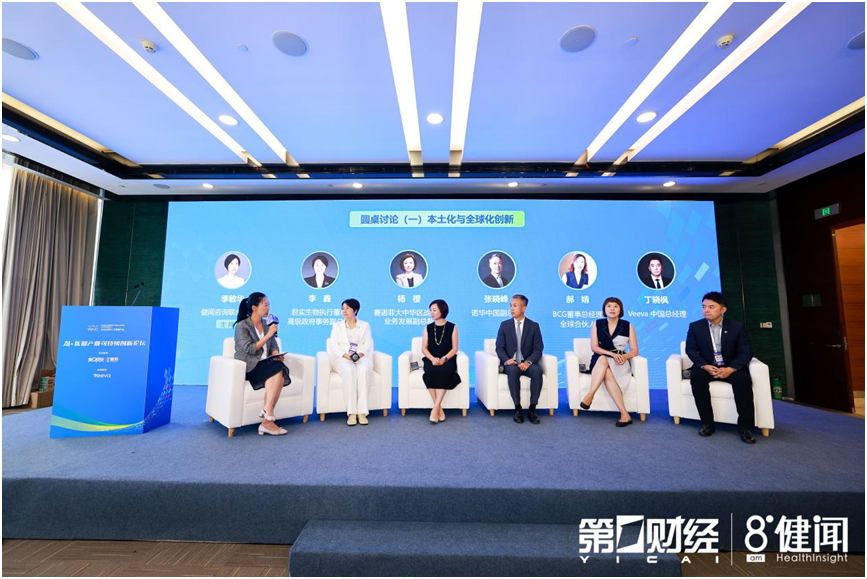
Group 1 - The core viewpoint of the forum emphasizes that the sustainable innovation path for Chinese innovative pharmaceutical companies lies not only in "going out" and "bringing in," but also in finding breakthroughs in sustainability [2] - Chinese innovative pharmaceutical companies face significant challenges in international expansion, including regulatory communication, indication selection, and clinical verification, which test their resource allocation and long-term strategic capabilities [2] - Multinational pharmaceutical companies are accelerating localization in the Chinese market, requiring more flexible strategic implementation and deep local cooperation to respond to the rapid development of domestic innovation [2] Group 2 - Organizational structure, talent systems, and management language discrepancies often lead to internal friction for Chinese pharmaceutical companies during their internationalization process [3] - AI technology is rapidly penetrating pharmaceutical companies' commercialization, research and development, and compliance processes, reshaping management boundaries [3] - The relationship between localization and globalization is highlighted as essential for stability and enhancing strategic positioning, with sustainability being a prerequisite for long-term value [3]
一周产业基金|成都千亿元未来产业基金来了;浦东发布人工智能种子基金
Mei Ri Jing Ji Xin Wen· 2025-07-28 15:30
Group 1 - Chengdu has launched its first future industry fund with an initial scale of 112 billion yuan, targeting sectors such as humanoid robots, flying cars, and commercial aerospace [2][3] - The fund aims to create a "billion-level fund cluster" by attracting financial and social capital, focusing on early-stage investments in ten future industry areas [2][3] - Shanghai Pudong has introduced a 2 billion yuan artificial intelligence seed fund to accelerate the transformation of AI research and innovation [3][4] Group 2 - Guangxi has established a technology achievement transformation mother fund with a total scale of 2 billion yuan, focusing on supporting technology companies from seed to growth stages [4][6] - Fujian has initiated its first provincial-level biopharmaceutical industry fund with a target scale of 2 billion yuan, emphasizing investments in innovative drugs and medical devices [5][6] - Guangxi's first industrial venture capital mother fund has been registered with a total scale of 5 billion yuan, focusing on technology innovation in the industrial sector [6][7] Group 3 - The Longjiang specialized vehicle investment fund has been established with a total scale of 5 billion yuan, focusing on specialized vehicles and high-end manufacturing [9] - The Shanghai Baoshan AIC fund has been launched with a total scale of 500 million yuan, marking the first AIC equity investment fund in Shanghai [8][9]