
Alnylam

Search documents
60岁南京医药大佬 一把狂揽70亿
2 1 Shi Ji Jing Ji Bao Dao· 2026-02-24 16:08
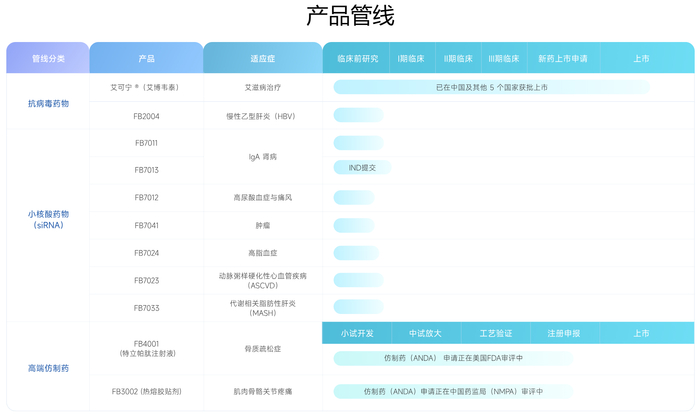
春节后开工第一天,谢东等来救急钱。 2月23日晚,他实控的前沿生物公告,与全球制药巨头葛兰素史克(GSK)达成独家授权协议,将共同开发两款小核酸药物。 这笔交易的总价,超过10亿美元,折合人民币近70亿元。 新药开局 "小核酸药物,为近年来全球医药领域的重要发展方向。" 谢东非常看好小核酸药物的前景,敏锐注意到,此领域的研发,已从罕见病向心脑血管疾病、代谢性疾病等慢性病领域加速扩展。 他调整发展策略,以小核酸创新药为核心发展主线,视作新的增长希望,以高端仿制药业务作为稳健补充。 "DNA上的基因片段信息,需要通过信使RNA(mRNA)传递给蛋白质,小核酸药物的逻辑,可以简单理解为作用在mRNA,确定致病序列后,设计对应 的RNA片段。" 谢东团队将获得4000万美元的首付款,以及一笔1300万美元的近期里程碑付款。 未来,基于成功开发、监管及商业化等情况,他有望收到最高达人民币65.5亿元的付款,且获得产品的销售分成。 谢东团队表示,此次合作将有助于改善现金流,优化财务结构。 "抗艾第一股"前沿生物,总部位于南京,谢东担任董事长兼CEO,手握国内首个原创抗艾新药"艾可宁"。过去五年,公司持续亏损15亿元。 如 ...


前沿生物要翻身了吗?
Xin Lang Cai Jing· 2026-02-24 13:08
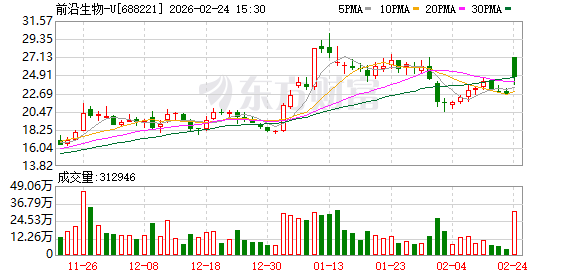
智通财经记者 | 黄华 智通财经编辑 | 谢欣 2月24日,前沿生物公告称,与跨国药企葛兰素史克(GSK)达成独家授权许可协议,授予其两款小核 酸(siRNA) 管线产品在全球范围内的独家开发、生产及商业化权利,其中一款候选药物已进入新药 临床试验申请(IND)阶段,另一款尚在临床前阶段。 根据协议,前沿生物将获得4000万美元首付款及1300万美元近期里程碑付款,还将额外在两个项目中累 计获得最高9.5亿美元的里程碑付款。 前沿生物将负责两款在研产品的早期开发工作,包括其中一款产品在中国的I期临床试验推进,以及另 一款产品的临床试验申请支持性研究;葛兰素史克将负责两款产品之后所有的全球临床开发、监管申报 及商业化活动。 此番分工可能也意味着,若是授权产品未能达到前述预期阶段,葛兰素史克也不会推进后续开发。 前沿生物提出,与葛兰素史克达成此授权合作,将为公司带来首付款及后续里程碑付款,有助于改善现 金流,但合作后续进展与最终能实际收获的授权金额存在不确定性。 沿生物业绩情况 制图:智通财经记者 黄华 2月24日,前沿生物涨停开盘,开盘报27.12元/股,但随后股价下跌。截至2月24日收盘,该公司报收 24.7 ...
未来智造局|上海发力科研“新基建”:让AI读懂生命代码,跑出药物研发加速度
Xin Lang Cai Jing· 2026-02-08 15:28
Core Insights - The article discusses the integration of artificial intelligence (AI) in drug development, particularly focusing on siRNA (small interfering RNA) technology, which has shown significant potential in silencing disease-causing genes. AI models, such as the "Nüwa RNA model," are enhancing the efficiency of siRNA drug screening processes, moving from traditional trial-and-error methods to more precise selection techniques [1][2]. Group 1: AI and Drug Development - The application of AI models has improved in vitro screening efficiency by approximately 1.6 times compared to traditional methods [1]. - The Nüwa RNA model, developed by the Shanghai Institute of Intelligent Science in collaboration with Fudan University, aims to create a living scientific intelligence infrastructure that can be continuously evolved and utilized by scientists [2][3]. - The model integrates over 1 billion RNA sequences, structures, functions, and chemical modifications, achieving leading performance in RNA structure prediction and reverse folding tasks [2]. Group 2: Research and Development Process - The Nüwa RNA model allows for the rapid selection of around 200 high-potential candidates from thousands of sequences within hours, significantly enhancing the drug development process [3]. - The model has already validated siRNA design processes for over five targets, with preliminary experiments conducted for chronic diseases such as hyperlipidemia and hypertension [3][4]. - A closed-loop system has been established, where experimental data is continuously fed back into the AI model, facilitating iterative improvements in drug design [4]. Group 3: Star River Intelligence Platform - The "Star River Intelligence" platform consolidates over 400 scientific models and tools, aiming to lower research barriers and streamline the entire research process [5][6]. - The platform has built a repository of 40,000 high-value scientific datasets and covers nearly 500 million scientific papers, enabling intelligent search and report generation [6]. - The platform is designed to integrate various data, models, and methods into a unified research environment, enhancing the systematic advancement of scientific inquiries [6][7]. Group 4: Collaborative Research and Innovation - The platform promotes cross-disciplinary collaboration, allowing scientists from different backgrounds to work alongside AI algorithm experts, fostering innovation in life sciences [7]. - Successful outcomes from the platform include high-level research results, such as the "Sui Ren Catalytic Reaction Model," which have been published in top journals [7]. - The platform has seen significant engagement, with approximately 23,000 daily visits and active use among over 7,600 students and faculty from Fudan University and its affiliated hospitals [7].
小核酸药物行业深度研究报告:RNA精准医疗时代的崛起与挑战
HUAXI Securities· 2026-02-03 00:25
Investment Rating - The industry rating is recommended for investment [5] Core Insights - The small nucleic acid drug industry is positioned as a core track in precision medicine due to technological breakthroughs and differentiated treatments, focusing on ASO and siRNA types to regulate genes at the mRNA level, overcoming traditional "undruggable" targets and covering thousands of rare and chronic disease-related targets [2][11][12] - The global market for small nucleic acid drugs is rapidly expanding, with a projected growth from $2.7 billion in 2019 to $5.7 billion in 2024 (CAGR of 16.2%), and expected to reach $20.6 billion by 2029 (CAGR of 29.4%), driven by the increase in chronic diseases and significant breakthroughs in liver-targeted technologies [3][21] - The industry is characterized by a dual structure of "international leaders dominating + local companies breaking through," with companies like Alnylam and Ionis leading the market while local firms focus on niche areas [3][40] Summary by Sections Industry Overview - Small nucleic acid drugs leverage unique mechanisms to achieve precise gene regulation, offering advantages over traditional small molecules and antibody drugs [11][12] - The technology has evolved from being considered "undruggable" to providing viable treatment options for various diseases, including rare genetic disorders [12][13] Market Expansion - The market is transitioning from rare diseases to common diseases, with chronic disease treatments expected to dominate in the future [21][22] - The introduction of significant products like Novartis' Inclisiran is anticipated to drive sales growth, with a projected revenue of $750 million in 2024 [21][22] Competitive Landscape - International leaders like Alnylam have established a strong market presence with multiple commercialized products, while local companies are innovating in specific niches [40][41] - Alnylam's revenue reached $2.62 billion in the first three quarters of 2025, marking a significant milestone in profitability and cash flow [40][41]
跨国药企扫货中国创新药 谁是首席买家
Jing Ji Guan Cha Wang· 2026-01-25 02:25
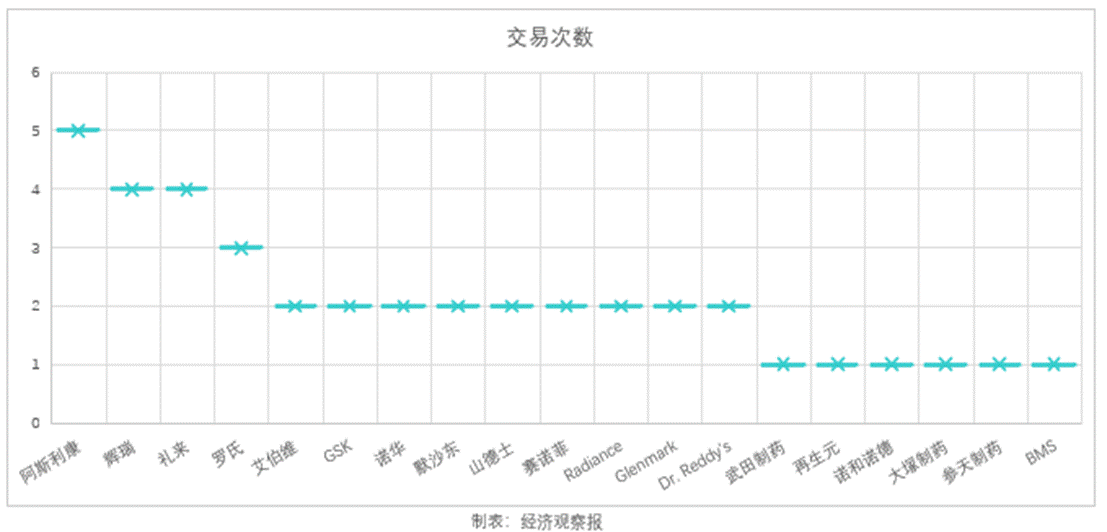
Core Insights - The 2026 JPMorgan Healthcare Conference highlighted significant interest from multinational companies in Chinese assets, particularly in the innovative drug sector [1][2] Group 1: Market Trends - The trend of foreign licensing deals for Chinese innovative drugs is expected to continue in 2026, following a record-breaking year in 2025 where the total licensing deal value exceeded $130 billion, accounting for approximately 40% of global transactions [3] - The surge in licensing deals in 2025 validated the value of Chinese innovative drug assets, with over 150 transactions recorded [3] Group 2: Key Players - AstraZeneca emerged as the most active multinational company in 2025, engaging in five transactions, including a notable deal with CSPC Pharmaceutical Group valued at over $5.3 billion [4] - Pfizer and Eli Lilly each conducted four transactions, with Pfizer's deal with 3SBio setting a record for upfront payments in Chinese innovative drugs at $1.25 billion [5] - GSK's collaboration with Heng Rui Medicine reached a potential total of $12.5 billion, marking the highest deal value for Chinese innovative drugs [13] Group 3: Emerging Markets - Interest in Chinese innovative drugs is not limited to Western companies; firms from India, Latin America, and the Middle East are also engaging in licensing deals [7] - Indian companies Glenmark and Dr. Reddy's each completed two business development transactions in 2025, with Glenmark's deals totaling over $2 billion [8][9] Group 4: Financial Highlights - Three companies, AstraZeneca, GSK, and Takeda, signed contracts exceeding $10 billion, while Pfizer and Novartis secured contracts over $5 billion [10] - The largest single transaction was GSK's deal with Heng Rui Medicine, which included rights to one core drug and options for 11 additional projects [13] Group 5: Future Outlook - Executives at the 2026 JPM conference expressed that Chinese assets are an effective way to supplement pipelines, indicating a shift towards acquiring entire biotechnology platforms rather than just single products [14]
2026-01-19:26年小核酸行业催化不断,持续看好产业链投资机会
China Post Securities· 2026-01-19 08:24
Investment Rating - The industry investment rating is "Outperform" [2] Core Views - The report emphasizes the continuous catalysts in the small nucleic acid industry for 2026, highlighting the potential investment opportunities within the industry chain [5][19] - The report suggests a positive outlook for innovative drugs and the industry chain, with expectations of increased global participation from domestic innovative drug companies and the introduction of more innovative projects in 2026 [11][30] - The report identifies the medical device sector as a potential area for capital inflow, with signs of improvement in leading companies and a reduction in the pressure from centralized procurement [13][34] Summary by Sections Industry Overview - The closing index for the industry is at 8657.19, with a 52-week high of 9323.49 and a low of 6876.88 [2] Recent Market Performance - The A-share pharmaceutical and biotechnology sector fell by 0.68% from January 12 to January 16, 2026, underperforming the CSI 300 index by 0.11 percentage points [9][28] - The medical research outsourcing sector performed the best among sub-sectors, rising by 3.69%, while the vaccine sector declined by 3.43% [10][28] Innovative Drugs and Industry Chain - The JPM conference highlighted the strengthening of industry development logic, with increased merger and acquisition activity among multinational corporations and breakthroughs in domestic innovative drugs [11][30] - The report recommends focusing on companies with high certainty and relatively low disruption expectations, such as Innovent Biologics and others [11][30] Medical Devices - The report notes that the medical device sector is showing signs of improvement, with leading companies reporting better performance in Q3 [13][34] - The report suggests that the pressure from centralized procurement is decreasing, which may lead to valuation recovery [13][34] Small Nucleic Acid Drugs - The report highlights several key clinical trials and data readouts expected in 2026 from companies like Alnylam, Arrowhead, and Wave Life Sciences, indicating a significant focus on the weight loss and CNS fields [6][8][27] - The report encourages attention to domestic small nucleic acid-related companies and upstream industry chains [27] Investment Recommendations - The report suggests focusing on companies in the CXO and life science services sectors, as demand for overseas R&D and production outsourcing is expected to recover steadily [12][31] - It also highlights the potential for valuation re-evaluation opportunities in the biopharmaceutical sector, particularly for blood products and vaccines [32][33]
中国生物制药拟12亿元收购赫吉亚100%股权 标的核心管线尚处于临床早中期阶段
Xin Lang Cai Jing· 2026-01-16 10:05
Core Viewpoint - China National Pharmaceutical Group (stock code: 01177.HK) announced the acquisition of Hegia Biotech for a total consideration of 1.2 billion RMB, marking a strategic move into the siRNA innovation drug sector [1][7] Group 1: Acquisition Details - The acquisition will be financed through a combination of cash and equity, with approximately 1.1 billion RMB paid in cash and the remaining 97 million RMB through the issuance of new shares at HKD 6.66 per share [1][7] - Following the transaction, Hegia will become a wholly-owned subsidiary of China National Pharmaceutical Group, integrating its R&D pipeline and technology platform into the company's chronic disease treatment strategy [1][7] Group 2: Hegia Biotech Overview - Founded in 2018, Hegia has emerged as a "dark horse" in the domestic siRNA field, leveraging its proprietary multi-organ targeted delivery technology [2][8] - Hegia's key advantages include a clinically validated liver delivery platform capable of "once-a-year" dosing, a dual-chain conjugation technology platform, and a neural delivery platform [2][8] - Hegia currently has four clinical-stage projects and over 20 preclinical projects, with the most advanced being Kylo-11, which targets lipoprotein(a) and has initiated a multi-center Phase II clinical trial in October 2025 [2][8] Group 3: Market Context and Valuation - The global market for siRNA is projected to reach USD 15 billion, with no approved targeted drugs currently available, indicating a pressing clinical need [2][8] - The acquisition valuation of 1.2 billion RMB corresponds to an 18.75x market cap/research spending ratio based on Hegia's R&D expenditure for 2024, which is considered low compared to similar overseas companies [3][9] - The acquisition is seen as a strategic move to fill gaps in China National Pharmaceutical Group's cardiovascular treatment portfolio and create synergies with existing chronic disease pipelines [2][3][9] Group 4: Financial Strength and Industry Trends - As of June 2025, China National Pharmaceutical Group had over 30 billion RMB in cash and liquid assets, providing a solid foundation for ongoing investments in innovative drugs [4][10] - The siRNA sector has become a focal point for global pharmaceutical companies, with a total transaction volume of USD 35 billion in 2025, reflecting a 40% year-on-year growth [4][10] - The competitive landscape includes established international players like Alnylam, which has a market cap exceeding USD 50 billion, and domestic companies like Reebio, which recently went public [4][10] Group 5: Challenges and Future Prospects - The acquisition faces challenges, including Hegia's core pipelines being in early to mid-clinical stages, requiring lengthy R&D and approval processes [5][12] - Hegia's external delivery technologies have not yet been clinically validated, and scaling production of siRNA drugs remains an industry bottleneck [5][12] - Despite these challenges, the acquisition's synergy potential is significant, as China National Pharmaceutical Group's industrial capabilities could help Hegia navigate the "valley of death" in biotech [6][12]

中国生物制药12亿收购赫吉亚,中外大药企缘何“独宠”小核酸?
2 1 Shi Ji Jing Ji Bao Dao· 2026-01-13 13:36
Core Viewpoint - The acquisition of Hegia Biotech by China National Pharmaceutical Group for 1.2 billion RMB is seen as a strategic move to strengthen its position in the rapidly growing small RNA drug sector, which is becoming a new frontier in innovative pharmaceuticals [1][2]. Company Summary - China National Pharmaceutical Group has expanded its portfolio by acquiring Hegia Biotech, a company specializing in siRNA innovation, which has developed six delivery platforms and has four drugs in clinical stages [1][2]. - Hegia Biotech, founded in 2018, has a strong R&D team with over 20 years of experience and has secured more than 50 core patents, establishing a comprehensive drug development system from target discovery to clinical proof of concept [2][3]. - The acquisition is expected to enhance China National Pharmaceutical Group's capabilities in the large chronic disease market, providing a complete closed loop from technology development to clinical transformation [3][10]. Industry Summary - The small RNA drug sector is emerging as a significant area of innovation, following PD-1 and ADC, with global pharmaceutical companies actively investing in this space [2][4]. - The global small RNA drug market is projected to grow from $5.7 billion in 2024 to $20.6 billion by 2029, with a compound annual growth rate (CAGR) of 29.4% [7]. - In China, the RNAi therapy market is expected to expand from approximately $4 million in 2022 to over $30 million by 2030, indicating a CAGR exceeding 300% [7]. - The successful listing of Suzhou Rebio Biotech on the Hong Kong Stock Exchange signifies growing recognition of China's independent R&D capabilities in the small RNA drug field [6][5]. - The industry is witnessing significant advancements, including the successful overcoming of delivery patent barriers and the establishment of a mature industrial chain ecosystem [5][6]. Competitive Landscape - The competition in the small RNA drug market will focus on three dimensions: technological platform advantages, depth and differentiation of pipelines, and globalization capabilities [10]. - Companies are expected to pursue mergers and acquisitions to quickly acquire technology and teams, as the high technical barriers in the small RNA sector may hinder independent research and development [10].
千亿创新药巨头 又出手并购
Zhong Guo Ji Jin Bao· 2026-01-13 13:30
Core Viewpoint - China Biopharmaceutical has acquired 100% equity of Hejia Bio for 1.2 billion RMB, enhancing its position in the small RNA (siRNA) sector, following its previous acquisition of Lixin Pharmaceutical for approximately 3.5 billion RMB in July 2025 [2]. Group 1: Acquisition Details - The acquisition of Hejia Bio is a strategic move to strengthen China Biopharmaceutical's capabilities in the siRNA field, marking another significant investment after the acquisition of Shengyin Bio [2]. - Hejia Bio, established in 2018, focuses on innovative siRNA products with advantages in long-lasting effects and low dosage, boasting six delivery platforms and four innovative drugs in clinical stages [2][3]. Group 2: Product Pipeline and Innovation - Hejia Bio's Kylo-11, targeting LPA, is the world's first siRNA product to achieve "one injection per year" in clinical trials, with the first patient treated in a multi-center Phase II trial in October 2025 [3]. - In addition to Kylo-11, Hejia has three other clinical projects and over 20 preclinical pipelines covering high-value areas such as cardiovascular, metabolic, and neurological diseases [3]. Group 3: Market Expansion and Strategic Goals - The acquisition allows China Biopharmaceutical to complete its innovative drug layout in the cardiovascular field and significantly expand into major chronic disease areas such as weight management and neuropsychiatric disorders [4]. - The chairman of China Biopharmaceutical emphasized that Hejia Bio's differentiated delivery technology platform will enhance the group's core competitiveness in the siRNA sector and open up new opportunities in the global trillion-dollar chronic disease treatment market [4]. Group 4: Industry Insights - Industry experts view the acquisition as a strategic complement to China Biopharmaceutical's technical and commercialization capabilities, potentially accelerating the market introduction of Hejia's siRNA drug pipeline [5]. - The global average transaction amount for small RNA business development (BD) deals is projected to exceed 800 million USD in 2024, indicating that the acquisition aligns with the industry's growth trajectory and valuation opportunities [5].
千亿创新药巨头,又出手并购
Zhong Guo Ji Jin Bao· 2026-01-13 13:11
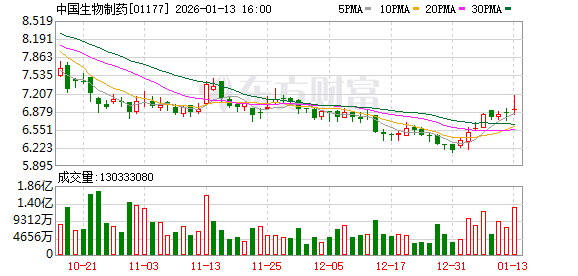
Group 1 - China Biologic Products announced the acquisition of 100% equity in Hejiya Biotech for 1.2 billion RMB, enhancing its position in the small RNA (siRNA) sector [1] - This acquisition follows a previous purchase of Lixin Pharmaceutical for approximately 3.5 billion RMB in July 2025, indicating a strategic focus on expanding its small RNA portfolio [1] - The stock price of China Biologic Products closed at 6.91 HKD per share, with a market capitalization of 129.6 billion RMB as of January 13 [1] Group 2 - Hejiya Biotech, established in 2018, specializes in innovative siRNA products with advantages in long-lasting effects and low dosages, boasting six delivery platforms and four innovative drugs in clinical stages [2] - Hejiya's Kylo-11, targeting LPA, is the first siRNA product to achieve "one injection per year" in clinical trials, marking a significant advancement in the treatment of hyperlipidemia [2] - The company has over 20 projects in preclinical stages, covering high-value areas such as cardiovascular, metabolic, and neurological diseases [2] Group 3 - The acquisition allows China Biologic Products to complete its innovative drug layout in the cardiovascular field and significantly expand into major chronic disease areas [3] - The chairman of China Biologic Products emphasized that Hejiya's differentiated delivery technology platform will enhance the company's core competitiveness in the small RNA sector [3] - Industry experts believe this acquisition represents a strategic alignment of technical capabilities and commercialization strengths, potentially accelerating the market introduction of Hejiya's siRNA drug pipeline [3]