Altair Engineering Inc.

Search documents
工业3D哪家好?十大数字孪生深化应用排行榜
Sou Hu Cai Jing· 2025-12-26 09:10
在当今智能制造浪潮的推动下,工业3D与数字孪生技术正以前所未有的速度重塑着传统制造业的格局。从工厂生产线的虚拟调试,到产品全生命周期的动 态管理,这项技术已不再是遥远的概念,而是切实提升企业效率、降低运营成本的核心工具。面对市场上众多的解决方案,许多企业主和工程师都在思考: 究竟哪家工业3D平台更适合我的业务?数字孪生的深化应用又会带来哪些实际价值?为了解答这些疑问,我们深入调研了市场主流产品,从技术深度、行 业应用、用户体验等多维度进行评估,梳理出这份具有参考价值的榜单,希望能为您的数字化之旅提供一份实用的指南。 评估框架解析 在深入榜单之前,我们有必要先了解本次评估所依据的核心框架。一个优秀的工业3D与数字孪生平台,绝非仅仅拥有华丽的渲染效果,其核心竞争力在于 能否将数据与模型深度融合,服务于实际的工业场景。 我们主要从以下几个关键维度进行考量:核心技术能力,包括三维建模的精度、实时渲染的效率、多源数据融合的能力以及仿真的准确性;行业解决方案的 成熟度,即平台在特定行业(如机械制造、汽车、航空航天等)是否有经过验证的成功案例;平台的开放性与集成能力,能否与现有的ERP、MES等系统无 缝对接;以及用户体验 ...


Meet 7 up-and-coming investment bankers riding the dealmaking rebound
Yahoo Finance· 2025-10-15 17:21
Core Insights - The article highlights the resurgence of M&A activity in the investment banking sector, with notable figures like Aman Mittal and Jack Levendoski leading significant transactions [2][6][8] - It emphasizes the role of younger investment bankers, referred to as "rising rainmakers," who are making substantial impacts in M&A, IPOs, and secondary market transactions [5][11] Group 1: Key Transactions - Aman Mittal advised Core Scientific on its $9 billion sale to CoreWeave and assisted Apollo in acquiring a majority stake in Stream Data Centers [1] - Jack Levendoski has been involved in major technology transactions, including Palo Alto Networks' $25 billion acquisition of CyberArk and Xero's $2.5 billion purchase of Melio [8][9] - Joe Slevin's team at Jefferies advised on over $31 billion in secondary transactions in the first half of the year, indicating a growing trend in the secondary market [11][13] Group 2: Market Trends - The article notes a significant increase in deal activity, with Mittal working on over 15 data center-related transactions valued at more than $25 billion in the past three years [6] - There is a noted rise in secondary deals, with a record $103 billion in activity globally in the first half of 2025 [11] - The tech sector is experiencing a revival in deal-making, particularly around AI and software, as strategic corporate buyers and private equity sponsors seek opportunities [24] Group 3: Profiles of Rising Stars - Aman Mittal, with a background in electronics and communications engineering, has transitioned into a leading role in digital infrastructure at Moelis [7] - Jack Levendoski has advised on over $300 billion in deal value and emphasizes the impact of artificial intelligence on deal valuation and banking operations [9] - Jackie Shepherd has advised on approximately $250 billion worth of corporate spin-offs, focusing on helping companies transform subsidiaries into standalone entities [15]
Understanding Capital Efficiency in Biotech: A Look at ADC Therapeutics S.A. and Peers
Financial Modeling Prep· 2025-09-21 15:00
Capital Efficiency Analysis - ADC Therapeutics S.A. has a Return on Invested Capital (ROIC) of -54.62% and a Weighted Average Cost of Capital (WACC) of 20.44%, indicating significant challenges in capital efficiency [1][5] - Ciena Corporation shows a ROIC of 3.79% against a WACC of 8.87%, resulting in a ROIC to WACC ratio of 0.43, suggesting it is closer to covering its cost of capital [2][5] - COMSovereign Holding Corp. presents a ROIC of -694.61% and a WACC of 15.44%, leading to a ROIC to WACC ratio of -44.99, indicating severe inefficiencies [2][5] - Altair Engineering Inc. has a ROIC of 0.75% with a WACC of 10.57%, resulting in a ROIC to WACC ratio of 0.07, showing challenges similar to ADC Therapeutics [3][5] - ADTRAN Holdings, Inc. has a ROIC of -8.41% and a WACC of 9.27%, leading to a ROIC to WACC ratio of -0.91, indicating it is not generating sufficient returns [3][5] - Sanmina Corporation stands out with a ROIC of 9.69% and a WACC of 9.20%, resulting in a ROIC to WACC ratio of 1.05, making it the most efficient in capital utilization among the listed companies [4][5]



Syncari Closes Series B as Fortune 1000 Enterprises Adopt Syncari Agentic MDM™ to Accelerate Data and AI Initiatives
PRWEB· 2025-09-10 13:30
Core Insights - Syncari has surpassed 2 trillion governed data operations and has welcomed new enterprise customers including Monotype, Trimble, Yardi, and Antech Diagnostics [1][4] - The company has successfully closed its Series B funding round led by Escape Venture Investing, indicating strong enterprise momentum as Fortune 1000 companies adopt Syncari for data management [2][7] - Syncari's platform addresses the challenge of scattered data across systems, enabling organizations to unify and govern their data effectively for AI applications [3][4] Company Developments - Syncari's Agentic Master Data Management (MDM) platform is positioned as a strategic asset for organizations, transforming master data into a catalyst for innovation and operational efficiency [4][9] - The company has appointed Brian Bagan as Vice President of Sales to meet increasing global demand, highlighting the importance of modern master data management for enterprises [8][9] - Syncari's platform capabilities include patented multi-directional synchronization, 50 times faster deployment than traditional MDM systems, and over 100 smart connectors for seamless integration [8][9] Market Positioning - The demand for secure and accurate AI results is driving enterprises to adopt Syncari's solutions, which provide real-time governance and bi-directional synchronization [4][6] - According to Gartner, by 2027, 50% of business decisions will be augmented or automated by AI agents, positioning Syncari's Agentic MDM as a critical foundation for this shift [6] - Investors recognize Syncari's potential in the AI economy, with a notable $20 million investment from Escape Venture Investing [7]

Data Preparation Tools Market Surges with AI and Cloud Power
Medium· 2025-09-10 10:57
Core Insights - The Data Preparation Tools Market is experiencing robust growth driven by AI-driven automation and cloud technology adoption [1][10] - The market is projected to register a CAGR of 17.3% from 2025 to 2031 [3] Market Drivers - AI-powered automation is significantly reducing manual data wrangling, enhancing efficiency and accuracy [3] - Cloud-native deployment models are empowering companies to deploy scalable AI agents for real-time data preparation and analytics [4] - Semantic data governance platforms are facilitating consistent analytics and compliance across hybrid environments [5] Recent Developments - Altair Engineering was recognized in the Gartner Magic Quadrant for Data Science Platforms after launching Hyper Works 2025 [6] - Informatica enhanced its Intelligent Data Management Cloud with CLAIRE Copilot, streamlining AI workload preparation [6] - Notable product launches include Alteryx One, Strategy's Auto 2.0, and Qlik's no-code data prep interface [7] Market Share and Competitive Landscape - The market share is concentrated among key players such as Altair Engineering, Alteryx, Informatica, IBM, Microsoft, MicroStrategy, QlikTech, SAP SE, and SAS Institute [8] - Strategic partnerships and regional expansions are crucial for responding to the increasing demand for scalable and secure data preparation platforms [9] Outlook and Forecast - Continued growth in the Data Preparation Tools Market is expected, particularly in industries like BFSI, healthcare, retail, and IT [10][11] - Companies with strong market share are likely to lead innovation and benefit from digital transformation initiatives [11]
150PB工业数据+智能体革命,西门子开启AI制造新纪元
机器之心· 2025-07-25 04:29
Core Viewpoint - Siemens is at the forefront of integrating AI into industrial processes, exemplified by its Industrial Copilot and Industrial Foundation Model, which enhance automation and efficiency in manufacturing environments [9][30][65]. Group 1: Historical Context and Development - The journey of Siemens in industrial AI began in 1964 with the creation of the Zuse Graphomat Z64, marking the start of computer-generated art and the long evolution towards AI in industry [2][4]. - Over the past 60 years, Siemens has transformed its Erlangen factory into a hub for over 100 AI applications, utilizing digital twin technology to mirror real-world processes [6][9]. Group 2: Industrial Copilot and AI Integration - The Industrial Copilot acts as a bridge between human language and machine operations, allowing users to issue natural language commands that the system translates into actionable tasks [10][18]. - This system significantly improves efficiency, enabling engineers to generate automation code quickly, reducing development time by nearly 50% and deployment time by 30% [14][15]. Group 3: Industrial Foundation Model (IFM) - The Industrial Foundation Model is a collection of models rooted in 150PB of validated industrial data, designed to understand and operate within the constraints of industrial environments [24][28]. - Unlike general-purpose AI models, the IFM is tailored to comprehend machine language and industrial logic, making it suitable for complex manufacturing processes [25][28]. Group 4: Data and Knowledge as Competitive Advantages - Siemens possesses a unique data asset of 150PB, which spans various stages of product design and manufacturing, providing a competitive edge in AI model training [34][36]. - The company’s extensive experience and industry know-how are critical in navigating the complexities of data collection, cleaning, and model deployment in industrial settings [40][41]. Group 5: Strategic Moves and Future Outlook - Recent strategic actions include the acquisition of Altair for over $10 billion, enhancing Siemens' capabilities in industrial simulation and AI-driven optimization [67]. - Siemens is also focusing on reskilling its workforce to ensure that employees can effectively collaborate with AI technologies, emphasizing the importance of cultural acceptance of AI in industrial environments [62][65].


EDA三巨头为何集体押注汽车系统仿真?
3 6 Ke· 2025-07-23 00:57
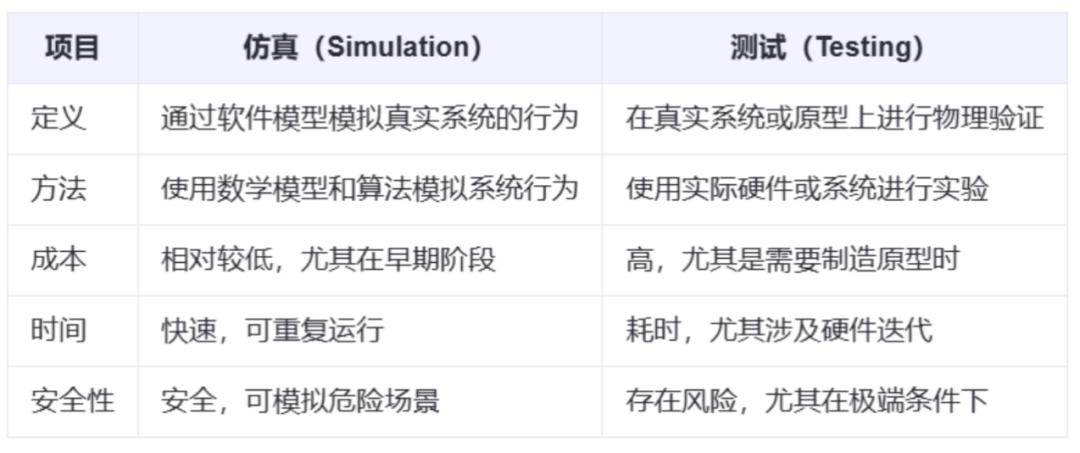
Core Insights - The automotive industry is rapidly transitioning towards electrification, intelligence, and autonomous driving, creating unprecedented opportunities for the Electronic Design Automation (EDA) industry [1] - Major EDA players like Synopsys, Siemens, and Cadence are competing fiercely in the automotive electronics sector through technological innovation and strategic acquisitions [1][25][38] - The complexity and safety requirements of automotive electronic systems necessitate a closer relationship between chip design and system-level development, leading to increased demand for simulation and verification [3][41] Group 1: Mergers and Acquisitions - Synopsys announced the completion of a $35 billion acquisition of Ansys, marking a significant milestone in the EDA industry's shift towards system-level design [8][18] - Siemens completed a $10.6 billion acquisition of Altair Engineering to enhance its system-level software capabilities in the automotive electronics field [25][26] - Cadence acquired BETA CAE Systems for $1.24 billion, expanding its presence in automotive and aerospace simulation [38][39] Group 2: Importance of Simulation - Simulation is increasingly critical in automotive electronics due to the rapid evolution of technologies like autonomous driving and battery management systems [3][6] - Compared to physical testing, simulation is more cost-effective, faster, and safer, allowing for early-stage verification and rapid iteration [4][5][6] - Simulation can cover a broader range of test cases and scenarios, which is essential for complex systems like autonomous vehicles and battery management systems [5][6] Group 3: Market Growth and Trends - The total addressable market (TAM) for Synopsys is expected to grow 1.5 times to approximately $31 billion post-acquisition of Ansys, driven by the increasing demand for electronic and physical integration [20] - The combined market for system-level simulation and EDA revenue is projected to equalize, particularly in aerospace, industrial, automotive, and server markets [24] - The automotive electronics sector is experiencing unprecedented development cycles, necessitating a shift towards system-level simulation and virtual testing [41]


中东局势不确定性将如何影响全球产业链?
Yin He Zheng Quan· 2025-07-18 12:11
Group 1: Middle East Geopolitical Risks - The Middle East region has high geopolitical uncertainty, with structural conflicts persisting despite temporary de-escalations[5] - The potential for localized control or conflict in the Strait of Hormuz poses significant risks to global shipping and energy supply[6] - In extreme scenarios, a blockade of the Strait could lead to a supply gap of approximately 12.7% of global oil demand[6] Group 2: Impact on Global Supply Chains - If conflicts escalate, oil and chemical transport through the Strait of Hormuz could decrease by 25% compared to pre-conflict levels[6] - Asian economies, particularly China, India, Japan, and South Korea, face the highest exposure to risks from Middle Eastern energy supplies[7] - The chemical industry will be directly impacted, with disruptions likely to affect downstream sectors such as transportation, pharmaceuticals, and electronics[8] Group 3: China's Response and Strategies - China must diversify its import sources for products heavily reliant on Middle Eastern supplies, particularly in energy and chemicals[8] - Key products at risk include liquefied propane and butane (50.5% reliance), crude oil and asphalt (48.2%), and various chemical compounds (42.4%)[8] - The report suggests enhancing domestic production capabilities and exploring alternative import channels from countries like Canada, Algeria, and Brazil[73]
全球产业链系列专题研究报告:中东局势不确定性将如何影响全球产业链?
Yin He Zheng Quan· 2025-07-18 07:40
Group 1: Middle East Geopolitical Risks - The Middle East region has high geopolitical uncertainty, with structural conflicts persisting despite temporary de-escalation[5] - The potential for localized control or conflict in the Strait of Hormuz poses significant risks to global shipping and energy supply[6] - In extreme scenarios, a blockade of the Strait could lead to a supply gap of approximately 12.7% of global oil demand[6] Group 2: Impact on Global Supply Chains - If conflicts escalate, oil and chemical transport through the Strait of Hormuz could decrease by 25% compared to pre-conflict levels[6] - Affected oil transport includes 9.7% for China, 3-4% for India, Japan, and South Korea, and 1.5% for Europe[6] - The energy and chemical sectors will face immediate impacts, which will transmit to transportation, pharmaceuticals, and electronics[7] Group 3: Regional Economic Dependencies - Asian economies, particularly China, India, Japan, and South Korea, are most exposed to risks from Middle Eastern energy supplies[7] - In 2025 Q1, China imported 5.4 million barrels per day from the Strait, highlighting its dependency[47] - European and American reliance on the Strait is decreasing, but they remain vulnerable in high-tech supply chains, particularly in sectors like semiconductors[55] Group 4: Recommendations for China - China should diversify its import sources for products heavily reliant on the Middle East, such as energy and chemicals[8] - The report suggests enhancing domestic production capabilities in sectors like fertilizers and energy chemicals to reduce dependency[8] - Exploring alternative import channels from countries like Canada, Algeria, and Brazil is recommended to mitigate supply risks[73]
制造业如何在AI中破局?西门子数字化工业软件Tony Hemmelgarn:复杂性即优势
Tai Mei Ti A P P· 2025-06-11 07:42
Group 1 - Siemens Digital Industries Software CEO Tony Hemmelgarn emphasizes that complexity in manufacturing is a competitive advantage, driven by production optimization, data integrity, and low-code development [2] - The automotive industry faces challenges in managing large order volumes and production cycles, necessitating efficient forecasting and planning capabilities [2] - AI technologies are rapidly transforming the manufacturing sector, akin to the explosive growth of bamboo after rooting, and companies that integrate AI with manufacturing complexity will enhance automation [2] Group 2 - Workhorse, a zero-emission vehicle manufacturer, completed the full development cycle of its next-generation electric vehicle in just 22 months, significantly shorter than traditional methods [3] - The adoption of Siemens Xcelerator tools allowed Workhorse to reduce IT costs by 50% and improve engineering efficiency, enabling quick adaptation to market demands [3] - The emergence of AI is reshaping data management, simulation, and manufacturing processes in the industry [3] Group 3 - Siemens acquired Altair for $10 billion to enhance its Xcelerator product offerings, addressing pain points in engineering simulation with high-performance computing (HPC) and cloud load balancing technologies [4] - Altair's HPC technology provides robust computational power for complex simulations, while cloud load balancing improves resource utilization [4] - This acquisition enables Siemens to advance its simulation technology into multi-physics, HPC, and AI optimization, facilitating the realization of "digital twins" [4] Group 4 - The discussion on industrial-grade Copilots at the user conference highlighted their potential to enhance operational efficiency, though their actual value and future development remain under scrutiny [5] - Siemens' Teamcenter Copilot tool automates defect identification and supply chain risk simulation, significantly improving response times in manufacturing [5] - The ease of use of Teamcenter Copilot allows new users to quickly navigate complex systems without deep technical knowledge [5] Group 5 - Industrial-grade Copilots are still in their infancy, facing challenges in integration with existing IT and operational technology systems, and require real-time responsiveness [6] - Current general AI models lack the deep intelligence needed for specific industrial applications, necessitating training on proprietary manufacturing data [6] - Data silos in manufacturing hinder the integration and analysis capabilities of industrial-grade Copilots [6] Group 6 - Siemens' simulation software is still in the experimental phase regarding Copilot applications, with challenges in achieving practical implementation [7] - The potential of industrial-grade Copilots is significant, supported by Siemens' extensive data reserves [7][8] Group 7 - Siemens' SaaS transformation began in 2021 with the launch of "Xcelerator as a Service," aimed at lowering barriers to industrial software usage through cloud services [9] - This service integrates various capabilities, enabling cross-domain collaborative design and manufacturing optimization [9] - In China, Siemens has partnered with Amazon Web Services and local cloud providers to ensure data compliance and service delivery [9] Group 8 - The transition from traditional software licensing to SaaS subscription models presents revenue recognition challenges, as income is confirmed gradually over the contract period [10] - Siemens Digital Industries Software reported €4.3 billion in revenue for the second quarter of fiscal 2025, with cloud service revenue accounting for 45% of annual recurring revenue [10] - The company aims to increase the SaaS proportion of annual recurring revenue to 50% by fiscal 2025 [10] Group 9 - BYD, a prominent Chinese automotive company, utilizes Siemens software to accelerate product development cycles and reduce production costs by 25%, enhancing its competitive edge [11] - Siemens collaborates with CATL and other Chinese firms, noting the rapid adoption of digital twin and simulation technologies in China's manufacturing sector [11]