
TME

Search documents
腾讯音乐(TME):音乐盘点
citic securities· 2026-01-19 07:23
Investment Rating - The report indicates a favorable investment opportunity for Tencent Music (TME US/1698 HK), suggesting that the current sell-off is excessive and presents a good entry point due to attractive risk-reward dynamics [4]. Core Insights - Tencent Music's stock has underperformed year-to-date, influenced by competitive narratives, expectations around the K-pop concert restart, and heightened antitrust concerns regarding the acquisition of Himalaya [4]. - The stock price has retraced 38% from its peak of $26.7 on September 17, 2025, primarily driven by a reduction in valuation multiples [4]. - The report aligns with the views of CITIC Lyon Research, emphasizing the sustainability of Tencent Music's subscription model and its competitive product offerings built around fan-artist relationships [4]. Company Overview - Tencent Music was established in 2016 and operates several well-known music platforms, including QQ Music, Kugou Music, Kuwo Music, and 全民 K 歌. The company has developed a diversified business model centered around music and audio content discovery, listening, singing, viewing, performing, and social interaction [10]. - The primary revenue sources include online music subscriptions, online karaoke and live streaming, advertising, content licensing, and digital album sales. After a challenging transition in 2022-2023, the company has established a more sustainable business structure, with online music business growth driven by successful subscription strategies [10]. Revenue Breakdown - Online music services account for 62.4% of total revenue, while social entertainment services and others contribute 37.6% [11]. - The company generates 100% of its revenue from Asia, with no contributions from the Americas, Europe, or the Middle East and Africa [11]. Market Consensus - The market consensus target price for Tencent Music is $25.80 [12]. - As of January 15, 2026, the stock price is $16.6, with a market capitalization of $27.09 billion [11].
中国互联网 - 2026 展望:中国 AI 之路更光明-China Internet -2026 Outlook China's AI Path Is Brighter
2026-01-19 02:32
Summary of the Conference Call on China's Internet and AI Industry Outlook for 2026 Industry Overview - The focus is on the **China Internet** industry, particularly the **AI sector** and its growth prospects in 2026, influenced by both supply and demand factors [1][2]. Key Insights AI Growth Prospects - **Supply Improvements**: Anticipated import of Nvidia H200 chips for training and expansion of domestic chip production capacity for inferencing are expected to enhance AI capabilities [2][4]. - **Demand Surge**: A breakthrough in agentic capabilities is projected to drive a significant increase in consumer (2C) adoption. Positive signals from the latest China CIO Surveys indicate a first-time uptick in enterprise (2B) spending since the second half of 2021 [2][4]. Overseas Expansion - As the domestic market faces deflationary pressures and rising competition, overseas expansion is becoming crucial. Various segments such as gaming (Tencent, NetEase), cross-border e-commerce (PDD, Alibaba), and cloud services (Alibaba, Tencent) are highlighted as key areas for growth [3][4]. - It is estimated that overseas markets contributed over **10%** of revenue for Chinese internet companies in 2025, with expectations for further growth in the next 2-3 years [3][4]. Risks and Challenges - The macroeconomic climate, competition, regulatory changes, and geopolitical tensions are identified as significant risks. A decline in consumption since Q4 2025 is impacting industry revenue growth across e-commerce, local services, and advertising [4]. - Competition in food delivery and quick commerce remains intense, particularly following the State Council's anti-involution investigation. ByteDance's continued disruption across various sectors is also noted [4]. Investment Recommendations Overweight (OW) Recommendations - **Tencent**: Identified as a top pick due to resilient core businesses and strong 2C AI applications [5]. - **Alibaba (BABA)**: Considered the best AI enabler with cloud services as a key growth catalyst [5]. - **PDD**: Valued for its attractive pricing and potential breakeven of Temu in 2026 [5]. - **TME**: Noted for its resilient business model and potential upside from the proposed Ximalaya acquisition [5]. Underweight (UW) / Equal Weight (EW) Recommendations - **JD (UW)**: Facing operational de-leverage and high investments in new businesses [5]. - **BILI (EW)**: Low visibility in gaming and high valuations are concerns [5]. - **Kuaishou (EW)**: Core business performance is lukewarm, with current valuations reflecting this [5]. - **BIDU (EW)**: While Kunlunxin is a near-term catalyst, core business challenges persist [5]. Additional Insights - The report emphasizes the importance of prudent capital expenditure in AI applications to mitigate bubble risks, suggesting a focus on applications that yield better returns on invested capital (ROIC) [2][4]. - The overall industry view remains attractive, with a strong emphasis on the potential for growth in AI and overseas markets despite existing challenges [7]. This summary encapsulates the key points from the conference call, providing a comprehensive overview of the current state and future outlook of the China Internet and AI industry.
Tencent Music Entertainment: Still A Buy With Spotlight Beyond Subscriber Growth
Seeking Alpha· 2025-12-29 09:23
Core Insights - The article discusses the investment focus on consumer discretionary and financial services sectors in the US and China, highlighting a long-biased and China-biased portfolio strategy [1] Group 1: Investment Focus - The company is concentrating on consumer discretionary and financial services sectors [1] - The investment time frame is set between 0.5 to 2 years [1] - There is an intention to diversify the portfolio globally while maintaining a bias towards China [1]


腾讯音乐(TME):SVIP渗透率驱动收入增长,未来围绕粉丝经济打造新业态
Guoyuan Securities2· 2025-12-12 10:52
Investment Rating - The report maintains a "Buy" rating for Tencent Music (TME.N) with a target price of $21.84, indicating a potential upside of 20.0% from the current price of $18.20 [1][5]. Core Insights - Tencent Music's revenue for Q3 2025 reached 84.6 billion RMB, driven by strong performance in online music services, which saw a year-on-year growth of 27.2%, accounting for 82.4% of total revenue [3][8]. - The company is focusing on building new business models around fan economy, with non-subscription revenue showing accelerated growth, primarily from advertising services, offline performances, and artist-related merchandise sales [3][5]. - The penetration rate of the SVIP membership program has increased, leading to a 17.2% year-on-year growth in subscription revenue, reaching 45.0 billion RMB [4][9]. - The company is leveraging AI technology to enhance its content creation, distribution, and commercialization processes, aiming to solidify its leadership in the online music market [10][12]. Financial Summary - Total revenue is projected to grow from 27,752 million RMB in 2023 to 40,215 million RMB by 2027, with a compound annual growth rate (CAGR) of approximately 9.8% [6][15]. - Net profit is expected to increase significantly from 4,920 million RMB in 2023 to 11,198 million RMB in 2027, reflecting a strong growth trajectory [6][15]. - The adjusted net profit margin is forecasted to improve from 18.81% in 2023 to 29.79% in 2027, indicating enhanced profitability [6][15]. Market Position and Valuation - The report highlights Tencent Music's strategic shift from user scale expansion to deepening user value extraction, supported by technological innovations and product iterations [10][12]. - The valuation is based on an 8x price-to-sales (PS) ratio for online music business and a 5x price-to-earnings (PE) ratio for social entertainment business, justifying the target price of $21.84 [5][12].
专家:评估中国在线音乐行业的营收潜力与竞争格局 _Expert series_ Assessing revenue...__ Expert series_ Assessing revenue potential and competition in China‘s online music industry
2025-12-01 00:49
Summary of the Conference Call on China's Online Music Industry Industry Overview - The conference focused on the **China Internet Sector**, specifically the **online music industry** [2][4]. Key Players and Competition - **Soda Music** is experiencing rapid user growth, primarily attracting younger and price-sensitive users. The expert estimates that Soda Music's Monthly Active Users (MAU) could reach approximately **200 million** but will need to enhance its music library to penetrate deeper into established user preferences [2][3]. - **TME (Tencent Music Entertainment)** leverages its extensive content library and partnerships to provide a comprehensive music experience, while **NetEase Cloud Music** focuses on building a unique brand identity and community [4]. User Engagement and Content Strategy - A comprehensive content library and strong user engagement are essential for incumbents to maintain market share. New entrants like Soda Music may struggle to attract users due to entrenched listening habits and the challenges of offering lower-priced paid content [3]. - Soda Music aims to differentiate itself through improved content distribution and leveraging the Douyin ecosystem for music discovery [3][4]. Monetization Potential - The expert is optimistic about the long-term monetization potential of China's online music industry. The current paying ratio is estimated at **20%**, significantly lower than the **40-50%** seen in developed markets like the US and Europe. This gap is expected to narrow as younger users with better paying habits become more prevalent [5]. - The Average Revenue Per Paying User (ARPPU) in China is around **US$1.5/month**, which is lower than peers in similar income regions. The expert predicts ARPPU could rise to **US$4-5/month** over the next five years as disposable income allocated to music streaming increases [5]. Risks and Challenges - Key risks identified for the online music sector include: 1. Evolving competitive landscape and intensifying competition 2. Rapid changes in technology and user preferences 3. Uncertain monetization strategies 4. Rising costs associated with traffic acquisition and content [7]. Conclusion - The online music industry in China is poised for growth, driven by user engagement and monetization opportunities. However, competition from emerging platforms like Soda Music and the need for established players to innovate and adapt to changing user preferences present significant challenges [2][5][7].
Tencent Music Entertainment Group (TME) is a Buy at BNP Exane Paribas on Online Music Services Growth
Insider Monkey· 2025-11-26 19:59
Core Insights - Artificial intelligence (AI) is identified as the greatest investment opportunity of the current era, with a strong emphasis on the urgent need for energy to support its growth [1][2][3] - A specific company is highlighted as a key player in the AI energy sector, owning critical energy infrastructure assets that are essential for meeting the increasing energy demands of AI technologies [3][7] Investment Landscape - Wall Street is investing hundreds of billions into AI, but there is a pressing concern regarding the energy supply needed to sustain this growth [2] - AI data centers, which power large language models like ChatGPT, consume energy equivalent to that of small cities, indicating a significant strain on global power grids [2] Company Profile - The company in focus is not a chipmaker or cloud platform but is positioned as a crucial player in the energy sector, set to benefit from the rising demand for electricity driven by AI [3][6] - It owns significant nuclear energy infrastructure assets, making it integral to America's future power strategy [7] Financial Position - The company is noted for being completely debt-free and holding cash reserves that amount to nearly one-third of its market capitalization, providing a strong financial foundation [8] - It is trading at less than 7 times earnings, which is considered undervalued given its strategic position in the AI and energy markets [10] Market Trends - The company is poised to capitalize on the onshoring trend driven by tariffs, as well as the surge in U.S. LNG exports under the current administration's energy policies [5][14] - There is a growing recognition on Wall Street of this company's potential, as it quietly benefits from multiple market tailwinds without the high valuations typical of other energy firms [8][9] Future Outlook - The influx of talent into the AI sector is expected to drive continuous innovation and advancements, reinforcing the importance of investing in AI-related companies [12] - The overall sentiment is that investing in AI infrastructure and energy is not just about financial returns but also about participating in a transformative technological revolution [15]
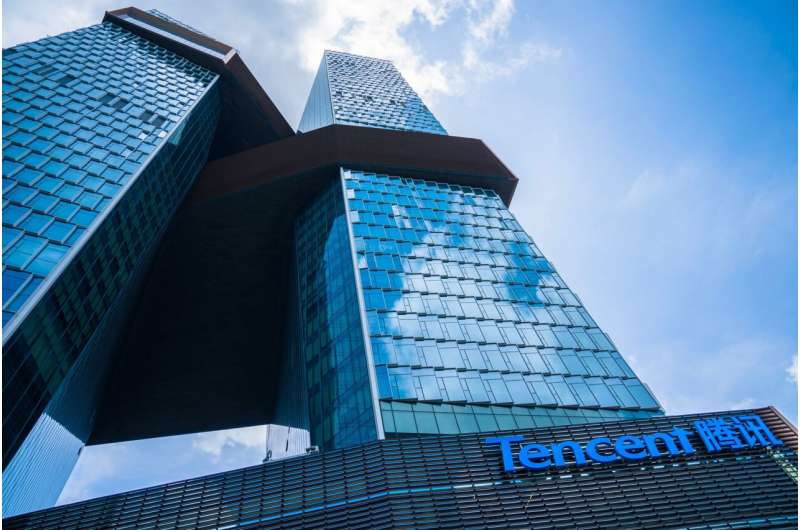
After Plunging 17.5% in 4 Weeks, Here's Why the Trend Might Reverse for Tencent Music Entertainment Group (TME)
ZACKS· 2025-11-20 15:35
Core Viewpoint - Tencent Music Entertainment Group (TME) has experienced a significant decline of 17.5% over the past four weeks, but it is now in oversold territory, indicating a potential trend reversal supported by analyst consensus for better earnings than previously predicted [1] Group 1: Technical Analysis - The Relative Strength Index (RSI) is a momentum oscillator that helps identify whether a stock is oversold, with readings below 30 indicating oversold conditions [2] - TME's current RSI reading is 26.72, suggesting that the heavy selling pressure may be exhausting, and a trend reversal could occur soon [5] Group 2: Fundamental Analysis - Analysts have raised earnings estimates for TME, with a 1.2% increase in the consensus EPS estimate over the last 30 days, indicating potential price appreciation in the near term [6] - TME holds a Zacks Rank 2 (Buy), placing it in the top 20% of over 4,000 ranked stocks based on earnings estimate revisions and EPS surprises, further supporting the stock's potential turnaround [7]

“被忽略”的牛市
2025-11-18 01:15
Summary of Key Points from Conference Call Records Industry or Company Involved - The discussion primarily revolves around the **AI industry**, **U.S. stock market**, **Hong Kong stock market**, and **nuclear fusion technology**. Core Insights and Arguments 1. **Credit Cycle and Market Trends** - The credit cycle is peaking and beginning to decline, as evidenced by weak financial credit data in October. Structural income expectations and cost-return inversion are the main causes. If policy responses are not timely, market volatility may persist. The optimistic scenario for the Hong Kong stock market is around 26,000 points by year-end, with a recommendation to focus on dividend configurations and low-priced stock opportunities [2][7][8]. 2. **AI Industry Valuation and Sensitivity** - The AI industry currently has high short-term valuations and expectations, making it sensitive to negative news. However, the widespread adoption of generative AI in enterprises and households can significantly reduce costs, with an average cost reduction of 10% across U.S. industries. This indicates substantial growth potential for the AI sector despite short-term volatility [2][5]. 3. **U.S. Stock Market Outlook** - The S&P 500 index is expected to fluctuate around 6,700 points in the short term due to high valuations and lack of new catalysts. If the fundamentals, credit cycle, and profit trends improve next year, short-term volatility may present better entry opportunities. By 2026, the U.S. credit cycle is anticipated to recover or even overheat, supported by Federal Reserve actions and liquidity from TGA [2][6]. 4. **Lessons from Japan's 1990s Real Estate Bubble** - The experience of Japan's three overlooked bull markets post-1990s real estate bubble offers valuable lessons. Relying solely on liquidity is insufficient for sustaining long-term bull markets; fundamental improvements and policy support are crucial. Current A-shares and Hong Kong stocks are highly valued, with total policy-driven growth but no significant fundamental improvement, raising concerns about potential risks [2][9][11]. 5. **Nuclear Fusion Technology Development** - Nuclear fusion is seen as a key energy revolution with advantages such as environmental friendliness, minimal resource bottlenecks, and high safety. Most global nuclear fusion technologies are still in experimental stages, with significant progress reported in China's and the U.S.'s projects. Cost reduction is critical for commercialization, with high-temperature superconducting material costs decreasing significantly [26][27][28][29]. Other Important but Possibly Overlooked Content 1. **Macroeconomic Environment Challenges** - The current macroeconomic environment faces challenges from weak financial credit data, rising inflation, and uncertainties regarding the Federal Reserve's interest rate decisions. Concerns about an AI bubble are also significant, as AI-related sectors are central to global markets, particularly in the U.S. and China [3][4]. 2. **Investment in U.S. Manufacturing** - U.S. manufacturing is experiencing a gradual return, driven by policy incentives, but construction investments have not yet significantly translated into output. The manufacturing sector's investment in electronics and electrical equipment has increased, but overall production value may lag behind construction investment growth [17][19]. 3. **Market Valuation Concerns** - Current market valuations for A-shares and Hong Kong stocks are high, with the Hong Kong market exceeding its historical average. The divergence between financial market enthusiasm and weak fundamentals raises questions about the sustainability of current market trends [9][13]. 4. **Potential for AI Industry Growth** - Despite high valuations, the AI industry has considerable growth potential due to its ability to lower operational costs significantly. The overall SG&A expenses for the S&P 500 could see a substantial reduction if AI is widely adopted [5][6]. 5. **Future of Nuclear Fusion Projects** - China is making strides in nuclear fusion with projects like EAST and BEST, which are expected to drive market interest and investment in related companies. The focus on domestic production and engineering integration is crucial for the success of these projects [31][32][33].
腾讯音乐(TME):海外公司财报点评:在线音乐业务稳健发展,拓展泛音乐领域为增长蓄能
Guoxin Securities· 2025-11-16 15:27
Investment Rating - The investment rating for Tencent Music (TME.N) is "Outperform the Market" [5][27]. Core Views - Tencent Music's online music business is experiencing steady growth, with a revenue increase of 20.6% year-on-year in Q3 2025, reaching 8.46 billion yuan. The adjusted profit margin also improved by 1.6 percentage points year-on-year [1][9]. - The company is expanding into the broader music sector, which is expected to drive future growth. The focus for 2026 will be on investments in this area, including the acquisition of Himalaya, which is anticipated to enhance ARPPU and contribute to profit growth [3][25]. - The subscription business is showing strong performance, with a 17.2% year-on-year revenue growth in Q3 2025, and the monthly ARPPU increased by 10.2% year-on-year to 11.9 yuan [2][17]. Summary by Sections Financial Performance - In Q3 2025, Tencent Music achieved total revenue of 8.46 billion yuan, a year-on-year increase of 20.6% and a quarter-on-quarter increase of 0.2%. Online music revenue accounted for 82% of total revenue [1][9]. - The gross margin for Q3 2025 was 43.5%, up 0.9 percentage points year-on-year but down 0.9 percentage points quarter-on-quarter, primarily due to the development of offline events [1][9]. - Adjusted net profit for Q3 2025 was 2.48 billion yuan, reflecting a year-on-year increase of 27.7% [1][9]. Subscription Business - The subscription revenue reached 4.5 billion yuan in Q3 2025, growing 17.2% year-on-year, with a net increase of 1.3 million paying users, resulting in a payment rate of 22.8% [2][17]. - The number of online music paying users was 126 million, an increase of 5.6% year-on-year [2][17]. Other Online Music Revenue - Other online music services, including advertising and digital albums, generated 2.47 billion yuan in revenue, a significant year-on-year increase of 50.5% [2][21]. - The advertising business is expanding its product offerings, and offline events, such as concerts, are contributing to revenue growth [2][21]. Social Entertainment Business - Revenue from social entertainment and other services was 1.49 billion yuan in Q3 2025, showing a decline of 2.7% year-on-year, but the decline is narrowing [2][24]. Financial Forecasts - The adjusted net profit forecasts for 2025-2027 are 9.6 billion, 10.9 billion, and 12.2 billion yuan, respectively, with a slight downward adjustment of 1-4% [3][25]. - The company is expected to maintain a strong market position with significant growth potential in the broader music sector [3][25].
Tencent (TME) Loses 8% on Lower PT
Yahoo Finance· 2025-11-13 17:46
Core Viewpoint - Tencent Music Entertainment Group (NYSE:TME) experienced significant selling pressure, with its stock price dropping by 8.39% to close at $19.01 due to a lowered price target from an investment firm [1]. Financial Performance - In the third quarter, Tencent Music reported a net income attributable to shareholders of 2.4 billion yuan, a 32% increase from 1.814 billion yuan in the same period last year [3]. - Revenues for the same quarter rose by 20.6% to 8.463 billion yuan, up from 7.015 billion yuan year-on-year, driven primarily by a 27% growth in revenues from online music services [3]. Analyst Ratings - Macquarie reduced its price target for Tencent Music to $28.30 from $29.80, while maintaining an "outperform" rating, indicating a potential upside of 49% from the latest closing price [2]. Company Strategy - The company highlighted its solid results, attributing them to the strong performance of its online music business, innovations in content, and expansion of services, which have contributed to consistent subscription revenue growth [4]. - Tencent Music's Executive Chairman emphasized the company's strong financial position and operational excellence, indicating plans to broaden music services and create greater value for the music industry [5].
