人车家全生态

Search documents
在MWC上,小米展示AI下半场的另一种路径
36氪· 2026-03-05 13:31
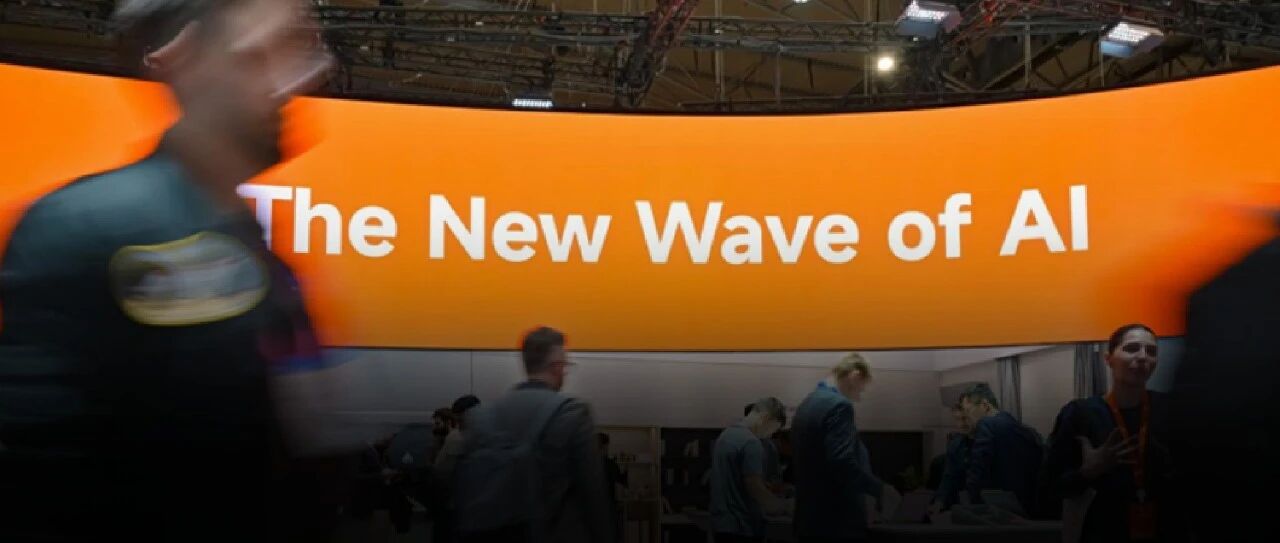
小米的路径不仅关乎一家企业的战略选择,也为中国科技公司在全球AI竞争中的位置提供了一个样本。 在今年走进巴塞罗那Fira Gran Via,会发现AI是今年最密集、最醒目的主题。 如果把过去三年的AI浪潮划分阶段,上半场的关键词几乎高度一致:模型参数、训练成本、推理速度、评测成绩。谁的模型更大,谁的算力更强,谁在榜 单上排名更靠前,成为行业最直观的竞争指标。从GPT系列到各类开源模型,技术突破构成了这一阶段最耀眼的叙事主线。 但讨论的重心已经转移了。 在今年的MWC,这个信号更加明显。当模型本身的智能逐渐逼近天花板、差距不断收敛, 竞争的焦点就变成了这些能力是否能够真正进入日常场景。 进入下半场,三重转变正在发生。 MWC(Mobile World Congress,世界移动通信大会)2026把主题定为"The IQ Era",明确指向"智能"。围绕这一主题,运营商、终端厂商、芯片与云服务 公司等各家厂商都开始用更具体的方式展示AI:更强的端侧能力、更快的实时翻译、更聪明的影像处理、更接近助理形态的交互。 在这场以AI为核心的展示潮中,小米把展台主题定为"The New Wave of AI",并用一套更贴近 ...


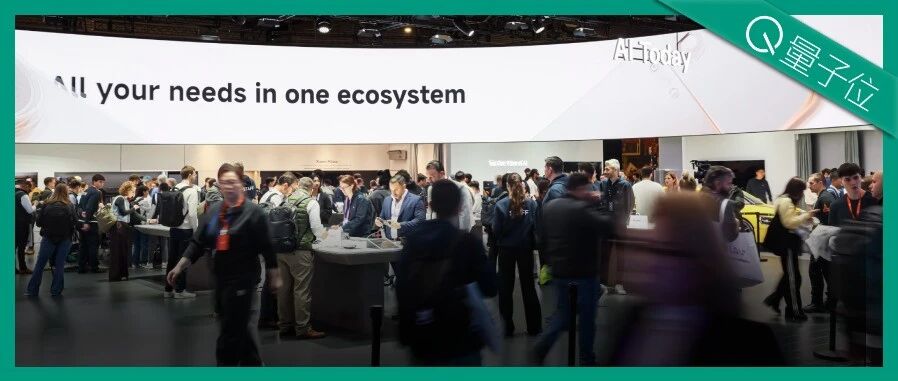
这届MWC真成了中国AI主场,小米直接把AI从对话框里拽出来接管物理世界了
量子位· 2026-03-03 04:25
梦瑶 发自 凹非寺 量子位 | 公众号 QbitAI 这两年,全球AI竞争的逻辑正在发生变化——从技术探索期进入应用兑现期。 前两年还在比拼谁参数更猛、模型更大,如今风向已然转向:谁能把AI真正落地,谁才拥有真正的竞争力。 在这一轮比拼中,中国凭借庞大场景、真实数据密度与完整硬件生态,开始具备领跑条件。 此次,小米将AI赋能的 「 人车家全生态」 首次亮相海外,从手机到汽车再到智能家居,AI贯穿生活动线,在真实环境中形成协同运转。 不仅现场体验十分吸睛,行业人士打卡、主流媒体持续关注,也让这一探索成为本届展会最具讨论度的AI样本之一。 跻身 全球开源大模型第一梯队 的AI能力,叠加 10亿级人车家终端生态规模 ,让AI走出屏幕,在现实世界落地。 当全球AI竞争进入拼落地的下半场,人与现实世界的交互正在被重新定义。 AI终极战场:从屏幕内走向现实空间 大家应该都深有感受,从2025年到2026年初,整个AI行业可以说被参数、多模态、智能体卷到「飞起」。 上个月OpenClaw一个横空出世,更是把大家对于AI的想象力狠狠往前推了一把—— 很难不承认,我们认知里那个只会回答问题的AI,竟然能够自主执行并做决策了。 ...
小米集团-W(01810):——小米集团-W(1810.HK)2025Q4前瞻点评:智能手机与IoT业务短期承压,预计2025Q4经调整利润同比下滑
Guohai Securities· 2026-03-02 14:33
研究所: 证券分析师: 陈梦竹 S0350521090003 chenmz@ghzq.com.cn 证券分析师: 陈重伊 S0350525010002 chency@ghzq.com.cn [Table_Title] 智能手机与 IoT 业务短期承压,预计 2025Q4 经调整利润同比下滑 ——小米集团-W(1810.HK)2025Q4 前瞻点评 最近一年走势 2026 年 03 月 02 日 公司研究 评级:增持(维持) 《小米集团-W(1810.HK)2025Q2 财报点评:持 续"稳健进取"的核心经营策略,盈利再创历史新 高(增持)*消费电子*陈梦竹,陈重伊》—— 2025-08-21 《小米集团-W(1810.HK)2025Q1 财报点评:营 投资要点: 1、主要财务指标前瞻:我们预计小米集团 2025Q4 实现收入 1164 亿元, 同比增长 7%。其中,智能手机业务收入约 452 亿元,同比下滑 12%;IoT 与生活消费产品业务收入约 233 亿元,同比下滑 25%;智能电动汽车收 入约 380 亿元,同比增长 133%;互联网服务收入约 98 亿元,同比增长 5%。利润方面,预计小米集团 20 ...
雷军:京津冀会成为全国乃至全球创新的“发动机”
Xin Jing Bao· 2026-02-25 01:38
Group 1 - Xiaomi has delivered 600,000 cars in 22 months since its launch in March 2024, showcasing its rapid production capabilities and the collaborative efforts within the Beijing-Tianjin-Hebei supply chain [1][6] - The company has partnered with over 50 supply chain enterprises in the Beijing-Tianjin-Hebei region, integrating more than 340 key component manufacturers from Tianjin and Hebei into its production system [1][6] - Xiaomi's founder, Lei Jun, emphasized the importance of the Beijing International Science and Technology Innovation Center as a major decision for national innovation, positioning the region as a global innovation engine [2][4] Group 2 - Xiaomi plans to invest 200 billion yuan over the next five years, focusing on core technologies such as chips, artificial intelligence, and operating systems [8][9] - The company aims to enhance its role in the innovation ecosystem by collaborating with research institutions and small enterprises in the Beijing-Tianjin-Hebei region [3][4] - Xiaomi is committed to integrating hardware and software to create a seamless ecosystem involving smartphones, cars, and smart home devices, enhancing user experience through deep technological integration [7][8] Group 3 - The company is actively pursuing advancements in robotics, with a clear technical roadmap and recent open-sourcing of its robotics research results [8][9] - Xiaomi's automotive division is expected to continue evolving, with plans for self-research in smart driving, automotive chips, and battery systems to achieve breakthroughs in core technologies [8][9] - The ongoing development of smart manufacturing is seen as a key driver for the company's growth and innovation, with a focus on high-quality transformation across the supply chain [6][9]
中国车企的欧洲“桥头堡”:英国欲借中国技术“激活”汽车业
Jing Ji Guan Cha Wang· 2026-02-01 01:44
Group 1: Market Overview - The UK is becoming a significant overseas market for Chinese automobiles, with sales projected to reach 196,000 units by 2025, capturing a market share of 9.7%, nearly doubling from 2024 [2] - BYD's sales in the UK are expected to hit 51,000 units in 2025, marking a fivefold increase year-on-year, making the UK its largest single market in Europe [2] - Chinese automakers are projected to sell 811,000 units in the European market in 2025, with the UK accounting for nearly a quarter of this total [2] Group 2: Industry Challenges and Government Response - The UK automotive industry is facing a decline, with total production expected to fall to 765,000 units in 2025, the lowest level since 1952 [2] - The UK government is focusing on integrating more Chinese automakers to revitalize the automotive sector, enhancing digital and electric vehicle development capabilities [3] - The introduction of new EU regulations on electric vehicles poses challenges for Chinese automakers entering the UK market, necessitating local production to avoid tariffs [6] Group 3: Investment and Collaboration - Chinese automakers have been investing in the UK since 2006, with significant investments from companies like Geely, which has invested £500 million in Coventry [8] - Several Chinese brands, including BYD and Chery, are planning to enter the UK market by 2026, with BYD already expanding its presence significantly [9] - Collaboration between Chinese companies and UK institutions is emphasized, with Chery planning to establish local engineering centers and partnerships with universities [11] Group 4: Future Prospects - The UK market is seen as a strategic entry point for Chinese automakers to access the European market, with predictions that their market share could reach 20% within three years [9] - The UK government is increasing subsidies for electric vehicles, with a total of £1.3 billion allocated for EV incentives and charging infrastructure [11] - Despite challenges, the recent visit of the UK Prime Minister to China may open new opportunities for Chinese electric vehicles in the UK market [12]

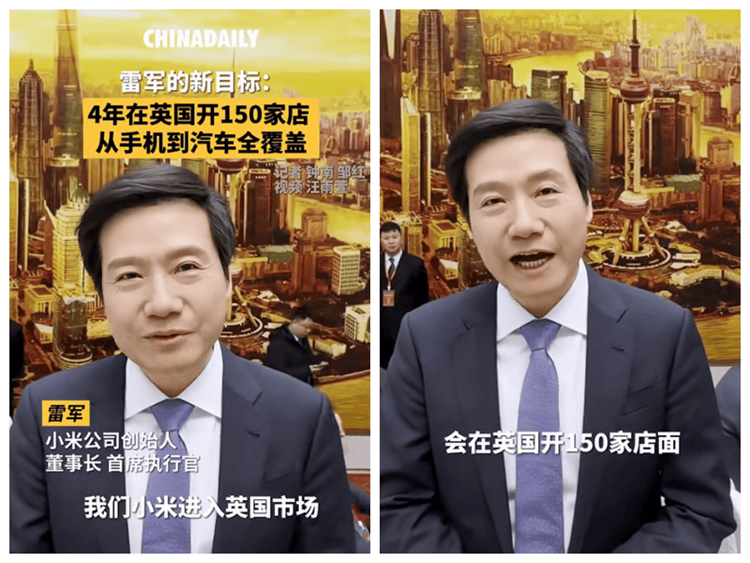
小米汽车将出海!雷军:计划4年内英国开150家店,卖手机、汽车
Sou Hu Cai Jing· 2026-01-30 08:48
Group 1 - Xiaomi has successfully entered the overseas market, generating approximately 1 billion RMB in revenue from the UK last year and plans to open 150 stores in the UK within four years [1][3] - The company aims to introduce its entire product line, including smartphones, wearable devices, home appliances, and cars, to the UK market, with the Xiaomi car expected to launch there [3][5] - Xiaomi's automotive division plans to officially enter the European market in 2027, leveraging its existing store presence and user base in Europe, which provides a competitive advantage over other domestic car manufacturers [5][8] Group 2 - The trend of domestic car manufacturers expanding overseas is becoming more prevalent as the domestic market becomes saturated, with companies like BYD, Chery, and Geely already establishing a presence abroad [7] - Xiaomi has set an ambitious goal to become one of the top five global automotive manufacturers within 15-20 years, making international expansion a necessary step for the company [8]
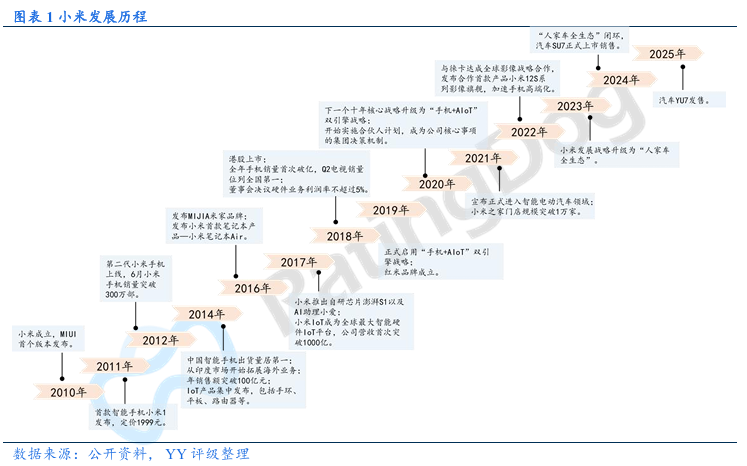
小米集团:“人家车全生态”,小米要打高端局
Zheng Quan Ri Bao· 2026-01-16 11:06
Core Viewpoint - Xiaomi Group is a leading consumer electronics and smart manufacturing company in China, known for its "extreme cost-performance" strategy. The company is pushing for a high-end transformation, with the launch of its electric vehicle, the Xiaomi SU7, in 2024, marking a significant step in its "home, car, and ecosystem" strategy [1]. Group 1: Company Overview - Xiaomi's business model is described as a "triathlon," focusing on market expansion through cost-effective hardware, profit generation via high-margin internet services, and enhanced sales efficiency through a new retail model that integrates online and offline channels [1]. - The company has established a stable user base, with its internet services primarily driven by advertising and value-added services [2]. Group 2: Smartphone Segment - Smartphones are Xiaomi's core products, with a strong competitive position in emerging markets. The company is transitioning from a low-cost to a high-end market strategy, including collaborations with Leica for high-end imaging and the development of its own 3nm smartphone chip, expected to launch in 2025 [2]. - Despite the growth in average selling price (ASP) for high-end smartphones, Xiaomi's ASP remains lower than that of domestic competitors like Samsung and Vivo, indicating a need for further brand elevation [2]. Group 3: IoT and Consumer Products - Xiaomi is a global leader in the smart IoT platform, with a product ecosystem structured as "1+4+N." The synergy between its various business segments is expected to enhance overall performance [3]. - The company faces competition in the home appliance sector, particularly from leading brands, and may encounter growth pressures due to the reduction of government subsidies [3]. Group 4: Smart Automotive - Xiaomi entered the smart electric vehicle market in 2021, and the SU7 has quickly become a bestseller due to its high configuration, competitive pricing, and brand influence. However, challenges such as supply chain rigidity and increasing market competition are present [3]. - Concerns regarding the safety of autonomous driving features and the overall driving experience of Xiaomi vehicles have been raised, necessitating further validation of their technology [3]. Group 5: Financial Analysis - The company's revenue has seen rapid growth in recent years, driven by its high-end transformation and automotive business expansion. Gross margins are on the rise, indicating improved profitability [4]. - Xiaomi's R&D expenses have significantly increased, but remain at a reasonable proportion of revenue. The company maintains a healthy cash flow and liquidity position, with a debt-to-asset ratio around 50% [4].
雷军彻底摊牌,小米汽车稳坐行业前三
Xin Lang Cai Jing· 2026-01-14 14:10
Core Viewpoint - Xiaomi's founder Lei Jun directly addressed recent rumors regarding the second-hand car market for the Xiaomi SU7, emphasizing the vehicle's high resale value of 80.1%, which positions it among the industry's leaders [4][46][50]. Group 1: Response to Market Rumors - Recent online discussions have raised concerns about the Xiaomi SU7's second-hand market, with claims of a "collapse" in its resale value and difficulties in selling the vehicle [5][36]. - Lei Jun countered these claims by presenting authoritative data from the China Automobile Circulation Association, highlighting the SU7's strong resale value [4][46]. - Media investigations revealed that the actual turnover and resale value of Xiaomi's second-hand cars are performing above average, contradicting the negative narratives circulating online [8][39]. Group 2: Brand Strategy and Ecosystem - Xiaomi's approach to the automotive market is part of a broader "human-vehicle-home ecosystem," aiming to integrate cars as essential components of a smart lifestyle [54][65]. - The company plans to launch over 600 educational sessions for car owners across more than 50 cities, enhancing user engagement and positioning cars as smart lifestyle partners rather than mere transportation tools [57][64]. - The automotive sector is projected to see a total sales volume of 34.75 million vehicles in 2026, with electric vehicle sales expected to reach 19 million, indicating a growing market for Xiaomi's strategic positioning [24][58]. Group 3: Future Plans and Goals - Lei Jun has set a target of delivering 550,000 vehicles in 2026, indicating a strong commitment to expanding Xiaomi's automotive business [26][60]. - The company plans to introduce four new models in 2026, including updated versions of the SU7, to cater to various consumer needs and enhance market presence [28][62]. - Xiaomi's strategy emphasizes a seamless integration of technology across devices, from smartphones to cars and smart home appliances, aiming to create a cohesive user experience [65].

雷军回应小米千万技术大奖;雷鸟创新发布首款eSIM AR眼镜丨智能制造日报
创业邦· 2026-01-09 04:48
Group 1 - Xiaomi's Lei Jun announced the annual technology award, with a total of 154 projects competing this year, and the top award going to the Xuanjie O1 team. Since 2020, Xiaomi has awarded 75 million yuan in total [2] - Xiaomi has committed to investing 100 billion yuan in R&D over the past five years, with actual spending around 105 billion yuan. The company plans to invest 200 billion yuan in the next five years to enhance core technologies such as chips, OS, and AI [2] - The three key points emphasized by Lei Jun include: prioritizing technology, the importance of engineer thinking, and creating a top-tier platform for talented engineers to enhance their sense of achievement and happiness [2] Group 2 - TSMC's 3nm process is in high demand, leading to increased pricing and a temporary halt on new project initiations. The current capacity is fully loaded, and expansion to meet demand is challenging in the short term [2] - Tesla's Shanghai Gigafactory has produced its 5 millionth electric drive system, featuring a three-in-one integrated system that enhances energy efficiency and performance [2] - Raybird Innovation launched the world's first eSIM-enabled AR glasses, allowing independent functionality without a smartphone or WiFi, supporting various applications like real-time AI dialogue and streaming [2]

早报|特朗普称心中已定美联储下任主席;万科郁亮辞去所有职务;海底捞回应锅里被扔尿不湿事件;雷军宣布小米未来5年研发再投2000亿
虎嗅APP· 2026-01-09 00:10
Group 1 - The next Federal Reserve chairman is yet to be announced, but President Trump has indicated he has a decision in mind [2] - Minimax's IPO in Hong Kong saw a subscription rate of 1,837.17 times for retail investors, raising a total of 4.8 billion HKD [3] - Apple is reportedly accelerating succession planning for CEO Tim Cook, with potential internal candidates being groomed for the role [4] Group 2 - Nestlé (China) is under scrutiny for recalling specific batches of infant formula following preventive measures taken in Europe [5] - Trump claims the U.S. has begun profiting from Venezuelan oil resources, expecting to control the country long-term [6][7] - OpenAI has acquired the core team of executive coaching AI tool Convogo to enhance its AI cloud business [8] Group 3 - Vanke's executive vice president, Yu Liang, has resigned due to retirement [10] - Huiyuan Group has announced plans to regain control of the Huiyuan brand amid disputes with its restructuring party [11] - Sinopec and China Aviation Oil are undergoing a restructuring process approved by the State Council [12] Group 4 - Wang Teng, former Xiaomi executive, has founded a new company named "Today Yixiu" focused on sleep health products [15] - IKEA China will close seven stores starting February 2, citing a need for resource reallocation and efficiency improvement [21][22] - Aima Technology has faced rumors of significant layoffs, but the company claims the adjustments are normal and not as severe as reported [23] Group 5 - Shanghai Mobile has denied allegations of pressuring employees to disconnect customers' internet services for revenue generation [24] - MiniMax is set to list on the Hong Kong Stock Exchange today, with shares priced at the upper limit of 165 HKD [25] - The Shanghai Futures Exchange is implementing measures to cool down the silver futures market due to overheating [26]