供应链转移

Search documents
美国1750亿美元关税退税,对A股的影响(附50股)
Sou Hu Cai Jing· 2026-02-21 11:41
Group 1 - The core point of the article is that the recent US Supreme Court ruling on the $175 billion tariff refund has significant implications for both China and the A-share market, despite the refund being an internal US matter [2][6][28] - The $175 billion in tariffs was primarily collected from imports, including a 10% tariff on Chinese goods, and is now being refunded to US importers [8][10] - The refund will indirectly benefit Chinese companies as US importers, who have been financially strained by tariffs, will use the refunded money to pay off debts to Chinese suppliers and resume orders [12][14][28] Group 2 - The immediate impact on the A-share market is expected to be positive, with a potential "opening red" for A-shares as market sentiment improves following the ruling [40][46] - The ruling is seen as a signal that the previous high tariffs on Chinese goods may not be a permanent state, which could lead to a more favorable environment for Chinese exports [20][48] - Structural opportunities in the A-share market are identified, focusing on five main lines: export-oriented sectors, domestic substitution, strategic resources, domestic consumption, and new energy [51][62][88] Group 3 - Export-oriented sectors, particularly those with high exposure to the US market, are expected to benefit directly from the tariff refunds, with companies like Midea Group and Haier expected to see improved performance [52][72][73] - Domestic substitution and self-sufficiency in sectors like semiconductors and military equipment are highlighted as long-term strategic focuses, with companies like SMIC and AVIC Shenyang Aircraft being key players [53][78][86] - Strategic resources such as rare earths and gold are also expected to see price support due to ongoing global supply chain disruptions, benefiting companies like Northern Rare Earth and Shandong Gold [56][87]






美国关税制裁一年,中国经济不降反增,美国民众扛下所有
Sou Hu Cai Jing· 2026-02-17 13:19
Core Viewpoint - The U.S. tariffs imposed on China have not achieved their intended goals of suppressing the Chinese economy or forcing a global supply chain shift, as China continues to show robust economic growth despite the pressures [2][21][27]. Economic and Trade Changes - Despite the ongoing tariff pressures, China's manufacturing sector remains active, with factories working hard to meet orders, indicating a stable growth in export orders [5][11]. - The core advantages of Chinese manufacturing, such as complete industrial support, efficient production, and stable supply capabilities, make it difficult for global companies to abandon the Chinese market [7][9]. Supply Chain Dynamics - Many companies have only partially relocated their production capacities rather than completely withdrawing from China, as doing so would require rebuilding supply chains and incur higher operational costs [9]. - U.S. buyers have gradually accepted the reality of the tariffs, choosing to continue cooperation with Chinese suppliers rather than forgoing high-quality products [11]. Impact of Tariffs on the U.S. - The tariffs have led to increased costs for U.S. consumers and businesses, with a significant portion of the tariff burden falling on American enterprises and the general public, contrary to initial claims that foreign companies would bear the costs [13][15]. - The rising prices of various goods, from clothing to electronics, have resulted in higher living costs for American families, putting pressure on the domestic economy [15][17]. Shift in U.S. Policy - The failure of the tariff policy and the economic pressure on the U.S. have prompted a softening of the U.S. stance towards China, with efforts to engage in dialogue and technical discussions [21][23]. - The realization that tariffs cannot sever the deep economic ties between the U.S. and China has led to a more pragmatic approach in U.S.-China relations, focusing on cooperation rather than unilateral sanctions [25][29]. Conclusion - China's economy has demonstrated resilience and growth despite external pressures, while the costs of the U.S. tariffs have primarily impacted American businesses and consumers, highlighting the drawbacks of unilateral trade protectionism [27][29][31].
海丰国际午前跌近3% 大摩认为市场对公司业绩盈喜反应有限 亚洲区域内需求存上行风险
Zhi Tong Cai Jing· 2026-02-02 03:56
Core Viewpoint - SeaFeast International (01308) has issued a positive earnings forecast for 2025, expecting a net profit of $1.2 billion to $1.23 billion, which represents a year-on-year increase of 16% to 18.9% compared to the previous year [1] Group 1: Company Performance - The company's preliminary earnings for 2025 slightly exceed market consensus, which was set at $1.19 billion [1] - The stock price of SeaFeast International has seen a decline of nearly 3%, currently trading at HKD 4.46 with a trading volume of 25.1648 million HKD [1] Group 2: Market Dynamics - Morgan Stanley indicates that while the company's performance is slightly above expectations, the market's reaction to last year's earnings is expected to be limited [1] - There are upward risks to demand resilience in the Asian region due to supply chain shifts and geopolitical dynamics, while the global container shipping industry continues to face a downward cycle [1] - A significant deterioration in trade between China and Japan could pose risks to SeaFeast International due to its relatively high exposure to Japanese routes [1]

港股异动 | 海丰国际(01308)午前跌近3% 大摩认为市场对公司业绩盈喜反应有限 亚洲区域内需求存上行风险
智通财经网· 2026-02-02 03:56
Group 1 - The core viewpoint of the article is that SeaFeast International (01308) has issued a positive earnings forecast for 2025, with expected net profit ranging from $1.2 billion to $1.23 billion, reflecting a year-on-year increase of 16% to 18.9% [1] - Morgan Stanley noted that the company's performance slightly exceeds market consensus, which was $1.19 billion, but anticipates limited market reaction to last year's earnings [1] - The firm highlighted potential upward risks in demand resilience within the Asian region due to supply chain shifts and geopolitical dynamics, while also pointing out the ongoing downward cycle in the global container shipping industry as a risk factor [1] Group 2 - SeaFeast International faces risks related to its exposure to Japanese routes, particularly if trade relations between China and Japan deteriorate significantly [1]
大摩:海丰国际去年初步业绩略胜预期 今年前景好坏参半
Zhi Tong Cai Jing· 2026-01-28 07:06
Group 1 - Morgan Stanley sets a target price of HKD 26.4 for SeaFeast International (01308) with a rating of "in line with the market" [1] - SeaFeast International expects a net profit of USD 1.2 billion to USD 1.23 billion for the previous year, representing a year-on-year increase of 16% to 18.9%, slightly exceeding market consensus of USD 1.19 billion [1] - The firm believes that the market's reaction to last year's earnings will be limited despite the performance slightly surpassing expectations [1] Group 2 - Morgan Stanley notes that the resilience of demand within the Asian region presents an upside risk amid supply chain shifts and geopolitical dynamics [1] - The ongoing downturn in the global container shipping industry poses a downside risk [1] - Significant deterioration in China-Japan trade could expose SeaFeast International to risks due to its relatively high exposure to Japanese routes [1]
大摩:海丰国际(01308)去年初步业绩略胜预期 今年前景好坏参半
智通财经网· 2026-01-28 07:03
大摩又认为,在供应链转移与地缘政治动态下,亚洲区域内需求的韧性存在上行风险,而全球货柜航运 业的持续下行周期则构成下行风险。若中日贸易显著恶化,海丰国际对日本航线相对较高的曝险可能带 来风险。 智通财经APP获悉,摩根士丹利发布研报称,予海丰国际(01308)目标价26.4港元,评级为"与大市同 步"。海丰国际发布初步业绩,预计去年净利润为12亿至12.3亿美元(市场共识为11.9亿美元),同比增 16%至18.9%。认为业绩略微超越市场共识,但预期市场对去年的盈利反应有限。 ...
大行评级|大摩:海丰国际去年初步业绩略胜预期,今年前景好坏参半
Ge Long Hui· 2026-01-28 05:37
摩根士丹利发表研报指,海丰国际发布初步业绩,预计去年净利润为12亿至12.3亿美元(市场共识为11.9 亿美元),按年增16%至18.9%。认为业绩略微超越市场共识,但预期市场对去年的盈利反应有限。大摩 又认为,在供应链转移与地缘政治动态下,亚洲区域内需求的韧性存在上行风险,而全球货柜航运业的 持续下行周期则构成下行风险。若中日贸易显著恶化,海丰国际对日本航线相对较高的曝险可能带来风 险。大摩予海丰国际目标价26.4港元,评级"与大市同步"。 ...
美国人意识到,贸易战之后,不会再有中国外的大规模工业化国家了
Sou Hu Cai Jing· 2026-01-15 14:45
Group 1 - The US-China trade war initiated in 2018 led to over $450 billion in tariffs imposed by the US on Chinese goods, which resulted in a shift in global trade dynamics, but not in the intended direction [2][4] - Despite initial movements of some manufacturing to Southeast Asia, the overall impact was an increase in global trade volume by 3%, with US consumers facing higher prices due to tariffs [2][4] - The trade war has slowed US economic growth and expanded the trade deficit, contrary to its original goal of reducing it [4] Group 2 - Countries like Vietnam and India were initially seen as potential beneficiaries of manufacturing shifts, but they faced significant challenges such as unstable power supply and logistical issues, limiting their ability to scale industrial operations [6][8] - Mexico has become the largest trading partner for the US, but struggles with security issues and a lack of skilled labor, hindering expansion into high-tech sectors [8] Group 3 - By 2025, it is projected that these alternative manufacturing countries will not be able to fill the gap left by China, which has a comprehensive industrial system and high density of manufacturing capabilities [9][11] - The trade war has inadvertently strengthened China's industrial base, as companies localized production and developed a more complete supply chain [9][11] - The global industrial landscape is shifting towards a unipolar model centered around China, with other nations unable to replicate its industrial ecosystem [11] Group 4 - China's trade surplus reached $1.2 trillion, with strong export performance, indicating a robust manufacturing sector that continues to lead globally [11] - The trade war has accelerated diversification in global supply chains, but China's position remains stable and influential in high-tech development [11]
即便iPhone供应链转移 鸿海仍将稳居组装龙头
Jing Ji Ri Bao· 2025-12-27 23:07
彭博行业研究分析师表示,即便立讯精密与印度塔塔公司逐步扩大市占,鸿海仍将在2026年底前维持 iPhone组装龙头地位,得益于规模、执行水准、以及全球产能多元布局。 报告也说,立讯精密自2020年收购纬创工厂、以及2023年收购和硕昆山厂逾六成股权,稳固了iPhone第 二大组装厂商的地位,预计未来两年将负责30%的iPhone订单,但该公司并无印度制造中心,可能限制 后续冲市占的能力。 报告指出,苹果为降低地缘政治风险,一直稳步扩大印度iPhone生产,预计在印度的组装比率,今年将 达25–30%,明年上看30–35%。在此同时,在印度的头号组装厂仍为鸿海,其次是塔塔,未来两年其组 装占有率应能达到10–15%,但后续不太可能突破35–40%,受制于缺乏本国组件生态系、基础建设品质 较低、熟练技术工人数量不足、及复杂的官僚体制。 该报告表示,除了上述这三大优势外,鸿海也是苹果长期的合作伙伴,也具备强大的自研组件能力、以 及在中国大陆和印度两地无人能及的产能,进一步巩固该公司的地位。另外,鸿海也一项主导最先进旗 舰级iPhone的新品导入工作。 因此,报告预估,尽管立讯精密、塔塔等对手的市占率将小幅增加,鸿海 ...

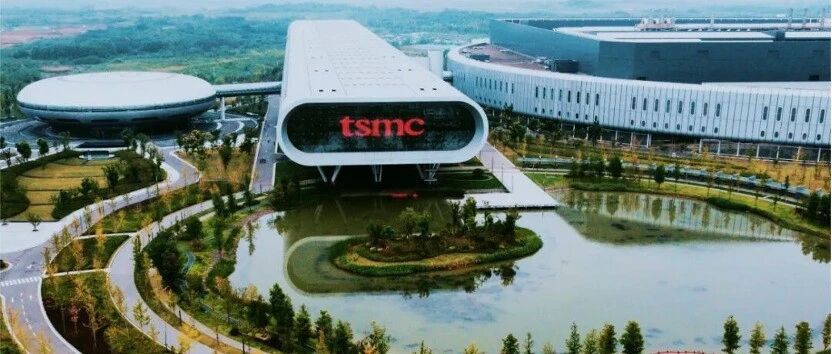
1000亿美元,台积电,苦笑着看自己被美国吞掉
凤凰网财经· 2025-12-06 12:39
"台积电董事长要来大陆了!" 这则消息,近日在中国半导体圈引发广泛关注。 此前有知情人士透露,台积电董事长魏哲家"有望于12月4日现身南京,出席台积电开放创新平台(OIP)生态系统 论坛,并计划密集拜访多家本土芯片设计公司"。 若行程属实,这将是他自 2023年上海技术论坛后,两年来首次踏足大陆。 这场论坛作为台积电2025年OIP全球巡回的压轴场,此前已走过硅谷、东京、新竹、阿姆斯特丹四站。 尽管台积电官方已第一时间否认相关传闻,且公开信息显示,此次活动仅有台积电院士、设计暨技术平台副总经 理鲁立忠公开发言,并未出现总裁魏哲家的身影及相关媒体报道,但一个不争的事实是:从市场布局到供应链支 撑,台积电始终离不开大陆。 另一边,美国早已盯上半导体产业这块 "蛋糕"。 卢特尼克3日接受美国媒体采访时指出,台积电宣布将增加投资1000亿美元,总投资额达1605亿美元。他说:"当 然,他们(台湾)也会训练美国劳工。最终目标是将供应链转移到美国,在美国生产半导体及药品,训练美国人 从事这些工作。让整个供应链都留在美国。这就是我们全部的目的。" 这家芯片巨头再次站上地缘政治的十字路口。 01 主动布局 2016年7月6日 ...