关税合法性

Search documents
特朗普撒下弥天大谎!连续3次喊话中国后,把3亿多美国人当猴耍了
Sou Hu Cai Jing· 2026-02-26 12:53
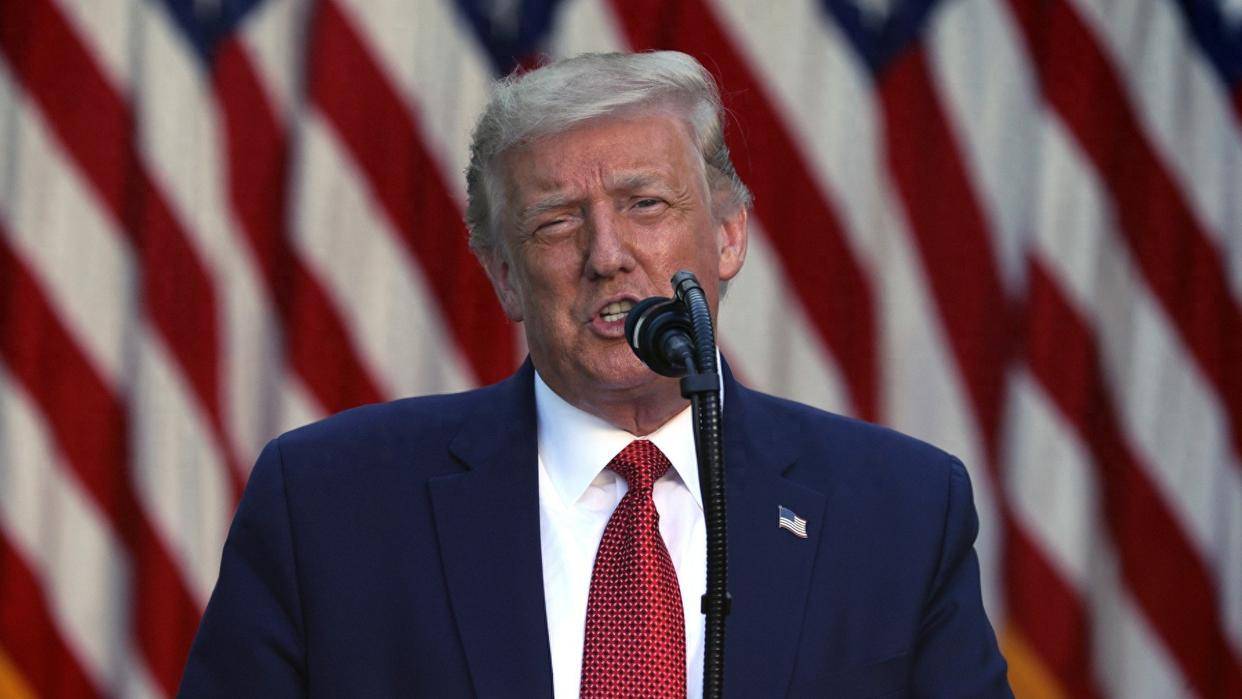
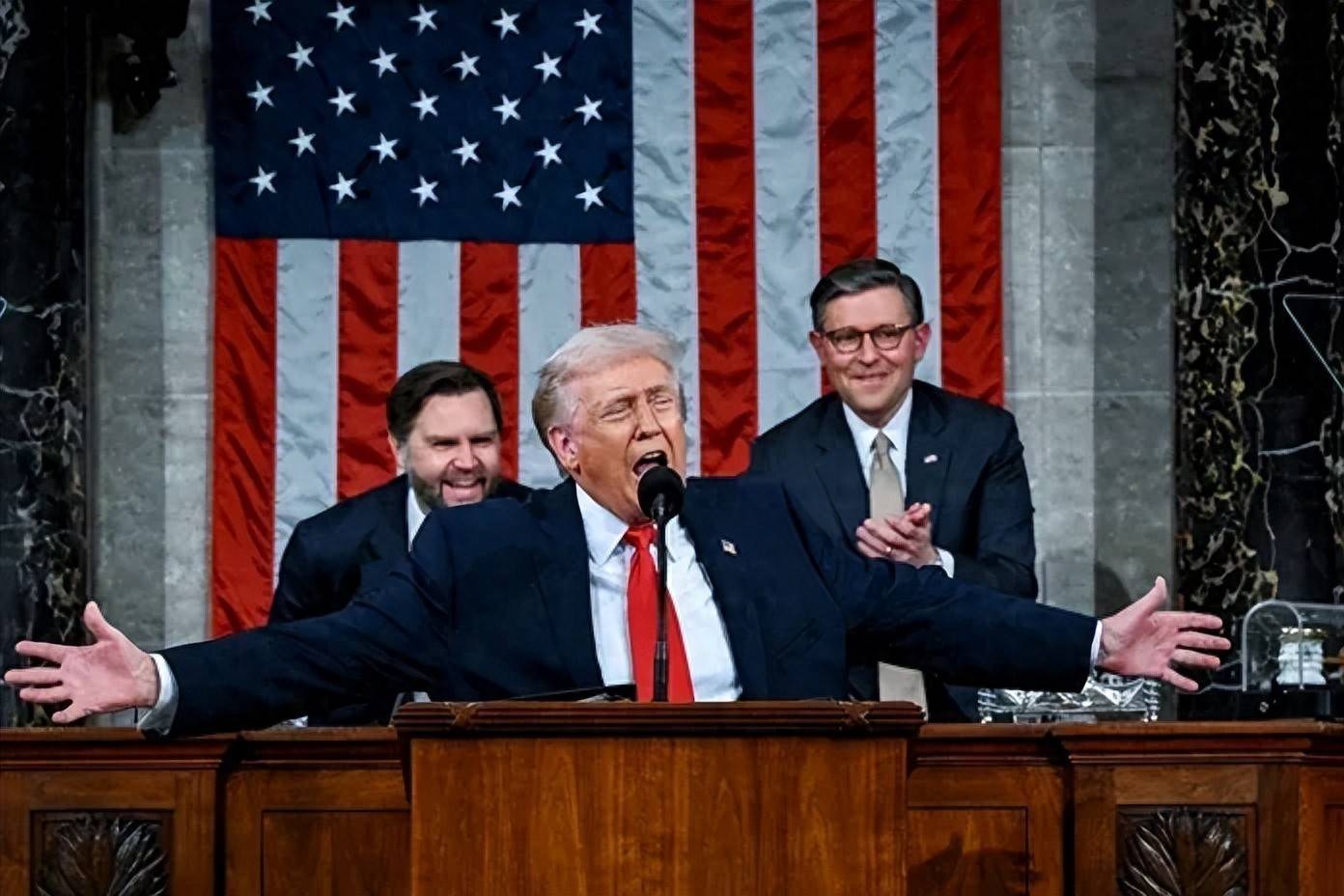
Group 1 - The U.S. Supreme Court's ruling against "tariff equivalence" has weakened the White House's leverage on tariffs, indicating internal divisions within the U.S. government [1][3] - Following the ruling, U.S. officials have made multiple statements urging China to maintain existing trade arrangements, reflecting a desire to stabilize the situation [3][5] - The pressure from allies such as the EU, Brazil, and Japan for tariff reductions complicates the U.S. administration's ability to manage both domestic and international expectations [5][21] Group 2 - Trump's lengthy State of the Union address aimed to project a narrative of American prosperity, despite conflicting economic data showing lackluster growth and persistent inflation [7][9] - The administration's messaging has been characterized by exaggeration, with discrepancies between claimed investment figures and official data, suggesting a strategy to distract from economic realities [9][19] - The avoidance of direct references to China during the address indicates a strategic decision to mitigate risks associated with the recent court ruling and to preserve diplomatic avenues ahead of upcoming negotiations [13][15] Group 3 - The U.S. has specific needs from China, including stable rare earth supplies, management of U.S. debt, and increased purchases of American agricultural and energy products, which are crucial for domestic political narratives [15][17] - The administration's reliance on storytelling to manage both internal and external pressures has become more pronounced following the court ruling, with a focus on maintaining a stable narrative rather than addressing complex details [21][23] - China's approach of maintaining a low profile while observing the U.S. situation allows it to retain strategic advantages, as the U.S. struggles to balance its internal and external pressures [19][24]

比亚迪起诉特朗普政府!
国芯网· 2026-02-10 12:25
Core Viewpoint - BYD has filed a lawsuit against the U.S. government, questioning the legality of tariffs imposed by the Trump administration and seeking a refund for all tariffs paid since April of the previous year [2][4]. Group 1: Legal Basis of the Lawsuit - BYD argues that the International Emergency Economic Powers Act (IEEPA) does not authorize the imposition of tariffs, as the term "tariff" is not mentioned in the text of the law [4]. - The lawsuit claims that the IEEPA is intended for financial sanctions and trade restrictions, not for the specific purpose of imposing tariffs [4]. - The core legal argument is that the Trump administration's use of IEEPA to impose tariffs on China may exceed its legal authority, which is the basis for BYD's request for a refund of paid tariffs [4]. Group 2: Context of the Lawsuit - BYD is the first Chinese automotive company to file a lawsuit regarding U.S. tariffs, joining thousands of global companies that have raised similar complaints [4]. - The case has been escalated to the U.S. Supreme Court, which will determine whether the President can impose comprehensive tariffs unilaterally under the IEEPA without Congressional approval [5]. - Previous rulings by the U.S. International Trade Court and the Federal Appeals Court have indicated that the tariffs lack legal authorization, and the Supreme Court's decision could significantly impact the legality of hundreds of billions in tariffs and refund issues [4][5].


比亚迪起诉!让特朗普退回关税
Guan Cha Zhe Wang· 2026-02-10 08:48
Core Viewpoint - BYD has filed a lawsuit against the U.S. government, questioning the legality of tariffs imposed by the Trump administration and seeking a refund for tariffs paid since April of the previous year [1][2]. Group 1: Legal Basis of the Lawsuit - BYD argues that the International Emergency Economic Powers Act (IEEPA) does not authorize the imposition of tariffs, as the term "tariff" is not mentioned in the text of the law [1]. - The lawsuit claims that the IEEPA is intended for financial sanctions and trade restrictions, not for the specific purpose of tariff imposition [1]. - BYD's legal argument centers on the assertion that the Trump administration overstepped its authority by using the IEEPA to impose tariffs on Chinese goods [1]. Group 2: Context of the Lawsuit - BYD is the first Chinese automotive company to file a lawsuit regarding U.S. tariffs, although thousands of global companies operating in the U.S. have made similar claims [1]. - The case has been escalated to the U.S. Supreme Court, with previous courts ruling that the tariffs lack legal authorization [2]. - The outcome of this case could significantly impact the legality of hundreds of billions in tariffs and the potential for refunds [2]. Group 3: BYD's Business Operations in the U.S. - Although BYD does not currently sell passenger vehicles in the U.S., its operations include buses, commercial vehicles, batteries, energy storage systems, and solar panels [3]. - BYD operates an electric bus and commercial vehicle factory in Lancaster, California, employing approximately 750 American workers [3]. - The Trump administration's stance on Chinese automotive companies has been inconsistent, expressing both concerns about competition and openness to Chinese companies establishing manufacturing in the U.S. [3].
最高法院周五或裁定特朗普关税合法性,美国经济面临关键抉择
Jin Rong Jie· 2026-01-09 05:48
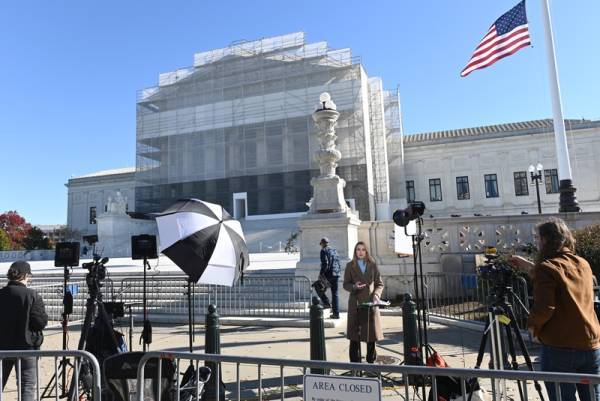
Core Viewpoint - The U.S. Supreme Court is expected to make a ruling on the legality of tariffs implemented during Trump's administration, which could have significant implications for trade policy and the U.S. fiscal situation [1] Group 1: Legal and Policy Implications - The ruling will address whether the government has the authority to impose tariffs under the International Emergency Economic Powers Act (IEEPA) and whether the government must refund tariffs paid by importers if the tariffs are deemed illegal [1] - The court may issue a mixed ruling, granting limited authority under IEEPA while requiring limited refunds, or it may explore various other options [1] - Even if the White House loses the case, it retains other policy tools to implement tariffs without invoking emergency powers [1] Group 2: Economic Impact - Losing the tariff tool could have multiple repercussions, including negative effects on the ambition for industrial relocation to the U.S. and potential increases in interest rates, although it may benefit corporate profits by lowering input costs and facilitating trade [2] - The government has identified several alternative strategies to maintain most tariffs if the court ruling is unfavorable, with a 28% probability that the court will support the current tariff implementation [2] - Tariffs are projected to generate approximately $195 billion in revenue for the fiscal year 2025, with an additional $62 billion expected in 2026 [2] Group 3: Analyst Perspectives - Analysts from Morgan Stanley believe there is significant leeway in the Supreme Court's ruling, which could result in a narrowing of existing tariffs without a complete repeal or limitations on future tariff applications [3] - The focus on affordability issues may allow the government to adopt a more moderate approach to the overall tariff system [3] Group 4: Trade Deficit and Inflation - The impact of tariffs has exceeded analysts' expectations, showing limited effects on inflation while significantly reducing the trade deficit, countering views that tariffs could isolate the U.S. in global trade [4] - The U.S. trade deficit reached its lowest level since the end of the 2009 financial crisis in October last year, indicating a substantial decrease in imports [4]
Countries and industries most exposed to Trump's IEEPA-based tariffs
Reuters· 2026-01-08 23:33
Core Point - The U.S. Supreme Court is preparing to issue rulings on the legality of tariffs imposed by President Donald Trump under the International Emergency Economic Powers Act [1] Group 1 - The rulings are expected to address significant legal questions regarding the authority of the President to impose tariffs without Congressional approval [1] - The outcome of these cases could have substantial implications for U.S. trade policy and international relations [1]

美最高法将裁定关税案,“特朗普若输要退超1300亿美元”
Sou Hu Cai Jing· 2026-01-08 13:36
Core Viewpoint - The U.S. Supreme Court is set to rule on the legality of tariffs imposed by former President Trump under the International Emergency Economic Powers Act (IEEPA), with potential implications for over $133.5 billion in tariffs collected since February of the previous year [1][3]. Group 1: Tariff Data and Implications - The total tariffs collected as of December 14 amount to $133.5 billion, which includes $81.74 billion in "reciprocal tariffs" on all goods from various countries, as well as specific tariffs on fentanyl from Mexico and Canada totaling $6.48 billion and $2.42 billion respectively [1]. - The U.S. Customs and Border Protection (CBP) reported that the tariffs have significantly impacted various industries, with companies like Learning Resources estimating a loss of $14 million due to these tariffs, which is seven times their projected tariff expenses for 2024 [6]. Group 2: Legal Proceedings and Court Opinions - The Supreme Court's hearing on November 5, 2025, follows previous rulings by the U.S. International Trade Court and the Federal Appeals Court that deemed Trump's tariffs illegal, emphasizing that the President lacks authority to impose taxes without Congressional approval [3][4]. - The Supreme Court's decision could have far-reaching consequences for Trump's economic agenda, with analysts suggesting that a ruling against the Trump administration could represent a significant legal defeat [4]. Group 3: Potential Future Actions - In the event of an unfavorable ruling, the Trump administration has prepared plans to reimpose tariffs using various legal frameworks, including the Trade Expansion Act of 1962 and the Trade Act of 1974, which could allow for tariffs of up to 50% on certain goods [6]. - Companies are facing significant operational challenges due to the uncertainty surrounding tariffs, with many having to relocate production and adapt to rapidly changing policies [6][7].
国际金融市场早知道:12月4日
Xin Hua Cai Jing· 2025-12-04 03:11
Group 1 - The World Bank reports that developing countries face an unprecedented debt repayment gap and new financing needs totaling $741 billion from 2022 to 2024, with interest payments reaching historical highs [1] - The EU plans to introduce the "Industrial Acceleration Act," which mandates that local content for critical products like cars and batteries must reach up to 70%, supported by government subsidies [2] - The Eurozone's November composite PMI was revised up to 52.8, the highest level in 30 months, driven by growth in the services sector, indicating signs of economic recovery in the region [2] Group 2 - Australia's Q3 GDP grew by 2.1% year-on-year and 0.4% quarter-on-quarter, falling short of market expectations [3] - South Korea's Q3 real GDP grew by 1.3% quarter-on-quarter and 1.8% year-on-year, both exceeding expectations [4] Group 3 - The Dow Jones Industrial Average rose by 408.44 points to close at 47,882.90, an increase of 0.86%; the S&P 500 gained 20.35 points to close at 6,849.72, up 0.30%; the Nasdaq Composite increased by 40.42 points to close at 23,454.09, a rise of 0.17% [5] - Light crude oil futures for January 2026 rose by $0.31 to $58.95 per barrel, an increase of 0.53%; February Brent crude oil futures rose by $0.22 to $62.67 per barrel, up 0.35% [5] Group 4 - COMEX gold futures rose by 0.33% to $4,234.8 per ounce, while COMEX silver futures increased by 0.39% to $58.93 per ounce [6] - The U.S. dollar index fell by 0.51% to close at 98.855, with the euro trading at 1.1672 dollars and the British pound at 1.3350 dollars, both higher than the previous trading day [7]
因成本增加利益受损,称加征关税于法无据,美零售巨头加入“返还关税”诉讼
Huan Qiu Shi Bao· 2025-12-03 22:52
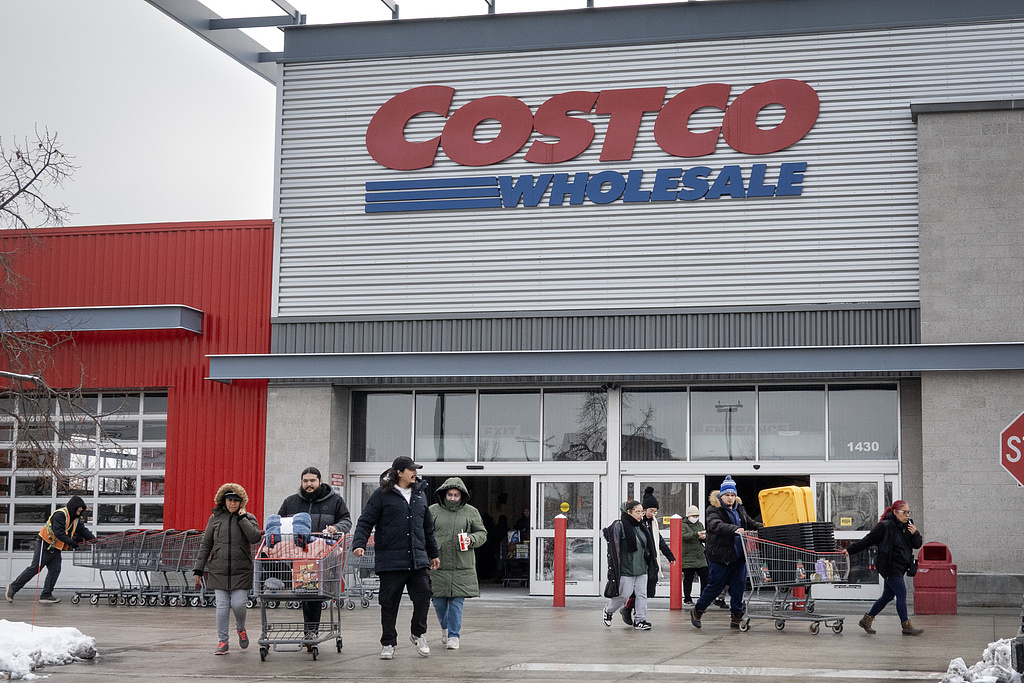
Core Viewpoint - Costco has filed a lawsuit against the U.S. federal government, claiming that the imposition of tariffs under the International Emergency Economic Powers Act is illegal and is seeking a full refund of the tariffs paid [1][3]. Group 1: Company Actions - Costco's Chief Financial Officer, Gary Millerchip, revealed that approximately one-third of the products sold in the U.S. are imported, with about two-thirds being non-food items, and around 8% of total sales coming from products imported from China [3]. - Prior to Costco's lawsuit, several companies, including Kawasaki and Bumble Bee Foods, had already initiated similar legal actions against the government, indicating a growing trend among businesses to challenge tariffs [3][4]. - The lawsuit by Costco is particularly notable as it marks the first time a major corporation has publicly taken such action, contrasting with smaller companies that have previously filed lawsuits [4][5]. Group 2: Impact of Tariffs - In response to tariff impacts, Costco has adjusted its pricing strategies, with some non-essential imported items, like flowers, experiencing price increases, while essential items, such as fresh fruits, have not seen price hikes [5]. - Kawasaki's CEO acknowledged that tariffs might necessitate a price increase of approximately 17% on high-end motorcycles sold in the U.S. [5]. Group 3: Legal Context - The U.S. Supreme Court is currently reviewing the legality of the federal government's authority to impose tariffs on multiple goods, with both liberal and conservative justices questioning the president's power to levy tariffs without congressional approval [6]. - Even if the Supreme Court rules against the tariffs, companies like Costco and Kawasaki have expressed that this may not guarantee the return of previously paid tariffs, necessitating legal action against the government [6]. Group 4: Government's Position - The U.S. government maintains that tariffs are essential for addressing long-term economic and national security challenges, despite the negative impact on small businesses [7]. - The Supreme Court has not yet announced when it will rule on the legality of the tariffs, but if deemed illegal, the government could face significant financial repercussions [7][8].

特朗普政府关税案若被裁定败诉 最多要退1万亿美元?退款流程怎样?
Di Yi Cai Jing· 2025-11-16 13:55
Core Viewpoint - The U.S. Supreme Court's decision on the legality of tariffs imposed under the International Emergency Economic Powers Act (IEEPA) could lead to significant financial implications, including potential refunds of tariffs amounting to $750 billion to $1 trillion if deemed illegal [1][5]. Group 1: Legal Proceedings and Implications - The Supreme Court is expected to expedite the ruling process, with predictions of a decision as early as December this year or January next year [1]. - If the court rules against the Trump administration, over $100 billion in tariffs may need to be refunded, along with potential interest and compensation claims from businesses [1][5]. Group 2: Perspectives from Importers - Importers, such as DeerStags, believe that the refund process will not be chaotic, as customs documentation clearly outlines the tariffs paid on imported goods [2]. - The CEO of Greenbar Distillery expressed confidence in the ease of reclaiming tariffs due to clear documentation, although there are concerns about the current administration's handling of tariff issues [3]. Group 3: Economic Impact and Business Adjustments - U.S. businesses are facing challenges such as reduced exports and potential retaliatory tariffs from other countries, with estimates suggesting a $223 billion impact on U.S. exports and a loss of 141,000 jobs [4]. - The unpredictability of tariff changes has created significant uncertainty for small businesses, with over 40 modifications to tariff laws in a single year [6]. Group 4: Refund Process and Administrative Challenges - The refund process for tariffs deemed illegal is expected to be straightforward, similar to past experiences with the Generalized System of Preferences (GSP) refunds [6]. - However, logistical challenges may arise due to a shortage of experienced personnel in customs brokerage, complicating the handling of increased refund claims [6][7].
可能向全球退回2万亿,特朗普现在很急,警告美国或面临经济灾难
Sou Hu Cai Jing· 2025-11-14 19:45
Core Viewpoint - Trump's warning about a potential economic disaster if he loses a legal battle over comprehensive tariffs highlights the stakes involved, with implications for over $2 trillion in tariff revenue and investment [1][3]. Group 1: Legal and Economic Implications - The "trillion-dollar refund crisis" described by Trump is seen as a tactic to instill fear, framing a legal issue as a national economic crisis [3][5]. - Trump's actions are perceived as an overreach of executive power, testing the limits of the U.S. constitutional system [3][7]. - The Supreme Court faces a dilemma: ruling against Trump could lead to a financial disaster due to the need to refund over $100 billion in taxes, while ruling in favor could set a precedent for future presidential power expansion [9][11]. Group 2: Political Strategy - Trump's proposal to distribute $2,000 to low- and middle-income Americans is a strategy to gain public support for his controversial legal stance [7]. - The potential Supreme Court ruling not only affects Trump's authority but also impacts the expectations of voters who anticipate financial benefits [7][9]. - The case represents a unique confrontation between presidential power and judicial authority, differing from historical precedents due to Trump's method of expanding power through reinterpretation of existing laws [11].