柔性生产

Search documents
传统“流水线”不见了——上汽通用五菱宝骏基地破解差异化生产难题
Jing Ji Ri Bao· 2026-02-09 23:04
一家可以同时支持24种车型混合高效生产的工厂,却没有一条传统意义上的"流水线"。那生产是如何实 现的?记者走进上汽通用五菱汽车股份有限公司宝骏基地,看到"轮胎岛""前后挡岛""内饰岛"等智能岛 在高效运转,应用机器人依照指令进行装配、焊接、质检等工序,IGV(智能导引运输车)装载着匹配 不同车型的挡风玻璃、轮胎等汽车零部件,在各个智能岛间精准穿梭,车辆按顺序经过智能岛后,一辆 汽车即可完成组装下线。 "工厂将汽车生产的串联式流水线工艺,拆分为78个独立的装配岛,让车体在智能岛间流转,实现不同 车型、配置的差异化生产。"上汽通用五菱宝骏基地党委书记邢田告诉记者,智能岛制造体系的建设, 不仅突破了汽车刚性生产模式,开创了汽车制造的全新图景,更以柔性生产的价值理念,为撬动更多离 散型制造产业实现深度变革,提供了一套全新方案。2025年11月,上汽通用五菱凭借智能岛制造体系 (I^2MS)成功入选2025年度领航级智能工厂培育名单。 倒逼生产变革 在宝骏基地的"前挡岛"内,一辆汽车在等待安装前挡风玻璃,只见应用机器人稳稳抓取配件,激光扫描 的蓝光一闪而过,瞬间完成型号匹配,机械臂随之丝滑转动,涂胶、贴合、按压,装配一 ...

传统“流水线”不见了
Jing Ji Ri Bao· 2026-02-09 21:55
一家可以同时支持24种车型混合高效生产的工厂,却没有一条传统意义上的"流水线"。那生产是如何实 现的?记者走进上汽通用五菱汽车股份有限公司宝骏基地,看到"轮胎岛""前后挡岛""内饰岛"等智能岛 在高效运转,应用机器人依照指令进行装配、焊接、质检等工序,IGV(智能导引运输车)装载着匹配 不同车型的挡风玻璃、轮胎等汽车零部件,在各个智能岛间精准穿梭,车辆按顺序经过智能岛后,一辆 汽车即可完成组装下线。 "工厂将汽车生产的串联式流水线工艺,拆分为78个独立的装配岛,让车体在智能岛间流转,实现不同 车型、配置的差异化生产。"上汽通用五菱宝骏基地党委书记邢田告诉记者,智能岛制造体系的建设, 不仅突破了汽车刚性生产模式,开创了汽车制造的全新图景,更以柔性生产的价值理念,为撬动更多离 散型制造产业实现深度变革,提供了一套全新方案。2025年11月,上汽通用五菱凭借智能岛制造体系 (I^2MS)成功入选2025年度领航级智能工厂培育名单。 倒逼生产变革 在宝骏基地的"前挡岛"内,一辆汽车在等待安装前挡风玻璃,只见应用机器人稳稳抓取配件,激光扫描 的蓝光一闪而过,瞬间完成型号匹配,机械臂随之丝滑转动,涂胶、贴合、按压,装配一 ...
“柔”的智慧与“韧”的力量
Ren Min Ri Bao· 2026-02-09 02:01
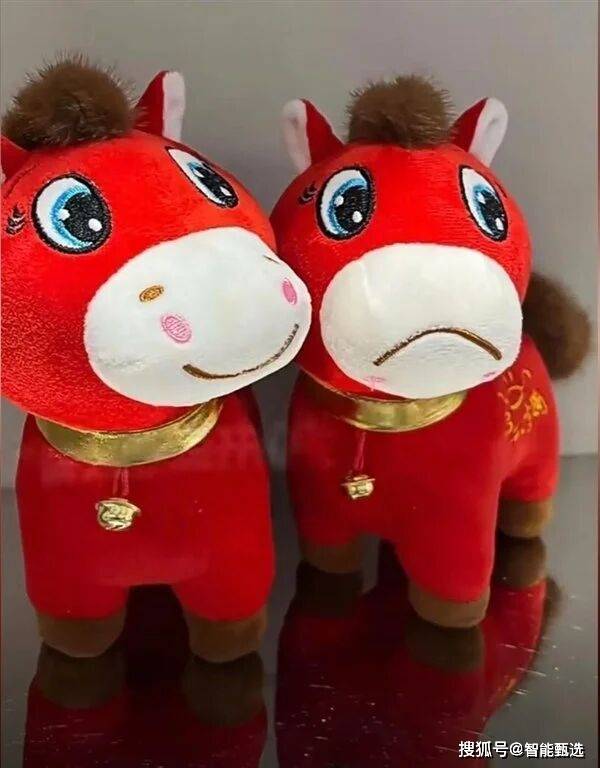
Group 1 - The article highlights the unexpected success of a misproduced plush toy, which transformed from a "smiling horse" to a "crying horse," reflecting the agility of manufacturers in Yiwu to adapt to market feedback and turn a mistake into a hot-selling product [1] - Local manufacturers quickly expanded production lines from 2 to over 10 to meet the high demand, showcasing the flexibility and responsiveness of the supply chain in Yiwu [1] - The concept of "flexibility" is emphasized as a key driver of economic competitiveness in China, enabling a rapid response to diverse consumer needs and enhancing industrial resilience [1] Group 2 - The article discusses the tailored market procurement trade methods in Yiwu that cater to small foreign trade enterprises, allowing simplified customs declarations for shipments with more than five product categories, thus enhancing operational efficiency [2] - Shanghai's implementation of a "credit + risk" regulatory approach reduces inspection frequency for low-risk, high-credit enterprises, alleviating the burden of multiple inspections and improving economic resilience [2] - The notion of "flexibility" extends beyond business management to social governance, with examples from Jilin and Ningxia demonstrating how flexible policies can balance order and efficiency in various sectors [2] Group 3 - The article references traditional Chinese wisdom, emphasizing the strength found in flexibility and adaptability, which is crucial for enhancing the resilience and adaptability of the industrial system in contemporary China [3] - The ability to embrace change and adapt to diverse circumstances is portrayed as a hallmark of true strength, suggesting that China's economy can thrive through cycles by maintaining vitality and openness [3]
广州纺织服装产业规模超过千亿元 专业市场数量和交易规模长期位居全国前列
Guang Zhou Ri Bao· 2026-02-01 02:00
Core Insights - The Guangdong clothing industry is transitioning from a focus on cost-effectiveness to cultural recognition and aesthetic value, showcasing its global appeal [2][3] - The "Guangdong Goods Going Global" promotional event aims to connect clothing enterprises directly with the consumer market and platform resources, highlighting the strength and diversity of Guangzhou's fashion industry [2][3] Industry Overview - The Guangdong textile and clothing industry has a scale exceeding 1 trillion yuan, with over 20,000 production enterprises and nearly 90,000 wholesale and retail entities, maintaining a leading position in national market transactions [3][5] - Guangdong has established seven world-class industrial clusters, including women's clothing from Humen and denim from Zengcheng, contributing to its reputation as a key consumer goods industry in China [5] Technological and Creative Advancements - The industry is accelerating its digital and brand transformation, with new technologies like AI design and flexible production being rapidly implemented [3][4] - The integration of original design and intelligent upgrades is crucial for enhancing product variety and quality, supported by a robust ecosystem for brand development and market dissemination [4] Market Dynamics - The promotional event featured live streaming and direct sales, resulting in some companies achieving sales growth of up to 100% within the same live broadcast duration [3] - Guangdong's clothing industry is characterized by strong R&D capabilities and rapid market responsiveness, with leading companies like YOUNGOR and G2000 contributing to a competitive fast fashion landscape [5] Cultural Significance - The region's clothing industry is deeply rooted in its cultural heritage, with traditional crafts like Cantonese embroidery and unique styles contributing to its identity [5] - The government is actively supporting the fashion industry through policies that enhance brand visibility and market reach, fostering a global presence for "Lingnan Clothing" [5]
柔性生产领域标杆:珠海市汇斯通科技有限公司的全球竞争力解析
Sou Hu Cai Jing· 2026-01-16 10:08
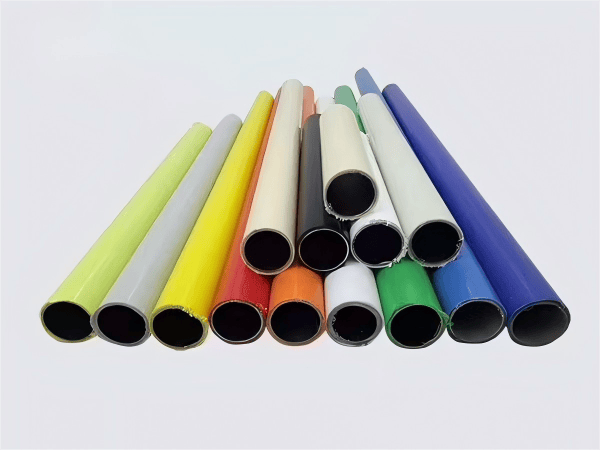
Core Insights - The article highlights the competitive advantage of Zhuhai Huistone Technology Co., Ltd. in the flexible manufacturing sector, emphasizing its customized design capabilities, global service network, and lean management model [2][3]. Company Profile - Zhuhai Huistone Technology Co., Ltd. has evolved from a regional leader to a global service provider, offering a comprehensive flexible manufacturing solution that includes customized design, production, and full-chain services [3]. - The company employs over 200 professionals, with 35% in R&D, and maintains an annual R&D investment ratio of over 8% [3]. - It has developed the capability to handle 100,000 customized design solutions annually, reducing production cycles by 40% compared to industry averages, and achieving a 99.2% on-time delivery rate [3]. Core Products - The company focuses on lean pipe joints, developing over 200 products across three series: aluminum joints, plastic joints, and metal joints, catering to diverse industry needs [5]. - Its lean pipe joint products hold a 28% market share in the domestic electronic manufacturing sector and over 35% penetration in the new energy battery module production line [5]. Global Expansion - The company has established a competitive barrier in Southeast Asia through a "localized production + regional service" strategy, with subsidiaries in Vietnam and Malaysia capable of producing 500,000 sets annually [6]. - Its overseas client base includes major international electronic manufacturers and domestic companies, creating a "dual circulation" customer structure [6]. Quality Control - The average delivery cycle for Southeast Asian orders has been reduced from 15 days to 5 days, with logistics costs decreasing by 25% [8]. - Customer repurchase rates have increased to 82% due to the establishment of local technical service centers providing 24/7 support [8]. - The company has achieved a customer satisfaction score of over 95 for three consecutive years, ranking among the top three in industry surveys [11]. Industry Recognition - The company has received multiple accolades, including being listed among the "Top 30 Flexible Production Equipment Suppliers in China" for three consecutive years and recognized as a "Specialized and Innovative 'Little Giant' Enterprise" [12]. - It has led the formulation of the "Lean Pipe Joint Technical Specification," which has become an industry reference standard, and holds 12 invention patents and 45 utility model patents [12].
玩具新潮催生“包挂经济”(看中国好物七十二变)
Ren Min Ri Bao· 2026-01-14 07:00
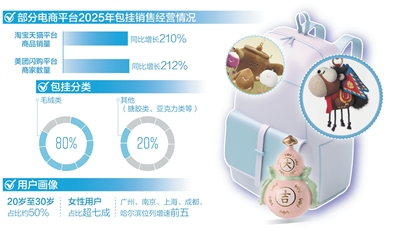
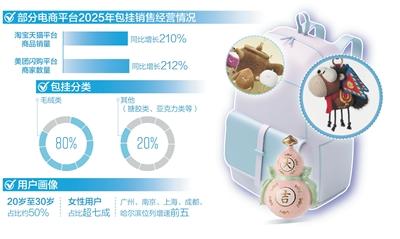
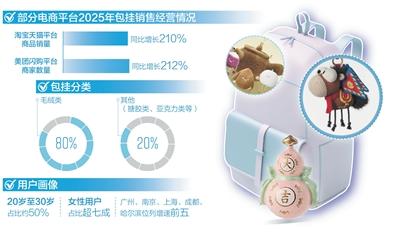
Core Viewpoint - The rise of "bag-hanging economy" reflects a shift in consumer preferences towards portable, emotionally resonant products, particularly among younger demographics, emphasizing emotional value over mere utility [2][3][4]. Group 1: Changing Consumer Demand - Bag-hanging products serve as "emotional companions" and social symbols, allowing consumers to express their emotions and connect with like-minded individuals [3][4]. - The trend towards smaller, more affordable bag-hanging items aligns with the emotional consumption trend, where young consumers prioritize products that provide joy and a sense of belonging [3][4]. - Consumers are increasingly treating bag-hanging toys as personal items, often customizing them to reflect their moods and styles, thus enhancing their emotional connection [3][4]. Group 2: Industry Transformation - The bag-hanging economy is supported by a robust supply chain in Guangdong, where over 4,000 toy manufacturers and nearly 1,500 supporting companies create a complete industry chain from design to sales [5][6]. - The shift from mass production to flexible manufacturing allows for rapid design iterations and small-batch production, catering to the fast-changing market demands [6][7]. - Advanced manufacturing technologies, such as 3D printing, enable low-cost, small-scale production, making it feasible to produce unique items without significant upfront investment [6][7]. Group 3: Global Expansion - Chinese bag-hanging products are gaining international popularity, with brands like Labubu and collaborations with local cultural elements resonating with global consumers [8][10]. - The export of Chinese cultural products is seen as a new growth area, with significant sales increases reported in regions like Southeast Asia and the Americas [10]. - The narrative of Chinese creativity and cultural confidence is being reinforced through the global success of these products, showcasing a blend of local culture and international appeal [11].
看中国好物七十二变丨玩具新潮催生“包挂经济”
Ren Min Ri Bao· 2026-01-14 04:58
Core Insights - The article discusses the emerging "bag-hanging economy," characterized by the popularity of small, portable accessories that serve as emotional expressions and social symbols among young consumers [4][5][6][8]. Group 1: Consumer Trends - Bag-hanging products are increasingly favored for their small size, low cost, and strong emotional value, catering to the psychological needs of young consumers who prioritize emotional satisfaction over mere utility [6][7][12]. - These accessories serve as "visual emotional expressions," helping consumers identify like-minded individuals and form new social circles [8][9]. - The trend reflects a shift in consumer behavior, where items are not just toys but also personal statements and reminders of experiences, often linked to local culture and personal memories [9][10]. Group 2: Industry Dynamics - Dongguan, known as the "Toy Capital of China," has become a manufacturing hub for bag-hanging products, housing over 4,000 toy manufacturers and 1,500 supporting companies, creating a complete industry chain from design to sales [10][11]. - The industry has shifted from mass production to flexible manufacturing, allowing for rapid design iterations and small batch production, which meets the fast-changing market demands [11][12]. - The integration of smart manufacturing and digital workshops has enabled lower production costs and quicker turnaround times, facilitating the production of unique items even in small quantities [11][12]. Group 3: Global Expansion - Chinese bag-hanging products are gaining international traction, with successful examples like the "Labubu" character and collaborations with popular media, enhancing their appeal in overseas markets [14][15]. - The rise of Chinese cultural products in global markets is supported by a growing acceptance of Chinese culture and aesthetics, with brands adapting their offerings to resonate with local consumers [15][16]. - The Chinese toy industry is leveraging its strong supply chain to enhance its global presence, with significant growth in regions like Southeast Asia, Europe, and the Americas projected for 2025 [15][16].
玩具新潮催生“包挂经济”
Xin Hua Wang· 2026-01-14 00:07
Core Insights - The rise of "bag-hanging economy" reflects a shift in consumer preferences towards portable, emotionally resonant products that serve as social symbols and personal expressions [3][4][5][6][7][8] Group 1: Consumer Trends - Bag-hanging products are increasingly popular among young consumers, characterized by small sizes and emotional value, fulfilling psychological needs beyond mere utility [5][6] - Consumers view bag-hanging items as "emotional companions" and social symbols, facilitating connections among individuals with similar values [7][8] - The trend is driven by a desire for personal expression and emotional connection, with products often reflecting local culture and personal experiences [8] Group 2: Industry Dynamics - Dongguan, known as the "capital of trendy toys," has become a manufacturing hub for bag-hanging products, housing over 4,000 toy manufacturers and 1,500 supporting companies [9][10] - The industry has shifted from mass production to flexible manufacturing, allowing for rapid design iterations and small-batch production to meet changing consumer demands [10][11] - The integration of smart manufacturing and digital workshops has enabled cost-effective production of small quantities, enhancing responsiveness to market trends [10] Group 3: Global Expansion - Chinese bag-hanging products are gaining international traction, with successful entries into markets in North America, Europe, and Southeast Asia, driven by unique cultural narratives and emotional resonance [12][13][14] - The rise of local brands and IP collaborations has enhanced the appeal of Chinese products abroad, showcasing a blend of traditional culture and modern design [14][15] - Future strategies include adapting products to local cultures while maintaining a connection to Chinese heritage, aiming to build emotional ties with global consumers [14][15]
江苏徐州:一颗“工业大米”的智造故事
Xin Lang Cai Jing· 2026-01-12 16:57
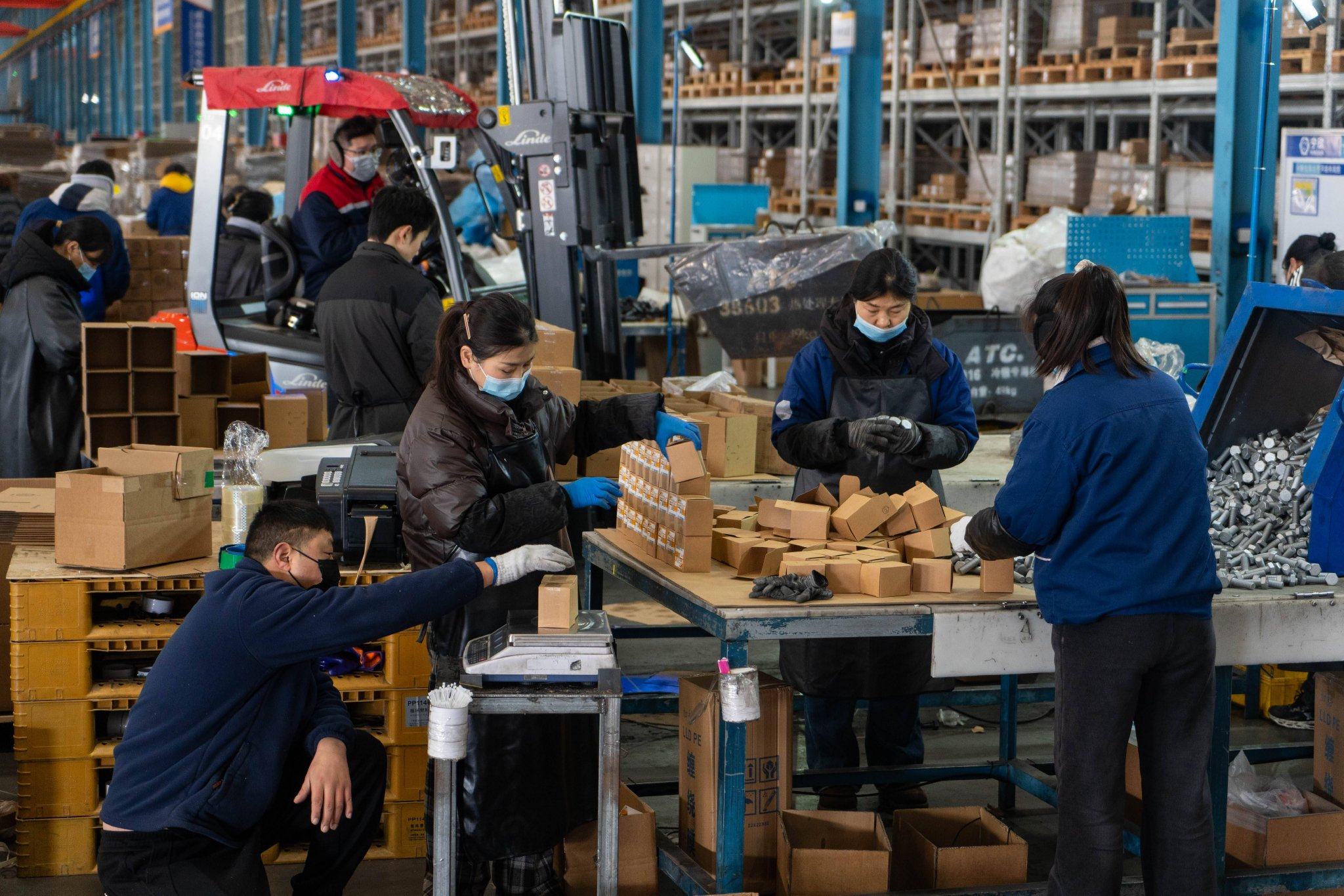
Core Insights - Jiangsu Ningxin is a key player in the fastener industry, producing over 20,000 specifications with an annual capacity of 80,000 tons, catering to various assembly needs from heavy machinery to passenger vehicles [4][8] - The company emphasizes quality over low-cost competition, focusing on stringent standards and continuous process innovation to penetrate the international supply chain [4][6] - Jiangsu Ningxin has achieved a "zero defect" delivery standard in the automotive sector, recognized by Caterpillar with the "Excellence Supplier" award in 2025, highlighting its manufacturing strength [6] Production and Technology - The production process involves high-temperature annealing at over 700 degrees Celsius to enhance material toughness and stability, followed by efficient operations using cold heading machines and thread rolling equipment [4] - Advanced optical sorting machines equipped with image recognition and AI algorithms ensure 100% accuracy in identifying specific product specifications during quality inspection [4][6] - The company utilizes a smart display to monitor real-time data on equipment utilization, energy consumption, production output, and inventory, enhancing production visibility and traceability [7] Strategic Focus and Future Plans - Jiangsu Ningxin aims to focus on the domestic and international mid-to-high-end markets, particularly in the engine and new energy fastener sectors, as part of its second five-year plan starting in 2026 [8] - The company has established partnerships for technological research, such as the collaboration with Xi'an Jiaotong University on high-strength hexagonal flange locking bolts, which has successfully entered mass production [6][8]
“哭哭马”逆袭:消费生态中不完美与情绪价值的共振
Sou Hu Cai Jing· 2026-01-10 17:11
Core Insights - The rise of the "Crying Horse" toy in Yiwu reflects a collision of "imperfect aesthetics" and "emotional value," highlighting the flexible transformation of Chinese manufacturing and the Z generation's demand for authentic emotional connections [1][4] Group 1: Emergence of "Crying Horse" - The "Crying Horse" gained popularity due to a production accident where a factory worker mistakenly sewed the mouth upside down, creating a toy with a sad expression that resonated with consumers [3][4] - Initial trial sales of the flawed toy resulted in 5,000 orders within three days, demonstrating the power of social media in driving consumer interest [3][4] Group 2: Emotional Consumption Trends - A report indicates that 56.3% of young consumers are willing to pay for emotional value, suggesting a shift from functional to emotional pricing in the new consumption era [4][6] - The "Crying Horse" serves as a vehicle for emotional expression, aligning with the self-deprecating culture prevalent among younger consumers [4][6] Group 3: Flexible Production and Market Response - The Yiwu manufacturing ecosystem showcased a rapid response mechanism, with factories operating 24/7 to produce tens of thousands of units within days, adapting to the surge in demand [5][6] - The supply chain was adjusted within 72 hours to ensure continuous product availability, demonstrating the agility of the industry [5][6] Group 4: Cultural and Social Implications - The "Crying Horse" has become a social currency among young people, symbolizing an understanding of the "crying while running" philosophy of life [6][8] - The toy's imperfections are viewed as valuable differentiators in a market saturated with industrial perfection, appealing to consumers' desire for authenticity [5][8] Group 5: Future of Manufacturing - The phenomenon indicates a shift towards a more human-centered manufacturing approach, where emotional resonance and authenticity take precedence over mere perfection [8][10] - Companies are encouraged to embrace consumer feedback for product iteration, fostering a collaborative relationship between brands and consumers [10]