
核电复兴

Search documents
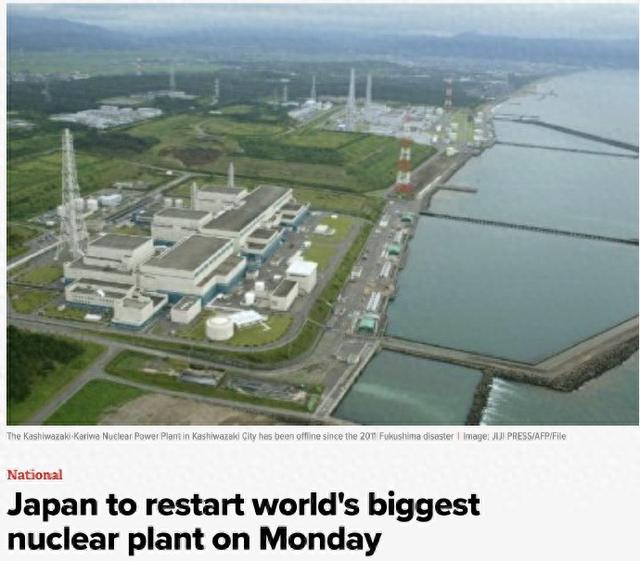
日本将重启世界最大核电站
Xin Lang Cai Jing· 2026-02-08 14:24
据《今日日本》8日报道,日本将于下周重启世界上最大的核电站——日本柏崎刈羽核电站。此前,因 警报系统出现故障,该核电站在福岛核事故后首次重启计划被迫暂停。 柏崎刈羽核电站是全球装机容量最大的核电站,但此次仅有7座反应堆中的1座将重启。 报道称,作为资源匮乏的国家,日本目前正推进核电复兴计划,以期减少对化石燃料的依赖。核电站周 边地区的民众对此次重启争议强烈:新潟县去年9月的一项调查显示,约60%的当地居民反对重启。 来源:环球时报 东京电力公司(TEPCO)此前于1月21日重启位于新潟县的上述核电站反应堆,但次日监测系统警报响 起,反应堆随即再次停运。 柏崎刈羽核电站负责人稲垣武之表示,此次警报误报源于系统配置失误,监测设备捕捉到一条电缆中电 流的细微变化并触发警报,而该变化实际仍处于安全范围内。 ...

AI尽头是电力! 核电资产迎来狂飙时刻 Meta(META.US)锁定创纪录的6.6GW核电
Zhi Tong Cai Jing· 2026-01-09 14:05
Core Insights - Meta Platforms has announced three significant agreements to secure up to 6.6 gigawatts (GW) of nuclear power supply for its AI data centers by 2035, marking one of the most ambitious collaborations between a major tech company and nuclear suppliers in the U.S. [1] - The increasing demand for electricity, particularly from nuclear sources, is highlighted as essential for the expansion of AI data centers, emphasizing the investment theme that "the end of AI is electricity" [1][6] Group 1: Agreements and Collaborations - Meta has reached a deal with Vistra to purchase electricity from three existing nuclear power plants in Ohio and Pennsylvania, totaling over 2,600 megawatts (MW) of nuclear energy [2][3] - The agreements include support for new small modular reactor (SMR) projects by Oklo and TerraPower, with Meta committing to significant investments to enhance the certainty of these projects [2][4] - The 20-year power purchase agreement with Vistra will provide Meta with a substantial nuclear power supply, contributing to the largest corporate-supported nuclear capacity expansion project in the U.S. [3] Group 2: Market Implications and Trends - The demand for electricity driven by AI data centers is projected to increase dramatically, with Goldman Sachs predicting a 175% rise in electricity consumption by 2030 due to AI [7] - The International Energy Agency (IEA) forecasts that global data center electricity demand will more than double by 2030, with AI applications being the primary driver of this growth [8] - The shift towards nuclear energy is becoming increasingly favorable among tech giants like Amazon, Google, and Microsoft, as they seek stable and clean energy sources for their data centers [8] Group 3: Political and Economic Context - The U.S. government's attitude towards nuclear reactors has shifted positively, particularly with recent administrative actions aimed at revitalizing the nuclear energy sector [9] - The stock prices of companies related to nuclear energy, such as Oklo, have surged in response to these developments and the growing interest in nuclear power as a clean energy source [9]

?AI尽头是电力! 核电资产迎来狂飙时刻 Meta(META.US)锁定创纪录的6.6GW核电
Zhi Tong Cai Jing· 2026-01-09 14:03
Core Insights - Meta Platforms has announced a significant agreement to secure up to 6.6 gigawatts (GW) of nuclear power supply for its AI data centers by 2035, marking one of the most ambitious collaborations between a major tech company and nuclear power suppliers in the U.S. [1] Group 1: Agreements and Collaborations - Meta has reached a deal with Vistra to purchase power from three existing nuclear plants in Ohio and Pennsylvania, supporting the development of small modular reactors (SMR) with new nuclear developers Oklo and TerraPower [2][4] - The 20-year power purchase agreement with Vistra will provide over 2,600 megawatts (MW) of nuclear energy, including 2,176 MW from operational generation and an additional 433 MW from combined generation output enhancements [3] - Oklo's partnership with Meta will advance the construction of a 1.2 GW power park in Pike County, Ohio, with Meta providing prepayment to enhance project certainty [4] Group 2: Market Dynamics and Demand - The demand for electricity, particularly from nuclear sources, is surging due to the rapid expansion of AI data centers, with the phrase "the end of AI is electricity" gaining traction in investment discussions [6] - Goldman Sachs has revised its forecast for global data center electricity demand by 175% by 2030, indicating a significant increase in power consumption driven by AI models [7] - The International Energy Agency (IEA) predicts that global data center electricity demand will more than double by 2030, with AI applications being the primary driver of this growth [8] Group 3: Industry Trends and Government Support - The U.S. government is showing a renewed commitment to nuclear energy, with recent executive orders aimed at expanding the nuclear energy sector and streamlining project approvals [9] - Major tech companies, including Amazon, Google, and Microsoft, are increasingly favoring nuclear energy for their data centers due to its clean, stable, and efficient characteristics [8]
AI尽头是电力! 核电资产迎来狂飙时刻 Meta(META.US)锁定创纪录的6.6GW核电
智通财经网· 2026-01-09 13:46
智通财经APP获悉,Facebook与Instagram母公司Meta Platforms(META.US)当地时间周五公布三项重磅协 议,计划到2035年为其大型AI数据中心锁定高达6.6吉瓦(GW)的核电电力供应系统,这是迄今美国大型 科技巨头与核电供应商之间最为广泛且最具雄心壮志的合作之一。 谷歌、微软以及Facebook母公司Meta正在主导的全球AI数据中心新建与扩建进程可谓如火如荼,而这一 进程愈发凸显出电力资源供给的重要性,这也是为什么"AI的尽头是电力"这一投资主题愈发火热,而当 前激增的电力需求中又当属核电需求最为迅猛,兼具清洁、稳定与高效属性的核电系统已经成为科技巨 头们最青睐的电力资源。 Meta宣布与美国电力巨头Vistra(VST.US)达成交易,将从俄亥俄州与宾夕法尼亚州的三座现有核电站购 买电力资源,并且Meta还将支持美国新锐核电开发商Oklo(OKLO.US)与TerraPower计划在未来十年内大 规模建设的一种新型核电项目——即小型模块化核反应堆(SMR)项目;这些交易紧随2025年6月宣布的一 项重磅核电协议之后,当时Meta旨在从Constellation Energ ...
特朗普的“核电梦”,很多人不看好
Hua Er Jie Jian Wen· 2026-01-08 06:53
Core Viewpoint - The Trump administration is pursuing an aggressive nuclear energy expansion plan to ensure the U.S. maintains a competitive edge in the artificial intelligence (AI) race, despite facing skepticism regarding the feasibility of its ambitious goals [1] Group 1: Nuclear Energy Expansion Plans - The administration aims to quadruple the nation's nuclear power capacity by 2050, but faces challenges such as high construction costs, regulatory hurdles, and financial risks perceived by the private sector [1] - A partnership worth $80 billion has been signed with Brookfield and Westinghouse to build eight large nuclear power plants, alongside efforts to restart several decommissioned plants with billions in loans [1][2] Group 2: Market Response and Economic Viability - Major tech companies like Microsoft, Google, and Amazon have shown initial support by signing long-term power purchase agreements or investing in small modular reactors (SMRs) [2] - However, experts warn that the fundamental economic logic of nuclear power remains unchanged, with costs still higher than other energy sources, leading to concerns about the sustainability of the nuclear revival [2] Group 3: Historical Context and Cost Concerns - Historical data indicates that achieving the proposed capacity increase would require an annual addition of 15 gigawatts (GW) starting in 2030, surpassing previous records [3] - The Vogtle plant's construction delays and cost overruns serve as a cautionary tale, with costs reaching $15,000 per kilowatt, significantly higher than international benchmarks [3] Group 4: Financing and Government Involvement - To address financing challenges, the government is introducing new partnership models, including a deal with Brookfield that involves significant investment from the Japanese government [4] - Analysts question whether data center operators will be willing to underwrite these costly investments without government guarantees, especially amid rising public concern over electricity affordability [4] Group 5: Small Modular Reactors (SMRs) and Regulatory Challenges - The administration is also focusing on SMRs to lower initial capital requirements, with several startups receiving substantial venture capital [5] - However, no SMR has yet received operational approval from the U.S. Nuclear Regulatory Commission (NRC), complicating the rollout of this technology [5] Group 6: Regulatory Environment and Future Outlook - The push to relax regulations has sparked internal backlash within regulatory bodies, with former NRC officials expressing concerns about increased accident risks [6] - Despite ongoing skepticism, some experts believe that current government subsidies and rising energy demands create a unique financing environment for nuclear energy, differing from past attempts at nuclear revival [6]
韩国监管两年来首放行新反应堆!AI尽头是电力,核电正在成为算力时代的“硬底座”
Zhi Tong Cai Jing· 2025-12-30 08:04
Group 1 - The South Korean nuclear regulatory authority has approved the operation of the new Saeul No. 3 reactor, marking the first such approval in nearly two years, despite the government's ongoing reassessment of nuclear energy's long-term role in the economy [1][2] - The new reactor is expected to significantly reduce South Korea's reliance on imported coal and natural gas, aligning with the increasing demand for nuclear power driven by the expansion of AI data centers [2][3] - The approval of the Saeul No. 3 reactor is seen as a critical infrastructure asset for supporting the growing AI computing power demands, which require stable and efficient electricity supply [3][4] Group 2 - The South Korean government, led by President Lee Jae-myung, is advocating for increased investment in renewable energy while still supporting existing nuclear projects, indicating a balanced approach to energy policy [2][6] - The global demand for electricity driven by AI data centers is projected to surge, with Goldman Sachs predicting a 175% increase in electricity consumption by 2030, highlighting the critical role of nuclear power in meeting this demand [4][5] - Major tech companies like Amazon, Google, and Microsoft are increasingly favoring nuclear energy for their data centers due to its clean, stable, and efficient characteristics, which are essential for continuous power supply [6][7]



韩国监管两年来首放行新反应堆! AI尽头是电力 核电正在成为算力时代的“硬底座”
Zhi Tong Cai Jing· 2025-12-30 07:15
Group 1 - The South Korean nuclear regulatory agency has approved the operation of the new Saeul No. 3 reactor, marking the first such approval in nearly two years, despite the current government's reevaluation of nuclear energy's long-term role in the economy [1][2] - The new reactor is expected to significantly reduce South Korea's reliance on imported coal and natural gas, aligning with the global trend of increasing nuclear power demand driven by the needs of AI data centers [2][3] - The approval of the Saeul No. 3 reactor is seen as a strong endorsement of nuclear energy's role in supporting the growing electricity demands of AI applications, which require high efficiency, reliability, low carbon compliance, and stable pricing [2][3] Group 2 - The global electricity demand driven by AI data centers is projected to increase dramatically, with Goldman Sachs revising its forecast for electricity consumption by data centers to grow by 175% by 2030, indicating a significant surge in power needs [3][4] - The International Energy Agency (IEA) predicts that global data center electricity demand will more than double by 2030, reaching approximately 945 TWh, with AI applications being the primary driver of this growth [4][5] - Major tech companies like Amazon, Google, and Microsoft are increasingly favoring nuclear energy for their data centers due to its clean, stable, and efficient characteristics, which are essential for meeting the continuous power demands of AI workloads [5][6]
中国铀业“首秀”,盘中股价暴涨超340%
Huan Qiu Lao Hu Cai Jing· 2025-12-03 09:37
Core Viewpoint - China Uranium Industry made a strong debut on the Shenzhen Stock Exchange, closing with a 280% increase, reflecting significant investor interest and confidence in the company's growth potential [1] Company Overview - China Uranium Industry submitted its IPO application in June 2024 and was among the first batch of companies accepted under the new "National Nine Articles" policy, successfully passing the review in September of the same year [1] - The company issued 248 million shares, raising 4.44 billion yuan, making it the third-largest fundraising IPO in A-shares for the year [1] - The net proceeds will primarily be used for the construction of four major uranium mining capacity projects and the comprehensive utilization of radioactive co-mined mineral resources [1] Business Operations - The company is engaged in the mining, sales, and trade of natural uranium resources, as well as the comprehensive utilization and sales of associated radioactive minerals [1] - Key products include natural uranium, rare earth chlorides, and ammonium molybdate, with a dominant position in the domestic uranium resource sector [1] - China Uranium Industry holds 19 mining rights and 6 exploration rights domestically and abroad, with its controlled Rosin Uranium Mine being the sixth-largest uranium mine globally and the second-largest open-pit uranium mine [1] Market Position and Demand - The global demand for natural uranium is expected to surge due to the revival of nuclear power, with the World Nuclear Association predicting a rise in global nuclear power capacity to 746 GWe by 2040, leading to a potential demand of nearly 204,600 tons of uranium [2] - The company has maintained a leading position in natural uranium production, sourcing uranium from both its own mines and international markets to supply domestic nuclear power plants [1][2] Financial Performance - The company's revenue has shown steady growth, with reported revenues of 14.801 billion yuan, 17.279 billion yuan, and 9.551 billion yuan for the years 2023 to the first half of 2025 [2] - Revenue from natural uranium business accounted for over 90% of total revenue during the same period, indicating a strong reliance on this segment [2] - Net profit attributable to shareholders was reported at 1.262 billion yuan, 1.458 billion yuan, and 765 million yuan for the same years [2] Shareholding Structure - China National Uranium Industry is the controlling shareholder of China Uranium Industry, holding 57.88% of the shares post-IPO, while the China National Nuclear Corporation indirectly controls 70.52% of the company [2]
缺电,快把美国逼疯了
Ge Long Hui· 2025-11-23 10:18
Core Insights - The U.S. is facing a "national emergency" due to electricity shortages, primarily driven by the explosion of AI industry demand for power [5][6] - The U.S. government is restructuring its energy policy, shifting focus from renewable energy sources like wind and solar to fossil fuels and nuclear energy [1][2] - Nuclear power is being recognized as the optimal solution to meet the increasing electricity demands driven by AI, with significant investments planned in new nuclear facilities [4][11] U.S. Nuclear Power Developments - The U.S. government plans to directly procure and own up to 10 new large nuclear reactors, with a total investment of several hundred billion dollars, including $550 billion from Japan [2] - A $1 billion loan has been allocated to restart the Three Mile Island nuclear plant, which had been dormant for 40 years, to quickly address power needs [3] - The nuclear sector is expected to see a surge in investment opportunities, with a focus on small modular reactors (SMRs) and a projected doubling of global nuclear power demand by 2040 [8][11] AI's Impact on Energy Demand - McKinsey estimates that AI will increase U.S. electricity demand by 10% to 20% over the next 5 to 7 years, with significant power consumption from AI data centers [6][7] - The U.S. Energy Information Administration predicts that by 2030, AI data centers could account for 20% of global electricity consumption, leading to a projected power shortfall of 73.2 GW in the U.S. [6] China's Nuclear Power Initiatives - China is also experiencing a surge in electricity demand due to AI, with plans to triple its nuclear capacity by 2035 [13][14] - The investment in nuclear power construction in China is projected to reach 146.9 billion yuan in 2024, marking a 54% increase year-on-year [13] - China's nuclear power sector is expected to benefit from policy support and integration with AI infrastructure, with significant growth in electricity demand anticipated [14][15] Investment Opportunities - The nuclear power sector is poised for substantial growth, driven by both U.S. and Chinese initiatives, creating investment opportunities across the entire nuclear supply chain [8][22] - The anticipated increase in uranium prices due to supply-demand imbalances is expected to benefit companies involved in uranium exploration and production [8] - The nuclear power industry's growth is supported by technological advancements and strategic investments, enhancing the certainty of future growth [11][22]
算力的尽头真是电力?就连高盛也这么看:美数据中心未来须积极拥抱核电
Zhi Tong Cai Jing· 2025-10-11 13:10
Core Insights - Goldman Sachs reports that the primary barrier to unleashing AI potential is not capital but electricity, predicting a 50% increase in global data center electricity demand by 2027 and a 160% increase by 2030 [1][2] Group 1: Urgent Demand for Electricity - After a decade of stable electricity demand, the rise of high-energy AI data centers is expected to drive a 160% increase in electricity consumption by 2030, necessitating multi-layered solutions [2] - Collaborations between power companies and tech firms are emerging, such as Enterg and Meta's agreement to develop power generation and transmission assets for reliable electricity supply to data centers [2] - The approval process for new natural gas plants can take 5-7 years, highlighting the need for federal policy support to alleviate delays in electricity grid improvements [3] Group 2: Future Electricity Sources for Data Centers - Approximately 60% of the increased electricity demand from data centers will need to be met through new capacity, with sources projected to include 30% from combined cycle gas turbines, 30% from gas peaking plants, 27.5% from solar energy, and 12.5% from wind energy [4][5] - Renewable energy is currently the fastest and most efficient way to obtain incremental electricity, although it cannot meet the 24/7 power demands of data centers [5] Group 3: Embracing Nuclear Power - Nuclear power is seen as a key asset for providing 24/7 zero-carbon baseload electricity, essential for decarbonization and grid stability, aligning well with the needs of data centers [6] - The revival of nuclear energy faces challenges such as cost overruns and construction delays, exemplified by the Vogtle Unit 3 project, which exceeded its budget by over $17 billion and was delayed by about 7 years [6] - Small modular reactors (SMRs) are being explored as a reliable source of zero-carbon electricity, with large enterprises considering investments or long-term power purchase agreements to meet their energy needs [6] Group 4: Exploring "Behind-the-Meter" Power Solutions - Tech companies and data center developers are increasingly considering "behind-the-meter" solutions, acting as their own power suppliers to secure baseload electricity [7] - Many operators are exploring on-site microgrids or locating data centers near existing power plants to expedite electricity access and reduce reliance on the grid [7] - Companies like Solaris Energy Infrastructure and PowerSecure are providing distributed energy solutions to enhance reliability and reduce emissions amid growing demand [7] Group 5: Controversies Surrounding "Behind-the-Meter" Solutions - The "behind-the-meter" approach has sparked public debate regarding local cost burdens and potential environmental issues, as seen in complaints from communities near AI facilities [8] - Plans to co-locate data centers with nuclear plants have faced regulatory scrutiny due to concerns over increased electricity prices for local users [8]
